Reptile Reproduction: Eggs, Live Birth & Care
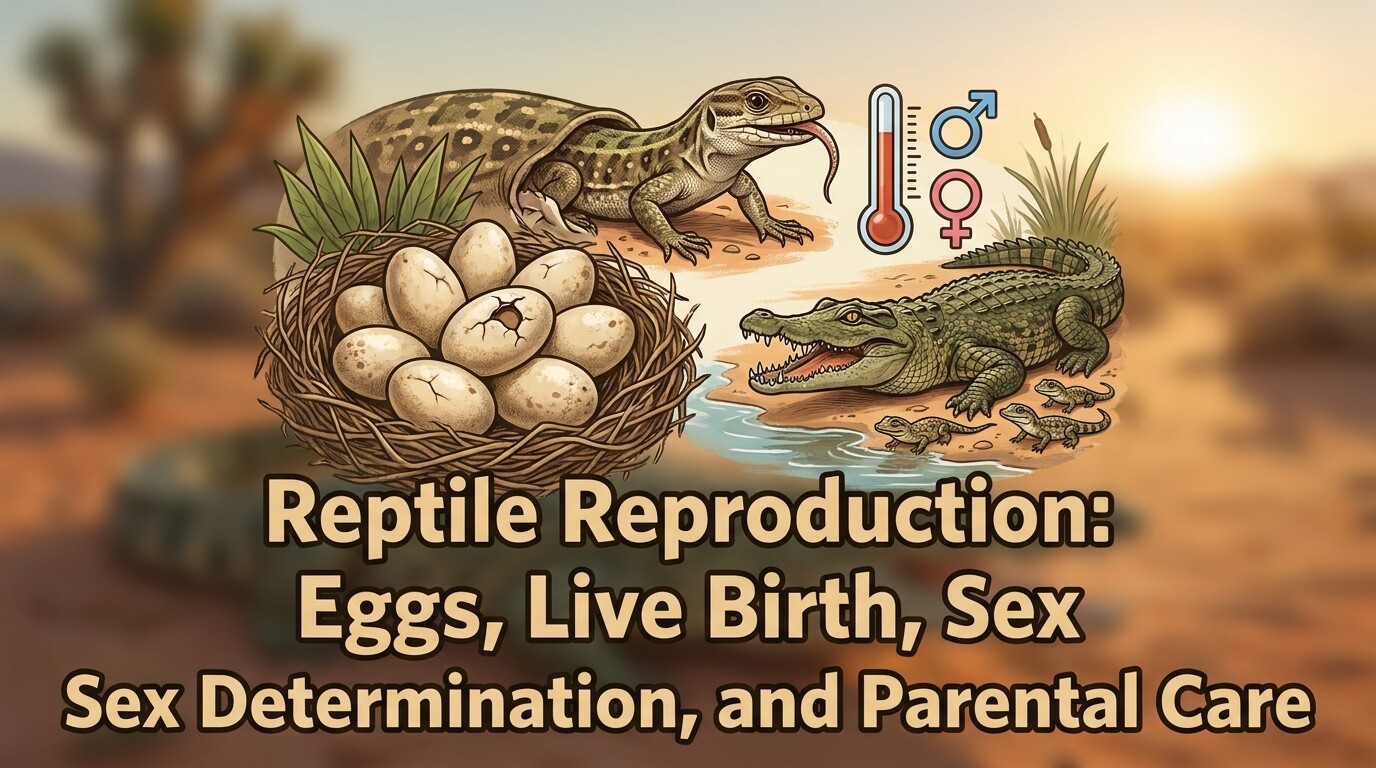
Reptile Reproduction: Eggs, Live Birth, Sex Determination, and Parental Care

Reptile reproduction is far more varied than the familiar image of a reptile laying eggs and leaving them behind. Living non-avian reptiles reproduce sexually in most cases, with internal fertilization, but what happens afterward differs greatly. Many species lay eggs, many squamates give birth to live young, incubation temperature affects sex in some lineages, genetic … Read more
How Reptiles Control Body Temperature

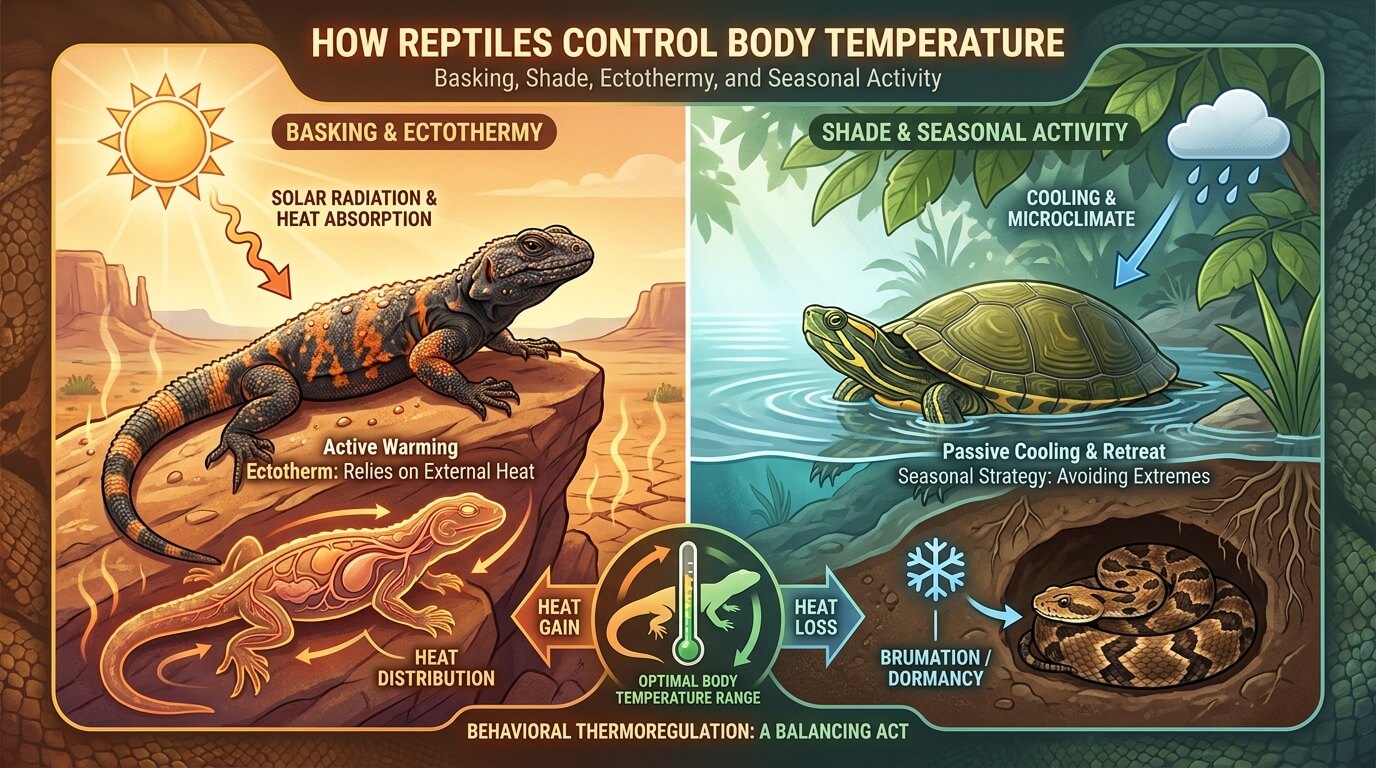
How Reptiles Control Body Temperature: Basking, Shade, Ectothermy, and Seasonal Activity

Reptiles control body temperature mainly by changing what they do and where they go. A lizard may move into sunlight, angle its body toward the sun, then retreat beneath a shrub before overheating. A turtle may alternate between water and a warm basking surface. A snake can use sun-warmed ground, shaded cover, a burrow, or … Read more

Reptile Skin and Scales: Shedding, Scutes & Armor

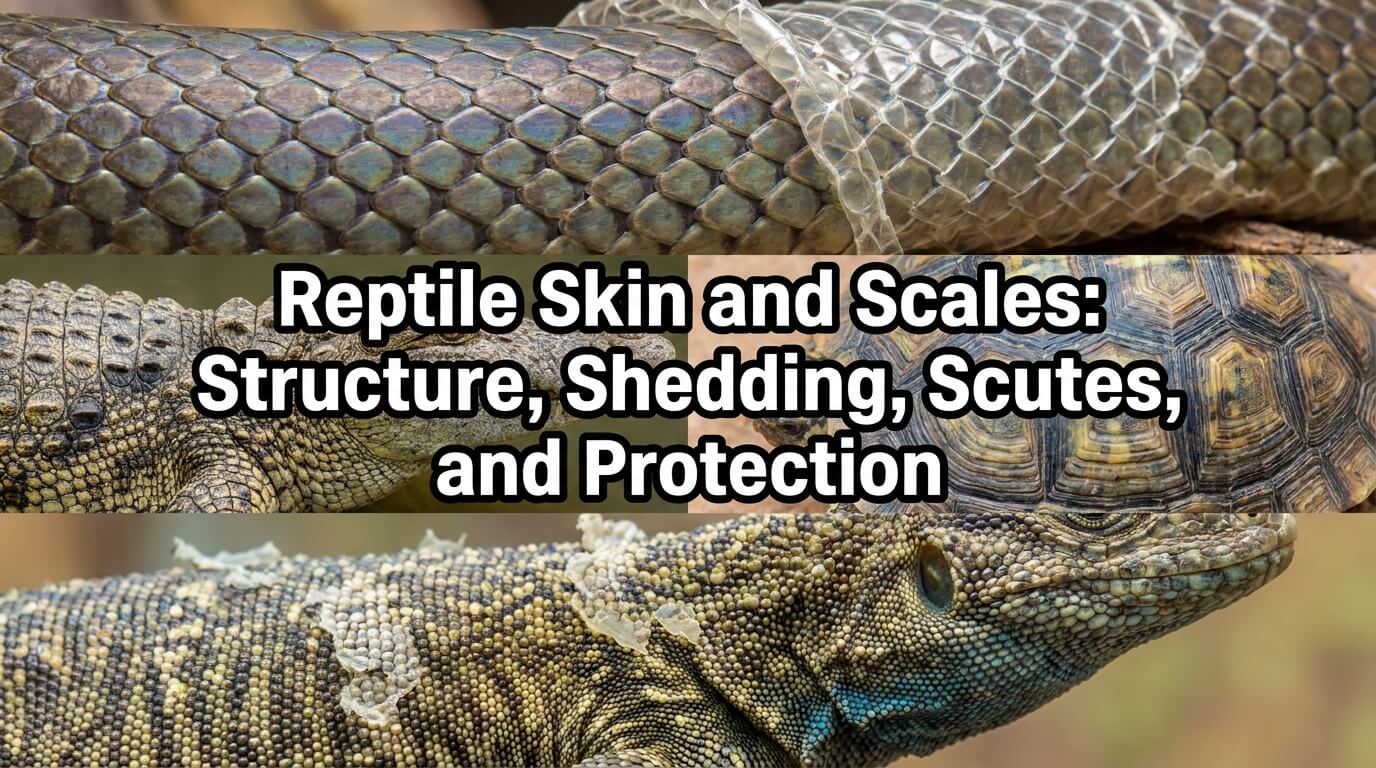
Reptile Skin and Scales: Structure, Shedding, Scutes, and Protection

Reptile skin does far more than make a snake look glossy or an alligator look armored. In living non-avian reptiles, the outer skin forms a tough, keratinized barrier that helps limit water loss, resists abrasion, carries color and display patterns, and in some species even contains highly specialized sensory structures. Yet reptile skin is not … Read more

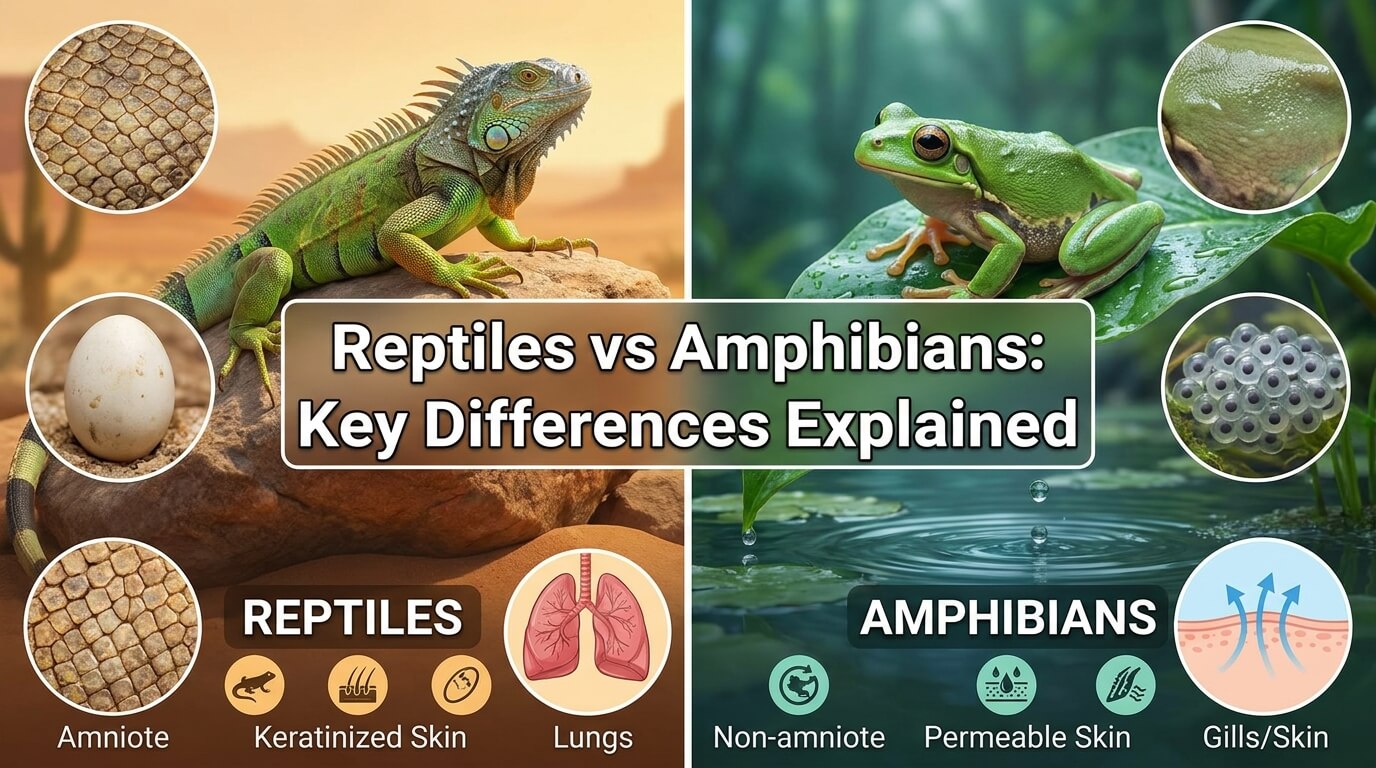
Reptiles vs Amphibians: Key Differences Explained

Reptiles vs Amphibians: Key Differences Explained

Reptiles and amphibians can look surprisingly similar. A salamander may be mistaken for a lizard, a caecilian can resemble a snake, and turtles are sometimes wrongly grouped with amphibians because many live around water. The most important differences are biological rather than superficial. Living non-avian reptiles are amniotes with keratinized skin and lungs, while amphibians … Read more

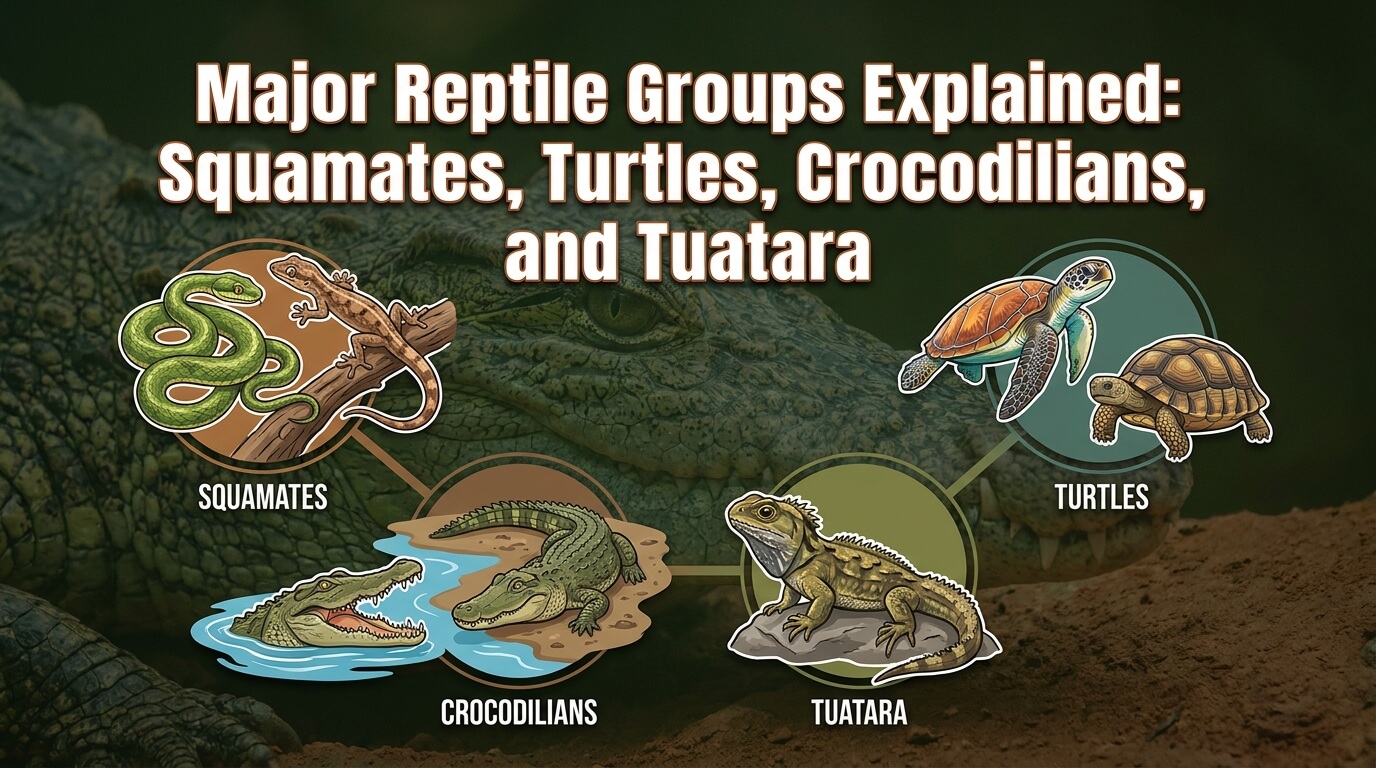
Major Reptile Groups: Squamates, Turtles & More

Major Reptile Groups Explained: Squamates, Turtles, Crocodilians, and Tuatara

The major reptile groups are easier to understand when familiar animal names are placed inside a modern evolutionary framework. For living non-avian reptiles, four broad lineages provide a useful starting point: Squamata, Testudines, Crocodylia, and Rhynchocephalia. Together they include snakes, the many animals commonly called lizards, amphisbaenians, turtles and tortoises, crocodiles, alligators, caimans, gharials, and … Read more

What Makes an Animal a Reptile? Key Traits

What Makes an Animal a Reptile? Key Traits Explained

What makes an animal a reptile is not one simple feature such as scales, egg laying, or being “cold-blooded.” Reptiles are best understood through evolutionary ancestry plus a pattern of biological traits. Living non-avian reptiles are vertebrate amniotes that breathe with lungs, have strongly keratinized outer body coverings, and are ectothermic, while reproduction, body shape, … Read more

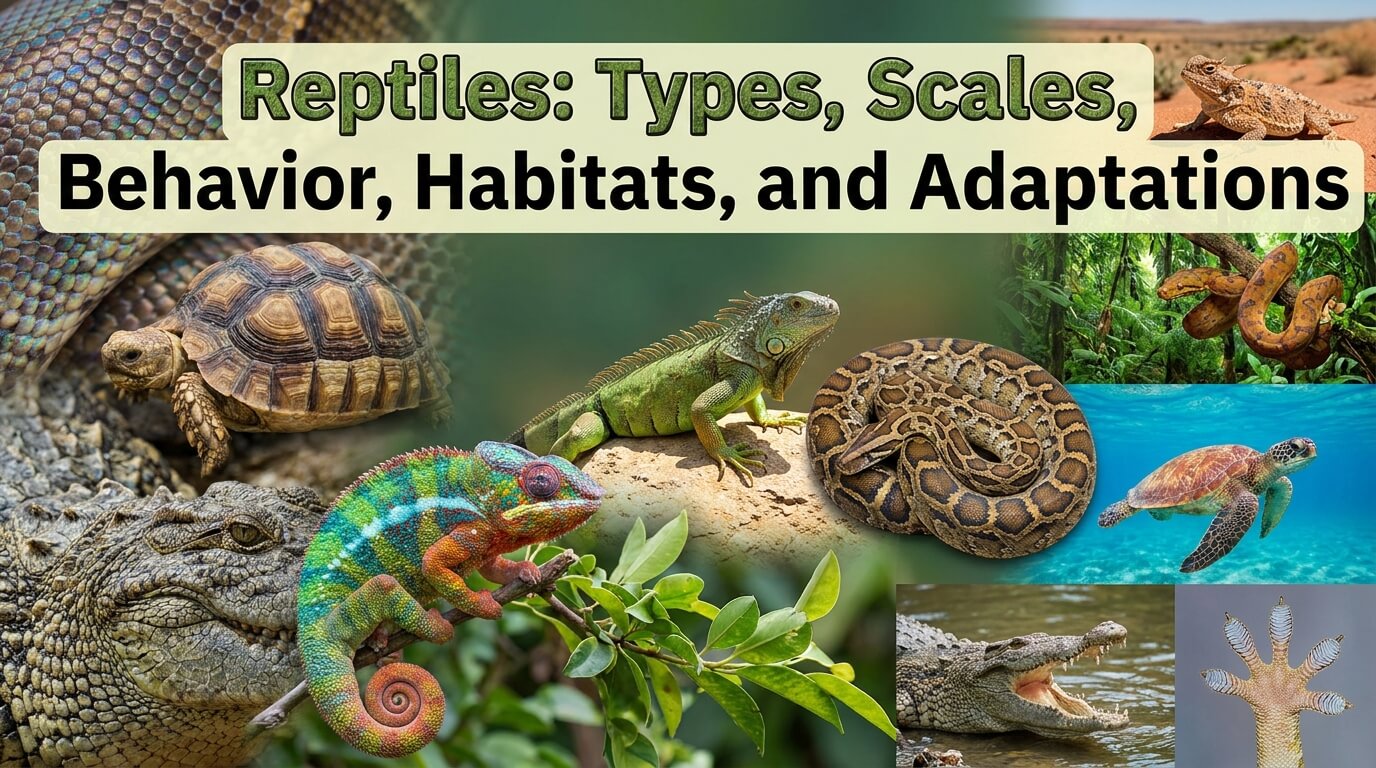
Reptiles: Types, Traits, Habitats & Adaptations

Reptiles: Types, Scales, Behavior, Habitats, and Adaptations

Reptiles are a remarkably varied group of vertebrates that includes snakes, the many animals commonly called lizards, turtles and tortoises, crocodilians, amphisbaenians, and tuatara. They share an evolutionary history and a set of broad biological themes, but there is no single simple rule that describes every reptile. Some have legs and some do not. Some … Read more

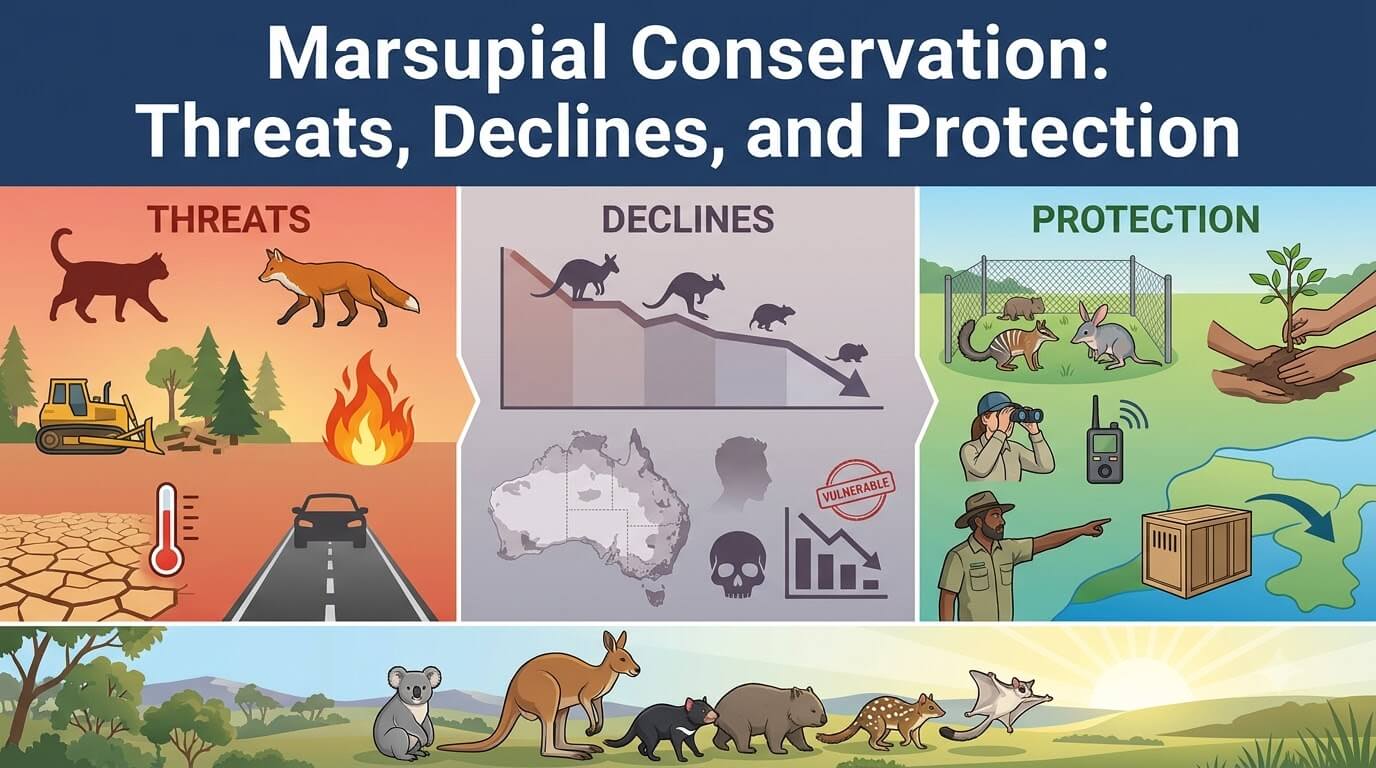
Marsupial Conservation: Threats, Declines & Protection

Marsupial Conservation: Threats, Declines, and Protection

Marsupial conservation is not one crisis with one solution. Living marsupials range from widespread adaptable species to animals surviving only in small, managed populations. Their threats include habitat loss and fragmentation, introduced predators, altered fire regimes, climate change, disease, road mortality, invasive competitors, and the loss of shelter or food resources. The importance of each … Read more

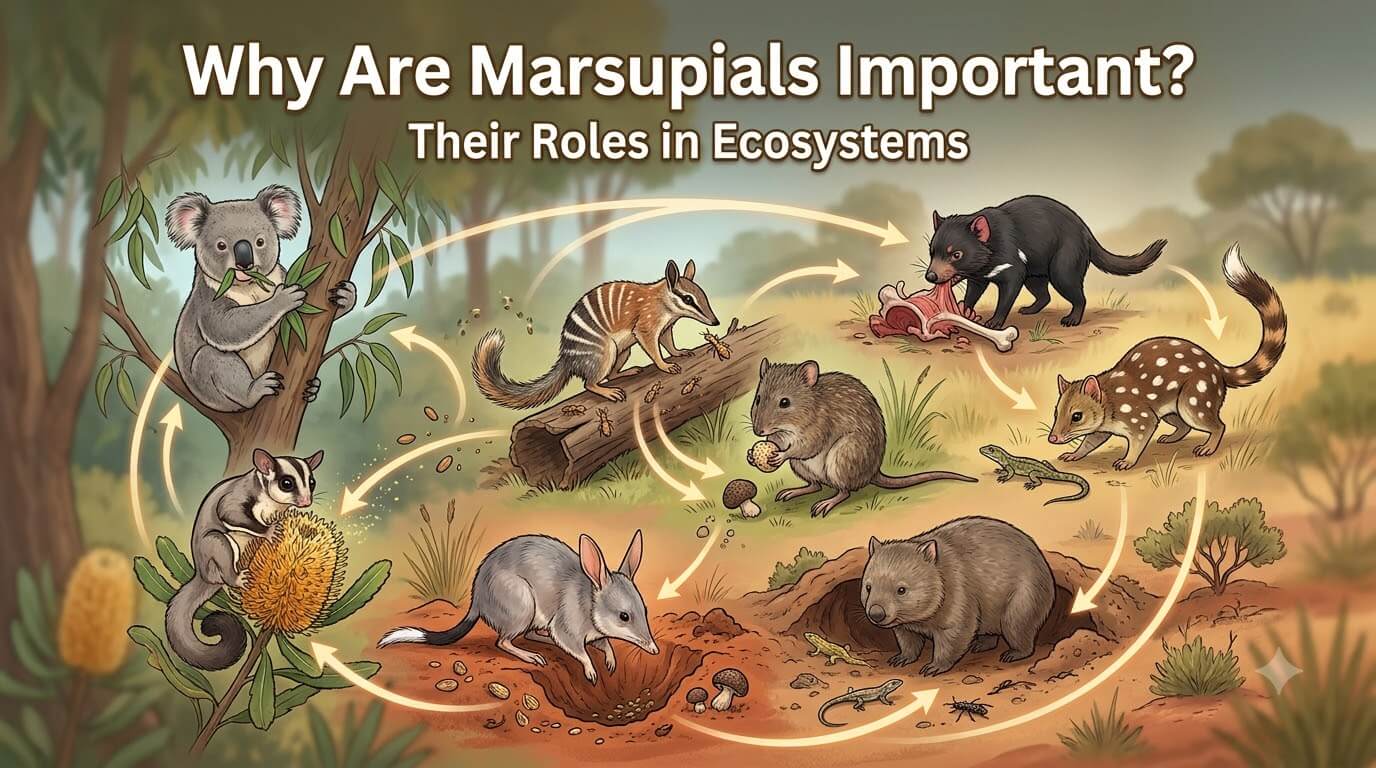
Why Are Marsupials Important? Ecosystem Roles Explained

Why Are Marsupials Important? Their Roles in Ecosystems

Marsupials matter in ecosystems because they perform many different jobs rather than one universal role. Some graze or browse vegetation. Some dig into soil while searching for food. Others move fungal spores, visit flowers, eat insects, hunt prey, scavenge carcasses, create burrows, or serve as prey themselves. These activities influence food webs, vegetation, soil structure, … Read more

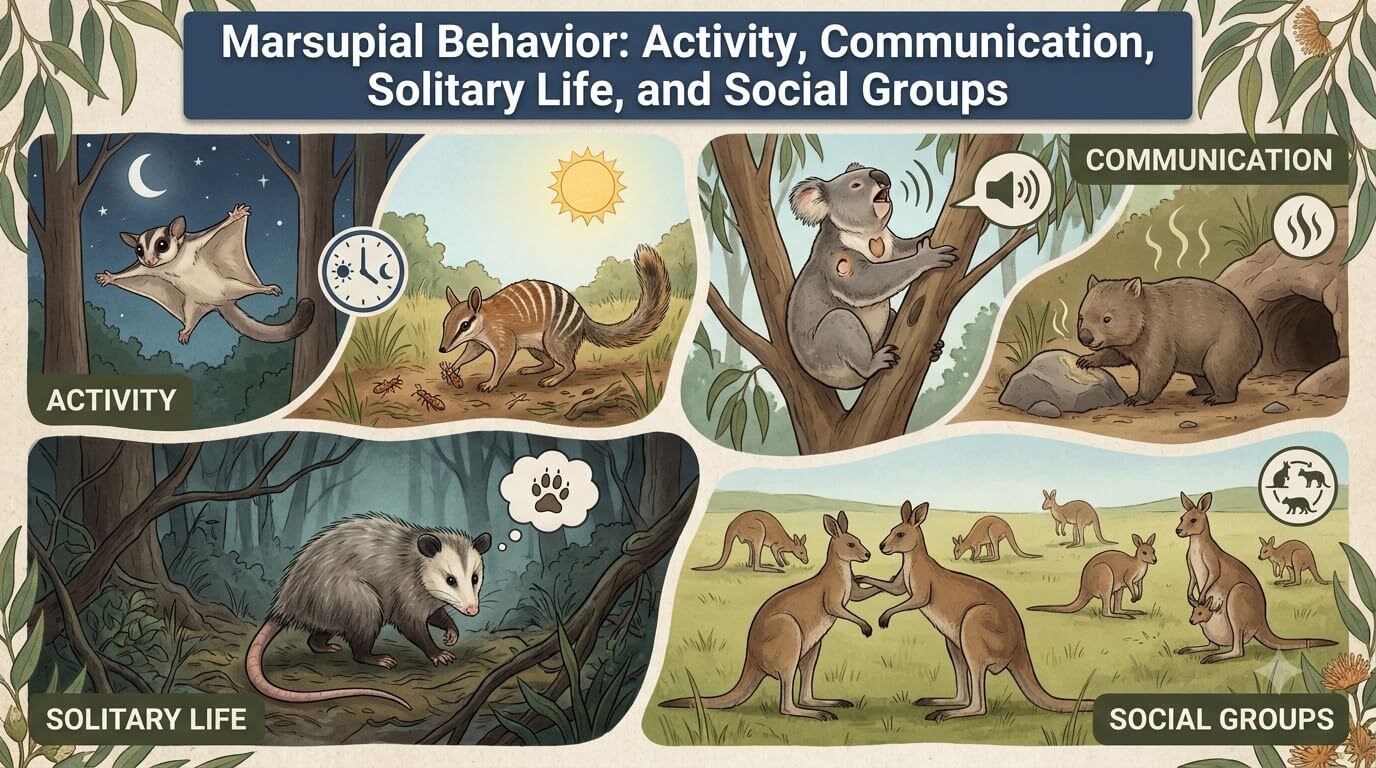
Marsupial Behavior: Activity, Communication & Social Life

Marsupial Behavior: Activity, Communication, Solitary Life, and Social Groups

Marsupial behavior is far more varied than the stereotype of a solitary nocturnal animal. Eastern grey kangaroos can form social mobs. Sugar gliders may live in small clans and share nests. Koalas are mostly solitary but communicate during the breeding season and maintain overlapping home ranges. Tasmanian devils usually forage alone yet interact around carcasses, … Read more