
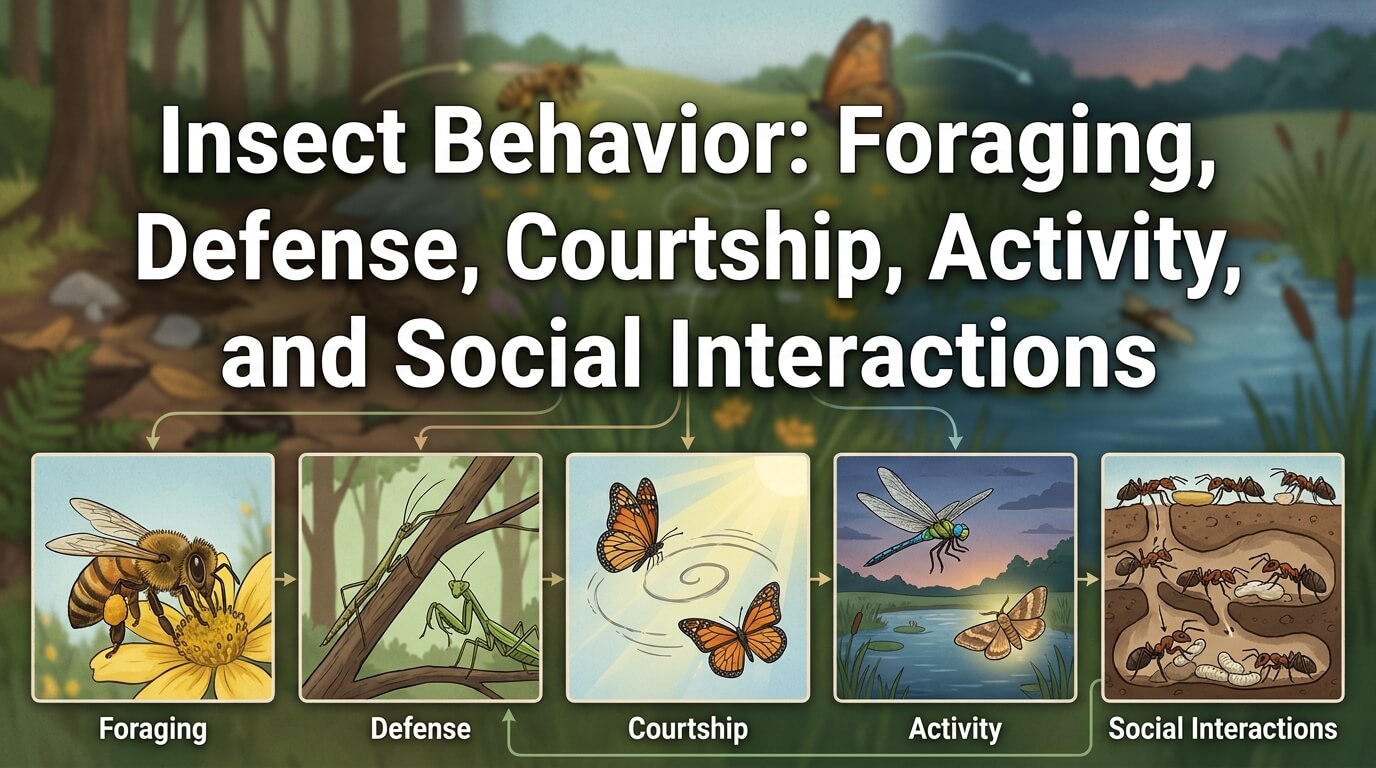
Insect behavior is far more varied than the stereotype of tiny animals running on fixed instinct. Insects use inherited behavioral programs, sensory information, internal state, past experience, and changing environmental conditions to decide when to move, where to search for food, how to approach mates, when to hide, and when to flee or defend themselves. The balance differs among species, but behavior is usually best understood as a response to real problems such as finding resources, avoiding predators, reproducing, and surviving bad weather.
That does not mean an ant, bee, beetle, moth, or dragonfly thinks like a human. It means insect behavior can be flexible without requiring human-like motives. Some responses are highly stereotyped. Others change with learning, temperature, hunger, crowding, time of day, or previous encounters. Understanding that middle ground makes insect behavior both more accurate and more interesting.
Quick Answer
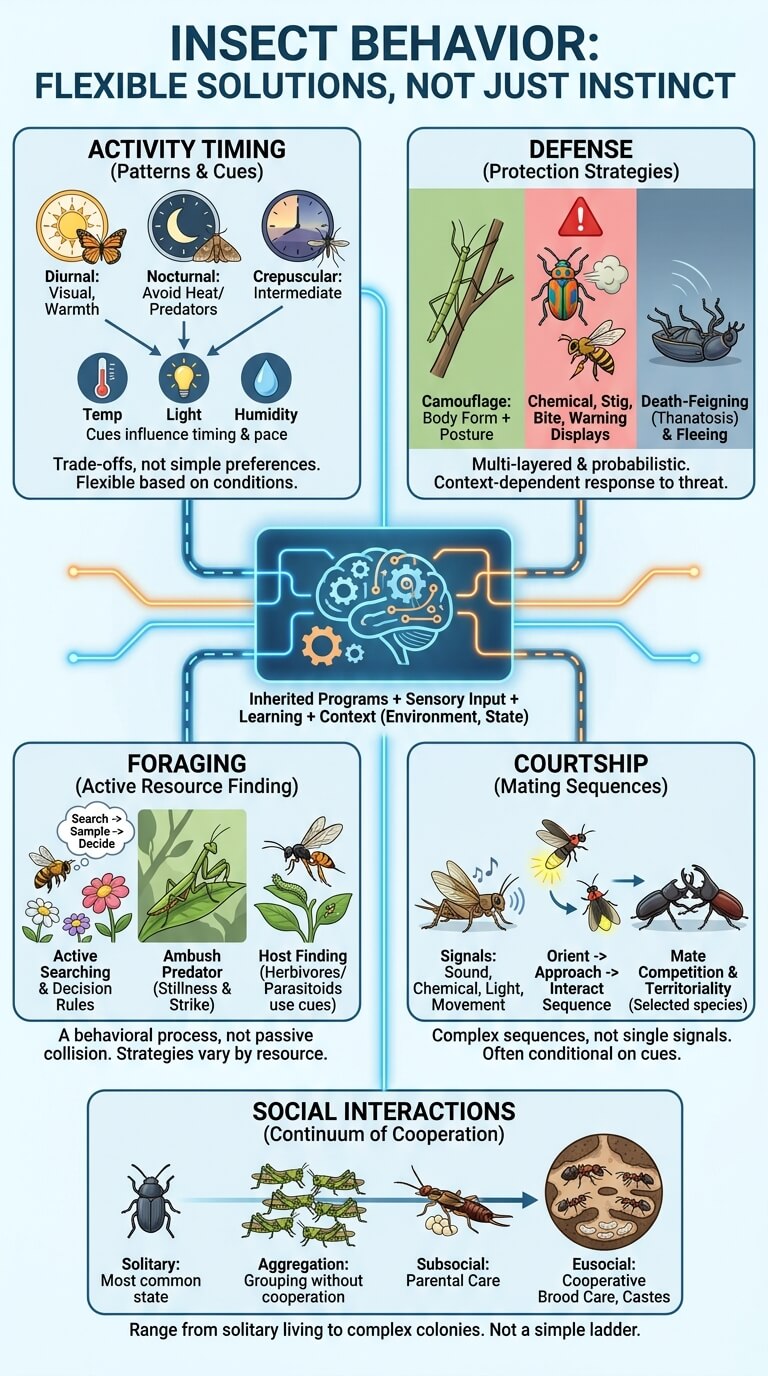
Insect behavior combines inherited programs, sensory input, learning, and environmental context
Many insect actions begin with evolved response systems that are well matched to recurring situations. A moth may orient toward a mate signal. A mantis may remain still while waiting for prey. A beetle may drop from vegetation when disturbed. These behaviors can look automatic because they occur quickly and reliably, but their expression often depends on context.
Temperature can determine whether a cold-bodied insect is active enough to forage. Hunger can change how strongly an animal responds to food cues. Light level can shift the balance between searching and hiding. Reproductive state can change which signals matter most. Insects therefore do not need a human-like planning system for their behavior to be conditional and adaptive.
Why instinct does not mean inflexible automation
“Instinctive” is useful when a behavior appears without being taught, but it should not be treated as a synonym for rigid. Even strongly inherited responses may have thresholds, competing cues, and opportunities for learning. A forager can stop following one cue when it no longer predicts a reward. A predator can improve at handling a difficult prey type. A pollinating insect can learn visual or odor associations that help it revisit profitable resources.
Research on insect cognition has documented multiple forms of learning and memory, including associative learning in flies, bees, and other insects. A Journal of Experimental Biology review of invertebrate learning and memory summarizes evidence that insects can show attention, concept learning, olfactory learning, and other forms of behavioral plasticity. Those results argue against describing insects as simple machines, while still leaving room for major differences among species and tasks.
Activity Timing
Diurnal, nocturnal, and crepuscular patterns
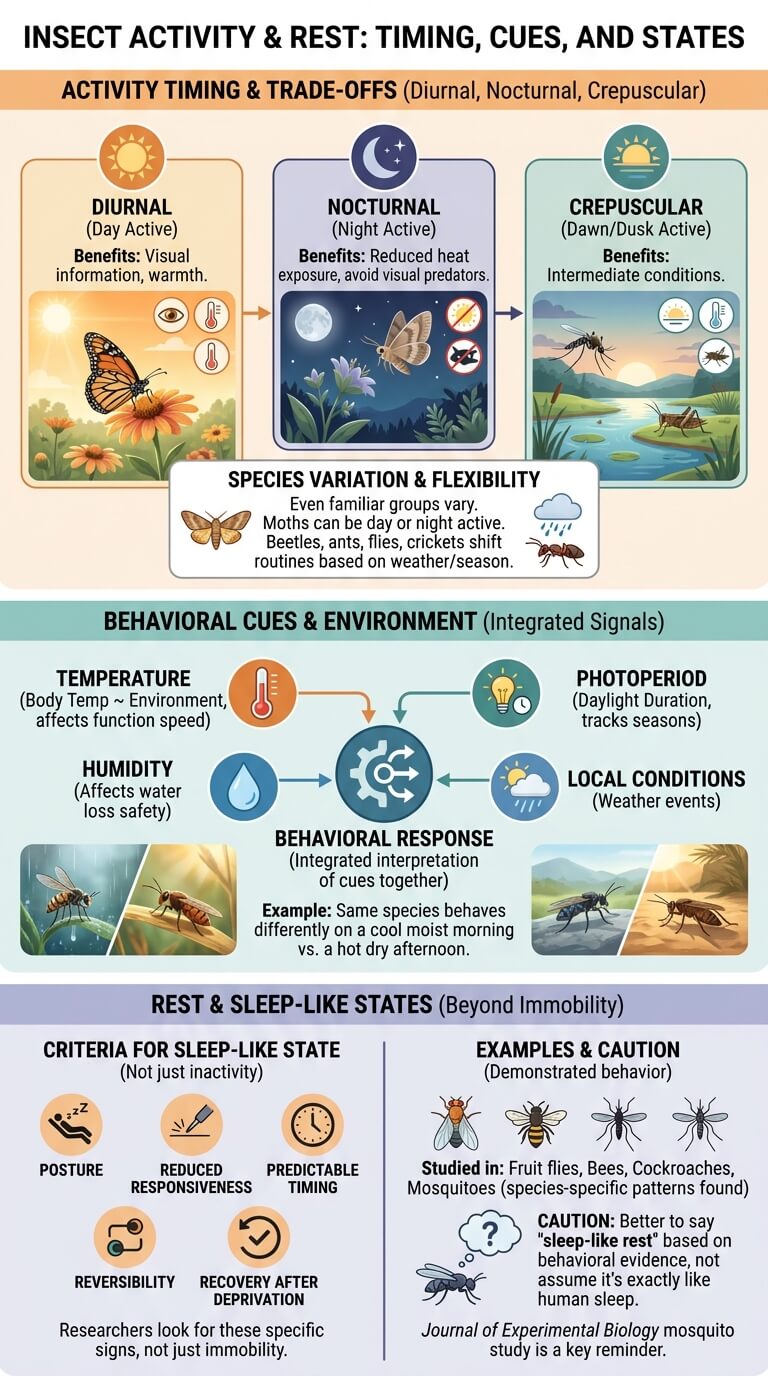
Some insects are most active by day, some by night, and others concentrate activity around dawn or dusk. These patterns reflect trade-offs rather than a simple preference for light or darkness. Day-active insects may benefit from visual information and warmth, while night-active insects may reduce exposure to heat or visually hunting predators. Dusk and dawn can offer intermediate conditions.
Even familiar groups contain variation. Many butterflies are strongly day-active, but numerous moths fly at night while others are active in daylight. Some mosquitoes seek hosts or mates at particular times, but activity schedules differ among species. Beetles, ants, flies, and crickets can also shift their daily routines with weather, season, or local conditions.
Temperature, light, humidity, and season as behavioral cues
Because insect body temperature is strongly influenced by the environment, temperature can change how fast muscles and nervous systems function. An insect that is inactive in cool conditions may become a rapid forager later the same day. Excessive heat can produce the opposite response, pushing activity toward cooler hours or shaded places.
Light and humidity matter too. Photoperiod, meaning the duration of daylight within a 24-hour cycle, can help insects track seasonal change. Humidity can affect water loss and therefore the safety of exposed activity. These cues are often interpreted together rather than one at a time, so the same species may behave differently in a cool moist morning than on a hot dry afternoon.
Rest and sleep-like states with species-specific caution
Periods of inactivity are not automatically sleep. Researchers usually look for additional signs such as a characteristic resting posture, reduced responsiveness, predictable timing, reversibility, and recovery after deprivation. These criteria have been used to describe sleep-like states in fruit flies, bees, cockroaches, mosquitoes, and several other insects.
A study of three mosquito species found behavioral and postural evidence consistent with sleep-like states and showed that rest patterns differed among species. The Journal of Experimental Biology mosquito sleep study is a useful reminder that insect rest should be demonstrated from behavior rather than assumed from immobility alone. It is safer to say that many studied insects show sleep-like rest than to claim that every insect sleeps exactly as humans do.
Foraging and Resource Finding
Searching, sampling, and decision rules
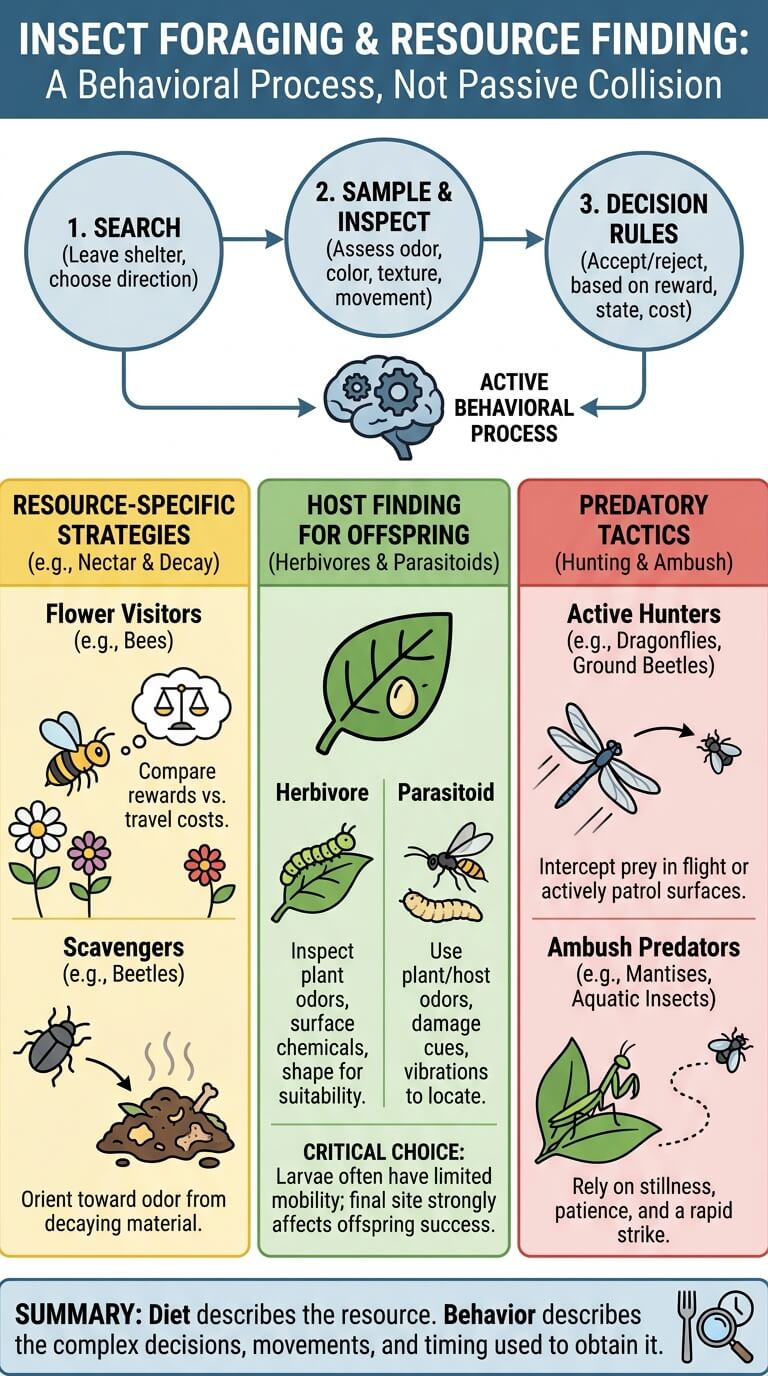
Foraging begins before an insect eats. It includes leaving shelter, choosing a direction, inspecting possible resources, accepting or rejecting them, and deciding whether to keep searching. These decisions can be influenced by odor, color, texture, temperature, movement, previous reward, and the insect’s own nutritional condition.
Different strategies suit different resources. A bee visiting flowers may compare recent rewards and travel costs. An ant may search locally until it encounters food, then change movement patterns as recruitment develops. A scavenging beetle may orient toward odor from decaying material. These examples differ in mechanism, but all show that finding food is a behavioral process rather than a passive collision with something edible.
Host finding in herbivores and parasitoids
Many herbivorous insects must locate not only “a plant” but a plant that their immature stages can use successfully. Females may inspect plant odors, surface chemicals, shape, or texture before laying eggs. The final choice can strongly affect offspring because young larvae often have much less mobility than adults.
Parasitoid insects face a similar search problem with animal hosts. A female parasitoid wasp may use plant odors, host odors, damage cues, vibrations, or traces left by a host. Once a possible host is found, further inspection can determine whether it is suitable for egg laying. That process is behaviorally complex even though the developing offspring later use the host as a food source.
Predatory searching and ambush behavior
Predatory insects range from active aerial hunters to patient ambush predators. Dragonflies intercept prey in flight. Ground beetles may search the surface for other invertebrates. Mantises often rely on stillness and a rapid strike once prey enters reach. Aquatic insects may patrol submerged vegetation or wait near likely prey routes.
These tactics show why “what insects eat” and “how insects find food” are different questions. Diet describes the resource. Behavior describes the decisions, movements, timing, and handling tactics used to obtain it.
Courtship and Mate Finding
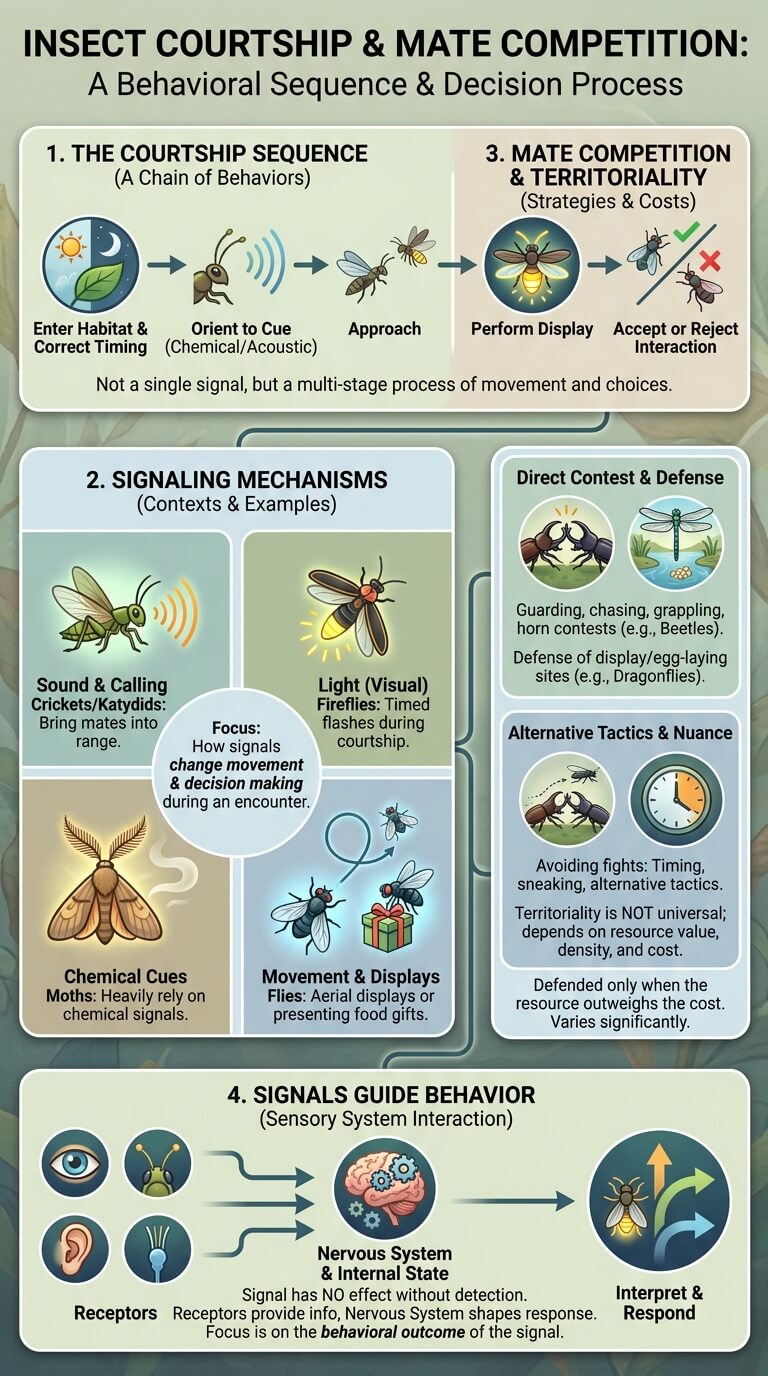
Movement, display, chemical cues, sound, and light as behavior contexts
Reproduction often requires a sequence of behaviors rather than a single attraction signal. An insect may first enter the right habitat, become active at the appropriate time, orient toward a chemical or acoustic cue, approach a potential mate, perform a display, and then accept or reject further interaction.
Crickets and katydids may use calling behavior to bring potential mates into range. Fireflies can use timed flashes during courtship. Many moths rely heavily on chemical signals. Some flies perform aerial displays or present food gifts. The signaling mechanisms differ, but from a behavioral perspective the important question is how an insect changes movement and decision making as an encounter unfolds.
Mate competition and territoriality in selected species
Competition for mates can produce guarding, chasing, grappling, horn-to-horn contests, or defense of a display site. Some dragonflies and damselflies defend areas around water where mating and egg laying occur. Certain beetles use enlarged horns or jaws in contests. Other species avoid direct fights and rely on timing, alternative mating tactics, or sneaking behavior.
Territorial behavior should not be generalized to insects as a whole. A defended patch only makes sense when a resource or mating opportunity is valuable enough to justify the cost. Many insects never defend territories, and even territorial species may behave differently when population density or resource abundance changes.
Signals guide behavior, but the mechanism belongs to the sensory system
Courtship shows how tightly behavior, senses, and communication interact. A signal has no behavioral effect unless a receiver can detect and interpret it. Chemical receptors, eyes, mechanoreceptors, or hearing organs provide information, while the nervous system and internal state shape the response. This article focuses on what the insect does with those signals rather than retelling the full chemistry, optics, or biomechanics of communication.
Defense Behaviors
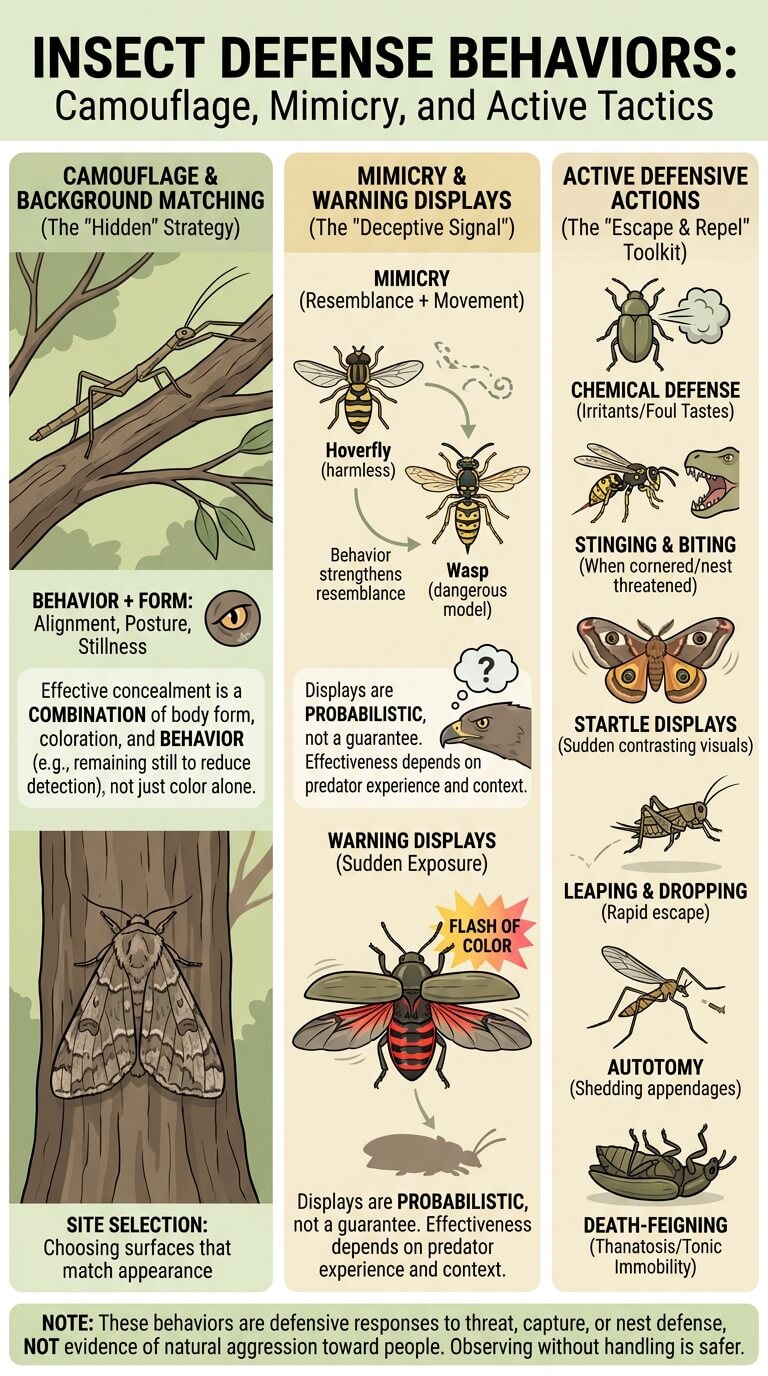
Camouflage and background matching
Camouflage is often discussed as a body-color trait, but behavior can make it more effective. A stick insect that aligns with a twig, a moth that settles on a matching bark surface, or a caterpillar that holds a characteristic posture is using behavior to improve concealment. Remaining still can also reduce visual detection by predators that respond strongly to movement.
Some insects choose resting sites that better match their appearance. Others change posture when disturbed. The protective effect therefore comes from the combination of body form, coloration, habitat, and behavior rather than from color alone.
Mimicry and warning displays
Mimicry can also involve behavior. An insect that resembles a dangerous or unpalatable model may strengthen the resemblance through the way it moves or displays its body. Harmless hoverflies, for example, may resemble bees or wasps in color and general appearance, while other insects expose bright hidden colors only when threatened.
Warning displays do not guarantee that a predator will retreat. They work within a broader interaction involving predator experience, hunger, viewing conditions, and the reliability of the signal. Defense is therefore probabilistic, not a magical shield.
Chemical defense, stinging, biting, startle displays, dropping, death-feigning, and autotomy
Insects use many defensive actions. Some release irritating or foul-tasting chemicals. Some sting or bite when restrained or when a nest is threatened. Others suddenly expose contrasting wings, kick, leap away, drop from a plant, or shed a trapped appendage in lineages where autotomy occurs.
Death-feigning, also called thanatosis or tonic immobility in some research contexts, is another anti-predator tactic. It is not merely a theatrical “decision to pretend.” In beetles, the duration and tendency to enter immobility can vary among individuals and has been studied as an adaptive defensive response. Research on ground beetles and red flour beetles summarized in Scientific Reports work on beetle threat responses shows that fleeing and immobility can be alternative responses to danger.
Defensive behavior should not be treated as evidence that an insect is naturally aggressive toward people. Many stings, bites, sprays, and startle displays occur only when an insect is captured, crushed, cornered, or defending a nest. Observing without handling is the safer way to watch these behaviors.
Solitary, Gregarious, and Social Behavior
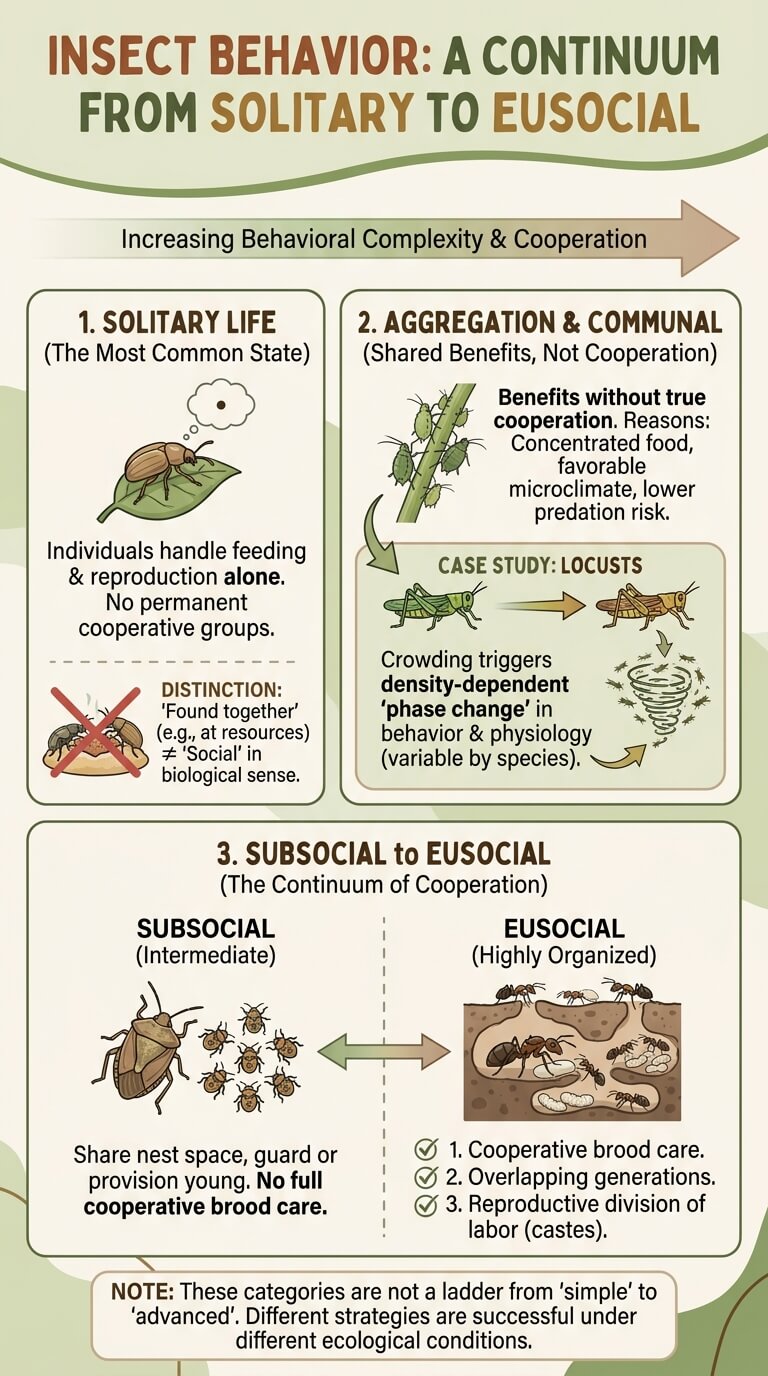
Solitary life is common among insects
Highly organized ant, bee, wasp, and termite colonies attract attention, but they are not the default condition for insects. Many insects spend most of their lives without permanent cooperative groups. They may still encounter others to mate, feed at the same resource, or gather at a seasonal site, yet each individual largely handles feeding and reproduction on its own.
This distinction matters because “found together” does not necessarily mean “social” in the biological sense. Hundreds of insects can crowd onto a food source without forming a cooperative society.
Aggregation and communal living
Aggregation can provide benefits even without true cooperation. Groups may form where food is concentrated, where microclimate is favorable, or where predators are less effective against many individuals. Aggregation can also arise because insects respond to the same environmental cue rather than to one another.
Some species show dramatic density-dependent changes. Locusts are a classic case: crowding can alter attraction to other locusts and produce broader changes in movement and physiology. Experiments with different locust species show that the timing and details of behavioral phase change are not identical across all locusts, a caution highlighted by Journal of Experimental Biology research on locust behavioral phase change.
Subsocial and eusocial behavior form part of a wider continuum
Between solitary living and highly integrated colonies are many intermediate arrangements. Some insects share nesting space without cooperative brood care. Others remain with offspring for part of development. Subsocial species may guard or provision young. Eusocial systems add cooperative brood care, overlapping generations, and reproductive division of labor in forms seen most famously in ants, termites, and some bees and wasps.
These categories help describe social organization, but they should not be turned into a ladder from “simple” to “advanced.” Different strategies can be successful under different ecological conditions. Detailed caste systems and colony organization require their own treatment because social insect societies vary greatly.
Parental and Brood-Care Behavior
Egg guarding and nest preparation
Parental care is less obvious in insects than in birds or mammals, but it occurs in many forms. Some females choose protected egg sites and leave. Others build nests, clean egg masses, guard offspring, or remain nearby through early development. Earwigs are a familiar example of maternal egg guarding and grooming.
Such behavior can reduce risks from predators, fungi, dehydration, or unsuitable microclimates, depending on the species. An Entomology Today overview of insect maternal care describes examples including egg guarding and nest attendance, illustrating how diverse parental behavior can be outside the best-known social insects.
Food provisioning in selected insects
Some insects prepare food for offspring before or after eggs are laid. Dung beetles can construct brood balls that provide larval food. Solitary hunting wasps may place immobilized prey in a nest cell. Certain bees provision cells with pollen and nectar. Burying beetles can prepare vertebrate carrion and feed larvae in unusually direct forms of care.
Provisioning links behavior to reproduction because the adult’s choices determine the food and microhabitat available to developing young. Yet it does not automatically make a species eusocial. A solitary female can perform elaborate parental care without living in a permanent colony.
Cooperative brood care can be part of social evolution
When multiple adults contribute to brood care, the behavior begins to overlap with the social systems seen in colonies. Cooperative care can include feeding larvae, guarding nests, cleaning brood, regulating nest conditions, or maintaining structures. The details differ greatly among ants, bees, wasps, and termites, and not every group uses the same castes or reproductive system.
Migration, Dispersal, and Seasonal Behavior
Long-distance migration in selected insects
Some insects make directed seasonal movements over large distances. Monarch butterflies are a famous North American example, but migration also occurs in dragonflies, locusts, moths, and other insects. These journeys require more than sustained flight. Migrants must start at an appropriate season, maintain a travel direction, respond to weather, and eventually stop in suitable habitat.
Insect orientation can combine inherited programs with multiple sensory cues. A Journal of Experimental Biology review of insect orientation discusses examples ranging from dung beetle straight-line orientation to monarch migration and homing in ants and bees. The variety of systems makes it risky to assume that all migratory insects navigate in the same way.
Local dispersal and colonization
Most movement between habitats is much shorter than continent-scale migration. Newly emerged adults may leave crowded or depleted sites, wind can carry small insects into new areas, and winged reproductive forms can establish new populations. Even walking insects can spread through connected habitat over time.
Dispersal decisions involve trade-offs. Staying may preserve access to known food or shelter, while leaving may reduce competition or open new breeding opportunities. Winged and wing-reduced forms within related insects often reflect different balances between reproduction, movement, and habitat stability.
Diapause is a seasonal developmental strategy, not simple sleep
Diapause is a programmed state of suppressed development and altered physiology that helps many insects survive predictable unfavorable seasons. It can occur in eggs, larvae, pupae, or adults depending on species. Day length is an important cue in many temperate insects, often interacting with temperature and other conditions.
Calling diapause “hibernation” or “sleep” can hide important differences. It involves endocrine and metabolic changes as well as reduced activity. For example, research summarized in an Entomology Today review of mosquito diapause timing shows that seasonal day length can help trigger diapause in some mosquito populations, while the exact response varies by species and geography.
Learning, Memory, and Behavioral Flexibility
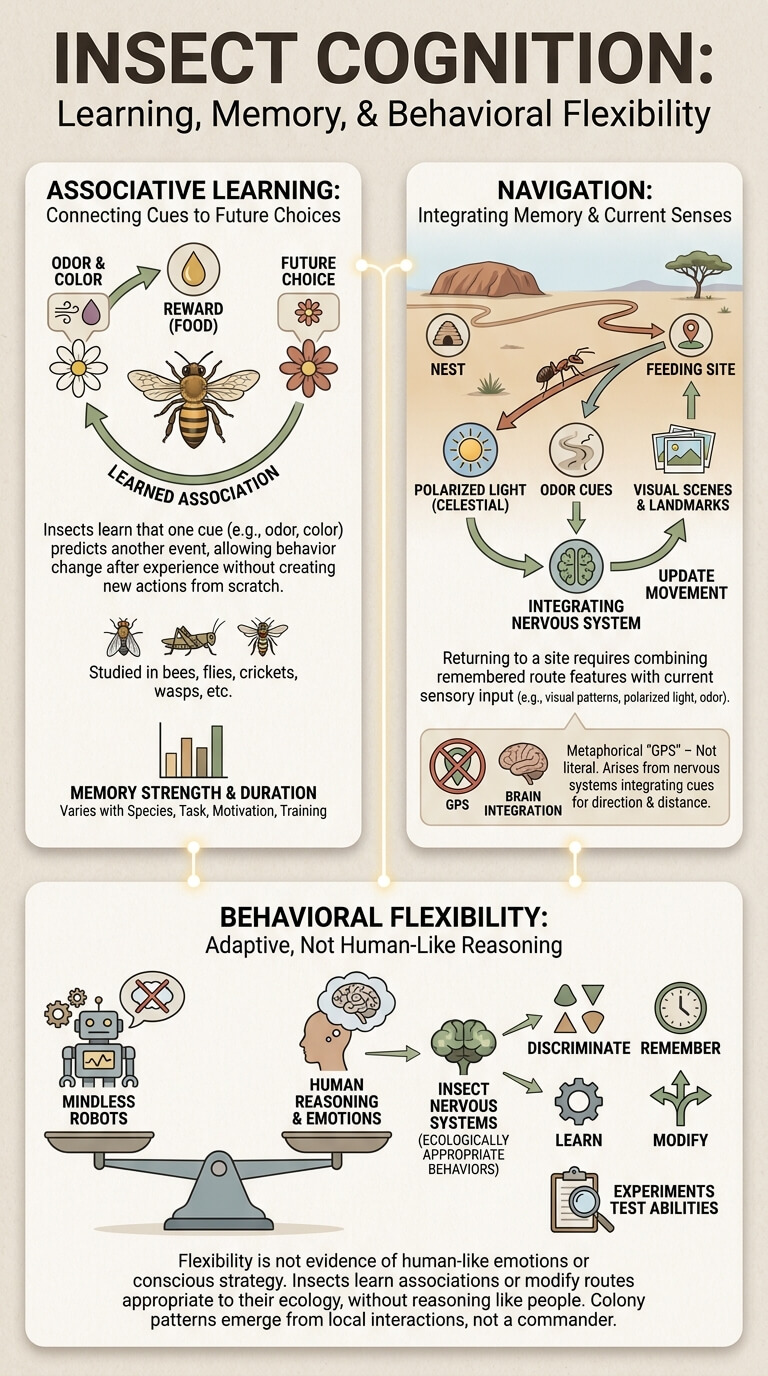
Associative learning changes future choices
Associative learning occurs when an animal learns that one cue predicts another event. In insects, odors, colors, shapes, locations, or other signals can become linked with food, danger, or punishment. This lets behavior change after experience without requiring the insect to invent an entirely new action from scratch.
Bees are especially well studied, but learning is not restricted to social insects. Fruit flies, crickets, parasitoid wasps, and other insects have been used in experiments on memory and decision making. The strength and duration of memory vary with species, task, motivation, and training conditions.
Navigation can combine memory with current sensory information
Returning to a nest or profitable feeding site may require remembering landmarks, directions, odors, or route features while also updating movement from current sensory input. Ants and bees can use learned visual scenes. Dung beetles can maintain a travel bearing. Migrants can use celestial and environmental information over much larger scales.
Calling this “GPS” can be a useful metaphor, but it is not literal. Insect navigation arises from nervous systems integrating cues such as visual patterns, polarized light, odor, movement, and internal estimates of direction or distance. Different species solve different navigation problems.
Behavioral flexibility is not the same as human-like reasoning
Evidence of learning should not be inflated into unsupported claims about human emotions, language, or conscious strategy. An insect can learn an association or change a route without needing to reason about the world in the same way a person does. Likewise, colony-level patterns can emerge from many local interactions without any individual acting as a commander.
The scientifically useful position is neither “insects are mindless robots” nor “insects think just like us.” Their nervous systems support behaviors appropriate to their ecology, and experiments can test what they can discriminate, remember, learn, or modify.
Common Behavior Myths
Are insects purely instinct-driven?
No. Inherited behavior is extremely important, but many insects also learn and adjust behavior with experience. The degree of flexibility differs among species and tasks. A strong innate tendency can coexist with learning rather than being replaced by it.
Do social insects have a central commander?
Usually not. A queen is primarily a reproductive individual, not a ruler issuing conscious instructions. Workers respond to local cues, chemical signals, task demands, nest conditions, and interactions with nestmates. Complex colony behavior can emerge from these distributed processes.
Are defensive insects automatically aggressive toward humans?
No. A defensive response is tied to context. An insect may sting, bite, spray, flee, freeze, or display when threatened, while ignoring a person who observes from a distance. Risk also varies enormously among species. Avoiding handling and nest disturbance reduces unnecessary conflict.
How Senses, Signals, Food, and Social Life Shape Behavior
Senses provide the information that behavior acts on
Behavior begins with information. Antennae can detect chemicals, air movement, touch, humidity, and other cues depending on the insect. Eyes provide visual information. Mechanoreceptors detect contact and vibration. The behavior is the resulting action: approach, avoid, search, orient, freeze, strike, court, or continue moving.
Communication changes what other insects do
A courtship call, pheromone trail, warning vibration, or flash becomes biologically meaningful when another insect changes behavior in response. Communication therefore overlaps with behavior but is not the same thing. One topic explains the signals; the other explains the decisions and actions around those signals.
Food categories and foraging decisions answer different questions
A leaf-eating caterpillar, predatory dragonfly, nectar-feeding bee, and dung beetle use very different resources. Their diets define what they consume. Their behavior explains how they locate, evaluate, compete for, capture, or return to those resources.
Colony organization adds another layer to individual behavior
In ants, termites, and some bees and wasps, individual behavior occurs inside a colony where task allocation, reproductive roles, brood care, and nest maintenance interact. Those societies deserve separate attention because not every social insect shares the same castes, queen system, or communication rules.
FAQ
Can insects learn?
Yes. Experimental studies show learning in many insects, including bees, flies, crickets, ants, and parasitoid wasps. They can form associations between cues and outcomes, learn routes or landmarks, and modify choices after experience. The abilities demonstrated depend on the species and the experimental task, so broad claims about “insect intelligence” should be avoided.
Do insects sleep?
Many studied insects show sleep-like states characterized by prolonged rest, reduced responsiveness, characteristic timing or posture, and sometimes rebound after deprivation. Fruit flies, bees, cockroaches, and mosquitoes are among the groups studied. It is more precise to describe evidence for sleep-like rest in particular species than to assume every insect sleeps exactly as a human does.
Why do some insects play dead?
Immobility can reduce the chance that a predator detects, handles, or continues attacking an insect. In some beetles and other insects, death-feigning has been studied as an anti-predator response. The duration and trigger can vary, and not every motionless insect is performing the same behavior.
Why are some insects active at night?
Night activity can reduce heat stress, change predator exposure, and match the timing of food or mates. Nocturnal insects may also have sensory systems suited to low-light or chemical and acoustic information. The reason differs by species, so “avoiding daylight” is not a complete explanation.
Final Thoughts
Insect behavior is best understood as a set of solutions to everyday biological problems. Insects search, sample, choose, court, hide, defend themselves, care for young, disperse, pause development, and learn from experience in ways that reflect their bodies and environments. Some behaviors are strongly inherited, others are flexible, and many combine both. Seeing insects this way replaces two misleading stereotypes at once: they are neither tiny human minds nor unthinking machines. They are animals with diverse sensory systems and behavioral repertoires shaped by the challenges of surviving and reproducing.

Ethan Walker is the founder and research editor of Animal Fact Central. He creates and reviews educational animal facts content using trusted wildlife, pet care, and science-based sources. His work focuses on making animal behavior, adaptations, habitats, and species facts clear, accurate, and engaging for everyday readers.
Read More Details About Ethan Walker: https://animalfactcentral.com/ethan-walker/