
Where do insects live? Nearly every kind of land habitat and a huge range of freshwater environments support insects, from tropical forest canopies and desert soil to mountain tundra, ponds, streams, caves, farms, city parks, and the spaces inside plants. A much smaller number live in salt marshes, intertidal zones, or other marine-associated settings, and only a few specialized sea skaters spend their lives on the open ocean surface.
That range is possible because insects do not use one universal survival strategy. Different species conserve water, burrow, enter diapause, tolerate cold, hide in protected microhabitats, breathe underwater, time their emergence to brief favorable seasons, or move between habitats as they develop. The Smithsonian notes that insects share a basic body plan but have diversified into animals with very different ways of moving, feeding, and living in different environments.
Quick Answer
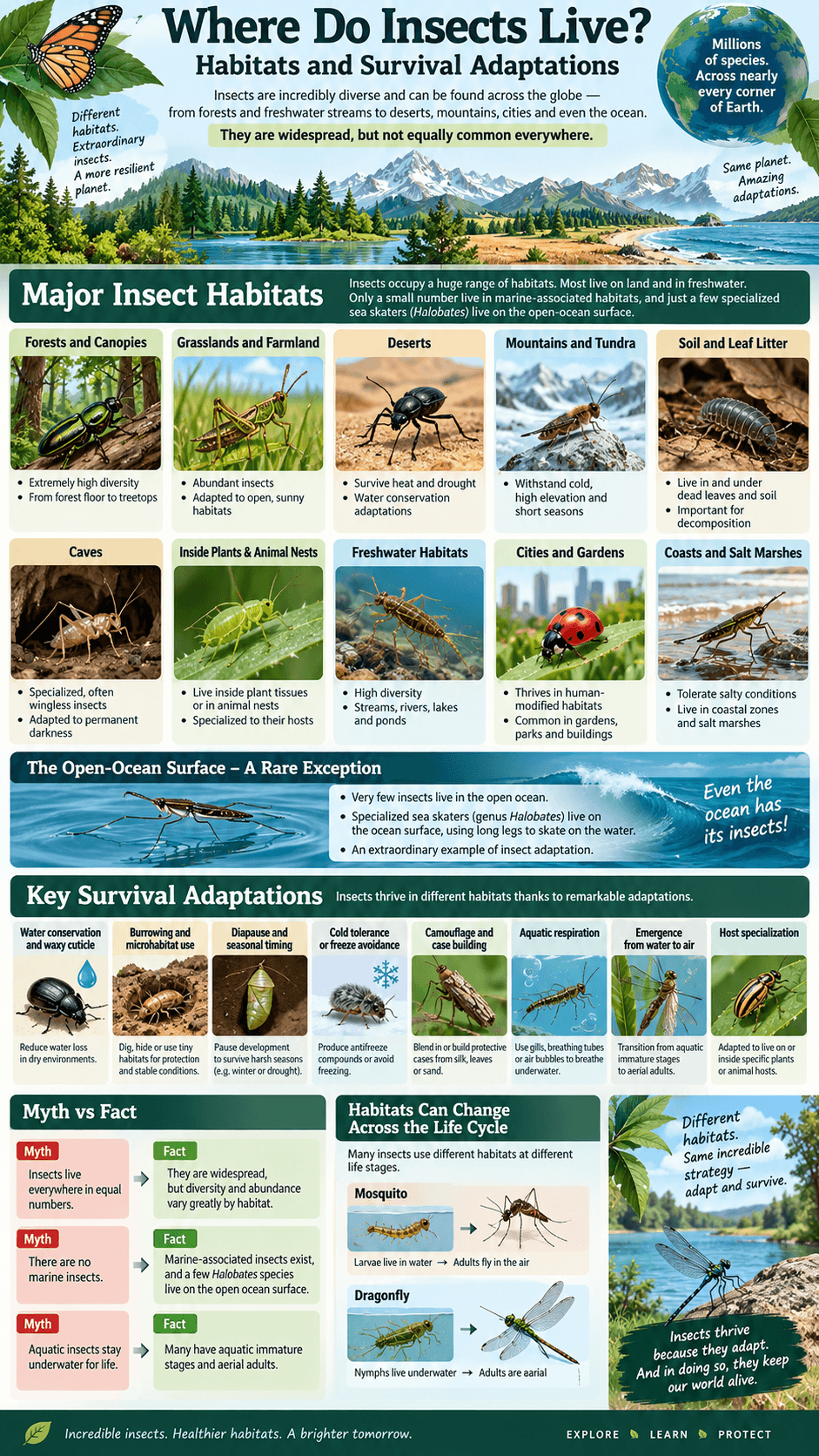
Insects Are Extremely Widespread but Not Equally Common Everywhere
Insects occur from wet tropical forests to dry deserts and from lowland ponds to cold mountain landscapes. They may live in the open, beneath bark, inside stems, under stones, in soil, among leaf litter, in animal nests, or within another organism’s tissues. Even a small patch of habitat can contain many microhabitats, meaning tiny areas that differ in moisture, temperature, shelter, food, or exposure.
Widespread does not mean uniform. A humid forest canopy supports a very different insect community from an alpine meadow, salt marsh, temporary desert pool, or urban parking lot. Some species tolerate broad conditions, while specialists may depend on one plant, one stream type, a particular soil layer, dead wood of a certain condition, or a brief seasonal window.
Why Land and Freshwater Dominate Insect Diversity
The great majority of insects are associated with terrestrial or freshwater environments. Land offers enormous structural variety through vegetation, soil, dead wood, fungi, animal nests, flowers, roots, and decaying material. Freshwater adds another set of opportunities in streams, ponds, lakes, wetlands, springs, and temporary pools.
The sea is different. Insects occur around coasts and in some salty habitats, but they are strikingly scarce in fully marine environments compared with crustaceans and many other invertebrates. That contrast is one of the most unusual large-scale patterns in insect habitat use.
Forests and Tree Canopies
Tropical Forests
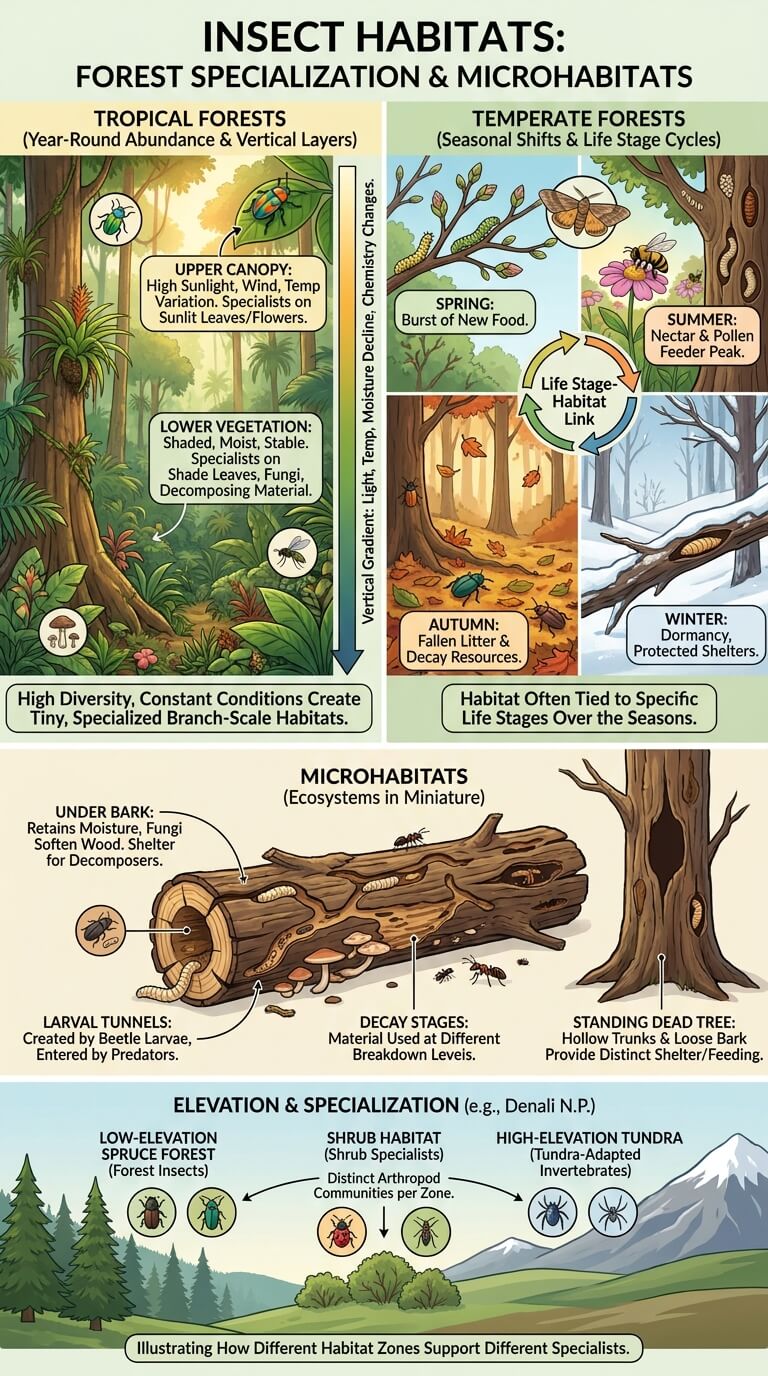
Tropical forests contain some of the richest insect communities known. Warm conditions, abundant plant growth, vertical layers, high plant diversity, dead wood, fungi, streams, epiphytes, and constantly changing patches create many ecological opportunities. Insects can specialize on particular leaves, flowers, fruits, tree bark, wood, fungi, prey, or decomposing material.
The canopy is not simply the forest floor lifted into the air. Sunlight, wind, temperature, leaf age, moisture, predators, and plant chemistry can differ sharply between the upper crown and shaded lower vegetation. Tiny insects that spend most of their lives on a particular host plant may experience a habitat measured in branches rather than miles.
Temperate Forests
Temperate forests also support insects in many layers, but strong seasons reshape habitat use. Spring leaf growth can produce a burst of food for caterpillars and other herbivores. Summer flowers support nectar and pollen feeders. Autumn creates fallen leaves and dead plant material, while winter pushes many insects into dormant stages, protected shelters, or cold-resistant states.
Many forest insects do not spend the year in one visible place. An adult may fly through the canopy while its eggs remain on bark, its larvae tunnel under bark or through wood, and its pupae develop in a protected cavity. Habitat is therefore often tied to life stage as well as species.
Dead Wood, Bark, Leaves, and Canopy Microhabitats
A fallen log is an ecosystem in miniature. Cracks beneath bark retain moisture, fungi soften wood, beetle larvae create tunnels, predators enter those tunnels, and decomposer-associated insects use material at different stages of decay. Standing dead trees, hollow trunks, moss mats, leaf axils, and loose bark can all create distinct shelter and feeding conditions.
Forest specialization is especially clear when landscapes change with elevation. In Denali National Park, entomologists found distinct arthropod communities in low-elevation spruce forest, shrub habitats, and high-elevation tundra, illustrating how different habitat zones support different invertebrate specialists.
Grasslands, Savannas, and Farmland
Open-Habitat Herbivores and Predators
Grasslands and savannas expose insects to sun, wind, fire, grazing, and seasonal changes in plant growth. Grasshoppers, leafhoppers, plant bugs, butterflies, beetles, bees, ants, predatory flies, and many other groups use these open habitats. Some feed directly on grasses or flowering plants. Others hunt the insects attracted to that vegetation.
Open habitat does not mean every insect lives above the vegetation. Many retreat into dense grass bases, soil cracks, burrows, plant crowns, or the shaded sides of stems during the hottest or driest part of the day. The usable habitat can change by the hour as sun exposure and humidity shift.
Soil, Roots, Stems, and Crop-Associated Habitats
Farmland adds cultivated plants, field margins, irrigation channels, hedgerows, stored plant material, and disturbed soil to the landscape. Some insects are adapted to crops, while others persist mainly in uncultivated edges or nearby natural vegetation. Roots can support root-feeding larvae, stems may hold borers, flowers attract visitors, and soil shelters insects that emerge only during particular seasons.
Calling an insect “a crop insect” can hide this complexity. A species may spend an immature stage underground and its adult stage above the crop, or it may use wild host plants outside fields for part of the year. Understanding habitat means following the complete life cycle rather than looking only at where the adult is noticed.
Seasonal Exposure and Drought
Grasslands and farms can become very dry after plant growth slows. Insects may avoid those conditions by using deeper soil, becoming inactive, moving to moister sites, shifting activity to cooler hours, or entering a resistant egg, larval, pupal, or adult stage. Which strategy occurs depends on the species.
Drought tolerance is not unlimited. Some insects are closely tied to moist grassland, wetlands, or fresh plant growth and disappear when those resources vanish. Others are adapted to dry open country and function best under conditions that would be stressful for forest or stream insects.
Deserts, Mountains, and Tundra
Heat Avoidance and Water Conservation
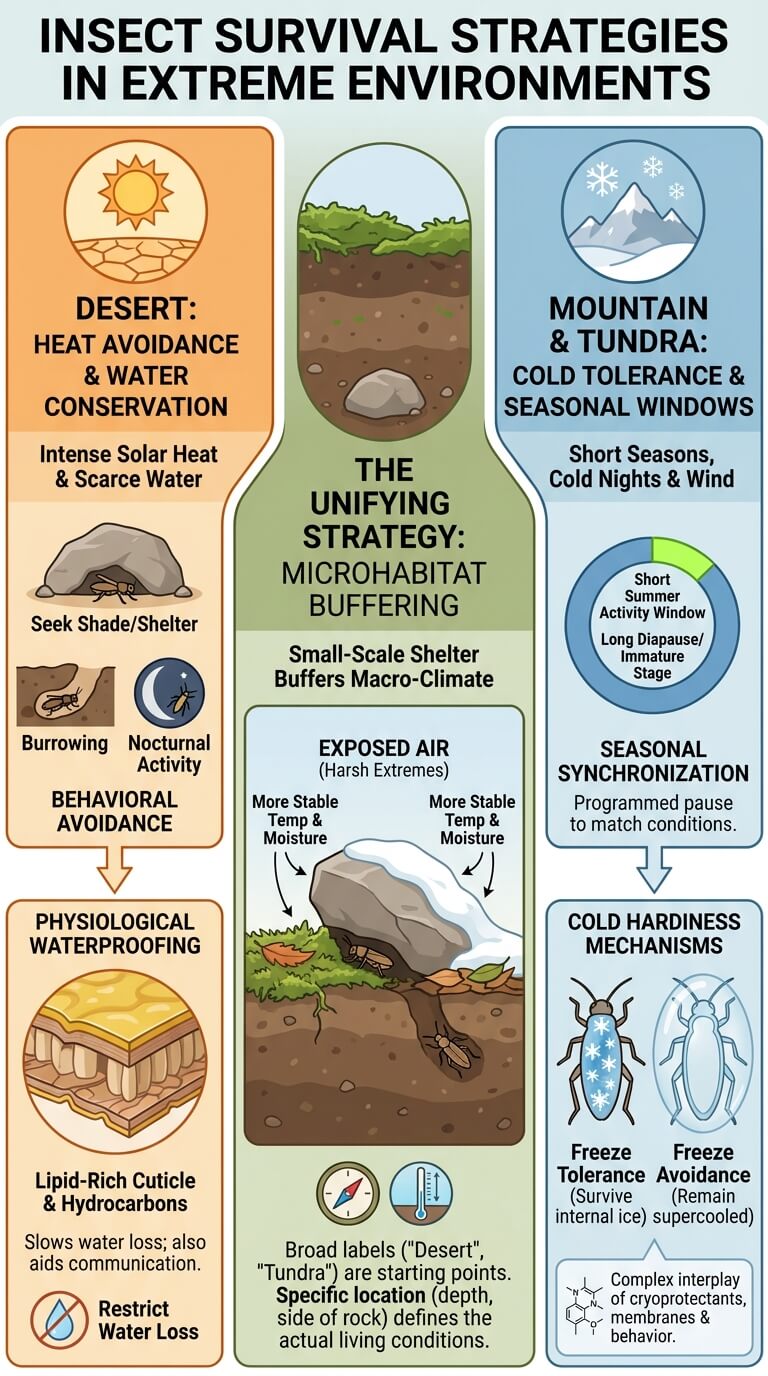
Desert insects face intense solar heating, scarce free water, and large temperature swings. Many survive partly by avoiding the harshest conditions rather than tolerating them continuously. They may be active at night, remain under stones, enter burrows, shelter inside plants, or use shaded surfaces where temperatures are lower.
Water balance is also critical. The outer surface of an insect includes lipid-rich components that slow water loss. A review in the Annual Review of Entomology explains that cuticular hydrocarbons help restrict water loss while also serving communication functions in many insects. This waterproofing layer is only one part of water management, alongside behavior, physiology, food choice, and microhabitat use.
Cold Tolerance, Freeze Avoidance, and Short Seasonal Windows
Mountain and tundra insects face short growing seasons, cold nights, wind, and long periods when food may be unavailable. Some are active only during a brief summer window. Others spend most of the year in an immature stage or in diapause, a programmed developmental pause that helps synchronize the life cycle with predictable seasonal conditions.
Cold survival varies greatly. Some insects tolerate freezing of part of their body fluids, while others survive by remaining supercooled and avoiding internal ice formation. These are not labels that can be applied casually to an entire order. A review of insect overwintering and cold hardiness emphasizes that diapause, acclimation, cryoprotective compounds, membrane changes, and behavior interact differently among species.
Burrowing and Microhabitat Use
Small-scale shelter can matter as much as broad climate. Soil, moss, leaf litter, snow cover, rock crevices, and plant bases can buffer temperature and moisture. An insect a few centimeters below ground may experience conditions very different from the exposed air above it.
This helps explain why broad habitat labels such as “desert” or “tundra” are only a starting point. To understand where an insect actually lives, it is often necessary to ask which side of a rock, which soil depth, which plant structure, or which season it uses.
Soil, Leaf Litter, Caves, and Hidden Microhabitats
Soil and Litter Communities
Soil and leaf litter are among the most important hidden insect habitats. Larvae of many beetles and flies develop below the surface. Ant colonies occupy underground chambers. Springtails are common in soil and litter too, although modern classifications generally place springtails in Hexapoda outside Insecta, so they should not be used as ordinary insect examples.
Leaf litter changes continuously as fungi, microbes, and animals break it down. Moist lower layers may shelter small insects during dry weather. Predators hunt among fragments, detritus feeders use decaying material, and larvae exploit fungi, roots, seeds, or other invertebrates.
Caves and Low-Light Habitats
Caves can support insects that live near entrances, use organic material washed in from outside, feed on fungi, or depend on guano and other animal-derived resources. Some lineages have populations adapted to darkness, stable temperatures, and limited food.
Not every insect found in a cave is a true cave specialist. Some are temporary visitors or use caves only for shelter. Strict cave-adapted insects may show reduced pigmentation, reduced eyes, elongated sensory structures, or other traits, but those features evolved independently in different lineages and are not universal.
Inside Plants, Animal Nests, and Host-Associated Environments
For some insects, the most important habitat is another organism. Leaf miners live between layers of leaf tissue. Gall-forming insects alter plant growth and develop inside the resulting structure. Wood borers tunnel through stems or trunks. Other insects live in bird or mammal nests, where temperature, food, and shelter differ from the surrounding landscape.
Parasitoid larvae can spend a major part of development on or inside an arthropod host. That makes “habitat” more than a geographic place. It can also be a biological environment that supplies food, protection, or the conditions needed for development.
Freshwater Habitats
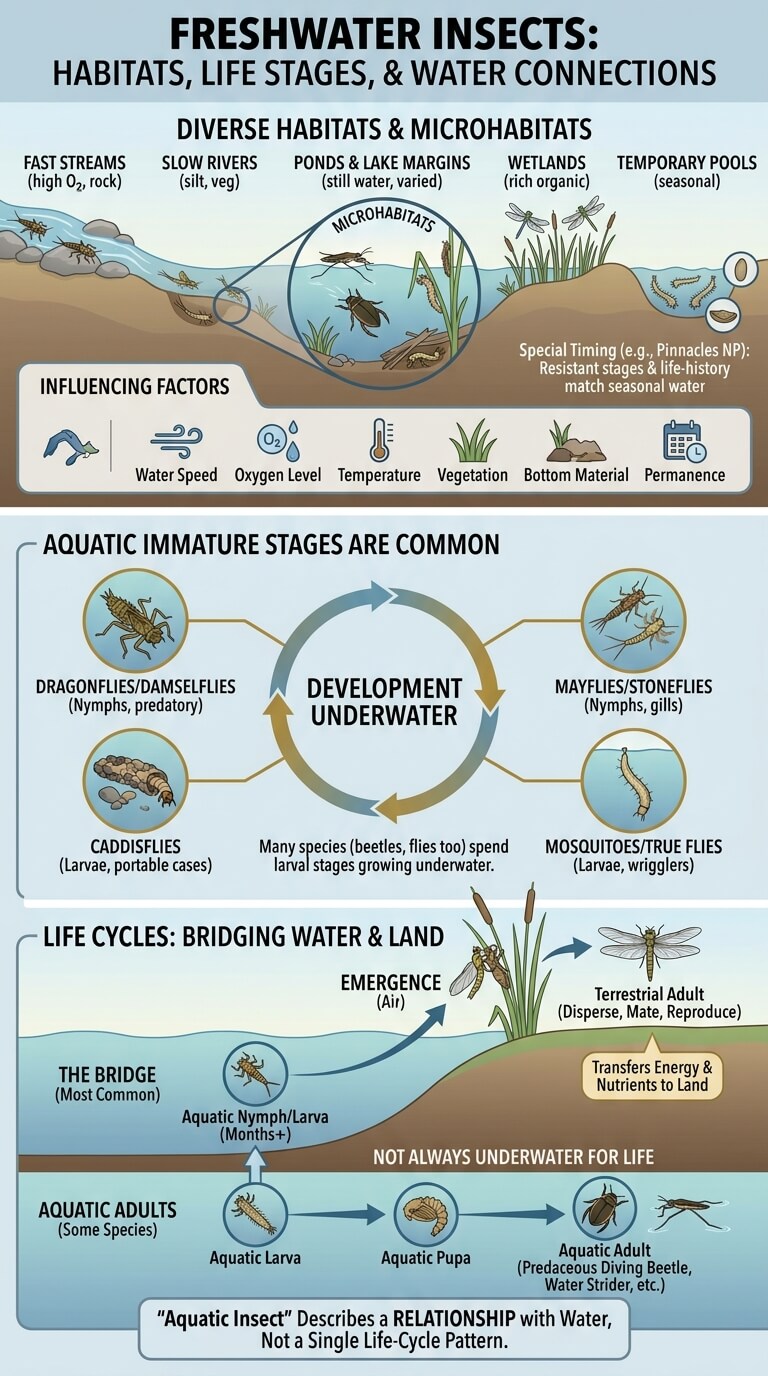
Streams, Rivers, Ponds, Lakes, Wetlands, and Temporary Pools
Freshwater insects occupy fast-flowing mountain streams, slow rivers, pond edges, lake margins, wetlands, springs, and pools that disappear seasonally. Water speed, oxygen, temperature, vegetation, bottom material, and permanence all influence which species can live there.
Even one pond contains several microhabitats. Insects may skate on the surface, cling beneath it, swim through open water, crawl through plants, burrow in sediment, or hide among stones and debris. Some carry atmospheric air underwater, while others in immature stages use structures that obtain dissolved oxygen from the water.
Aquatic Immature Stages Are Extremely Common
Dragonflies and damselflies develop as aquatic nymphs before emerging as flying adults. Mayflies and stoneflies also have aquatic immature stages. Caddisfly larvae are famous for building portable cases or fixed retreats in many freshwater environments. Mosquito larvae develop in water, and numerous beetles and true flies include aquatic species.
Temporary waters require special timing. At Pinnacles National Park, research on insects in intermittent streams shows how some species persist where channels dry for much of the year, using life-history timing and resistant stages to match seasonally available stream habitat.
Aquatic Insect Does Not Always Mean Underwater for Life
Many insects bridge water and land. An immature stage may feed and grow underwater for months or longer, then the adult emerges into the air to disperse, mate, and reproduce. This movement transfers energy and nutrients between aquatic and terrestrial food webs.
Other insects are aquatic as adults too. Predaceous diving beetles, water scavenger beetles, backswimmers, water boatmen, and water striders are familiar examples. The term “aquatic insect” therefore describes a relationship with water, not one single life-cycle pattern.
Cities and Human-Modified Habitats
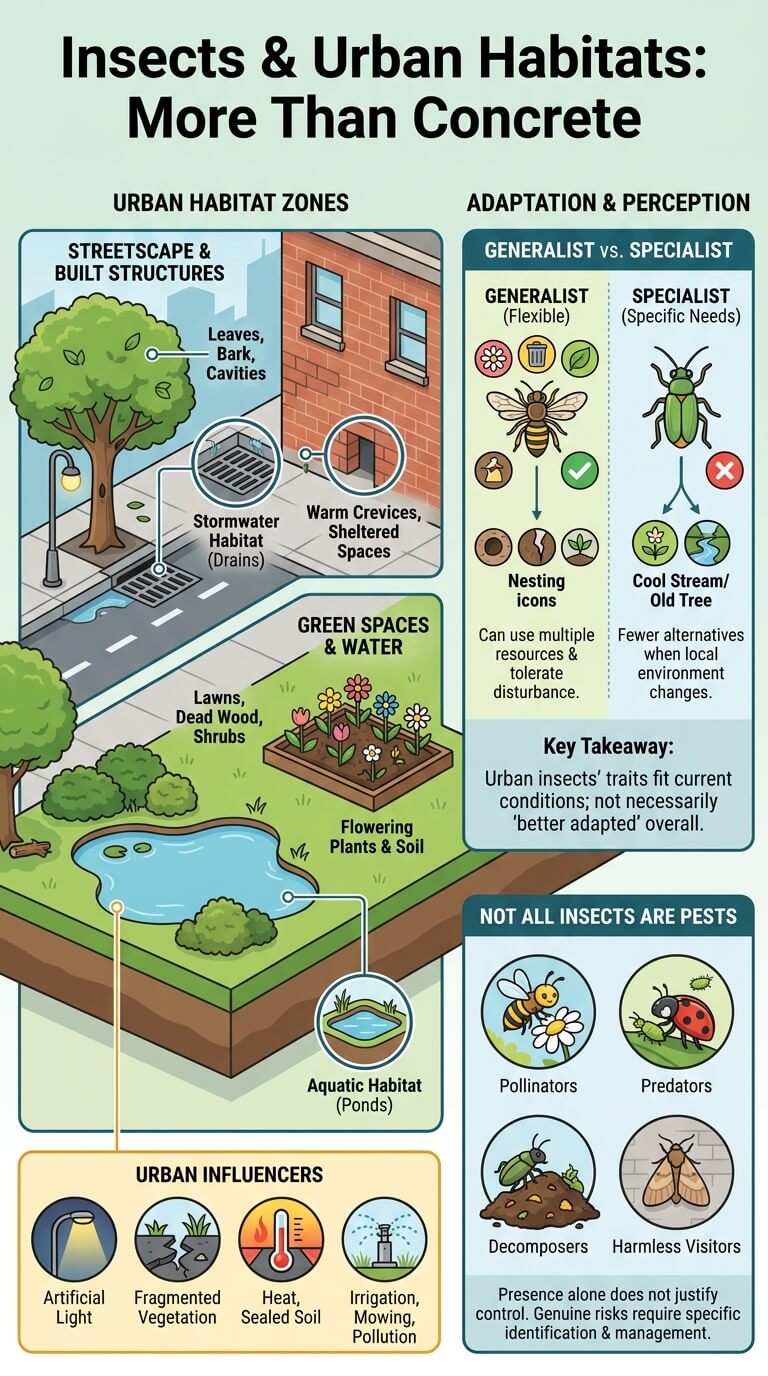
Buildings, Parks, Gardens, Street Trees, and Stormwater Habitats
Cities contain more insect habitat than concrete surfaces suggest. Street trees provide leaves, bark, flowers, and cavities. Gardens add flowering plants and soil. Parks contain lawns, ponds, dead wood, and shrubs. Storm drains and retention ponds can create temporary or permanent aquatic habitat. Buildings offer warm crevices and sheltered spaces to species able to use them.
Artificial light, fragmented vegetation, heat, irrigation, mowing, sealed soil, pollution, and introduced plants can all change which insects are present. Some species use cities readily, while others disappear when their required microhabitats are lost.
Generalists Versus Specialists
Generalists can often use several foods or nesting sites and may tolerate disturbance better than specialists. A specialist tied to one host plant, cool stream, old tree cavity, or narrow moisture range has fewer alternatives when the local environment changes.
This does not mean every common urban insect is biologically “better adapted” in a general sense. It means its particular traits fit the conditions created there. The same species may perform poorly in a habitat with different temperature, moisture, food, predators, or competitors.
Urban Insects Are Not Automatically a Pest-Control Problem
Many insects seen near homes are harmless visitors, pollinators, predators, decomposer-associated species, or animals using vegetation around buildings. Their presence alone does not justify pesticide use or nest disturbance.
When an insect creates a genuine structural, health, or stinging risk, identification and management require a different kind of guidance. A habitat overview is more useful when it explains why insects appear in cities without turning every observation into a control problem.
Coasts and the Open-Ocean Exception
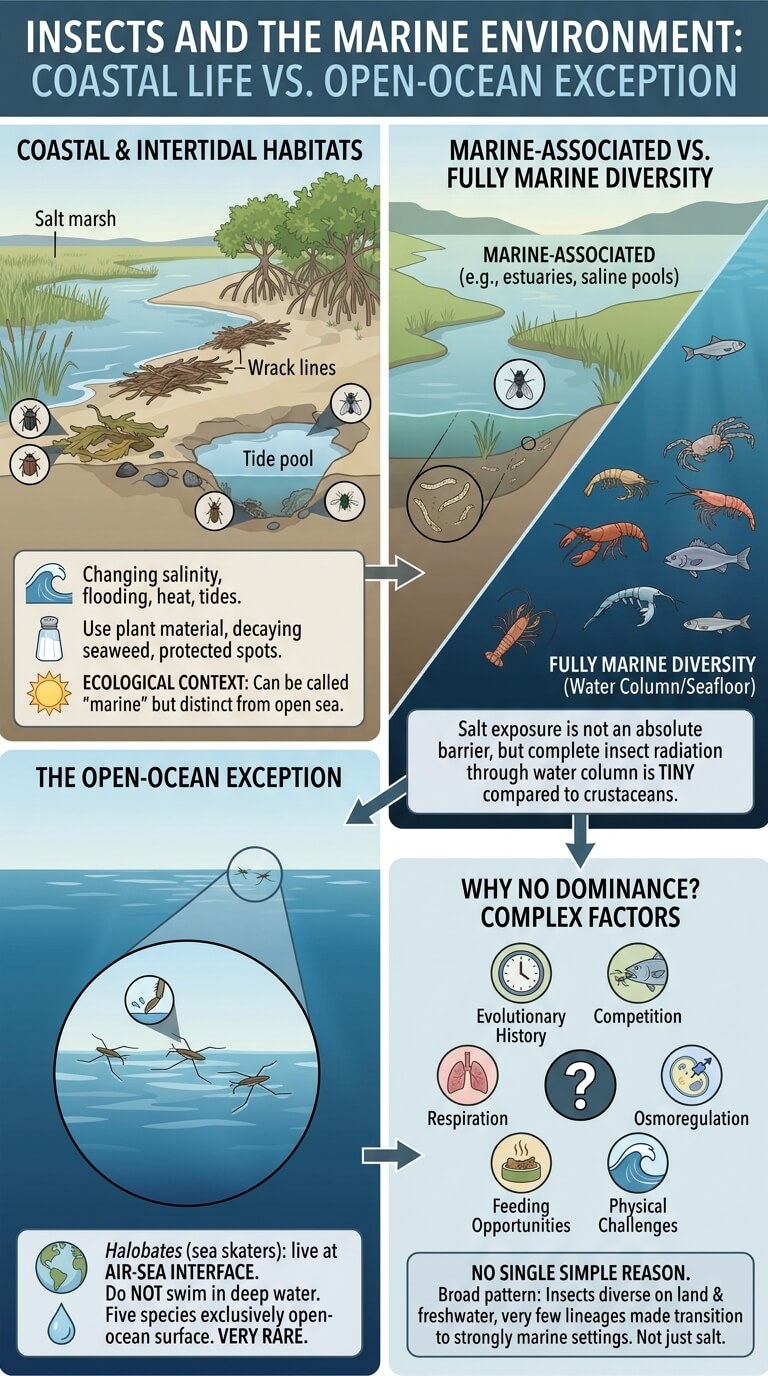
Intertidal and Salt-Marsh Insects
Some insects live around shorelines, salt marshes, mangroves, wrack lines, and intertidal areas. These environments can expose them to changing salinity, flooding, heat, drying, and tides. Coastal insects may use plant material, algae-associated resources, decaying seaweed, prey, or protected crevices.
Calling these species marine can be reasonable in ecological context, but it helps to distinguish insects associated with coasts from insects that live far from land on the open sea. The latter are exceptionally rare.
Marine-Associated Habitats
Insects occur where freshwater and saltwater meet, including estuaries and salt marshes. Some fly larvae develop in saline pools or coastal sediments, and certain beetles and true flies use shore environments. These examples show that salt exposure itself is not an absolute barrier.
What is rare is a complete insect radiation through the water column and seafloor comparable to marine crustaceans. Fully marine insect diversity remains tiny relative to terrestrial and freshwater diversity.
Halobates and Other Unusual Ocean-Surface Insects
The sea skaters in the genus Halobates are the best-known exception. They are true bugs related to freshwater water striders and live at the air-sea interface. A peer-reviewed overview in PLOS Biology reports that five species of Halobates live exclusively on the open-ocean surface, while other members of the genus occur nearer coasts.
These insects do not swim through deep water like fish or marine crustaceans. They exploit the surface itself, moving across it on water-repellent legs and feeding on small organisms or material available there. Their existence is remarkable precisely because open-ocean insects are so unusual.
Why Insects Do Not Dominate Fully Marine Ecosystems
There is no single simple reason that explains the scarcity of marine insects. Evolutionary history, competition, reproductive biology, respiration, osmoregulation, feeding opportunities, and the physical challenges of the marine environment have all been discussed by researchers.
The safest conclusion is the broad pattern: insects became extraordinarily diverse on land and in freshwater, but only a very small set of lineages made the transition into strongly marine settings. The absence of a simple answer is more scientifically accurate than claiming that salt alone keeps insects out of the sea.
Survival Adaptations Across Habitats
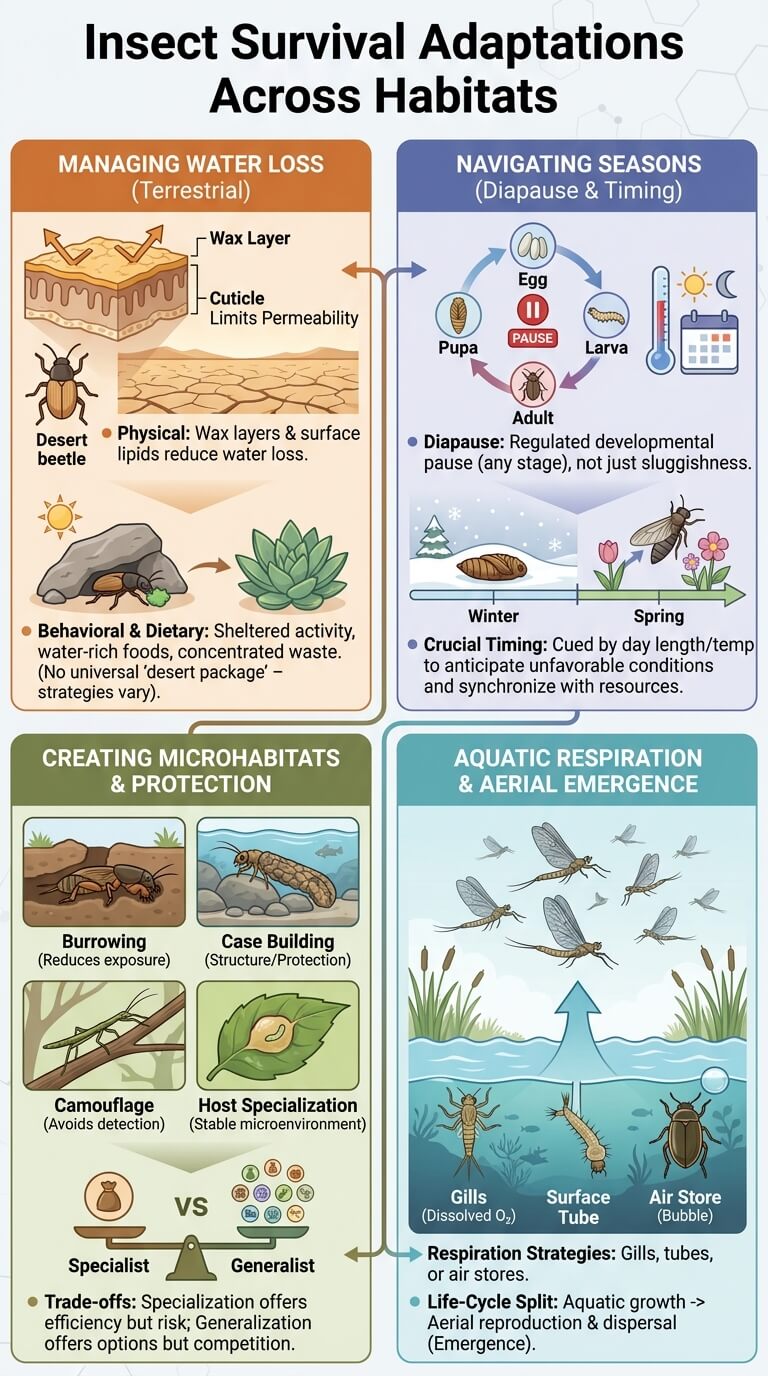
Wax Layers and Water Balance
Terrestrial insects lose water through the body surface, respiratory openings, and excretion. Their cuticle helps limit that loss, and surface lipids are especially important in reducing permeability. Species living in dry habitats may combine physical waterproofing with sheltered activity times, water-rich foods, concentrated waste, and behaviors that reduce exposure.
There is no universal “desert insect package.” Different insects solve water problems in different ways, and some dry-country species still depend on humid burrows or brief wet seasons.
Diapause and Seasonal Timing
Diapause allows many insects to pause development in anticipation of recurring unfavorable conditions such as winter or seasonal drought. It can occur in eggs, larvae, pupae, or adults depending on the species. Day length, temperature, food condition, and other cues can help coordinate its timing.
This is different from simply becoming sluggish because it is cold. Diapause is a regulated developmental state, while short-term inactivity can occur without it. Seasonal timing can be as important as physical tolerance because an insect that emerges too early may encounter little food, few mates, or dangerous weather.
Burrowing, Case Building, Camouflage, and Host Specialization
Behavior can turn a harsh landscape into a usable habitat. Burrowing reduces exposure to heat and dry air. Caddisfly cases can provide structure and protection in flowing water. Camouflage reduces the chance of detection. Living within stems, leaves, wood, galls, or hosts can create stable microenvironments.
Specialization brings trade-offs. A highly specialized insect may exploit a resource extremely well but become vulnerable if that host or microhabitat disappears. A generalist may have more options, yet face stronger competition or lower performance on any one resource.
Aquatic Respiration and Emergence
Aquatic insects use several respiratory strategies. Some obtain dissolved oxygen through gill-like structures, some breathe through tubes that reach the surface, and others carry or maintain air stores. The exact mechanism depends on the lineage and life stage.
Emergence solves another problem: reproduction and dispersal may happen in the air even when growth happens underwater. That life-cycle split is why a stream can produce swarms of adults that suddenly appear over nearby vegetation despite having spent the immature stage hidden beneath the water.
Common Habitat Myths
Do Insects Live Everywhere on Earth?
No. Insects are extraordinarily widespread, but “everywhere” hides important absences and strong differences in diversity. Open-ocean habitats contain very few insects, and even on land individual species can have narrow ranges or strict habitat requirements.
A better statement is that insects occupy an exceptional variety of terrestrial and freshwater environments, with specialized representatives in some coastal and marine-associated habitats.
Are There Marine Insects?
Yes, but relatively few compared with the enormous number of terrestrial and freshwater insects. Many marine-associated insects live in intertidal, shoreline, salt-marsh, or coastal settings. The open-ocean sea skaters Halobates are the clearest pelagic exception.
This distinction matters because saying “there are no marine insects” is too absolute, while saying insects are common throughout the ocean is equally misleading.
Do Aquatic Insects Spend Their Entire Lives Underwater?
Often they do not. Dragonflies, damselflies, mayflies, stoneflies, caddisflies, mosquitoes, and many other insects spend important immature stages in water but become aerial or terrestrial adults.
Other aquatic insects remain closely tied to water as adults. The key is to check the life cycle rather than assuming one aquatic stage describes the entire animal’s habitat.
How Habitat Changes Through an Insect’s Life
Life Cycles Can Move an Insect Between Water, Soil, Plants, and Air
An insect’s habitat may change more dramatically during development than the habitat of many vertebrates. A mosquito larva lives in water, while the adult flies through terrestrial airspace. A wood-boring beetle larva can spend months or years inside plant tissue before the adult emerges. A dragonfly grows underwater, then becomes an aerial predator.
These shifts reduce direct competition between life stages in some species because juveniles and adults use different foods and spaces. They also mean that protecting or understanding one stage’s habitat is not enough to explain the entire life cycle.
Wings and Behavior Affect Dispersal Between Habitats
Flight allows many adult insects to leave the place where they developed and search for mates, food, breeding sites, or seasonal refuges. Flightless insects can disperse by walking, drifting, climbing, hitching rides, or being transported with their host material.
Behavior determines when that movement happens. Temperature, wind, daylight, humidity, and resource availability can affect activity. Habitat use is therefore dynamic, not a static dot on a map.
Habitat Quality Is More Than the Name of a Biome
Two forests may differ in canopy cover, dead wood, stream condition, understory plants, fire history, moisture, and age. Two ponds may differ in permanence, oxygen, fish predators, vegetation, and pollution. Those details decide whether a particular insect can complete its life cycle.
This is why habitat loss and habitat degradation are treated carefully in conservation biology. Knowing that a species “lives in forests” is not enough if it actually requires old hollow trees, one host plant, cold headwater streams, or another feature that is disappearing.
FAQ
Where Are Insects Most Diverse?
Insect diversity is especially high in tropical regions, and tropical forests contain enormous numbers of insect species and ecological specialists. However, precise global comparisons are difficult because many insect groups remain incompletely described and sampled. Temperate forests, grasslands, deserts, freshwater systems, and other habitats also support rich communities adapted to their local conditions.
Can Insects Live in the Ocean?
A small number can. Coastal and intertidal insects occur in marine-associated habitats, while a few Halobates sea skaters live on the open ocean surface. Insects are nevertheless far less diverse in fully marine environments than on land or in freshwater.
How Do Insects Survive Winter?
There is no single strategy. Depending on the species and life stage, insects may enter diapause, shelter under bark or soil, remain beneath snow, migrate, acclimate to cold, avoid freezing, or tolerate some freezing. Winter survival depends on physiology, microhabitat, energy reserves, and seasonal timing.
Which Insects Live in Freshwater?
Freshwater habitats support dragonflies, damselflies, mayflies, stoneflies, caddisflies, mosquitoes, many true flies, numerous beetles, water bugs, and other groups. Some are aquatic only as immatures, while others remain closely associated with water in adulthood.
Final Thoughts
Where do insects live? The most accurate answer is not simply “everywhere.” Insects are extraordinarily successful across terrestrial and freshwater environments, but each species depends on a particular combination of food, moisture, temperature, shelter, life-cycle timing, and microhabitat. Forest canopies, desert burrows, alpine tundra, leaf litter, ponds, city parks, and even the open ocean surface can all support insects, yet they do so in very different ways.
Their habitat diversity makes more sense when paired with their survival adaptations. Water-conserving cuticles, diapause, cold tolerance, burrowing, aquatic respiration, case building, flight, seasonal emergence, and host specialization are not universal insect features. They are different solutions evolved by different lineages. Seeing those distinctions turns “bugs live everywhere” into a much more useful picture of how insects actually occupy the planet.

Ethan Walker is the founder and research editor of Animal Fact Central. He creates and reviews educational animal facts content using trusted wildlife, pet care, and science-based sources. His work focuses on making animal behavior, adaptations, habitats, and species facts clear, accurate, and engaging for everyday readers.
Read More Details About Ethan Walker: https://animalfactcentral.com/ethan-walker/