
Big Cat Coat Patterns: Stripes, Spots & Rosettes
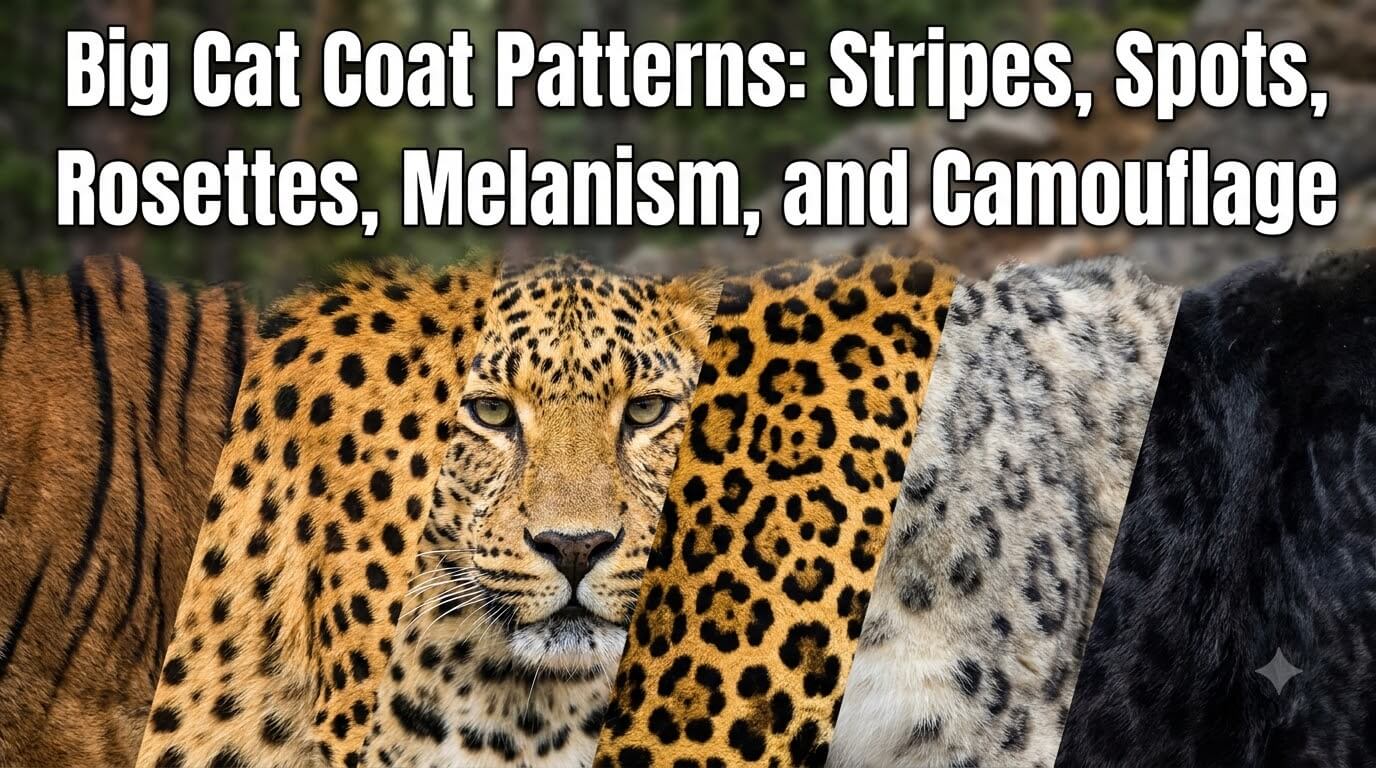
Big Cat Coat Patterns: Stripes, Spots, Rosettes, Melanism, and Camouflage

Big cat coat patterns do more than make species easy for people to recognize. Stripes, spots, rosettes, cloud-like blotches, pale winter-looking coats, and mostly plain fur can all change how a cat’s outline appears against vegetation, rock, shadow, or open ground. These markings do not make an animal invisible, and no single pattern works equally … Read more

Where Do Big Cats Live? Habitats and Global Range

Where Do Big Cats Live? Habitats and Global Range

Big cats live in a much wider range of habitats than the familiar images of lions on savannas or tigers in tropical forests suggest. Large wild cats occupy grasslands, dry woodlands, scrub, deserts, tropical and temperate forests, wetlands, mangroves, river corridors, and some of the highest mountain landscapes used by any mammalian predator. Where a … Read more

Big Cat Social Behavior: Prides, Coalitions & Territories

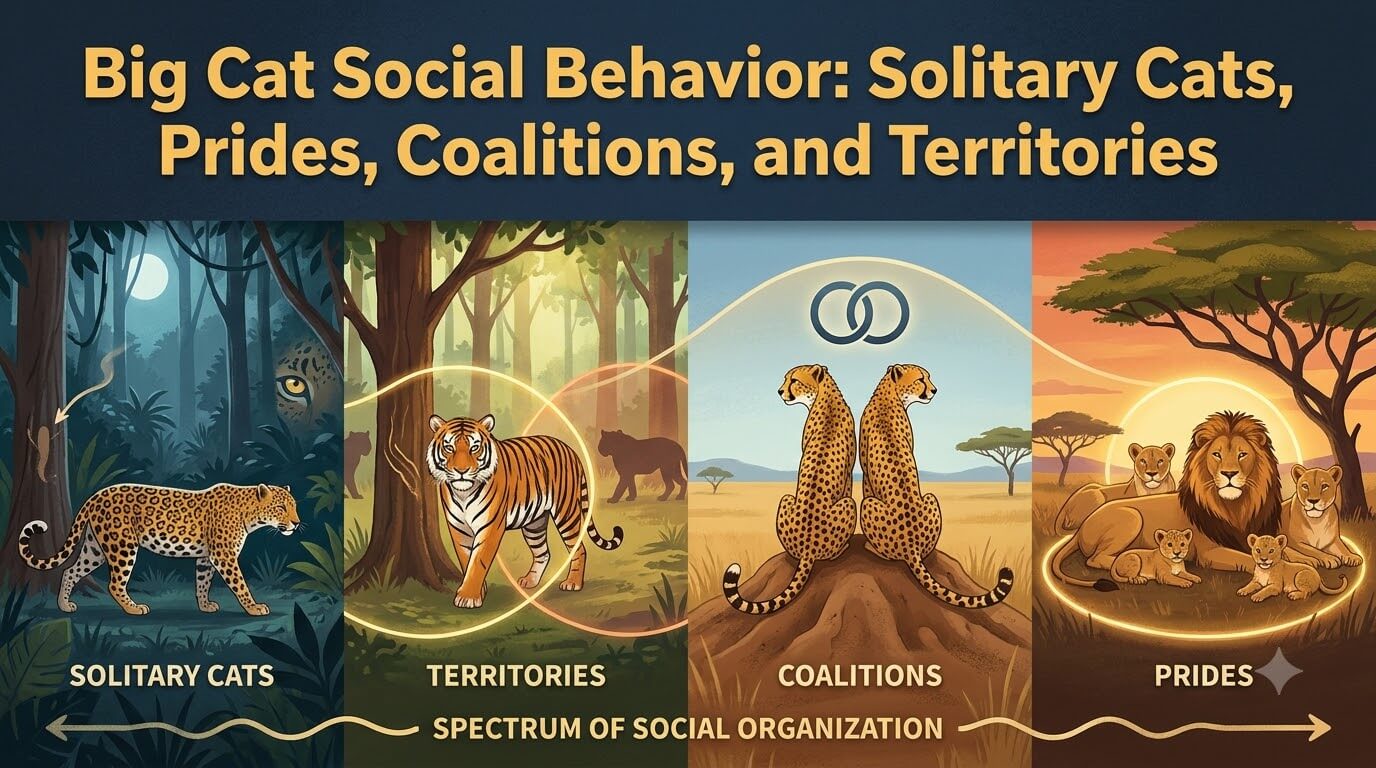
Big Cat Social Behavior: Solitary Cats, Prides, Coalitions, and Territories

Big cat social behavior is more varied than the familiar idea that lions are social and every other large cat is solitary. Lions do form stable social groups called prides, but even they split and reunite over time rather than moving as one permanent unit. Tigers, leopards, jaguars, snow leopards, and clouded leopards usually travel … Read more

How Big Cats Communicate: Roars, Scent & Signals

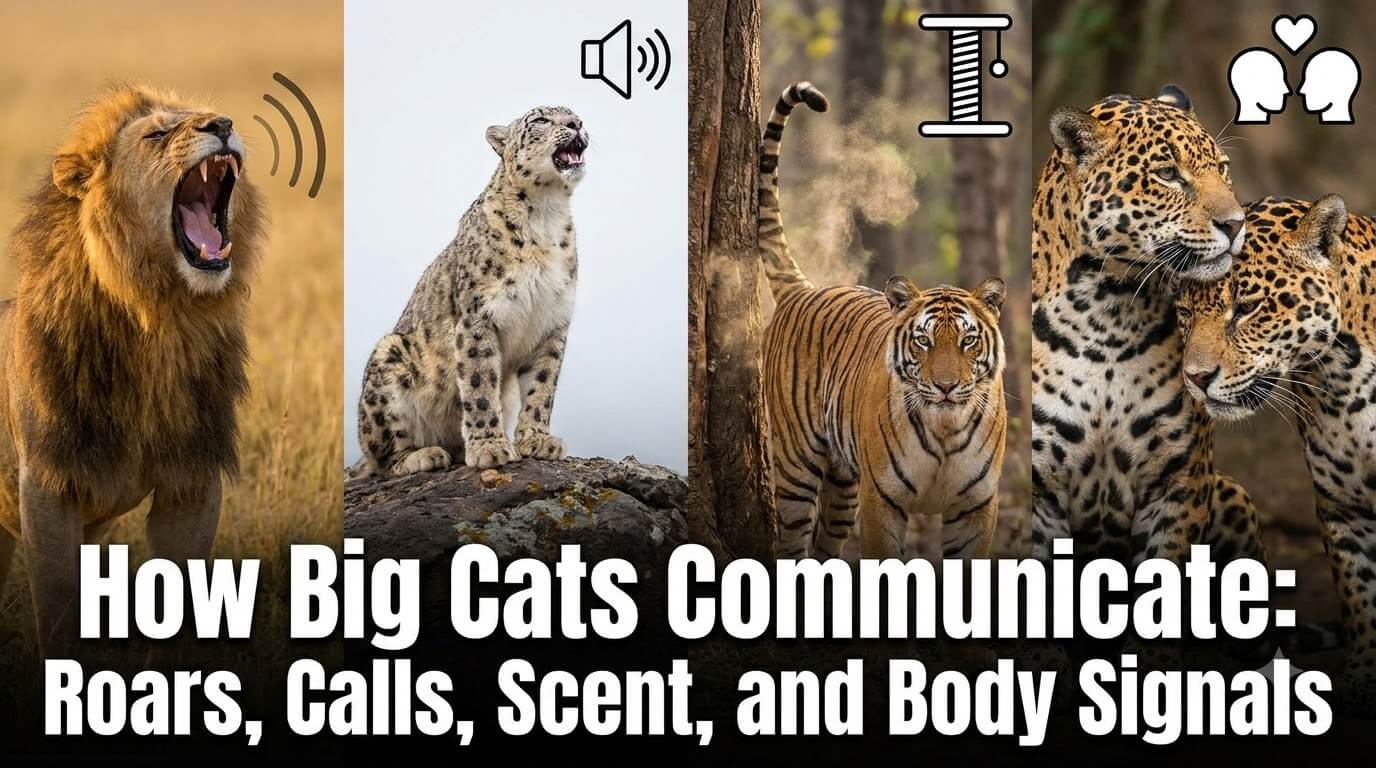
How Big Cats Communicate: Roars, Calls, Scent, and Body Signals

Big cats communicate through much more than roaring. Lions, tigers, leopards, jaguars, snow leopards, clouded leopards, and other large wild cats combine sound, scent, posture, facial expression, touch, and physical marks in the environment. A signal that travels for a long distance can help an animal advertise its presence without a face-to-face encounter, while a … Read more

Big Cat Senses: Vision, Hearing, Smell & Whiskers

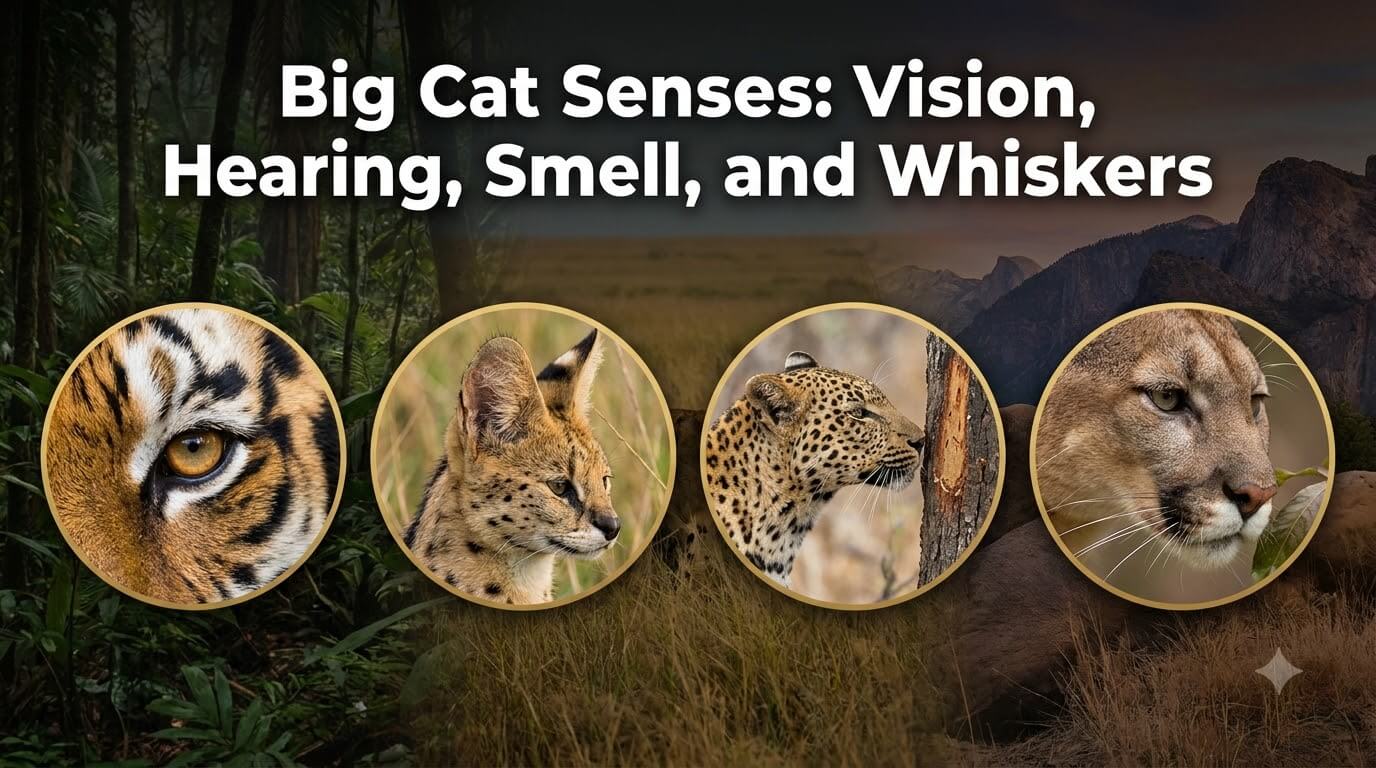
Big Cat Senses: Vision, Hearing, Smell, and Whiskers

Big cat senses work as a combined detection system rather than a simple ranking of “best” abilities. Vision helps a cat judge distance and track movement. Hearing can reveal activity hidden by darkness or vegetation. Smell carries information about other animals, food, and scent marks. Whiskers provide close-range touch information when the face is near … Read more

Big Cat Teeth and Jaws: How Their Bites Work

Big Cat Teeth and Jaws: Canines, Carnassials, and Prey Processing

Big cat teeth are not a collection of interchangeable “fangs.” Different teeth do different jobs, and the skull, jaw muscles, jaw joint, and tongue work with them as one feeding system. The long canines are built mainly for gripping and penetrating prey, while the blade-like carnassials farther back in the mouth slice meat. Small incisors … Read more

Leopard vs Jaguar: Key Differences Explained

Leopard vs Jaguar: Key Differences and How to Tell Them Apart

A leopard and a jaguar can look strikingly similar at first glance. Both are muscular spotted cats in the genus Panthera, both can have yellow-gold coats marked with rosettes, and both may appear almost black when melanism darkens the coat. The clearest difference, however, starts with geography: wild leopards live across parts of Africa and … Read more