Arachnid Senses: Vision, Vibration, Touch, Chemicals, and Air Movement

Arachnid Senses: Vision, Vibration, Touch, Chemicals, and Air Movement
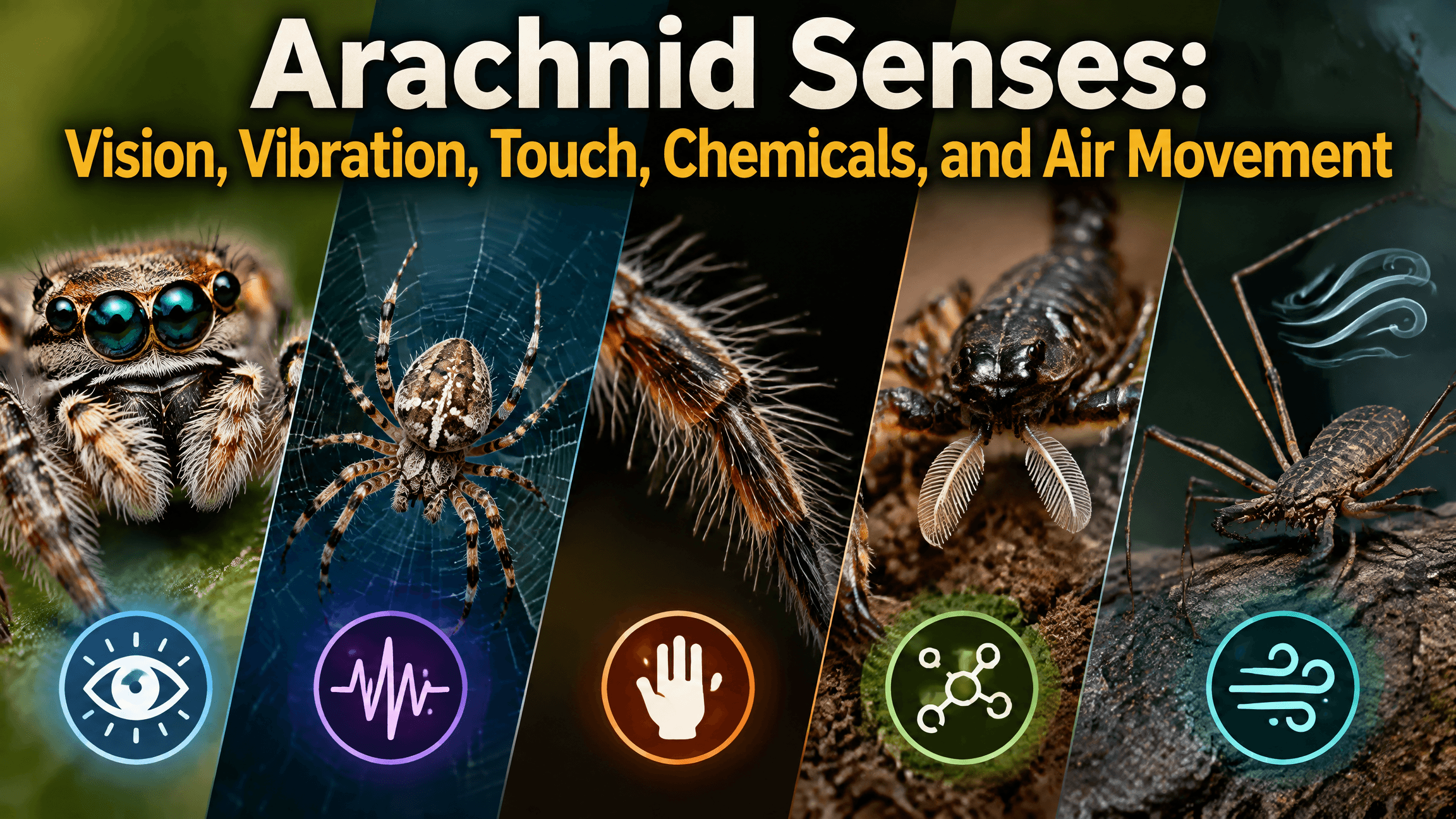
Arachnids do not experience the world through one standard set of senses. A jumping spider can rely heavily on vision, a web-building spider may depend more on vibration, a scorpion can sample the ground with comb-like pectines, a tick carries Haller’s organ on its first pair of legs, and a tailless whip spider sweeps its … Read more
How Arachnids Move: Walking, Climbing, Burrowing, and Hydraulic Locomotion

How Arachnids Move: Walking, Climbing, Burrowing, and Hydraulic Locomotion

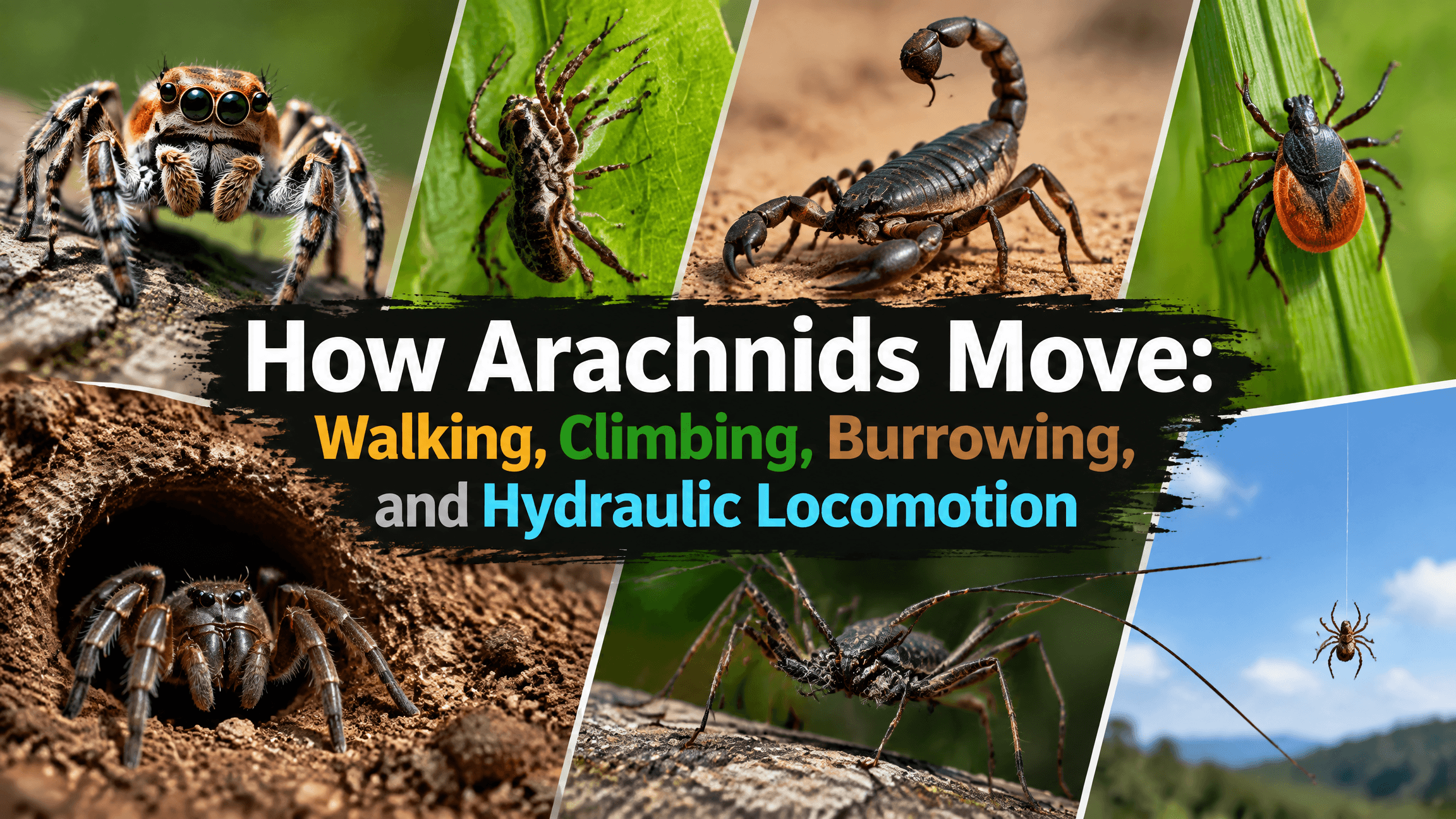
Arachnids move in far more ways than the familiar eight-legged walk. Spiders run, climb, jump, burrow, and sometimes travel through the air on silk. Scorpions cross loose soil and shelter in burrows. Harvestmen step across uneven ground on long legs. Ticks climb vegetation and wait for passing hosts. Mites can crawl through soil, plants, animal … Read more

Arachnid Anatomy: Chelicerae, Pedipalps, Legs, Eyes, and Body Regions

Arachnid Anatomy: Chelicerae, Pedipalps, Legs, Eyes, and Body Regions

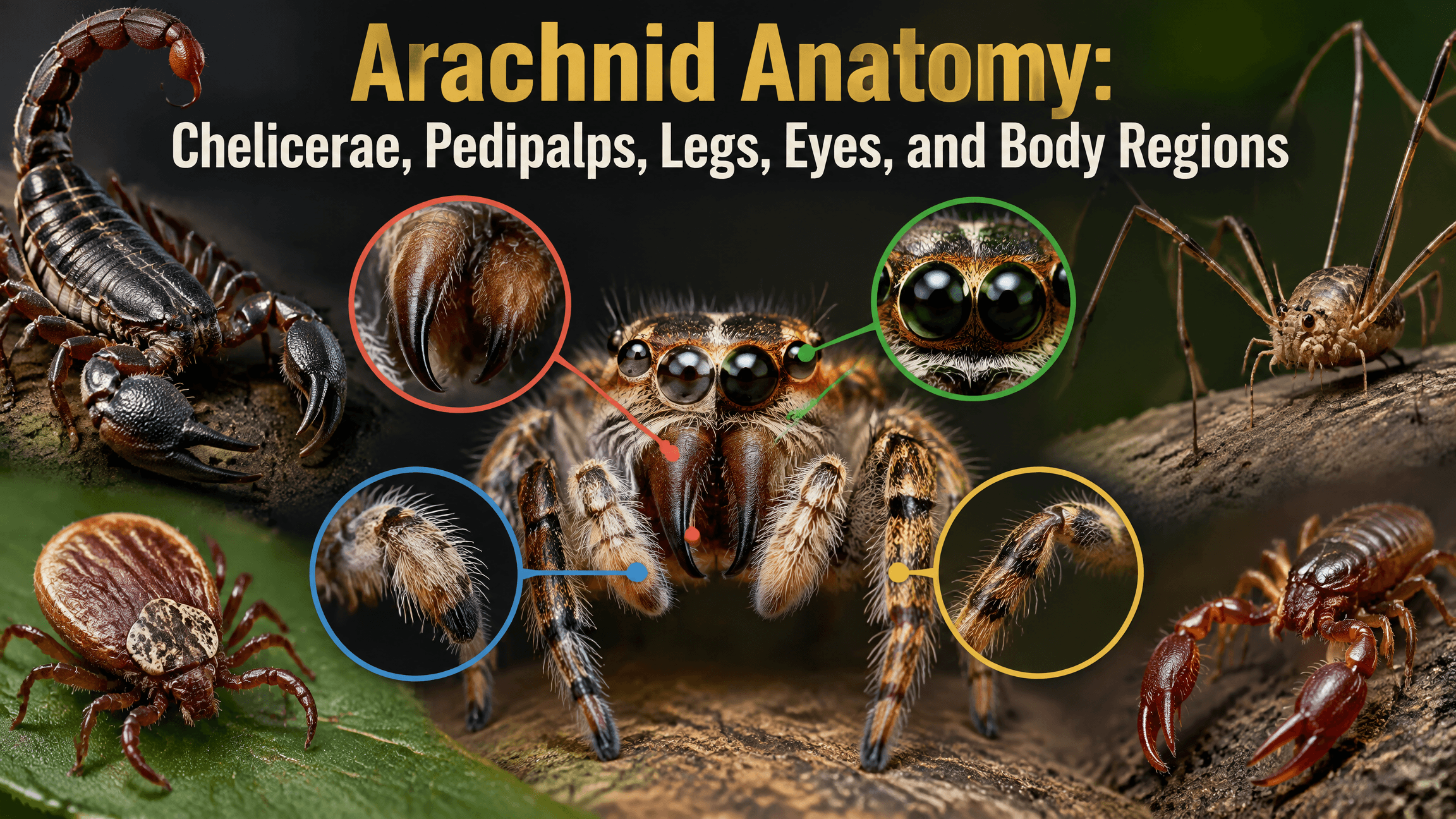
Arachnid anatomy follows a shared chelicerate plan, but that plan is far more flexible than the familiar spider silhouette suggests. Spiders, scorpions, ticks, mites, harvestmen, solifuges, pseudoscorpions, and whip spiders all possess the basic arachnid appendage pattern, yet those structures can look and function very differently from one group to another. The most useful way … Read more

Types of Arachnids: Spiders, Scorpions, Ticks, Mites, and More

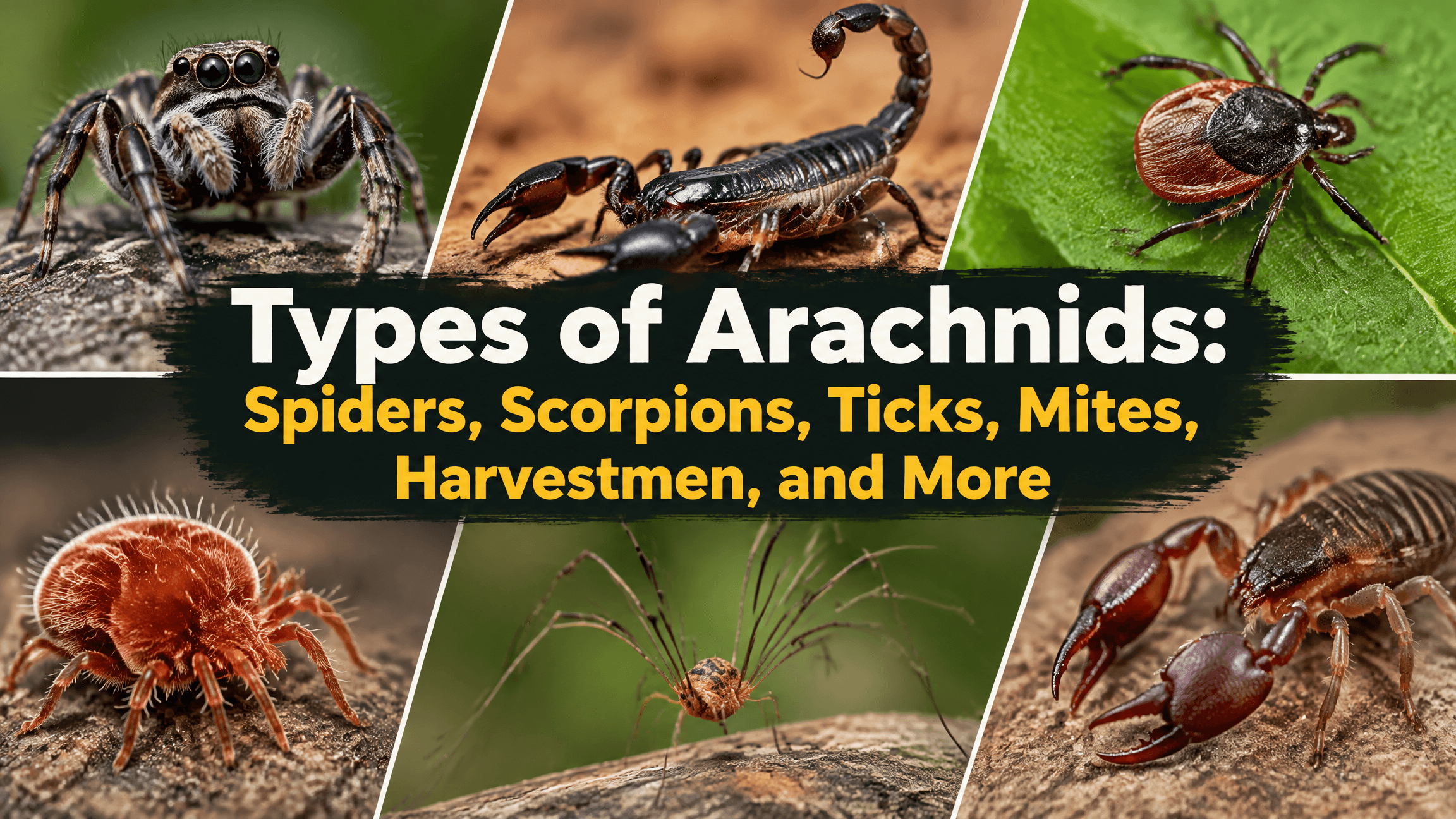
Types of Arachnids: Spiders, Scorpions, Ticks, Mites, Harvestmen, and More

Arachnids include much more than spiders. The class Arachnida, in the conventional framework used here, contains familiar groups such as spiders, scorpions, harvestmen, ticks, and mites, along with less familiar lineages such as pseudoscorpions, solifuges, tailless whip spiders, vinegaroons, schizomids, ricinuleids, and palpigrades. These animals share chelicerate ancestry, but their bodies, diets, habitats, defenses, and … Read more

What Makes an Animal an Arachnid? Key Traits Explained

What Makes an Animal an Arachnid? Key Traits Explained

What makes an animal an arachnid is not simply having eight legs. Arachnids are chelicerate arthropods, a branch of the arthropod family tree that includes spiders, scorpions, harvestmen, ticks, mites, pseudoscorpions, solifuges, whip spiders, vinegaroons, and several smaller lineages. Their identity comes from ancestry plus a characteristic body plan: chelicerae near the mouth, a second … Read more

Arachnids: Types, Anatomy, Behavior, Habitats, and Adaptations

Arachnids: Types, Anatomy, Behavior, Habitats, and Adaptations

Arachnids are a diverse branch of arthropods that includes spiders, scorpions, ticks, mites, harvestmen, pseudoscorpions, solifuges, tailless whip spiders, vinegaroons, and several smaller groups. They share a chelicerate ancestry and several body-plan themes, but they do not all look, feed, move, reproduce, or defend themselves in the same way. Thinking of an arachnid as simply … Read more

Arthropod Conservation: Threats, Declines & Protection

Arthropod Conservation: Threats, Declines, and Protection

Arthropod conservation is difficult to summarize with a single number. Arthropoda includes insects, arachnids, crustaceans, myriapods, horseshoe crabs, and many smaller or less familiar lineages spread across land, freshwater, oceans, caves, soils, plants, and animal hosts. These groups are not monitored equally, and their conservation problems are not identical. Some arthropod populations have declined sharply … Read more

Why Are Arthropods Important? Ecosystem Roles

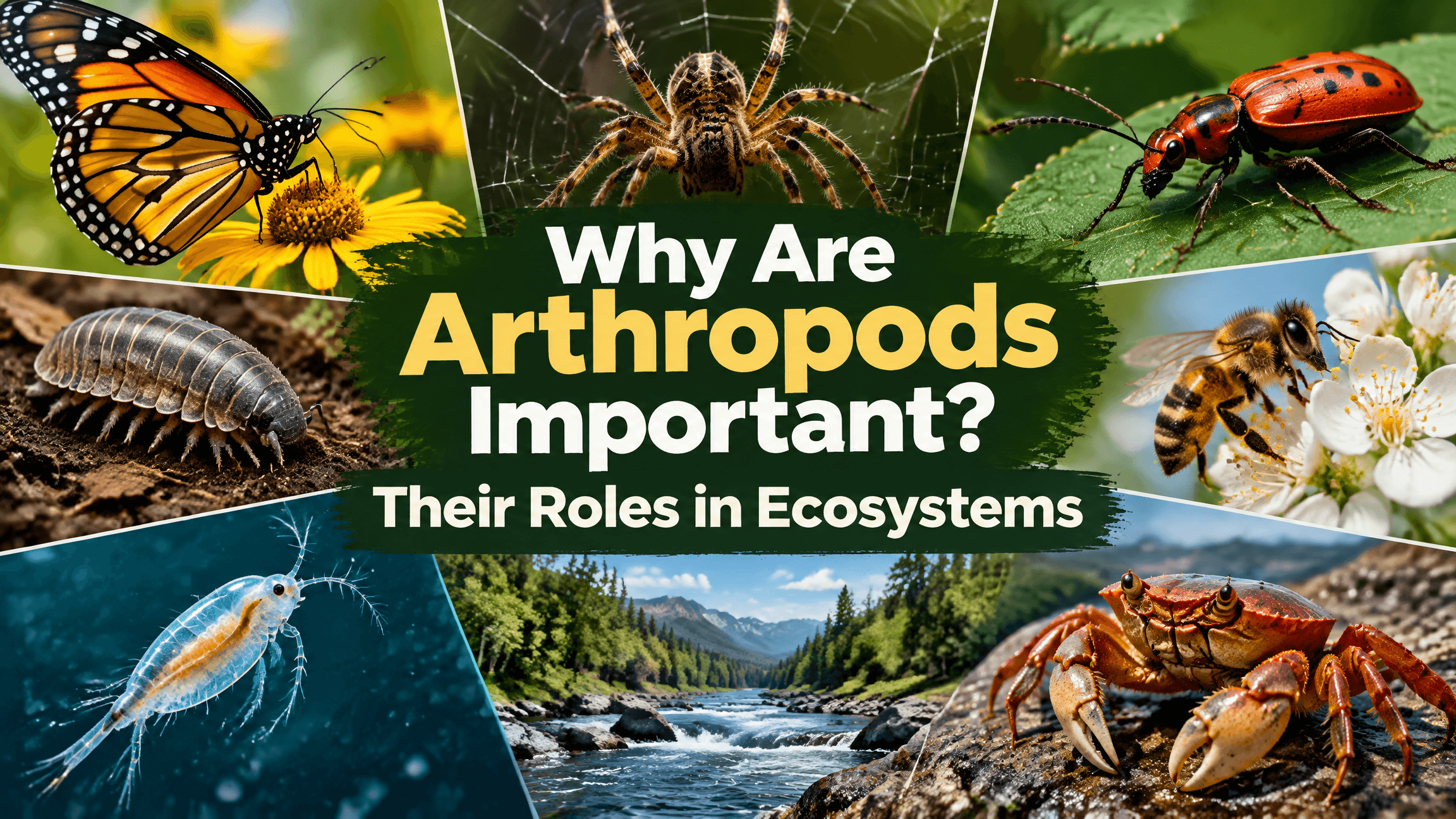
Why Are Arthropods Important? Their Roles in Ecosystems

Arthropods matter because they perform many different ecological roles at once. They consume plants and algae, hunt other animals, shred dead organic matter, graze microbes, filter particles from water, pollinate flowers, recycle nutrients, and serve as prey for fish, birds, mammals, reptiles, amphibians, and other invertebrates. No single role explains their importance. Insects dominate many … Read more

Where Do Arthropods Live? Habitats Explained

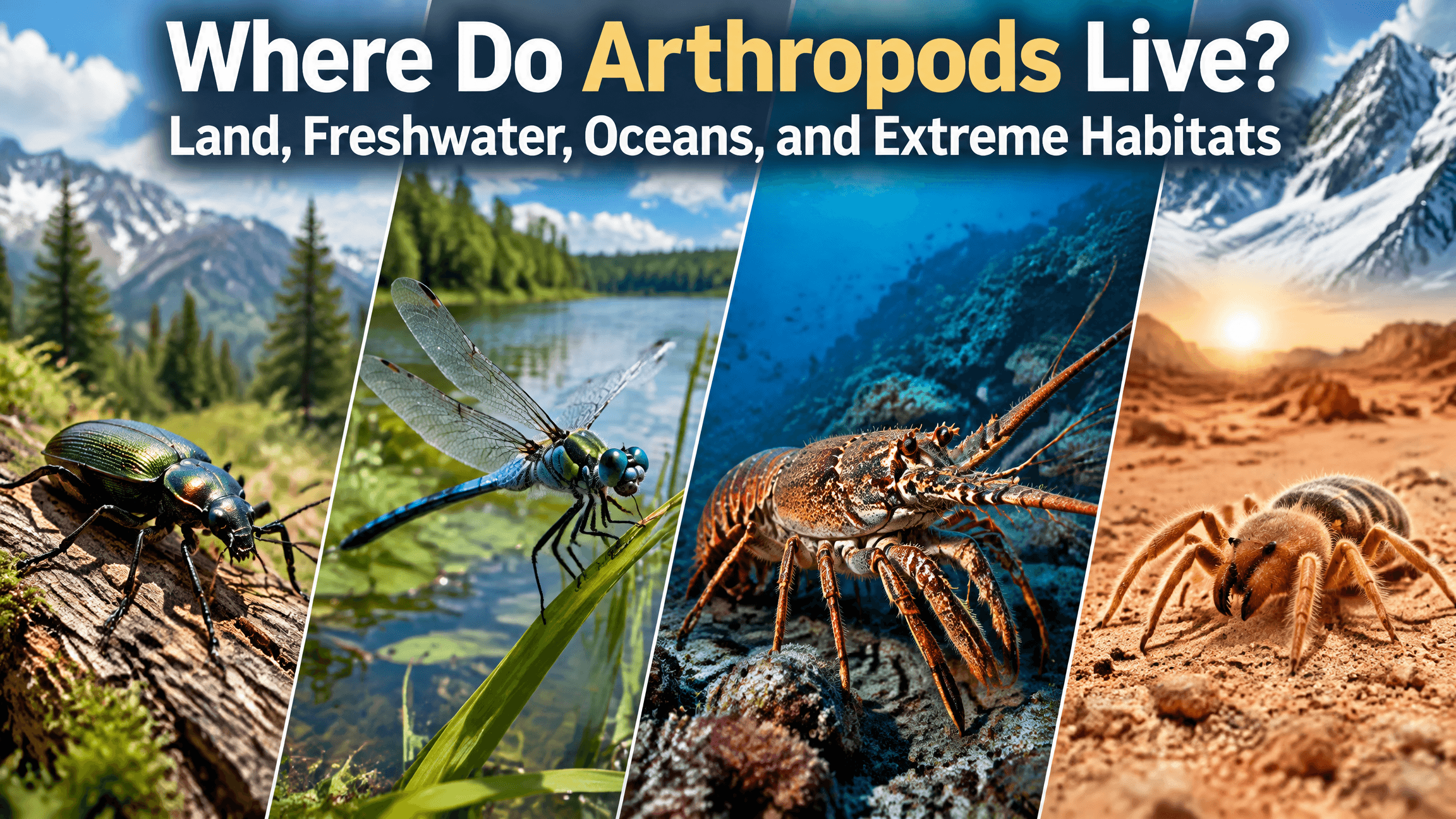
Where Do Arthropods Live? Land, Freshwater, Oceans, and Extreme Habitats

Arthropods live in marine, freshwater, and terrestrial environments, but they are not distributed evenly across every habitat. Crustaceans dominate many aquatic settings, insects are especially diverse on land and in freshwater, arachnids and myriapods are overwhelmingly terrestrial, and specialized lineages occupy caves, deserts, mountains, soils, plant surfaces, animal hosts, and urban environments. The phrase “arthropods … Read more

Arthropod Reproduction: Mating, Eggs & Development

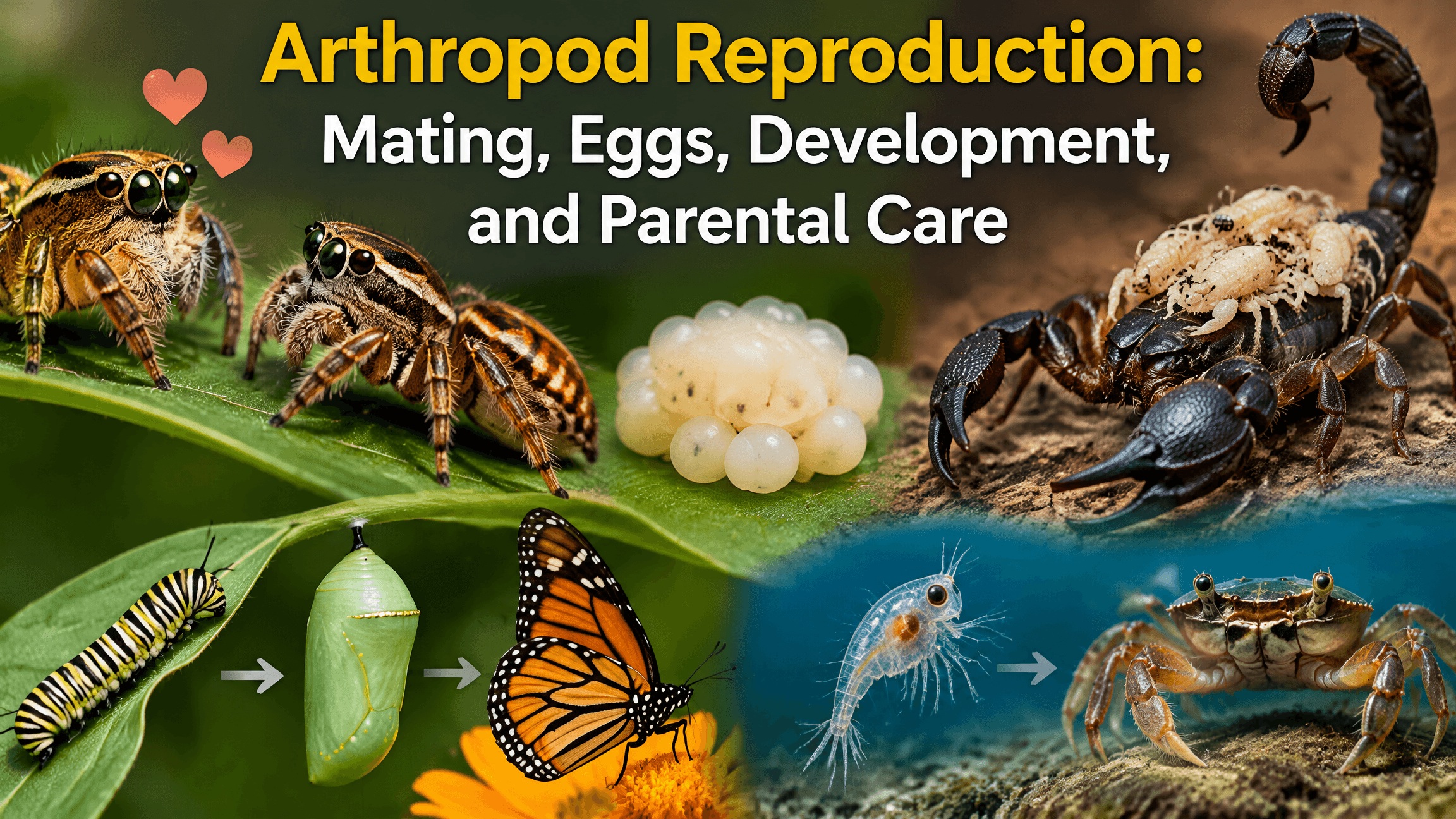
Arthropod Reproduction: Mating, Eggs, Development, and Parental Care

Arthropod reproduction is extraordinarily diverse. Most species reproduce sexually, but the details vary widely. Some transfer sperm directly, some use spermatophores, some brood eggs on or under the body, some give birth to live young, and some can reproduce without fertilization through parthenogenesis. Development is just as varied. Some young hatch looking broadly like miniature … Read more