What Do Arthropods Eat? Diets & Mouthparts
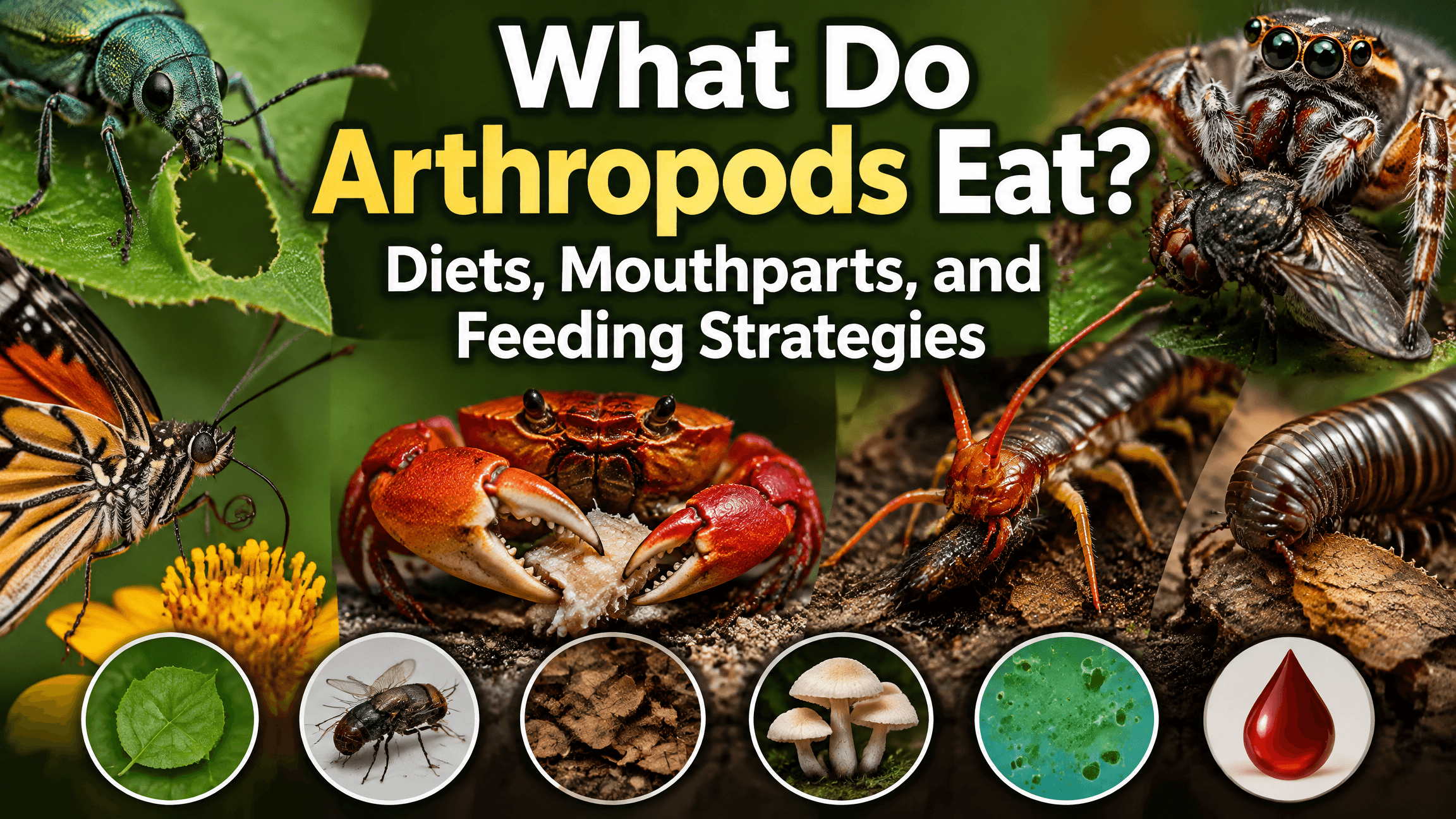
What Do Arthropods Eat? Diets, Mouthparts, and Feeding Strategies

Arthropods eat almost every major kind of biological food available in their environments. Some are predators, some browse plants or algae, some feed on fungi, some consume dead organic matter, and others filter tiny particles from water. Many species are omnivores or change diet across life stages. Their feeding diversity is possible because arthropod appendages … Read more
Arthropod Senses: Eyes, Antennae & Vibrations

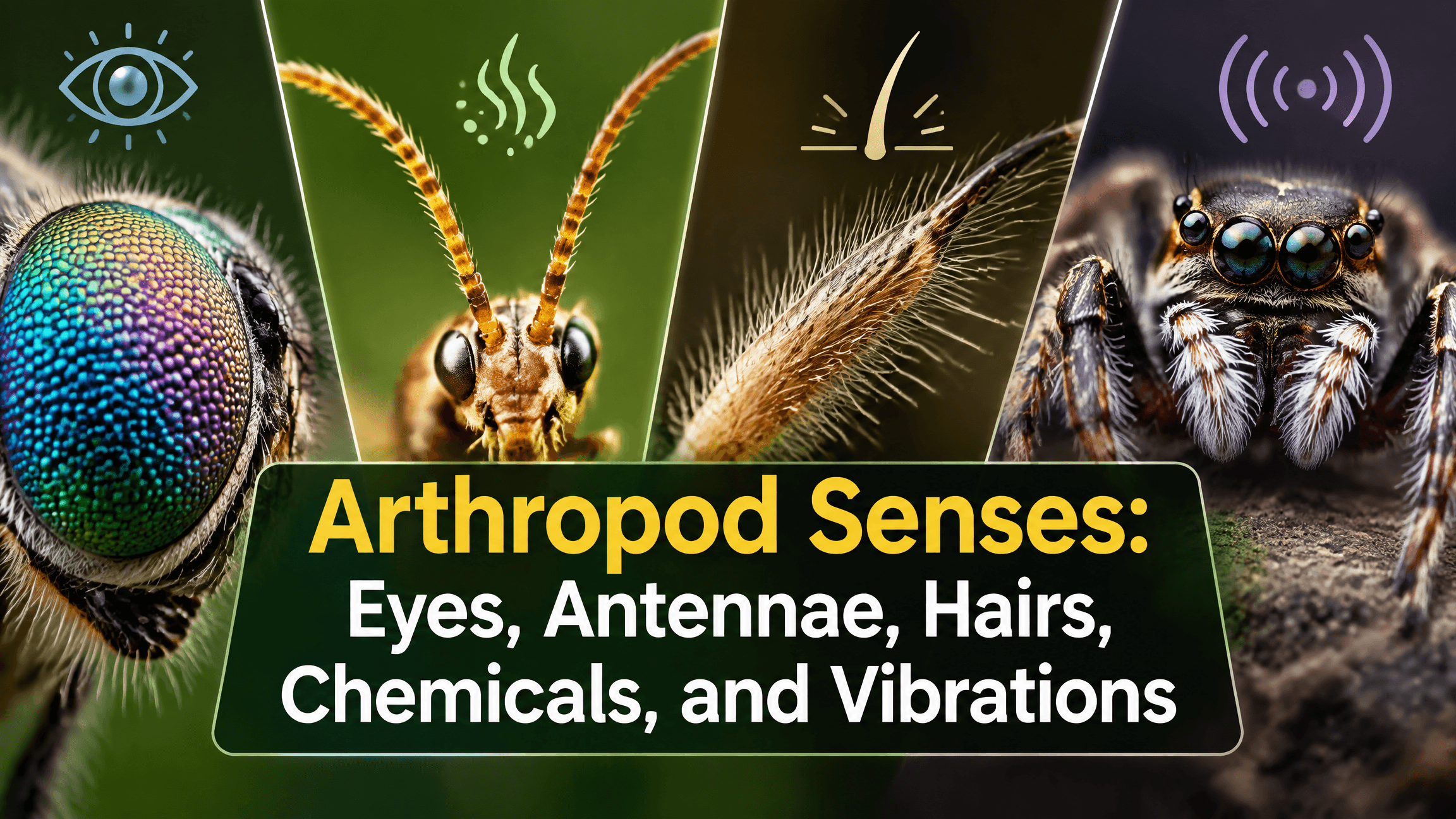
Arthropod Senses: Eyes, Antennae, Hairs, Chemicals, and Vibrations

Arthropods sense the world through a remarkable variety of structures. Some rely heavily on vision, while others depend more on touch, vibration, chemicals, airflow, water movement, humidity, or body position. Their sensory systems are built into the same modular body plan that gives them jointed appendages and an external cuticle. There is no single arthropod … Read more

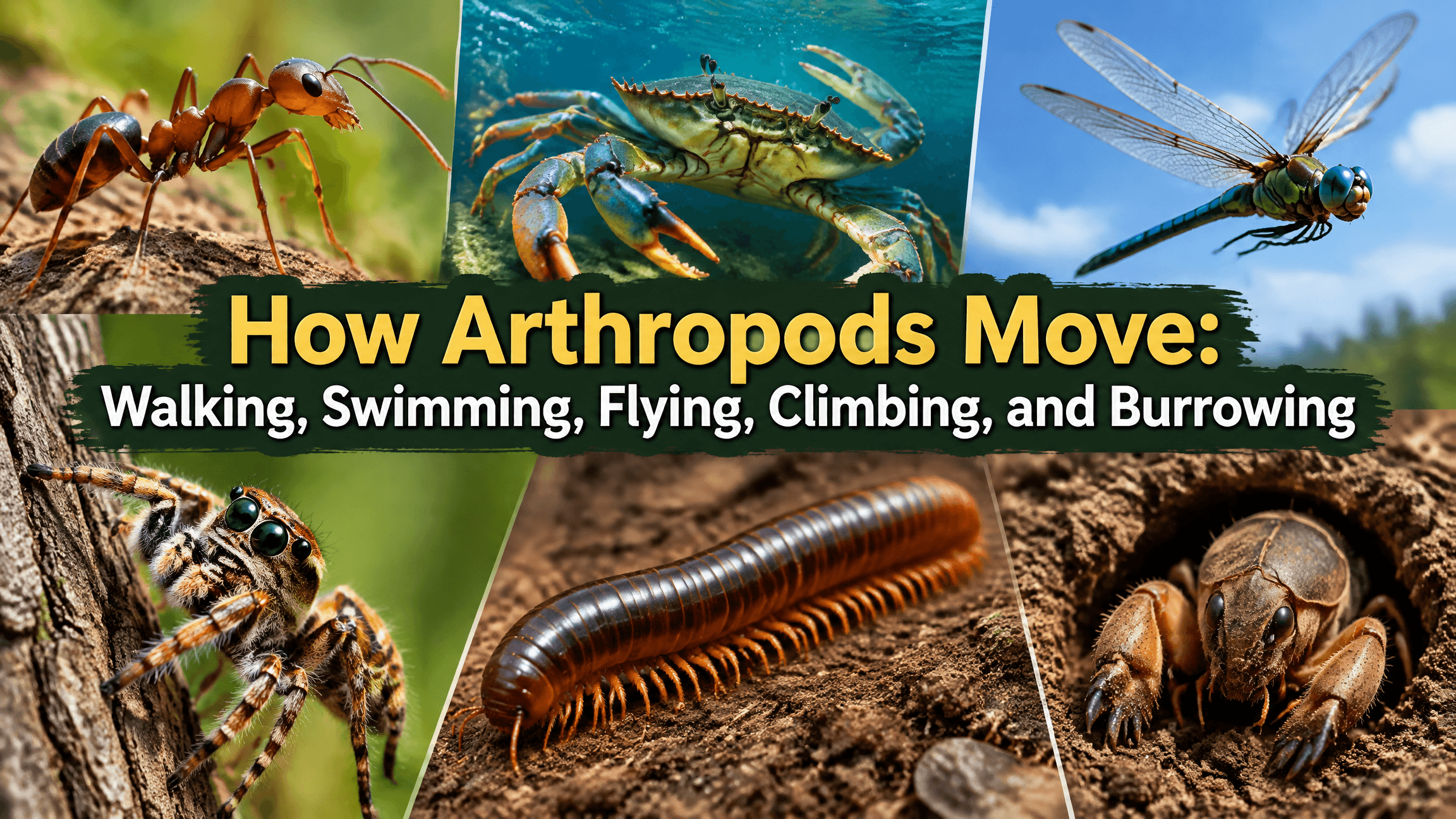
How Arthropods Move: Walking, Swimming & Flying

How Arthropods Move: Walking, Swimming, Flying, Climbing, and Burrowing

Arthropods move in an extraordinary variety of ways. They walk, run, jump, climb, burrow, row, swim, fly, drift, and sometimes use body waves or hydraulic pressure to help power particular movements. The shared foundation is a segmented body with jointed appendages, but different arthropod groups use that framework in very different ways. An insect can … Read more

How Arthropods Breathe: Gills, Tracheae & Lungs

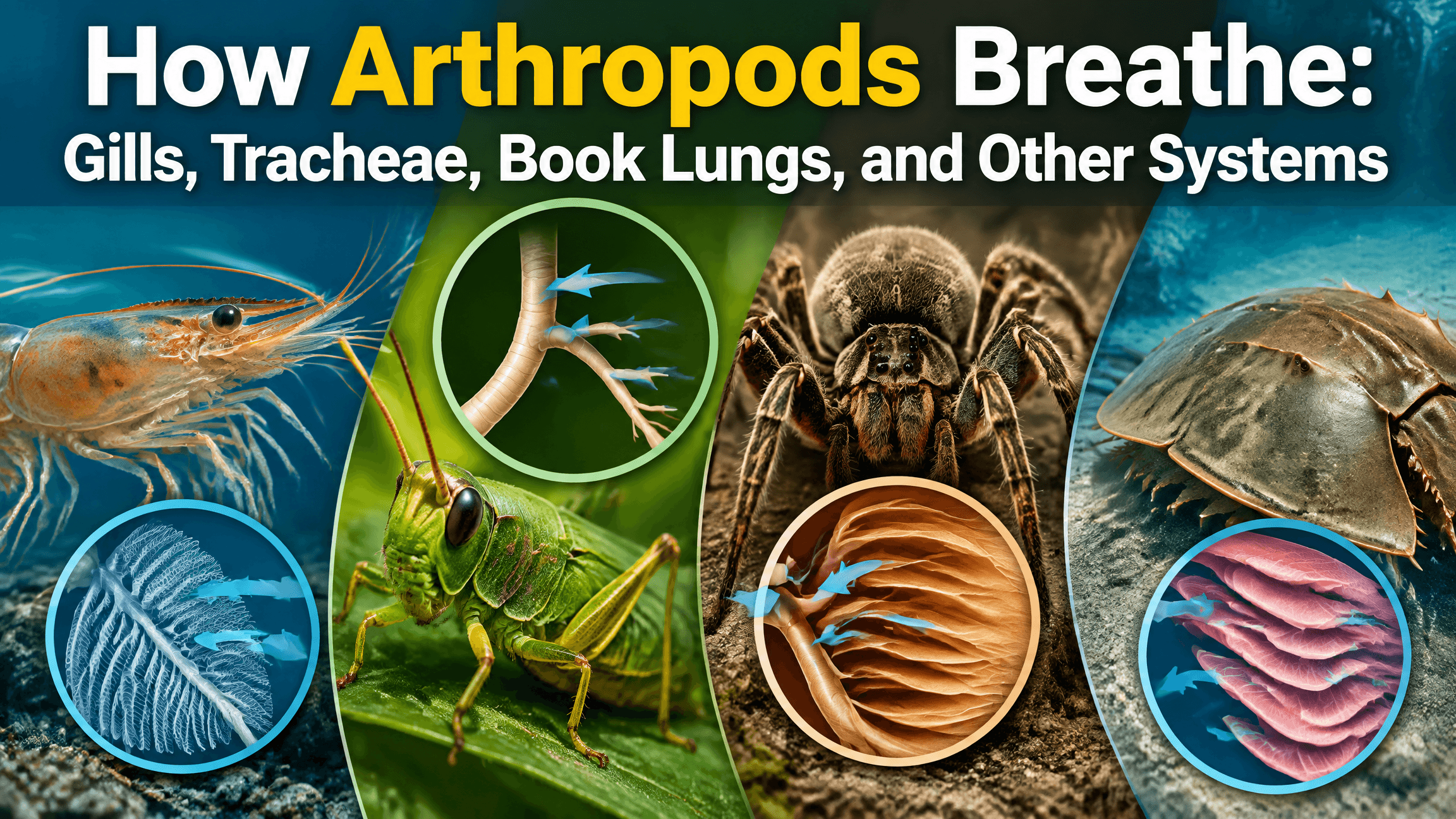
How Arthropods Breathe: Gills, Tracheae, Book Lungs, and Other Systems

Arthropods do not all breathe the same way. Across the phylum, oxygen can enter the body through gills, tracheal tubes, book lungs, book gills, or relatively thin body surfaces. Which system an animal uses depends on its evolutionary lineage, habitat, body size, and way of life. Terrestrial insects and myriapods commonly use tracheal systems that … Read more

How Arthropods Molt: Ecdysis and Growth

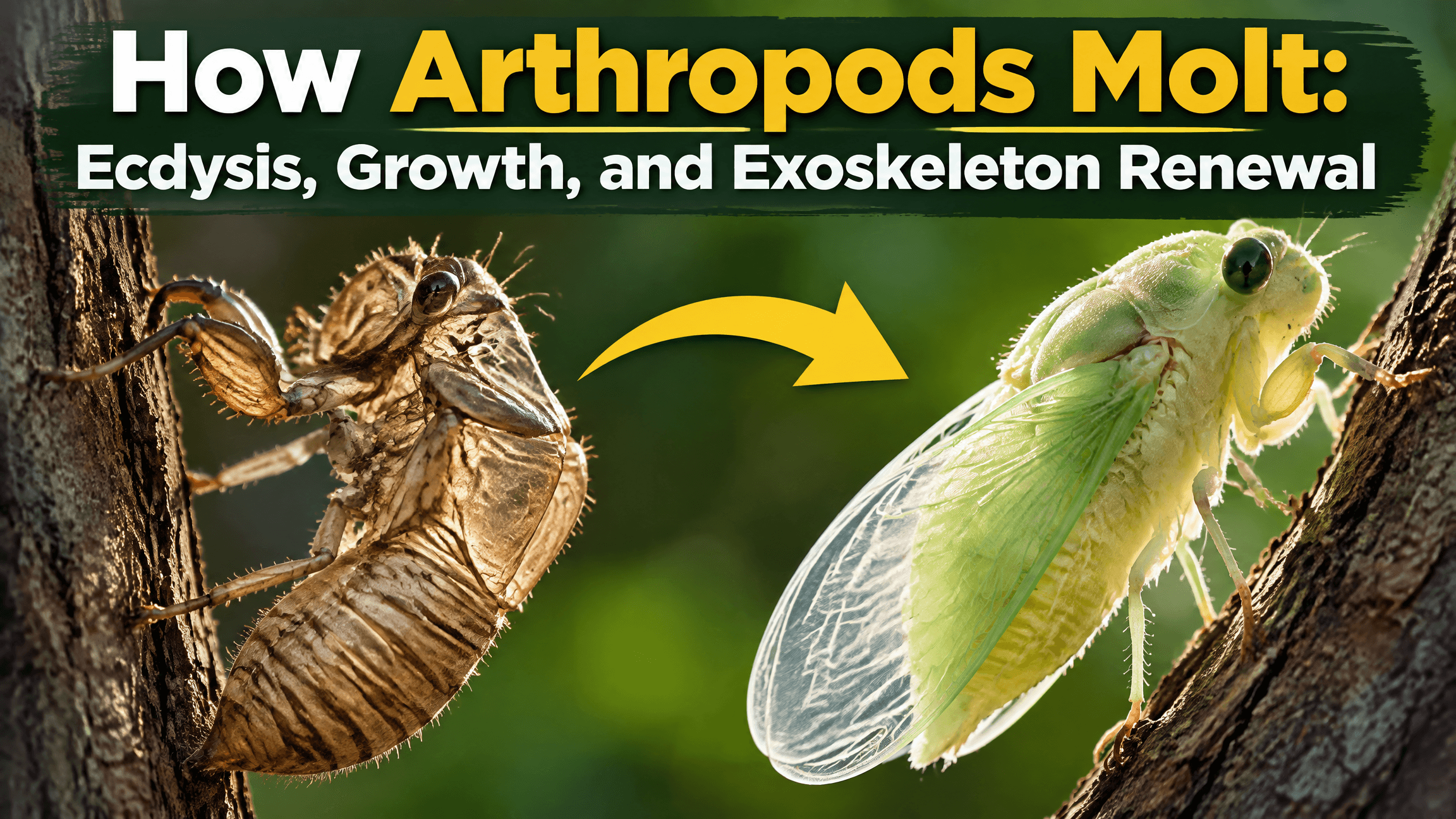
How Arthropods Molt: Ecdysis, Growth, and Exoskeleton Renewal

Arthropods grow in a way that is fundamentally different from animals with internal skeletons. Their body is supported and covered by an external cuticle, so growth requires periodic renewal of that covering. The broad process is called molting, while ecdysis refers specifically to the moment when the old outer covering is shed. Molting is more … Read more

Arthropod Anatomy: Segments, Appendages & Tagmata

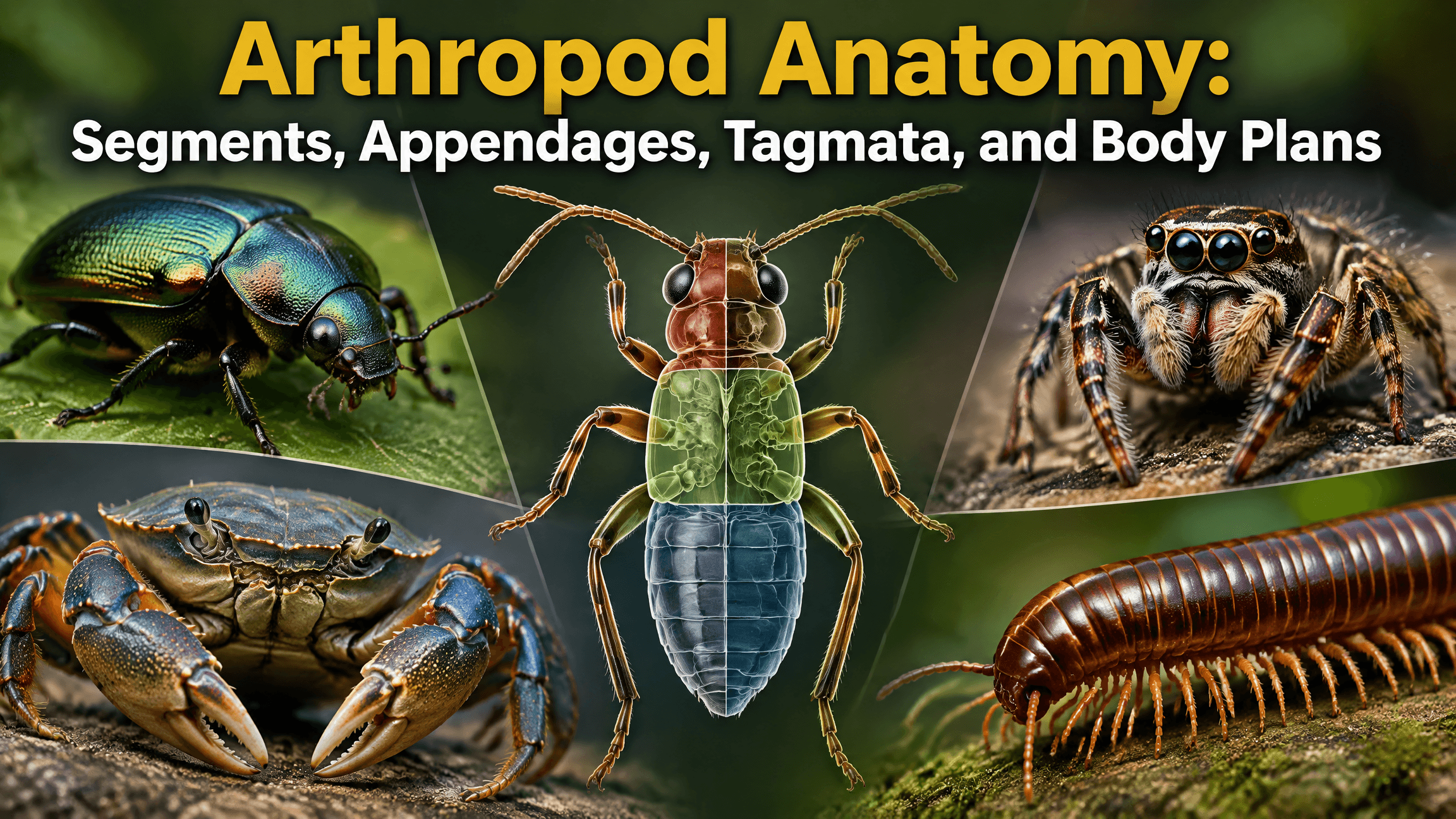
Arthropod Anatomy: Segments, Appendages, Tagmata, and Body Plans

Arthropod anatomy is built around a modular body plan. The body is fundamentally segmented, paired jointed appendages are associated with segments, and the outside is covered by a cuticle that functions as an exoskeletal system. Over evolutionary time, those segments and appendages have been grouped, fused, reduced, and specialized into remarkably different forms. That is … Read more

Types of Arthropods: Major Groups Explained

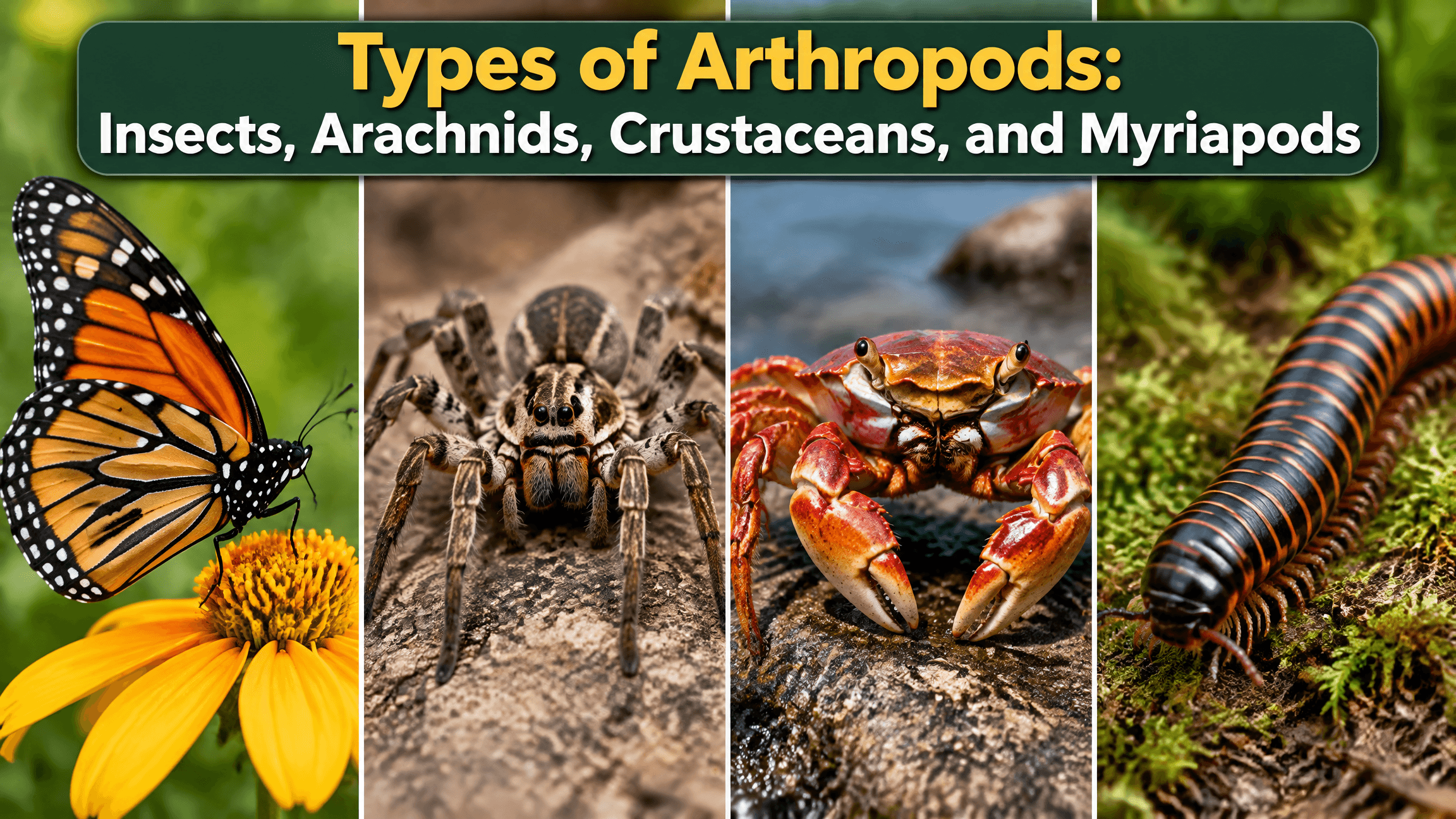
Types of Arthropods: Insects, Arachnids, Crustaceans, and Myriapods

The most familiar types of arthropods are insects, arachnids, crustaceans, and myriapods. That four-part list is useful for learning because it puts butterflies, spiders, crabs, centipedes, and millipedes into recognizable groups. It is not, however, a perfect picture of modern arthropod evolution. A more scientific framework recognizes several deeper branches. Chelicerata includes arachnids and horseshoe … Read more

What Makes an Animal an Arthropod? Key Traits

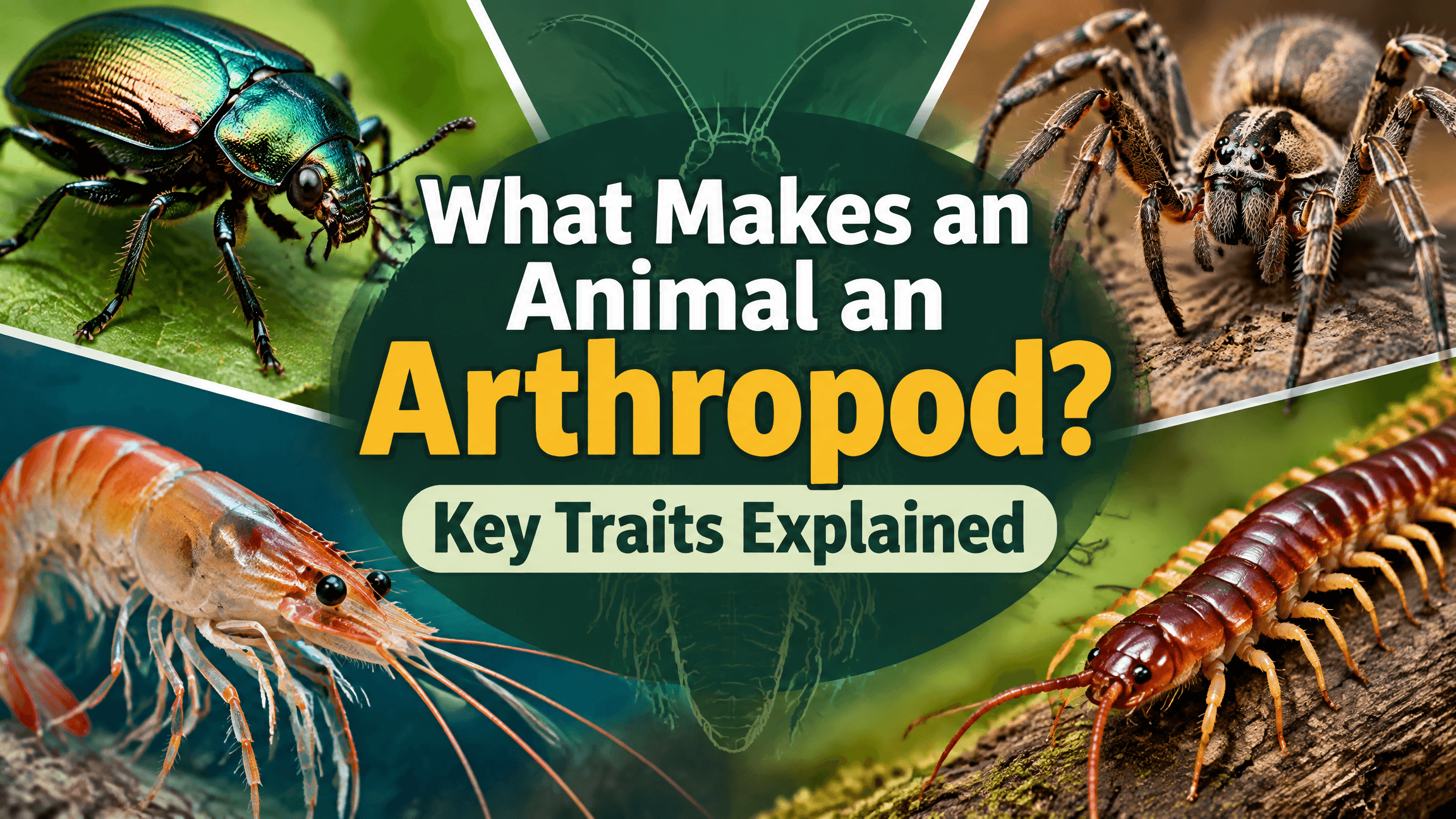
What Makes an Animal an Arthropod? Key Traits Explained

What makes an animal an arthropod is not one feature by itself. Arthropods share a body-plan framework that includes a segmented body, paired jointed appendages, an external cuticle that forms an exoskeletal system, and growth that involves molting. Their segments and appendages are often specialized into different functional regions and structures. That combination matters because … Read more

Arthropods: Types, Body Plans & Adaptations

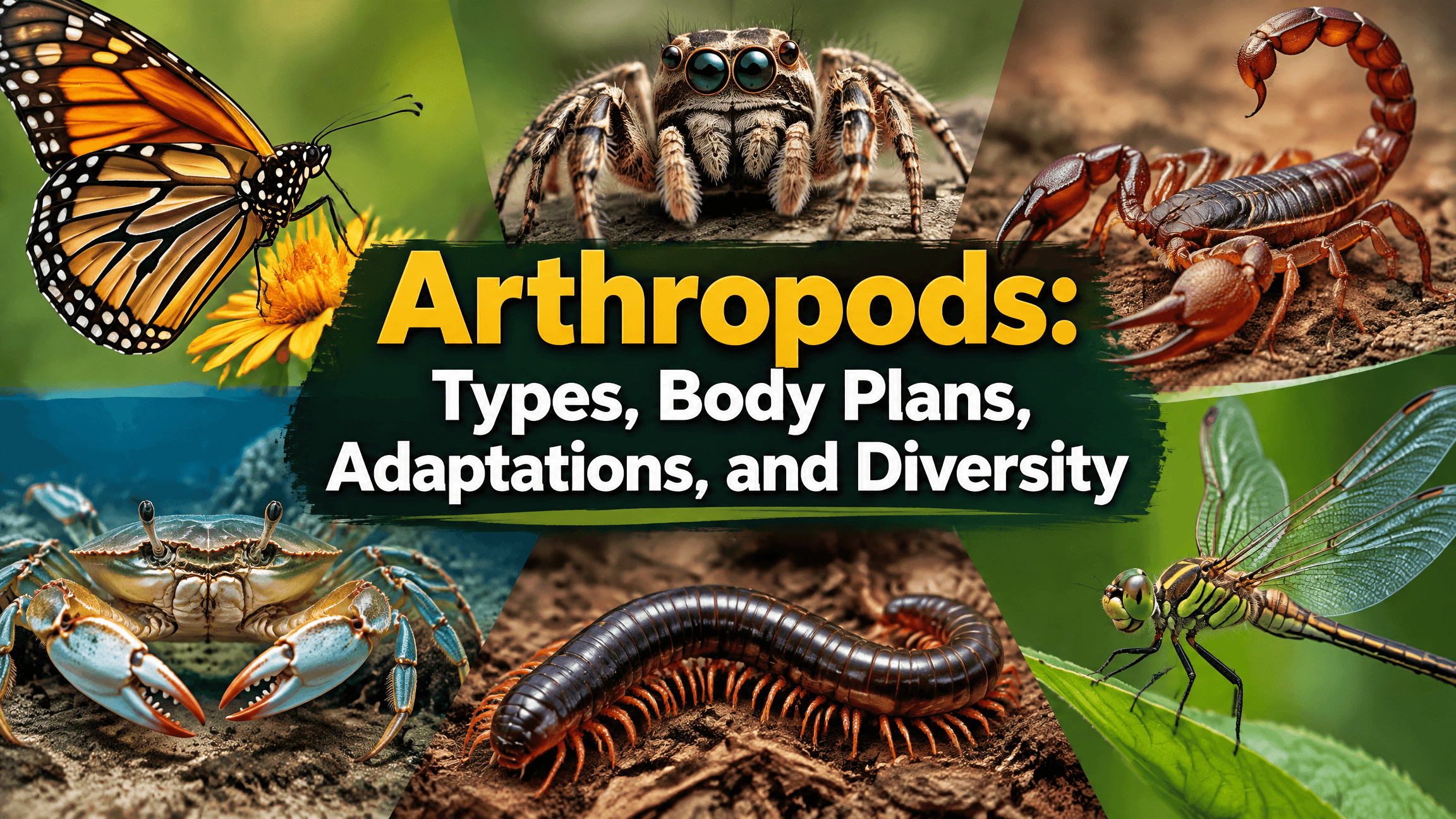
Arthropods: Types, Body Plans, Adaptations, and Diversity

Arthropods are animals with a distinctive structural toolkit: a segmented body, paired jointed appendages, and an external cuticle that forms an exoskeleton. That shared framework links animals that can look remarkably different, including beetles, spiders, scorpions, centipedes, millipedes, crabs, shrimp, barnacles, and horseshoe crabs. The same basic plan has been modified for walking, swimming, flying, … Read more