Lemurs, Lorises, and Tarsiers: Key Differences

Lemurs, Lorises, and Tarsiers: How These Primates Differ

Lemurs, lorises, and tarsiers can look superficially similar because many are small-bodied, tree-dwelling primates with large eyes. Modern classification, however, separates them in an important way. Lemurs and lorises belong to Strepsirrhini, while tarsiers belong to Haplorhini, the same major primate branch that also contains monkeys and apes. That relationship is why the older label … Read more

Great Apes vs Lesser Apes: Key Differences

Great Apes vs Lesser Apes: What Is the Difference?

Great apes and lesser apes are both members of the ape superfamily Hominoidea, but they belong to different families and have evolved noticeably different body sizes, movement styles, and social systems. Great apes belong to Hominidae and include orangutans, gorillas, chimpanzees, bonobos, and humans. The animals traditionally called lesser apes belong to Hylobatidae and include … Read more

Monkeys vs Apes: Key Differences Explained

Monkeys vs Apes: Key Differences Explained

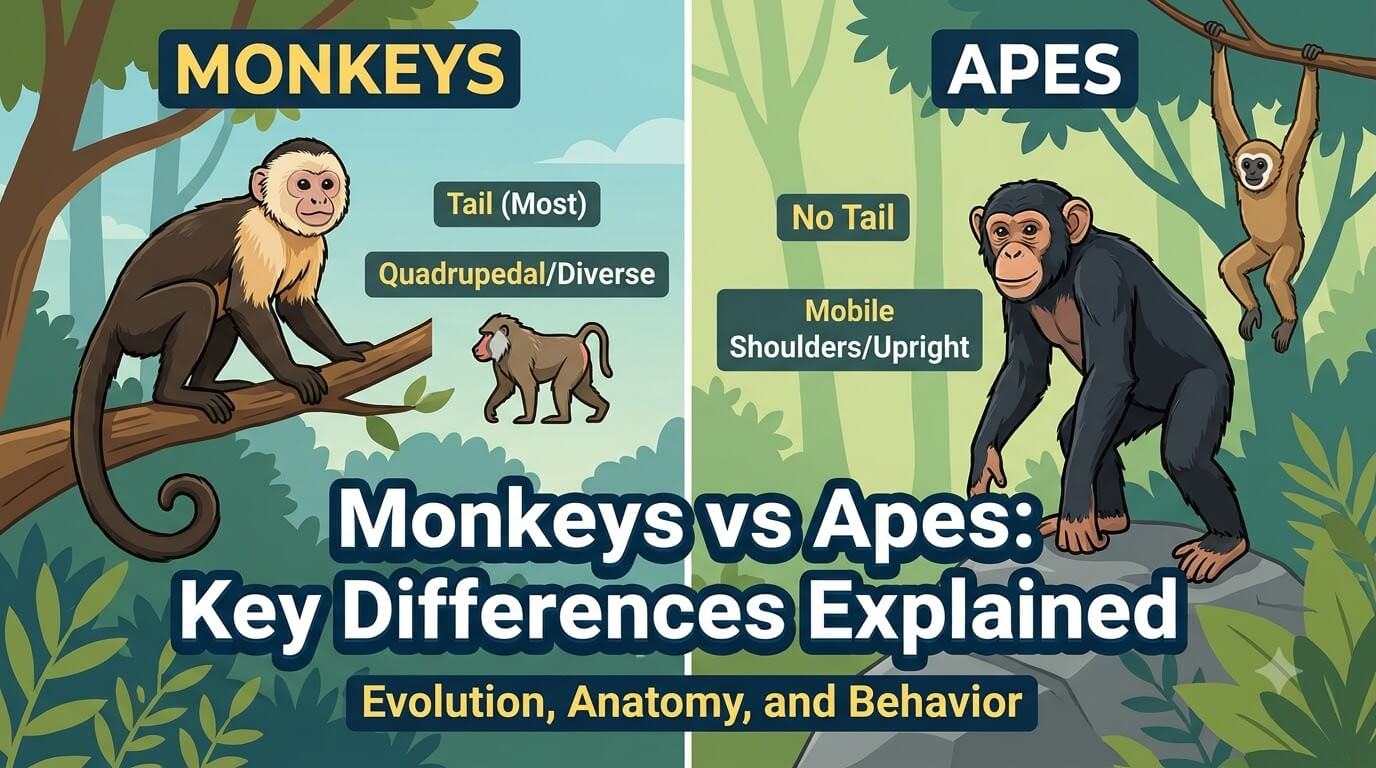
Monkeys and apes are both primates, but they are not the same kind of primate. In modern classification, monkeys belong to New World or Old World monkey lineages, while apes belong to the superfamily Hominoidea. The most familiar visible clue is the tail: living apes do not have an external tail, while most monkeys do. … Read more

What Makes an Animal a Primate? Key Traits Explained

What Makes an Animal a Primate?

What makes an animal a primate is not one obvious feature. Primates are mammals that belong to a shared evolutionary branch and tend to combine several traits, including mobile hands and feet, sensitive digits, forward-facing eyes, strong depth perception, flexible limbs, and relatively long periods of growth and learning. Many also have nails on most … Read more

Primates: Types, Traits, Behavior, and Habitats

Primates: Types, Traits, Intelligence, Behavior, and Habitats

Primates are a diverse order of mammals that includes lemurs, lorises, galagos, tarsiers, monkeys, apes, and humans. They are not defined by one feature such as opposable thumbs, large brains, or life in trees. Instead, primates share a broad evolutionary pattern that combines flexible limbs, grasping ability in many lineages, forward-facing eyes, sensitive hands and … Read more

Marine Mammal Conservation: Threats and Protection

Marine Mammal Conservation: Major Threats and Protection

Marine mammal conservation is not about saving one uniform group with one conservation status. Whales, dolphins, porpoises, seals, sea lions, manatees, dugongs, and sea otters include species and populations with very different trends. Some have recovered substantially from past exploitation, while others remain at serious risk from fishing gear, vessel strikes, habitat change, underwater noise, … Read more

Marine Mammal Migration: Why and How They Navigate

Marine Mammal Migration: Why They Travel and How They Navigate

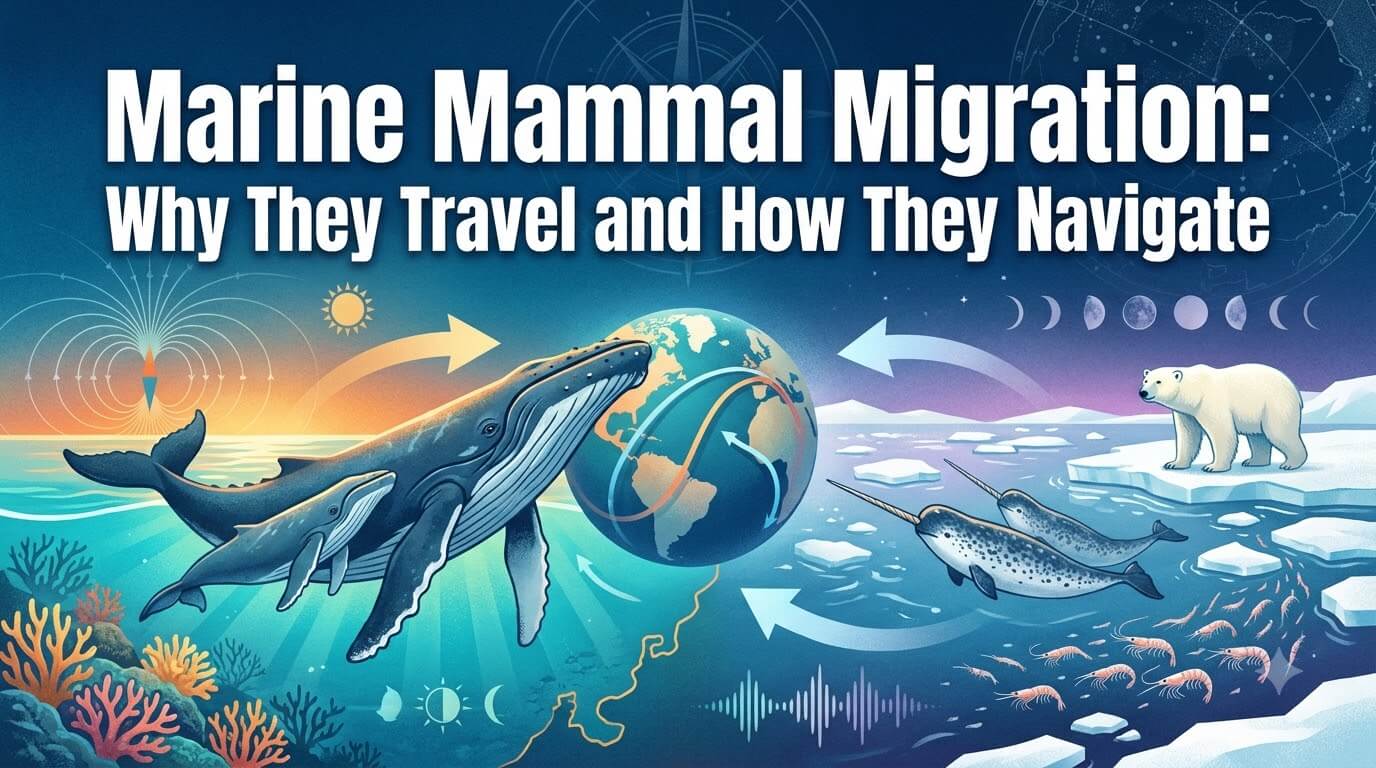
Marine mammal migration is the repeated movement of animals between areas that offer different seasonal advantages. A whale may leave a productive feeding ground for a warmer breeding area. A seal may spend months foraging at sea before returning to a traditional breeding colony. Arctic whales may follow shifting sea ice and openings in the … Read more

How Marine Mammals Communicate Underwater

How Marine Mammals Communicate Underwater

Marine mammals communicate underwater mainly through sound because sound can travel efficiently through water even when visibility is poor. Whales use calls and, in some species, songs. Dolphins and other toothed whales use whistles, burst-pulsed sounds, and clicks. Pinnipeds such as seals and sea lions can vocalize both underwater and in air, while sirenians and … Read more