
What Is Dog Behavior?
Dog behavior is communication, not random action
When a dog sits, pants, barks, whines, or nudges your hand, those actions usually mean something. Behavior is the way dogs communicate needs, intentions, feelings, and information about their environment. Rather than random movements, many behaviors serve specific functions such as getting attention, avoiding harm, asking for food, or coordinating with family members.
Why dogs use body language more than vocal language
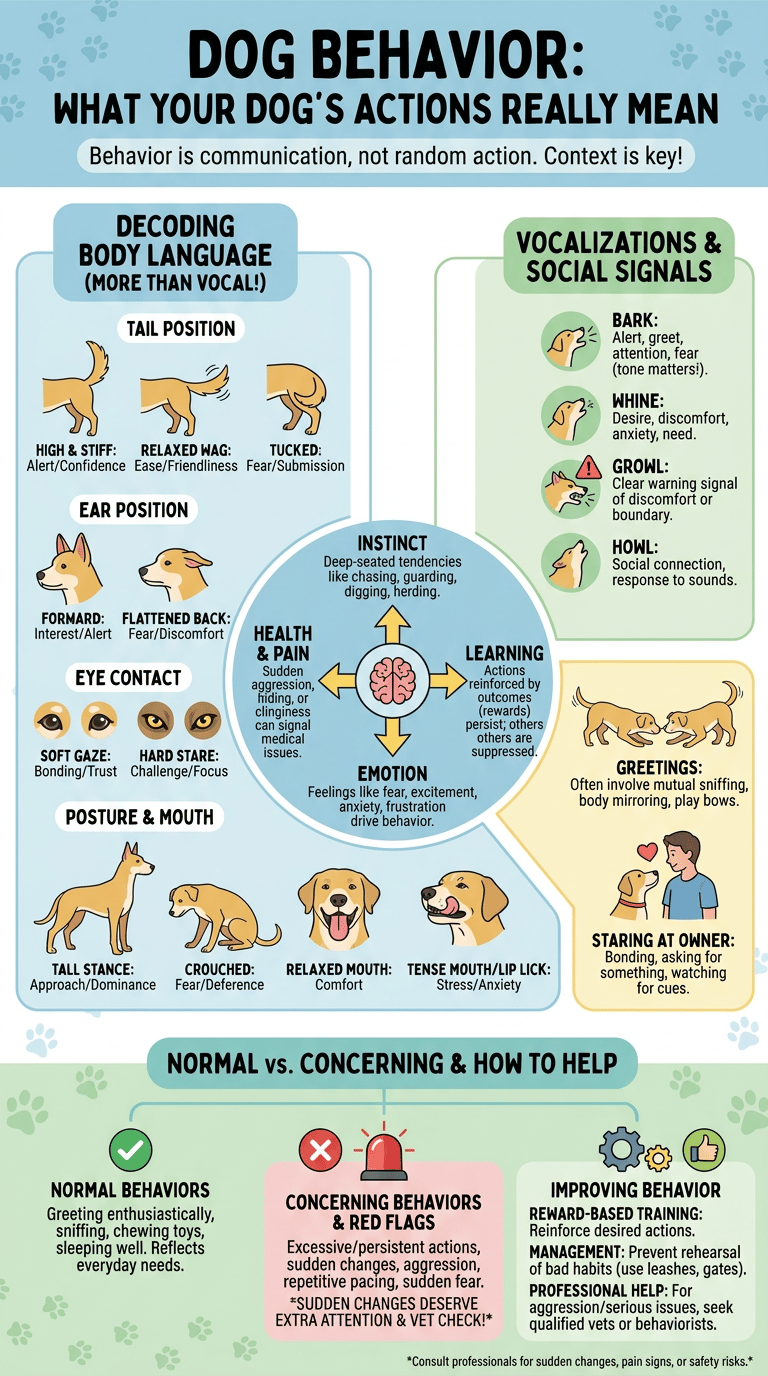
Dogs rely heavily on body language because posture, facial expression, tail movement, and ear position convey subtle messages quickly. Vocalizations like barking and whining are useful, but body signals often provide more precise information about a dog’s immediate emotional state and intentions. Observing body cues together with sounds gives a fuller picture of what a dog is communicating.
How instinct, learning, emotion, and environment shape behavior
Behavior arises from several interacting sources. Instincts provide basic tendencies such as chasing, guarding, or retrieving. Learning shapes which actions persist by reinforcing useful outcomes and suppressing others. Emotions influence how easily a dog will approach or avoid things, and the environment sets the stage for what behaviors are possible or rewarded. Together these factors make behavior flexible and context-dependent.
Readers comparing dog behavior may also find why your dog acts strange sometimes useful for a closer look at a related part of canine behavior.
Readers comparing https://animalfactcentral.com/dog-behavior-what-your-dogs-actions-really-mean/ may also find problems useful for a closer look at a related part of canine behavior.
Readers comparing https://animalfactcentral.com/dog-behavior-what-your-dogs-actions-really-mean/ may also find other dogs useful for a closer look at a related part of canine behavior.
Readers comparing dog behavior may also find crazy dog behaviors explained useful for a closer look at a related part of canine behavior.
Readers comparing dog behavior may also find things dogs do that confuse owners useful for a closer look at a related part of canine behavior.
Readers comparing dog behavior may also find dog in heat behavior useful for a closer look at a related part of canine behavior.
Why context changes the meaning of the same behavior
The same action can mean different things depending on the situation. A wagging tail may indicate excitement in one context and nervous arousal in another. A dog that barks while playing with a familiar person is communicating differently than a dog that barks at a stranger approaching the house. Reading behavior requires attention to who is present, what happened just before the action, and the dog’s overall body language.
Normal dog behavior vs concerning dog behavior
Behaviors that are usually normal
Many behaviors are part of everyday dog life and reflect normal needs and emotions. Examples include greeting people with enthusiasm, sniffing to gather information, chewing appropriate toys, and sleeping many hours. These behaviors support learning, social bonding, exercise, and mental stimulation.
Behaviors that may signal stress, fear, pain, or poor training
Some actions that look normal can also be signs of trouble when they are excessive, persist despite attempts to redirect them, or occur alongside other warning signals. Repetitive pacing, persistent trembling, avoiding interactions, sudden withdrawal from activities a dog previously enjoyed, or sudden reluctance to be touched in a particular area can all indicate stress, discomfort, or a need for behavior support.
Why sudden behavior changes deserve extra attention
A rapid change in behavior is an important signal. Even a behavior that is common for a dog can become concerning if it starts abruptly or intensifies. Sudden changes may reflect medical issues, pain, injury, environmental stressors, or new sources of fear. When a dog shows a clear shift in how it behaves, checking for health causes and seeking help from a veterinarian or qualified behavior professional is a prudent step.
The Main Types of Dog Behavior
Body language behavior
Tail position
A tail is a dynamic communication tool. Position, motion, and stiffness contribute to meaning. A relaxed tail that moves fluidly often signals ease, while a high, stiff tail can indicate alertness or confidence. Low or tucked tails frequently accompany fear or submission. Reading tail signals together with posture and facial cues helps avoid misinterpretation.
Ear position
Ear orientation helps dogs focus on sounds and express emotion. Forward ears can signal interest or alertness. Ears held back flat against the head are often associated with fear, submission, or discomfort. In breeds with erect ears these changes can be more obvious, but ear movement is meaningful across many dogs.
Eye contact
Direct eye contact can have multiple meanings. A soft gaze may reflect bonding and trust, while a hard stare can indicate a challenge or intense focus. Avoiding eye contact can be a sign of stress or submission. When combined with other signals, the eyes are a reliable piece of the communication puzzle.
Posture
Whole-body posture speaks to a dog’s intent. A tall, forward-leaning stance can signal approach or dominance tendencies, while a crouched or lowered posture suggests fear or deference. Raised hackles and a stiff body add emphasis to a dog’s message and should be interpreted as part of the larger context.
Mouth and facial tension
Relaxed mouths, panting without tension, and gentle facial expressions generally indicate comfort. Tight lips, snarling, teeth display, or a closed mouth with tense facial muscles can suggest stress, discomfort, or aggression risk. Yawning and lip licking may function as calming signals in stressful situations.
Social behavior
How dogs greet people
Greeting behavior varies by dog and situation. Many dogs approach with loose body language, sniffing hands and offering friendly gestures like play bows or gentle nudging. Some dogs prefer a slower, calmer greeting and may approach cautiously. The owner’s response influences whether a greeting remains calm or escalates into overexcitement.
How dogs greet other dogs
Dog-to-dog greetings often involve mutual sniffing of faces and rear ends, body mirroring, and brief play signals. Calm, reciprocal signals usually support peaceful interactions. If one dog’s signals are ignored or misread, greetings can become tense; watching for signs of discomfort and intervening calmly when needed helps prevent conflict.
Why some dogs are friendly with humans but reactive to dogs
Familiar experiences and socialization shape how dogs respond to people versus other dogs. A dog raised with positive interactions with humans may be relaxed around people but lack confidence or experience with other dogs. Breed tendencies, past negative encounters, and learned avoidance can also make a dog more reactive toward canine peers than toward people.
Vocal behavior
Barking
Barking serves many functions including alerting, greeting, soliciting attention, expressing frustration, or communicating fear. The tone, rhythm, and context of barking help distinguish whether a dog is warning of danger, asking for play, or signaling distress.
Whining
Whining often communicates a desire, discomfort, or anxiety. Puppies use whining to solicit care, and adult dogs may whine when they want attention, are unsure, or feel unwell. Because whining may arise from multiple causes, observing accompanying signals is essential to determine the need for change.
Growling
Growling is a clear warning signal. When a dog growls, it is communicating discomfort or a boundary. Addressing the trigger calmly and safely, and seeking professional guidance for persistent or unpredictable growling, reduces risk and helps the dog learn safer ways to express needs.
Howling
Howling is an ancient social vocalization that can connect dogs to group members across distance. It may occur in response to sounds, during periods of social arousal, or when a dog expresses loneliness. Context helps determine whether howling is purely communicative or a sign of social need.
Problem behavior
Chewing
Chewing is a natural activity that helps dogs explore, relieve teething discomfort, and occupy their minds. Chewing becomes a problem when dogs destroy household items or ingest dangerous objects. Offering appropriate chew toys and ensuring adequate mental and physical stimulation can reduce destructive chewing.
Jumping
Jumping up on people is a common attention-getting behavior. While often seen as friendly, jumping can be startling or unsafe around children or older adults. Teaching alternative greetings and reinforcing all-four-paws-on-floor behavior helps shift this habit in a dog-friendly way.
Pulling on leash
Pulling reflects a dog’s motivation to reach a destination or strong interest in environmental stimuli. Training methods that reinforce walking politely on a loose leash and management tools that keep walks safe support better outings for both dog and handler without relying on force-based techniques.
Separation-related behavior
Some dogs show distress when left alone, which can include vocalization, destructive actions, or elimination inside the home. The causes range from anxiety to lack of appropriate outlets for energy. Management, gradual desensitization, and behavior strategies can help, and severe cases warrant professional assessment.
Aggression and reactivity
Aggression and reactivity are complex and can involve fear, resource guarding, redirected frustration, or medical causes. Because safety is paramount, addressing aggression with calm management, veterinary assessment for medical contributors, and guidance from experienced behavior professionals is essential.
Reproductive and hormonal behavior
Dog in heat behavior
Female dogs in estrus often show changes such as increased attention from intact males and potentially shifts in social behavior. Owners commonly manage these changes through careful supervision and housing decisions until reproductive management steps are taken.
Mounting behavior
Mounting can stem from sexual drive, play, excitement, stress, or learned habit. Not all mounting is sexual; observing the triggers and the dog’s overall demeanor helps identify the underlying cause and informs an appropriate response.
Behavior changes after spaying
Spaying or neutering can alter hormonal influences on behavior for some dogs, but results vary. Some individuals show reductions in certain hormonally linked behaviors, while other behaviors are more strongly shaped by learning and environment and may persist. Owners considering surgery should discuss expected outcomes with a veterinarian.
Why Dogs Behave the Way They Do
Instinct
Chasing
Chasing reflects predatory sequence tendencies that many dogs inherited from ancestral hunting behaviors. Rapid movement from small animals, bikes, or cars can trigger pursuit. Management focuses on preventing dangerous situations and teaching reliable recall and impulse control.
Guarding
Guarding behavior stems from protective instincts toward resources, territory, or social partners. Dogs may guard food, toys, resting spots, or people. Training and management strategies that reduce perceived need to guard and teach alternative behaviors can reduce risk.
Digging
Digging can serve practical functions such as creating a cool resting spot, hiding food, or releasing energy. Providing outlets like designated digging areas and addressing boredom or temperature discomfort can reduce unwanted digging.
Herding
Herding breeds display focused chasing and nipping behaviors linked to moving animals or people. These instinctive tendencies can be channeled through appropriate jobs, structured activities, and training that redirects intensity into safe outlets.
Emotions
Fear
Fear drives avoidance, freezing, or escape behavior. When dogs experience fear, their priorities shift to safety. Gradual exposure, predictable environments, and professional behavior support help dogs build confidence without overwhelming them.
Excitement
Excitement motivates energetic behaviors such as jumping, barking, and increased movement. Teaching calm alternative responses and providing outlets for energy helps dogs express excitement in appropriate ways.
Anxiety
Anxiety can produce persistent vigilance, restlessness, pacing, or distress when separated from caregivers. Addressing anxiety often requires a combination of management, behavior modification, environmental enrichment, and, when needed, veterinary consultation.
Frustration
Frustration arises when a dog cannot access a desired outcome, leading to attention-seeking, vocalizing, or redirected behaviors. Predictable routines, clear communication, and teaching delay or impulse control reduce frustration.
Learning history
Reinforced behaviors
Behaviors that are rewarded tend to increase. If a dog learns that barking brings attention, the barking is more likely to continue. Identifying what reinforces an unwanted behavior and altering those consequences helps reshape it over time.
Accidental rewards from owners
Owners sometimes unintentionally reward behaviors by responding in ways the dog finds reinforcing. For example, giving treats to stop whining or pushing a dog away to end jumping can reinforce those actions. Conscious responses that reward desired behaviors instead are more effective.
Learned avoidance
Avoidance occurs when a dog learns to steer clear of situations that previously caused discomfort. Gradual, positive desensitization can help dogs approach formerly stressful situations with less fear.
Health and pain
Sudden aggression
When an otherwise gentle dog suddenly shows aggressive behavior, physical pain or medical conditions can be contributors. A veterinary evaluation is an important first step to rule out health causes before assuming a purely behavioral explanation.
Sudden hiding
Sudden withdrawal or hiding can reflect pain, illness, or extreme stress. These changes warrant attention and often benefit from a veterinary check to determine if medical treatment is needed.
Sudden clinginess
Increased clinginess or attention-seeking that appears abruptly may signal discomfort, anxiety, or a change in the dog’s environment. Observing for other signs and consulting a veterinarian can clarify whether the cause is medical or behavioral.
Sudden house-soiling
New elimination inside the home in a previously house-trained dog can be caused by medical problems, cognitive change, or stress. Veterinary assessment is recommended when house-soiling appears without a clear behavioral explanation.
Common Dog Behaviors and What They Mean
Why dogs lick people
Affection
Licking commonly functions as a bonding gesture, similar to grooming in social animals. Dogs may lick to show closeness or to strengthen social bonds with their human family.
Attention-seeking
Some dogs learn that licking gets attention, petting, or a reaction. If attention follows licking, that behavior is likely to continue. Redirecting to other attention-earning behaviors can reduce excessive licking.
Stress
Excessive licking or lip licking can also be associated with stress or discomfort. When licking accompanies other stress signals such as yawning, avoidance, or restless pacing, it may indicate the dog is uneasy.
Taste and scent
Dogs use their mouths to explore. Salty skin, food residues, or interesting scents can prompt licking simply because it is a way to gather sensory information.
Why dogs mount or hump
Excitement
Mounting can express overexcitement during play or social interactions. Redirecting the dog to calmer activities and teaching alternative play cues helps manage this behavior.
Stress
Humping can also emerge during stressful situations as a displacement behavior. Reducing the stressor and providing calming supports may decrease the behavior.
Play
In many cases mounting is part of rough-and-tumble play. Monitoring play intensity and intervening when it becomes excessive keeps interactions safe and comfortable for all participants.
Hormonal behavior
Sexual drive can contribute to mounting, especially in intact animals. Spaying or neutering can alter hormonally influenced behaviors for some dogs, but learning and context continue to shape actions as well.
Why dogs stare at their owners
Bonding
Long gazes can reinforce social bonds between dogs and humans. Eye contact released with relaxed body language often functions as an affiliative signal.
Asking for something
Dogs learn that looking at their people can communicate requests such as food, attention, or to be let outside. Combining eye contact with other cues helps clarify the dog’s goal.
Watching cues
Dogs are adept at reading human behavior. Staring can also indicate that a dog is attending closely to your body language for signals about what will happen next.
Why dogs follow you everywhere
Attachment
Following can show attachment and a desire to be near a trusted person. Many dogs enjoy staying close to their social partners for comfort and security.
Curiosity
Dogs that follow you may be interested in where you are going or what you are doing. Following keeps them in the loop and allows them to respond to new opportunities.
Anxiety
If following becomes clingy or occurs with signs of distress when separated, anxiety may be present. Addressing separation comfort and gradual independence-building helps in such cases.
Why dogs tilt their heads
Sound location
Tilting the head helps a dog adjust ear position to better locate a sound source. Small adjustments can refine auditory perception and improve signal understanding.
Attention
Head tilts can reflect focused attention and curiosity. Many dogs tilt their heads when they are trying to understand a human’s cue or an unusual noise.
Visual focus
A tilt can improve a dog’s view of someone’s face by changing the line of sight. This behavior often appears when dogs concentrate on a person’s expression or an object of interest.
When Dog Behavior Becomes a Problem
Repeated behavior that disrupts daily life
Constant barking
When barking is persistent and disrupts household routines, community peace, or sleep quality, it is a behavior to address. Identifying triggers and using consistent management and reinforcement of quiet behavior helps reduce nuisance barking.
Destructive chewing
Chewing that damages property or poses ingestion risk is a welfare and safety concern. Removing access to hazardous items, offering safe chews, and increasing enrichment reduce destructive tendencies.
Excessive licking
When licking becomes repetitive, causes skin problems, or interferes with daily life, it may indicate stress, medical discomfort, or compulsion. Veterinary and behavior assessment is useful when licking is excessive.
Intense pulling or lunging
Strong pulling on leash or lunging toward people and animals can create unsafe situations. Teaching polite leash manners, using management tools that protect safety, and working with a trainer can improve control and reduce risk.
Behavior that creates safety risks
Biting
Biting is a serious safety concern. Any bite that breaks skin should prompt medical attention for the people involved and a professional assessment of the dog’s behavior and environment. Preventing access to triggers and consulting professionals reduces future risk.
Resource guarding
Resource guarding involves a dog protecting valued items and can lead to snapping or biting if approached. Professional guidance helps teach safer ways for the dog to share resources and for owners to manage access safely.
Dog-to-dog aggression
Aggression between dogs poses risks to both animals and people. Avoiding high-risk encounters, managing interactions carefully, and seeking behavior support for underlying causes are important steps.
Human-directed aggression
Aggression toward people is particularly concerning. Safety planning, veterinary evaluation, and working with credentialed behavior professionals help address the causes and reduce risk to family members and the public.
Sudden behavior changes
Why sudden changes matter
Sudden changes in activity, sociability, mobility, or temperament can signal pain, illness, neurological issues, sensory loss, or significant emotional stress. Because these changes may have medical roots, they should not be ignored.
When to call a veterinarian
Contact a veterinarian when behavior changes are abrupt, dramatic, or accompanied by other signs such as changes in appetite, mobility, elimination, or responsiveness. A medical check can identify treatable causes and guide next steps.
When to contact a trainer or behaviorist
For persistent, safety-related, or complex behavior concerns that do not have a clear medical cause, a qualified, force-free trainer or a certified animal behaviorist can provide an assessment and structured plan. Professionals help tailor interventions to a dog’s history and needs while minimizing risk.
How to Improve Dog Behavior
Reward-based training
Reward the behavior you want
Reward-based training focuses on reinforcing desired actions with praise, treats, or play, which increases the likelihood those behaviors will recur. Consistent, immediate reinforcement makes it easier for a dog to learn what you expect.
Avoid reinforcing unwanted behavior
Reducing attention or access to rewards when a dog engages in unwanted behavior helps decrease that action. The key is to provide an appealing alternative behavior and reward it consistently so the dog learns a preferred option.
Keep sessions short
Short, frequent training sessions maintain a dog’s engagement and reduce frustration. Frequent practice in real-life contexts helps generalize new skills so they work reliably outside training sessions.
Management
Prevent rehearsal of bad habits
Management means arranging the environment to prevent unwanted behavior from being practiced and reinforced. Examples include removing tempting objects, supervising interactions, and setting up failures as learning opportunities for the dog.
Use leashes, gates, crates, and routines carefully
Management tools keep dogs and people safe while training and can reduce stress by providing predictability. When used humanely and appropriately, gates and crates offer safe boundaries and restful spaces, while leashes and routines support consistent expectations.
Behavior modification
Desensitization
Desensitization involves exposing a dog to a low level of a trigger that does not provoke a problematic response, then gradually increasing intensity as the dog remains comfortable. This gradual approach helps dogs build tolerance over time.
Counterconditioning
Counterconditioning pairs the presence of a trigger with something the dog loves, such as a high-value treat, so that the trigger becomes associated with positive outcomes. Combining this with desensitization is often effective for reducing fear or reactivity.
Professional help for serious issues
For aggression, severe anxiety, or behaviors that endanger the dog or people, seek help from credentialed professionals who use humane, science-based methods. They can design a tailored plan that addresses safety, welfare, and long-term change.
Dog Behavior FAQ
Why is my dog suddenly acting different?
Sudden changes may be caused by medical issues, pain, sensory changes, or new stressors. A veterinary review is a sensible first step. If medical causes are ruled out, a behavior assessment can help identify environmental or learning factors to address.
Why does my dog bark at nothing?
Barking at apparently empty space can stem from heightened alertness to distant sounds or smells, attention-seeking, boredom, or anxiety. Observing the timing and context of the barking helps narrow possible causes and choose appropriate interventions.
Why does my dog lick so much?
Licking can reflect affection, a way to seek attention, a sensory preference, or a sign of stress or medical irritation. If licking is excessive or causing skin problems, consult a veterinarian to check for underlying medical causes and consider behavior strategies to redirect the habit.
Why does my dog act aggressive around other dogs?
Dog-directed aggression can arise from fear, poor socialization, resource guarding, or past negative experiences. Management to prevent risky encounters, along with behavior modification guided by a professional, helps reduce reactivity while keeping everyone safe.
Can dog behavior problems be fixed?
Many behavior concerns can be improved or managed with the right combination of veterinary care, reward-based training, management strategies, and professional behavior support. The approach depends on the cause, the dog’s history, and the severity of the issue. Safety and welfare should guide decisions, and complex cases often benefit from expert help.
For general information about mammalian behavior and species-level fact sheets that provide context for how instincts and learning operate across mammals, see the Smithsonian National Zoo mammal resources, the San Diego Zoo Wildlife Explorers mammal guides, and the Animal Diversity Web mammalia overview for accessible background on how animals communicate and behave in natural and managed settings. Smithsonian National Zoo mammal resources, San Diego Zoo Wildlife Explorers mammal guides, Animal Diversity Web Mammalia.
If you observe sudden changes in your dog’s behavior, signs of pain, or any aggression that risks safety, consult a veterinarian and a qualified behavior professional rather than attempting risky interventions. Safety and humane methods protect both your dog and your family.

Ethan Walker is the founder and research editor of Animal Fact Central. He creates and reviews educational animal facts content using trusted wildlife, pet care, and science-based sources. His work focuses on making animal behavior, adaptations, habitats, and species facts clear, accurate, and engaging for everyday readers.
Read More Details About Ethan Walker: https://animalfactcentral.com/ethan-walker/