
Understanding dominant and submissive dog behavior helps owners read social signals, reduce conflict in multi-dog homes, and support dogs that are anxious or pushy. Many people use the word dominance to explain a wide range of behaviors, but that can lead to confusion and unhelpful advice. This article combines clear definitions, common signs, practical management strategies, and answers to frequently asked questions so you can interpret interactions more accurately and keep dogs safe and comfortable.
What Do Dominant and Submissive Dog Behaviors Mean?
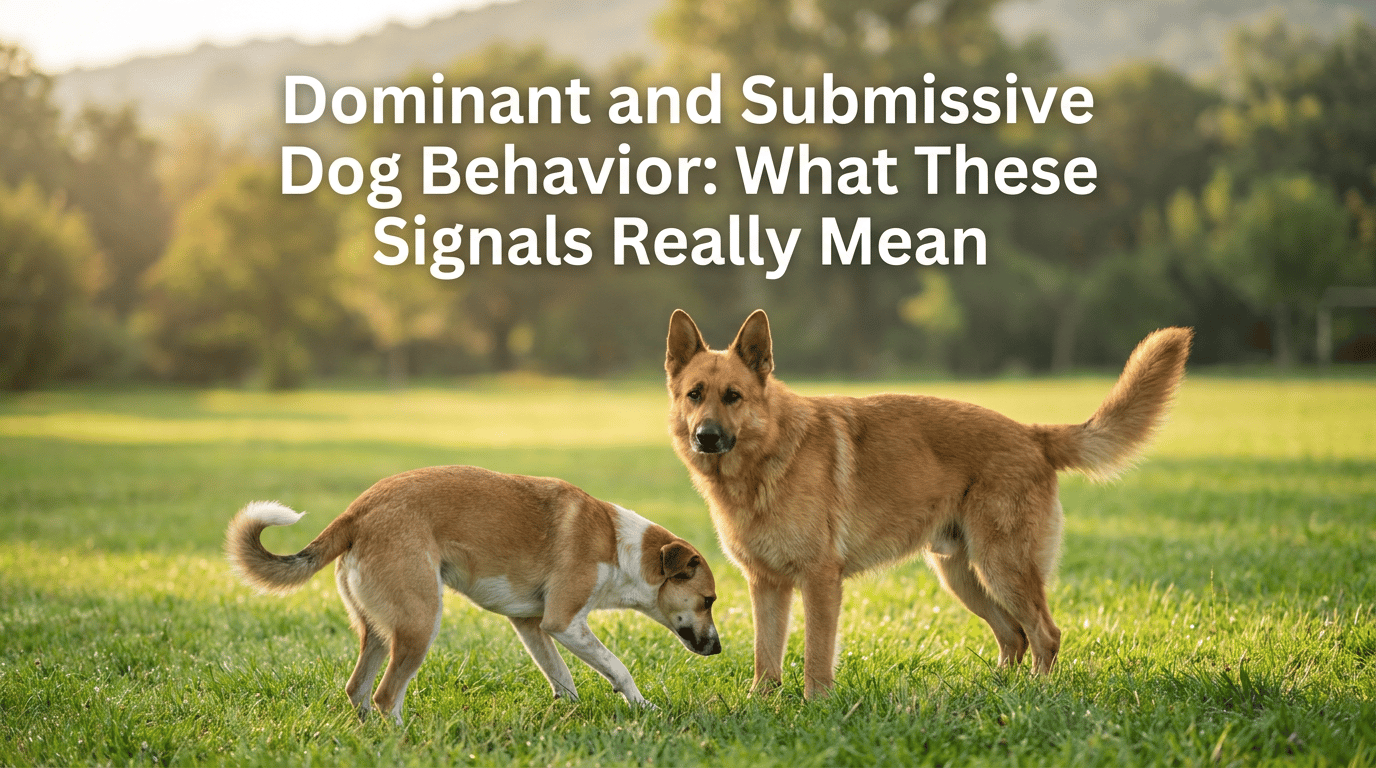
When people talk about dominance and submission in dogs, they are usually describing social signals that influence how dogs interact with each other and with people. These signals can relate to access to resources, safety, comfort, or attempts to defuse tension. Interpreting them correctly means considering context, body language, and the history of the animals involved.
Why dominance is often misunderstood
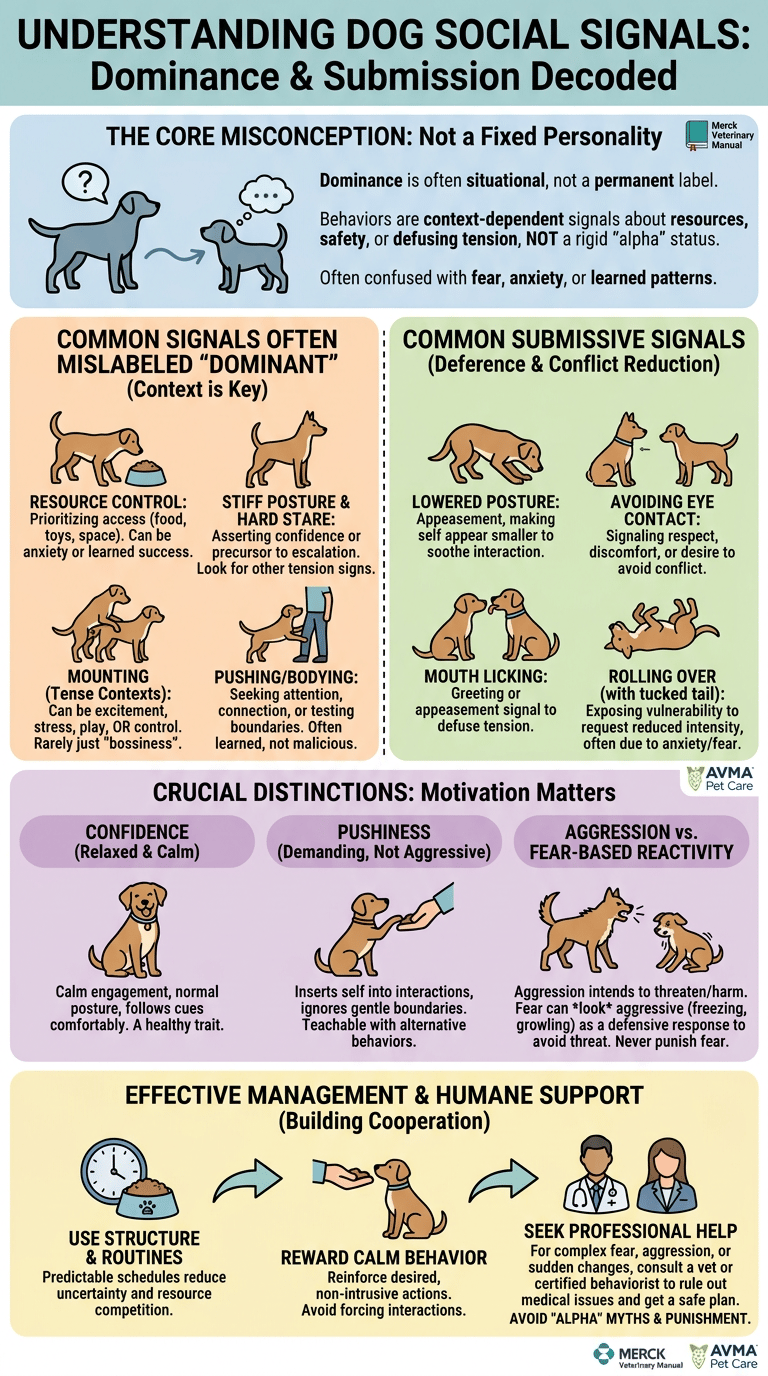
Dominance is sometimes treated as a single explanation for unwanted behaviors, but that oversimplifies how dogs communicate. Some behaviors labeled as dominant can instead be the result of fear, resource guarding, excitement, poor socialization, or learned patterns. Modern veterinary and behavior guidance emphasizes careful assessment and context rather than assuming a dog has a fixed desire to be an alpha. Trusted clinical resources such as the Merck Veterinary Manual describe how multiple factors produce social outcomes and why one-size-fits-all dominance approaches are risky and often ineffective. Merck Veterinary Manual
Dominance is not a fixed personality type
Dogs do not carry a single label such as dominant or submissive across every situation. A dog might control access to food but yield in greeting situations, or be assertive with unfamiliar dogs yet defer to a long-term housemate. Roles can shift with age, health, context, and the individuals present. Recognizing that social status can be fluid helps owners avoid rigid interventions and focus on specific interactions and triggers.
Submission is often communication, not weakness
Submission is a set of signals meant to reduce conflict and indicate non-threat. Submissive signals allow dogs to show deference, defuse tension, or seek reassurance. Interpreting submission as weakness can lead to inappropriate responses that increase a dog’s stress. Veterinarians and behavior professionals recommend reading submissive displays as communicative and responding with calm, predictable handling and positive reinforcement when training. AVMA Pet Care
Common Dominant Dog Behavior Signs
Below are behaviors often interpreted as dominance. Each entry includes notes about context because the same action can mean different things depending on the situation.
Controlling access to resources
A dog that positions itself to control toys, food bowls, resting places, or the owner’s attention may be asserting priority over those resources. Resource control can be motivated by confidence, learned success at retaining items, or anxiety about losing access. When resource control leads to conflict, management strategies and behavior modification are safer than punishment-based attempts to show who is boss. Clinical guidance recommends creating predictable routines and supervised exchanges to reduce tension. Merck Veterinary Manual
Blocking another dog’s movement
Some dogs place themselves in doorways or between another dog and a favored spot. This can be an attempt to intercept access or a way to maintain proximity to a valued object or person. Observe whether the blocked dog shows stress signals; if so, the behavior may escalate without management.
Standing tall and stiff
A rigid, elevated posture can be an assertion of confidence or a precursor to escalation. Stiffness combined with other signals like raised hackles, a fixed stare, or growling is more concerning than a single momentary posture. Reading the full body and the sequence of behaviors is essential before deciding how to respond.
Hard staring
Prolonged direct gaze can be an attempt to intimidate or control another animal’s behavior. Some dogs use hard stares in competitive contexts, while in other situations it may indicate intense focus or arousal. Look for accompanying signals—lip lifting, growling, or body tension—to assess risk.
Mounting in tense contexts
Mounting can be sexual, play-related, or a displacement behavior linked to excitement or stress. When mounting occurs repeatedly during tense encounters and is directed at specific dogs to interrupt their movement or attention, it can function as a controlling action. Because motives vary widely, avoid assuming a single cause without context.
Pushing into space
Some dogs physically push or lean into other animals or people to gain position or attention. This bodying can be an attempt to assert control, to gain connection, or to test preferences. Training that reinforces calm boundaries and offers alternative ways to request attention can reduce problematic pushing.
Common Submissive Dog Behavior Signs
Submissive behaviors help reduce conflict and show deference. They are usually communicative and aimed at defusing tension rather than indicating permanent weakness.
Lowered body posture
A dog that lowers its body, crouches, or keeps its head down is signaling deference. This posture decreases apparent size and can soothe a more assertive animal. If lowering occurs in response to routine handling or friendly interactions, it is often a benign appeasement signal.
Avoiding eye contact
Breaking gaze or avoiding direct eye contact is a common submissive cue. It can indicate respect, discomfort, or an attempt to prevent escalation. Some dogs trained to avoid eye contact due to fear may also benefit from confidence-building work.
Rolling over
Exposing the belly can be an appeasement behavior or an invitation to interact. Not every belly-up is a genuine invitation to be handled; some dogs expose the belly to indicate vulnerability and request reduced intensity in the interaction. Observing the broader context—tail position, ear orientation, and the dog’s movement—helps determine the intent.
Licking another dog’s mouth
Mouth-licking toward another dog is a classic appeasement signal often seen between familiar animals. It can communicate deference, greeting, or a desire to maintain calm during a tense moment.
Tail tucked
A tail held low or tucked between the legs is a clear sign of submission or anxiety. Because tail position is a strong indicator of emotional state, combine it with other signals to form an accurate reading.
Submissive urination
Some dogs urinate when greeting people or animals as a submissive response. This behavior is often involuntary and can be rooted in early social development or fear. Punishing a dog for submissive urination tends to increase anxiety and worsen the problem; instead, management and gentle desensitization methods are recommended by veterinary resources. Merck Veterinary Manual
Dominance vs Confidence vs Aggression
These terms describe different behavioral states that can look similar. Distinguishing them prevents misinterpretation and guides safer responses.
Confident behavior
Confidence appears as relaxed, upright postures, normal tail carriage, and calm engagement with the environment. Confident dogs accept handling, follow cues, and shift attention flexibly. Confidence is a healthy trait that can be encouraged through predictable routines, positive reinforcement, and social exposure.
Pushy behavior
Pushy dogs repeatedly insert themselves into interactions, demand attention, or ignore gentle boundaries. Pushiness is not necessarily aggression, but it can create tension and social friction. Teaching alternative behaviors—like waiting for attention, offering a sit, or moving to a mat—gives pushy dogs clear rules and reward-based options for getting what they want.
Aggressive behavior
Aggression involves behaviors intended to threaten or harm, such as growling, snapping, or biting. Aggression can be motivated by resource guarding, fear, pain, redirected frustration, or medical conditions. Because aggressive behaviors carry a real risk of injury, veterinary and behavior professional assessment is essential before attempting home interventions. Owner guidance and recommendations to seek professional help when safety is a concern are available from the American Veterinary Medical Association. AVMA Pet Care
Fearful behavior that looks aggressive
Fear can produce defensive actions that resemble aggression. A frightened dog may freeze, growl, or lunge if cornered. These defensive displays are efforts to avoid closer threat or to escape, not attempts to dominate. Because the underlying cause is fear, increasing pressure or punishment typically makes the situation worse. Gentle desensitization, counterconditioning, and management are safer approaches; a veterinarian or certified behaviorist can advise on suitable plans.
Submission vs Fear
Submission and fear share some outward signs, but the differences matter for treatment. Submission is often an active, communicative choice to avoid conflict, while fear can lead to avoidance, stress, and defensive reactions.
Polite appeasement signals
Polite signals like turning the head away, slow blinking, softening the eyes, or offering a paw are ways dogs say they do not want a fight. These behaviors are common in friendly or slightly anxious interactions and do not necessarily indicate clinical fear. Reinforcing calm, reward-based interactions helps these signals remain effective.
Fearful shutdown
When fear becomes intense, dogs may shut down, showing minimal movement, reluctance to eat, or avoidance of eye contact. This shutdown reduces visible signals but reflects high stress. Veterinary sources stress that persistent fear or sudden behavior shifts warrant medical and behavioral evaluation to rule out pain or illness. Merck Veterinary Manual
Learned helplessness
Chronic exposure to aversive handling or unpredictable punishment can lead to learned helplessness, where the dog no longer attempts to avoid unpleasant situations. This state is harmful to welfare and is not a desirable outcome of training. Positive, predictable handling and avoiding force-focused techniques support better welfare and learning.
When submissive behavior becomes concerning
Submissive signals become a welfare concern when they are constant, accompanied by avoidance of normal activities, or linked to avoidance of necessary care. If a dog is persistently withdrawn, refuses food, or shows signs of chronic stress, consult a veterinarian or qualified behavior professional to investigate and create a humane support plan. AVMA Pet Care
Dog-to-Dog Dominance and Submission
Interactions between dogs are shaped by resource access, history, and play styles. Understanding common scenarios helps owners manage multi-dog households safely.
Resource-related conflict
Competition over food, toys, resting spots, or people can trigger assertive or defensive behaviors. Preventing resource-related conflict usually involves management measures such as supervised feeding, separate bowls, and ensuring each dog has escape routes and safe resting spaces. Managing resources predictably reduces the frequency of confrontations before behavior modification begins.
Play behavior
Play often includes behaviors that resemble domination or submission—mounting, chasing, pinning, and role reversals are typical. Healthy play involves self-handicapping, role switching, and mutual engagement. Watch for signs that play is one-sided or escalating into real aggression; if one dog consistently injures the other or if play triggers persistent stress signals, intervene and adjust play opportunities.
Household dog relationships
Long-term relationships among household dogs often settle into predictable patterns. One dog may initiate resource control while another defers, but these patterns can be cooperative and stable. Problems arise when changes occur—illness, arrival of a new dog, or altered routines—or when one dog escalates beyond subtle negotiation. Regular observation, respectful management, and staged introductions help maintain harmony.
Why roles can change by situation
Roles are context-dependent. A confident dog in the park may yield to a more assertive dog during mealtime. Age, health, social experience, and environmental variables all influence who leads in a given situation. Expect fluidity and use targeted management for specific triggers rather than global labels.
Human-Dog Dominance Myths
Several popular myths about human-dog dominance persist and can harm relationships. Replacing myths with humane, evidence-aware practices supports better outcomes for dogs and families.
Why alpha dog advice can backfire
Advice that emphasizes physical dominance, forced submission, or confrontational techniques can increase fear, damage trust, and provoke defensive responses. Scientific and veterinary resources caution against punitive or dominance-based methods because they can worsen behavior problems and undermine welfare. Instead, focus on predictable leadership, clear rules, and reinforcement of desired behaviors. Merck Veterinary Manual
Why punishment can increase fear and aggression
Punishment can suppress behavior temporarily but often leaves the underlying motivation untreated. Punitive approaches can cause dogs to avoid cues, hide signs of pain, or escalate to reactive aggression. Behavior work that emphasizes rewards, desensitization, and environmental management is safer and more effective in the long term.
Better ways to build cooperation
Cooperation is best built through consistency, reward-based training, and environmental management. Useful strategies include:
- Teaching alternative behaviors such as sit-and-wait for attention or food
- Using predictable routines so dogs know what to expect
- Reinforcing calm behavior and gradually exposing dogs to challenging situations at a tolerable pace
- Seeking guidance from credentialed trainers or veterinary behaviorists for complex cases
These approaches increase desired behavior by teaching dogs what to do rather than relying on force to stop what they should not do.
How to Manage Pushy or Submissive Behavior
Practical, humane strategies can reduce pushiness and support dogs that are overly submissive. Management focuses on safety, predictability, and positive reinforcement.
Reward calm behavior
Reinforce calm, non-intrusive behaviors with treats, attention, or access to favored activities. For a pushy dog, mark and reward moments of waiting, sitting, or moving away. For a submissive dog, reward voluntary engagement and short, successful interactions to build confidence. Consistent timing helps dogs associate calm responses with positive outcomes.
Use structure and routines
Clear routines reduce uncertainty. Scheduled walks, feeding times, and predictable handling procedures help dogs feel secure and reduce competition. Structure does not mean dominance through force; it means creating reliable patterns that dogs can understand and depend on.
Prevent resource conflict
Minimize opportunities for competition by:
- Feeding dogs separately or in different rooms
- Providing multiple resting spots and toys
- Supervising interactions around highly valued resources
When conflict occurs, safely separate dogs and reassess management rather than attempting to fix disputes by confrontation.
Avoid forcing interactions
Do not force a shy dog to tolerate greetings or push a confident dog into overwhelming situations. Allow voluntary approaches and provide escape routes. Forcing proximity can increase stress and degrade trust. If interactions are necessary, use gradual desensitization and reward for calm engagement.
Build confidence in fearful dogs
Confidence grows through predictable successes and gentle exposure to novel situations. Start with low-stress exercises that the dog can perform reliably and reward every successful attempt. Short sessions that end on a positive note help prevent overwhelm. If fear is severe or linked to medical issues, consult a veterinarian or behavior specialist for an individualized plan. AVMA Pet Care
If behaviors could be influenced by health issues, a veterinary exam is appropriate. Parasites or skin problems can change how dogs interact; identification resources may assist owners and veterinarians in narrowing causes while professional diagnosis and treatment are sought. BugGuide
Dominant and Submissive Dog Behavior FAQ
Short answers to common questions can help owners decide when to observe, manage, or seek professional help.
Is my dog trying to dominate me?
Most human-directed dominance interpretations are better understood as learned behaviors that obtain rewards or attention. If a dog repeatedly performs an unwanted action and is reinforced unintentionally, the behavior will continue. Teach and reward alternative behaviors, set clear boundaries, and avoid confrontational methods. For concerns about aggression or safety, consult a veterinarian or certified behaviorist. Merck Veterinary Manual
Why does my dog roll over when I approach?
Rolling over can be an appeasement signal, a request for gentle interaction, or a sign of submission. Some dogs also display the belly when they want to be petted. Watch accompanying signals: a relaxed face and soft tail suggest comfort, while a tense body or tucked tail suggests stress. Respond calmly and avoid forcing interaction if the dog appears anxious.
Is mounting always dominance?
No. Mounting has multiple causes: sexual behavior, play, social signaling, or displacement linked to excitement or stress. Evaluate the context, frequency, and whether the mounted individual appears distressed. If mounting is problematic, redirect the dog to an alternative behavior and reward compliance.
Can a submissive dog become confident?
Yes. Many dogs gain confidence with predictable routines, gentle exposure to challenges, positive reinforcement for voluntary approaches, and avoidance of punishing techniques. For deeply rooted fear or rapid behavior changes, involve a veterinarian or professional behaviorist to rule out medical causes and design a safe training plan. AVMA Pet Care
If you are ever unsure about a behavioral change, sudden aggression, or persistent stress, seek a veterinary evaluation to check for pain, illness, or other medical contributors before assuming the cause is purely behavioral.
Reading dog social signals accurately helps owners promote safe, cooperative relationships between dogs and people. Replace myths about fixed dominance with context-based assessment, humane management, and reward-focused training to support healthier interactions and better welfare for all animals involved.

Ethan Walker is the founder and research editor of Animal Fact Central. He creates and reviews educational animal facts content using trusted wildlife, pet care, and science-based sources. His work focuses on making animal behavior, adaptations, habitats, and species facts clear, accurate, and engaging for everyday readers.
Read More Details About Ethan Walker: https://animalfactcentral.com/ethan-walker/