
Amphibians are disappearing because many populations are being hit by several pressures at the same time. Habitat loss removes breeding ponds, streams, forests, and underground shelter. Infectious diseases can spread through susceptible populations. Pollution can harm eggs, larvae, adults, prey, or the water and soil they depend on. Climate change alters rainfall, temperature, snowpack, drought, and the timing of breeding. Invasive species, roads, collection, and wildlife trade can add further stress.
No single explanation fits every frog, toad, salamander, newt, or caecilian. Some species remain common, some are declining only in part of their range, and others face a high risk of extinction. The central problem is that amphibians often depend on several connected habitats and life stages. A population may survive one pressure but fail when disease, habitat damage, and extreme weather overlap.
Quick Answer
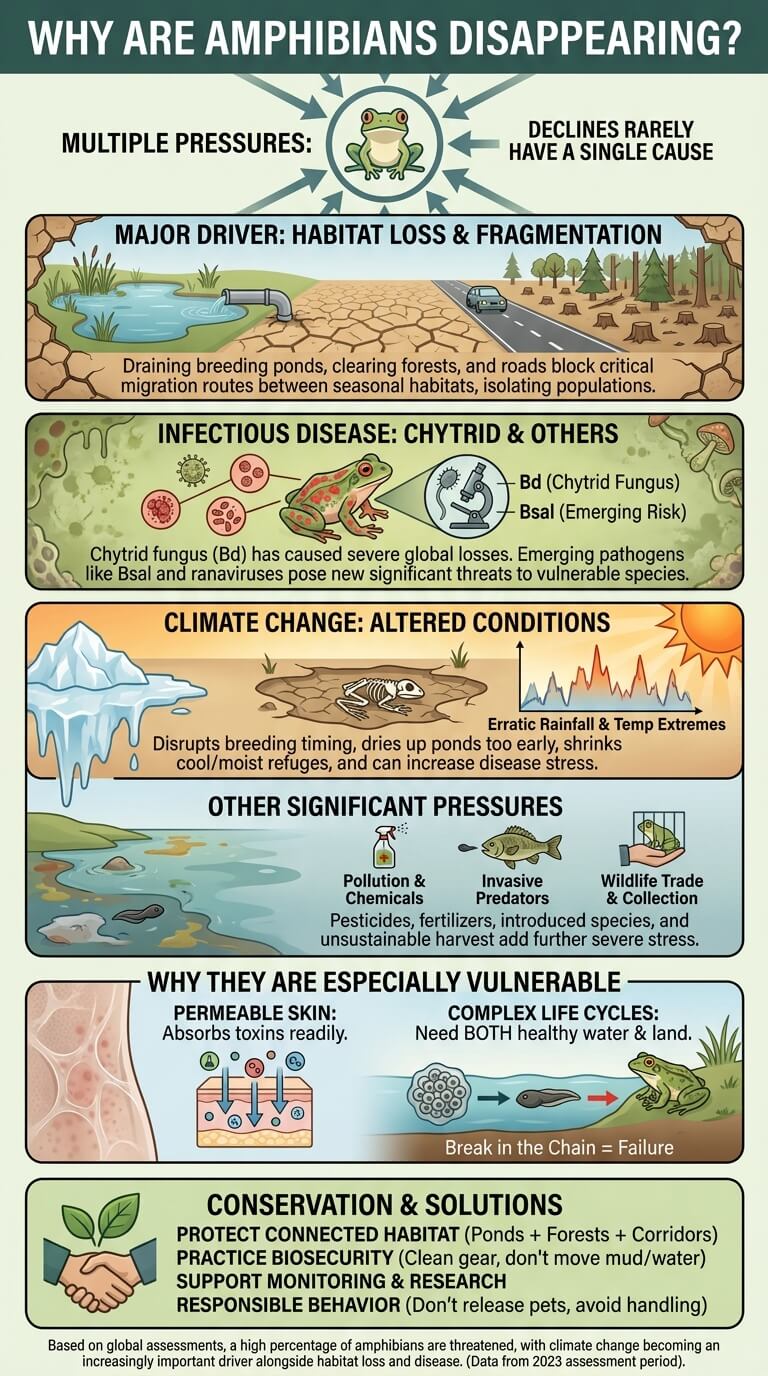
Declines Rarely Have a Single Cause
A breeding pond may still hold water, yet the forest around it may have been cleared. A stream may look intact, yet a pathogen may be present. A protected reserve may preserve habitat, yet a long drought can prevent successful reproduction. These examples show why amphibian decline is better understood as a multiple-pressure problem than a search for one universal cause.
The strongest driver varies by place and species. Habitat change is widespread and can directly remove the places amphibians feed, hide, breed, and overwinter. Chytrid disease has caused severe losses in some regions and species. Climate change is becoming a larger concern, especially where species have small ranges, narrow temperature tolerances, or breeding cycles tied closely to rainfall.
Global Patterns and Local Differences
The second Global Amphibian Assessment found that 40.7 percent of assessed amphibian species were globally threatened, meaning they were classified as Vulnerable, Endangered, or Critically Endangered. The assessment was completed in 2022 and published in 2023, so the percentage should always be attached to that assessment period rather than treated as an unchanging live count.
The 2023 global amphibian assessment also found that climate-related pressures had become an increasingly important cause of genuine status deterioration after 2004, while habitat loss remained a major driver. The pattern was not evenly distributed. Salamanders and amphibians in the Neotropics showed especially strong deterioration, and many species still lacked enough data for a confident trend.
How Scientists Know Amphibians Are Declining
Long-Term Surveys and Historical Records
Scientists document decline by comparing observations across years. They may count calling frogs, search standardized stream sections, record egg masses, trap or photograph salamanders, sample environmental DNA, or revisit sites described in older museum and field records. A decline becomes more convincing when several methods point in the same direction.
Repeated surveys matter because amphibian activity changes with rainfall, temperature, season, and time of day. A dry night can make a healthy population appear absent. A wet breeding night can make a small population appear abundant. Long-term monitoring helps separate temporary detection changes from a persistent fall in abundance, reproduction, occupancy, or range.
Conservation Assessments and Data Gaps
Conservation assessments combine information about distribution, population trend, habitat, threats, and the size or fragmentation of a species’ range. A species can be placed in a threatened category even when its exact population is unknown, provided that the available evidence meets defined criteria. Categories can also change when new information improves understanding rather than because the animal suddenly became safer or more endangered.
Data gaps remain a major challenge. Many amphibians are small, nocturnal, seasonal, underground, high in forest canopies, or restricted to remote mountains. Some species are known from only a few specimens or locations. A lack of recent records may indicate severe decline, but it can also reflect limited survey effort, difficult access, or imperfect identification.
Why Absence Is Difficult to Prove
Declaring a species extinct requires more than failing to find it once. Researchers must consider whether suitable habitat remains, whether the animal could persist in an unsurveyed area, whether the survey occurred in the right season, and whether the method could reliably detect a small population.
This caution prevents premature extinction declarations, but it also means official totals may lag behind reality. Some species can remain listed as Critically Endangered and possibly extinct for years while searches continue. Local disappearance, called extirpation, is easier to establish when a well-monitored population vanishes from a known site, but that does not prove the species is gone everywhere.
Why Amphibians Can Be Especially Vulnerable
Permeable Skin and Chemical Exposure
Amphibian skin is living tissue involved in water balance, gas exchange, defense, and communication. Its permeability can allow water and some dissolved substances to move across the surface more readily than through the dry, keratinized skin of many reptiles or mammals. This does not mean every chemical passes through every amphibian at the same rate, but it creates important exposure pathways.
Dependence on Aquatic and Terrestrial Habitats
Many amphibians need water for eggs or larvae and land for feeding, shelter, migration, and winter survival. Protecting only a breeding pond may not be enough if adults must cross a road to reach it or if the surrounding forest has been removed.
This two-part life history creates more possible failure points. A pond can dry too early, a stream can become silted, a forest can lose moist cover, or a migration corridor can be blocked. Species that remain aquatic or terrestrial for most of their lives still depend on particular moisture, temperature, and shelter conditions.
Small Ranges and Specialized Breeding Sites
Some amphibians occupy only one mountain, valley, island, cave system, or stream network. Others breed only in temporary pools, water-filled plant structures, specific stream reaches, or narrow bands of cloud forest. A species with a small range cannot easily escape a local fire, drought, disease outbreak, mine, dam, or land conversion.
Habitat Loss, Fragmentation, and Wetland Change
Draining, Development, Agriculture, and Forest Alteration
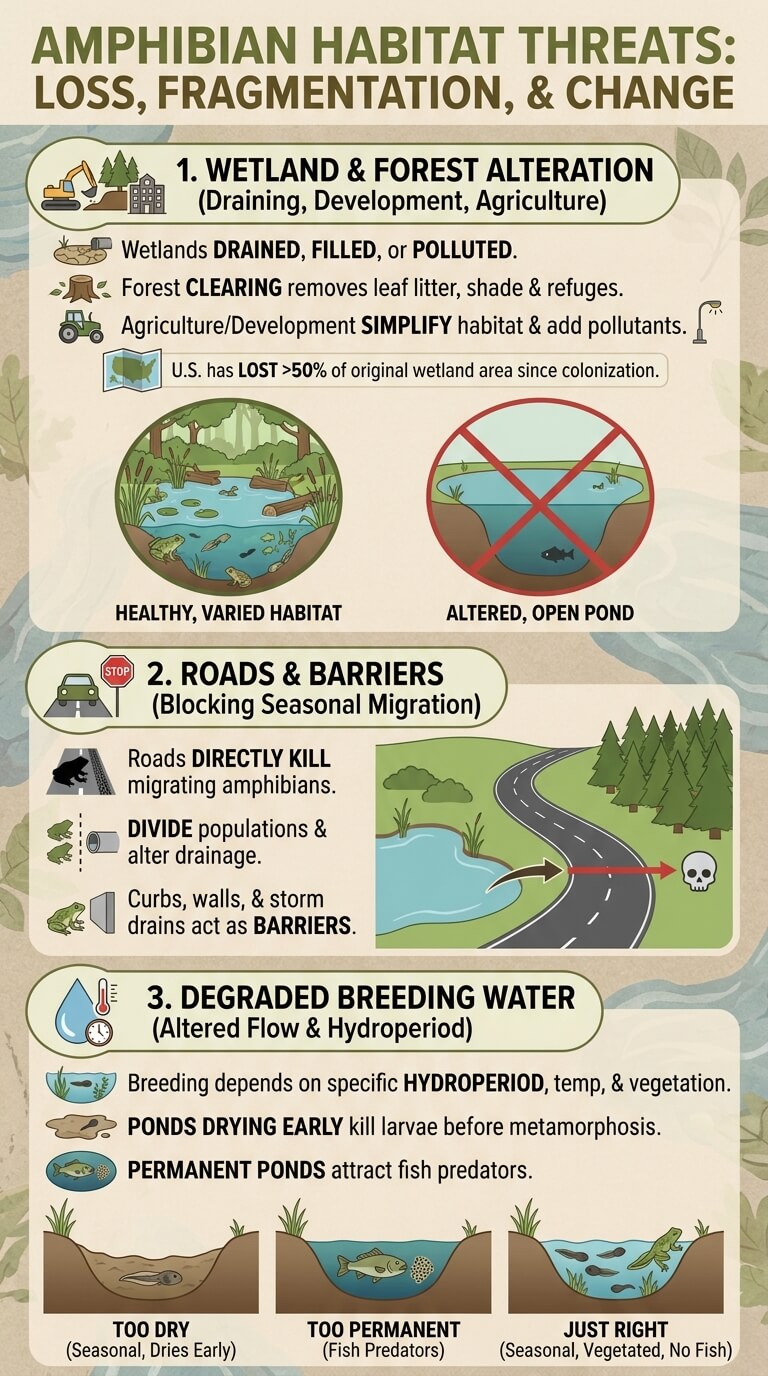
Wetlands may be drained, filled, deepened, polluted, isolated, or converted into open-water ponds that no longer provide the vegetation and shallow edges needed by local amphibians. Forest clearing removes leaf litter, shade, fallen wood, root spaces, and humid refuges. Agriculture and urban development can simplify habitat while adding roads, runoff, noise, light, and predators associated with people.
The U.S. Fish and Wildlife Service overview of wetland conservation notes that the United States has lost more than half of its original wetland area since European colonization and that recent patterns include losses of vegetated wetlands. A newly created open pond is not automatically equivalent to a seasonal woodland pool, bog, marsh, or forested wetland.
Roads and Barriers Between Seasonal Habitats
Roads can kill amphibians directly during seasonal migrations. They can also divide a population into smaller groups, alter drainage, increase salt and oil runoff, and make it harder for juveniles to disperse. Curbs, retaining walls, storm drains, and dry open ground can become barriers even when the road itself is narrow.
Degraded Breeding Water and Altered Stream Flow
Amphibian breeding depends on more than the presence of water. Depth, temperature, oxygen, vegetation, hydroperiod, current speed, predators, sediment, and chemistry all influence whether eggs and larvae survive. A pond that dries earlier may kill larvae before metamorphosis. A pond that becomes permanent may attract fish that consume eggs and tadpoles.
Infectious Disease
Chytridiomycosis Caused by Bd
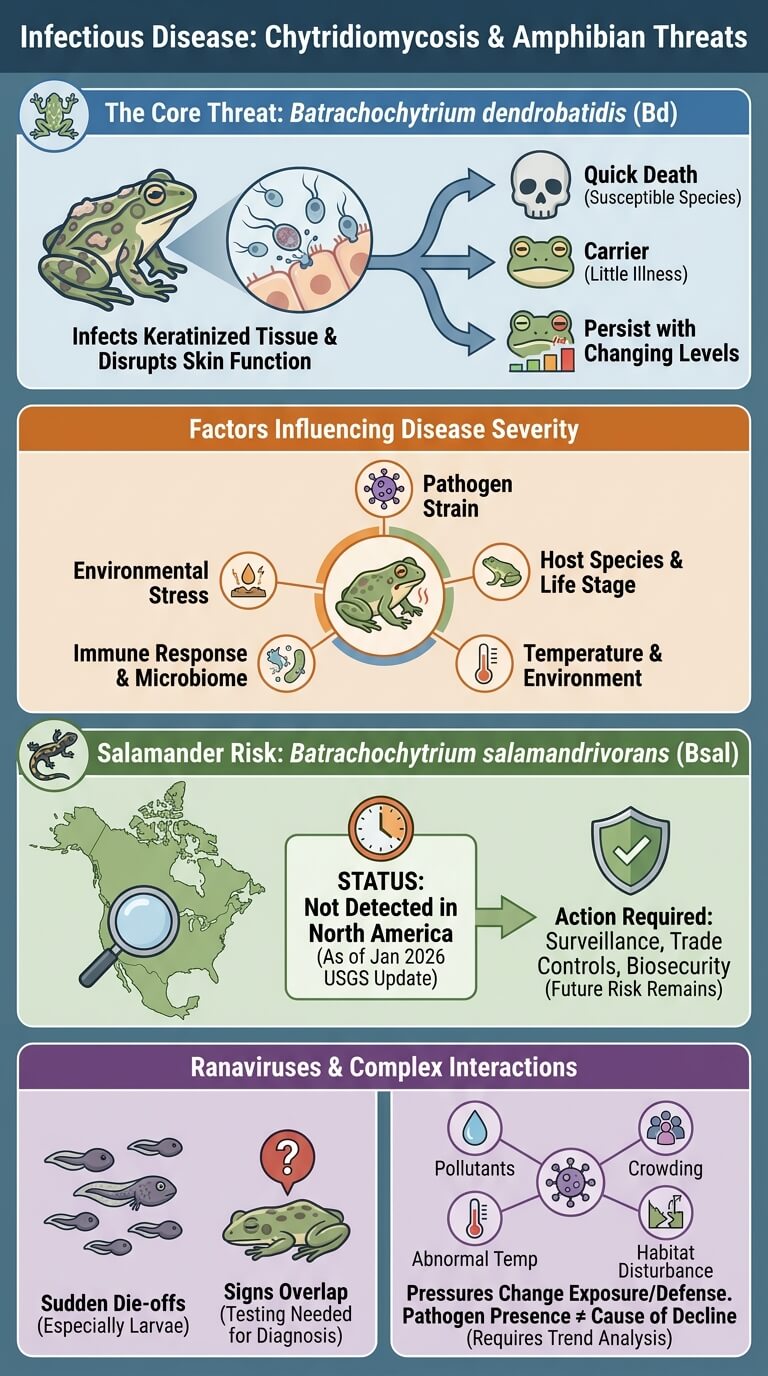
Batrachochytrium dendrobatidis, usually shortened to Bd, is a chytrid fungus that infects keratinized amphibian tissues. In susceptible post-metamorphic animals, infection can disrupt skin function and lead to the disease chytridiomycosis. Outcomes vary widely. Some species die quickly, some carry infections with little obvious illness, and others persist with changing disease levels.
The USGS amphibian disease program identifies chytrid fungi, ranaviruses, and other pathogens as important causes of amphibian illness and mortality. Disease effects depend on the pathogen strain, host species, temperature, life stage, immune response, microbial community, and environmental stress.
Bsal and Salamander Risk
Batrachochytrium salamandrivorans, or Bsal, is a related chytrid fungus associated with severe disease in susceptible salamanders. It has caused major mortality in parts of Europe and is a serious concern for North America, which contains exceptional salamander diversity.
As of the USGS Bsal surveillance update published in January 2026, the pathogen had not been detected in North America. That statement is time-sensitive and does not mean future risk is low. Continued surveillance, trade controls, reporting, and field biosecurity are designed to reduce the chance of introduction and improve early detection.
Ranaviruses and Disease Interactions
Ranaviruses can infect amphibians and may cause sudden die-offs, particularly among larvae. Infection signs can overlap with other diseases or environmental injuries, so dead animals should not be diagnosed by appearance alone. Wildlife agencies and diagnostic laboratories may need samples, site information, and testing to determine the cause.
Pathogens can interact with other pressures. Poor nutrition, abnormal temperatures, crowding, pollutants, or habitat disturbance may change exposure or host defenses. At the same time, finding a pathogen does not prove it caused a population decline. Researchers compare infection, mortality, reproduction, and population trends before drawing that conclusion.
Climate Change and Extreme Weather
Drought, Heat, Snowpack, and Breeding Timing
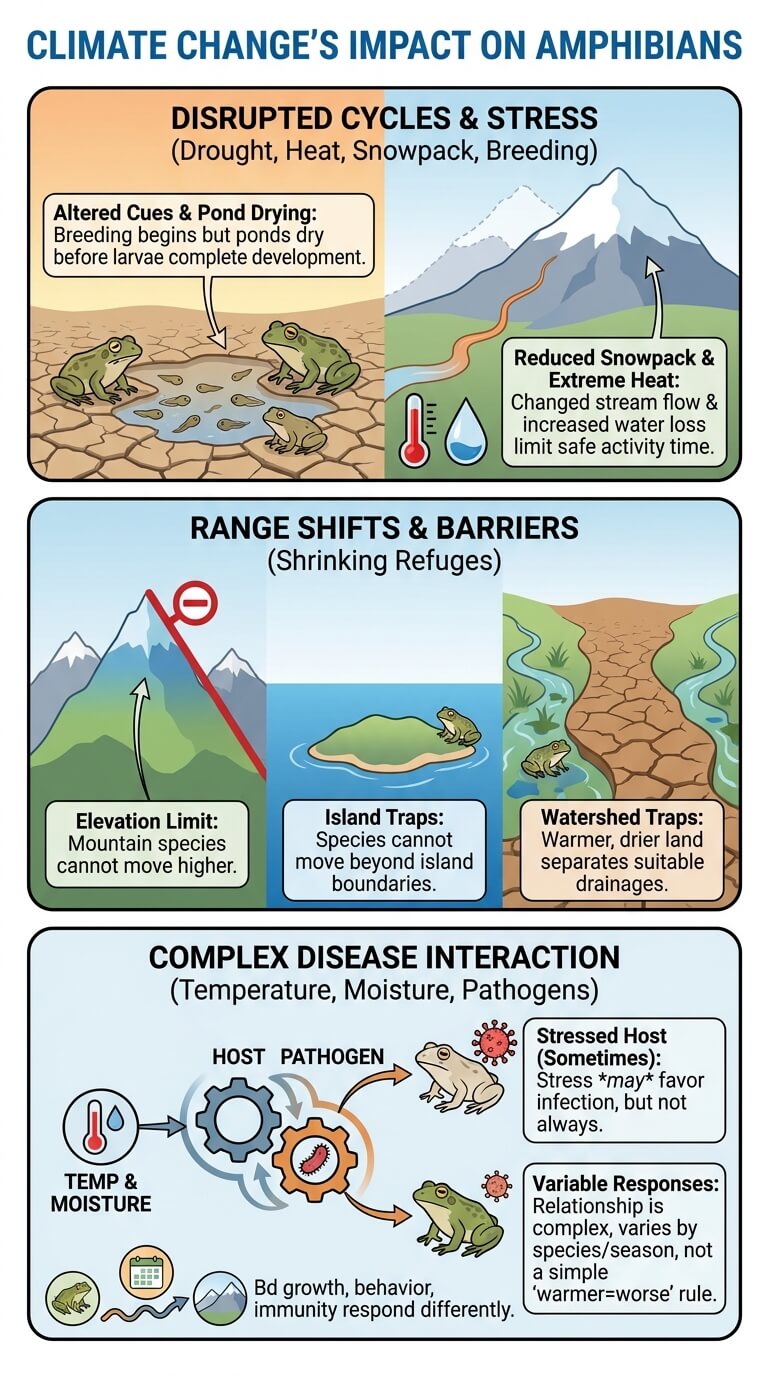
Many amphibians begin breeding in response to rainfall, temperature, snowmelt, or seasonal flooding. Climate change can alter those cues and the conditions that follow them. Adults may arrive at a pond that dries before larvae complete development. Reduced snowpack can change mountain stream flow. Extreme heat can increase water loss and reduce safe activity time.
Range Shifts and Shrinking Climate Refuges
As temperatures and rainfall patterns change, suitable habitat may shift uphill, poleward, or into cooler and wetter microclimates. Mountain species can face an elevation limit. Island species cannot move beyond the island. Stream species may be trapped within a watershed if warmer, drier land separates them from another suitable drainage.
How Climate Can Interact With Disease
Temperature and moisture affect both amphibians and pathogens. Conditions that stress the host may sometimes favor infection, but the relationship is not a simple rule that warmer weather always increases disease. Bd growth, host behavior, immune function, and exposure can respond differently across elevations, seasons, and species.
Pollution and Chemical Exposure
Pesticides, Fertilizers, Metals, and Road Runoff
Amphibians may encounter pesticides in agricultural runoff, lawn treatments, mosquito-control applications, drift, contaminated prey, or water flowing from treated land. Fertilizers can alter nutrient levels and oxygen conditions. Metals, petroleum products, road salt, and other contaminants may enter streams and ponds from mines, roads, industry, and urban drainage.
The EPA research on pesticide exposure in frogs emphasizes that uptake can occur through several routes and life stages. Risk depends on the chemical, concentration, exposure time, species, temperature, water chemistry, and whether several substances occur together.
Direct Toxicity Versus Indirect Habitat Effects
A contaminant can kill an animal directly, but sublethal and indirect effects can also matter. Exposure may affect growth, development, movement, reproduction, immune function, or predator avoidance. Fertilizer runoff may stimulate algal growth and later reduce oxygen. An insecticide may reduce the prey available to adult frogs even when it does not cause immediate frog mortality.
Why Results Differ by Species and Dose
Amphibians do not share one universal sensitivity. Eggs, larvae, juveniles, and adults may respond differently. A chemical can be harmful at one concentration and produce no detectable effect at a lower concentration. Formulations, temperature, pH, and exposure duration can change toxicity.
Invasive Species, Harvest, and Other Pressures
Introduced Predators and Competitors
Fish introduced into naturally fishless ponds can consume amphibian eggs and larvae. Non-native frogs may prey on native species, compete for food or breeding sites, and carry pathogens. Invasive plants can change shade, water depth, oxygen, and shoreline structure.
Wildlife Trade and Collection
Trade can threaten narrowly distributed species through collection, especially when demand targets rare colors or newly described animals. Moving live amphibians also creates a pathway for pathogens to cross natural barriers. Captive-bred trade with health safeguards can reduce some pressure, but it does not eliminate disease or welfare concerns. Colorful poison dart frogs show why trade impacts must be checked species by species, because captive breeding, wild collection, and conservation status are not the same issue.
Wild amphibians should not be collected, moved, purchased from unverified sources, or released. A captive animal may carry pathogens without obvious illness and may not belong to the local species or genetic population.
Light, Noise, Roads, and Emerging Stressors
Artificial light can change insect availability, calling behavior, movement, and predator exposure. Traffic noise can mask calls or alter when males call. Roads create mortality, chemical runoff, heat, and fragmentation. Microplastics, pharmaceuticals, wildfire effects, and novel contaminants are also being studied.
Why Threats Often Compound
Multiple Stressors Across the Life Cycle
An amphibian can encounter different pressures at each stage. Eggs may face contaminated water. Larvae may face introduced fish and early pond drying. Juveniles may cross roads. Adults may lose forest shelter or become infected during breeding gatherings.
Stressors can add together or interact. A small habitat fragment may hold fewer refuges during drought. Pollutants may change immune responses. Disease may be more damaging when animals are poorly nourished. These interactions help explain why solving one problem sometimes produces only a partial recovery.
Delayed Loss and Slow Recovery
A population may persist for years after habitat becomes too small or isolated to support long-term replacement. Adults can return to breed even when few young survive. This delay can make a site look stable until the remaining adults age and disappear.
Regional Variation
In one region, Bd may be the dominant driver. In another, wetland drainage, stream modification, invasive fish, drought, or collection may matter more. Even neighboring species can respond differently because they breed at different times, use different elevations, or tolerate different temperatures.
Good conservation begins with diagnosis. Managers need to know which species are present, which life stage is failing, where movement occurs, what pathogens have been detected, and how water and land conditions are changing.
What Amphibian Conservation Can Do
Protect Connected Habitat and Breeding Sites
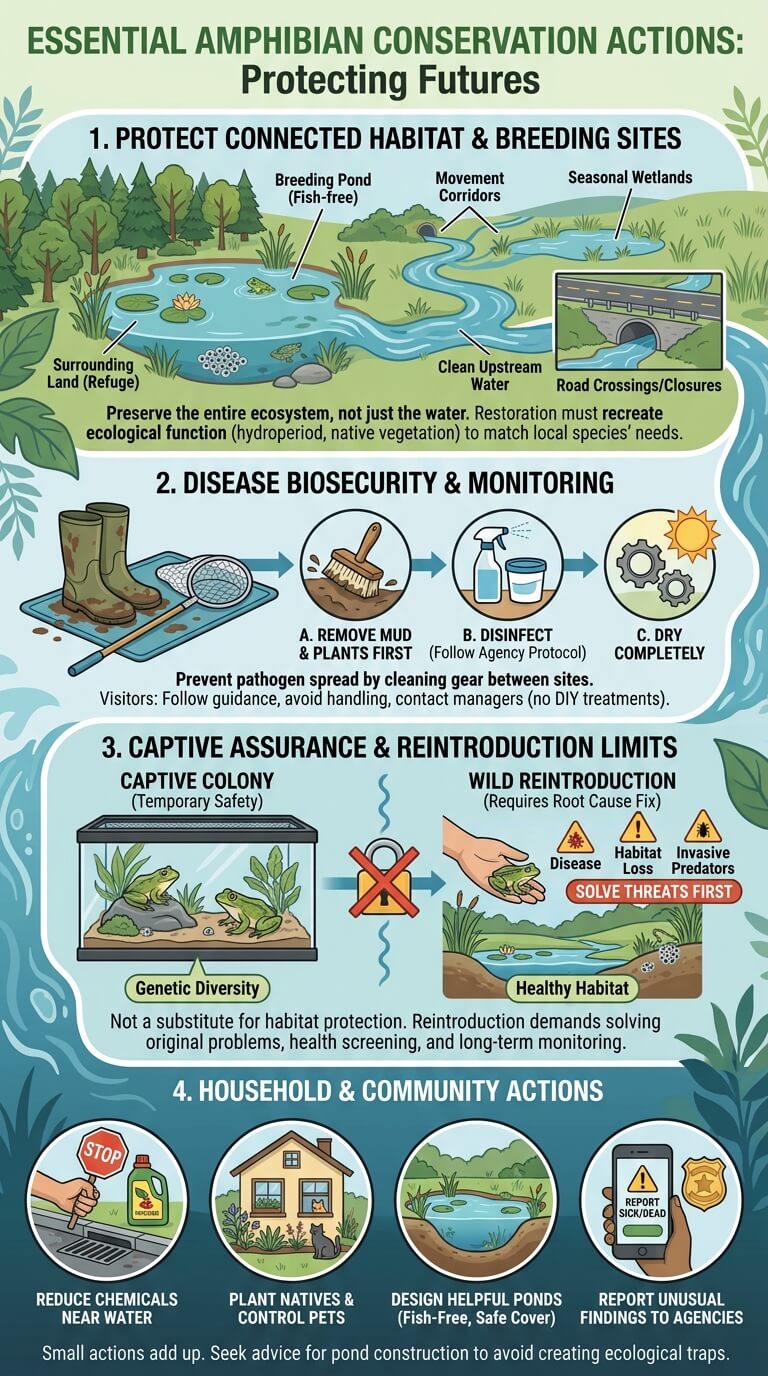
Protecting a pond without its surrounding land leaves many species only partly protected. Effective plans can preserve breeding water, shoreline vegetation, forest or grassland refuges, movement corridors, seasonal wetlands, and clean upstream water sources.
Restoration should recreate ecological function rather than simply adding water. Hydroperiod, vegetation, fish presence, shade, soil, flow, and connectivity should match the needs of local native species. Road crossings and seasonal closures may be valuable where migration mortality is concentrated.
Disease Biosecurity, Monitoring, and Research
People working at multiple wetlands can accidentally move mud, water, plant material, or pathogens on boots, nets, boats, and equipment. The appropriate cleaning method depends on the pathogen, equipment, site, and agency rules.
The PARC field-equipment disinfection protocol emphasizes removing mud and vegetation before disinfection and preventing contaminated gear from moving directly between sites. Casual visitors should follow posted guidance, avoid handling wildlife, and contact the relevant land manager rather than improvising chemical treatments near water.
Captive Assurance Programs and Reintroduction Limits
Captive assurance colonies can preserve living representatives of species facing an immediate threat in the wild. Breeding programs may support research, maintain genetic diversity, and provide animals for carefully planned reintroductions.
They are not substitutes for habitat protection. A species cannot be restored safely if the original disease, habitat loss, invasive predator, or water problem remains. Captive populations can also lose genetic variation, adapt to captivity, or carry pathogens. Reintroduction requires health screening, habitat assessment, permits, long-term funding, and post-release monitoring.
Actions Households and Communities Can Take
People can reduce pesticide and fertilizer use near drainage systems and water, plant native vegetation, keep cats controlled, avoid releasing pets or bait, and support wetland and forest protection. Property owners can seek advice from native-plant programs, conservation districts, extension offices, or wildlife agencies before building a pond.
A backyard pond may help some local frogs when it provides clean, fish-free breeding habitat and safe surrounding cover. It can also become an ecological trap if it contains harmful chemicals, steep sides, invasive plants, disease risk, or released animals. Local design guidance matters.
Reports of unusual numbers of sick or dead amphibians should go to a state wildlife agency, park biologist, or wildlife disease reporting program. Do not collect or transport carcasses unless instructed.
What Readers Often Misunderstand
A Global Decline Does Not Mean Every Species Is Declining
Some amphibians remain widespread or stable, and a few have improved after conservation action. The global crisis describes a high proportion of threatened species and a worsening overall trend, not identical decline in every population.
Local abundance also does not erase broader risk. One common species calling in a neighborhood pond cannot represent the status of rare stream salamanders, mountain frogs, or species on another continent.
One Cold Winter Does Not Explain a Long-Term Trend
Weather can cause a poor breeding season or temporary mortality, but long-term decline is established through repeated evidence. Amphibians have many seasonal survival strategies, and local populations may rebound after an unusual winter if habitat remains connected and healthy.
Climate concerns are based on persistent shifts, changing extremes, and interactions with habitat and disease, not the claim that one hot summer or cold winter proves climate change caused every loss.
Captive Breeding Cannot Replace Habitat Protection
Breeding animals in captivity can buy time for selected species, but it does not rebuild a forest, restore stream flow, remove an invasive predator, or protect a migration corridor. Keeping large numbers of threatened species indefinitely would also require major resources and careful genetic management.
The strongest programs combine habitat protection, threat reduction, disease management, research, community involvement, and captive work only where it serves a defined recovery purpose.
Why Frog, Salamander, and Freshwater Losses Are Connected
Frog Declines Can Change Food-Web Relationships
Frogs and tadpoles are predators, prey, grazers, and movers of energy between water and land. Their decline can remove food for fish, snakes, birds, mammals, and aquatic insects while changing pressure on invertebrates, algae, or organic material. The outcome varies by species and ecosystem, but the loss removes ecological relationships.
Salamanders Face Distinct Disease and Habitat Risks
Salamanders share many broad amphibian pressures, yet their biology creates distinct conservation questions. Lungless salamanders depend heavily on moist skin for gas exchange. Stream species may need cool, sediment-free water and rocky crevices. Bsal prevention is particularly important because North America holds extraordinary salamander diversity.
Freshwater Conditions and Seasonal Survival Matter Together
Breeding water, surrounding land, and seasonal refuges form one system. A frog that survives winter still needs a suitable pond in spring. A healthy pond cannot sustain a population if adults cannot reach it. A cool stream cannot protect larvae if upstream flow and sediment are severely altered.
This is why amphibian conservation often works at the landscape or watershed scale. Protecting connected processes is more durable than treating each life stage as an isolated problem.
FAQ
Is Chytrid Fungus the Main Cause of Every Amphibian Decline?
No. Bd has caused severe declines and extinctions in susceptible species, but it is not responsible for every loss. Habitat destruction, climate change, pollution, invasive species, ranaviruses, Bsal risk, collection, roads, and other pressures can dominate in different places.
Even where Bd is present, infection does not prove it caused the trend. Some species tolerate infection, and disease severity can change with temperature, pathogen strain, life stage, and other stressors.
Are Amphibians Going Extinct Faster Than Other Vertebrates?
The 2023 global assessment described amphibians as the most threatened vertebrate class based on the proportion of assessed species in threatened categories. It also documented continued deterioration in extinction risk.
Comparisons should use the same assessment framework and date. They do not mean every amphibian is declining faster than every bird, mammal, reptile, or fish. The statement refers to the overall assessed class and its Red List status.
Can Backyard Ponds Help Local Frogs?
They can help some species when they provide suitable water, native vegetation, gentle exit routes, surrounding cover, and no introduced fish or released animals. Benefits depend on the local frog community and whether the pond connects with safe terrestrial habitat.
Before construction, check local rules and wildlife guidance. Do not stock frogs, tadpoles, fish, or plants collected elsewhere. Avoid pesticides and fertilizers near the pond, and never release captive amphibians.
What Should People Do After Touching Amphibians in the Field?
The safest practice is usually not to touch wild amphibians. When handling is required for authorized research, rescue, or agency work, follow the specific protocol provided for that activity. Disposable gloves, clean containers, and equipment disinfection may be required.
Do not move an animal to a new site, apply household disinfectant to its body, or clean boots in a wetland. Remove soil and organic material from footwear and gear away from natural water, then follow the land manager’s biosecurity instructions before visiting another site.
Final Thoughts
Why are amphibians disappearing? The evidence points to a combination of habitat loss, infectious disease, climate change, pollution, invasive species, roads, trade, and other pressures that differ among species and regions. Amphibian life cycles expose populations to problems in water, on land, and along the routes between them.
Conservation succeeds when it identifies the real local drivers and protects the full system an amphibian needs. Connected habitat, clean breeding water, disease prevention, long-term monitoring, careful restoration, and responsible public behavior can all help. The crisis is global, but effective action is often specific, practical, and rooted in the needs of each species and landscape.

Ethan Walker is the founder and research editor of Animal Fact Central. He creates and reviews educational animal facts content using trusted wildlife, pet care, and science-based sources. His work focuses on making animal behavior, adaptations, habitats, and species facts clear, accurate, and engaging for everyday readers.
Read More Details About Ethan Walker: https://animalfactcentral.com/ethan-walker/