
Owners often wonder what to expect after a female dog is spayed. Some behavior changes are a direct result of surgery and anesthesia, while others develop later as hormones decline. This article separates immediate, short-term recovery behaviors from longer-term hormonal effects and clarifies which signs usually require veterinary attention. For practical guidance on postoperative care and behavior, trusted veterinary resources can help inform decisions and next steps.
What Happens After Spaying?
Spaying removes the reproductive cycle
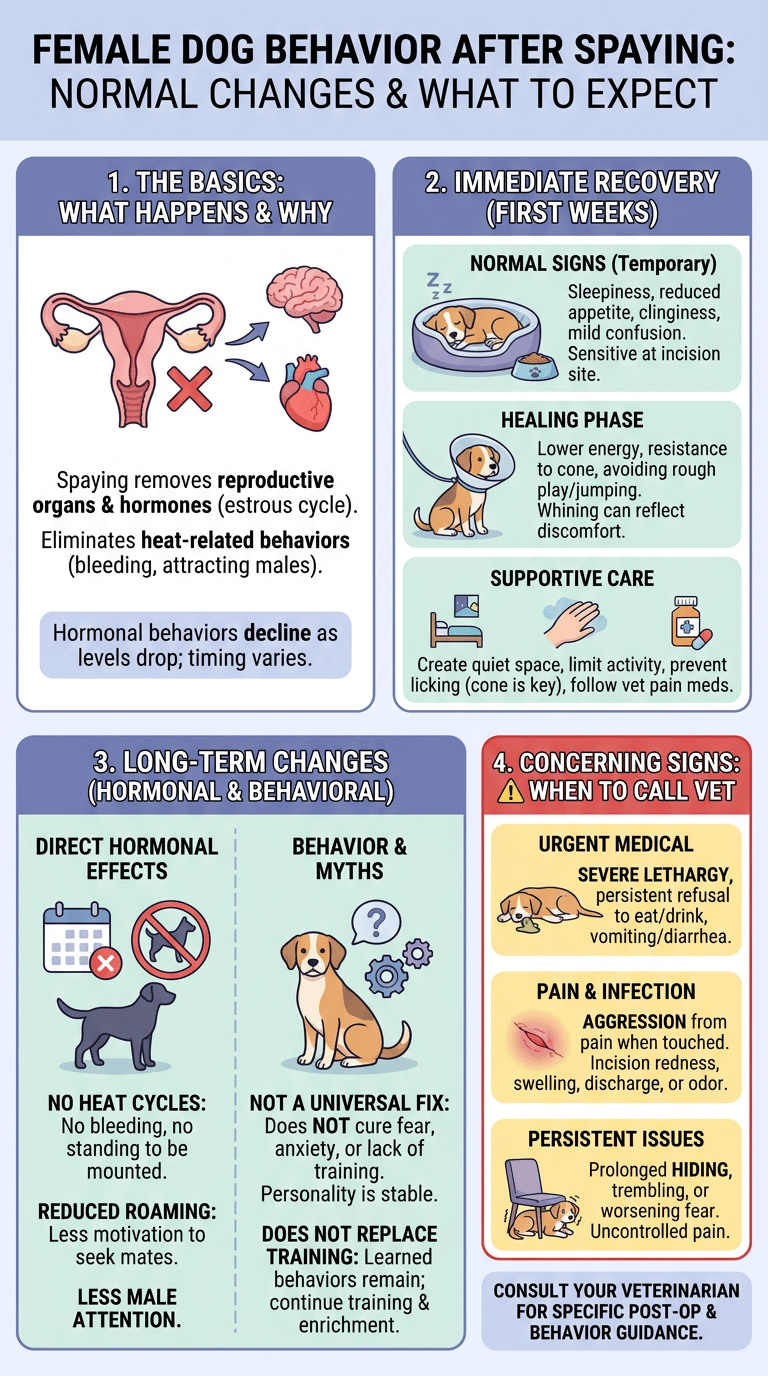
Spaying, or ovariohysterectomy, removes the ovaries and usually the uterus, which stops the estrous cycle commonly called heat. This change ends the recurring hormonal fluctuations that drive heat-related behaviors such as standing to be mounted, vaginal bleeding, and scent cues that attract males. For basic owner-facing information about spaying and neutering and what the procedure does, see overview material from the American Veterinary Medical Association on pet care and sterilization.
AVMA pet care and sterilization resources
Hormonal behavior may decrease over time
Because spaying removes the source of reproductive hormones, behaviors tied directly to the heat cycle tend to decline as hormone levels fall. The timing and degree of change vary by individual dog, her age, the presence of learned behaviors, and the reasons she displayed those behaviors before spay. Long-term behavioral changes related to hormones may emerge gradually rather than immediately after surgery. For context on how endocrine changes can influence behavior and recovery, consult educational material from veterinary teaching hospitals such as Cornell University College of Veterinary Medicine.
Readers comparing female dog behavior after spaying may also find dog in heat behavior useful for a closer look at a related part of canine behavior.
Cornell University College of Veterinary Medicine
Surgery recovery can temporarily affect behavior
The surgical procedure and anesthesia cause temporary effects such as drowsiness, reduced appetite, and sensitivity around the incision. These are normal parts of postoperative recovery but should improve over time when the dog receives appropriate rest and care. Authoritative postoperative care guidance is available from veterinary medical references that outline common signs to expect and when to contact a veterinarian.
Postoperative care guidance from the Merck Veterinary Manual
Normal Behavior Right After Spaying
Sleepiness
Many dogs are sleepy or quieter than usual after anesthesia. Sleepiness helps with rest and healing. Owners should plan for a calm, supervised recovery period and allow their dog to sleep as needed while monitoring breathing and overall responsiveness.
Lower appetite
A temporary decrease in appetite is common in the immediate postoperative period. Small, bland meals and offering water can be appropriate, but prolonged refusal to eat warrants veterinary contact. Follow your veterinarian’s feeding instructions and recommendations for when to resume normal diet and activity.
Clinginess
Some dogs become more attached or seek extra attention after a stressful event such as surgery. Increased need for comfort, following you around, or settling close to you are normal reactions as the dog adjusts and recovers.
Mild confusion
Anesthesia and pain medications can cause temporary disorientation, slower responses, or mild confusion. These signs usually resolve as the drugs wear off and the dog rests. Keep the environment predictable and quiet while monitoring for worsening or prolonged confusion.
Reduced activity
Reduced activity helps the incision heal and reduces the risk of complications. Most veterinarians advise limiting exercise and preventing jumping or running during the initial recovery period. Exact activity restrictions should follow your veterinarian’s advice for your dog’s procedure and individual needs.
Irritability when touched
Soreness at the surgical site can make a dog sensitive when the area is touched. Avoid petting, rubbing, or handling the incision area and use gentle handling elsewhere. If a dog shows increasing aggression or pain-related reactions when touched, contact your veterinarian for a checkup and pain management review.
Behavior Changes in the First Weeks
Less energy during recovery
During the first weeks after spay, lower energy levels are typical as tissues heal. Encourage rest and avoid activities that strain the incision. Monitor eating, drinking, urination, and bowel movements; prolonged changes in these behaviors should prompt a call to the veterinarian.
Resistance to wearing a cone
Many dogs resist an Elizabethan collar or alternative protective device used to prevent licking and chewing at the incision. This resistance can lead to restlessness or attempts to remove the collar. Offer patient positive reinforcement when the dog tolerates the device and consult the clinic for alternative calming strategies if tolerance is poor.
Whining or restlessness
Whining, pacing, or restless sleep can reflect discomfort, anxiety, or sensitivity after surgery. Check the incision for redness, swelling, or discharge and contact the clinic if pain seems uncontrolled. Your veterinarian can review pain control options and rule out complications.
Needing more comfort
Some dogs seek extra comfort, such as closeness to family, soft bedding, or brief extra petting. Providing a calm environment, predictable routines, and gentle reassurance helps with recovery. Avoid rewarding hyperactive behavior with attention that could reinforce excessive activity.
Avoiding jumping and rough play
Avoiding high-energy activities is beneficial in the short term. Dogs that normally enjoy play may be less interested until they feel more comfortable. Preventing jumping, stair running, and rough play reduces the risk of incision opening or internal complications.
Long-Term Behavior Changes After Spaying
No more heat behavior
Spaying stops the estrous cycle, so signs associated with heat, such as bleeding and standing to be mounted, cease. This is a direct consequence of removing ovarian hormone production and is one of the primary reasons owners choose sterilization.
Reduced roaming related to heat
Female dogs that previously attempted to escape or roam when in heat may show reduced motivation to leave home in search of mates after spaying. However, roaming can also be influenced by personality, environment, and learned behaviors, so spaying does not guarantee elimination of all escape attempts.
Reduced male attention
With the end of heat cycles and associated scents, a spayed female is generally less likely to attract intact male dogs. This change may reduce stress or unwanted encounters in multi-dog households or neighborhoods where intact males roam.
Possible changes in activity level
Some dogs become less driven by reproductive behaviors and may show modest changes in overall activity. Individual responses vary: some dogs maintain the same energy level they had before spay, while others might appear calmer. Changes in activity level can also be influenced by age, weight, training, and household routine.
Behavior that may not change
Many behaviors are learned or influenced by environment, training, and individual temperament rather than reproductive hormones. Issues such as fear, separation anxiety, resource guarding, or habitual reactivity are unlikely to resolve simply because a dog was spayed. Targeted behavioral modification, training, or professional behavior support may be needed for those problems. The American Kennel Club provides resources on how spaying interacts with behavior and the limits of surgery as a behavioral fix.
American Kennel Club information on spaying and behavior
Myths About Spaying and Behavior
Spaying does not automatically fix all behavior problems
While spaying removes reproductive hormones that drive heat-related behaviors, it is not a universal fix for unrelated behavioral problems. Behaviors rooted in fear, past learning, poor socialization, or lack of training will often require behavior-focused interventions in addition to surgical sterilization. The AVMA emphasizes that surgery is one tool among many for responsible pet ownership and welfare.
AVMA guidance on spay, neuter, and pet care
Spaying does not replace training
Training, consistent routines, early socialization, and enrichment are essential components of behavior management. If undesirable behaviors are present before spaying, plan to continue or initiate training strategies postoperatively. Professional trainers and veterinary behaviorists can provide structured programs for persistent issues.
Personality usually does not completely change
A dog’s core personality traits tend to be stable. Spaying can modify some hormone-driven behaviors but rarely transforms a dog’s overall character. Expect gradual, modest changes rather than a complete personality overhaul.
Fear and anxiety may need separate help
Conditions such as generalized anxiety, noise phobia, or separation-related distress are complex and may not respond to spaying alone. These conditions often benefit from behavior modification, environmental management, and, in some cases, veterinary-prescribed interventions. For medically oriented treatment options and behavior referrals, reliable veterinary sources recommend consulting your veterinarian or a certified behavior professional.
Concerning Behavior After Spaying
Severe lethargy
While mild sleepiness is expected, severe or worsening lethargy that does not improve in the short term should prompt immediate veterinary contact. Severe lethargy can reflect complications such as adverse reactions to anesthesia, pain, infection, or other medical issues. Follow your clinic’s postoperative watch instructions and seek care if recovery stalls.
Aggression from pain
Pain at the incision or internal discomfort can cause defensive or aggressive reactions when a dog is handled. If aggression appears after surgery, avoid forcing interactions and arrange a veterinary assessment to address pain control. Pain management is an essential part of recovery and should be adjusted by your veterinarian if necessary.
Refusing food for too long
Not eating for an extended period is a concern, especially when combined with vomiting, diarrhea, or lethargy. Do not wait to see if appetite returns; seek prompt advice if a dog refuses to eat and shows other worrisome signs.
Excessive licking at incision
Persistent or forceful licking, chewing, or rubbing at the incision can cause irritation, infection, or wound dehiscence. Prevent access using recommended protective devices and consult your veterinarian if the incision looks red, swollen, has discharge, or the dog continues to focus on the site despite barriers.
Hiding and trembling
Fearful behaviors such as hiding, trembling, or freezing may reflect pain, anxiety, or a negative reaction. If these signs persist or worsen, contact the veterinarian to rule out complications and to discuss strategies for managing fear and promoting comfortable recovery.
Signs of infection or pain
Watch for localized signs at the incision such as increasing redness, swelling, warmth, discharge, persistent bleeding, or an unusual odor. Systemic signs like fever, vomiting, diarrhea, poor appetite, and marked lethargy also require veterinary assessment. Trusted veterinary references offer guidance on typical wound care and red flags; consult your surgeon’s instructions and reach out to the clinic when signs align with infection or uncontrolled pain.
Merck Veterinary Manual postoperative and wound care guidance
How to Help Your Dog Recover Calmly
Create a quiet recovery area
Prepare a comfortable, quiet space for recovery with low foot traffic, soft bedding, and easy access to water and a toileting area. Limiting noise and sudden activity helps reduce stress during the vulnerable postoperative period.
Limit activity
Follow your veterinarian’s specific instructions on activity restriction. General strategies include short, controlled leash walks for toileting, preventing jumping or running, and supervising interactions with other pets and children. Activity limits reduce the risk of strain on the incision and internal structures while tissues heal.
Use enrichment without movement
Provide low-activity enrichment to keep the dog mentally engaged without encouraging physical exertion. Options include food-dispensing toys placed on the floor, scent games that require minimal movement, or gentle chewing items approved by the veterinarian. Avoid fetch-style toys or rough play until the vet clears more active behavior.
Prevent licking
Use an Elizabethan collar or veterinarian-recommended alternatives to prevent licking and chewing at the incision. If the dog repeatedly removes the device, contact the clinic for fitting adjustments or alternative barrier solutions. Preventing repeated access to the incision reduces infection risk and promotes healing.
Follow vet instructions
Adhere to prescribed pain medications, antibiotics if given, and follow-up appointments. Keep a clear communication line with your veterinary team about medications, feeding, activity limits, and any unusual signs. Veterinary manuals and academic centers emphasize following the clinician’s postoperative plan and contacting them for changes in condition.
Cornell University College of Veterinary Medicine postoperative care recommendations
Female Dog Behavior After Spaying FAQ
Will my female dog calm down after spaying?
Spaying can reduce behaviors directly linked to the reproductive cycle and mating motivation, which may give the impression of a calmer dog for some individuals. However, not all activity or hyperactive behaviors are hormone-driven. Many behavior patterns are learned or tied to breed, age, training, and environment. Expect possible reduction in heat-related behaviors, but do not assume spaying will resolve unrelated hyperactivity or behavioral concerns.
Why is my dog clingy after spaying?
Clinginess after surgery commonly reflects temporary discomfort, anxiety, or the stress of an unfamiliar experience. Dogs often seek reassurance and proximity during recovery. Provide calm, predictable care and consult your veterinarian if clinginess is accompanied by signs of pain or does not improve over time.
Can spaying make a dog aggressive?
Spaying itself does not typically cause aggression. If a dog shows new or increased aggression after surgery, underlying pain, fear, or medical complications may be factors. Aggression related to handling around a painful incision is a recognized possibility. Because aggression can present safety concerns, contact your veterinarian promptly to assess pain control and rule out medical causes, and then pursue behavior support if needed.
How long does behavior change last after spaying?
The timeline for behavior change varies. Immediate postoperative effects from anesthesia and pain medication usually diminish within days. Hormone-related behavioral shifts may appear over time as hormone levels stabilize. Learned behaviors and temperament traits are less likely to change simply because of spaying and typically require training or behavior intervention. Your veterinarian can help set realistic expectations based on your dog’s age, history, and specific behavior concerns.
Final Notes
Spaying is a common and generally safe procedure with health and population-management benefits. Understanding the distinction between short-term recovery behaviors and longer-term hormonal effects helps owners prepare and respond appropriately. If you notice severe lethargy, uncontrolled pain, persistent refusal to eat, excessive attention to the incision, signs of infection, or sudden behavioral changes, contact your veterinarian for prompt assessment. For general postoperative and behavioral guidance consult trusted veterinary resources and your clinic’s specific instructions.

Ethan Walker is the founder and research editor of Animal Fact Central. He creates and reviews educational animal facts content using trusted wildlife, pet care, and science-based sources. His work focuses on making animal behavior, adaptations, habitats, and species facts clear, accurate, and engaging for everyday readers.
Read More Details About Ethan Walker: https://animalfactcentral.com/ethan-walker/