
What Does It Mean When a Dog Is in Heat?
Heat is part of the female dog reproductive cycle
When a female dog is “in heat,” she is in a phase of the reproductive cycle when she may become sexually receptive and her body is preparing for possible pregnancy. For general background on mammalian reproductive patterns, see an overview on a mammal-focused species database from Animal Diversity Web.
When dogs usually go into heat
Timing varies among individual dogs and breeds. Smaller breeds often reach sexual maturity sooner than larger breeds, and first heats can occur at different ages. Expect individual differences rather than a single fixed schedule.
How long heat can last
Visible behaviors and physical signs associated with heat typically persist for a period measured in weeks rather than days. Duration varies by individual; consult a veterinarian for timing specific to your dog.
Common Dog in Heat Behavior Signs
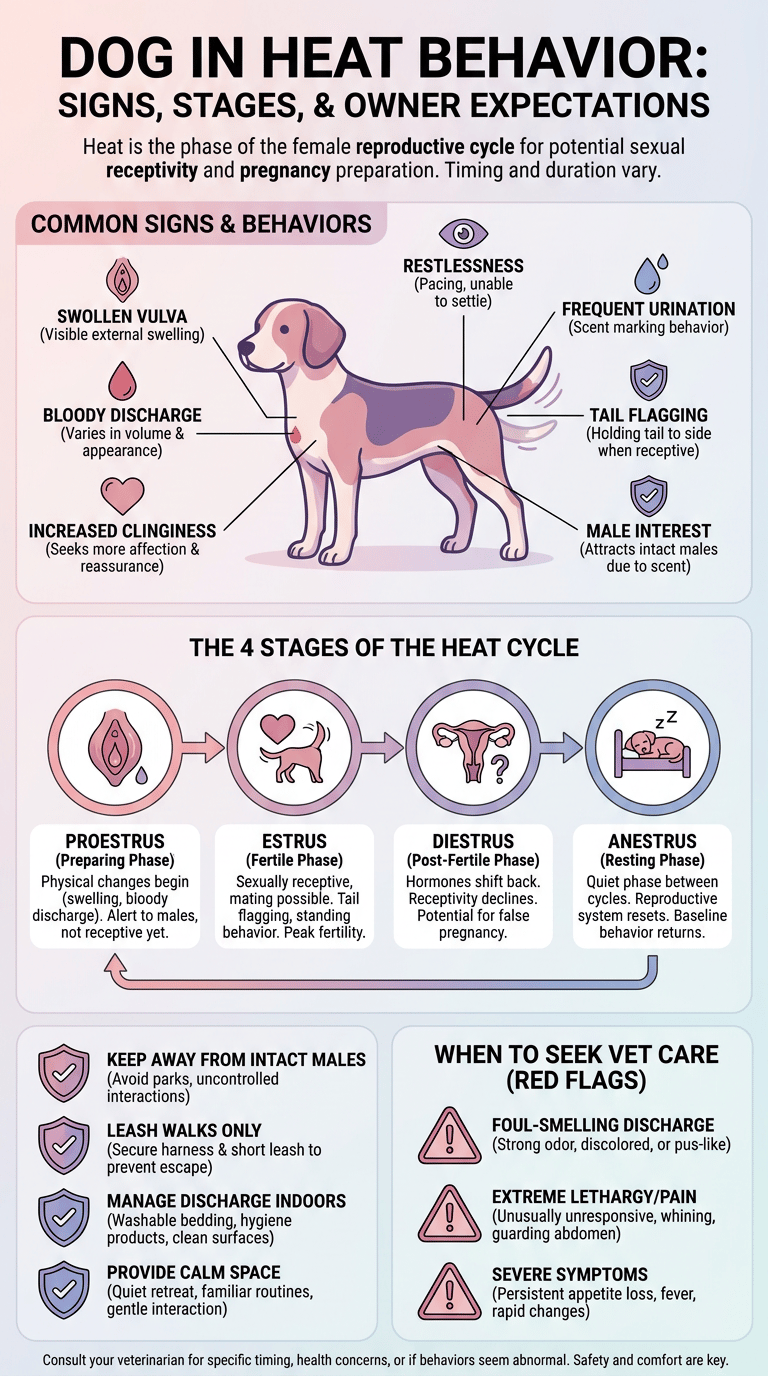
Increased clinginess
Many owners notice their female dog seeks more physical contact, attention, or reassurance during parts of the heat cycle. This increased affection can be intermittent and relates to hormonal changes.
Restlessness
Restlessness or changes in sleep and activity patterns are common while hormones shift. A dog may pace, seem unable to settle, or move between rooms more than usual.
Frequent urination
Some females urinate more often during heat. Urine carries scent signals that communicate reproductive status to other dogs; you may see more marking behavior or small-volume urination in the yard or indoors.
Swollen vulva
External swelling of the genital area can occur as part of normal estrous changes. Monitor the dog and consult a veterinarian if swelling seems extreme or is accompanied by other concerning signs.
Bloody discharge
A bloody or blood-tinged vaginal discharge is commonly reported during one phase of the cycle. Discharge appearance and volume vary between individuals. Maintain hygiene to reduce soiling of bedding and furniture.
Tail flagging
Holding the tail to the side when receptive can be a visible reproductive behavior and a signal that the dog may accept mating. Be mindful of nearby intact males during this time.
Increased interest from male dogs
Male dogs often show increased interest in a female in heat due to scent cues. This can lead to persistent attention from intact males in the neighborhood or at dog parks; take steps to prevent unwanted contact.
Changes in appetite
Some females may eat less during heat, while others maintain normal feeding. Watch for persistent appetite changes that could indicate a health issue.
The Stages of a Dog’s Heat Cycle
Proestrus
Physical signs
Proestrus is the early phase in which physiological changes prepare the reproductive tract. External signs may include vulvar swelling and a bloody discharge. For general mammal reproductive descriptions, see accessible mammal information from the Smithsonian National Zoo.
Behavior signs
During proestrus some females may become more alert to male attention but are not yet fully receptive. Owners often notice increased attention-seeking, restlessness, or mild mood shifts as hormones begin to change.
Estrus
Fertile period
Estrus is the phase when a female becomes sexually receptive and conception is possible. Breeders typically reference this as the time when mating can result in pregnancy. Consult a veterinarian for guidance on safe breeding windows and health considerations.
Receptive behavior
Behavior during estrus can include tail flagging, standing to be mounted, and greater tolerance of male attention. Degree of receptivity varies between individuals.
Diestrus
Hormonal shift
Diestrus follows estrus, when hormones shift and the body moves toward either supporting pregnancy or returning to a non-receptive state. Signs of sexual receptivity generally decline during diestrus.
False pregnancy possibility
Some females experience a false pregnancy or pseudopregnancy during diestrus, in which hormonal changes lead to maternal behaviors and physiological changes without actual pregnancy. If you are concerned about marked behavior or physical changes after heat, consult a veterinarian.
Anestrus
Resting phase
Anestrus is the quieter phase between cycles when reproductive activity is low and the dog returns to baseline behavior. This resting phase allows the reproductive system to reset before the next cycle begins.
Behavior Changes During Heat
More affection
Some females become noticeably more affectionate and seek extra petting, close contact, or time with household members. Calm, voluntary attention can help the dog feel secure without reinforcing unwanted behaviors.
More irritability
Hormonal shifts can lead to increased irritability or touch sensitivity in some dogs. Shortened tolerance for handling, reluctance to be picked up, or growling when approached are signals to respect the dog’s space. Avoid punishment-based responses; seek help from a trainer or veterinarian if aggressive reactions occur.
Escape attempts
Intact males attracted to a female in heat can prompt escape attempts. Secure fencing, attentive supervision, and careful use of gates and doors reduce the risk of escape and unintended contact.
Mounting behavior
Mounting can increase during heat. While often sexual, mounting may also be a response to arousal, stress, or social interaction. Managing triggers and providing calm outlets for energy helps reduce problematic mounting indoors.
Increased scent marking
Scent marking via urine is a communication method for many mammals, including dogs. During heat, marking frequency and the strength of scent cues can change as the dog signals reproductive status to others.
How to Care for a Dog in Heat
Keep her away from intact males
Preventing contact with intact males is important. Avoid dog parks, off-leash areas, and any situations where uncontrolled interactions could occur. If persistent males are a problem in your area, consider scheduling walks at quieter times and using a secure leash and collar.
Use leash walks only
Walk your dog on a secure leash during heat. A harness and a short leash provide control and reduce the chance of sudden darting or escape attempts. Supervised, calm walking lets the dog exercise without exposing her to unwanted attention.
Manage discharge indoors
Household management can include washable bedding, easy-to-clean surfaces, and dog-specific sanitary products if you choose to use them. Regularly wash bedding and keep the environment clean to reduce odors and staining. Use mild, pet-safe cleaners on areas where your dog rests.
Provide calm space
Offer a quiet, comfortable area where your dog can retreat. Maintain familiar routines for feeding and exercise as much as possible. Soft bedding and predictable, gentle interaction support emotional comfort during hormonal shifts.
Watch for unusual symptoms
Monitor appetite, energy level, discharge appearance, and any signs of pain or fever. Many behavior and physical changes are normal, but sudden or severe symptoms merit prompt veterinary attention. Signs such as extreme lethargy, very heavy or foul-smelling discharge, or behaviors suggesting severe discomfort warrant contacting a veterinarian or emergency clinic.
When Heat Behavior May Not Be Normal
Extreme lethargy
Marked lethargy that leaves a dog unusually unresponsive or unwilling to move is not typical of the heat cycle and should prompt a veterinary check to rule out illness or complications.
Foul-smelling discharge
Normal discharge may have a mild odor, but a strong, unpleasant smell can indicate infection. If discharge becomes foul-smelling, discolored, or increases sharply in volume, seek veterinary advice.
Severe pain
If your dog shows signs of intense pain, such as constant whining, protecting the abdomen, or avoiding movement, do not assume it is normal. Severe pain requires veterinary evaluation to determine cause and treatment.
Appetite loss
Temporary appetite changes can occur, but ongoing refusal to eat or rapid weight loss is concerning. Persistent appetite loss should be evaluated by a veterinarian.
Signs of infection
Signs that suggest infection include fever, lethargy, a swollen or red vulva with heat and pain, or any discharge that appears pus-like. Prompt veterinary assessment is important when infection is suspected. For general information on mammal health and welfare, see reader-friendly mammal resources from San Diego Zoo Wildlife Explorers.
Dog in Heat Behavior FAQ
How long do dog in heat behaviors last?
Behavioral signs appear across several phases of the reproductive cycle and can span a period measured in weeks. Exact length varies by individual dog and breed. For precise timing related to breeding or health, consult a veterinarian.
Do dogs act strange when in heat?
Changes in mood, appetite, and social behavior are common and may seem different from your dog’s baseline. These variations are usually normal responses to hormonal changes. If behaviors are severe or pose a safety concern, consult a veterinarian or a professional trainer experienced in positive, reward-based methods.
Why is my dog clingy during heat?
Clinginess can be a normal response to hormonal changes and the discomfort or uncertainty the dog may feel. Offering calm affection and predictable routines can help. If clinginess is accompanied by other concerning signs, seek veterinary advice.
Can a dog in heat be aggressive?
Some females may show reduced tolerance for handling or increased irritability during parts of the cycle. Mild increased protectiveness or touch sensitivity can be normal, but any aggression that risks harm should be taken seriously. Do not use punishment; contact a veterinarian or a qualified behavior professional who uses humane, evidence-based methods.
Final notes
Managing a female dog in heat is primarily about safety, comfort, and hygiene. Observe your dog closely, provide calm care, prevent unwanted breeding, and seek veterinary attention for any sudden, severe, or persistent health concerns. For general mammal reproductive background and species-level context, consult an overview on mammalian reproduction at Animal Diversity Web from Animal Diversity Web, accessible mammal fact sheets from the Smithsonian National Zoo at the Smithsonian National Zoo, and reader-friendly mammal information from San Diego Zoo Wildlife Explorers on the San Diego Zoo site. When in doubt about health or behavior, contact your veterinarian or a qualified animal care professional.
Readers comparing dog in heat behavior may also find dog behavior training useful for a closer look at a related part of canine behavior.

Ethan Walker is the founder and research editor of Animal Fact Central. He creates and reviews educational animal facts content using trusted wildlife, pet care, and science-based sources. His work focuses on making animal behavior, adaptations, habitats, and species facts clear, accurate, and engaging for everyday readers.
Read More Details About Ethan Walker: https://animalfactcentral.com/ethan-walker/