
What Is Dog Licking Behavior?
Licking as communication
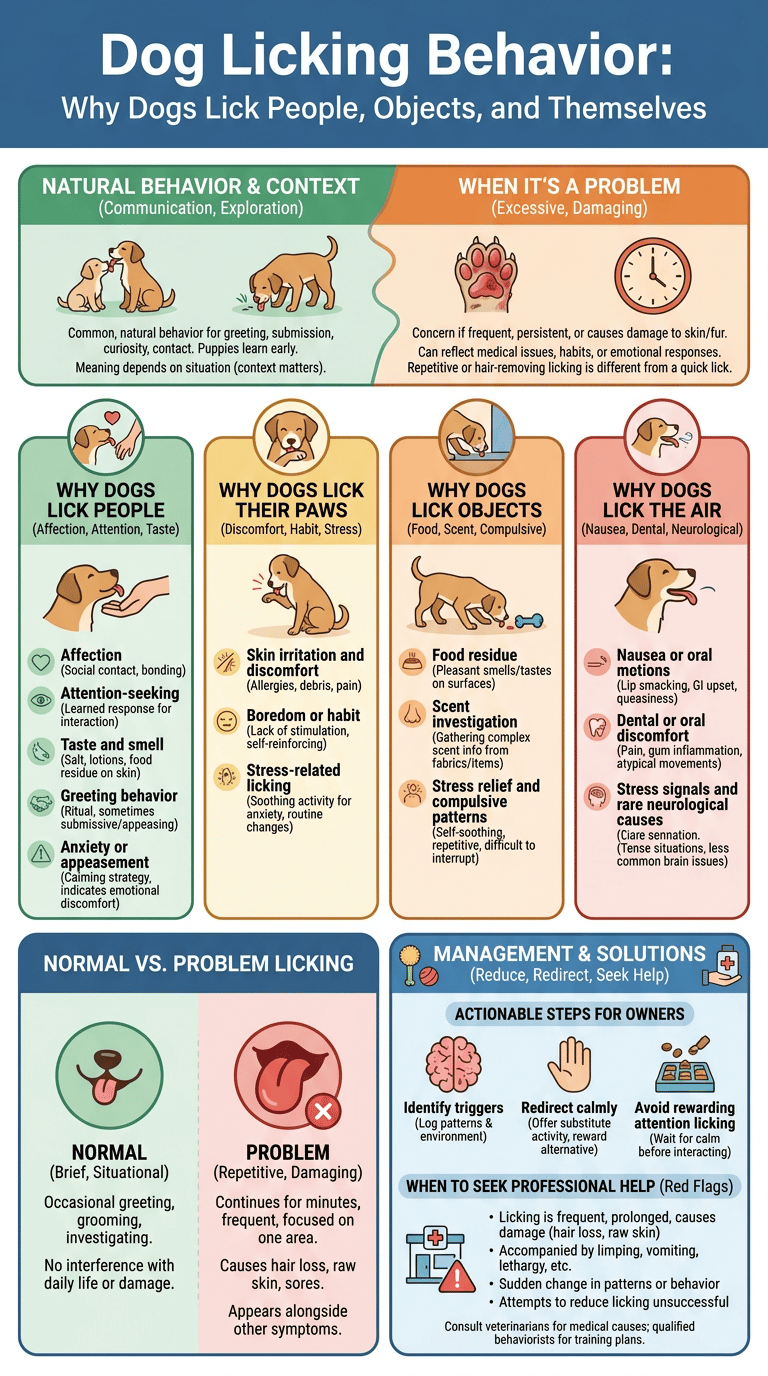
Licking is a common, natural behavior in dogs. It can communicate greeting, submission, curiosity, or a desire for contact. Puppies learn by licking from their mother and littermates, and that early experience helps shape how adult dogs use their tongues to explore and interact.
When licking becomes excessive
Occasional licking is normal. Licking may be a concern when it is frequent, persistent, or causes damage to skin or fur. Excessive licking can reflect medical problems, behavioral habits, or emotional responses. Context and pattern help determine whether licking is harmless or needs attention.
Why context matters
The meaning of a lick depends on the situation. A quick lick during a greeting is different from repeated self-licking that removes hair or from focused paw licking after a walk. Note when the licking occurs, how long it lasts, where the dog licks, and whether other signs are present to distinguish communication from a problem that requires management or veterinary care.
Why Dogs Lick People
Affection
Many owners interpret licking as a sign of affection. Dogs may lick a trusted person to maintain social contact, similar to grooming or nuzzling with bonded dogs. Intensity and frequency vary by individual.
Attention-seeking
Dogs learn which actions elicit a response. If a lick reliably produces petting, play, or a vocal reaction, a dog may lick to gain attention. In that case, the lick functions as a communicative tool to influence human behavior.
Taste and smell
Skin carries tastes and scents from sweat, lotions, food residue, or environmental smells. Dogs may lick to gather more information or because a taste is rewarding to them.
Greeting behavior
Quick licks can be part of canine greeting rituals. This behavior can overlap with submission or appeasement signals when offered to a dominant individual or a nervous companion.
Anxiety or appeasement
Some dogs lick people as a calming strategy or to show appeasement in stressful situations. Repetitive or frantic licking directed at a person, especially alongside pacing, panting, or trembling, can indicate emotional discomfort rather than simple affection.
Why Dogs Lick Their Paws
Skin irritation and discomfort
Frequent paw licking may indicate skin irritation, debris or foreign objects between toes, or contact with an irritating substance. It can also be a response to discomfort in a paw or limb. If paw licking is persistent or worsens, a veterinary evaluation can help identify underlying causes.
Boredom or habit
When dogs lack mental stimulation or physical exercise, they sometimes develop repetitive behaviors like paw licking. Licking can become a self-reinforcing habit that provides short-term relief from boredom. Enrichment and increased activity often reduce licking driven by lack of outlet.
Stress-related licking
Stress or anxiety can lead dogs to lick their paws as a soothing activity. Changes in routine, separation from a caregiver, loud noises, or other stressors can increase self-soothing behaviors. Addressing the underlying stressor and providing predictable enrichment can help reduce stress-related licking.
Why Dogs Lick Objects
Food residue
Objects with food residues or pleasant smells invite licking. Dogs use their mouths and tongues to sample surfaces, and an object that smells like food may be licked to investigate taste and scent.
Scent investigation
Fabrics and household items carry complex scent information. Licking can be one way for dogs to collect scent particles and process them through their mouth and nose. Investigatory licking often accompanies sniffing and is part of normal curiosity-driven exploration.
Stress relief and compulsive patterns
Some dogs lick nonfood objects to self-soothe when anxious. In a subset of dogs, object licking becomes repetitive and difficult to interrupt; when it interferes with normal activity or continues despite redirection, it may indicate a compulsive behavior pattern. These cases can benefit from professional assessment and a behavior plan focused on enrichment and stress reduction.
Why Dogs Lick the Air
Nausea or oral motions
Air licking, sometimes called lip smacking, can be associated with nausea or gastrointestinal upset. Dogs that feel queasy may make repeated tongue movements near the lips or into the air. If air licking is new and paired with vomiting, drooling, or loss of appetite, seek professional advice.
Dental or oral discomfort
Oral pain can change how a dog moves its mouth and tongue. Dogs with dental disease or inflamed gums may exhibit atypical licking behaviors, including air licking. Dental problems are best assessed by a veterinarian.
Stress signals and rare neurological causes
Subtle mouth movements and air licking can appear in tense situations as stress signals. In uncommon situations, repetitive or unusual licking patterns might relate to neurological issues affecting oral motor control. Because neurological causes are less common than behavioral or medical explanations, a veterinary exam can help rule out neurologic conditions when air licking is persistent and unexplained.
Normal Licking vs Problem Licking
Normal occasional licking
Brief, situational licking during greetings, petting, grooming, or when investigating a novel smell is usually normal. Normal licking does not interfere with daily life and does not cause damage to the skin or fur.
Repetitive licking
Repetitive licking that continues for minutes, happens many times per day, or is focused on one area should be monitored. Repetitive licking can be a behavioral habit, a response to chronic itch, pain, anxiety, or a combination of factors. Assessing environment, routine, and health helps identify likely triggers.
Licking that causes skin damage
Licking that leads to hair loss, raw skin, or sores is a red flag. Self-inflicted wounds increase the risk of infection and discomfort. When licking causes visible tissue damage, consult a veterinarian because treating only the surface behavior without addressing the underlying cause may allow the cycle to continue.
Licking with other symptoms
If licking appears alongside changes in appetite, energy, bowel habits, urination, mobility, or behavior, these combinations suggest a medical evaluation is appropriate. Concurrent symptoms give important clues about whether the licking is primarily medical, behavioral, or both.
How to Reduce Excessive Licking
Identify triggers
Careful observation helps identify patterns. Keep a simple log of when licking occurs, what was happening before and after, the location of the licking, and any environmental factors such as recent walks, meals, or household changes. Identifying triggers guides targeted interventions, whether medical or behavioral.
Redirect calmly
When licking is attention-seeking, calmly redirecting a dog to an alternative behavior can reduce reinforcement. Offer a substitute activity such as a chew toy or a brief training session, then reward the alternative behavior with praise or a treat. Avoid yelling or harsh corrections, which can increase stress and make licking worse.
Readers comparing dog licking behavior may also find female dog behavior after spaying useful for a closer look at a related part of canine behavior.
Readers comparing dog licking behavior may also find dog in heat behavior useful for a closer look at a related part of canine behavior.
Add enrichment
Increasing mental and physical enrichment often decreases licking driven by boredom or unmet activity needs. Enrichment can include walk variations, interactive toys, food puzzles, scent games, and short training sessions. A combination of predictable physical exercise and novel mental challenges reduces the likelihood that a dog will develop repetitive licking as a pastime.
Avoid rewarding attention licking
Because licking can be a learned way to gain attention, be mindful of how you respond. If a dog licks to get you to pet or play and you consistently give attention immediately, you reinforce the behavior. Instead, wait for a calm moment or an alternative behavior, then reward that state so the dog learns how to earn attention without repetitive licking.
Seek veterinary care when needed
When licking is persistent, causes damage, or appears with other health changes, a veterinary examination is a recommended step. A veterinarian can assess for skin disease, allergies, dental problems, pain, and other medical contributors. If a medical cause is identified, treatment can be combined with behavioral strategies to reduce licking once the underlying issue is addressed.
Dog Licking Behavior FAQ
Why does my dog lick me so much?
Possible reasons include affection, seeking attention, tasting pleasant smells on your skin, or self-soothing in uncertain situations. Consider the context and what happens right before and after the licking. If the licking is severe, persistent, or accompanied by other changes, consult a veterinarian or a qualified behavior professional.
Why does my dog lick their paws at night?
Paw licking at night often reflects factors that become more noticeable when the household quiets down, such as irritation, mild discomfort, habit, or boredom. If nighttime paw licking is new or causing damage, seeking veterinary advice is wise.
Is dog licking a sign of anxiety?
Licking can be one of several signs of anxiety in dogs, particularly if it appears during stressful events alongside panting, pacing, whining, or avoidance behaviors. Licking alone is not a definitive sign of anxiety because it also appears in neutral contexts like grooming and greeting. Look for clusters of behaviors and consistent triggers to evaluate anxiety as a likely cause.
Should I stop my dog from licking?
Not all licking should be stopped. Brief, situational licking is a normal part of dog communication. Stopping licking is appropriate when it is excessive, causes harm, or disrupts daily life. Use calm redirection, enrichment, and, when needed, veterinary or behavioral support rather than punishment. If licking is linked to pain or a medical condition, treating the cause is the priority.
When to Seek Professional Help
- Licking is frequent, prolonged, or focused on one area to the point of hair loss or raw skin
- Licking is accompanied by limping, loss of appetite, vomiting, diarrhea, or lethargy
- There is a sudden change in licking patterns or other dramatic behavior changes
- Attempts to reduce licking through enrichment and redirection are unsuccessful
Veterinarians can evaluate medical causes and may recommend diagnostics or treatments. A qualified behaviorist can design a training and enrichment plan when the licking is primarily behavioral.
Practical Tips for Owners
- Observe and record patterns so you can describe them clearly to a professional.
- Increase daily enrichment with food puzzles, scent toys, and controlled training sessions.
- Offer safe chew items to replace object licking when appropriate.
- Practice calm redirection rather than shouting, which can increase stress and make licking worse.
- Address household factors that may cause comfort-seeking licking, such as temperature, paw care after walks, and stress triggers.
Final Thoughts
Licking is a multifaceted behavior with many possible meanings. Short, situational licks are often normal and communicative, while repetitive or damaging licking warrants a closer look. Careful observation, enrichment, calm redirection, and timely veterinary consultation when medical issues are suspected will help you differentiate normal communication from a problem that needs intervention. When in doubt, consult qualified professionals who can evaluate your dog in person and tailor advice to your dog and household.

Ethan Walker is the founder and research editor of Animal Fact Central. He creates and reviews educational animal facts content using trusted wildlife, pet care, and science-based sources. His work focuses on making animal behavior, adaptations, habitats, and species facts clear, accurate, and engaging for everyday readers.
Read More Details About Ethan Walker: https://animalfactcentral.com/ethan-walker/