
Why Dog Body Language Matters
Dogs communicate with their whole body
Dogs use posture, facial expression, tail position, ear shape, eye contact, and movement to communicate how they feel and what they intend. Reading those signals together gives a clearer picture than focusing on a single cue. For general background on mammal behavior and communication, see accessible mammal fact sheets and overviews from the Smithsonian National Zoo from the Smithsonian National Zoo.
Tail
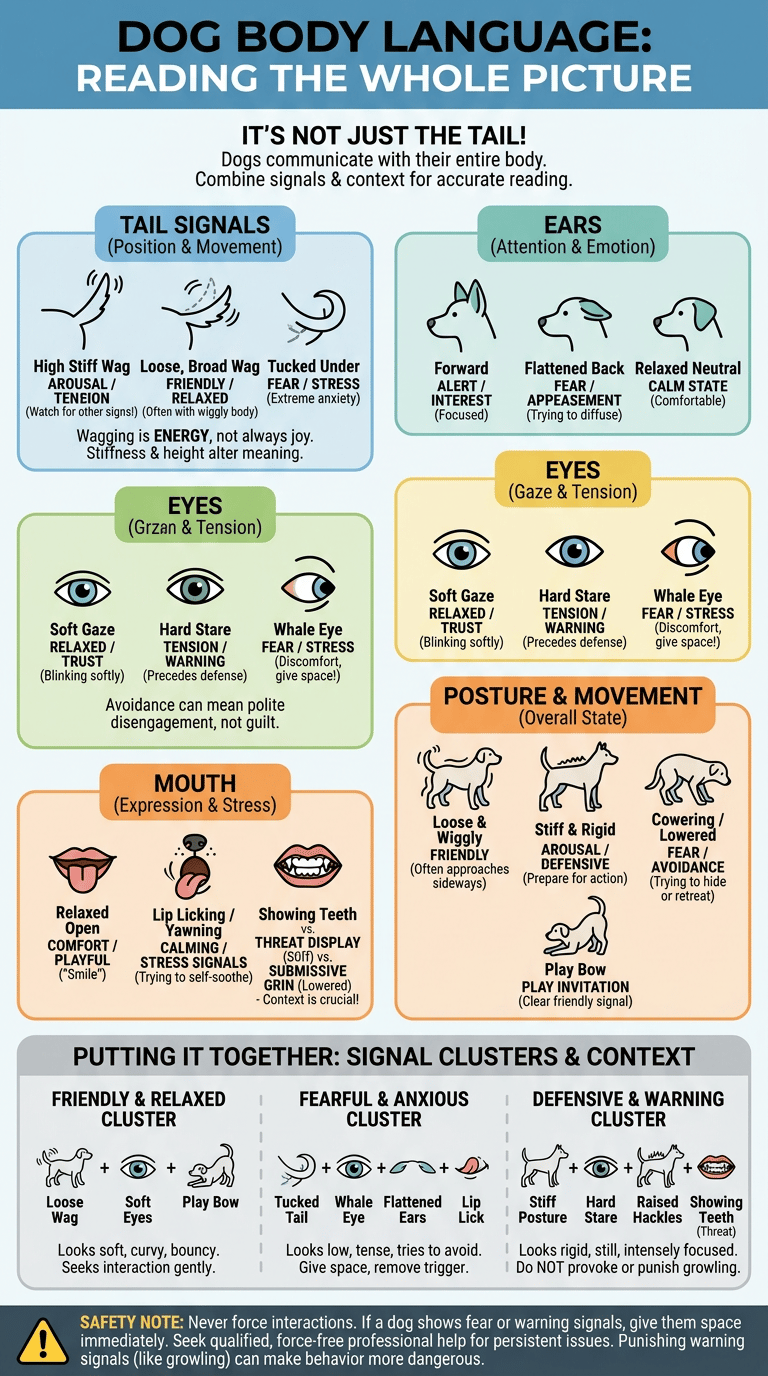
The tail is often a prominent signal, but its meaning depends on position, movement, and the rest of the body. Tail position can indicate confidence, uncertainty, stress, or submission depending on context and breed-related tail shape.
Ears
Ears change with attention and emotion. Forward, raised, relaxed, or flattened ears each add information when read alongside eyes, mouth, and posture.
Eyes
Eye behavior ranges from soft and relaxed to wide and white-showing. Dogs use eye contact differently than humans and often combine eye cues with other signals to communicate comfort or discomfort.
Mouth
Mouth tension, yawning, lip-licking, panting, and teeth displays are expressive signals. Whether a mouth is open and relaxed or showing teeth depends on whether the dog is relaxed, stressed, or warning others.
Weight shift
Where a dog places its weight, and whether it moves forward or backward, often signals interest, confidence, or avoidance. Shifts toward an object can indicate curiosity or intent to engage; moving weight back can indicate uncertainty or preparation to retreat.
Fur and posture
Piloerection, often called raised hackles, and overall body posture provide information about arousal level and state of mind. Posture that is loose and flowing usually reflects comfort, while rigid or hunched posture can signal tension or fear.
One signal is not enough
Why context matters
A single sign rarely conveys the whole message. The environment, recent events, a dog’s health, and the other signals the dog is giving all shape interpretation. For reliable background on mammal behavior and natural history that helps place signals in a broader perspective, see general mammal references such as the Animal Diversity Web mammal taxonomy and behavior overview.
Readers comparing dog body behavior may also find dog in heat behavior useful for a closer look at a related part of canine behavior.
Readers comparing dog body behavior may also find female dog behavior after spaying useful for a closer look at a related part of canine behavior.
Why tail wagging does not always mean happiness
Tail wagging is an energy signal rather than a simple expression of joy. The position and stiffness of the tail and the speed and breadth of the wag alter its meaning. A loose, slow wag with soft body language tends to be friendly; a high, stiff wag with tense posture can signal arousal or possible aggression.
Why breed shape can affect interpretation
Breed differences in tail set, ear carriage, and facial anatomy can change how signals look. Short tails or naturally folded ears can make some cues harder to read. When a dog’s anatomy obscures typical signals, rely more on overall posture, movement, and context.
Dog Tail Behavior
High tail position
Confidence
A tail held higher than average, combined with a relaxed or forward stance, often signals confidence or strong interest. The rest of the body will typically be relaxed or leaning forward rather than rigid.
Alertness
A high tail can indicate attention to something in the environment. When paired with forward ears and an intent gaze, the dog is likely focused on a stimulus and assessing it.
Possible tension
If a high tail is held very stiffly and the dog’s body is rigid, that can indicate tension or arousal that might escalate. Watch for other warning signs such as a hard stare, raised hackles, or a stiff gait.
Low tail position
Uncertainty
A tail held low or level with the body can mean the dog is uncertain or cautious. Combined with subtle body leaning away or slow, tentative movements, it suggests the dog is assessing risk.
Fear
A low tail with tense body and avoidance behaviors often reflects fear. Look for other stress signals such as tucked posture, flattened ears, or attempts to hide.
Submission
Some dogs adopt a low tail and lowered body posture to show submission or deference. This is commonly seen in social interactions with other dogs and can be accompanied by lowered head, averted gaze, and soft vocalizations.
Tail tucked under the body
Fear
A tightly tucked tail is a pronounced sign of fear or extreme anxiety in many dogs. When combined with trembling, attempts to escape, or cowering, immediate steps to reduce stress and seek professional help are appropriate.
Pain
Dogs in pain may keep the tail tucked and hold a guarded posture. Any sudden change to a tucked tail that is not consistent with past behavior should prompt a health check with a veterinarian.
Stress
Chronic or repeated tail-tucking during specific triggers indicates that the dog perceives those situations as stressful. Owners and caregivers should work to identify triggers and reduce exposure while consulting qualified professionals for safe management strategies.
Different types of tail wagging
Loose wag
A slow, loose wag with a relaxed body usually signals friendliness and comfort. This is often most easily read when the entire body looks calm and the mouth is relaxed.
Stiff wag
A stiff, fast wag with a high tail and tense posture is an arousal signal. It can precede either friendly or aggressive interactions depending on the rest of the dog’s signals and the situation.
Fast nervous wag
Rapid, small wagging often with a lowered tail can indicate nervousness. This may be accompanied by lip-licking, yawning, and avoidance behaviors.
Whole-body wag
When a dog wags with the whole rear end and often approaches with a loose, bouncy gait, the signal is typically affiliative and inviting. Context matters; for example, a dog that bounces excitedly at the door may be overstimulated rather than calmly social.
Dog Ear Behavior
Forward ears
Alertness
Ears forward usually show attention to a sound or object. Paired with a stiffened body they can indicate the dog is ready to investigate further.
Interest
Forward ears combined with tilted head and relaxed mouth often show curiosity and active interest rather than threat.
Possible arousal
Forward ears with a fixed gaze and raised hackles indicate higher arousal. Assess other signals such as tail and posture to determine whether the dog is excited, anxious, or potentially aggressive.
Flattened ears
Fear
Ears flattened close to the head are a common sign of fear or submission. Watch for other indicators such as lowered body, tucked tail, and attempts to avoid interaction.
Appeasement
Flattened ears can be part of an appeasement display to defuse tension in social interactions.
Stress
Flattened ears with lip-licking, yawning, or other calming signals often mark a dog experiencing stress.
Relaxed ears
Calm state
Ears carried in a natural, neutral position generally indicate the dog is calm and comfortable in the present environment.
Safe environment
Neutral ear carriage combined with soft eyes, relaxed mouth, and loose posture points to a dog that perceives its surroundings as safe.
Dog Eye Behavior
Soft eyes
Relaxation
Soft, relaxed eyes with a gentle gaze are signs of a calm dog. The eyelids may appear relaxed, and the dog will not stare intensely.
Trust
Soft eye contact within a comfortable relationship often reflects mutual trust. It is usually accompanied by other relaxed signals.
Hard stare
Tension
A fixed, hard stare is a tension signal. It can precede a defensive or threatening action, especially when combined with a stiff body and forward posture.
Warning signal
When a dog gives a hard stare with other warning cues such as growling, lifted lip, or stiff tail, it should be treated as a serious sign to increase space and avoid provocation.
Whale eye
Fear
Whale eye occurs when a dog shows the whites of its eyes near the corners while turning the head away. It is a classic stress and fear signal and indicates discomfort with what the dog is perceiving.
Resource guarding risk
Whale eye sometimes appears when a dog is tense around food, toys, or other valued items. It can be an early sign that the dog may escalate to stronger defensive behavior if the perceived threat continues.
When to give space
If you see whale eye, consider giving the dog space and removing the trigger if possible. Because behavior can change quickly, seek guidance from qualified behavior professionals for persistent or dangerous situations.
Avoiding eye contact
Stress
Avoiding eye contact can indicate stress, anxiety, or discomfort. Dogs often avert gaze to reduce tension in social situations.
Polite dog communication
Averted gaze is a normal, polite communicative move between dogs and can be a way to avoid confrontation.
Not always guilt
Human interpretations like “guilt” are unreliable. A dog avoiding eye contact after a scolding may be responding to immediate discomfort rather than moral wrongdoing.
Dog Mouth and Facial Signals
Relaxed open mouth
An open mouth with a relaxed tongue and soft lips often signals comfort and playfulness. This look is common during relaxed greetings, play, and when dogs are content in their environment.
Lip licking
Lip licking often functions as a calming or appeasement signal and can be seen in mildly stressful circumstances. When frequent or repeated in situations that should be neutral, it may indicate the dog is uncomfortable.
Yawning
Yawning can be a sign of tiredness but also serves as a calming signal in stressful situations. When seen during a tense encounter, it is likely an attempt by the dog to calm itself or others.
Panting when not hot
Panting unrelated to temperature or exercise can be a sign of stress or high arousal. If panting is sudden, intense, or coupled with other stress signs, consider whether the dog is anxious or in discomfort and consult a veterinarian if needed.
Showing teeth
Submissive grin vs threat display
Some dogs show teeth while smiling in relaxed contexts, often called a submissive grin. This looks different from a threat display: a true threat usually includes a stiff body, raised lip, direct stare, and growl or snarl. Context and accompanying behavior are essential to distinguish these displays safely.
Dog Posture Behavior
Loose body posture
A dog that moves with relaxed limbs, fluid motion, and a neutral head position is usually comfortable. Loose posture during social greetings and play is a good sign of positive emotional state.
Stiff body posture
Stiffness suggests arousal, vigilance, or preparation for rapid action. Combine stiffness with tail, ear, and eye cues to assess whether the dog is alert and curious, anxious, or preparing to defend itself.
Cowering
Cowering, often accompanied by lowered body, tucked tail, and flattened ears, is a fear response. These dogs may try to retreat or hide. If cowering appears suddenly or in familiar settings, medical causes should be ruled out by a veterinarian.
Play bow
The play bow, in which the dog lowers the front legs and keeps the rear up, is a clear invitation to play when combined with relaxed facial expression and wagging. It is a communicative posture used to signal friendly intent.
Leaning forward
Leaning into a person or object can show interest, confidence, or a desire for interaction. Monitor whether the leaning is gentle and paired with relaxed signals, or intense and paired with other arousal signs.
Turning away
Turning the head or body away is a pacifying action that can prevent escalation. It can mean the dog wants less interaction or is trying to calm the situation. Respecting this signal helps reduce stress.
Stress Signals in Dog Body Language
Pacing
Pacing can indicate agitation, excitement, or stress. Persistent pacing that is out of character may also suggest medical issues or chronic anxiety and should be checked with a professional if it continues.
Shaking off
Dogs sometimes shake as a quick reset after a stressful or arousing event. This behavior is a normal self-soothing response but if it becomes frequent around specific triggers it signals that those triggers are uncomfortable for the dog.
Sniffing the ground suddenly
Redirecting attention to the ground by sniffing can be a displacement behavior when a dog feels unsure or wants to break eye contact. It is a way to de-escalate and buy time to decide on the next move.
Freezing
Freezing means the dog stops all movement and often holds a tense posture. It can indicate intense fear, focused attention, or preparation to flee. Freezing with other warning signals should prompt increased distance and professional consultation if needed.
Hiding behind owner
Seeking shelter behind a person reflects fear or avoidance. It indicates the dog views the handler as a resource for safety or wants protection from the environment.
Friendly vs Fearful vs Aggressive Body Language
Friendly dog body language
- Loose, wiggly body
- Relaxed open mouth
- Soft eyes and blinking
- Play bows and invitation displays
- Approach with loose gait and whole-body wag
Fearful dog body language
- Lowered posture and tail
- Whale eye or averted gaze
- Pacing, trembling, or cowering
- Hiding behind people or objects
- Attempts to escape or to avoid interaction
Defensive dog body language
- Stiff, braced posture
- Raised hackles and hard stare
- Growling, lip lifting, snarling
- Direct, forward approach or standing ground
- Signals may escalate if space is not increased
Over-aroused dog body language
- Rapid barking, jumping, or mouthing
- Broad, rapid wagging without soft signals
- Quick shifts between friendly and tense cues
- Difficulty settling or escalating play into rough interactions
Common Mistakes Owners Make
Thinking every wagging tail means happy
Assuming a wagging tail always signals friendliness is a common error. Consider tail height, stiffness, and the rest of the body to determine what the tail actually communicates.
Ignoring stiff posture
Stiffness often precedes escalation. Overlooking a rigid body, hard stare, or other warning signals can allow situations to worsen. Paying attention to these early signs helps keep everyone safer.
Punishing growling
Punishing a dog for growling may suppress that specific warning signal without addressing the underlying cause, increasing the risk the dog will escalate without prior warning. Safer approaches focus on identifying triggers and seeking professional, force-free support.
Forcing greetings
Encouraging or forcing a dog to interact when it shows avoidance or stress signals often increases fear and mistrust. Let dogs approach at their own pace and respect signs that they need space.
Dog Body Language FAQ
What does it mean when a dog shows whale eye?
Whale eye, when you see the whites of the dog’s eyes, typically indicates discomfort or fear. It is a stress signal that the dog may want more space, and it can precede defensive reactions if the situation continues to feel threatening. When you notice whale eye, consider increasing distance and removing the source of stress if possible. For general guidance on mammal behavior and signals, consult reputable animal resources such as the San Diego Zoo Wildlife Explorers reader-friendly mammal information.
Why does my dog freeze suddenly?
Freezing is an attentive or fearful response. A dog may freeze to assess a potential threat, to prepare to flee, or because it feels trapped. Sudden freezing in familiar contexts can sometimes indicate pain or neurological issues, so persistent or unexplained freezing should be evaluated by a veterinarian.
Why does my dog lick lips when I talk to them?
Lip licking is often a calming or appeasement signal and can indicate mild stress or a desire to avoid escalation. Dogs also lick lips for normal reasons like tasting or anticipation, so interpret lip licking alongside other cues such as body posture, ear position, and the situation.
How can I tell if my dog is uncomfortable?
Look for clusters of signals rather than single actions. Signs of discomfort commonly include tense posture, whale eye, flattened ears, tucked tail, yawning or lip licking in stressful situations, avoidance behaviors, and attempts to hide. If you are unsure or the behavior is new or severe, consult a veterinarian or certified behavior professional for an assessment and safe next steps.
Safety note: When behavior suggests fear, pain, or potential aggression, avoid forcing interaction. Consult a veterinarian for new or sudden changes and seek a qualified, force-free behavior professional for ongoing concerns. If there is immediate danger, contact local animal control or emergency services as appropriate.
This article focuses on visible body-language signals and how to interpret them in context. For general background on mammals and their behavior patterns you can consult established mammal resources such as the Animal Diversity Web mammal accounts and the Smithsonian National Zoo mammal species pages. For accessible summaries of mammalian natural history and behavior useful for understanding pet species, the San Diego Zoo Wildlife Explorers collection may be helpful to explore reader-friendly mammal facts.

Ethan Walker is the founder and research editor of Animal Fact Central. He creates and reviews educational animal facts content using trusted wildlife, pet care, and science-based sources. His work focuses on making animal behavior, adaptations, habitats, and species facts clear, accurate, and engaging for everyday readers.
Read More Details About Ethan Walker: https://animalfactcentral.com/ethan-walker/