
Viral clips of sharks leaping from the water, gliding beside divers, or circling a boat spark excitement and sometimes fear. Many of those moments are real behaviors, but the camera angle, slow motion, and tight editing can make them look more dramatic than they are. This article walks through common shark actions you might see in viral footage and explains the biology and ecology behind each scene, with practical context to help viewers separate behavior from hype.
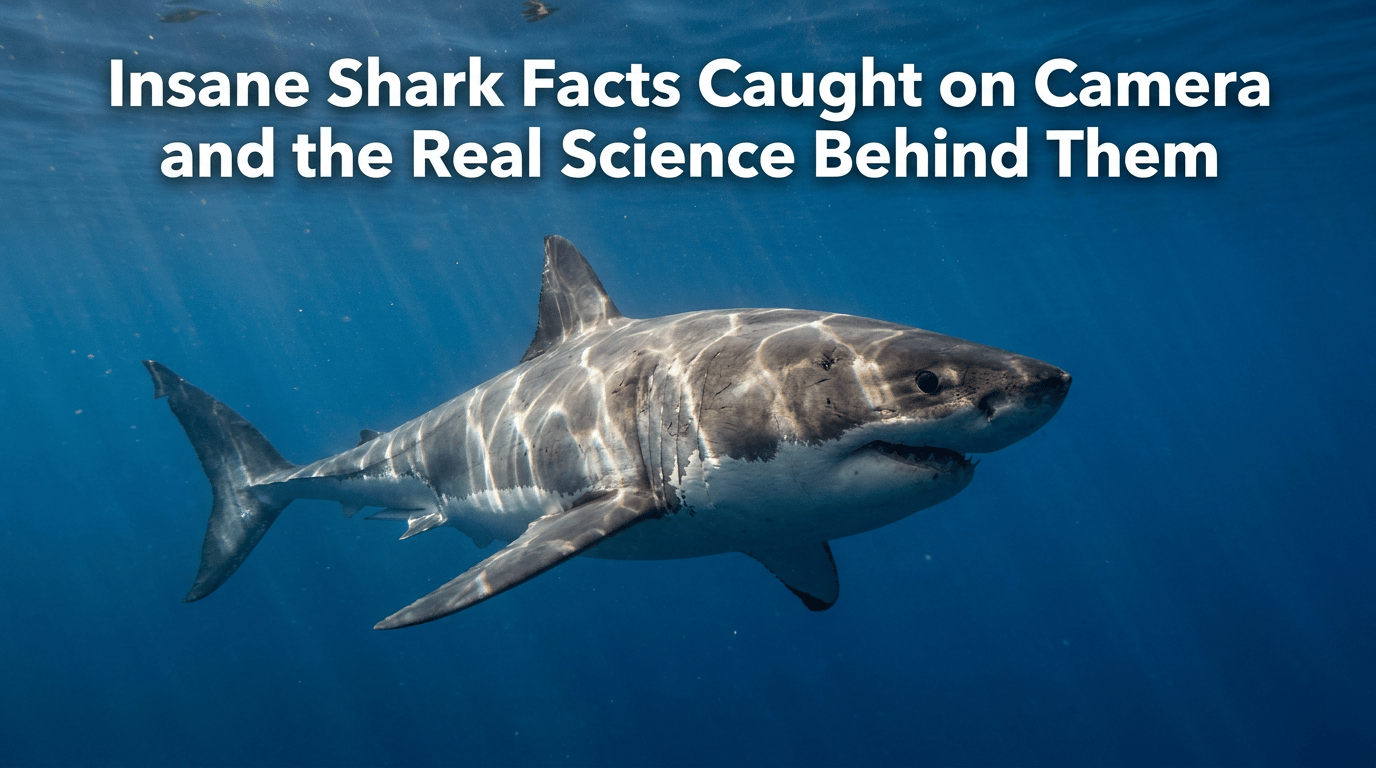
Sharks Breaching Out of the Water
Breaching footage is among the most shareable shark clips online. When a shark appears to launch itself out of the water, viewers often assume it is a cinematic ambush. Breaching does happen, but the full story usually involves pursuit, body position, and prey behavior.
Why great whites launch into the air
Some large predatory sharks are recorded leaving the water when they are pursuing agile prey that occur near the surface. A combination of powerful acceleration and an upward trajectory can send the shark above the surface for a short time. Cameras capture these moments most often when prey are concentrated at or near the water surface and when the shark approaches from below at speed.
What prey they usually target
When breaching is linked to hunting, the targeted prey are typically fast and agile animals that spend time at the surface. Footage that shows a shark coming out of the water usually involves a predator responding to a nearby prey item rather than an unprovoked leap without a biological motive.
Why breaching looks so dramatic on camera
Several factors make breaching appear more extreme on video:
- Angle and framing: Low-angle shots or lenses that compress distance can exaggerate height.
- Slow motion: High-frame-rate playback stretches a brief event into several seconds of visible motion.
- Selective editing: Clips often cut out the approach and focus on the moment of emergence, making the action seem sudden.
Because footage can emphasize the single dramatic instant, it helps to look for surrounding frames or additional camera angles when possible to understand the full behavior.
Whale Sharks Swimming Beside Divers
Videos of enormous, cartilaginous fish passing close to snorkelers and divers are shared widely with captions that call them calm giants. These scenes are usually peaceful interactions, but responsible viewing and accurate interpretation are important.
Why whale sharks look so calm
Animals that feed by filtering small particles from the water often move slowly and steadily as they swim. In footage where a large filter-feeding shark drifts near people, their steady cruising can read as calm behavior. That calmness is part of their feeding strategy rather than social tolerance for human presence.
Filter feeding explained
Filter-feeding sharks obtain food by moving water through structures that retain small organisms and particles. This feeding style leads to a distinct body posture and swimming speed that differs from the burst movements of active predators. When you watch filter feeders on camera, the slow, continuous motion is a reflection of how they collect food.
Why responsible distance matters
Even calm-looking animals deserve space. Close approaches can stress wildlife, alter feeding patterns, and create unpredictable situations. For human safety and animal welfare, follow local guidelines and maintain respectful distance from wild animals. When sharing or using footage, avoid encouraging behaviors that could lead to overcrowding or harassment of animals.
Hammerhead Sharks Moving in Groups
Drone and aerial video often reveal large aggregations of sharks that look like patterned ribbons in the water. One striking example are groups with distinctive head shapes moving together. Understanding why sharks gather helps explain these compelling visuals.
Why hammerheads form schools
Sharks gather for a variety of reasons, including feeding, migration, social interaction, or reproduction. Schooling behavior can help individuals find mates, exploit a productive area, or gain protection through numbers. Several species that form groups do so seasonally or in response to local conditions.
Daytime grouping behavior
Groups seen during the day may reflect resting aggregations, thermoregulatory behavior, or social clustering at sites with particular environmental features. Aerial footage often captures these patterns because tightly packed animals are easier to see from above.
What this looks like from above
From an aerial perspective, schools can form geometric shapes, lines, or dense packs that shift as animals move. The contrast between individual shadows and the water surface can create striking images that editors and viewers find compelling.
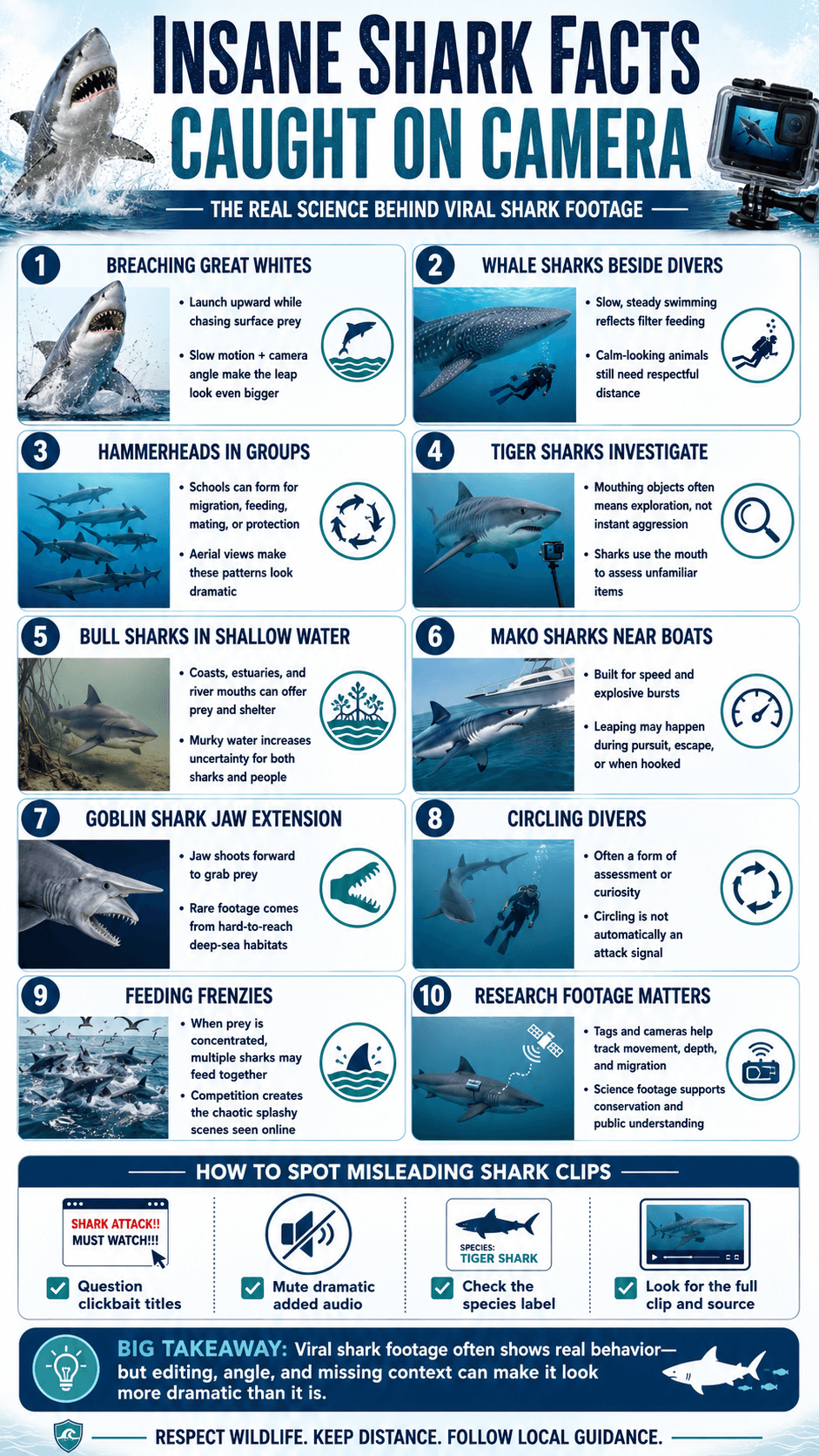
Tiger Sharks Investigating Objects
Many viral clips show sharks mouthing buoys, cameras, or floating debris. That behavior is often framed as hostile, but the reality includes exploration, assessment, and anatomical reasons for using the mouth as a sensing tool.
Curiosity vs aggression
Sharks lack hands and use their mouths to explore unfamiliar objects. This investigative mouthing is not always aggressive; it is one way sharks gather information about objects in their environment. Interpreting mouthing as outright aggression can mischaracterize the intent behind the behavior.
Why tiger sharks use their mouths
Some shark species have broad, strong jaws and teeth adapted for a varied diet. When these sharks encounter novel items, they may bite or grasp to determine edibility. That same jaw mechanics make their investigatory behavior look forceful, even when the shark is assessing rather than attacking.
Why this behavior can look scary
Close-up footage, nighttime lighting, and the sound design of viral videos amplify perceived threat. A single investigatory bite can appear menacing on camera, but context and distance are essential for interpreting whether the animal posed a danger or was simply exploring.
Bull Sharks in Shallow Water
Scenes of sharks near shorelines, in estuaries, or moving upriver often raise questions about why some species venture into shallow or murky habitats. Several ecological factors can explain these movements without assuming human-provoked risk.
Why bull sharks come close to shore
Shallow coastal areas can provide access to prey, warmer water, and sheltered environments. Some sharks take advantage of these conditions to forage or rest. Movements into shallower water are part of natural habitat use and not necessarily an indication of increased aggression.
River and estuary movement
Certain species are tolerant of low-salinity waters and may use estuaries and river mouths seasonally. These movements can reflect life history needs, such as access to prey or use of sheltered nurseries for young animals. Filmed encounters in such habitats are best viewed with an understanding of the species’ natural tendencies.
Why murky water changes risk
Reduced visibility affects how both humans and animals perceive one another. In turbid water, a shark may not recognize an object at first and may investigate with a bite. For people recreating in murky environments, general caution and adherence to local advisories are sensible. When footage comes from murky conditions, the visual uncertainty often fuels dramatic interpretations.
Mako Sharks Jumping Near Boats
Leaping makos and other streamlined predators often appear in angling or at-sea videos. These leaps reflect a combination of body design and behavioral context rather than random theatrics.
Speed and power
Some sharks are built for rapid bursts of movement. When pursuing prey or trying to escape capture, their muscle power and body shape enable sudden high-energy movements. Camera perspectives that show a shark near a vessel tend to emphasize the contrast between animal and human-made object.
Readers comparing insane shark facts caught on camera may also find interesting facts about sharks useful for a deeper look at a closely related shark topic.
Why makos leap
Leaping can be a predatory tactic, an escape response, or an attempt to dislodge a hook or lure. In fishing videos, a shark that is hooked or hooked near the surface may leap as it resists or tries to free itself.
Why fishing videos often show this behavior
Fishing scenarios concentrate animal and human attention in a confined space around bait or tackle. That proximity increases the odds of capturing dramatic behaviors on camera. Editors also favor such footage because it illustrates conflict and motion, which audiences find engaging.
Goblin Shark Jaw Extension Footage
Rare clips of deep-water sharks sometimes reveal extreme jaw mechanics that look almost cinematic. These moments are compelling because they are unusual and because they shed light on specialized feeding strategies.
Why the jaw shoots forward
Certain deep-sea predators possess highly protrusible jaws that can extend quickly to seize prey. This morphological adaptation allows the predator to capture small, evasive organisms in the low-light, high-pressure environment of the deep ocean. When filmed, the sudden forward projection of the jaw is startling but functionally straightforward.
Deep-sea feeding strategy
Feeding in deep water poses challenges such as sparse prey and little ambient light. Rapid jaw extension can be an effective way to grab passing animals without the need for fast sustained pursuit. Such specialized feeding reflects evolutionary solutions to the constraints of deep habitats.
Why this footage is so rare
Deep-sea species are seldom filmed because the environments they occupy are difficult to access and require specialized equipment. When rare footage is obtained, it is often captured by research expeditions or remotely operated cameras, making such clips both scientifically informative and viral-worthy.
Sharks Circling Divers
Circling is one of the most misinterpreted shark behaviors in underwater video. It can indicate interest, caution, or routine movement rather than a direct threat.
What circling can mean
Circling often functions as assessment. A shark may circle to get a better view or sensing angle on an unfamiliar object. The behavior can also reflect territorial or social dynamics in certain contexts, but it is not a universal sign of intent to attack.
Curiosity and assessment
Sharks use multiple senses to explore their surroundings. A circling pattern can allow a shark to sample chemical cues, check visual information, and judge the size and behavior of another animal. Many filmed circumnavigation events end without escalation.
Why body language matters
Just as with terrestrial animals, subtle postures and movement patterns convey intent. In footage, a shark that moves smoothly and maintains steady distance is behaving differently from one that shows rapid erratic motions or repeated targeting of the same area. Interpreting body language requires caution, and when in doubt, follow local dive guidance and professional recommendations.
Sharks Feeding in Groups
Group feeding can produce chaotic scenes that editors turn into dramatic montages. Understanding the drivers of group feeding helps explain the noise and apparent disorder in such footage.
Feeding events
When abundant prey items become concentrated in a small area, multiple predators can converge and feed together. These events often involve high-energy chases and splashing as each individual tries to secure a meal. Video tends to highlight these high-intensity moments because they are visually striking.
Competition around food
Competition can drive behaviors such as rapid snapping, body ramming, and directional changes as individuals jockey for position. The resulting motion disturbs the water and stirs up particles, which camera operators record as chaotic movement.
Why water movement looks chaotic
Feeding aggregations create turbulence, sediment suspension, and abrupt changes in direction, all of which register strongly on camera. Close-up and water-surface shots especially emphasize the frenzied nature of these events.
Shark Tagging and Research Footage
Footage from scientific tagging and tracking programs often gives some of the clearest perspectives on shark movement and behavior. Researchers use controlled methods to attach devices and record natural activities over time.
How scientists track sharks
Researchers commonly use a variety of tagging methods to monitor movements and behavior. Some tags record location and movement and transmit data when animals come to the surface. Other devices are used to record underwater movement, temperature, or depth. These tools help scientists build longer-term pictures of habitat use and migration patterns.
What cameras reveal about migration
Mounted and remote cameras provide visual context that complements tracking data. Visual records can show how sharks use particular features such as reefs, canyons, or coastal zones, and can document behaviors that are difficult to infer from location data alone.
Why footage helps conservation
Visual evidence from tagging studies and remote cameras can help managers and the public understand when and where sharks spend time, which in turn can inform protective measures. Footage also serves as an educational bridge between scientific results and public awareness.
For general conservation context and international frameworks related to wildlife protection, consult the International Union for Conservation of Nature website for global conservation information and species assessments and the Convention on International Trade in Endangered Species website for information on trade regulation and protection. For accessible animal overviews and educational resources, refer to established zoological institutions such as the Smithsonian’s National Zoo and related public-facing resources from major zoological organizations.
How to Tell Real Shark Footage From Misleading Clips
Not all dramatic shark clips tell the full story. Misleading titles, added sound effects, and incorrect species labels can all distort what actually happened. Here are practical tips to assess authenticity.
Misleading titles
Clickbait headlines often frame events as extreme to attract views. Compare the title with the visual evidence, look for full-length versions of the clip, and try to find original sources or timestamps that confirm when and where the footage was taken.
Edited sound effects
Many viral videos add music, splashes, or growls to heighten tension. Audio cues are easy to edit and can change the perceived mood of a scene. Mute the clip and consider whether the visuals alone match the narrative being presented.
Wrong species labels
Species misidentification is common online. Head shapes, fin placement, and body proportions are clues, but novices can mislabel animals. When species identity matters to an interpretation, seek confirmation from reputable field guides, researchers, or institutions.
Context matters
Short clips omit context such as how an interaction began and ended. Try to locate the unedited footage, additional camera angles, or reports from reliable organizations that were present. Understanding the lead-up and aftermath can change how a scene is read.
FAQs About Shark Facts Caught on Camera
Why do sharks breach?
Breaching can be part of predatory pursuit when surface-oriented prey is involved, or it can result from other rapid upward movements. The visible leap is the outcome of acceleration and trajectory during capture attempts or intense movement near the surface.
Why do sharks circle divers?
Circling is often investigative behavior that allows a shark to assess an unfamiliar object or animal. It can also be part of movement within a localized area. Circling is not an automatic sign of intent to attack, but it does warrant cautious attention and adherence to local safety guidance.
Are shark videos online always real?
Some clips are authentic and responsibly documented, while others are edited, miscaptioned, or staged. Evaluate videos by checking for source information, longer versions, or corroboration from reputable organizations. Be especially cautious of clips that lack provenance or that use sensational language without evidence.
What is the rarest shark filmed?
Footage of deep-sea or cryptic species is inherently rare because those animals live in hard-to-reach habitats. When rare species are filmed, the recordings are valuable for science and public education. For authoritative conservation information on any species, consult established conservation resources.
Why do sharks come close to boats?
Sharks may approach boats for several reasons, including curiosity, the presence of bait or fish activity, or opportunistic foraging. In some cases, human activity concentrates prey and draws predators closer to vessels. Maintaining distance and following local regulations reduces the risk of negative interactions for both people and animals.
Final Notes on Watching and Sharing Shark Footage
Viral shark videos are powerful tools for curiosity and learning when they are presented with accurate context. Cameras provide windows into behaviors that are fascinating and ecologically important. At the same time, careful interpretation protects animals from misrepresentation and reduces the chance that people will imitate risky behavior. When you encounter dramatic footage online, consider the full context, respect wildlife guidelines, and seek trustworthy sources for deeper information.
Please remember that this article explains behaviors and interpretation rather than advising on emergency or medical situations. If you encounter an unexpected wildlife situation, contact local authorities or qualified professionals for guidance.
Authoritative external resources mentioned within this article:
- IUCN Red List — global conservation information and species assessments.
- CITES — information on international trade regulation and protections for listed species.
- Smithsonian National Zoo — educational animal overviews and public-facing resources.
- San Diego Zoo Wildlife Explorers — reader-friendly animal information and conservation education materials.

Ethan Walker is the founder and research editor of Animal Fact Central. He creates and reviews educational animal facts content using trusted wildlife, pet care, and science-based sources. His work focuses on making animal behavior, adaptations, habitats, and species facts clear, accurate, and engaging for everyday readers.
Read More Details About Ethan Walker: https://animalfactcentral.com/ethan-walker/