
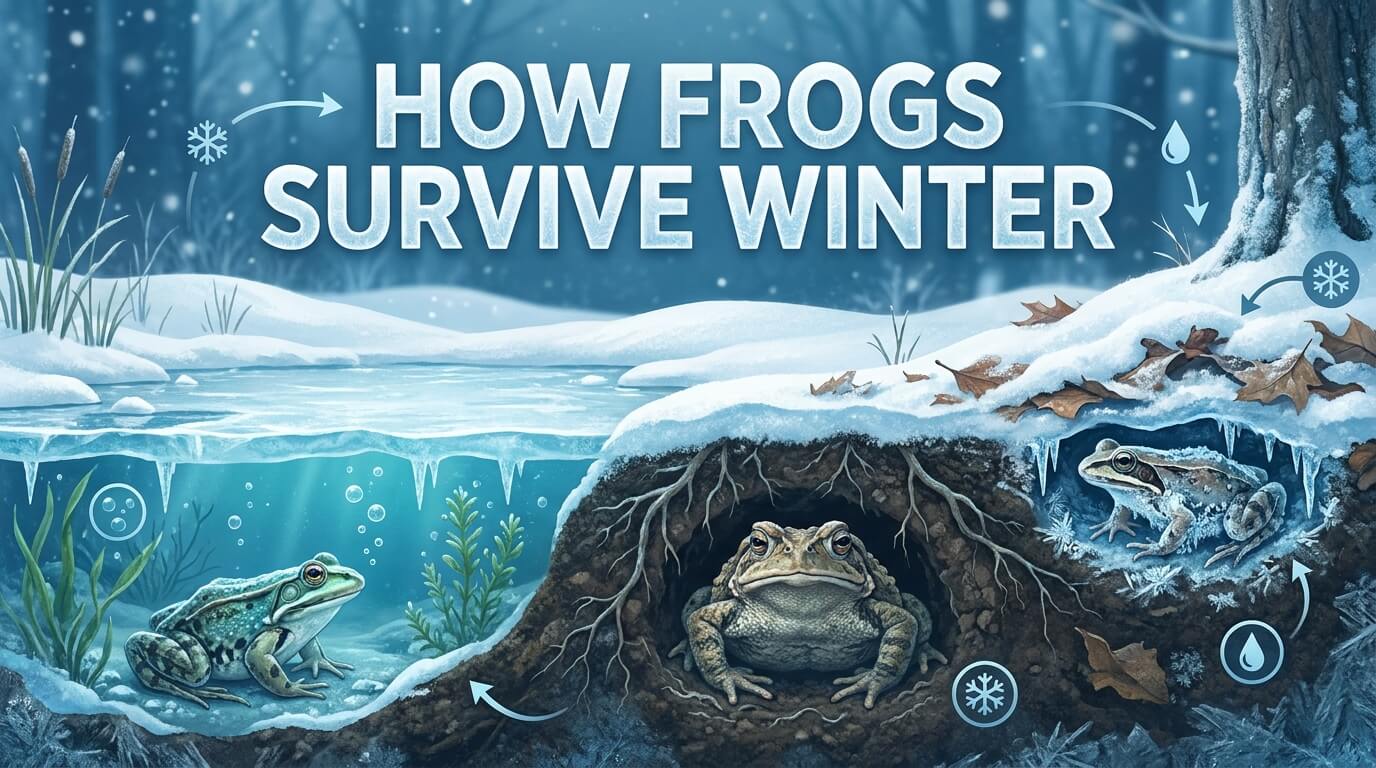
Frogs survive winter by matching their strategy to their species and habitat. Aquatic frogs may remain beneath pond or lake ice, where cold water still contains dissolved oxygen. Toads and other strong diggers may shelter below the frost line. Small woodland frogs can hide beneath leaf litter, logs, roots, or shallow soil. A limited group, including wood frogs, can tolerate controlled freezing of part of the water in their bodies.
These strategies are not interchangeable. A bullfrog resting underwater does not use the same physiology as a wood frog beneath frozen leaves, and most frogs cannot survive having ice form throughout their tissues. Winter survival depends on metabolic slowdown, stored energy, moisture, oxygen, insulation, and choosing a refuge that protects the animal from the most dangerous conditions in its environment.
Quick Answer
Frogs Use Several Winter Strategies
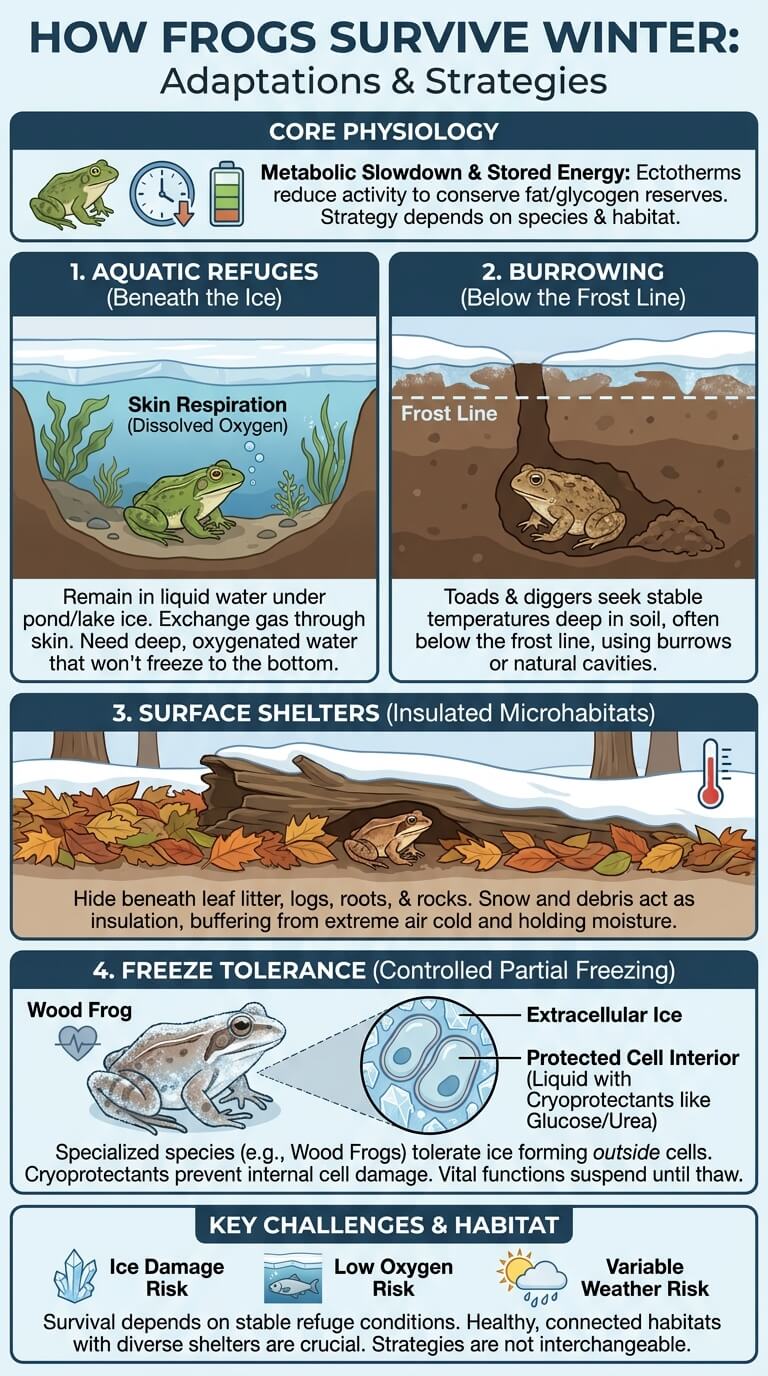
Cold-region frogs generally survive in one of four ways. Some remain underwater in permanent ponds, lakes, springs, or slow stream refuges. Some burrow into soil or use existing underground spaces. Others shelter near the surface beneath leaves, logs, bark, moss, or rocks. A few species tolerate limited body freezing while protected by cryoprotectants, chemicals that reduce cellular injury.
The National Park Service overview of amphibian winter strategies contrasts aquatic frogs, burrowing toads, and freeze-tolerant woodland species. The examples are useful, but they should not be applied as rigid rules. Even closely related frogs may overwinter differently, and one species may use more than one type of refuge across its range.
Species, Habitat, and Climate Determine the Method
A frog’s body size, skin, digging ability, tolerance of low oxygen, breeding schedule, and local climate all influence where it spends winter. Permanent-water frogs need water that does not freeze from surface to bottom. Terrestrial frogs need shelter that remains moist without becoming lethally cold. Burrowing species need soil they can enter before it hardens.
Geography matters within a species. A wood frog in subarctic Alaska experiences longer and colder winters than a wood frog in the central United States. Populations can differ in how much glucose and urea they accumulate, how long they remain frozen, and how low a temperature they survive. A number reported for one population should not be treated as the limit for every wood frog.
The Main Winter Challenges for Frogs
Cold Slows Metabolism
Frogs are ectotherms, meaning that their body temperature is strongly influenced by the surrounding environment. As temperatures fall, chemical reactions in muscles, nerves, digestion, and other tissues slow. A frog can no longer hunt, jump, digest food, or escape predators as effectively as it can in warm weather.
Metabolic slowdown is also useful. A dormant frog needs far less energy than an active one. It can live for weeks or months on stored fat and glycogen rather than trying to find insects in a frozen landscape. The challenge is slowing enough to save energy without losing the oxygen, water balance, and cellular function needed to survive until spring.
Ice Can Damage Cells and Tissues
Ice is dangerous because expanding crystals can physically disrupt tissue, while freezing water outside cells draws liquid out of them. Severe dehydration changes salt concentrations, membrane structure, proteins, and organ function. Ice forming inside cells is especially damaging and is avoided by freeze-tolerant frogs.
A freeze-tolerant frog does not allow every drop of body water to become ice. Instead, ice forms mainly outside cells and in body spaces while cryoprotectants help keep cell interiors liquid and reduce dehydration injury. This distinction is why the popular phrase “frozen solid” is memorable but biologically incomplete.
Frozen or Oxygen-Poor Water Limits Survival
Water below ice can remain liquid because ice forms at the surface first. That liquid layer can offer a relatively stable temperature compared with exposed land. It is not automatically safe. A shallow pond may freeze to the bottom, while a pond covered by ice and deep snow may lose oxygen as photosynthesis falls and decomposers continue consuming oxygen.
Aquatic frogs must choose water with enough depth, oxygen, and suitable bottom structure. Their low winter metabolism reduces oxygen demand, but it does not eliminate it. Species differ in their ability to tolerate oxygen shortage, so a pond that supports one frog species may be unsuitable for another.
Dormancy, Hibernation, and Brumation
How the Terms Are Used
Hibernation is commonly used for prolonged winter dormancy. Brumation is often used in popular reptile and amphibian writing to distinguish cold-season inactivity in ectotherms from mammalian hibernation. Scientific papers may instead use winter dormancy, overwintering, hibernation, hypometabolism, or a more specific physiological term.
Metabolic Slowdown and Energy Conservation
During winter dormancy, heart rate, breathing activity, movement, digestion, and energy use can fall dramatically. The exact degree depends on temperature and strategy. An aquatic frog may remain capable of slow movement, while a frozen wood frog has no detectable breathing or heartbeat until thawing begins.
Before winter, frogs need enough stored energy to maintain cells, repair damage, and become active in spring. They stop feeding when prey becomes scarce and temperatures are too low for effective digestion. A frog disturbed repeatedly during winter may spend energy it cannot easily replace.
Why Frogs May Become Active During Warm Spells
Dormancy is not always an uninterrupted sleep. A mild rainy period can warm the soil or open water enough for some frogs to move. Spring peepers, chorus frogs, and other early breeders may call during unusually warm winter weather, then become quiet again when temperatures fall.
Aquatic Frogs Beneath Ice
Overwintering in Ponds, Lakes, and Stream Refuges
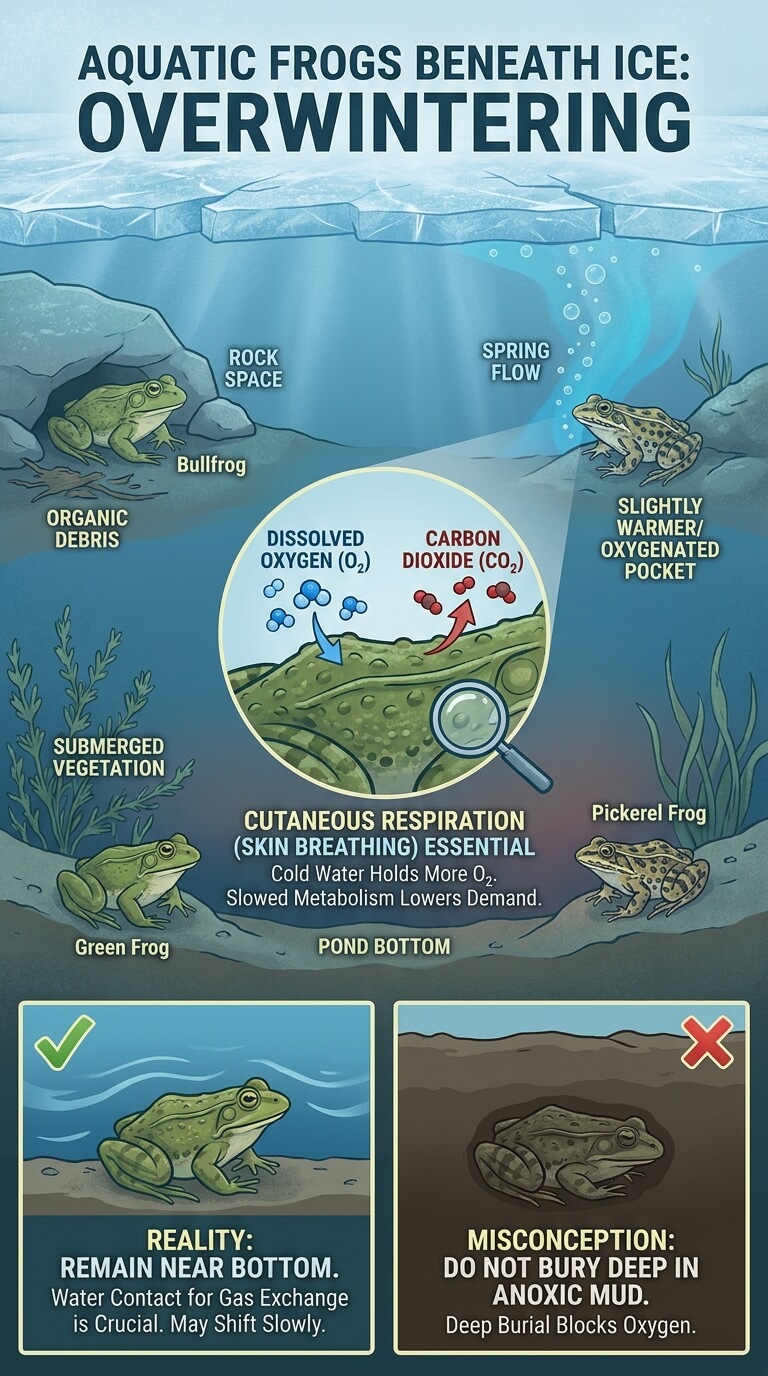
Green frogs, bullfrogs, leopard frogs, pickerel frogs, and other water-associated species may overwinter in permanent water, although exact habits vary by species and region. They use lake bottoms, pond margins, springs, slow current, submerged vegetation, organic debris, rock spaces, or other underwater refuges.
Water near the bottom of a sufficiently deep pond often remains just above freezing. Springs and flowing groundwater can create slightly warmer or more oxygenated pockets. A frog may shift position slowly if oxygen, temperature, or disturbance changes.
Skin Respiration and Dissolved Oxygen
Frogs have lungs, but they can also exchange gases through moist skin. During underwater dormancy, cutaneous respiration becomes essential. Oxygen dissolved in water moves across the skin into blood, while carbon dioxide moves out. Cold water can hold more oxygen than warm water, and the frog’s slowed metabolism lowers demand.
The National Park Service explanation of frogs beneath lake ice notes that aquatic frogs commonly remain on or near the pond bottom rather than disappearing into deeply sealed mud. Water must contact the skin for gas exchange, so a refuge with water movement and oxygen can be more important than the softest sediment.
Why Frogs Do Not Simply Bury Deep in Pond Mud
Many aquatic frogs rest on the bottom, lie partly exposed, or move slowly enough to keep oxygenated water in contact with their skin. Relying on deep anoxic sediment would create a different challenge from the mud-burial strategies used by some turtles.
Terrestrial Frogs and Toads on Land
Burrows, Leaf Litter, Logs, Rock Crevices, and Soil
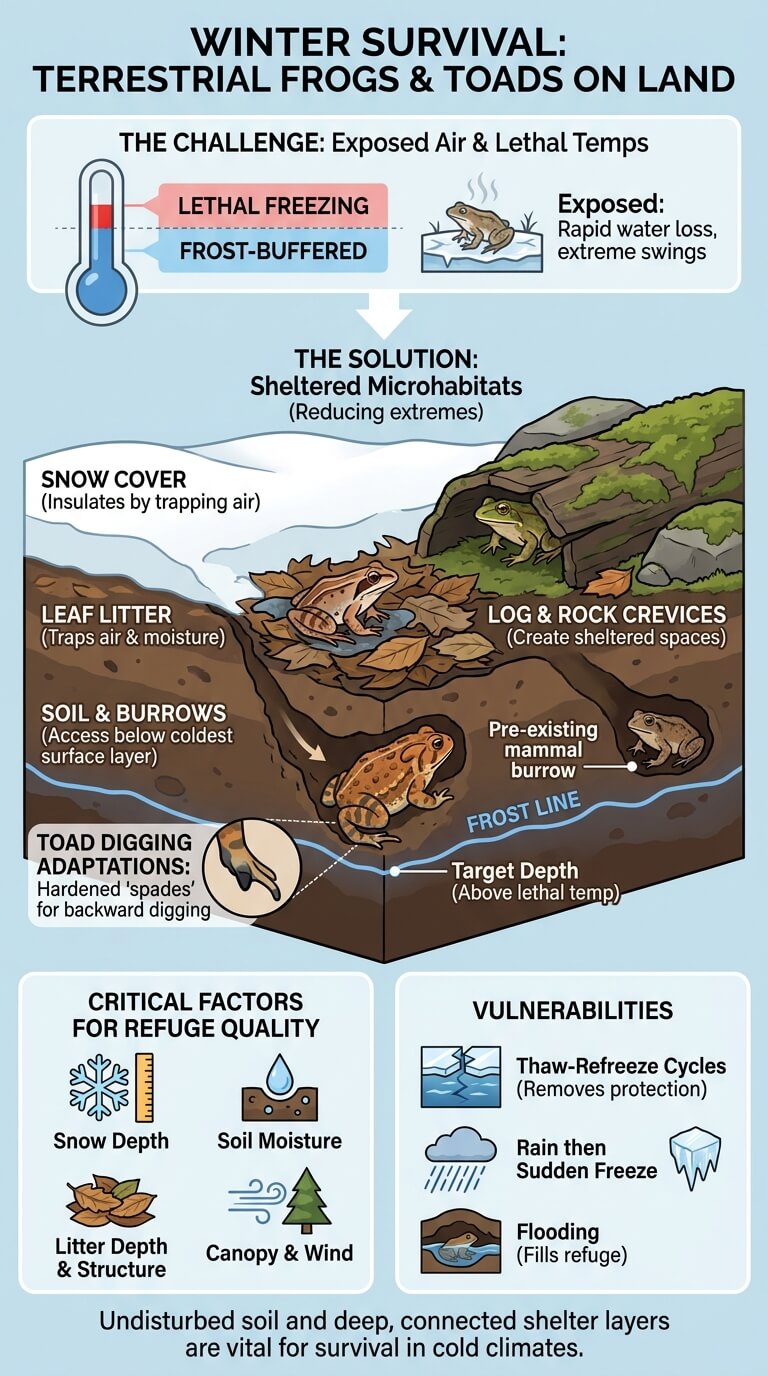
Land-dwelling frogs use small refuges that reduce temperature swings and water loss. Leaf litter traps air and moisture. Logs and rocks create sheltered spaces. Roots, mammal burrows, cracks, and loose soil can lead below the coldest surface layer. Snow adds insulation by trapping air above the ground.
These shelters may look shallow, yet they can remain less extreme than exposed air. A woodland frog under damp leaves experiences a different microclimate from a frog sitting on bare frozen ground. The quality of the refuge depends on snow cover, soil moisture, wind, canopy, and the depth and structure of the litter layer.
Choosing Frost-Buffered Microhabitats
Freeze-avoiding terrestrial frogs must remain in places that do not cross their lethal temperature. They may move deeper before winter, use south- or north-facing slopes differently, select moist cavities, or remain near groundwater. A few inches of soil or organic material can make a large difference during a short freeze.
Snow can protect a dormant frog by insulating the ground from very cold air. A winter with little snow, repeated thawing, or rain followed by sudden freezing can remove that protection. Flooding can also fill a refuge or force an animal into exposed conditions.
Toad Digging Adaptations and Shelter Depth
Many true toads have short, powerful hind limbs and hardened areas on the feet that help them dig backward into soil. American toads can use their own burrows or enter existing cavities. They generally seek depths that remain above their lethal freezing temperature, often below the local frost line when soil conditions allow.
Digging depth is not one fixed measurement. Frost penetrates differently in sandy soil, clay, gardens, forests, and places with or without snow. Rocks, roots, groundwater, and compacted ground limit where a toad can go. This is why undisturbed soil, deep litter, and connected shelter matter in cold climates.
Freeze-Tolerant Frogs
Wood Frogs as a Well-Studied Example
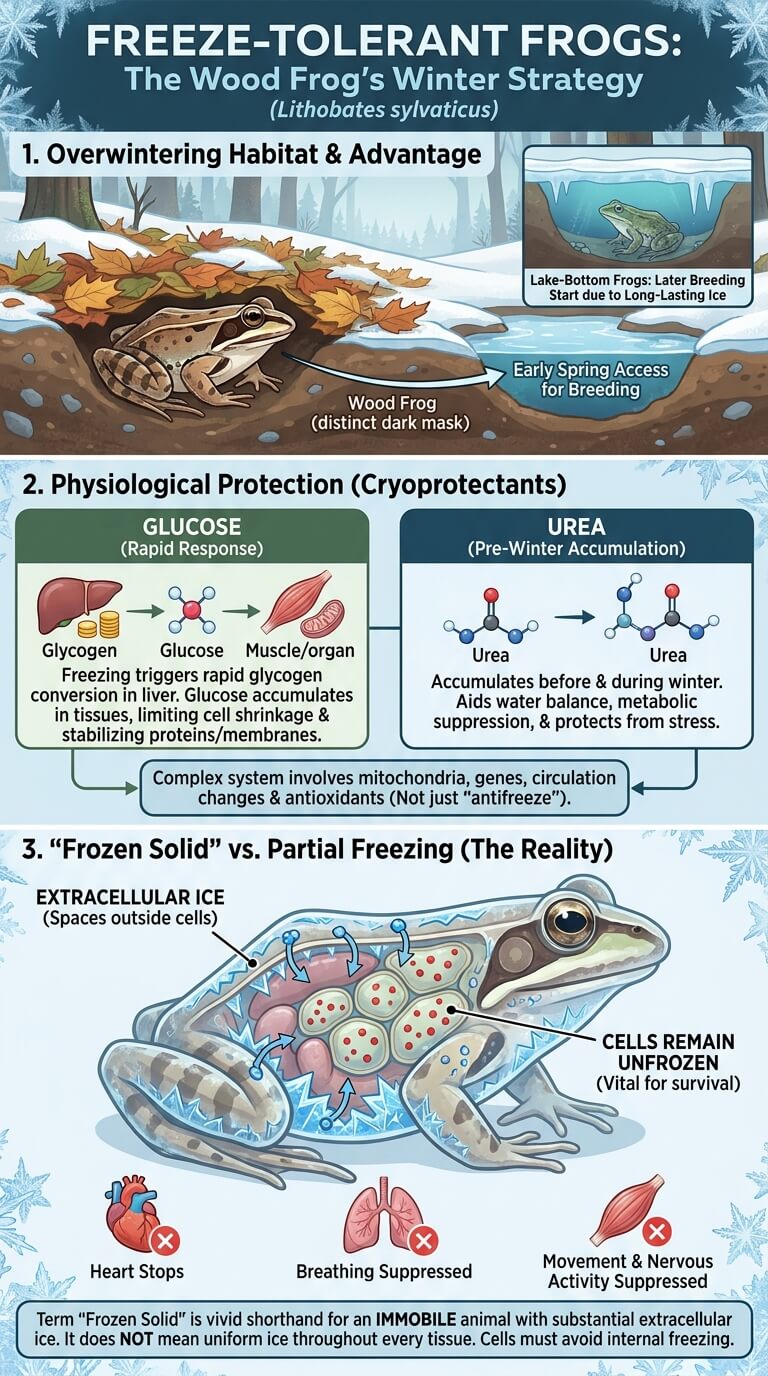
Wood frogs, Lithobates sylvaticus, overwinter close to the ground beneath leaves and other forest cover. These shelters do not keep them continuously above freezing. When ice begins forming around the frog, a coordinated physiological response allows a substantial portion of body water to freeze outside cells.
The strategy lets wood frogs remain near shallow seasonal breeding pools and become active soon after spring thaw. The National Park Service wood frog profile describes how forest-floor overwintering supports early breeding compared with frogs that remain beneath long-lasting lake ice.
Glucose, Urea, and Protection of Vital Tissues
Freezing triggers rapid conversion of liver glycogen into glucose. Glucose enters the bloodstream and accumulates in tissues, where it helps limit cell shrinkage and stabilizes proteins and membranes. Wood frogs also accumulate urea before and during winter. Urea contributes to water balance, metabolic suppression, and protection from freezing and dehydration stress.
A peer-reviewed review of wood frog freeze biology explains that glucose and urea work as part of a larger response involving mitochondria, antioxidants, gene regulation, circulation changes, and controlled recovery after thawing. The frog is not simply filled with a commercial antifreeze-like liquid.
Partial Body Freezing Versus Being Frozen Solid
During freezing, ice forms in spaces outside cells, in the abdominal cavity, and around organs. Water leaves cells and joins the growing extracellular ice. Circulation, breathing, muscle movement, digestion, and nervous activity become profoundly suppressed. The heart can stop until thawing restores conditions that allow circulation to resume.
Researchers often report that a large fraction of total body water can freeze, but the cells themselves must avoid destructive internal ice. “Frozen solid” is acceptable as a vivid shorthand for the immobile, ice-containing animal. It should not be interpreted as uniform ice throughout every tissue.
Frogs That Avoid Freezing
Supercooling and Sheltered Refuges
Some frogs can cool below the normal freezing point of their body fluids without ice forming immediately. This state is called supercooling. It can help during a brief cold period, but it is unstable. Contact with external ice or other nucleating material can trigger freezing.
Freeze-avoiding frogs reduce that risk by selecting protected sites, limiting contact with surface ice, and moving below the coldest zone. Their tissues may also accumulate solutes that lower freezing risk, but not enough to make them truly freeze-tolerant.
Moving Below the Frost Line
Burrowing is effective because soil temperatures become more stable with depth. Toads and burrowing frogs may descend before the surface freezes. Other frogs use root channels, animal burrows, caves, springs, seepage areas, or deep leaf litter rather than digging a complete tunnel themselves.
Regional and Species-Level Limits
Freeze tolerance is not shared by all frogs. Wood frogs, spring peepers, gray treefrogs, and a small number of other species have documented tolerance, but their limits differ. A tropical frog exposed to the same temperature may die, and even a freeze-tolerant species can be killed by excessive cold, long exposure, repeated cycles, dehydration, poor condition, or badly timed thawing.
A review of subarctic wood frog overwintering reports that northern populations can tolerate colder and longer experimental freezing than temperate populations. This geographic variation is why a dramatic temperature record should not become a universal wood frog fact.
What Happens to Breathing, Heart Rate, and Feeding?
Reduced Oxygen Demand
A cold, dormant frog uses much less oxygen than an active summer frog. Underwater species continue exchanging gases through the skin at a low rate. Terrestrial, freeze-avoiding frogs breathe slowly or intermittently. In freeze-tolerant wood frogs, detectable breathing and heartbeat can cease during the frozen state.
Low oxygen demand increases the time an aquatic frog can survive beneath ice, but oxygen still matters. Flowing springs, aquatic plants receiving light, open channels, and water exchange can maintain oxygen. Thick snow, decomposition, crowding, and shallow water can reduce it.
Long Fasting and Stored Energy
Dormant frogs generally do not feed. Their digestive systems slow, and prey may be unavailable. Stored glycogen and fat support basic maintenance, cryoprotectant production, thawing, movement, and the beginning of the breeding season.
Restarting Activity During Spring Thaw
As temperatures rise, ice melts and metabolism accelerates. In a freeze-tolerant frog, organs do not all restart at the same instant. Circulation and cell function recover in an organized sequence while the animal repairs freezing and oxidative stress.
Early-breeding species may move toward seasonal pools while snow remains nearby. Aquatic frogs often emerge later because deep water warms slowly and lake ice persists. Rainfall, soil temperature, water temperature, latitude, elevation, and species determine when movement and calling begin.
Winter Risks and Changing Conditions
Sudden Freezes and Loss of Snow Insulation
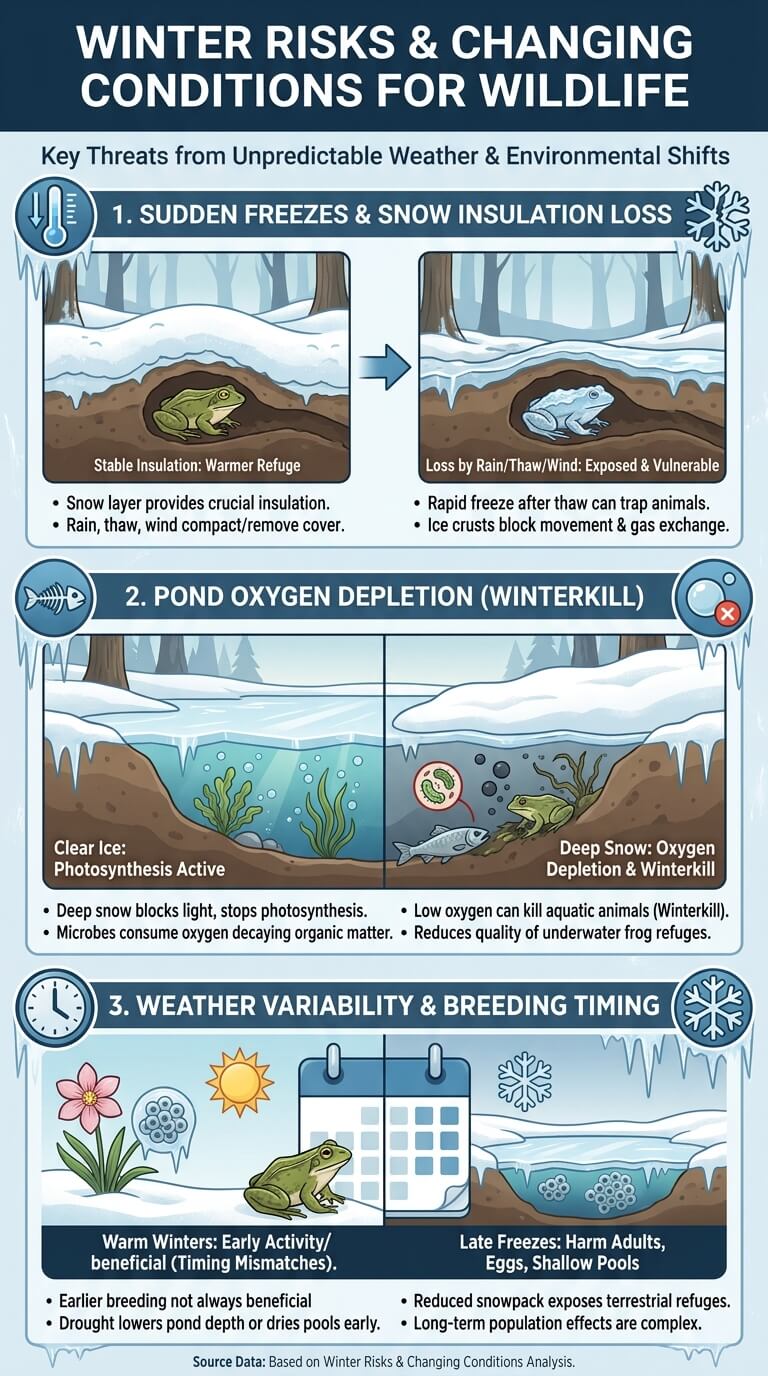
Snow is not only a hazard. A stable snow layer can keep the forest floor warmer than exposed air. Rain-on-snow events, midwinter thaws, and wind can remove or compact that insulation. A frog may become active during warmth and then face a rapid freeze in a less protected position.
Ice crusts can block movement or alter gas exchange in soil spaces. Repeated freeze-thaw cycles may also demand repeated physiological responses. The effect depends on species, refuge, energy stores, and the speed and depth of temperature change.
Pond Oxygen Depletion and Winterkill
Under clear ice, aquatic plants and algae may continue producing some oxygen. When deep snow blocks light, photosynthesis decreases. At the same time, microbes consume oxygen while breaking down dead plants and organic material. Oxygen can fall enough to kill fish and other aquatic animals, a process often called winterkill.
Penn State Extension’s pond winterkill guidance explains how snow-covered ice, plant decay, and oxygen consumption can combine in winter ponds. Frogs are not fish, and species tolerances differ, but the same oxygen decline can reduce the quality of an underwater frog refuge.
Weather Variability and Breeding Timing
Warm winters can trigger earlier movement or calling, while late freezes may affect adults, eggs, or shallow pools. Reduced snowpack can expose terrestrial refuges to colder air. Drought can lower pond depth before winter or cause breeding pools to dry early in spring.
Earlier breeding is not automatically beneficial. If insect emergence, pond filling, predator activity, and larval development do not shift together, timing mismatches can occur. Long-term effects must be measured at the population level rather than inferred from one unusual winter.
Common Myths and Mistakes
Not All Frogs Can Survive Body Freezing
Freeze tolerance is a specialized adaptation. Most frogs avoid freezing by remaining underwater, burrowing, or selecting insulated shelters. A frog that lacks the necessary physiology can suffer fatal cell damage at temperatures a wood frog may survive.
Even wood frogs have limits. Tolerance changes with population, acclimation, temperature, duration, number of freeze-thaw cycles, hydration, and body condition. The ability should never be tested by placing a frog in a freezer or exposing it to ice.
A Motionless Frog Is Not Automatically Dead
A dormant or cold-stunned frog can move very little. A freeze-tolerant frog may show no visible breathing or heartbeat while frozen. Appearance alone may not reveal whether the animal is alive, injured, diseased, or dead.
Do not squeeze, bend, warm, or repeatedly touch the frog to test it. In a natural refuge, leave it undisturbed. An unusual cluster of dead or sick amphibians should be reported to a state wildlife agency, park biologist, or wildlife disease program.
Warming or Moving a Dormant Frog Can Cause Harm
Pouring warm water on a frog can create rapid temperature stress and damage delicate skin. Bringing it indoors may cause premature activity when food and suitable outdoor conditions are unavailable. Moving it to a different pond or shelter can spread pathogens and place it in the wrong habitat.
If a frog is found in an immediately dangerous human-made location, such as inside operating machinery, contact a licensed wildlife rehabilitator or local wildlife agency for guidance. Routine winter dormancy is not a reason to rescue a wild frog.
Winter Survival Depends on Healthy Habitat
Skin, Moisture, and Temperature Work Together
Amphibian skin makes water balance and gas exchange central to winter survival. A terrestrial refuge must remain humid enough to prevent severe dehydration without becoming flooded or oxygen-poor. An aquatic refuge must allow water to contact the skin while maintaining suitable oxygen and temperature.
Leaf litter, woody debris, uncompacted soil, spring flow, pond depth, aquatic vegetation, and canopy cover all help create these microclimates. Removing every log, leaf, and shallow wet area can reduce the number of safe choices available to frogs. Returning successfully in spring allows frogs to resume their food-web roles as predators, prey, tadpole producers, and nutrient movers.
Pond Conditions Affect More Than Winter
A pond deep enough for winter survival must also support breeding, eggs, tadpoles, prey, and shoreline movement. Permanent water can shelter aquatic adults but may also contain fish that eat eggs and larvae. Seasonal pools often avoid fish but may not hold water through winter.
There is no single ideal pond for every frog. Pond owners should use local extension or wildlife guidance before aerating, deepening, adding fish, breaking ice, removing vegetation, or changing water levels. An intervention intended to help one animal group can harm another.
Changing Winters Can Add Population Stress
Frogs have survived variable weather for a long time, but rapid shifts can change the frequency of extreme events, snow insulation, pond ice, drought, and breeding cues. Species with small ranges or few winter refuges may have less room to adjust. When winter stress overlaps with habitat loss, disease, pollution, or blocked movement, it can contribute to the broader pattern of amphibian decline.
Winter is only one stage of the annual cycle. A population also needs summer feeding habitat, safe migration routes, clean breeding water, and successful juvenile development. Protecting connected habitat gives frogs more options when one winter refuge fails.
FAQ
Do Frogs Sleep All Winter?
Frogs enter winter dormancy rather than ordinary nightly sleep. Their metabolism, movement, feeding, and breathing decrease, but the depth of dormancy varies. An aquatic frog may shift position slowly, and a terrestrial frog may become active during a warm rainy spell.
A frozen wood frog is at a much deeper physiological standstill, with breathing and heartbeat suspended until thawing. These different states are all described casually as hibernation, but they are not identical.
Can a Frog Survive Inside a Frozen Pond?
A frog can survive beneath the frozen surface if liquid water remains below the ice and contains enough oxygen for that species. Aquatic frogs usually rest on or near the bottom, where they exchange gases through their skin. They are not necessarily frozen themselves.
If a shallow pond freezes from surface to bottom or loses most of its dissolved oxygen, survival becomes much less likely. Freeze-tolerant woodland frogs generally overwinter on land rather than as blocks of ice inside ponds.
How Cold Can Wood Frogs Survive?
There is no single temperature limit for all wood frogs. Experiments show strong geographic variation, with subarctic populations surviving colder and longer freezing than temperate populations. National Park Service information from Denali reports survival around -12 degrees Celsius for Alaskan wood frogs, while experimental outcomes depend on duration, acclimation, body condition, and methods.
That value is not a safe limit for handling or experimentation. The forest-floor refuge and snow layer also mean the frog’s body does not necessarily reach the coldest air temperature recorded above it.
When Do Frogs Emerge in Spring?
Emergence begins when local temperature, rainfall, soil thaw, pond conditions, and species-specific cues become suitable. Wood frogs and spring peepers may move very early, sometimes while snow and ice remain. Bullfrogs and other aquatic species often become active later as deeper water warms.
Calendar dates vary by latitude, elevation, weather, and year. A brief warm spell can produce temporary activity without marking the full start of breeding season.
Final Thoughts
How frogs survive winter depends on where they live and what their bodies can tolerate. Aquatic frogs use cold water and skin respiration. Toads and burrowing frogs move into frost-buffered soil. Woodland species use leaves, logs, roots, and snow insulation. Wood frogs and a small group of other species add controlled freeze tolerance to that range of strategies.
The most useful winter response from people is usually restraint. Leave dormant frogs and their shelters undisturbed, do not thaw or relocate them, and protect the ponds, leaf litter, soil, woody debris, and connected habitat they need. A frog that appears inactive in winter may be carrying out a highly specialized survival process.

Ethan Walker is the founder and research editor of Animal Fact Central. He creates and reviews educational animal facts content using trusted wildlife, pet care, and science-based sources. His work focuses on making animal behavior, adaptations, habitats, and species facts clear, accurate, and engaging for everyday readers.
Read More Details About Ethan Walker: https://animalfactcentral.com/ethan-walker/