
What Is Dog to Dog Behavior?
Dogs use body language first
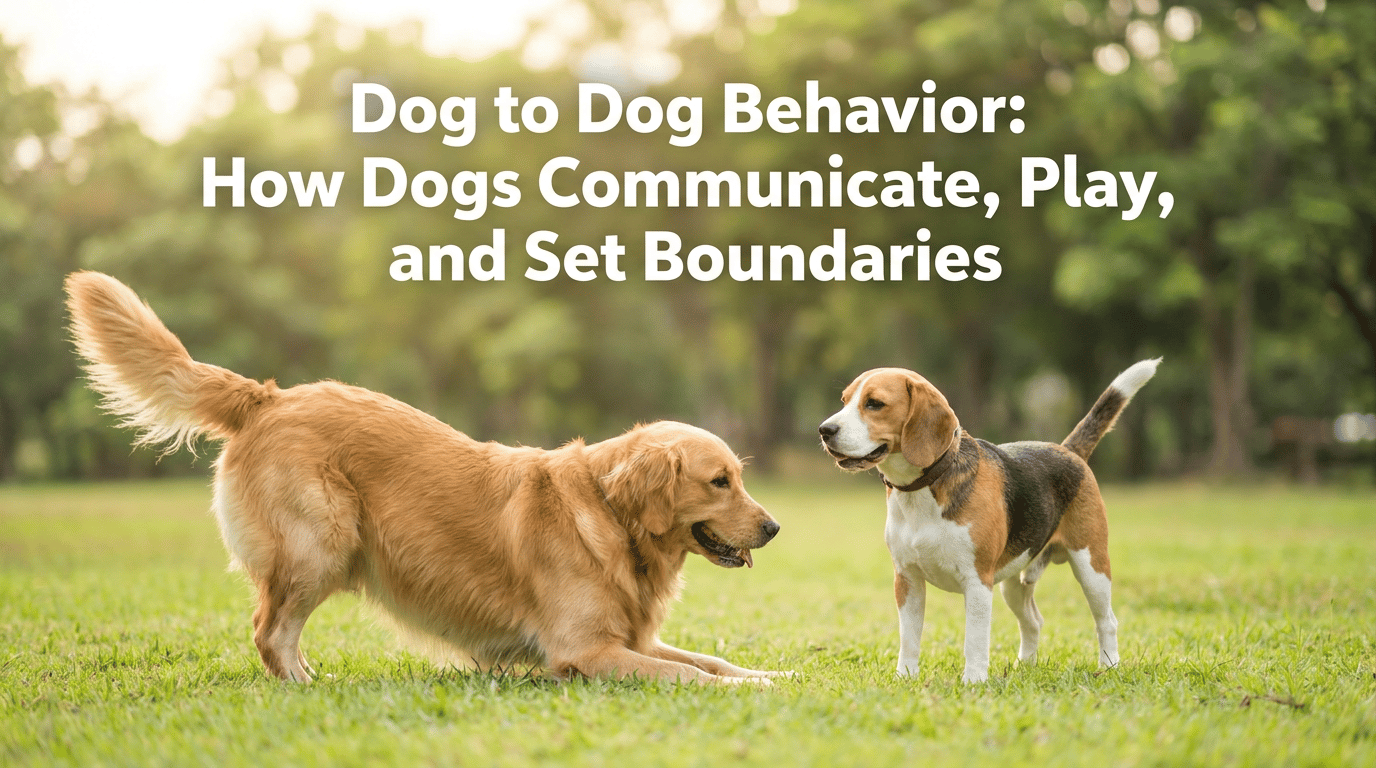
Dogs are social mammals that rely heavily on nonverbal signals when they interact with other dogs. Much of what dogs “say” to one another is communicated through posture, facial expression, tail position, movement patterns, and scent cues rather than human words. General resources on mammalian behavior note that body language and scent are common communication channels across species, and those same channels underlie how domestic dogs interact with conspecifics (Animal Diversity Web).
Dog greetings are different from human greetings
When dogs meet, their priority is gathering social information: who the other animal is, whether it is familiar, what its emotional state might be, and whether the situation is safe. This assessment is often done through scent investigation and brief visual cues rather than prolonged face-to-face interaction. Observational resources about mammals note that brief or subtle actions can carry rich meaning for other animals (Smithsonian National Zoo).
Not all dogs want dog friends
Some dogs enjoy frequent, loose social contact with other dogs, while others prefer only occasional or highly supervised interactions. Individual temperament, past experiences, and health influence a dog’s social preferences. It is normal for dogs to vary in how much they seek out or tolerate interaction with other dogs, and owners benefit from accepting those differences rather than assuming every dog should be equally social (San Diego Zoo Wildlife Explorers).
How Dogs Greet Each Other
Sniffing
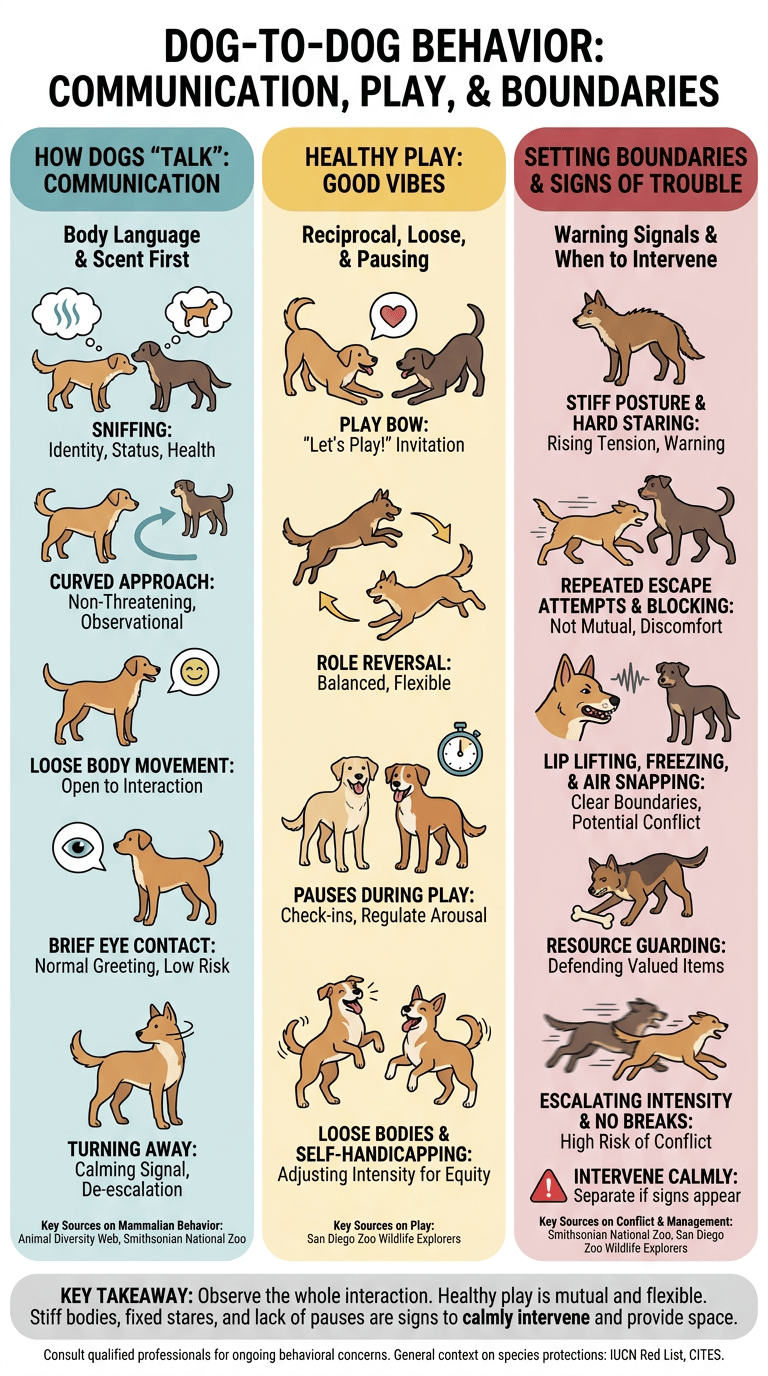
Sniffing, especially of the face, neck, and rear, is a primary form of introduction. Dogs use scent to learn about identity, sex, reproductive status, diet, and recent activity. Quick, mutual sniffing is a normal part of a greeting and helps dogs decide how to proceed with the interaction (Animal Diversity Web).
Curved approach
A direct head-on approach can be perceived as threatening. Dogs often approach one another on a curve or from an angle, which allows both animals to observe and reduces the intensity of the greeting. This angled approach lowers the chance of sudden escalation and gives each dog options to disengage if needed (Smithsonian National Zoo).
Loose body movement
During a friendly greeting, bodies are relaxed and movements are smooth rather than stiff or jerky. Loose movement signals that a dog is open to interaction and not preparing to attack. Observing overall fluidity is more informative than focusing on any single body part.
Brief eye contact
Dogs use eye contact differently than humans. Short, soft eye contact can be part of a normal greeting, while long, fixed staring tends to increase tension. Dogs often alternate glances with looking away to keep the greeting low risk.
Turning away
Turning the head or body away is an important calming or de-escalating signal. When one dog turns away during a greeting, it is offering an option to pause or stop the interaction. Recognizing and respecting those signals helps prevent misunderstandings that can lead to conflict.
Healthy Dog Play Behavior
Play bow
The play bow, where a dog lowers its front end while keeping its rear end raised, is a widely recognized invitation to play. It communicates friendly intent and helps distinguish playful activity from aggression. Many observers use the play bow as a clear sign the interaction is meant to be playful rather than hostile (San Diego Zoo Wildlife Explorers).
Role reversal
Healthy play often includes changes in which dog is on top, chasing, or being chased. Role reversal shows that both partners are flexible and willing to trade positions, which helps keep play balanced. When one dog consistently dominates without reciprocity, play can become one-sided and uncomfortable.
Pauses during play
Regular pauses or changes in pace are a healthy part of play. Brief breaks allow dogs to check in with one another, regulate arousal, and decide whether to continue. Continuous nonstop high-speed activity is more likely to push arousal to levels where miscommunication can occur.
Loose bodies
During healthy play, dogs retain loose, bouncy movements. Playful dogs may use exaggerated, open-mouthed expressions and relaxed vocalizations. Observing the overall body quality gives a clearer picture than focusing on single behaviors taken out of context.
Self-handicapping
Self-handicapping means a stronger or faster dog intentionally reduces the intensity of its actions to match a smaller or less confident partner. This behavior supports equitable play and helps prevent injury. When dogs self-handicap, it is a sign they respect one another’s limits.
Signs Dog Play Is Becoming Too Rough
One dog keeps trying to escape
If one dog repeatedly attempts to leave and is prevented from doing so, the play is no longer mutual. Persistent escape attempts indicate discomfort or overstimulation and are a clear cue to intervene or separate the dogs calmly.
Stiff body posture
When a dog’s movements become stiff, with reduced flexibility and a direct, rigid stance, tension is rising. Stiffness is a warning that the interaction may escalate beyond play. Owners should watch for a shift from loose to hard posture.
Repeated pinning
Pinning occurs when one dog forces another to the ground and maintains control without offering breaks. Occasional, brief pins during mutual play can be normal, but repeated, prolonged pinning that prevents the other dog from disengaging is a risk factor for escalation.
No breaks
Healthy play includes rhythm and opportunities to pause. When play becomes continuous without natural breaks, both dogs’ arousal may climb to unsafe levels. Introducing a calm timeout can help reset the situation.
Growling with tension
Some growling is part of rough play, but growls that are accompanied by hard stares, raised hackles, or aggressive posture should be treated as warnings rather than playful sounds. Context matters: watch the whole interaction rather than relying on a single cue.
Escalating speed and intensity
When chasing turns into reckless pursuit or body checks become harder and more forceful, the play may be shifting toward real conflict. Rapid increases in intensity reduce the window for dogs to use calming signals and for owners to intervene safely.
Dog-to-Dog Conflict Signals
Freezing
Freezing, where a dog suddenly becomes very still, is often a clear sign of concern or fear. A frozen posture can precede other defensive or aggressive behaviors, so it is important to allow the freezing dog space and avoid forcing interaction (Animal Diversity Web).
Hard staring
A direct, fixed stare with little blinking or head movement is a hard signal that often increases tension. Dogs that hold eye contact in a stiff manner may be preparing to escalate if the other dog does not back off.
Blocking
Blocking occurs when a dog positions its body to prevent another dog from leaving an area or from accessing a resource. This behavior restricts choice and can quickly move an interaction from tension to conflict.
Lip lifting
Lifting the lips to show teeth is a warning sign that a dog is uncomfortable and may snap if pushed further. Unlike a playful grin, lip lifting often accompanies other tension signals and should be taken seriously.
Air snapping
Air snapping, where a dog snaps close to another dog without making contact, is a clear boundary-setting action. It is a serious escalation beyond play signals and indicates that the dog needs space.
Resource guarding
Resource guarding arises when a dog defends valued items such as food, toys, or resting spots. Guarding can result in aggressive displays if another dog approaches the resource. Owners should manage high-value items carefully to reduce guarding behavior (Smithsonian National Zoo).
Why Some Dogs React Badly to Other Dogs
Fear
Fear is a common reason dogs react negatively. A dog that feels threatened may use barking, lunging, or avoidance to create distance. Fearful behavior is not willful misbehavior but a protective response to perceived danger (San Diego Zoo Wildlife Explorers).
Poor socialization
Dogs that did not experience positive, age-appropriate social interactions during early life can be unsure or fearful around other dogs. Lack of gradual, controlled exposure can limit a dog’s ability to read and respond to normal dog signals comfortably.
Previous bad experience
Negative encounters such as fights, rough handling, or frightening events can leave a dog wary of future dog interactions. Memory of a traumatic event may cause a dog to react defensively to certain types of approaches or body language.
Leash frustration
Being on-leash can amplify tension because the restrained dog cannot use distance to manage interactions. Some dogs react more strongly when they feel constrained; this can be especially noticeable in crowded urban dog encounters (Smithsonian National Zoo).
Pain or illness
Dogs in pain or discomfort may be more irritable and less tolerant of other dogs. Sudden changes in behavior, increased reactivity, or avoidance should prompt consideration of medical causes and consultation with a veterinarian.
Overexcitement
High arousal can impair a dog’s ability to read social cues accurately. Overexcited dogs may misinterpret signals and react in ways that escalate rather than calm an interaction. Teaching self-control and providing appropriate outlets for energy helps reduce these episodes.
Dog Behavior at Dog Parks
When dog parks are a bad idea
Dog parks can be a convenient place for off-leash activity, but they are not suitable for every dog. Dogs that are fearful, aggressive, or poorly socialized often do better in structured settings or one-on-one playdates. Owners of dogs with medical issues, seniors, or dogs that do not tolerate rough play should consider alternatives to busy off-leash areas (San Diego Zoo Wildlife Explorers).
Signs your dog is overwhelmed
Signs of overwhelm include repeated retreat attempts, hiding along the perimeter, excessive panting, tail tucked, persistent avoidance of play, or sudden changes in body language. When a dog shows these indicators, the owner should consider removing the dog to a calmer environment to prevent escalation.
How to leave before conflict starts
Plan an exit strategy before you need it. If you notice escalating body language, repeated chasing that is not reciprocal, or any of the warning signs listed earlier, calmly call your dog and leave. Prompt, calm removal reduces the chance of a fight and helps the dog learn that avoiding overstimulation is acceptable.
Why not all dogs are dog-park dogs
Some dogs enjoy the social buffet of a dog park, while others find it stressful or unsafe. Age, temperament, health, and prior experience all play into whether a dog benefits from off-leash group play. Choosing the right environment for your dog’s needs is part of responsible ownership.
How to Introduce Dogs Safely
Neutral location
Initial introductions are often smoother in neutral territory rather than inside the home of one dog, where the resident dog may feel territorial. A quiet outdoor area with minimal distractions can help both dogs focus on the new social partner without defending resources.
Parallel walking
Walking two dogs in parallel at a comfortable distance gives them an opportunity to observe each other without forced proximity. Gradually reduce the distance while watching body language for signs of comfort or tension. Parallel walks are a low-pressure way to build positive associations between dogs (San Diego Zoo Wildlife Explorers).
Loose leash
Keeping both dogs on loose leashes reduces the chance that restraint will amplify stress. Tight tension on a leash can transfer to a dog’s body and make it harder for them to use calming signals. Use calm handling and maintain slack to the extent it is safe and practical.
Short interactions
Start with brief, supervised greetings and end them while things are still positive. Short successful meetings build confidence. Long, unstructured initial encounters increase the likelihood of misunderstanding and can leave one or both dogs uncomfortable.
Watch both dogs’ body language
Pay attention to the signals of both dogs, not just your own pet. A third dog that seems relaxed may still be signaling discomfort through subtle cues, and a small dog’s fear can be missed if an owner focuses only on overt behaviors. Respecting both dogs’ communications reduces risk.
Dog to Dog Behavior FAQ
Why does my dog bark at other dogs?
Barking at other dogs can come from excitement, fear, frustration, or a desire to get attention or distance. Because various emotional states can produce barking, observing the surrounding context and body language helps determine the likely cause. If barking increases suddenly or leads to aggressive actions, seek guidance from a qualified behavior professional or veterinarian.
How do I know if dogs are playing or fighting?
Context and multiple signals determine whether an interaction is play or conflict. Play typically includes role reversal, play bows, loose body language, and regular pauses. Fighting often shows stiff posture, hard stares, pinned ears, and persistent attempts by one dog to escape. If you are unsure, it is safer to calmly separate the dogs and seek professional help to assess patterns of behavior.
Why does my dog only dislike some dogs?
Dogs form preferences based on individual temperament, past experiences, and the other dog’s signals. A dog that is fearful or stressed by certain sizes, sexes, or energy levels may react negatively to animals that display those traits. Positive, gradual exposure and management can help change associations over time.
Should I let dogs work it out?
Allowing dogs to “work it out” without supervision is risky. Dogs that are anxious or less socialized may be harmed, and fights can escalate rapidly. Owners should supervise interactions, intervene calmly when warning signs appear, and consult qualified trainers or behaviorists for ongoing problems. For medical or severe behavioral concerns, contact a veterinarian or certified behavior professional.
Key takeaways: Dogs communicate largely by body language and scent. Healthy play is reciprocal and loose, while repeated escape attempts, stiffness, or hard stares signal trouble. Thoughtful introductions, reading both dogs’ signals, and choosing appropriate settings like supervised playdates instead of crowded off-leash areas can reduce conflict.
For general background on mammal behavior and communication channels that inform how dogs interact, consult resources such as Animal Diversity Web, the Smithsonian National Zoo, and the San Diego Zoo Wildlife Explorers. For broader context about conservation and international protections that sometimes affect wild relatives of domestic dogs and other species, see the IUCN Red List and CITES.
If you have ongoing concerns about your dog’s interactions with other dogs, consider contacting a qualified, force-free behavior professional or your veterinarian for a tailored plan that addresses training, socialization, or medical evaluation.

Ethan Walker is the founder and research editor of Animal Fact Central. He creates and reviews educational animal facts content using trusted wildlife, pet care, and science-based sources. His work focuses on making animal behavior, adaptations, habitats, and species facts clear, accurate, and engaging for everyday readers.
Read More Details About Ethan Walker: https://animalfactcentral.com/ethan-walker/