
Noticing that your dog is acting odd can be unsettling. Owners often describe the same concern with phrases such as “why is my dog acting strange,” “dog acting weird sometimes,” or “sudden strange dog behavior.” This article focuses on occasional or abrupt changes in behavior, how to interpret context and patterns, and when behavior signals a medical problem that needs professional attention.

We emphasize careful observation and tracking rather than quick fixes. If behavior appears suddenly or is severe, contact a veterinarian or qualified behavior professional right away. For reliable guidance on medical signs and when to seek veterinary care, consult the Merck Veterinary Manual and the American Veterinary Medical Association’s AVMA Pet Care resources.
What Does Acting Strange Mean?
Sudden changes matter more than occasional weirdness
Dogs have daily rhythms and personalities. A one-off odd behavior after a new experience is not usually cause for alarm. What matters most is how sudden the change is and whether it persists or worsens. A brief episode that resolves within a short time may reflect a transient stressor or environmental trigger. By contrast, abrupt, dramatic changes in behavior or new behaviors that continue beyond a short period warrant closer attention and often veterinary evaluation.
Strange behavior can be emotional, environmental, or medical
When a dog acts differently, causes generally fall into three broad categories: emotional (stress, fear, anxiety), environmental (new people, sounds, smells, or changes in routine), and medical (pain, neurological events, illness). These categories can overlap. For example, pain can create anxiety-like behaviors, and a new environment can reveal underlying health issues. Medical causes are particularly important to rule out when behaviors appear suddenly or involve confusion, aggression, or loss of normal bodily control. Reliable veterinary resources recommend contacting your veterinarian if you notice sudden or severe changes in behavior or bodily functions; see the Merck Veterinary Manual for clinical guidance.
Context is the key
Context helps distinguish a harmless quirk from a warning sign. Ask questions such as:
- When did the behavior start and for how long does it last?
- What happened right before the change (a loud noise, a guest, a fall, a new medication)?
- Does it occur in a particular place, time of day, or around certain people or animals?
- Has anything in the home changed recently, such as moving furniture, new cleaners, or schedule shifts?
Keeping notes or short videos of episodes makes it easier to spot patterns and gives your veterinarian useful information.
Common Reasons Your Dog Acts Strange
Stress
Stress can produce a range of behaviors, including pacing, hiding, clinginess, shaking, or refusal to eat. Common stressors include separation from caregivers, sudden loud noises, new household members, or disrupted routines. Signs of stress vary by individual: some dogs withdraw while others become hypervigilant. Managing stress involves identifying and reducing triggers, offering predictable routines, and seeking guidance from a veterinarian or qualified behaviorist for persistent problems. The AVMA provides practical resources to help owners recognize and respond to stress in pets; see AVMA Pet Care.
Fear
Fear is a strong motivator of behavior change. A fearful dog might freeze, cower, tremble, hide, bark, or attempt to escape. Sudden exposures to threatening stimuli such as fireworks, thunder, or an unfamiliar animal can trigger intense, immediate reactions. Because fear can escalate into defensive aggression if a dog feels cornered, avoid forcing interactions and seek professional help if fear-based responses are frequent or severe.
Pain
Pain commonly causes abrupt behavior changes. A dog in pain may yelp when touched, avoid using a limb, stop jumping, or become irritable and withdraw. Pain does not always look dramatic; some dogs show subtle shifts like altered gait, reluctance to climb stairs, or decreased playfulness. Because pain is a medical issue, veterinary assessment is important to identify and treat the underlying cause. See the Merck Veterinary Manual for information on recognizing medical signs that require evaluation.
Illness
Infectious diseases, metabolic disturbances, gastrointestinal upset, and neurological events can all change behavior. Illness-related behaviors often occur alongside physical signs such as vomiting, diarrhea, fever, drooling, or changes in urination. Sudden confusion, stumbling, or collapse are examples of medical emergencies. If an otherwise healthy dog shows abrupt behavioral change with other physical signs, contact your veterinarian promptly.
New environment
Moving to a new home, visiting a strange place, or a boarding stay can unsettle many dogs. New sights, scents, and routines can cause temporary disorientation, clinginess, or decreased appetite. Most dogs adjust with time and supportive routines. When anxiety persists or the dog shows severe avoidance or aggression in the new setting, consult a behavior professional or your veterinarian.
Changes in routine
Dogs thrive on predictability. Sudden schedule changes, different caretakers, altered walking times, or new work hours for the household can disrupt a dog’s sense of security and lead to behaviors such as barking, pacing, or attention-seeking. Restoring consistency and providing structured enrichment often helps reduce these responses.
Loud noises
Fireworks, thunder, construction, and other loud sounds can trigger immediate fear responses. Some dogs eventually habituate; others develop long-term noise aversion that requires behavior modification or veterinary-assisted treatment. Avoid punishing fear-related responses; instead, create a calm environment, provide safe hiding options, and seek professional advice if noise-related fear is severe.
Aging
As dogs age, cognitive changes and sensory losses can alter how they behave. Older dogs may become more easily disoriented, sleep more during the day, become less tolerant of touch, or show disruptions in house training. Behavioral changes in senior dogs should prompt veterinary evaluation to identify treatable medical conditions and to discuss strategies for managing cognitive decline with your veterinarian. See the Merck Veterinary Manual for information on age-related health and behavior.
Hormonal changes
Hormonal fluctuations related to heat cycles, pregnancy, neuter status, or endocrine disorders can influence behavior. Intact animals may show increased restlessness or changes in social behavior during breeding cycles. Endocrine diseases such as thyroid dysfunction can also affect mood and energy. If you suspect a hormonal or endocrine cause, a veterinary exam and appropriate testing are necessary.
Strange Dog Behaviors and Possible Meanings
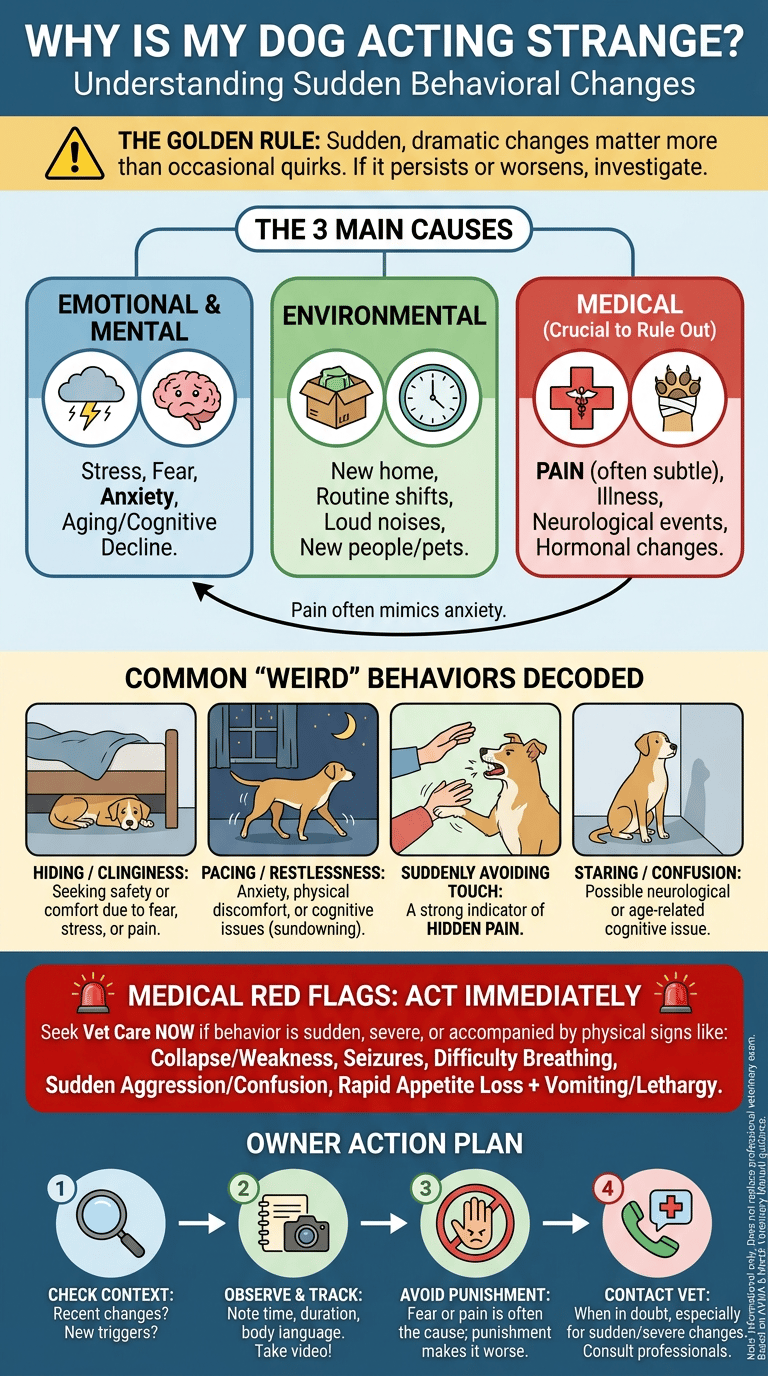
Hiding
Hiding can indicate fear, stress, discomfort, or a need for a quiet space. After loud events or when visitors arrive, hiding is often a coping strategy. If hiding becomes chronic, is accompanied by signs of pain or illness, or the dog seems unable to be comforted, seek veterinary advice to rule out medical causes.
Pacing
Pacing may reflect anxiety, pain, restlessness, or a neurological issue. Nighttime pacing can be a sign of discomfort or cognitive changes in older dogs. Note whether pacing happens before specific events, after meals, or at certain times of day to help identify triggers. If pacing is new, persistent, or accompanied by other signs, consult your veterinarian.
Staring at walls
Occasional staring at walls or fixed objects can be puzzling. It may be due to attention-seeking, boredom, sensory misperception, or, in some cases, changes in vision or neurological function. If staring is accompanied by disorientation, circling, or altered consciousness, seek veterinary assessment because those signs can indicate neurological events.
Acting clingy
Increased clinginess often follows changes in routine, separation, or stress. Dogs may seek more physical contact or follow family members constantly. While temporary clinginess can be a normal adjustment response, sudden or extreme clinginess that disrupts daily life could indicate anxiety or an underlying medical problem that is causing vulnerability or discomfort.
Refusing food
Brief appetite loss can result from stress, motion, new food, or mild stomach upset. Prolonged refusal to eat, inability to keep food down, or refusal combined with lethargy and vomiting are medical concerns. Owners should monitor appetite closely and contact their veterinarian if a dog will not eat for more than a day, or sooner for puppies, senior dogs, or dogs with chronic conditions. The Merck Veterinary Manual provides guidance on when decreased appetite warrants evaluation.
Sleeping more than usual
Temporary extra sleep after intense activity or stress can be normal. However, prolonged or sudden increases in sleepiness may reflect illness, pain, metabolic issues, or side effects of medication. Document sleep changes and associated signs to share with your veterinarian if the pattern continues.
Barking at nothing
Barking at apparently empty spaces can be triggered by subtle sounds or scents humans do not notice, anxieties, or cognitive changes in older dogs. It may also be attention-seeking behavior. Recording the episodes and noting the time and environment can help identify patterns. If barking is excessive or coupled with anxiety, seek behavioral strategies from a qualified trainer or discuss options with your veterinarian.
Suddenly avoiding touch
If a dog that usually enjoys petting suddenly recoils, snaps, or tries to move away, pain is a likely suspect. Avoiding touch is a common pain indicator. If this behavior appears suddenly, treat it as a medical concern and have the dog evaluated to determine and treat the underlying cause.
Acting restless at night
Nighttime restlessness can stem from anxiety, noise sensitivity, discomfort, urinary urgency, or age-related cognitive changes. For senior dogs, nighttime disruption may reflect cognitive dysfunction and should prompt a veterinary evaluation for medical causes and management strategies.
When Strange Dog Behavior Could Be Medical
Some sudden behaviors are medical red flags. When you observe any of the following sudden changes, contact your veterinarian promptly. Emergency evaluation may be necessary if the dog appears in distress, is collapsing, is having seizures, or shows severe breathing difficulties. See the Merck Veterinary Manual for clinical guidance on acute behavioral and physical changes.
Sudden aggression
A previously friendly dog that becomes suddenly aggressive may be in pain, frightened, or experiencing a neurological problem. Do not attempt to force interactions or punish the dog. Protect people and other animals by giving the dog space and contact a veterinarian to rule out medical causes and to discuss safe management strategies.
Sudden confusion
Confusion may include disorientation, getting stuck in corners, circling, or staring blankly. Causes can include metabolic disturbances, toxins, seizures, or age-related cognitive issues. Because confusion can indicate serious medical problems, seek veterinary evaluation promptly.
Sudden loss of appetite
A rapid loss of appetite accompanying lethargy, vomiting, diarrhea, or fever can indicate infections, gastrointestinal blockage, organ dysfunction, or systemic illness. Puppies, seniors, and dogs with preexisting health conditions need prompt attention. Veterinary guidance is important when appetite loss is sudden and significant.
Sudden house accidents
A house-trained dog that suddenly starts urinating or defecating indoors may have a urinary tract infection, diabetes, neurological dysfunction, or another medical issue. Behavioral causes are also possible, but a veterinary evaluation helps exclude treatable medical problems before addressing training or environmental factors.
Sudden excessive licking
Persistent, focused licking at a body part can indicate localized pain, itch, skin disease, or anxiety. Excessive licking can lead to sores and secondary infections. Because it may be a sign of medical or behavioral issues, consult your veterinarian when licking increases abruptly or causes tissue damage.
Sudden weakness or trembling
Weakness, collapse, or trembling can result from metabolic disorders, toxin exposure, neurological events, or severe pain. These are potentially serious signs. If your dog becomes suddenly weak, drools excessively, has difficulty standing, or is trembling uncontrollably, seek immediate veterinary care or emergency services.
What Owners Should Do
Check for recent changes
Start by scanning for any recent changes that could explain behavior: new people or animals in the household, medication changes, recent travel or boarding, altered feeding or walking schedules, newly introduced substances, or environmental changes such as renovations. Small changes that seem unrelated may be the trigger.
Observe body language
Body language provides clues. Look for ear position, eye expression, tail carriage, posture, vocalizations, yawning, lip licking, shaking, and movement speed. These signals help distinguish fear from pain or boredom. Avoid forcing interactions and respect a dog’s calming signals and need for space.
Track when it happens
Keeping a simple log makes pattern detection easier. Note the time of day, location, duration, preceding events, what else was occurring in the household, and any physical signs. Short videos are especially helpful for veterinarians and behaviorists because they show the behavior in real context.
Avoid punishment
Punishing a dog for behavior that may be driven by fear, pain, or confusion can make the problem worse and damage trust. Instead, remove the dog from stressful situations when safe, provide a calm environment, and seek professional help to address the root cause. Positive, reward-based strategies are recommended for behavior change.
Contact a vet if behavior is sudden or severe
If the behavior is sudden, severe, or accompanied by physical signs such as vomiting, collapse, seizures, labored breathing, or inability to stand, contact your veterinarian or an emergency clinic immediately. For non-emergent but concerning changes, schedule a veterinary appointment to investigate medical causes and receive guidance on next steps. The AVMA’s pet care resources and the Merck Veterinary Manual can help owners decide when to seek veterinary care; see AVMA Pet Care and the Merck Veterinary Manual.
Note: This article is informational and does not replace a veterinary exam. If your dog’s behavior changes suddenly or severely, contact a licensed veterinarian promptly.
Why Your Dog Acts Strange Sometimes FAQ
Why is my dog acting weird all of a sudden?
Sudden behavior changes can result from transient stressors, unexpected events, pain, illness, or neurological changes. Begin by checking for recent events, injuries, or exposures, and monitor for physical signs such as vomiting, lethargy, or collapse. When in doubt, consult your veterinarian to rule out medical causes; see the Merck Veterinary Manual for clinical information.
Why does my dog act strange at night?
Nighttime odd behavior may stem from anxiety, noise sensitivity, urinary urgency, discomfort, or age-related cognitive changes. Improving comfort, establishing a calm bedtime routine, and addressing underlying medical conditions with your veterinarian can help. If the problem is persistent or the dog is disoriented, seek veterinary advice.
Can stress make dogs act weird?
Yes. Stress can produce many behaviors that owners describe as strange, including hiding, pacing, excessive barking, refusal to eat, or clinginess. Identifying and reducing stressors, using predictable routines, and consulting veterinary or behavior professionals for chronic stress are constructive steps. The AVMA offers practical pet care resources to help owners recognize and address stress in pets; see AVMA Pet Care.
When should I worry about strange dog behavior?
Worry is warranted when behavior appears suddenly, is severe, or is accompanied by physical signs such as vomiting, collapse, seizure activity, breathing difficulty, bleeding, or inability to walk. Sudden aggression, confusion, or incontinence are additional reasons to pursue prompt veterinary evaluation. When immediate danger or severe distress is present, seek emergency veterinary care.
Observant, calm, and timely responses help most dogs recover from transient episodes and ensure that medical causes are not missed. If you are ever unsure, err on the side of professional assessment: veterinarians can provide examinations, diagnostics, and treatment plans to address the underlying issue and restore your dog’s normal behavior and wellbeing.

Ethan Walker is the founder and research editor of Animal Fact Central. He creates and reviews educational animal facts content using trusted wildlife, pet care, and science-based sources. His work focuses on making animal behavior, adaptations, habitats, and species facts clear, accurate, and engaging for everyday readers.
Read More Details About Ethan Walker: https://animalfactcentral.com/ethan-walker/