
When a dog’s behavior starts to disrupt daily life, make people or other animals unsafe, or seems to change suddenly, owners need clear red flags and decision points. This article focuses on the warning signs that a behavior is more than a nuisance and when to act, with practical steps to track and respond while prioritizing safety and welfare.

What Makes a Dog Behavior a Problem?
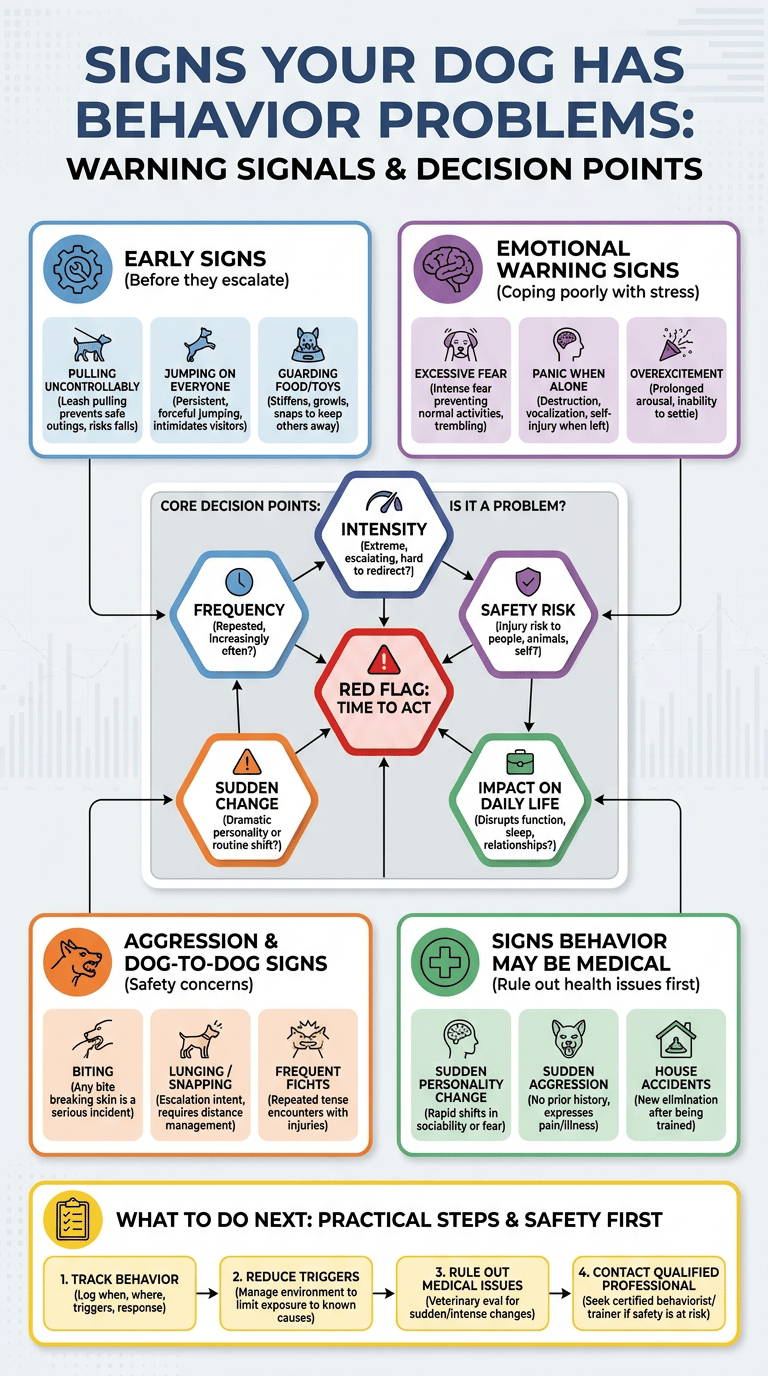
Not every annoying habit is a behavior problem that requires professional help. Use these five decision points to judge whether a behavior is escalating beyond normal variation and needs attention.
Frequency
If a behavior happens rarely and in predictable contexts, it is less likely to be a serious problem. A behavior becomes a concern when it occurs repeatedly, increasingly often, or in many places where it previously did not. Track how often the behavior happens to see whether it is persistent or situational.
Intensity
Intensity refers to how extreme the behavior is when it occurs. Mild whining, alert barking, or brief mouthing are different from intense, sustained, or escalating actions such as hard bites, high-pitched panic, or repeated destructive episodes that cannot be redirected. When intensity grows, risk and distress increase.
Safety risk
Behavior that creates risk to people, other animals, or the dog itself is a clear red flag. Examples include behaviors that could lead to injury, outbreaks of aggression, escapes into traffic, or interactions with wildlife. Any behavior that threatens safety should prompt immediate management and professional input.
Sudden change
A sudden or dramatic change in personality or routine behavior is important. Dogs that were previously calm but become fearful, aggressive, disoriented, or incontinent may be signaling pain, illness, trauma, or stress. Sudden changes merit a prompt veterinary evaluation to rule out medical causes.
Impact on daily life
Consider how the behavior affects your household’s ability to function. Problems are serious when they interfere with work, sleep, social life, the dog’s access to exercise and enrichment, or relationships with household members. If a behavior forces changes that reduce quality of life for the dog or people in the home, it is time to intervene.
Early Signs Your Dog Has Behavior Problems
Early detection makes interventions more effective. The items below are common early warning signs that can progress into larger problems if not addressed.
Ignoring basic cues
If a dog repeatedly ignores simple cues like coming when called, leaving an item on command, or settling when asked, it can indicate poor impulse control, lack of training, or motivation issues. Assess whether the cue is clear and consistent, whether the dog understands it, and whether any physical issues might reduce responsiveness.
Constant barking
Barking is normal canine communication, but constant, hard-to-interrupt barking that occurs for long periods, at inappropriate times, or in many contexts can strain relationships with neighbors and signal underlying stress, boredom, or territoriality. Manage the environment and identify triggers before the pattern becomes entrenched.
Pulling uncontrollably
Frequent, hard pulling on leash that cannot be redirected increases the chance of escapes, injury, or reactivity. When leash pulling prevents safe outings or leads to stressful encounters with people or other dogs, it becomes a problem that reduces exercise opportunities for both dog and owner.
Jumping on everyone
Greeting by jumping may seem harmless at first, but persistent jumping that causes falls, knocks over small children, or intimidates visitors is a behavior worth changing. Teach and reinforce safe alternative greetings and manage interactions until the habit is consistently replaced.
Destructive chewing
Investigate chewing that damages household items, doors, furniture, or the home itself. While puppies explore with their mouths, ongoing destructive chewing in adult dogs can indicate anxiety, lack of enrichment, or unmet needs and may be hazardous if the dog ingests harmful materials.
Stealing objects
Taking and hiding objects, repeatedly retrieving items that present a hazard, or stealing food can create health and safety risks. Determine whether the dog is seeking play, attention, or has learned that stealing yields rewards. Addressing the behavior often involves preventing access and offering safe alternatives.
Guarding food or toys
Protective behavior around food, toys, a resting place, or a person is common to some degree. It becomes problematic when the dog stiffens, growls, snaps, or bites to keep others away. Guarding that escalates or occurs in unpredictable contexts is a serious warning sign requiring careful management and expert help.
Emotional Warning Signs
Emotional states shape behavior. These signs often indicate that a dog is coping poorly with stressors and may benefit from environmental changes, enrichment, training, or veterinary assessment.
Excessive fear
Some fear in new situations is normal, but ongoing, intense fear that prevents normal activities, causes trembling, avoidance, or extreme attempts to escape is a red flag. Fear-based responses can escalate and lead to defensive aggression if the dog feels cornered.
Hiding often
If a dog spends large amounts of time hiding, avoiding household members, or withdrawing from routine activities, the behavior may signal anxiety, pain, or depression. Monitor for accompanying signs such as reduced interest in play, changes in appetite, or sleep pattern alterations.
Panic when alone
Panic or intense distress when left alone can lead to vocalization, destruction, self-injury, or escapes. When a dog cannot be left without severe reaction, the condition affects household functioning and the dog’s welfare and should be addressed with management strategies and professional guidance.
Overexcitement that does not settle
Some dogs are energetic, but when excitement becomes prolonged and the dog cannot settle even in calm settings, the pattern can frustrate owners and limit positive interactions. Teaching self-control and providing structured activity can help, but persistent inability to calm may require behavior support.
Constant pacing
Repetitive pacing can be a sign of stress, frustration, or a medical condition. When pacing replaces rest or interrupts normal behavior over time, investigate possible triggers, enrichment needs, and consult a veterinarian if the pattern appears new or severe.
Aggression Warning Signs
Aggression varies in origin and severity. Any aggression that risks injury should be treated as a serious safety concern. The descriptions below emphasize behavior patterns and practical decision points rather than labels.
Growling
Growling is communication. A growl can warn that a dog is uncomfortable and should be heeded rather than dismissed. Repeated or escalating growling in situations that previously were safe suggests increased tension and a need to change how those situations are handled.
Snapping
Snap attempts are more serious than growls because they show the dog is prepared to escalate. Because snapping can result in injury, it is a practical boundary that signals the owner should seek help to modify the context and reduce triggers.
Lunging
Lunging toward people, animals, or objects can indicate high arousal or defensive intent. A dog that repeatedly lunges while restrained, on leash, or behind barriers increases the risk of bites, escapes, or confrontation. Manage distance and seek professional assistance to reduce the behavior.
Biting
Any bite that breaks skin or causes injury is a serious incident. After ensuring safety and medical care if needed, consult qualified professionals about behavior assessment, management, and next steps. Bites may result from fear, pain, redirected frustration, or other triggers and require careful evaluation.
Freezing before reacting
A dog that freezes and then reacts can be unpredictable. Freezing may indicate that the dog is carefully assessing a threat before deciding to act. Recognizing and removing the dog from the trigger situation before escalation reduces risk.
Guarding people or objects
Guarding a person or object with stiff posture, blocking access, or threatening others is a behavior that can lead to conflict. Manage interactions so that the dog cannot be placed in situations that provoke guarding, and consult a professional to develop safe behavior modification plans.
Signs of Dog-to-Dog Behavior Problems
Interactions with other dogs require particular attention because conflict can result in serious injury. Look for patterns that suggest a problem rather than isolated incidents.
Leash reactivity
Dogs may behave differently on leash because restraint heightens arousal. Repeated, intense lunging, barking, or attempts to reach other dogs while on leash that cannot be managed by distance or redirection may indicate a problem that makes safe group outings difficult.
Stiff greetings
Stiff, one-sided greetings where one dog does not offer relaxed signals or refuses to disengage can lead to miscommunication and escalation. Encourage neutral, supervised introductions and avoid forcing interactions that increase tension.
Bullying during play
Play that consistently results in one dog overwhelming another, soliciting escape, or causing stress is not healthy play. Watch for persistent chasing, pinning, or resource monopolization and separate dogs before conflicts become physical.
Frequent fights
Occasional disagreements may be resolved quickly, but frequent fights with injuries or repeated tense encounters are a safety concern. Prevent unsupervised interactions, manage access to shared spaces, and consult behavior professionals to reduce risk.
Resource conflict with other dogs
If dogs regularly fight over food, toys, resting spots, or human attention, create management strategies that remove competition: separate feeding areas, multiple enrichment items, and supervised interactions. Persistent resource conflict warrants professional behavior support.
Signs Behavior May Be Medical
Medical problems commonly cause or worsen behavior changes. When behavior shifts suddenly, consider veterinary evaluation before attributing changes solely to training or environment.
Sudden personality change
Rapid shifts in sociability, fearfulness, or activity level may reflect pain, neurologic issues, hormonal changes, or other medical causes. Prompt veterinary assessment can help identify treatable conditions that underlie behavioral change.
Sudden aggression
A dog that becomes aggressive without a clear behavioral history of aggression may be expressing discomfort, pain, or illness. Because of the potential for harm, seek veterinary evaluation and avoid forcing the dog into triggering situations.
House accidents after being trained
New elimination in the house after being house-trained can indicate medical problems, stress, or changes in the environment. Medical causes should be ruled out first through veterinary consultation before addressing behaviorally.
Excessive licking
Persistent licking of skin, paws, or surfaces may signal allergies, skin irritation, pain, or anxiety. If licking creates sores, removes hair, or is a new pattern, consult a veterinarian to evaluate medical causes and discuss behavioral strategies if needed.
Sleep or appetite changes
Noticeable increases or decreases in sleep or appetite that are unexplained can accompany medical conditions or mood changes. Because these basic functions reflect overall health, veterinary input is important when patterns change.
What to Do Next
When you recognize a red flag, prioritize safety, gather information, manage the environment, and seek appropriate expertise. The following steps create a practical roadmap for owners making decisions.
Track the behavior
Keep a simple log of when and where the behavior happens, who is present, what preceded it, and how you responded. Consistent notes help spot patterns and provide useful information to your veterinarian or a behavior professional. For ideas on consistent recording methods and clear descriptions, consider general resources on structured observation from organizations such as the Cornell Lab of Ornithology from the Cornell Lab.
Reduce triggers
Change the environment to limit exposure to known triggers. For example, create safe spaces, avoid provocative situations, control access to items that prompt guarding or stealing, and manage walking routes to reduce encounters with stressful stimuli. Simple management reduces risk while you work on long-term change.
Stop accidental rewards
Many unwanted behaviors persist because they are inadvertently rewarded. If a behavior gets attention, food, or escape from an aversive situation, it can be reinforced. Withhold rewards for the problem behavior and reinforce calm, acceptable alternatives consistently.
Rule out medical issues
Because medical problems can cause or aggravate behavior, arrange a veterinary evaluation when behaviors begin suddenly, increase in intensity, or are accompanied by other health changes. If your dog’s interactions involve wildlife, or if you suspect injury or exposure to toxins, consider appropriate local wildlife or conservation resources. For broader context about wildlife species and risks, see the IUCN Red List through the IUCN Red List, and for international trade and regulation context refer to CITES on the CITES website.
Contact a qualified professional if safety is involved
If a dog’s behavior poses risk of injury to people or animals, contact a qualified professional such as a certified applied animal behaviorist or an accredited trainer with experience in aggression and safety planning. Immediate management may include separating individuals, using barriers, and muzzles designed for safety when necessary, and tailored plans developed by professionals. Avoid punishment-based methods or dominance approaches, and seek humane, evidence-based strategies.
For guidance on documenting behavior patterns that may inform professional assessment, materials on recording behavior from conservation and natural history organizations can inspire clarity; for example, BirdLife International provides resources on recording behavior that may help owners document actions consistently from BirdLife International.
Signs Your Dog Has Behavior Problems FAQ
How do I know if my dog has behavior problems?
Look for persistent patterns that match the decision points described earlier: frequent or intense occurrences, risk to safety, sudden changes, or substantial impact on daily life. If you are unsure, start by documenting incidents and seeking a veterinary check when changes are sudden or accompanied by health signs.
Can behavior problems get worse?
Yes. Problems that go unaddressed can become more frequent, more severe, and harder to change. Early management, consistent training, environmental adjustments, and professional help reduce the chance of escalation.
Are dog behavior problems my fault?
Behavior problems usually arise from a mix of factors including genetics, socialization, learning history, environment, and health. Blame is not productive; focusing on practical steps, prevention, and humane solutions is more useful than assigning fault.
When should I get help?
Seek professional help when behaviors threaten safety, when they persist despite consistent management, when they prevent normal care or exercise, or when they begin suddenly. Start with a veterinary exam to rule out medical causes, then consult credentialed behavior professionals for assessment and a structured plan.
Remember: safety and welfare come first. If an incident causes injury or creates immediate danger, separate the individuals involved and contact appropriate medical or animal control authorities as needed.
Document behaviors clearly, prioritize humane management, and involve qualified professionals when risk or rapid change is present. With timely attention, many red flags can be reduced and handled so that dogs and their families live more safely and happily together.

Ethan Walker is the founder and research editor of Animal Fact Central. He creates and reviews educational animal facts content using trusted wildlife, pet care, and science-based sources. His work focuses on making animal behavior, adaptations, habitats, and species facts clear, accurate, and engaging for everyday readers.
Read More Details About Ethan Walker: https://animalfactcentral.com/ethan-walker/