
One minute your dog is snoozing, the next they explode into a blur of motion, toy flinging, or frantic digging. These dramatic, high-energy episodes can be funny, confusing, or worrying. This article breaks down the most common reasons dogs act wild, describes which behaviors are usually normal, explains which actions come from instinct, and highlights signs that a behavior might be a medical or welfare concern. Practical, humane strategies to calm over-the-top behavior are included, with guidance on when to seek professional help.

Why Dogs Sometimes Act Crazy
High-energy or chaotic behavior in dogs usually comes back to a few core causes: releasing energy, responding to stress or excitement, following instinct, becoming overstimulated, or learning that a wild reaction gets attention. These categories overlap, and a single episode can have more than one trigger.
Energy release
Dogs build up physical and mental energy, and sudden bursts of activity are one safe way to discharge that buildup. Veterinarians and behaviorists describe frenetic random activity periods, often called zoomies, as a normal way for dogs and puppies to release pent-up energy after play or inactivity. For a concise, science-aware explanation of these periods and why they occur, see the Cornell University College of Veterinary Medicine overview of frenetic random activity periods (Cornell on zoomies).
Short, intense bursts that let a dog move off steam are usually not a cause for alarm when they occur in a familiar, safe environment and the dog returns to calm afterward.
Stress release
Some high-energy behaviors are stress responses. Dogs may pace, bolt, vocalize, or engage in repetitive movements when they feel anxious, uncertain, or frightened. Veterinary guidance stresses the importance of distinguishing normal energetic antics from sustained stress-related behaviors that interfere with a dog’s welfare; see the Merck Veterinary Manual for practical resources on behavior problems and red flags that suggest anxiety or compulsive patterns (Merck Veterinary Manual).
Instinct
Many dramatic actions reflect ancestral behaviors. Chasing, digging, shaking prey-like objects, and guarding resources have evolutionary origins in hunting, denning, and protecting. Instinct can be the engine behind exuberant play that looks wild but is rooted in hard-wired tendencies. Recognizing the instinctual basis for these acts helps owners provide appropriate outlets rather than punish natural behavior.
Overstimulation
Dogs can become overstimulated when too many exciting cues stack up: multiple people, toys, high-volume play, unfamiliar environments, or intense attention. Overstimulation may look like frantic running, repeated mounting of people or objects, or collapse into sudden, loud play-barks. Management to reduce stimulus load and teach calming skills can help dogs who frequently tip into overexcitement.
Learned attention-seeking
Dogs rapidly learn the consequences of their actions. If a wild act leads to laughter, extra play, or increased owner interaction, a dog may repeat the behavior to get attention. This is a common reason otherwise normal antics persist beyond puppyhood. Training that reinforces calm behavior and ignores attention-seeking chaos can reduce these repeats.
Crazy Dog Behaviors That Are Usually Normal
Many dramatic behaviors are common, harmless, and part of normal dog life. This section covers typical high-energy actions and what they mean in most cases.
Zoomies after a bath
It is common for dogs to run energetically after a bath. A bath can combine physical relief, sudden freedom, and sensory stimulation. Cornell’s explanation of frenetic random activity periods specifically describes why dogs may run after being bathed, noting that puppies and adult dogs may express this energy release more obviously after grooming events (Cornell on zoomies).
Because slippery floors or confined spaces can make a post-bath sprint risky, it is wise to towel-dry and allow a controlled open area for a brief run rather than trying to stop the reaction abruptly.
Sudden sprinting around the house
Fast, short sprints that start and stop without apparent reason are often zoomies or spontaneous play bursts. These episodes are a way to expel excess energy quickly. Owners can create safe zones for these runs and schedule regular exercise to reduce the frequency of indoor sprints.
Throwing toys in the air
Flinging toys, tossing them for dramatic effect, or shaking them enthusiastically while playing are normal play behaviors. These actions may mimic prey-handling motions and are commonly part of interactive play. Providing durable toys and supervising play helps keep toy-related antics safe for both dog and people.
Digging at blankets
Blanket-scratching or vigorous nose work into bedding often relates to nesting instincts, comfort-seeking, or simply creating a preferred lying surface. It can also be a way to release energy or boredom. Supplying appealing bedding and regular mental enrichment reduces destructive digging on blankets or furniture.
Spinning before lying down
Circling or spinning before settling is a common, benign behavior with possible origins in the denning instincts of canid ancestors who tamped down grass to make a safe bed. Most dogs circle briefly and then lie down comfortably.
Barking during play
Vocalizing while chasing or wrestling is a normal element of canine play. Short bursts of play-barks, accompanied by loose body language and rapid recovery to calm, usually indicate excitement rather than aggression. Owners should watch for escalating intensity or signs of stress that suggest play has gone too far.
Rolling on the ground
Rolling or wriggling on the ground can be a way to scratch an itch, spread a scent, or simply express pleasure. This behavior is typically harmless unless the dog shows signs of skin irritation or parasites, in which case a veterinary evaluation is appropriate.
Crazy Dog Behaviors Linked to Instinct
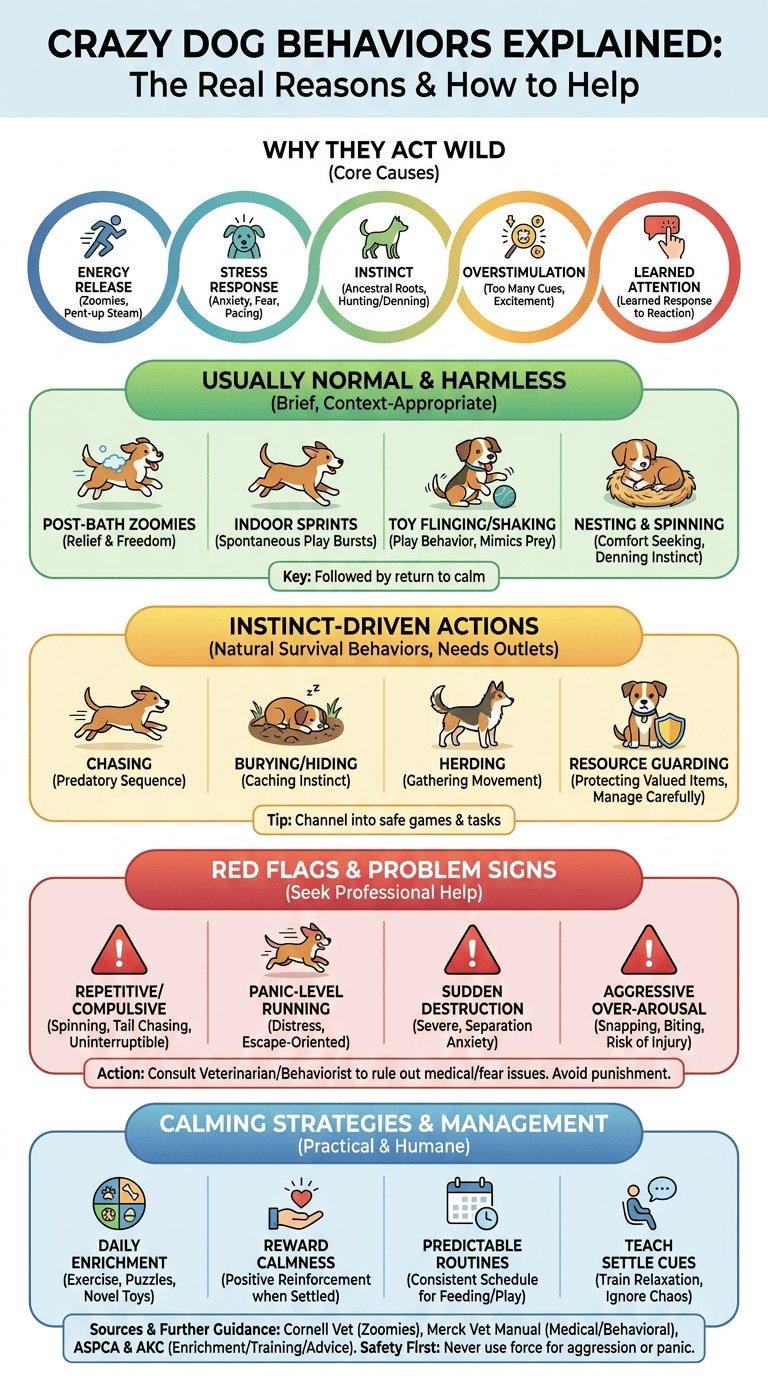
Some of the wildest-looking actions are directly tied to ancient survival behaviors. These are natural but can be channeled into safe, acceptable outlets.
Chasing moving objects
Chase behavior taps into the predatory sequence. Fast-moving objects trigger the pursuit reflex, which is why bikes, squirrels, balls, and even running children can ignite a dog. Controlled training, long-line work in safe areas, and supervised games that end with reliable recall help manage chasing impulses.
Shaking toys
Shaking, thrashing, or vigorously mouthing a toy simulates prey capture and processing. This behavior satisfies instinctual drives and can be redirected into appropriate tug or fetch games with safe toys designed for strong chewing and shaking.
Burying treats
Burying or hiding food and toys reflects caching instincts. Dogs sometimes tuck away prized items in blankets, under cushions, or in corners. Providing puzzle feeders and scattering food for foraging-style play offers an acceptable outlet for this natural behavior.
Herding people or pets
Herding behaviors, including nipping at heels or guiding movement, are the legacy of breeds developed for livestock control. Some pet dogs retain strong herding drives and will try to gather children, other dogs, or moving groups. Training, management, and safe alternatives channel the energy into structured tasks that satisfy the dog without creating stress for people or other animals.
Guarding favorite items
Resource guarding tends to stem from a natural desire to protect valued food, toys, or spaces. Many dogs show mild guarding that can be managed with training and careful handling. However, if guarding escalates to snapping, biting, or persistent aggressive displays, professional behavior assessment is recommended.
Crazy Dog Behaviors That May Signal a Problem
While many wild behaviors are benign, certain patterns are red flags for medical issues, anxiety, compulsive disorders, or dangerous aggression. When in doubt, consult a veterinarian or certified behavior professional. The Merck Veterinary Manual lists behavior problems and provides guidance on signs that require further evaluation (Merck Veterinary Manual).
Repetitive spinning
Occasional circling before lying down is normal, but repetitive spinning that seems compulsive or cannot be interrupted may indicate a neurological issue, compulsive disorder, or anxiety problem. Owners should seek veterinary evaluation when spinning is frequent, injurious, or accompanied by other unusual signs.
Tail chasing that cannot be interrupted
Tail chasing that becomes uncontrollable, injurious, or unresponsive to distraction can be a sign of compulsive disorder or medical irritation. Persistent tail-chasing warrants a professional assessment to rule out infection, pain, or behavioral disorders.
Panic-level running
Running that appears panicked, frantic, or escape-oriented suggests fear or a high level of distress. A dog in a panic state may injure themselves, run into danger, or become unable to respond to recall. If a dog repeatedly exhibits panic-level episodes, consult a veterinarian or qualified behaviorist for evaluation and a safe management plan.
Sudden destructive bursts
Destructive episodes that involve tearing furniture, doors, or walls can reflect separation anxiety, extreme frustration, or unmanaged compulsive energy. When destructive behavior is sudden, severe, or paired with signs of distress like excessive vocalization or toileting indoors, professional help is important to address underlying causes humanely.
Aggressive over-arousal
High arousal that escalates into snapping, lunging, or biting is a serious concern. Aggression triggered by overexcitement during play or resource guarding must be taken seriously to prevent injury. Seek guidance from a veterinarian or certified behavior specialist rather than attempting forceful or punitive corrections. Qualified professionals can assess whether medical issues, fear, or learned responses drive the aggression and design a safe, evidence-based plan.
How to Calm Over-the-Top Dog Behavior
Most chaotic behaviors become more manageable with predictable routines, physical and mental outlets, and training that rewards calmness. Humane animal welfare organizations and veterinary sources provide practical methods for enrichment, routine-building, and working with trainers.
Add daily enrichment
Enrichment reduces boredom and channels natural drives. Effective enrichment includes:
- Regular, species-appropriate exercise to meet a dog’s physical needs.
- Food puzzles and scatter feeding to encourage foraging behaviors.
- Interactive training sessions that teach new skills and provide mental stimulation.
- Novel toys rotated regularly to maintain interest.
For practical enrichment ideas and guidance on reducing behavior problems through environmental and training changes, see the ASPCA recommendations on common behavior issues and care strategies (ASPCA behavior and care guidance).
Reward calmness
Positive reinforcement for calm behavior teaches dogs that relaxed states earn attention and rewards. Use treats, gentle praise, or quiet petting only when the dog is settled rather than when the dog is in the middle of a manic episode. Reinforcing the desired state gradually shifts the dog’s behavior toward more predictable calm responses. Owner-facing advice on positive reinforcement approaches for zoomies and high-energy behavior is outlined by the American Kennel Club (AKC on zoomies).
Build predictable routines
Dogs thrive on routine. Regular feeding, exercise, play, and rest times reduce uncertainty and energy spikes. Predictable schedules help dogs anticipate activity and allow owners to plan exercise and enrichment sessions at times when the dog tends to be most excitable.
Avoid accidentally rewarding chaos
Attention in any form can reinforce wild behavior. If a dog behaves crazily and the human reaction is laughter, scolding, or increased interactions, the dog may learn that chaos produces results. Instead, withhold attention during the unruly display when safe to do so, and offer rewards for composed behavior. This strategy requires consistency from all household members to be effective.
Teach settle cues
Training explicit cues for settling and relaxation gives a dog a concrete skill to switch from high arousal to calm. Start in low-distraction settings and reward brief periods of stillness, gradually extending the length and applying the cue around more stimulating activities. Professional trainers and behaviorists can offer structured protocols if a dog struggles to generalize settle skills.
Crazy Dog Behaviors FAQ
This short FAQ answers common owner questions about wild-seeming dog behavior and points to when it is time to seek help.
Why does my dog get zoomies?
Zoomies are short, frenetic activity periods that let a dog release built-up energy, excitement, or relief after a bath or play session. Both puppies and adult dogs can experience them. For a clear explanation of zoomies and what they mean, see the Cornell University College of Veterinary Medicine overview of frenetic random activity periods (Cornell on zoomies).
Why does my dog act crazy after a bath?
A bath can leave a dog feeling physically different, relieved, and suddenly free to run. The combination of sensory change, possible mild relief from discomfort, and sudden freedom is a common trigger for a post-bath burst of energy. Allowing a safe, supervised space for a brief run and drying the dog properly helps reduce risk of slips and injury.
Is wild dog behavior normal?
Many wild-looking behaviors are normal expressions of play, instinct, or energy release. Context matters. Brief zoomies, toy shaking, playful barking, and digging for comfort are usually harmless. However, behaviors that are repetitive, injurious, panic-driven, or aggressive require evaluation. The Merck Veterinary Manual is a reputable resource on distinguishing normal behavior from problematic signs that warrant professional assessment (Merck Veterinary Manual).
When should crazy behavior worry me?
Seek veterinary or behaviorist help if a behavior is:
- Repetitive, uncontrollable, or injurious to the dog.
- Associated with sudden aggression toward people or animals.
- Accompanied by signs of medical illness such as pain, lethargy, or neurological changes.
- Triggering safety concerns, such as panic-driven attempts to escape or repeated injury from frantic running.
When you observe worrying patterns, consult your veterinarian first to rule out medical causes. If behavior stems from anxiety, separation issues, or complex aggression, a certified behaviorist or trainer who uses force-free, science-based methods can design a step-by-step plan. The ASPCA offers guidance on humane interventions and how to find professional help for common behavior concerns (ASPCA guidance).
Safety note: Do not attempt forceful or punitive corrections for aggressive, panicked, or compulsive behavior. Contact a veterinarian or certified behavior professional for guidance tailored to your dog and situation.
Understanding why dogs act wild helps owners respond calmly and effectively. Most high-energy antics are normal when they are brief, context-appropriate, and followed by a return to calm. When behaviors are repetitive, injurious, or tied to fear or aggression, seek professional assessment. Humane enrichment, consistent routines, and positive reinforcement for calm behavior are powerful tools for managing the most dramatic dog behaviors.
For further reading on zoomies and energy-release behaviors, see Cornell’s explanation of frenetic random activity periods (Cornell on zoomies), and for owner-facing advice on zoomies and management consult the American Kennel Club (AKC on zoomies). For clinical guidance on behavior problems that may signal medical or compulsive issues, refer to the Merck Veterinary Manual (Merck Veterinary Manual), and for enrichment ideas and routine-building strategies see the ASPCA’s resources (ASPCA guidance).

Ethan Walker is the founder and research editor of Animal Fact Central. He creates and reviews educational animal facts content using trusted wildlife, pet care, and science-based sources. His work focuses on making animal behavior, adaptations, habitats, and species facts clear, accurate, and engaging for everyday readers.
Read More Details About Ethan Walker: https://animalfactcentral.com/ethan-walker/