Nocturnal Mammals: Adaptations for Life at Night

Nocturnal Mammals: Adaptations for Life at Night
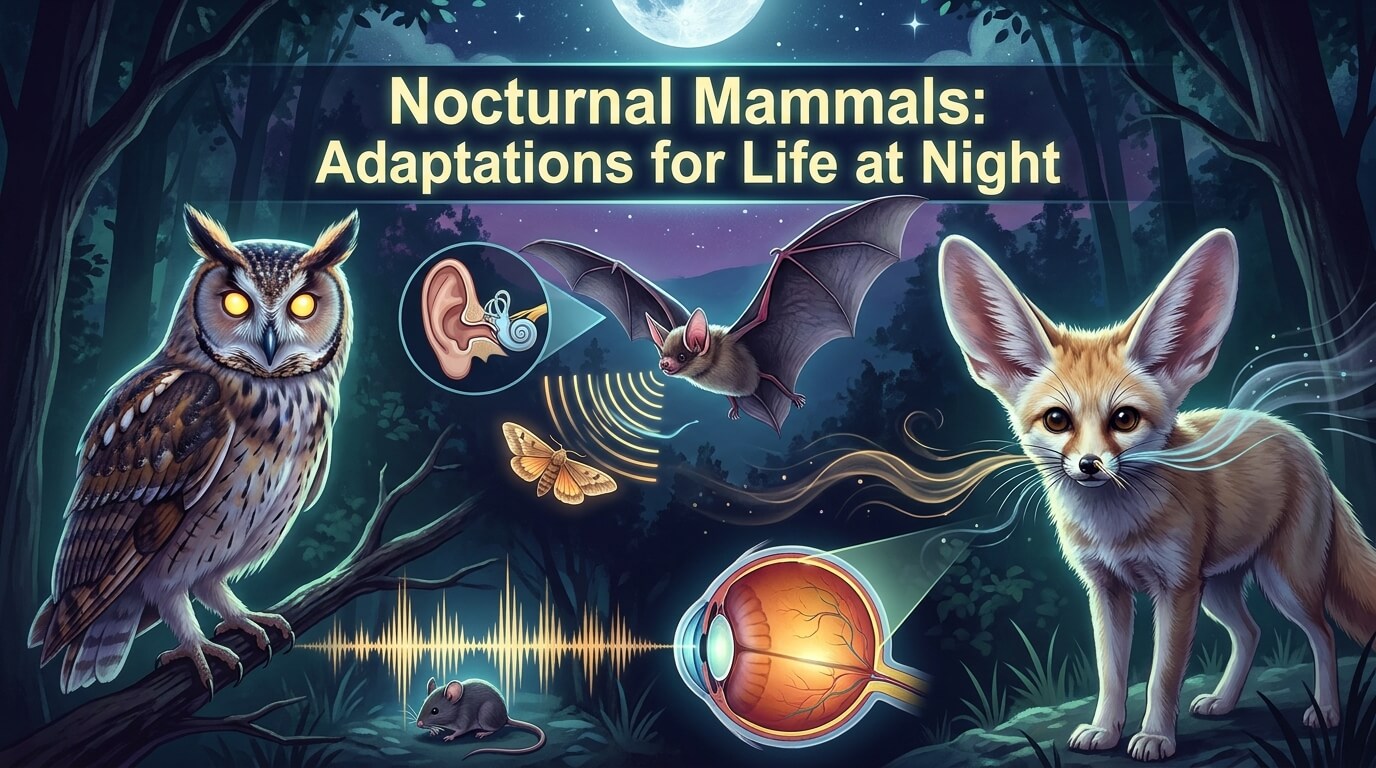
Nocturnal mammals are active mainly during the dark part of the daily cycle, but darkness does not demand one universal body plan. A bat hunting insects in open air, a mouse moving through leaf litter, a slow loris climbing among branches, and a seal feeding in dim water face different sensory and physical problems. Each … Read more
Mammal Reproduction: Pregnancy, Birth, and Milk

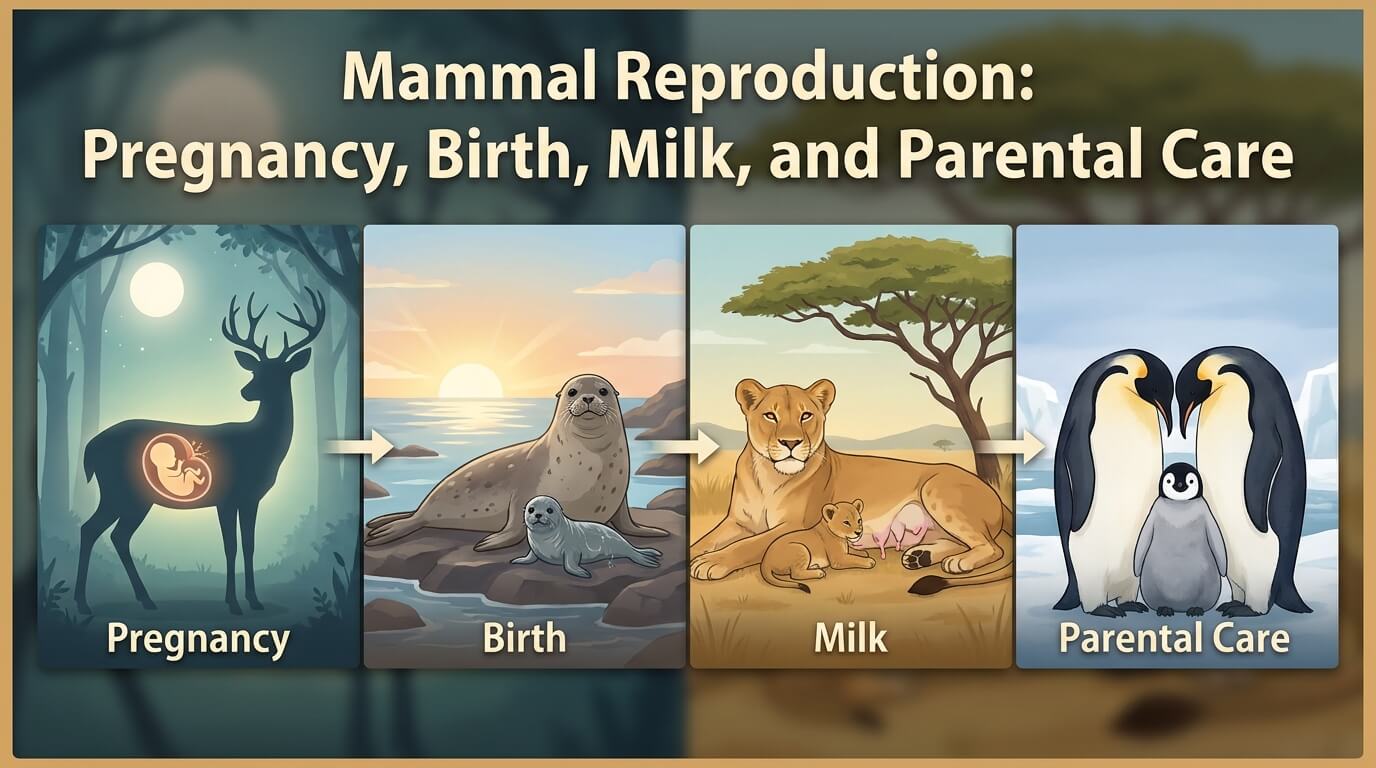
Mammal Reproduction: Pregnancy, Birth, Milk, and Parental Care

Mammal reproduction follows a recognizable pattern, but it does not follow one single blueprint. Every living mammal lineage produces milk for its young, yet the path to that point can involve an egg, a very short pregnancy followed by prolonged nursing, or a longer pregnancy supported by a complex placenta. Newborns may arrive nearly helpless … Read more

How Mammals Communicate: Sounds, Scent and Signals

How Mammals Communicate

Mammals communicate by sending and receiving signals through sound, scent, touch, body posture, facial movement, ground vibration, and other sensory channels. A wolf howl, an elephant rumble, a bat social call, a scent mark, and a mother licking her newborn are very different signals, but each can change what another animal does. No single method … Read more

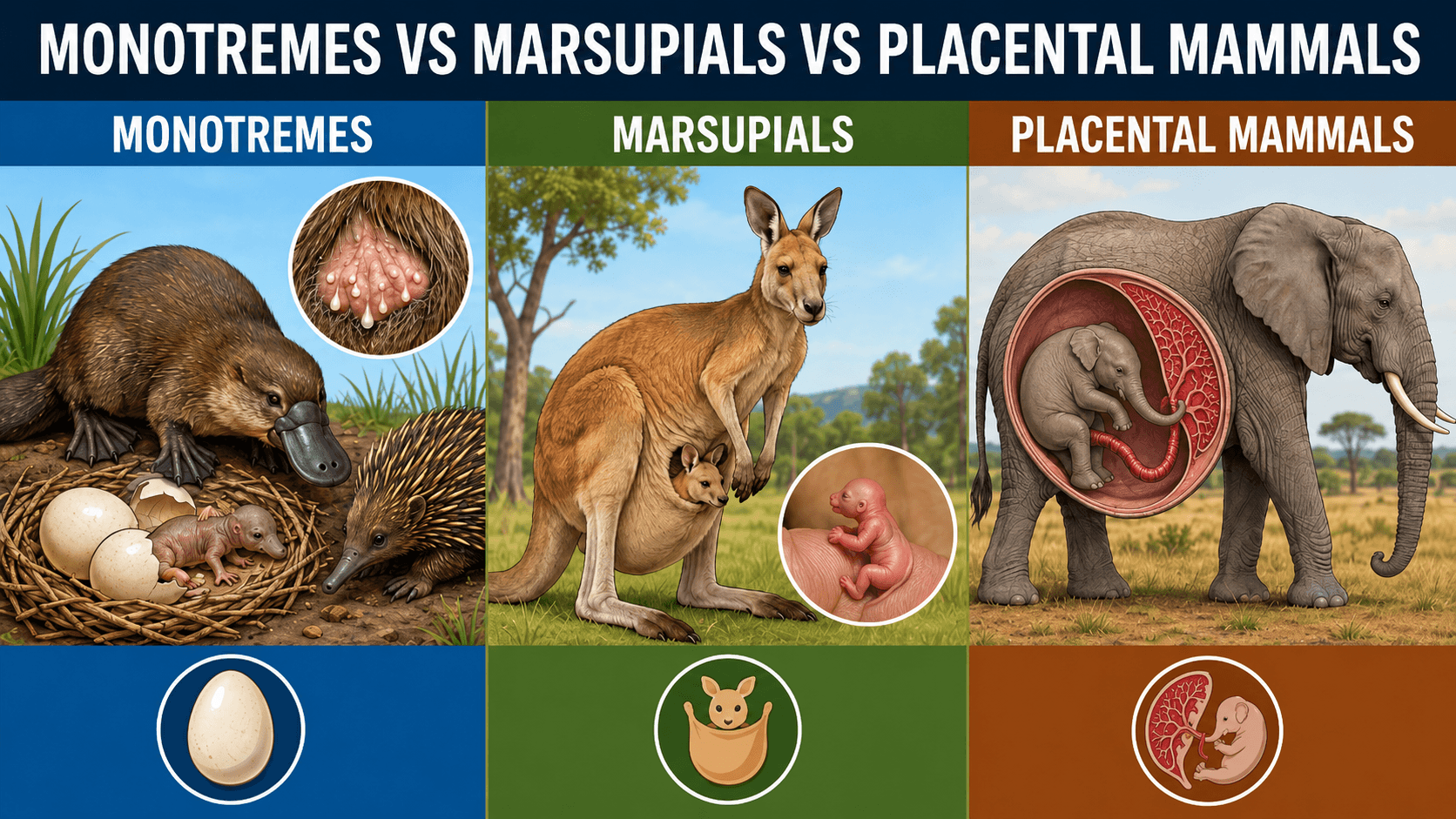
Monotremes vs Marsupials vs Placental Mammals

Monotremes, marsupials, and placental mammals are the three major living branches of mammals, but they differ most clearly in how their young develop. Monotremes lay eggs. Marsupials give birth to very immature young that continue much of their development while nursing. Placental mammals usually support longer development inside the uterus through a highly developed placenta. … Read more

How Mammals Keep Warm: Fur, Fat, and Heat

How Mammals Keep Warm

Mammals keep warm by balancing four linked jobs: producing heat, slowing heat loss, moving heat around the body, and changing behavior before conditions become dangerous. Metabolism and muscle activity generate heat. Fur, trapped air, and body fat reduce how quickly that heat escapes. Blood vessels adjust heat transfer between the warm core and the skin, … Read more

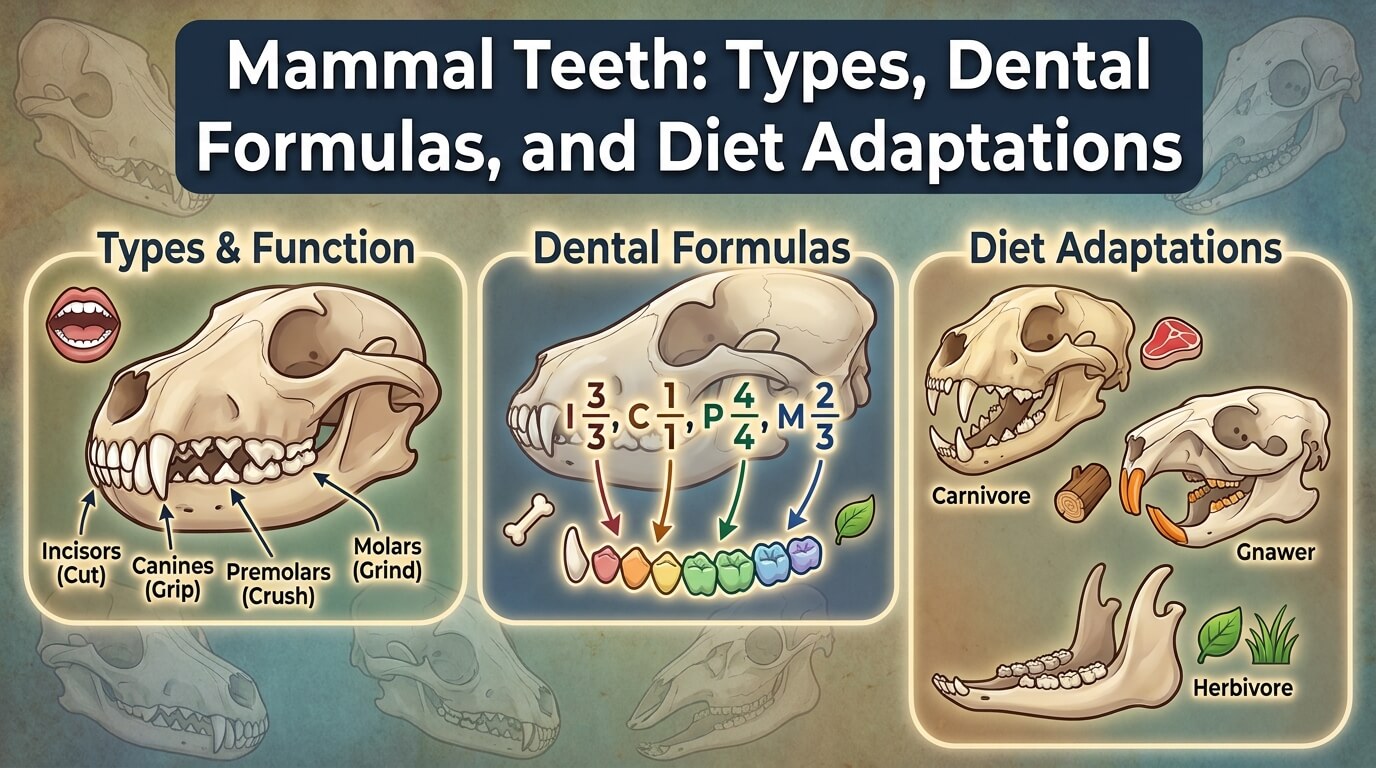
Mammal Teeth: Types, Formulas, and Diet

Mammal Teeth: Types, Dental Formulas, and Diet Adaptations

Mammal teeth are remarkably varied because they do more than bite food. They cut, grip, tear, crush, grind, scrape, dig, display, defend, and sometimes even help an animal sense its surroundings. Most mammals have several tooth types in the same mouth, a pattern called heterodonty. Incisors, canines, premolars, and molars can be reshaped, reduced, enlarged, … Read more

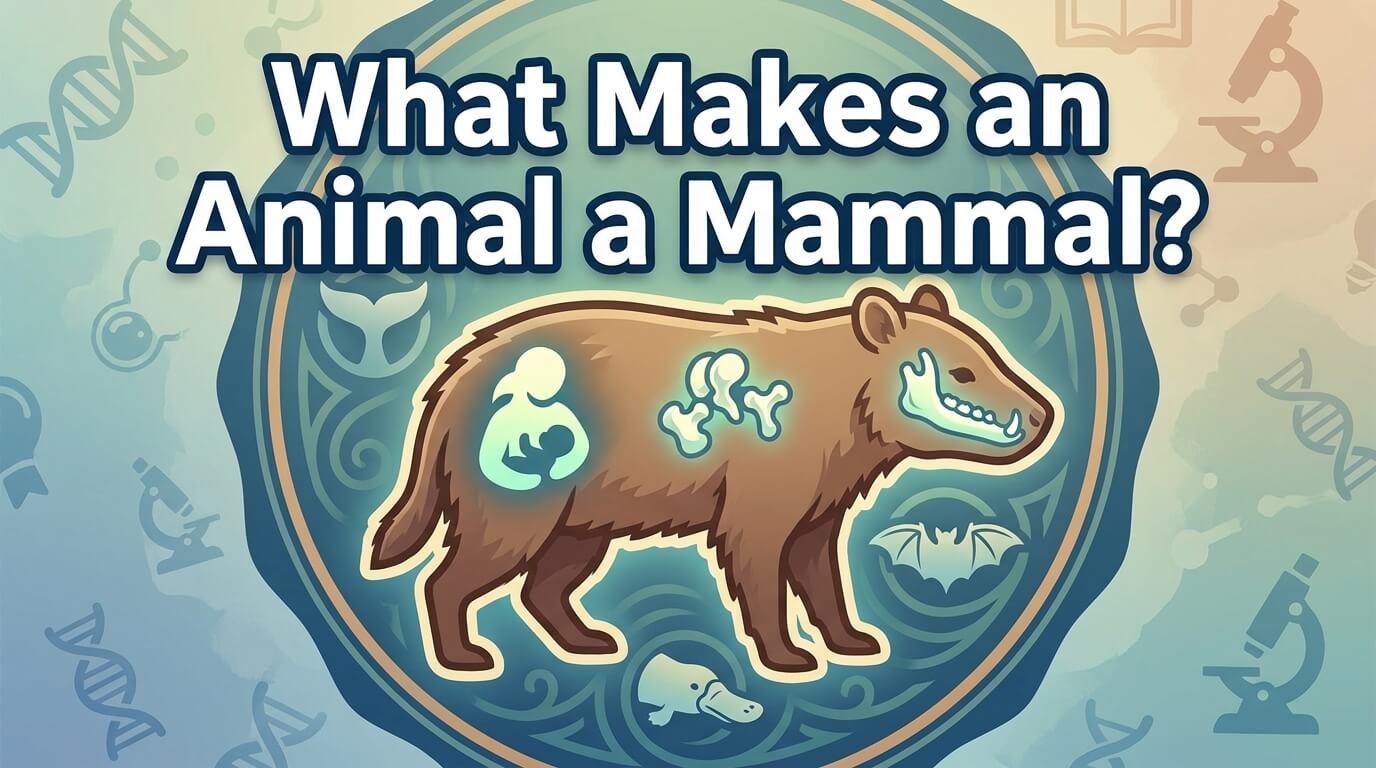
What Makes an Animal a Mammal? Key Traits

What Makes an Animal a Mammal?

A mammal is a vertebrate whose identity is defined by a combination of inherited features, not simply by looking furry or giving live birth. The most important traits include hair at some stage of development, milk-producing mammary glands in females, three tiny bones in the middle ear, and a lower jaw built mainly from a … Read more

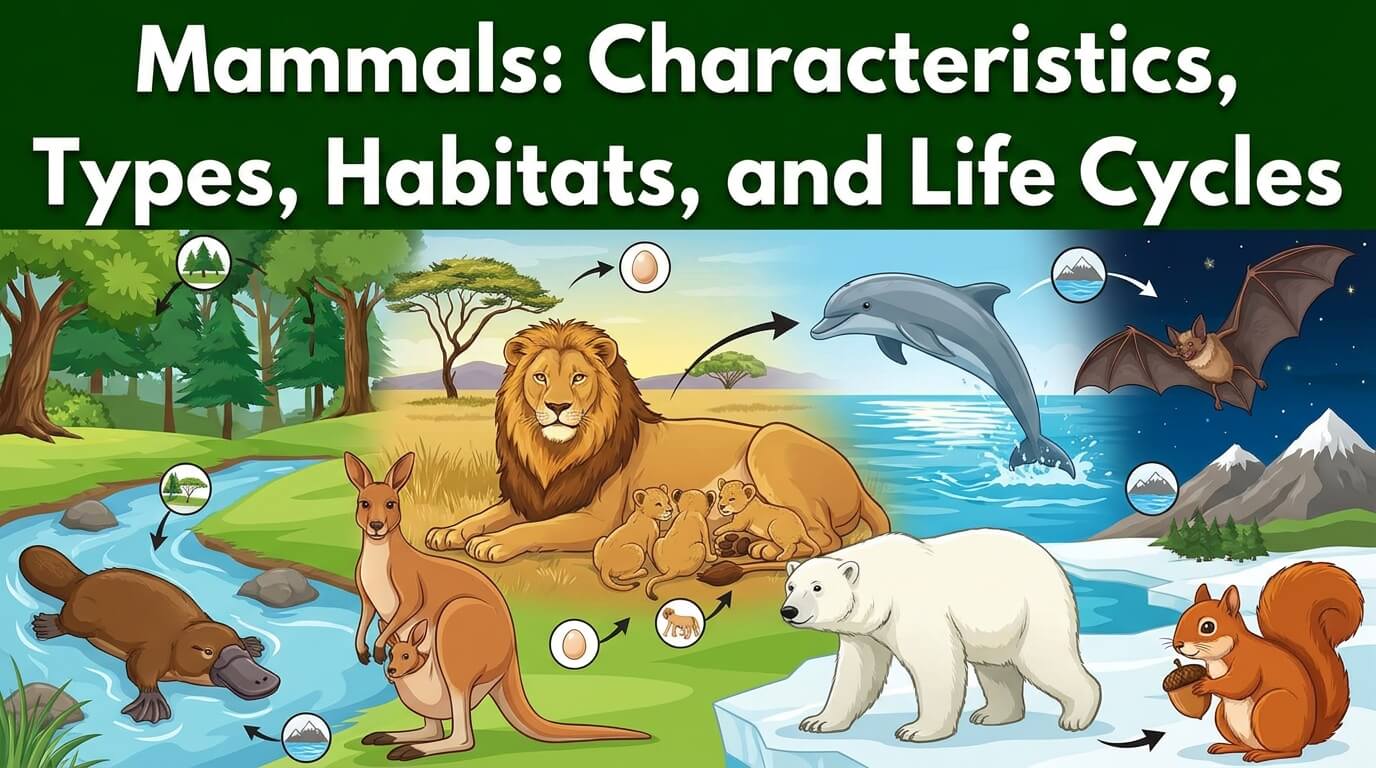
Mammals: Characteristics, Types, and Life Cycles

Mammals: Characteristics, Types, Habitats, and Life Cycles

Mammals are vertebrate animals in the class Mammalia. They include familiar animals such as mice, bats, elephants, whales, dogs, cats, and humans, yet their shared identity is based on biology rather than appearance. Mammals produce milk for their young, have hair at some point in development, and possess three tiny middle-ear bones. Most also regulate … Read more

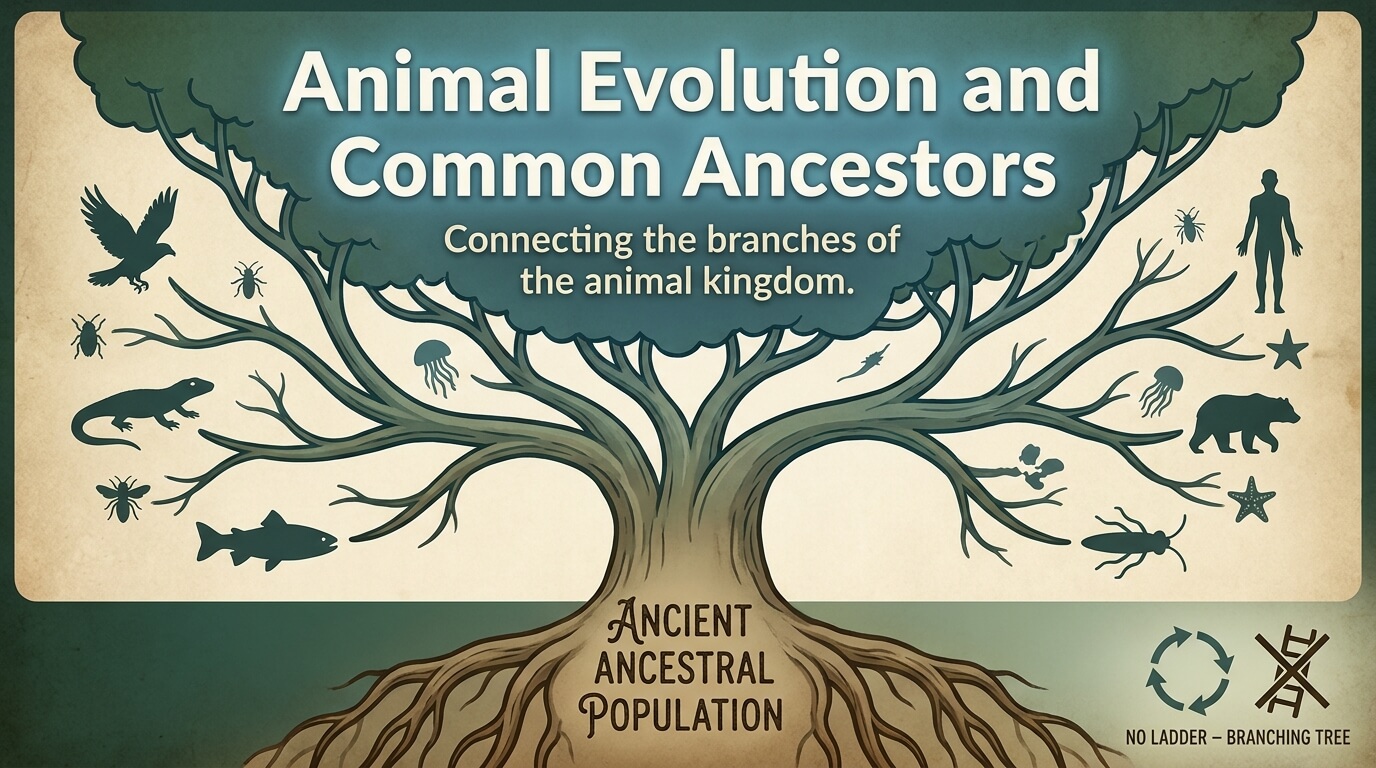
Animal Evolution and Common Ancestors Explained

Animal Evolution and Common Ancestors

Animal evolution and common ancestors explain why a whale’s flipper, a bat’s wing, a lizard’s foreleg, and a human arm can be built from the same basic arrangement of bones. Living animals did not appear as separate, finished designs. Their lineages inherited traits from earlier populations, changed across generations, split into new branches, and sometimes … Read more

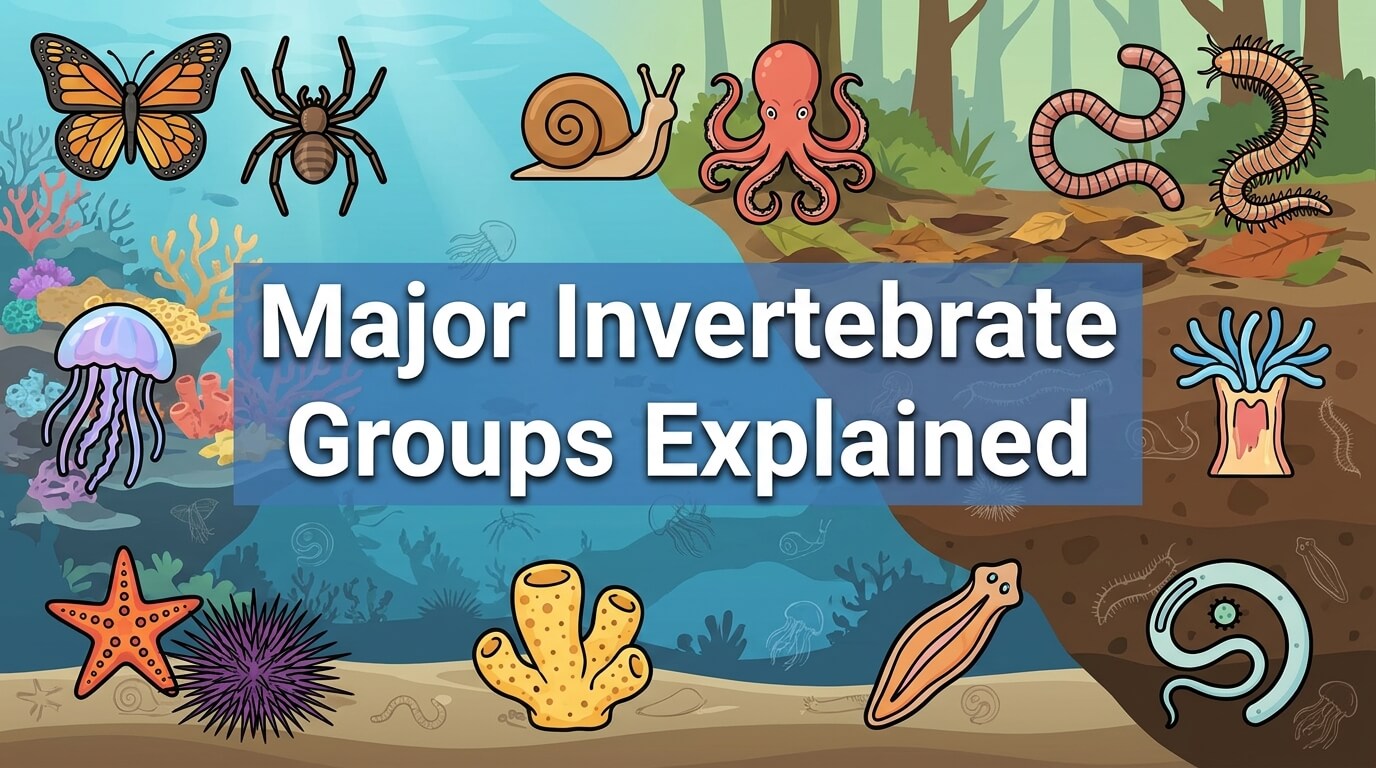
Major Invertebrate Groups Explained

Major Invertebrate Groups Explained

Invertebrates are animals without a vertebral column, but that simple definition covers an extraordinary range of bodies. A butterfly, an octopus, an earthworm, a jellyfish, and a sea star are all invertebrates, yet they move, feed, sense their surroundings, and reproduce in very different ways. Understanding the major invertebrate groups means looking beyond the missing … Read more