
Mollusk conservation is not one problem with one solution. Mollusks include freshwater mussels, land snails, marine snails, clams, oysters, scallops, chitons, nautiluses, octopuses, squid, and many other lineages that live under very different ecological conditions. Some species remain widespread, while others occupy a single river system, island forest, spring, cave, reef, or narrow stretch of coastline. That difference in range alone can change how vulnerable a species is to habitat loss or disturbance.
The safest way to understand conservation in this phylum is species by species and habitat by habitat. Freshwater mussels in North America face especially serious pressures from altered rivers, pollution, fragmentation, invasive species, and disruptions to host-fish relationships. Many island land snails have extremely small ranges and can be devastated by introduced predators. Marine mollusks face a different mix of pressures, including harvest, habitat change, pollution, warming, and changing ocean chemistry. Conservation status therefore has to be tied to a named species, population, assessment date, and source rather than generalized to “mollusks” as a whole.
Quick Answer
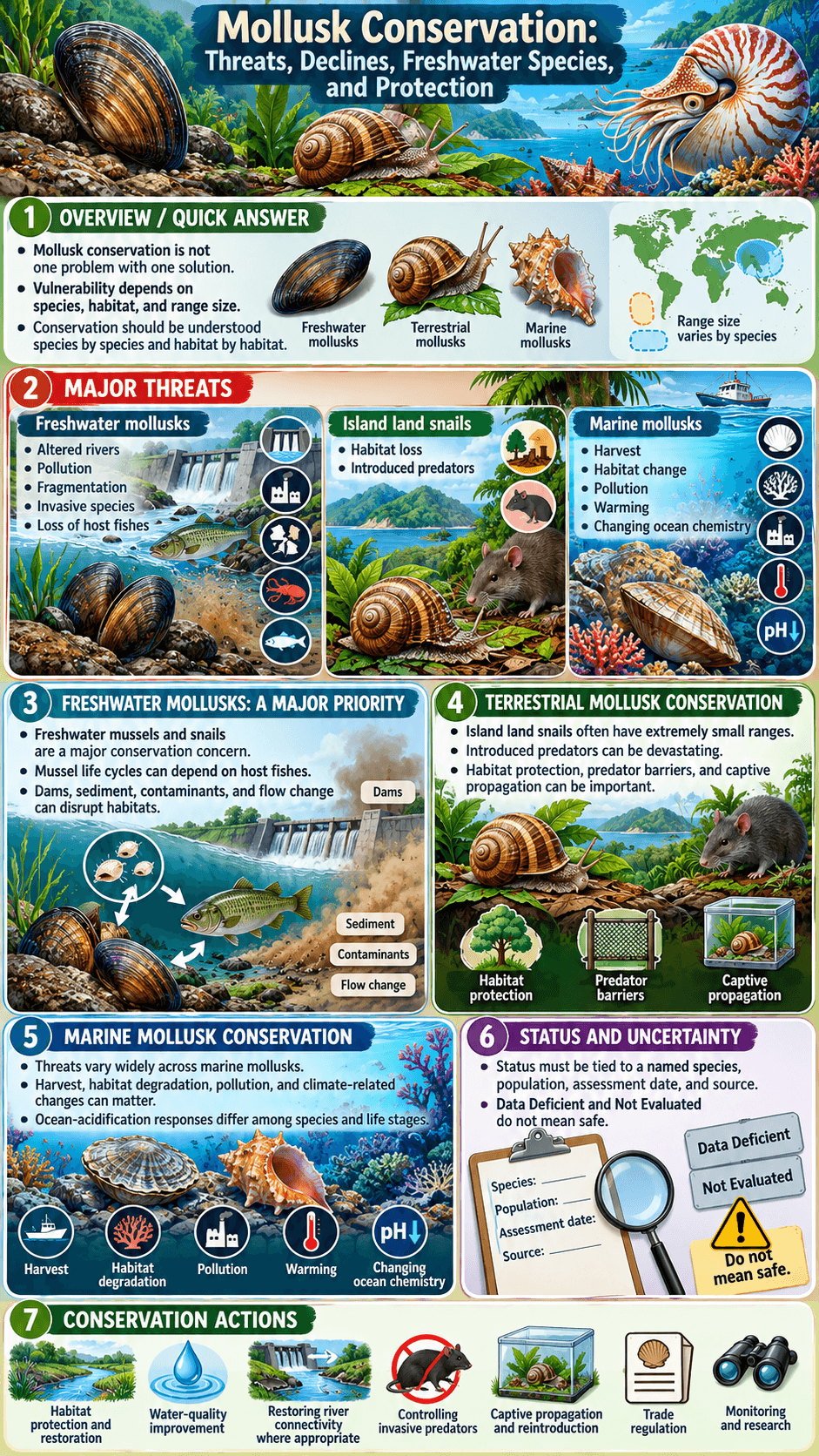
Mollusk conservation focuses on protecting species whose populations or habitats are being reduced faster than they can recover. The most important threats vary widely. In freshwater systems, dams, altered flow, sediment, pollution, invasive species, and loss of host fishes can be critical. On islands, native land snails may be threatened by habitat loss and introduced predators. In marine systems, harvest, habitat degradation, pollution, and climate-related changes can matter, but sensitivity differs among species and life stages.
Conservation actions can include habitat protection, water-quality improvement, restoring river connectivity where appropriate, controlling invasive predators, captive propagation, reintroduction, trade regulation, monitoring, and research. Just as important, conservationists must recognize uncertainty. A mollusk that has not been thoroughly assessed is not automatically secure, and a group with some common species can still contain highly imperiled relatives.
Why Mollusk Conservation Is Uneven Across Groups
Extremely Diverse Lineages Have Different Threat Profiles
A mussel buried in the bottom of a large river does not encounter the same pressures as a tree snail restricted to one mountain ridge or a pelagic squid moving through open ocean. Mollusks occupy marine, freshwater, and terrestrial environments and differ enormously in mobility, reproductive rate, dispersal, host dependence, shell structure, and habitat specialization. Those traits shape both exposure to threats and the ability to recover after a disturbance.
Range size is especially important. A widespread species may lose one local population without disappearing everywhere. A narrow endemic, meaning a species found naturally in only a very small area, may have no such buffer. One fire, drought, invasive predator, polluted tributary, or habitat conversion can affect much of its remaining range at once. This is why island snails and spring- or river-restricted freshwater species often require very different conservation strategies from broadly distributed marine mollusks.
Why Assessment Coverage Matters
Conservation databases are powerful, but they are not a census of every living mollusk. The IUCN Red List categories and criteria distinguish among categories such as Least Concern, Vulnerable, Endangered, Critically Endangered, Data Deficient, and Not Evaluated. Data Deficient means there is not enough information to assess extinction risk reliably. Not Evaluated means the taxon has not yet been assessed under the system.
That distinction matters because absence from a threatened category does not always mean low risk. Some species are poorly known, difficult to survey, recently described, taxonomically uncertain, or found in habitats that receive little monitoring. For mollusks, this problem can be substantial because many species are small, localized, cryptic, or difficult to identify without specialist knowledge. A responsible overview therefore avoids converting incomplete assessment coverage into a claim that unassessed species are safe.
Freshwater Mollusks Are a Major Conservation Priority
Freshwater Mussels and Snails
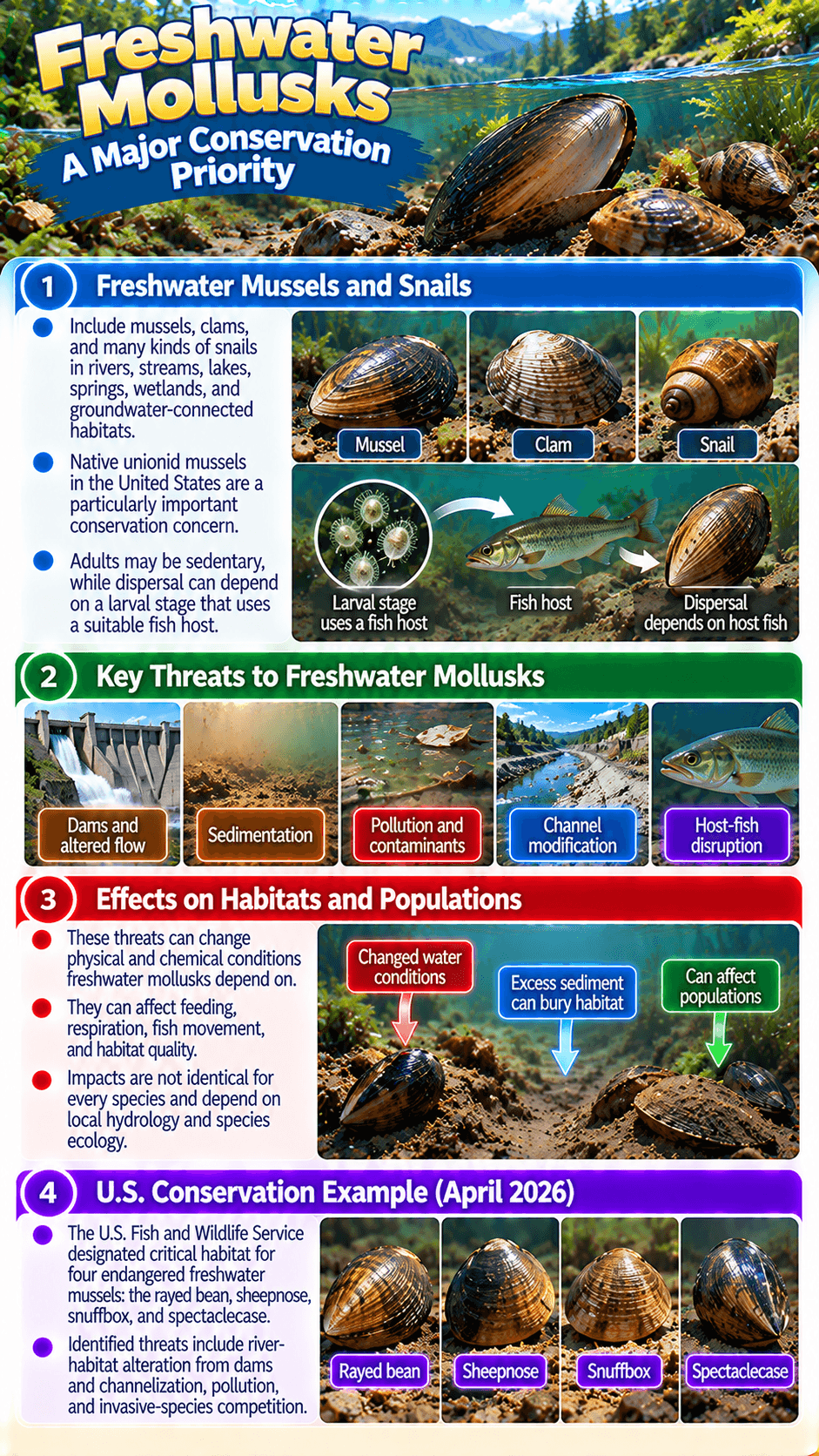
Freshwater mollusks include mussels, clams, and many kinds of snails living in rivers, streams, lakes, springs, wetlands, and groundwater-connected habitats. In the United States, native unionid mussels are a particularly important conservation concern. Their adult lives may be relatively sedentary, while dispersal can depend heavily on a larval stage that uses a suitable fish or other aquatic host. This creates a life cycle in which the mussel population can be affected both by conditions on the river bottom and by what happens to host communities.
Recent work from the U.S. Geological Survey on freshwater mussel extinction risk found links among extinction risk, habitat fragmentation, species range, body size, and host-fish dispersal potential. The study highlights why conservation cannot focus only on the adult mussel bed. Connectivity and the biology of host fishes can influence whether larvae reach suitable habitat and whether separated populations remain connected over time.
Habitat Fragmentation, Water Quality, Sediment, Flow Change, and Host-Fish Disruption
Dams, channel modification, water withdrawal, altered flow, sedimentation, contaminants, and nutrient pollution can change the physical and chemical conditions freshwater mollusks depend on. A dam can alter current speed, temperature, sediment transport, oxygen conditions, and fish movement. Excess sediment can bury suitable substrate or interfere with feeding and respiration. Pollution can directly stress animals or indirectly alter food webs and habitat quality.
These effects are not identical for every species. A mussel adapted to stable large-river habitat may respond differently from a species that uses smaller streams. Some freshwater snails depend on springs, seeps, or other narrowly defined microhabitats. Conservation planning therefore relies on local hydrology, species ecology, population structure, and known threats rather than assuming that every freshwater mollusk needs the same type of restoration.
Why U.S. Conservation Claims Need Current Official Evidence
Legal status and recovery actions can change, so U.S. claims should be checked against current federal and state information. In April 2026, the U.S. Fish and Wildlife Service designated critical habitat for four endangered freshwater mussels: the rayed bean, sheepnose, snuffbox, and spectaclecase. The agency identified threats including river-habitat alteration from dams and channelization, pollution, and invasive-species competition.
That example does not mean all U.S. freshwater mussels have the same status. Some are federally listed, some have state-level protections, some are relatively secure, and others are still being assessed. Status should always be attached to the exact species and current authority. Common names can also be confusing, so scientific names are useful when legal or conservation claims need precision.
Terrestrial Mollusk Conservation
Island Land Snails and Narrow Endemism
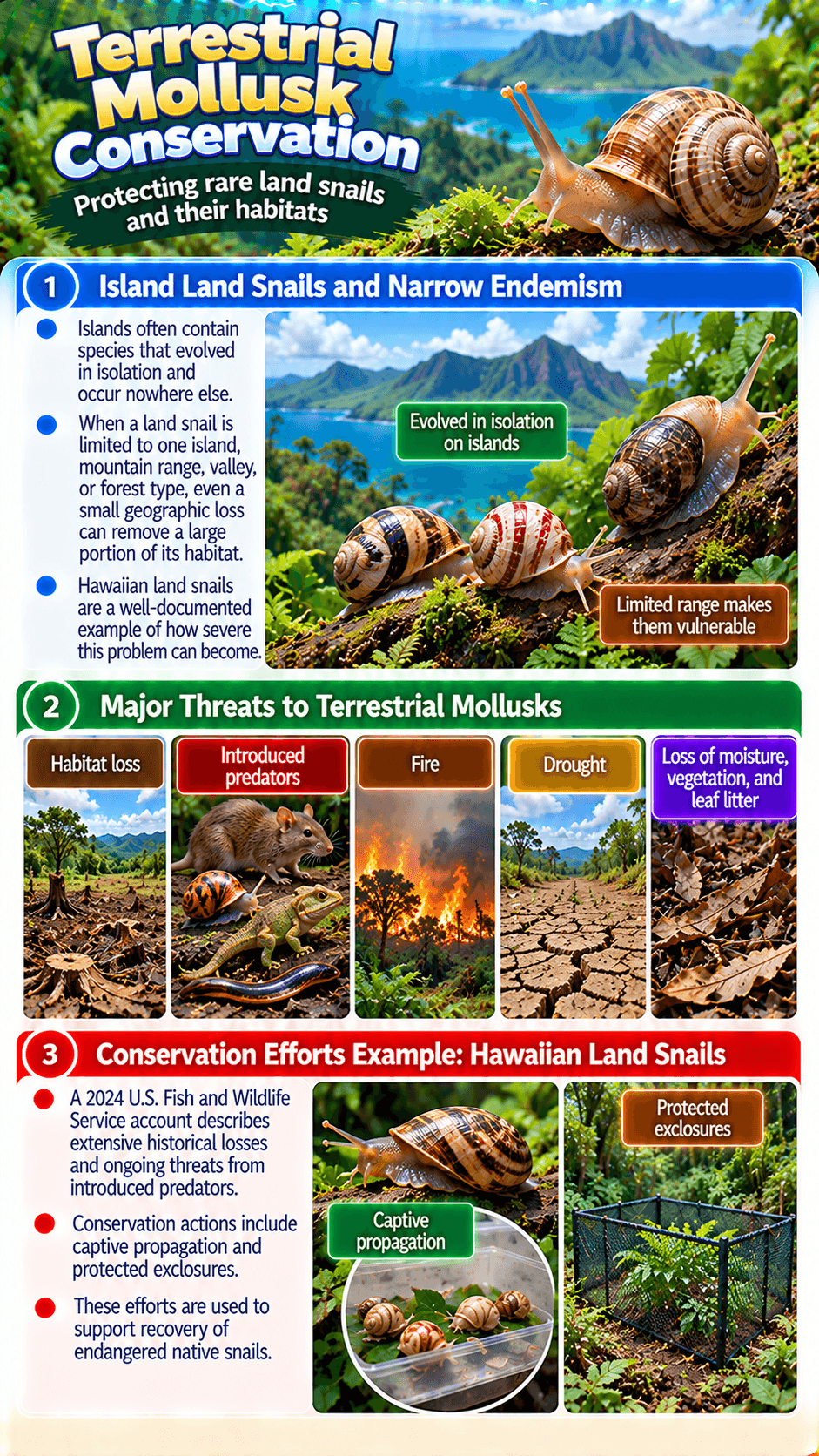
Land snails are easy to overlook because familiar garden species can make snails seem universally abundant. Native island faunas tell a different story. Islands often contain species that evolved in isolation and occur nowhere else. When a land snail is limited to one island, mountain range, valley, or forest type, even a small geographic loss can remove a large portion of its available habitat.
Hawaiian land snails are a well-documented example of how severe this problem can become. A 2024 U.S. Fish and Wildlife Service account of Oʻahu tree-snail conservation describes extensive historical losses and ongoing threats from introduced predators, including rats, the rosy wolfsnail, chameleons, and the New Guinea flatworm. It also describes captive propagation and protected exclosures used as part of recovery efforts for endangered native snails.
Habitat Loss, Invasive Predators, Fire, Drought, and Other Local Pressures
Terrestrial mollusks depend strongly on moisture, vegetation, leaf litter, fungi, algae, and stable microclimates. Clearing forest can remove food and shelter while also making the remaining habitat hotter and drier. Fire can be especially destructive in ecosystems where native snails evolved with little exposure to frequent burning. Drought can shrink moist refuges and increase physiological stress, although the importance of these factors varies among species and islands.
Introduced predators can be even more direct. A native snail lineage that evolved with few specialized snail predators may have little defense against an introduced predator that can actively track and consume it. In such situations, habitat protection alone may not be enough. Conservation may also require predator barriers, removal programs, captive assurance populations, or carefully planned reintroductions.
Marine Mollusk Conservation
Harvest, Bycatch, Habitat Change, Pollution, and Climate-Related Pressures
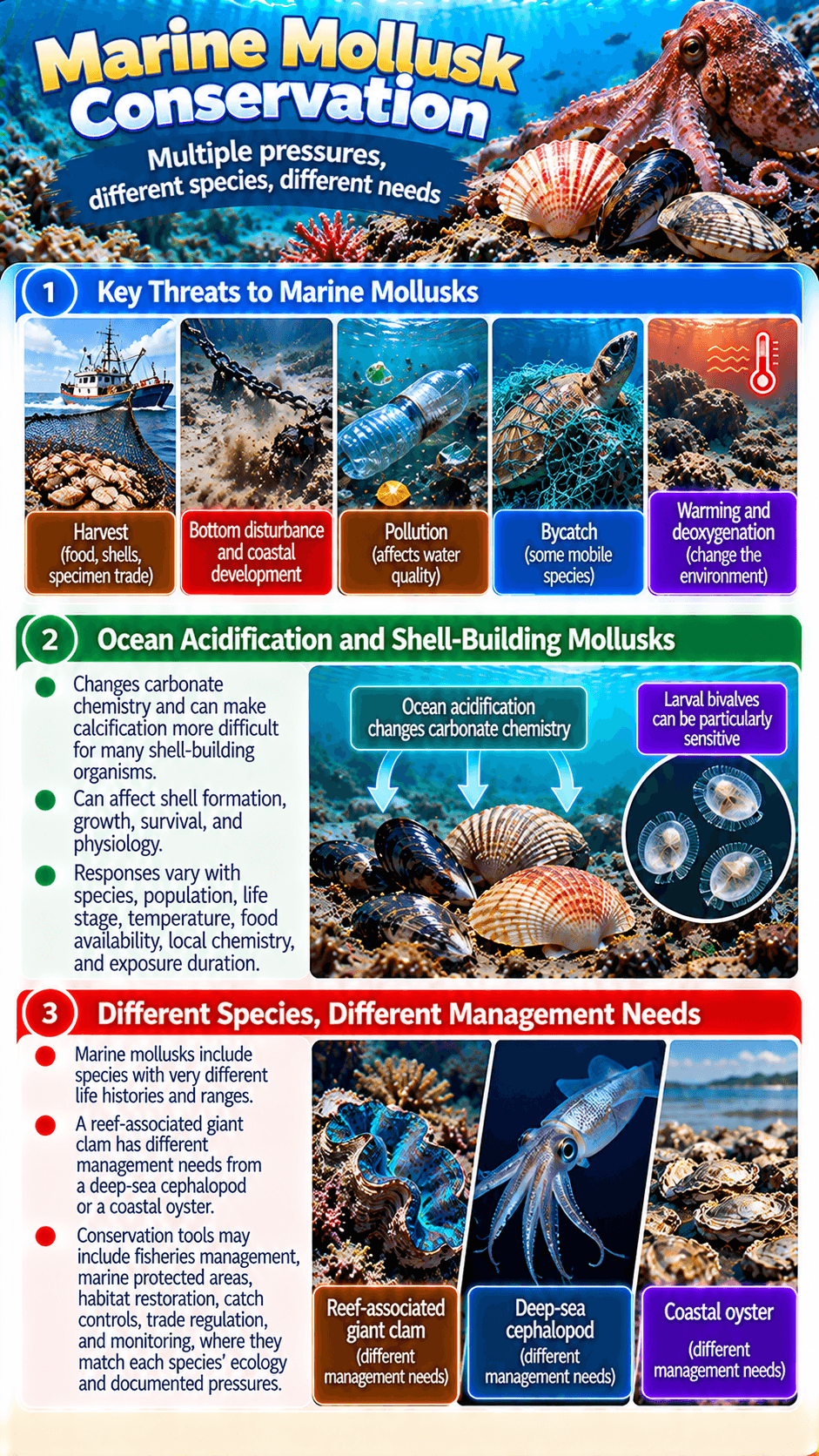
Marine mollusks range from sedentary bivalves to active cephalopods, so marine conservation cannot be summarized by one threat. Harvest can matter for species collected for food, shells, or the specimen trade. Bottom disturbance and coastal development can alter habitats used by benthic species. Pollution can affect water quality or accumulate in food webs. Bycatch can matter for some mobile marine species, while warming and deoxygenation can change the environmental envelope in which populations can persist.
The importance of each pressure depends on geography and biology. A reef-associated giant clam has different management needs from a deep-sea cephalopod or a coastal oyster. Fisheries management, marine protected areas, habitat restoration, catch controls, trade regulation, and monitoring may all have roles, but only where they match the ecology and documented pressures of the species involved.
Species and Life Stages Differ in Ocean-Acidification Responses
Ocean acidification changes carbonate chemistry and can make calcification more difficult for many shell-building organisms, but the response is not uniform. NOAA’s ocean-acidification research on shellfish describes effects on shell formation, growth, survival, and physiology while also emphasizing ongoing experiments across different species and life stages. Larval bivalves are often a major focus because early shell formation can be particularly sensitive.
It would still be misleading to say acidification simply “dissolves mollusks.” Responses vary with species, population, life stage, temperature, food availability, local chemistry, and exposure duration. Some effects occur through slower growth or altered energy balance rather than visible shell dissolution. Conservation writing should therefore describe acidification as a pressure that can affect vulnerable mollusks, not as a single guaranteed outcome for every species.
Why Marine Mollusks Cannot Be Treated as One Status Group
Marine mollusks include lineages with radically different life histories and geographic ranges. Some produce large numbers of planktonic young capable of dispersing over broad areas. Others are tied to reefs, shallow lagoons, seagrass beds, vents, or isolated islands. Some support major fisheries; others are rarely encountered. Even within a family, species can differ greatly in abundance and threat exposure.
This is why labels such as “marine mollusks are safe” or “marine mollusks are endangered” are both too broad. The useful question is which species, in which region, under which assessment, and exposed to which pressures. The same rule applies to cephalopods. The conservation condition of a well-known octopus cannot stand in for nautiluses, squid, cuttlefish, or the rest of Mollusca.
Trade and Collection Pressure
Shell and Specimen Trade Where Relevant
Shells can enter decorative, curio, jewelry, and specimen markets, and live mollusks may be traded for aquaria, food, research, or private collections. Trade is not automatically a conservation problem. It becomes a concern when demand combines with slow recovery, small populations, restricted ranges, weak enforcement, destructive collection, or poor traceability.
For rare or protected species, collectors can also create risks by sharing exact locations publicly. Conservation communication should avoid publishing sensitive collecting sites or instructions that make vulnerable populations easier to remove. Photographing or observing a species in place is generally less disruptive than removing individuals or shells, especially where local rules are unclear.
CITES and Legal Protection Apply Only to Certain Taxa
International wildlife-trade rules cover selected mollusks, not the entire phylum. The CITES-listed species database includes molluscan taxa such as giant clams, nautiluses, and certain land and freshwater mollusks. Their listing means international trade is subject to the rules of the relevant CITES Appendix, but it does not mean every mollusk is regulated under CITES.
National and local laws can add other protections, and rules may differ among countries, states, marine jurisdictions, protected areas, and species. For that reason, general conservation information is not a substitute for a permit or local collecting rules. Anyone dealing with protected wildlife needs to check the law that applies to the exact species and location.
Why This Is Not a Shell-Collecting Guide
Empty shells can have ecological value even after the animal has died. They may become shelter, hard substrate, calcium sources, or microhabitat for other organisms. Removing large quantities from sensitive beaches, protected areas, or small island populations can therefore have effects beyond the loss of a decorative object. Rules also vary widely by place.
The conservation question is not whether every shell should remain untouched everywhere. It is whether removal is legal, sustainable, and ecologically appropriate in that setting. Because those answers are local and species-specific, broad collecting instructions would be misleading.
Invasive Mollusks and Conservation
Ecological Impacts in New Ranges
Some mollusks become invasive when introduced outside their native ranges. Invasive snails, slugs, mussels, and clams can alter food webs, compete with native species, change nutrient cycling, clog infrastructure, or damage vegetation. The same phylum can therefore contain both imperiled native species and introduced species that require control.
This can create confusing public messages. “Protect mollusks” does not mean every introduced snail should be protected in every location. Likewise, “control invasive mussels” does not justify harming native freshwater mussels. Correct identification and local guidance are essential because native and invasive species may occur in the same watershed.
Why Moving Snails or Mussels Between Watersheds Can Spread Problems
Moving live mollusks, aquarium animals, bait, aquatic plants, mud, or water between watersheds can spread nonnative species or pathogens. Even well-intentioned relocation can place an animal in unsuitable habitat, mix populations that should remain separate, or violate wildlife laws. Freshwater mussels can be especially difficult to identify correctly without training.
The safe conservation principle is simple: do not move wild snails, mussels, or other mollusks to “help” them unless the action is part of an authorized conservation program. For invasive-species concerns, use state wildlife, natural-resource, or extension guidance rather than improvising transport or release.
Understanding Conservation Status
IUCN Categories and Assessment Dates
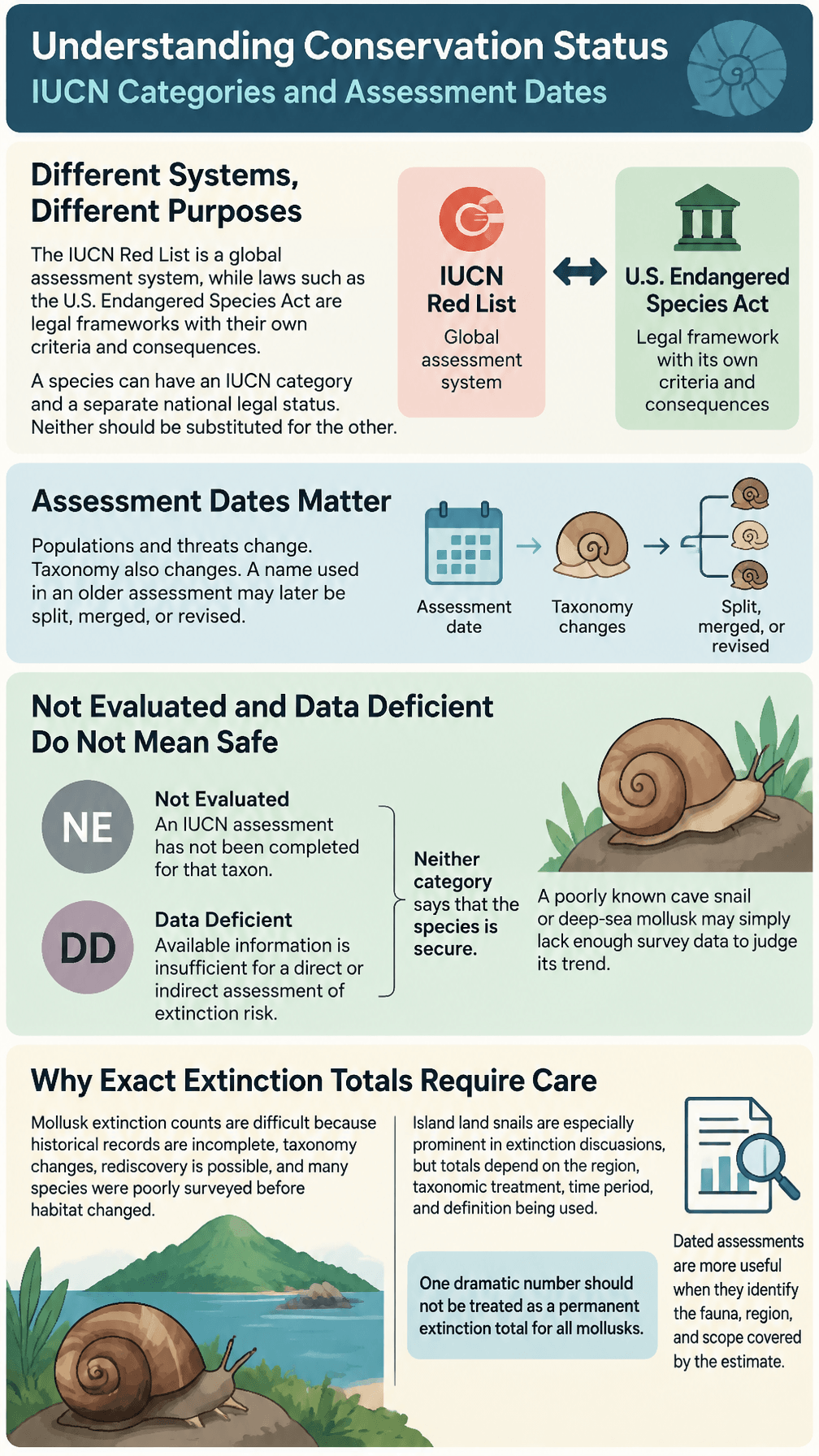
The IUCN Red List is a global assessment system, while laws such as the U.S. Endangered Species Act are legal frameworks with their own criteria and consequences. A species can therefore have an IUCN category and a separate national legal status. Neither should be substituted for the other.
Assessment dates matter because populations and threats change. Taxonomy also changes. A name used in an older assessment may later be split, merged, or revised. When conservation status is important, the most reliable practice is to check the exact taxon, assessment date, geographic scope, and authority instead of repeating an undated label from a secondary website.
Not Evaluated and Data Deficient Do Not Mean Safe
Not Evaluated means an IUCN assessment has not been completed for that taxon. Data Deficient means available information is insufficient for a direct or indirect assessment of extinction risk. Neither category says that the species is secure. A poorly known cave snail or deep-sea mollusk may simply lack enough survey data to judge its trend.
At the same time, uncertainty should not be converted into a claim of hidden crisis without evidence. The correct response is to state what is known, what is uncertain, and what information would improve assessment. Conservation science works best when uncertainty is visible rather than concealed behind false precision.
Why Exact Extinction Totals Require Care
Mollusk extinction counts are difficult because historical records are incomplete, taxonomy changes, rediscovery is possible, and many species were poorly surveyed before habitat changed. Island land snails are especially prominent in extinction discussions, but totals depend on the region, taxonomic treatment, time period, and definition being used.
For that reason, one dramatic number should not be treated as a permanent extinction total for all mollusks. Dated assessments are more useful when they identify the fauna, region, and scope covered by the estimate.
What Conservation Actions Can Look Like
Habitat Protection and Restoration
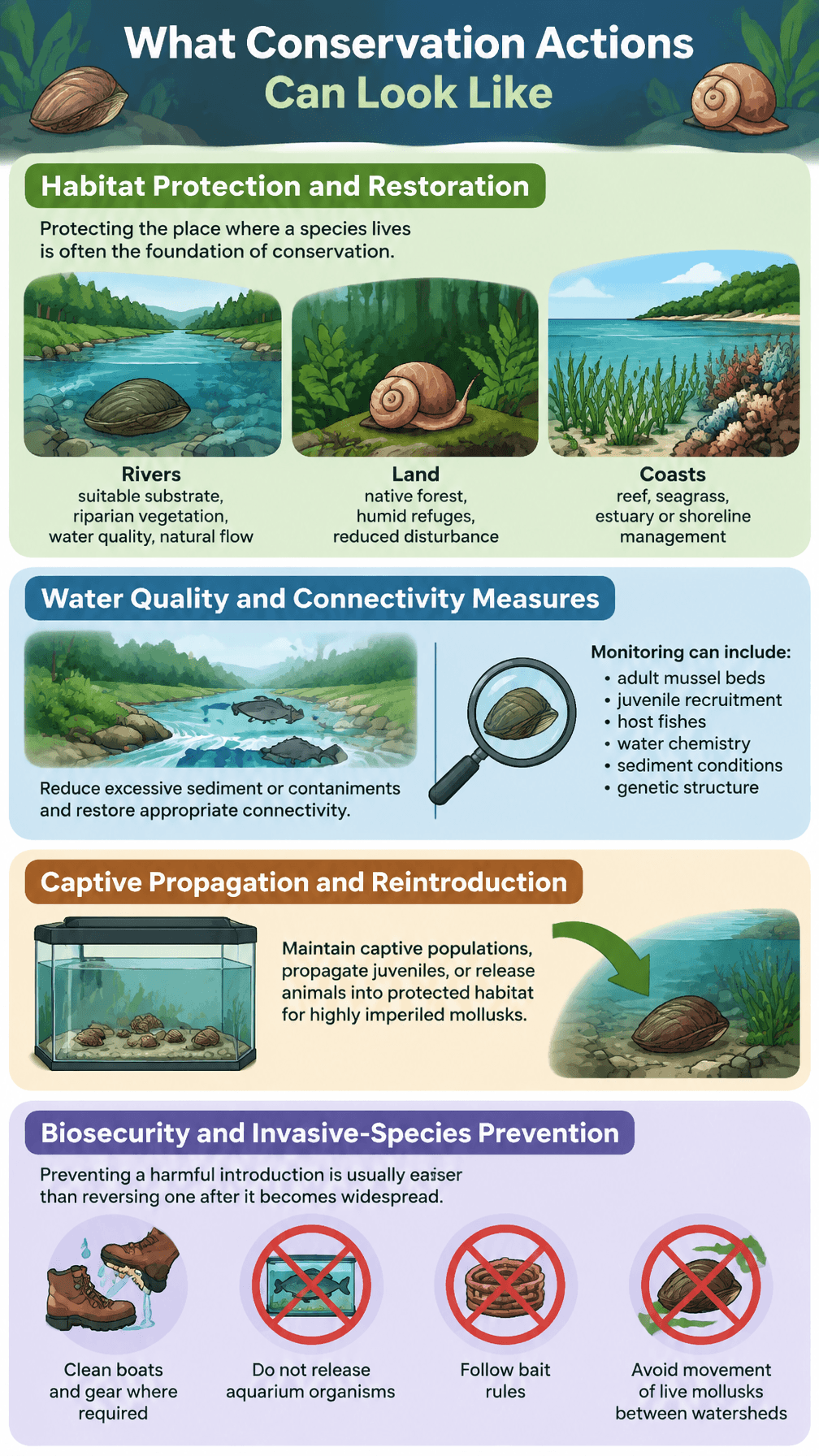
Protecting the place where a species lives is often the foundation of conservation. For river mollusks, this can involve preserving suitable substrate, riparian vegetation, water quality, and natural flow patterns. For land snails, it can mean protecting native forest, maintaining humid refuges, and reducing disturbance. For coastal species, it may include reef, seagrass, estuary, or shoreline habitat management.
Restoration is most effective when it addresses the actual limiting factor. Planting vegetation will not solve a host-fish barrier, and removing a predator will not help if the habitat has become unsuitable. Good programs begin with species ecology and monitor whether the action improves survival, reproduction, recruitment, or population stability.
Water Quality and Connectivity Measures
Freshwater conservation often requires thinking at watershed scale. Reducing excessive sediment or contaminants can improve local habitat, while restoring appropriate connectivity may help host fishes move between reaches. In other places, a barrier may be serving an important purpose or removing it may create new invasive-species risks, so connectivity decisions require site-specific planning.
Monitoring can include surveys of adult mussel beds, juvenile recruitment, host fishes, water chemistry, sediment conditions, and genetic structure. No single measurement captures the whole system. A river may look visually clean while still lacking the biological conditions needed for a sensitive mussel to reproduce successfully.
Captive Propagation and Reintroduction
For some highly imperiled mollusks, conservation programs maintain captive populations, propagate juveniles, or release animals into protected habitat. These methods can reduce immediate extinction risk or rebuild depleted populations, but they are not substitutes for repairing the causes of decline. Reintroduction into degraded habitat is unlikely to succeed simply because more animals are released.
Freshwater mussel propagation can be especially specialized because many species require suitable host fishes during larval development. Land-snail programs may need predator-proof facilities and careful genetic management. These interventions belong in professional conservation programs, where disease risk, genetics, permits, release sites, and long-term monitoring can be managed together.
Biosecurity and Invasive-Species Prevention
Preventing a harmful introduction is usually easier than reversing one after it becomes widespread. Cleaning boats and gear where required, not releasing aquarium organisms, following bait rules, and avoiding movement of live mollusks between watersheds can reduce pathways for invasive species.
On islands, biosecurity can be equally important because a newly introduced predator, competitor, or plant pest may affect species with very small ranges. Conservation therefore includes not only rescuing declining populations but also preventing new pressures from arriving.
What Readers Often Misunderstand
“All Mollusks Are Common Because Snails Are Familiar”
Seeing common garden snails does not tell you the status of native mollusks. The animals around homes may be widespread native species, introduced species, or invasive species, while rare native snails persist only in isolated natural habitat. Familiarity with one species can create a false impression about an entire phylum.
“Marine Species Are Automatically Safer Than Freshwater Species”
Marine environments can allow broader dispersal for some mollusks, but that does not guarantee safety. Restricted-range marine species, heavily harvested taxa, habitat specialists, and species exposed to rapid environmental change can still face serious risks. Freshwater mollusks receive special attention because many species combine narrow ranges, fragmented river systems, and complex life cycles, not because marine mollusks are universally secure.
“A Species Not on a List Has No Conservation Concern”
Lists are tools, not complete inventories of every population in trouble. A species can be declining before formal assessment catches up, or it may be poorly known. Conversely, a species being studied does not automatically mean it is endangered. The responsible approach is to use the best current evidence and state uncertainty clearly.
Why Habitat, Reproduction, and Ecosystem Roles Matter Together
Habitat Dependence
Mollusk conservation often begins with habitat because anatomy and physiology tie these animals closely to moisture, water chemistry, substrate, food, and shelter. A shell-bearing species still depends on far more than mineral supply. It may need a particular flow regime, host plant, reef structure, sediment type, or microclimate.
Reproduction and Host Relationships
Life history can determine whether a population rebounds. Species with slow growth, low reproductive output, restricted dispersal, or specialized host relationships may recover slowly after habitat loss. Freshwater mussels show this clearly because successful recruitment may depend on both adult habitat and the availability and movement of suitable hosts.
Ecosystem Roles
Protecting mollusks can also protect ecological functions. Freshwater mussels process suspended material and connect water-column and bottom processes. Grazing snails influence algal films. Burrowing and shell accumulation can alter small-scale habitat. Mollusks also serve as prey for fish, birds, mammals, crustaceans, and other invertebrates. Losing a species can therefore remove interactions that are not obvious from the shell alone.
FAQ
Why are freshwater mussels so vulnerable?
Many freshwater mussels combine several risk factors: adults are relatively sedentary, rivers can be fragmented by dams or degraded by sediment and pollution, and larval development in many unionids depends on suitable host fishes. If habitat becomes isolated or host fish cannot move between reaches, mussel recruitment and dispersal can decline even when some adults remain present. Vulnerability still varies greatly among species, so the exact threats should be checked for the mussel and watershed in question.
Are land snails endangered?
Some land-snail species are endangered or critically imperiled, while many others are not. Island endemics can be especially vulnerable because they often occupy small ranges and may be exposed to introduced predators, habitat loss, fire, drought, or other local pressures. A common backyard snail should not be used to infer the status of a native forest snail, and conservation status should always be checked for the exact species.
How can conservation status differ among mollusk groups?
Conservation status reflects the biology and circumstances of individual taxa. Range size, habitat specialization, dispersal, reproductive strategy, harvest, invasive species, pollution, climate exposure, and the amount of available data all matter. A freshwater mussel restricted to a few river reaches may face very different risks from a widespread marine snail or a fast-growing squid. That is why Mollusca cannot be assigned one meaningful conservation label.
Final Thoughts
Mollusk conservation makes the most sense when we stop treating mollusks as one uniform group. Freshwater mussels may depend on connected rivers and suitable host fishes. Island land snails may need predator-free refuges and intact native forest. Marine species can face harvest, habitat change, pollution, warming, and altered carbonate chemistry, but their responses differ by species and life stage.
The practical lesson is to attach every strong conservation claim to a specific animal, place, time, and trusted assessment. Protecting habitat, improving water quality, preventing invasive-species spread, regulating trade where needed, supporting carefully designed propagation programs, and filling major data gaps can all contribute. The combination that matters most depends on the mollusk and the ecosystem it calls home.

Ethan Walker is the founder and research editor of Animal Fact Central. He creates and reviews educational animal facts content using trusted wildlife, pet care, and science-based sources. His work focuses on making animal behavior, adaptations, habitats, and species facts clear, accurate, and engaging for everyday readers.
Read More Details About Ethan Walker: https://animalfactcentral.com/ethan-walker/