How Crustaceans Molt: Growth, Ecdysis, and Shell Hardening

How Crustaceans Molt: Growth, Ecdysis, and Shell Hardening
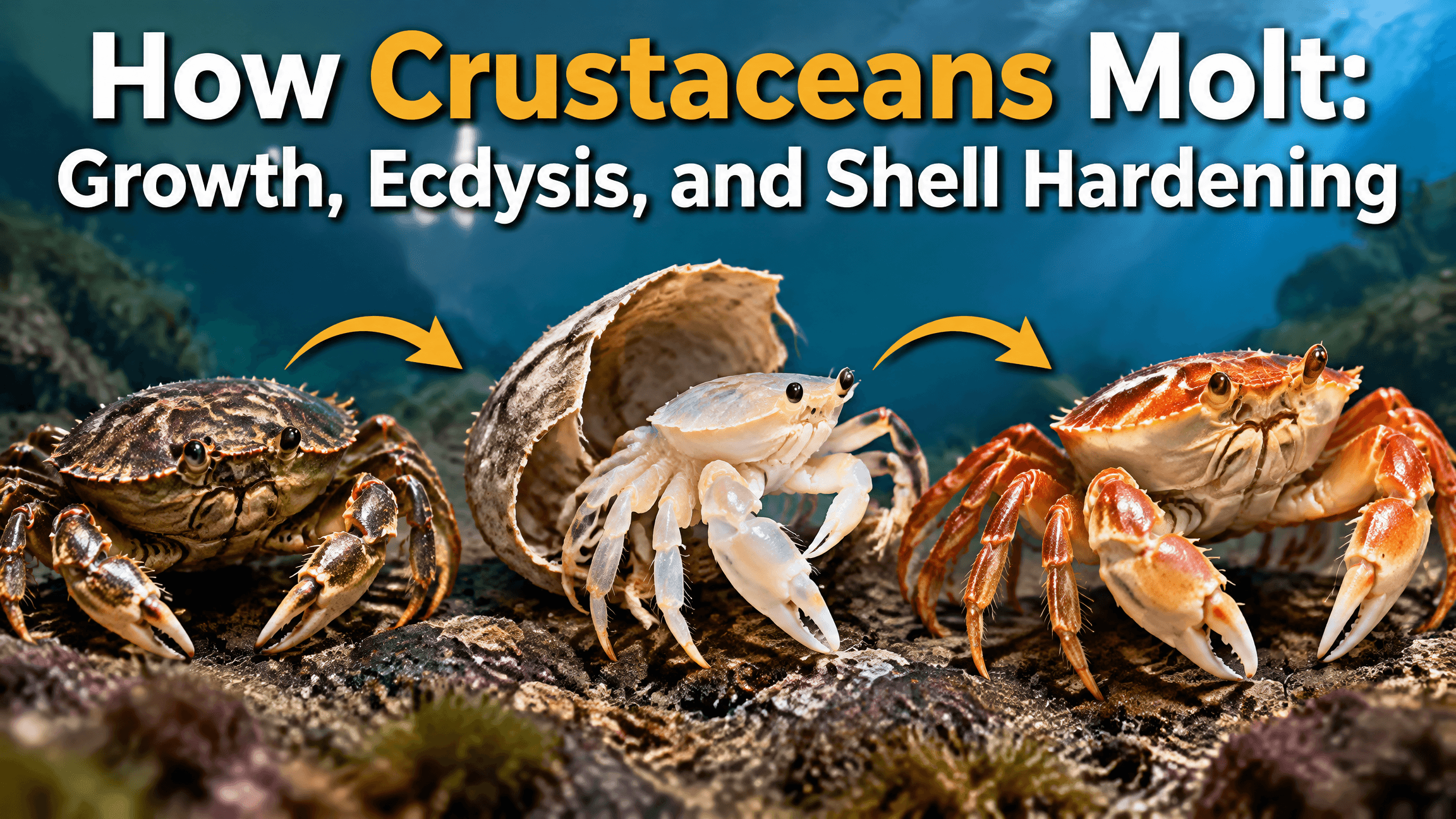
Crustaceans grow by periodically replacing their external cuticle, the body covering that forms much of the exoskeleton. The shedding event itself is called ecdysis, but molting is a longer cycle. Before ecdysis, the animal separates from parts of the old cuticle and prepares a new one underneath. During ecdysis it withdraws from the old covering. … Read more
Crustacean Anatomy: Appendages, Antennae, Gills, Eyes, and Body Regions

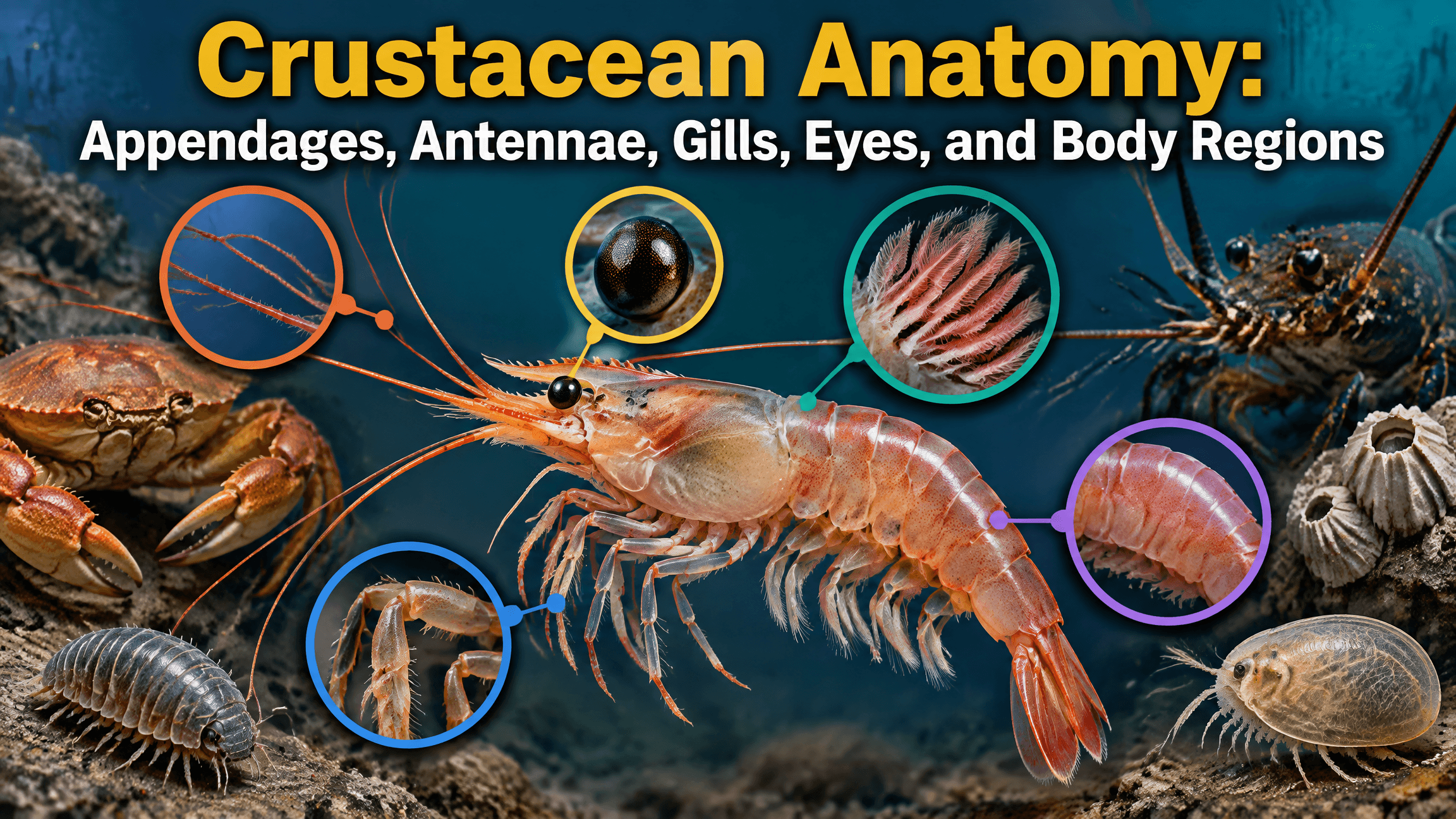
Crustacean Anatomy: Appendages, Antennae, Gills, Eyes, and Body Regions

Crustacean anatomy is built on a segmented arthropod framework, but there is no single body diagram that fits every crustacean. A crab, shrimp, copepod, barnacle, isopod, and ostracod can all share deep structural themes while looking radically different on the outside. Their segments may be grouped into different body regions, their appendages may be modified … Read more

Types of Crustaceans: Crabs, Shrimp, Lobsters, Krill, Barnacles, and More

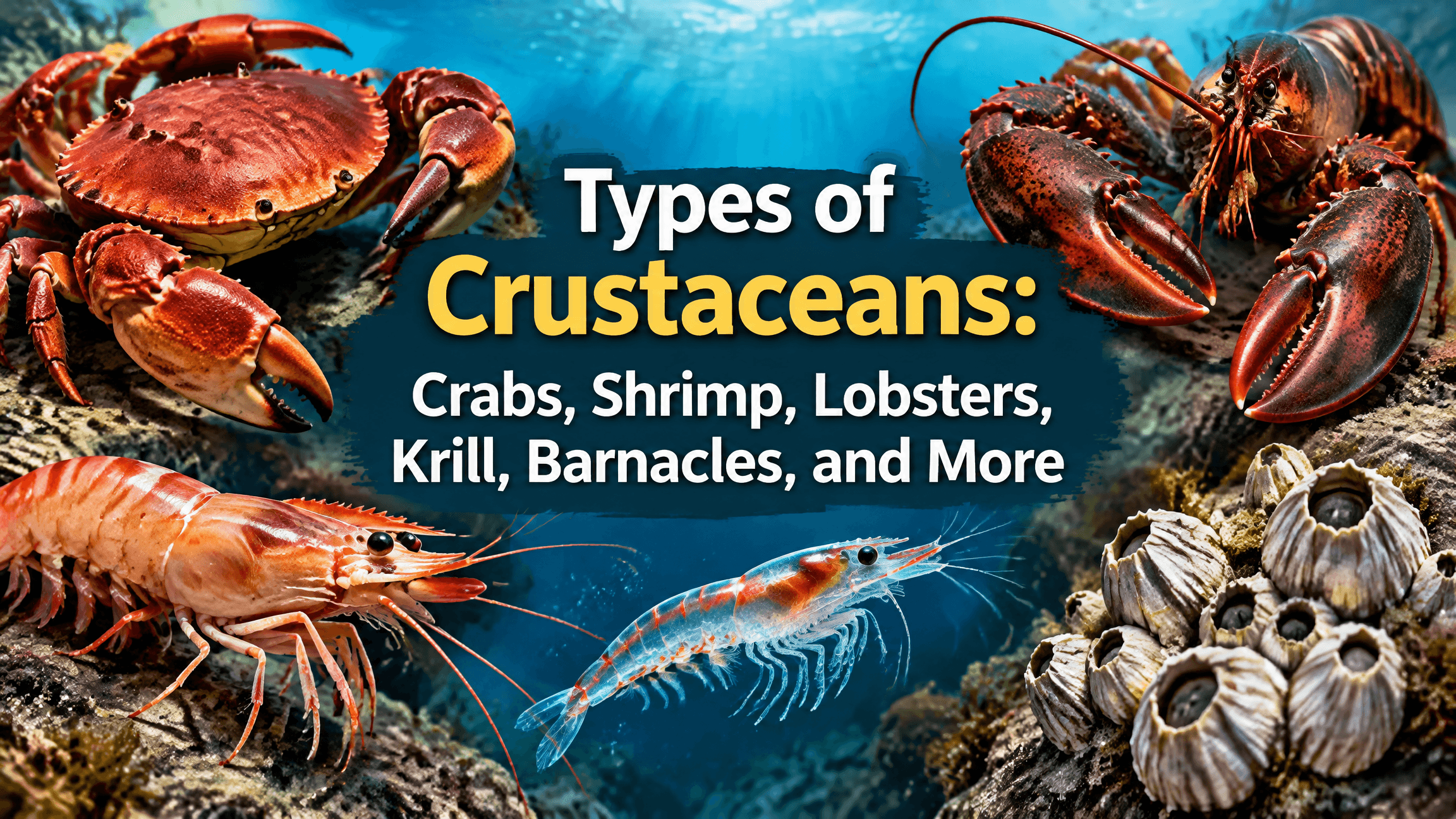
Types of Crustaceans: Crabs, Shrimp, Lobsters, Krill, Barnacles, and More

Crabs, shrimp, and lobsters are the crustaceans most people recognize first, but they represent only a fraction of the group. The major types of crustaceans also include copepods, barnacles, isopods, amphipods, krill, branchiopods, ostracods, remipedes, mantis shrimps, and many other lineages. Some are large and heavily armored. Others are nearly transparent, microscopic or near-microscopic, permanently … Read more

What Makes an Animal a Crustacean? Key Traits Explained

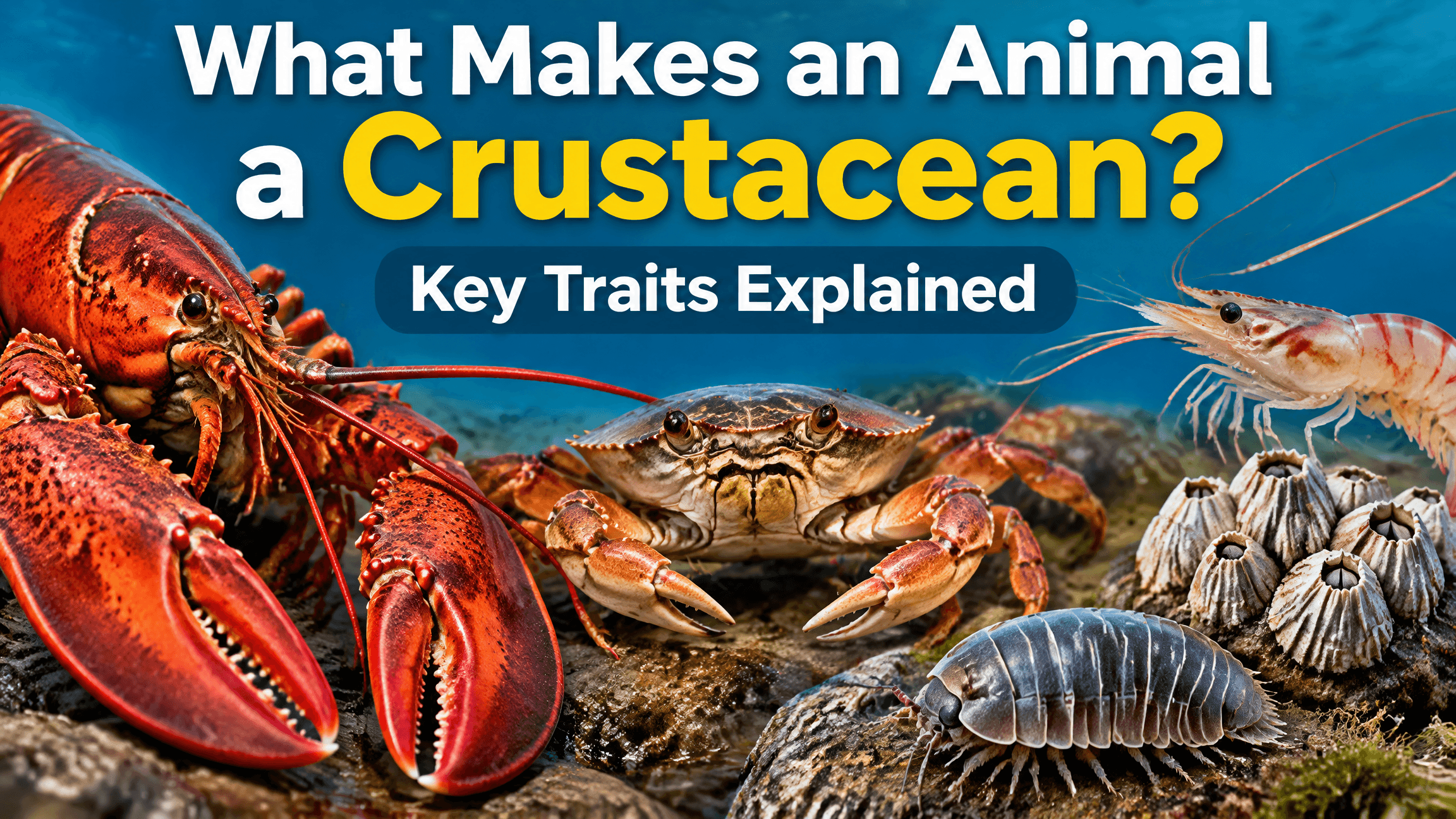
What Makes an Animal a Crustacean? Key Traits Explained

A crustacean is an arthropod that belongs to the broad evolutionary radiation that includes familiar animals such as crabs, lobsters, shrimp, crayfish, barnacles, copepods, krill, and isopods. The useful part of that definition is not a single visible feature. Crustaceans are recognized by a combination of body-plan traits, including a segmented arthropod body, jointed appendages, … Read more

Crustaceans: Types, Anatomy, Habitats, and Adaptations

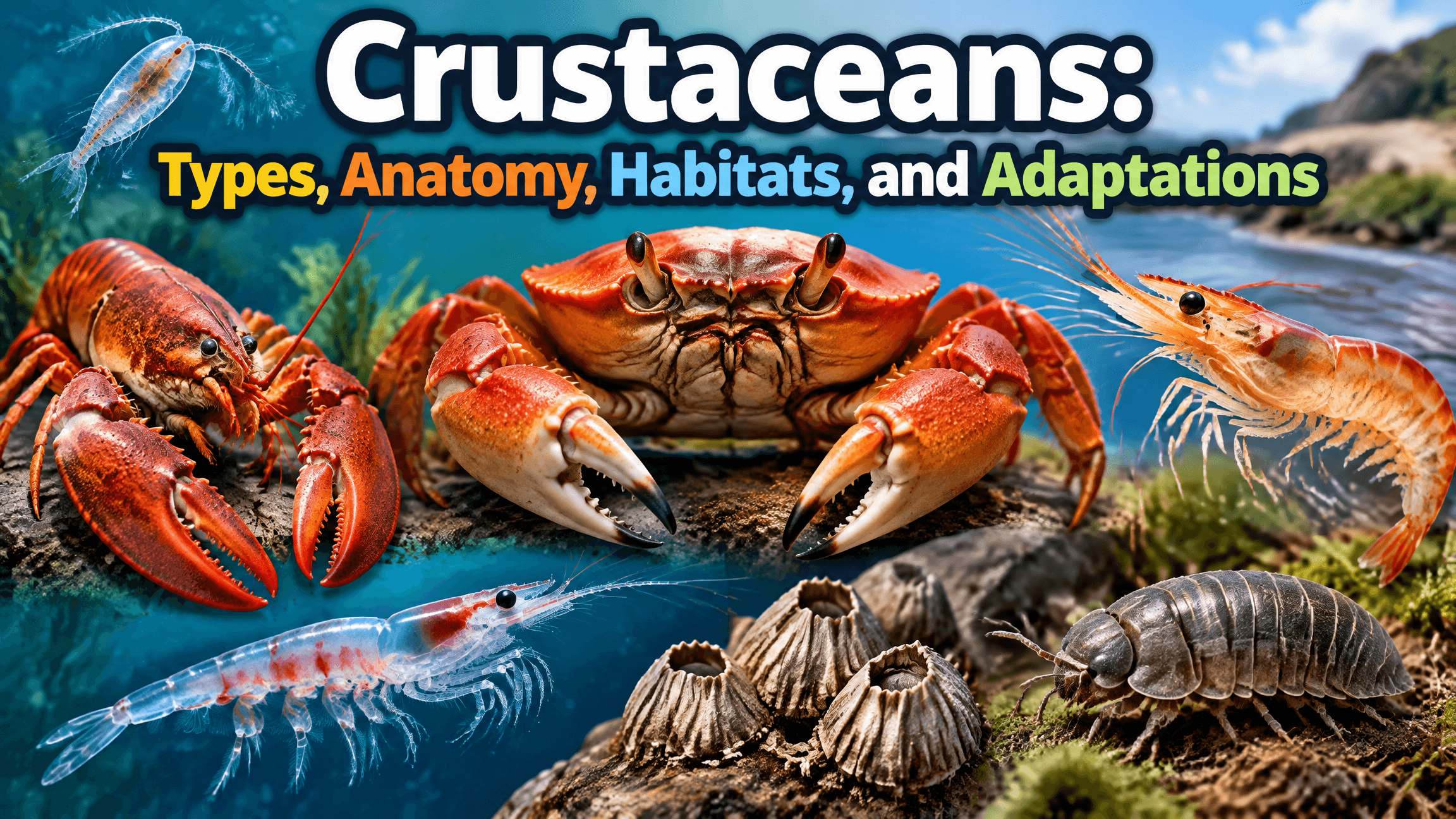
Crustaceans: Types, Anatomy, Habitats, and Adaptations

Crustaceans are arthropods best known through animals such as crabs, shrimp, lobsters, and crayfish, but those familiar forms show only part of the group. The animals conventionally called crustaceans also include copepods drifting through lakes and oceans, barnacles fixed to hard surfaces as adults, krill moving through open water, terrestrial pill bugs beneath logs, tiny … Read more

Arachnid Conservation: Threats, Data Gaps, and Protection

Arachnid Conservation: Threats, Data Gaps, and Protection

Arachnid conservation is difficult to summarize with one number because the group is vast, unevenly studied, and incompletely assessed. Spiders receive far more attention than many mites, harvestmen, pseudoscorpions, whip spiders, and other smaller lineages, yet even spider monitoring is patchy across regions and habitats. Many species are known from few records, tiny ranges, isolated … Read more

Why Are Arachnids Important? Their Roles in Ecosystems

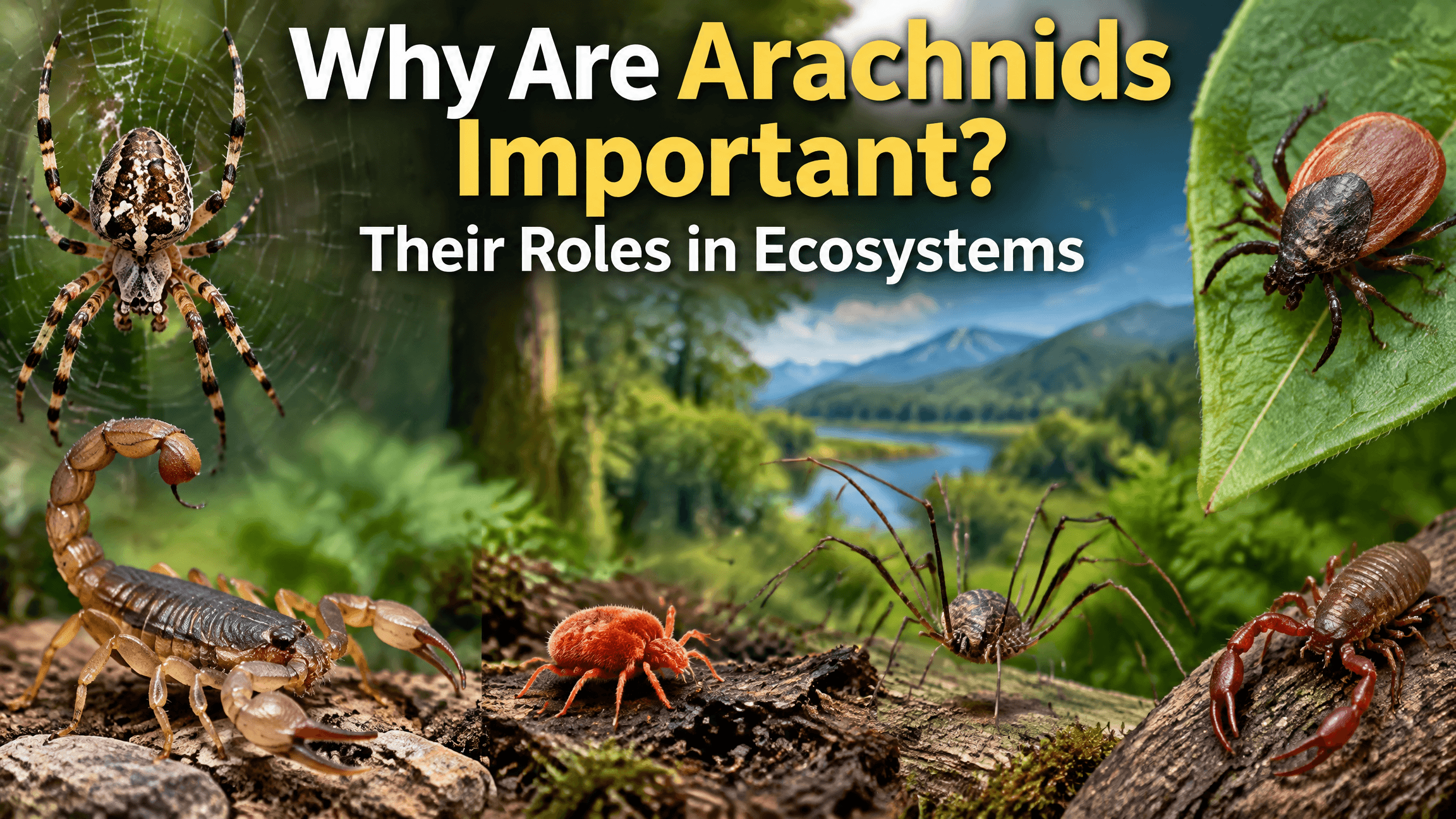
Why Are Arachnids Important? Their Roles in Ecosystems

Arachnids are important because they occupy many different positions in food webs. Spiders and scorpions are predators, ticks and some mites are parasites, plant-feeding mites consume living vegetation, other mites graze fungi or feed in decomposer systems, harvestmen can act as predators, scavengers, or omnivores, and pseudoscorpions hunt tiny arthropods in soil, litter, and bark. … Read more

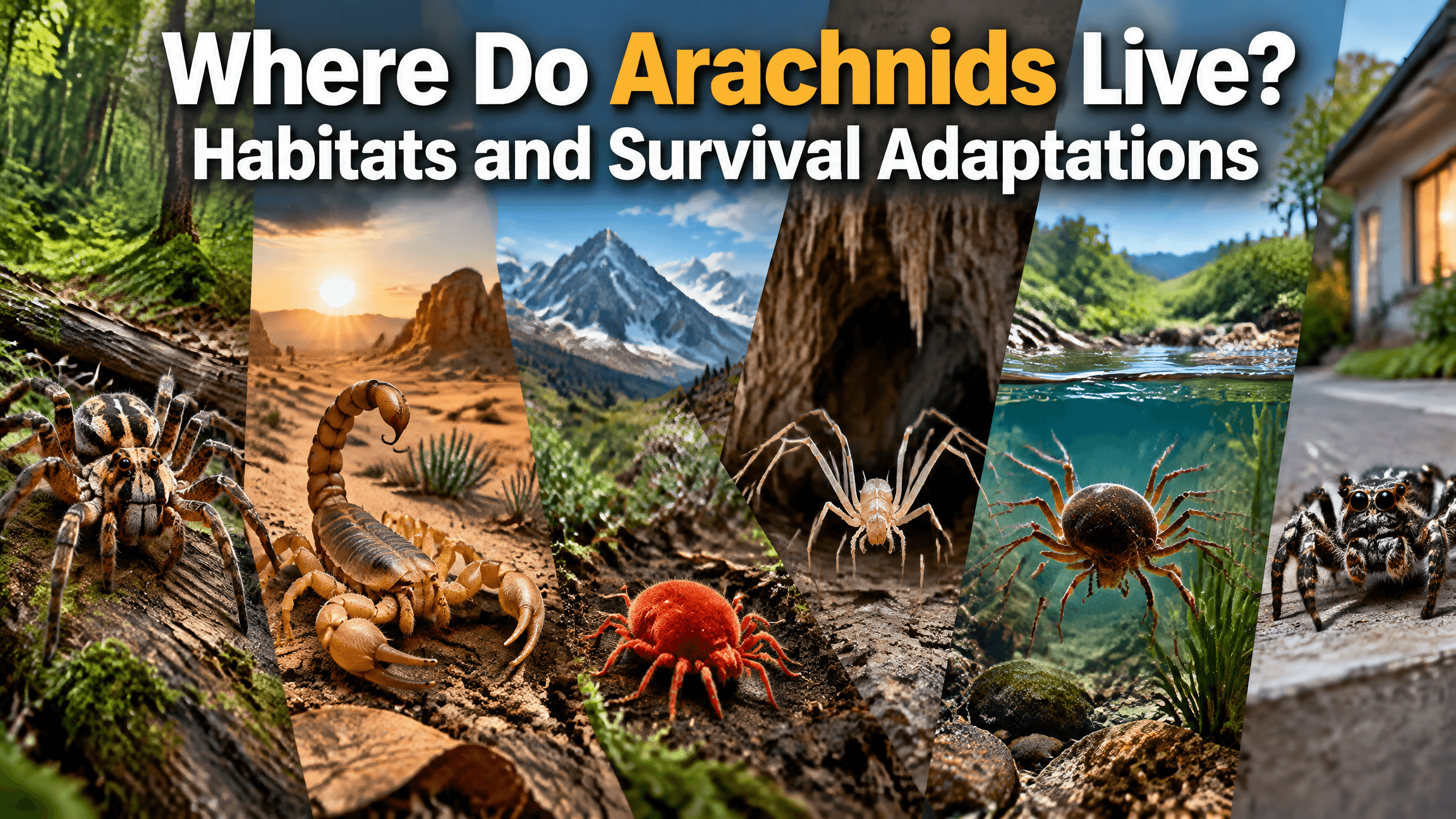
Where Do Arachnids Live? Habitats and Survival Adaptations

Where Do Arachnids Live? Habitats and Survival Adaptations

Arachnids live in an extraordinary range of habitats. Spiders, scorpions, mites, ticks, harvestmen, pseudoscorpions, whip spiders, and other arachnids occur in forests, grasslands, deserts, mountains, caves, soil, leaf litter, tree bark, freshwater, intertidal zones, animal hosts, plants, gardens, buildings, and many other microhabitats. Most arachnids are associated with land, but “arachnids are terrestrial” is only … Read more

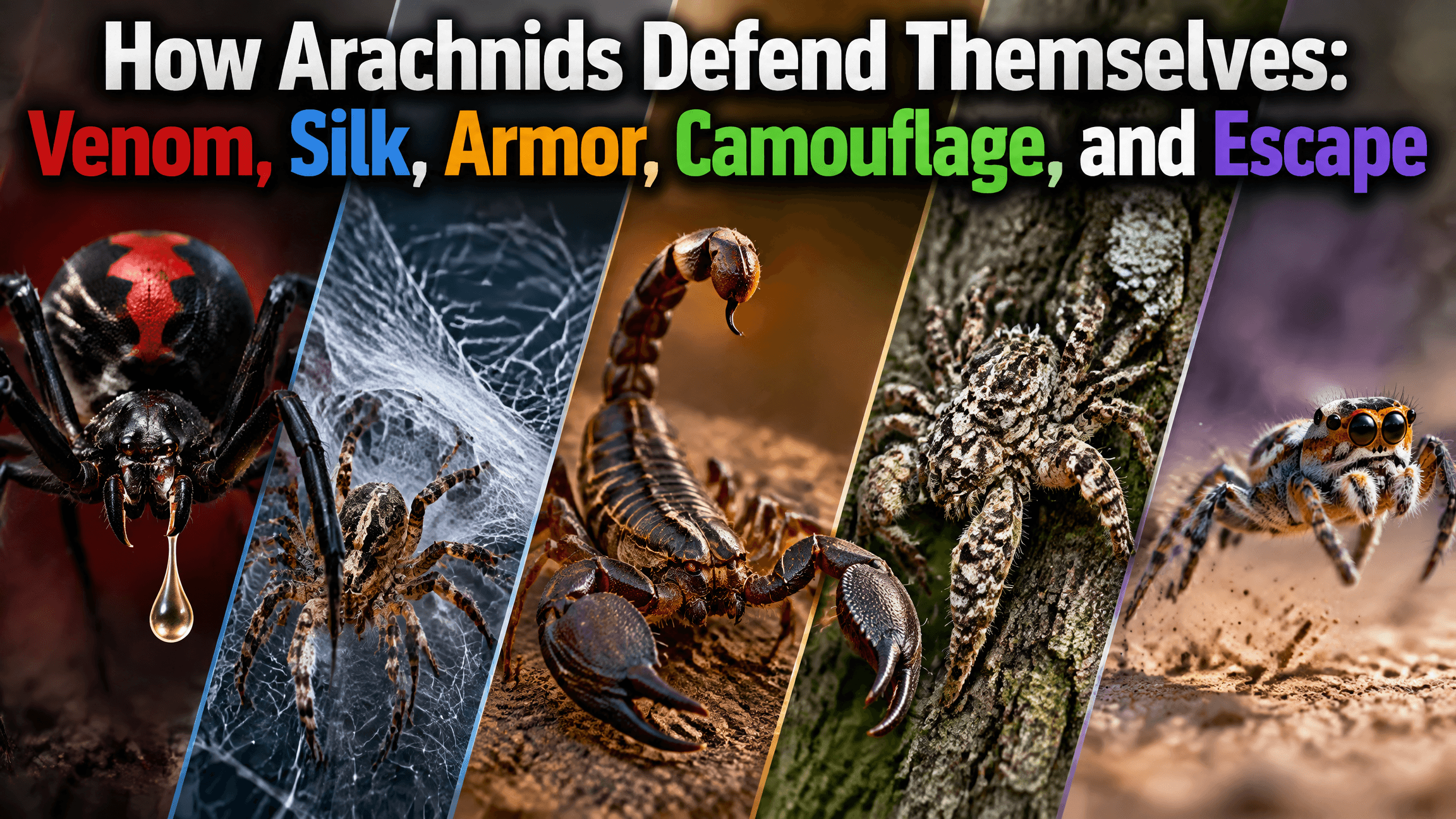
How Arachnids Defend Themselves: Venom, Silk, Armor, Camouflage, and Escape

How Arachnids Defend Themselves: Venom, Silk, Armor, Camouflage, and Escape

Arachnids defend themselves in many ways, and venom is only one part of the story. Spiders may hide, run, drop away, use silk retreats, display threat postures, or bite when pressed. Scorpions combine pincers, a stinger, armor, posture, and shelter use. Harvestmen may freeze, release defensive chemicals, shed a leg, vibrate, group together, or feign … Read more

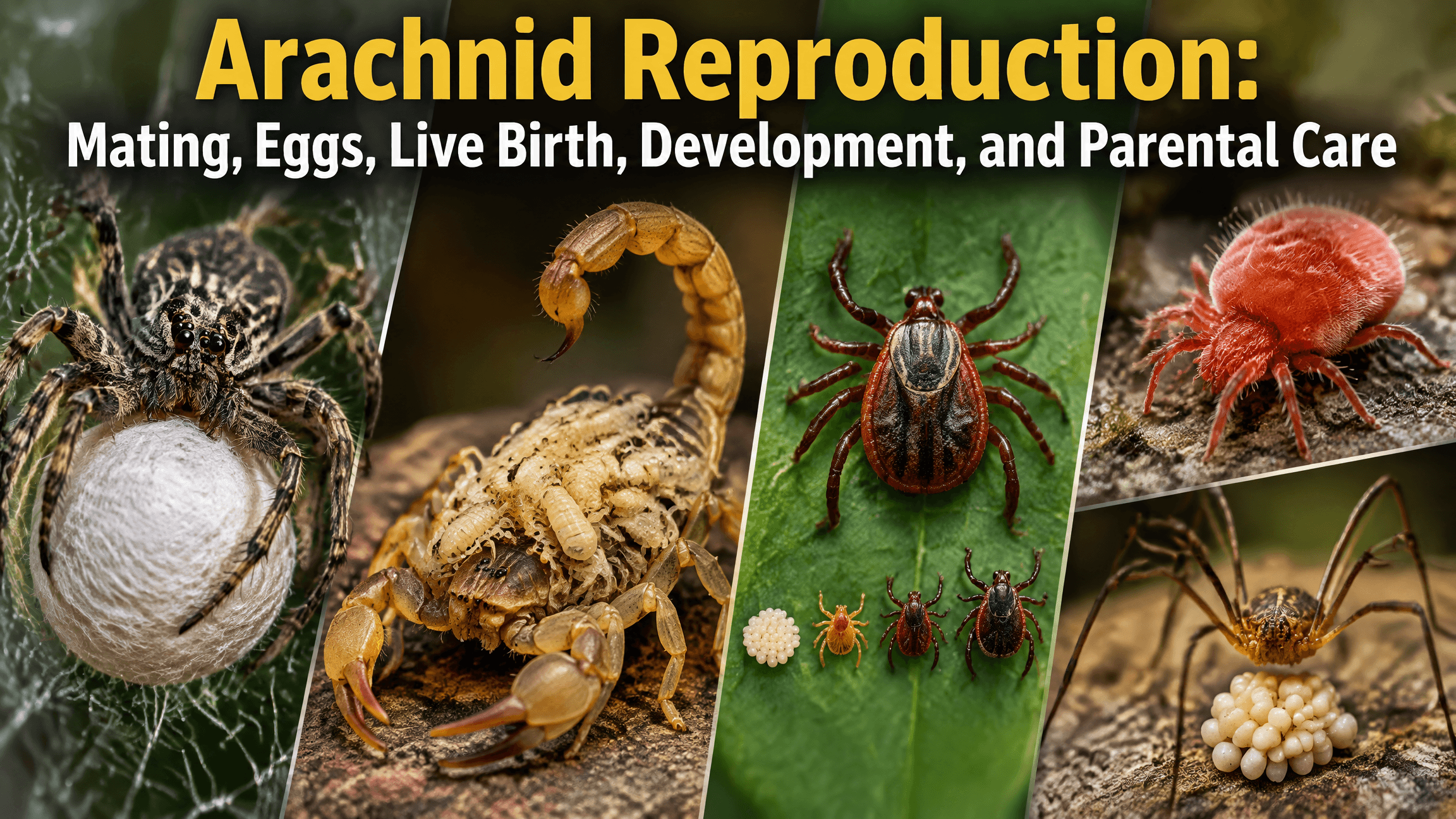
Arachnid Reproduction: Mating, Eggs, Live Birth, Development, and Parental Care

Arachnid Reproduction: Mating, Eggs, Live Birth, Development, and Parental Care

Arachnid reproduction is far more varied than the familiar image of a spider guarding an egg sac. Most spiders lay eggs, scorpions give birth to live young, ticks pass through egg, larval, nymphal, and adult stages, mites show several developmental patterns, and harvestmen include species with maternal or paternal egg care. Mating can involve direct … Read more