
Arachnid Behavior: Hunting, Shelter, Courtship, and Social Interactions

Arachnid Behavior: Hunting, Shelter, Courtship, and Social Interactions
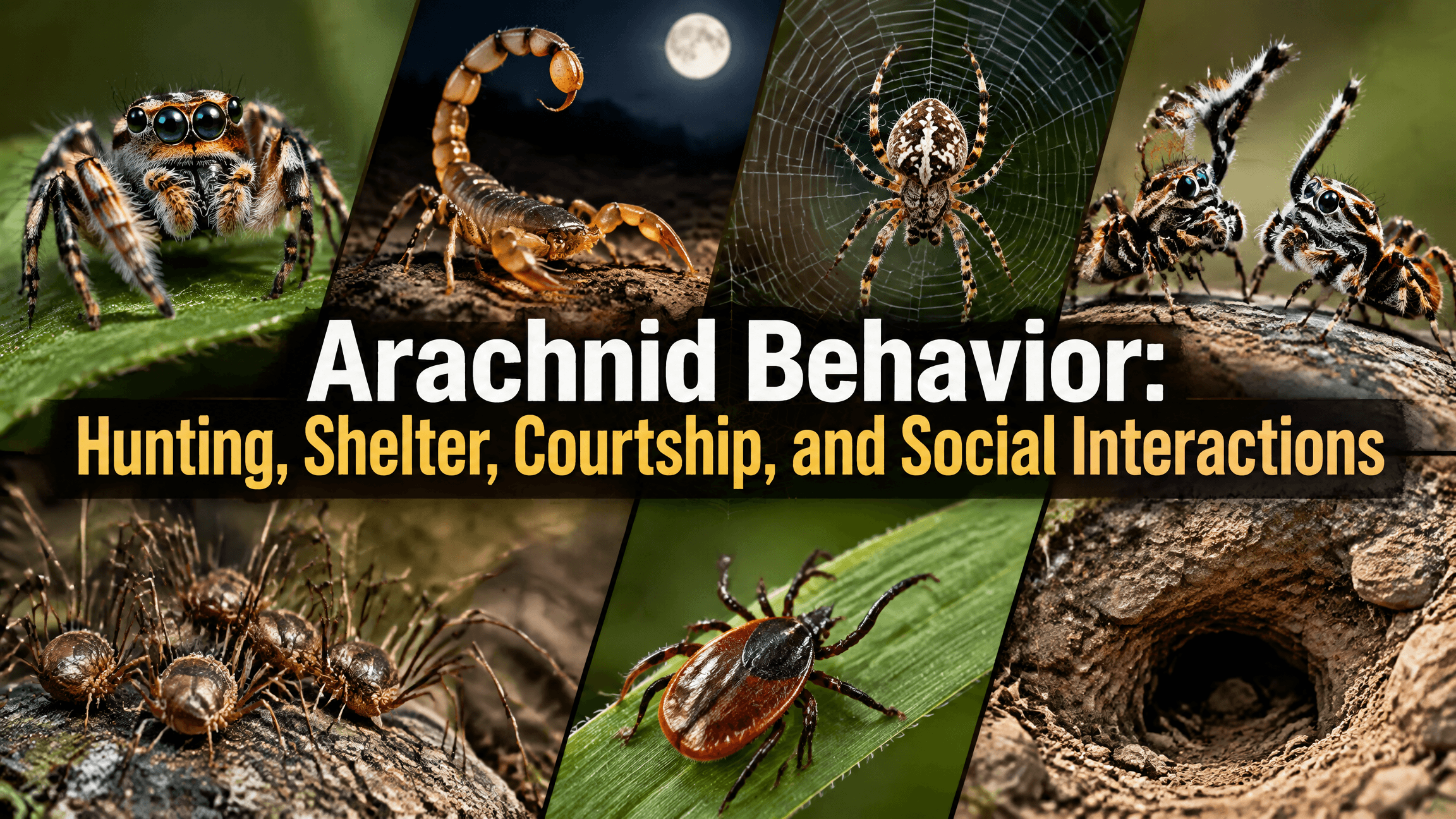
Arachnid behavior is far more varied than the familiar image of a spider waiting in a web. Some spiders stalk prey visually, others ambush from cover, scorpions leave retreats after dark to hunt, harvestmen may forage and rest in groups, ticks wait in a questing posture for passing hosts, and a small number of spider … Read more
What Do Arachnids Eat? Predators, Parasites, Scavengers, and Other Diets

What Do Arachnids Eat? Predators, Parasites, Scavengers, and Other Diets

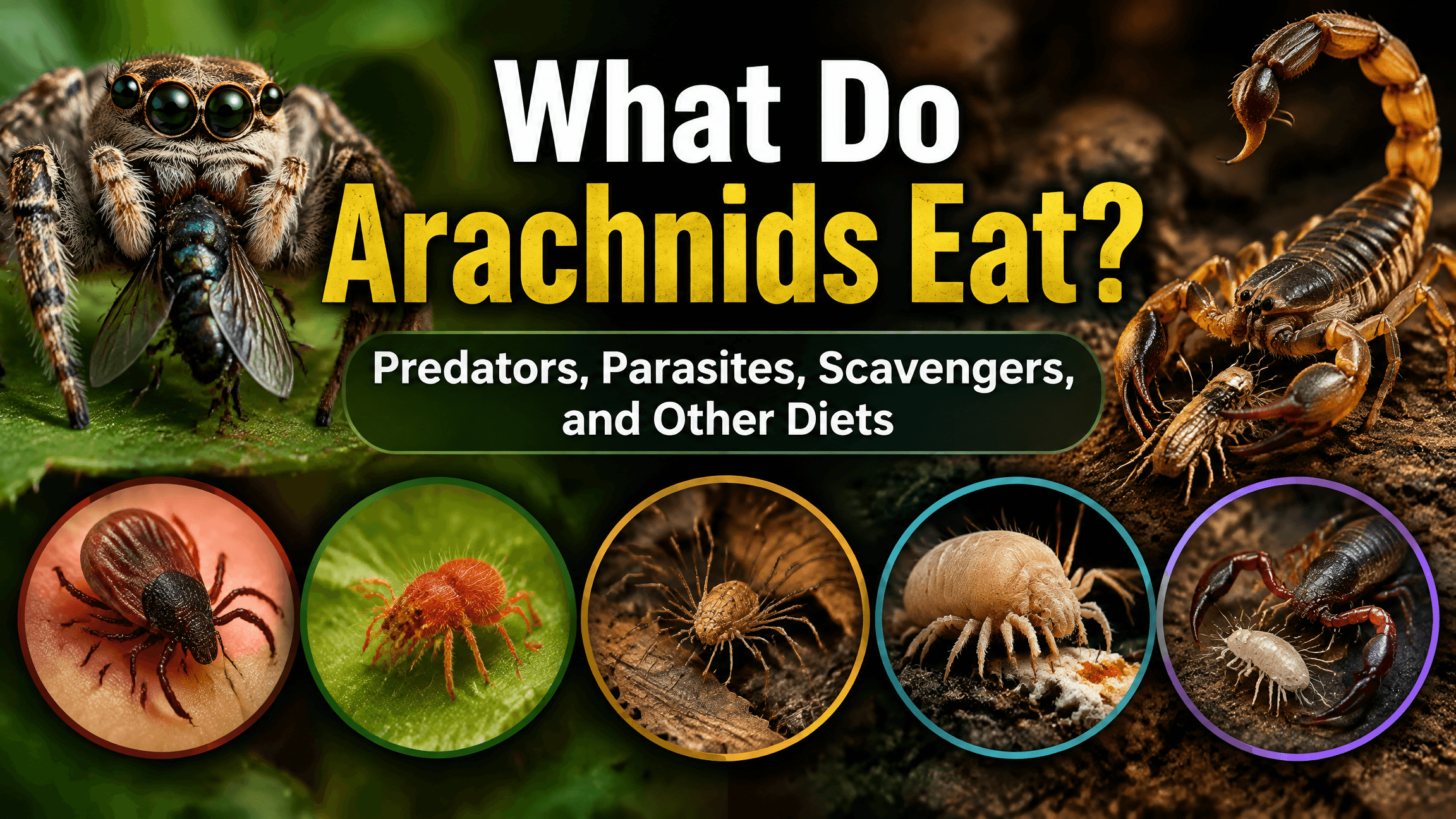
Arachnids do not all eat the same kind of food. Spiders and scorpions are mostly predators, ticks are specialized blood feeders, many mites eat plants or fungi, other mites prey on tiny animals, and harvestmen can combine predation, scavenging, fungi, plant material, and other foods. Some arachnids are parasites, some are detritus-associated feeders, and a … Read more

Arachnid Senses: Vision, Vibration, Touch, Chemicals, and Air Movement

Arachnid Senses: Vision, Vibration, Touch, Chemicals, and Air Movement

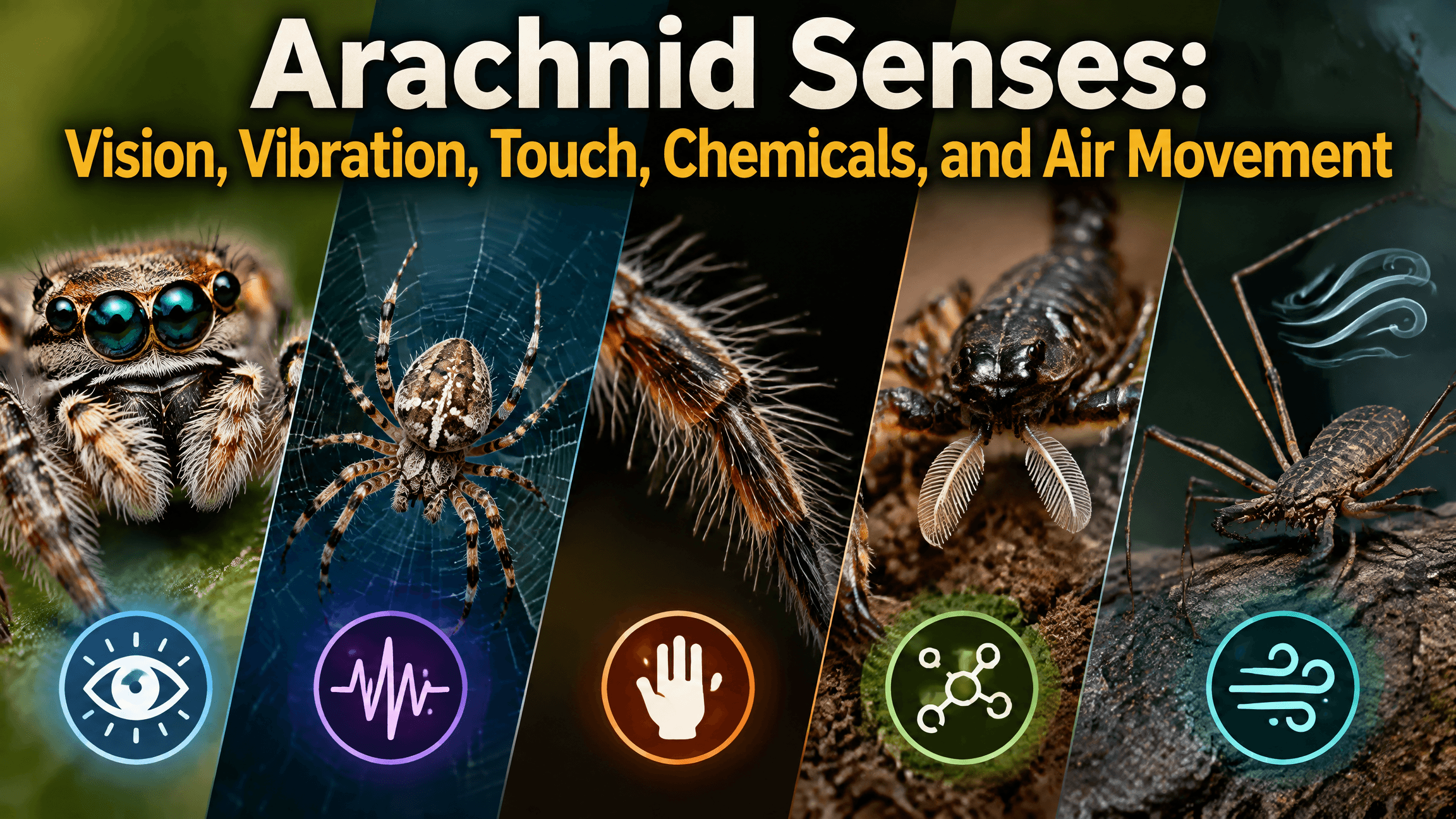
Arachnids do not experience the world through one standard set of senses. A jumping spider can rely heavily on vision, a web-building spider may depend more on vibration, a scorpion can sample the ground with comb-like pectines, a tick carries Haller’s organ on its first pair of legs, and a tailless whip spider sweeps its … Read more