Exoskeletons Explained: How Outer Skeletons Work

Exoskeletons Explained thumbnail

Exoskeletons are hard outer body coverings that support and protect many animals, especially arthropods such as insects, spiders, crabs, lobsters, shrimp, scorpions, centipedes, and millipedes. Instead of having bones inside the body like mammals, birds, reptiles, amphibians, and fish, these animals carry much of their structural support on the outside. The simplest way to understand … Read more

Why Do Animals Have Tails? Key Functions Explained

Why Do Animals Have Tails? thumbnail

Animals have tails because a tail can solve many different survival problems. Depending on the species, a tail may help with balance, swimming, steering in the air, communication, defense, warmth, fat storage, or social signals. A kangaroo’s tail is not doing the same job as a fish’s tail, and a dog’s wagging tail is not … Read more

Animal Teeth Types and What They Do

Animal Teeth Types thumbnail

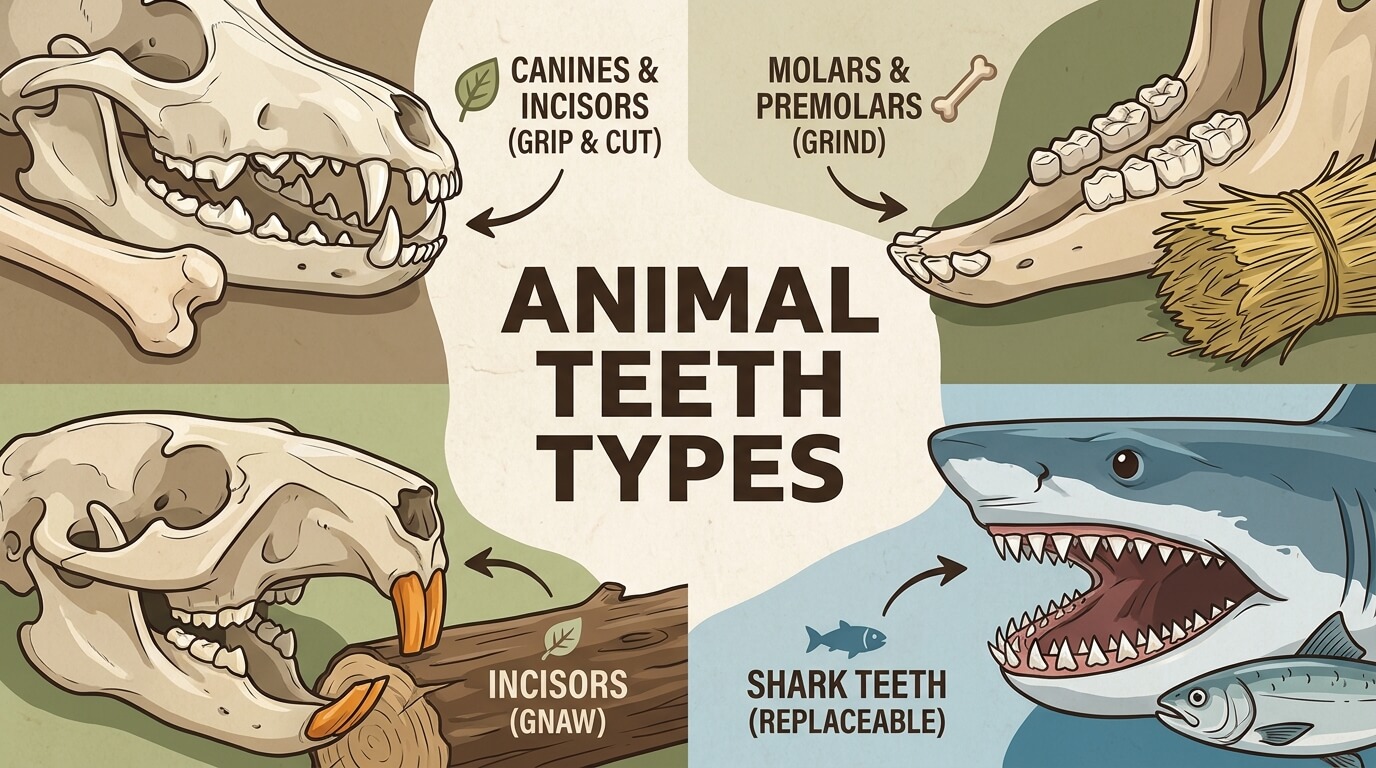
Animal teeth types are clues to how animals bite, chew, slice, grind, scrape, grip, and survive. A wolf’s pointed canines, a horse’s broad grinding teeth, a beaver’s orange incisors, and a shark’s replaceable cutting teeth all solve different feeding problems. Teeth are not just white points in a jaw. They are body tools shaped by … Read more

Fur vs Hair: What Is the Difference?

Fur vs Hair thumbnail

Fur vs hair is one of those animal questions that sounds simple until you look closely. In everyday language, people often say that dogs, cats, foxes, rabbits, and bears have fur, while humans, horses, elephants, and some dog breeds have hair. Biologically, though, fur and hair are not two completely different materials. Both are mammal … Read more

Animal Anatomy: Body Parts That Help Animals Survive

Animal Anatomy: Body Parts That Help Animals Survive thumbnail

Animal anatomy is the study of the body parts that let animals live, move, feed, sense danger, find mates, raise young, and survive in their surroundings. A beaver’s chisel-like front teeth, an alligator’s armored skin, a red panda’s bushy tail, and a bird’s feathers all look different, but they share the same basic idea: body … Read more

Why Some Animals Cannot Fly: Flightless Animal Facts

Why Some Animals Cannot Fly thumbnail

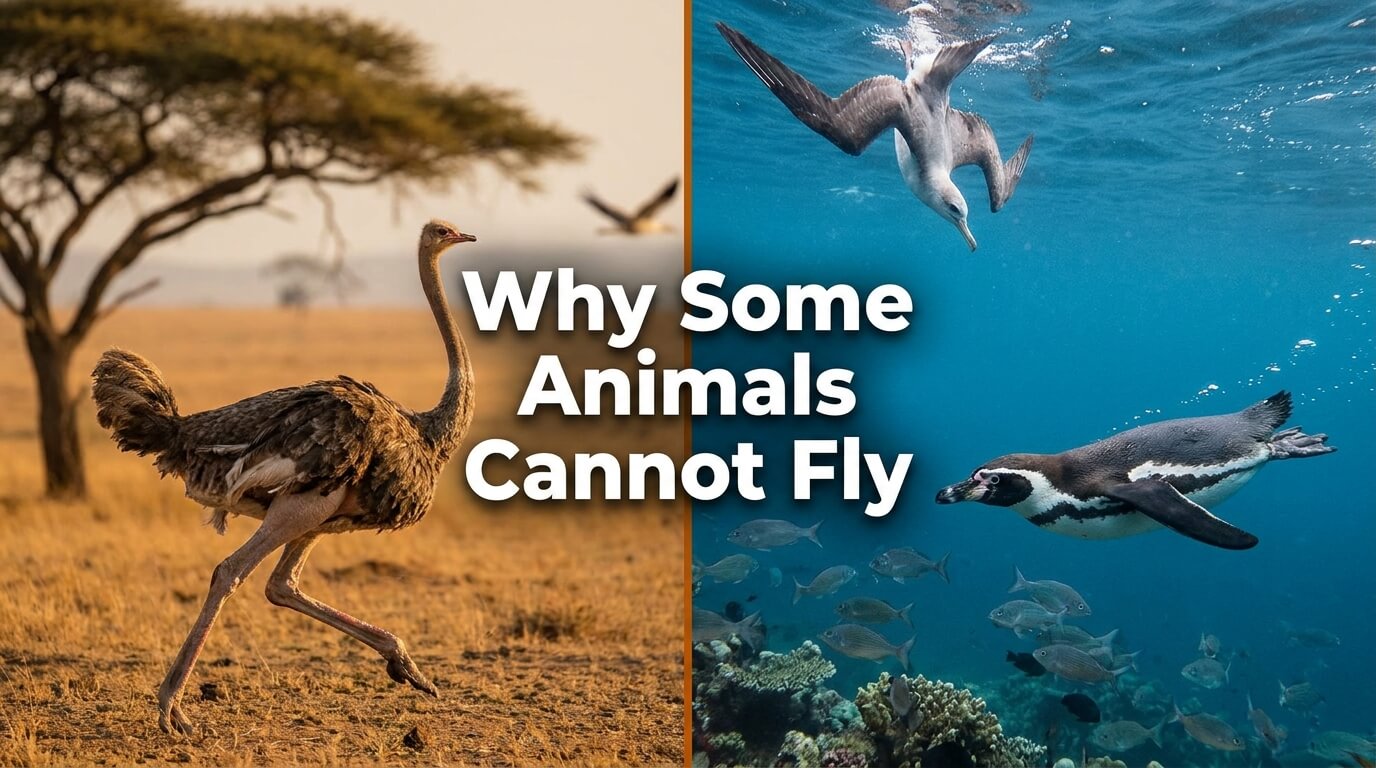
Some animals cannot fly because flight is expensive, demanding, and not always worth keeping. In birds, insects, and a few other animals, wings may become smaller, stiffer, weaker, or useful for something other than air travel when running, swimming, hiding, breeding, or saving energy matters more than lifting off the ground. That does not make … Read more