
Ocean Conservation: Animals, Habitats, and Threats

Ocean Conservation thumbnail

Ocean conservation is the work of protecting marine animals, ocean habitats, and the natural processes that keep saltwater ecosystems alive. It is not only about saving one famous animal. It is about coral reefs, seagrass beds, mangroves, beaches, estuaries, the open ocean, deep-sea habitats, fisheries, tiny plankton, giant whales, nesting sea turtles, seabirds, shellfish, and … Read more
Animals That Store Food: Caching and Hoarding

Animals That Store Food thumbnail

Some animals do not wait until they are hungry to look for food. They hide nuts under leaves, pack seeds into cheek pouches, dry plants in rock piles, wedge acorns into bark, or bury leftover prey where another animal might not find it first. Food storage is one of the simplest looking animal behaviors that … Read more

Herbivores, Carnivores, and Omnivores Explained

Herbivores, Carnivores, and Omnivores Explained thumbnail

Most people learn the words herbivore, carnivore, and omnivore early, but the real animal world is more flexible than a simple classroom chart. A deer eating twigs, a lion hunting zebra, and a bear switching from spring greens to summer berries all show different ways animals solve the same problem: getting enough energy and nutrients … Read more

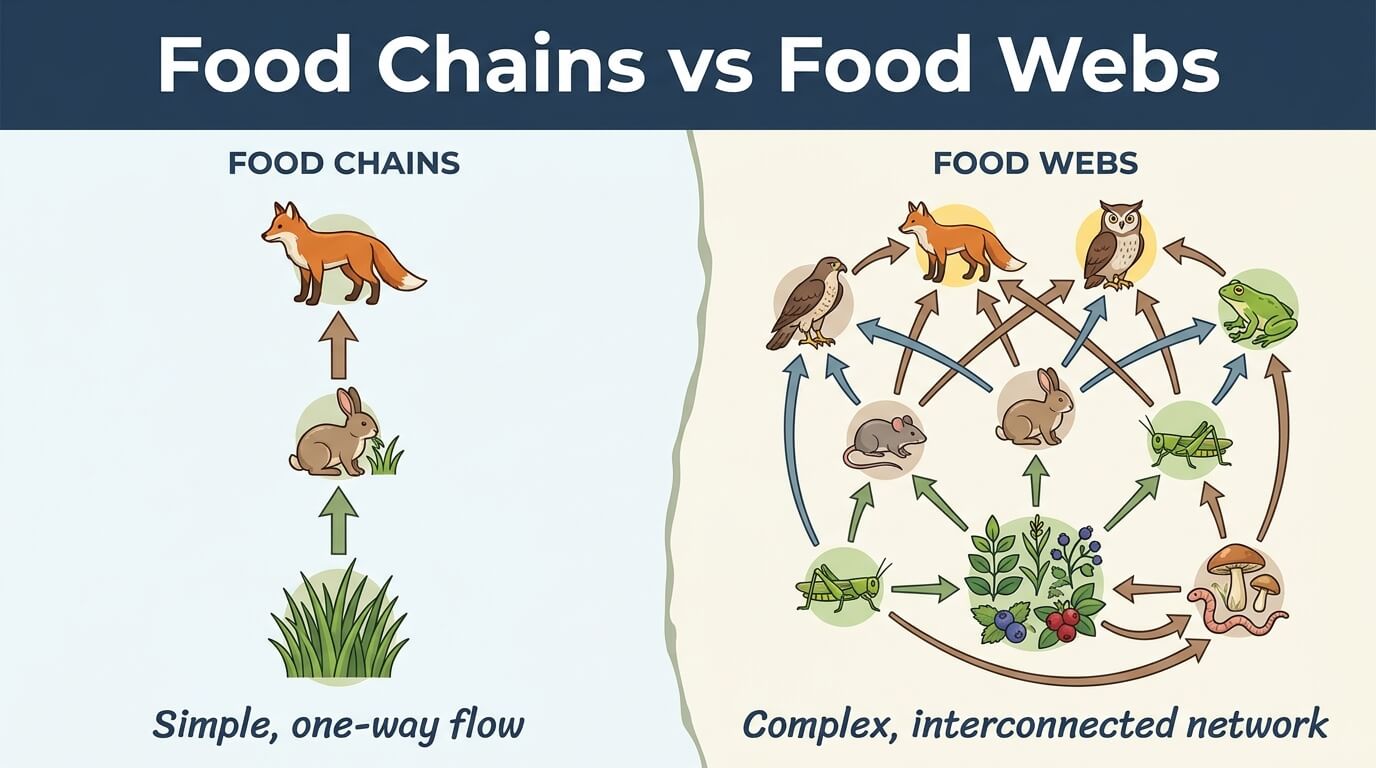
How Animals Eat: Diets, Feeding Strategies, and Food Webs

How Animals Eat: Diets, Feeding Strategies, and Food Webs thumbnail

Every animal has to solve the same basic problem: how to get enough energy to survive. A hummingbird hovering at a flower, a wolf following elk tracks, a whale filtering tiny animals from seawater, and a squirrel burying nuts are all answering that problem in different ways. The details look very different, but the basic … Read more

Scales, Feathers, Shells, and Skin Explained

Scales, Feathers, Shells, and Skin thumbnail

Animal body coverings are not just surfaces. They are working parts of the body that help animals stay protected, move through their surroundings, control temperature, sense danger, and communicate. Scales, feathers, shells, and skin all sit at the boundary between an animal and the outside world, but they do not work the same way. The … Read more