
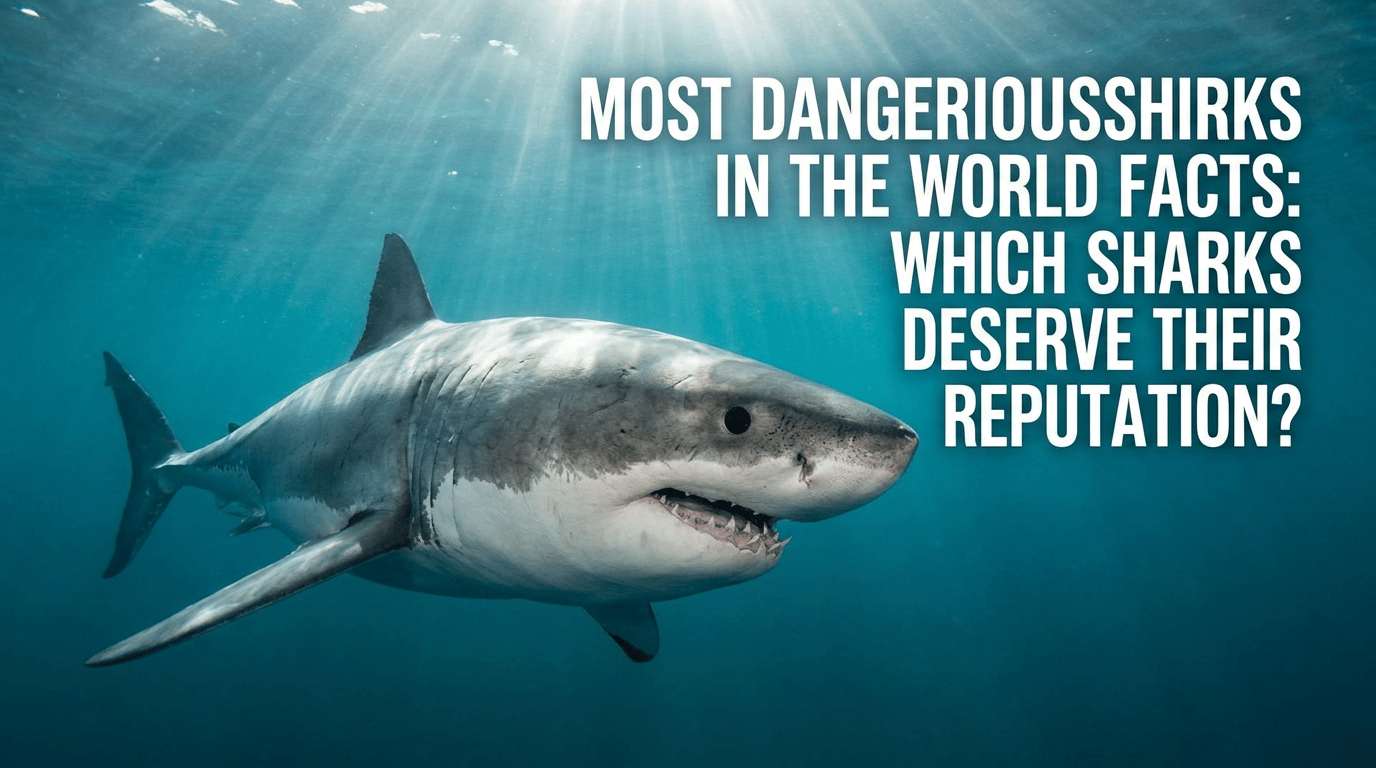
Sharks occupy a unique place in public imagination. Some species have reputations as dangerous predators, while others are more often the subject of curiosity or conservation concern. This article ranks common candidates for the label “most dangerous” by realistic risk factors such as size, habitat overlap with people, feeding behavior, and the circumstances that lead to human encounters. The goal is to explain why certain sharks attract fear while keeping the focus on balanced, evidence-aware discussion and practical safety guidance.
What Makes a Shark Dangerous?
When people ask which shark is the most dangerous, they usually mean which species pose the greatest realistic risk to swimmers, surfers, boaters, or people working in the water. Several factors influence that risk. A fair appraisal looks beyond sensational headlines to consider how likely a shark is to encounter people and how its behavior and physical traits affect the outcome of an encounter.
Readers comparing most dangerous sharks in the world facts may also find tiger shark facts useful for a deeper look at a closely related shark topic.
Readers comparing most dangerous sharks in the world facts may also find mako shark facts useful for a deeper look at a closely related shark topic.
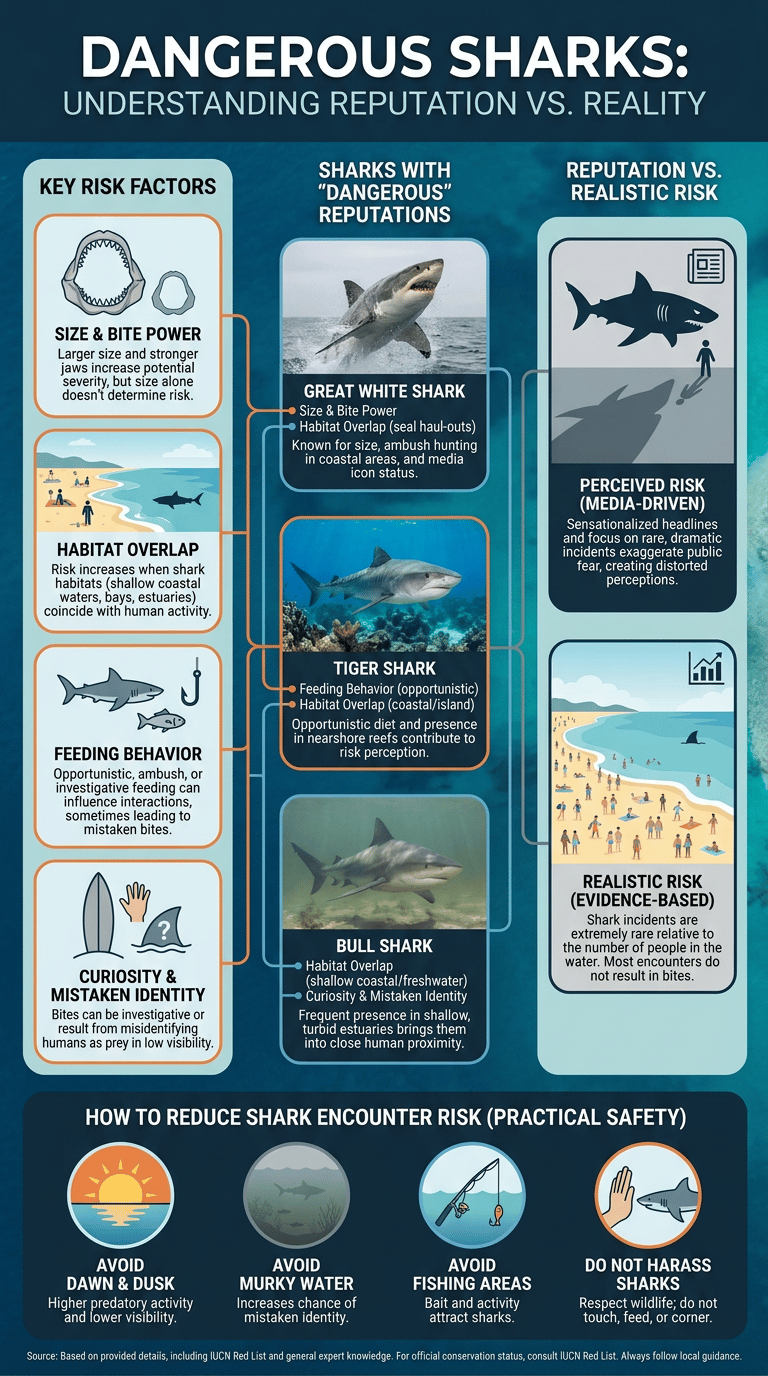
Size and bite power
Large sharks have proportionally larger jaws and stronger bite mechanics, which can affect the potential severity of a bite. Size alone does not determine risk. A very large shark that rarely comes near shore is less of a threat to swimmers than a smaller species commonly found in shallow, busy coastal waters.
Habitat overlap with humans
Risk to people increases when a shark’s preferred habitat overlaps places where people swim, surf, wade, fish, or work. Shallow coastal waters, bays, estuaries, and river mouths tend to concentrate both human activity and the prey species that attract sharks. Sharks that tolerate or prefer these nearshore environments are often those most commonly implicated in encounters with people.
For conservation status and habitat overviews, consult species assessments on the IUCN Red List for up-to-date range and habitat descriptions.
Feeding behavior
Feeding strategies matter. Predatory ambush behavior, opportunistic scavenging, or a tendency to investigate unfamiliar objects by biting can influence how a shark interacts with humans. Opportunistic feeding can lead to mistaken bites if a shark misidentifies a person or reacts to splashing or baited fishing gear.
Curiosity and mistaken identity
Many shark bites are believed to be investigative rather than predatory in intent. A shark may bite an unfamiliar object to sample it and then withdraw. When a human is the object of curiosity, a single bite from a large shark can cause serious injury. Misidentification plays a role when a shark mistakes a person on a surfboard for a seal or other prey, especially in conditions of low visibility or when a surfer’s silhouette resembles common prey.
Because these dynamics are behavioral and context dependent, they are best framed as careful explanations rather than precise numeric predictions.
Great White Shark
Why it has a dangerous reputation
The great white shark is an iconic species with a reputation for power and size. That reputation stems from its presence in coastal waters where marine mammals congregate and from its ambush-style hunting in some regions. Educational materials and exhibits often highlight its role as an apex predator, which contributes to public perception.
Hunting style
Great whites are capable of burst speed and powerful ambush attacks in regions where they hunt marine mammals. They may approach from below and use surprise and acceleration to disable prey. Hunting methods vary by region, target prey, and individual animal.
Human encounters explained
Most human encounters with large predatory sharks occur where people use the ocean in ways that overlap with the sharks’ hunting grounds. Surfing or swimming near seal haul-outs, fishing from shore or boats, and entering waters at times of low visibility can increase encounter probability. Understanding how human activity concentrates risk is a key step in reducing the chance of an incident and in separating natural shark behavior from sensational interpretations.
Tiger Shark
Opportunistic diet
Tiger sharks have a broad, opportunistic diet and are known to consume a wide variety of items. Their flexible feeding behavior contributes to a reputation for investigating and sampling unusual objects.
Coastal and island habitats
Tiger sharks are frequently found in coastal and island environments, including near reefs and in shallow waters where turtles, fish, and other prey occur. Their presence in these zones can bring them into contact with people who swim, snorkel, boat, or fish in the same areas.
Why it is considered risky
The combination of opportunistic feeding and use of nearshore habitats helps explain why tiger sharks are often listed among species that command caution. Their tendency to sample a variety of items and frequentation of coastal waters contribute to both real and perceived risk.
Bull Shark
Shallow water habitat
Bull sharks frequently spend time in shallow coastal areas, including estuaries and river mouths. That preference for shallow water brings them into close contact with people who fish or swim near shore and increases the chance of encounters where human use is concentrated.
Freshwater tolerance
Some bull sharks can tolerate lower salinities and move into brackish or freshwater systems. Where such behavior occurs, it broadens the range of habitats in which people and sharks might meet.
Why human overlap is high
Because these sharks exploit shallow coastal and estuarine environments frequented by people for recreation and fishing, spatial overlap is often higher than for strictly offshore species. That overlap is a primary reason this species figures prominently in discussions about human risk from sharks.
Oceanic Whitetip Shark
Open-ocean behavior
The oceanic whitetip prefers the open ocean and pelagic habitats. Interactions with people typically occur in different contexts than nearshore species, such as after a vessel incident or when people are adrift at sea. The open-ocean setting changes the dynamics of encounters and the potential consequences.
Historical reputation
The oceanic whitetip’s historical reputation reflects observations from maritime incidents where survivors in open water reported aggressive behavior from sharks. These accounts shape public perception but should be read alongside ecological context, which emphasizes differences between nearshore and pelagic risk scenarios.
Why encounters are rare but serious
Most people do not spend extended time adrift in the open ocean, so encounters with pelagic species are rarer for the general population. When such encounters happen, however, they can be serious due to the difficulty of rescue and the isolation of the setting.
Shortfin Mako Shark
Speed and power
Shortfin makos are built for speed and are powerful pelagic predators. Their athleticism and strong jaw musculature are most relevant to interactions with fisheries and anglers, where a powerful reaction from the animal can create hazardous situations on deck.
Risk mostly during fishing encounters
Shortfin mako interactions with humans are more commonly associated with recreational and commercial fishing than with beachgoers. Instances where anglers hook or fight a large pelagic shark can lead to equipment failure or unintentional injuries during handling.
Why it is not usually a beach threat
Because the species prefers open-water habitats and is less likely to forage in shallow coastal areas where people swim, the shortfin mako is not typically considered a beach threat. Its danger is contextual and linked to where people encounter it.
Hammerhead Sharks
Size of great hammerheads
Some hammerhead species, including the great hammerhead, can reach substantial sizes and have unique head morphology that provides sensory advantages and a wide field of vision useful in hunting.
Human risk level
Overall, hammerheads are not commonly implicated in unprovoked attacks on people. Their feeding ecology generally focuses on schooling fish, cephalopods, and benthic prey in many regions, and they are more often a subject of conservation interest than fear.
Why they are usually not aggressive
Hammerheads tend to avoid confrontation with large mammals and people and are more often cautious or curious. Their social behaviors and habitat preferences mean they are less likely to attack humans in typical coastal recreation settings.
Blacktip and Spinner Sharks
Common nearshore sharks
Blacktip and spinner sharks are commonly found in nearshore coastal waters in many parts of the world. Their presence in shallow, warm waters where people swim and surf makes them familiar to beach communities and recreational users.
Small bite incidents
Because these species are relatively smaller and more numerous in popular water-use zones, incidents if they occur are often limited in severity compared with bites from much larger sharks. Encounters that do happen are frequently related to splashing or fishing activities that attract schooling fish and therefore the sharks.
Why they are often misidentified
Smaller coastal sharks are often misidentified, especially by casual observers who see only a fin at the surface or a glimpse of a body in murky water. Misidentification can inflate perceptions of which species are responsible for an encounter and contributes to confusion about relative risk.
Nurse Sharks
Usually calm behavior
Nurse sharks are typically slow-moving bottom dwellers that feed at night and are known for a relatively calm demeanor. Their habit of resting on the seafloor or in crevices contributes to their reputation as less aggressive than some active pelagic predators.
Why bites can still happen
Even generally placid species can bite if provoked, stepped on, or handled. Because nurse sharks often rest in shallow waters and near reefs, accidental contact by snorkelers or divers can lead to defensive bites.
Human mistakes around wildlife
Many shark incidents stem from human behavior: approaching too closely, attempting to touch or feed a wild animal, or inadvertently cornering it. Respecting wildlife space and following local guidance reduces the chance of any negative interaction.
Dangerous Versus Misunderstood Sharks
Why shark incidents are rare
Shark incidents involving people are uncommon relative to the number of people who enter the water. Most species do not target humans, and many human-shark interactions do not escalate into bites.
Why media exaggerates fear
Media coverage often focuses on dramatic incidents because they attract attention, which can create a distorted perception of how common serious shark encounters are. Single events can shape public fear in ways that are not proportional to everyday risk. Conservation and management perspectives help put individual incidents into a broader context.
International agreements and regulations influence how people and sharks interact through fisheries management, habitat protection, and trade regulation. For background on international trade and protections, consult official information from global conventions such as CITES.
How to respect sharks safely
Respectful behavior reduces risks for both people and animals. Practical precautions include observing local warnings, avoiding areas where sharks are known to be feeding, and not entering the water with open wounds. Do not attempt to catch, feed, or handle sharks. If you observe a shark close to shore, calmly leave the water and notify local authorities when appropriate.
When in doubt, follow local guidance and contact trained local authorities or wildlife professionals rather than attempting to manage a situation yourself.
How to Reduce Shark Encounter Risk
Avoid swimming at dawn or dusk
Dawn and dusk are times when many marine predators are more active and when visibility is lower. Choosing daylight hours for swimming and water activities helps reduce the chance of a surprise encounter.
Avoid murky water
Murky or low-visibility water makes it easier for a shark to misidentify a person or an object. Visibility also affects a person’s ability to notice potential hazards, so avoiding such conditions is a sensible precaution.
Avoid fishing areas
Fishing activity concentrates bait, blood, and fish parts in the water, which can attract sharks. Swimming or paddling away from active fishing zones reduces the likelihood of crossing paths with a shark drawn to that area.
Do not harass sharks
Do not attempt to touch, chase, corner, or feed sharks. Harassment provokes defensive reactions and is harmful to the animals. Interactions with wildlife should prioritize safety and the animals’ welfare.
If a shark encounter becomes dangerous or if an injury occurs, seek professional medical help immediately and alert local authorities or beach rescue personnel so trained responders can address the situation safely.
FAQs About Dangerous Sharks
What is the most dangerous shark?
There is no single species that can be labeled absolutely the most dangerous in every context. Risk depends on a combination of factors such as habitat overlap with people, feeding behavior, and the circumstances of an encounter.
Are great whites more dangerous than bull sharks?
Comparisons depend on location and context. Great whites frequent some coastal hunting grounds, while bull sharks are notable for their presence in shallow and brackish waters. Each species can represent a different kind of risk depending on where and how people use the water.
Do sharks hunt humans?
Sharks do not typically hunt humans as preferred prey. Most interactions are believed to be investigatory or mistaken identity. Predatory attacks on humans are rare when considered against the number of people in marine environments.
Which shark has the strongest bite?
Bite strength varies among species and depends on body size, jaw structure, and feeding ecology. Larger predatory sharks generally have stronger bites in absolute terms, but bite force alone is only one factor in the outcome of an encounter.
Are shark attacks common?
Shark incidents are uncommon relative to the number of people who use coastal and ocean waters. Media reports of rare events can create the impression that attacks are frequent. For conservation context and official species assessments, consult the IUCN Red List.
If you plan to travel to coastal areas where sharks are a consideration, check local guidance, follow posted safety advice, and consult trained local authorities or lifeguards for the most relevant precautions for that region. When in the water, adopt respectful behaviors that prioritize both human safety and the welfare of wildlife.

Ethan Walker is the founder and research editor of Animal Fact Central. He creates and reviews educational animal facts content using trusted wildlife, pet care, and science-based sources. His work focuses on making animal behavior, adaptations, habitats, and species facts clear, accurate, and engaging for everyday readers.
Read More Details About Ethan Walker: https://animalfactcentral.com/ethan-walker/