
What is a mako shark?
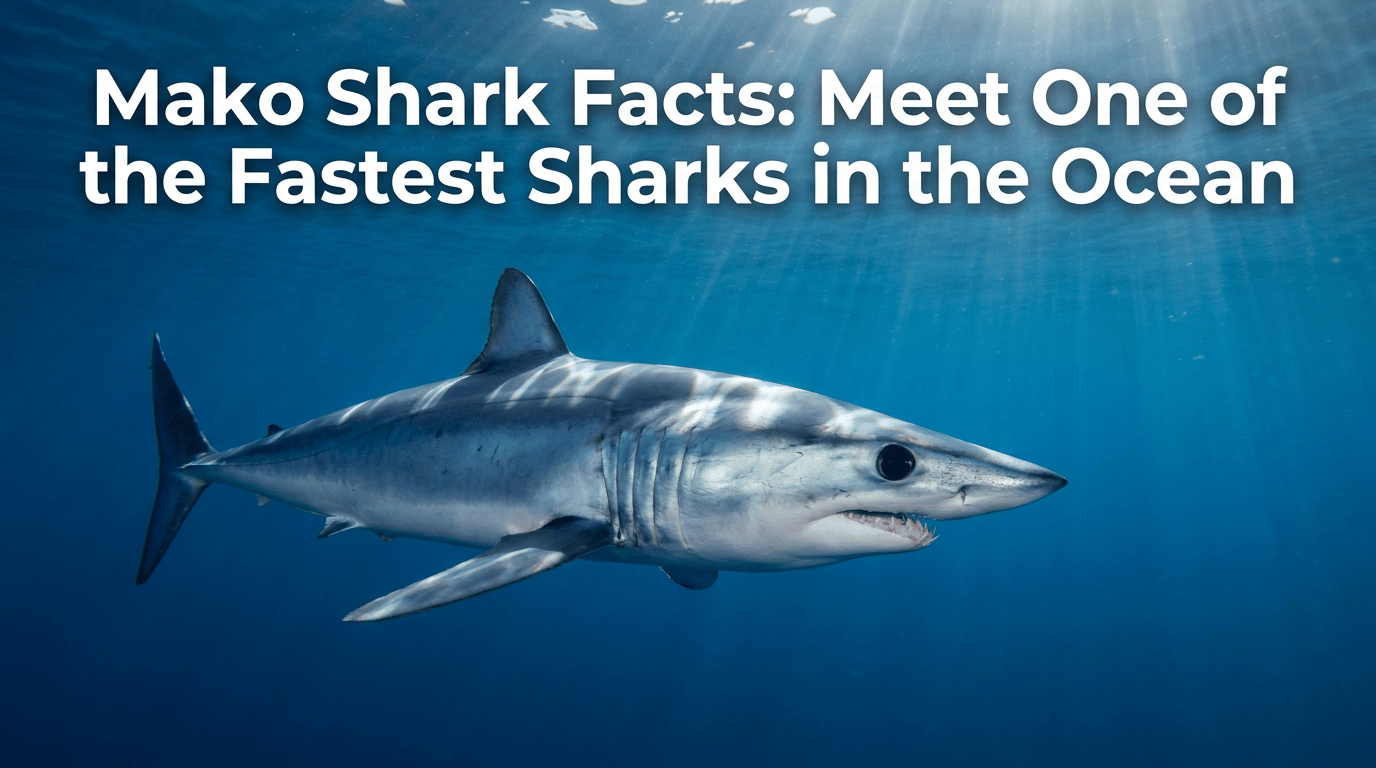
Mako sharks belong to the genus Isurus, which includes two species commonly discussed in marine biology and fisheries contexts. These pelagic predators are adapted to life in open water and are known for active hunting, streamlined bodies, and conspicuous teeth. For species-level details and global assessments, consult conservation databases.
Shortfin mako vs. longfin mako
The two species called mako sharks differ in fin proportions, behavior, and distribution patterns. The shortfin mako is typically associated with faster, more active hunting in the open ocean, while the longfin mako has relatively longer pectoral fins and is less frequently encountered by anglers and observers. See global conservation assessments for authoritative species summaries and differences.
IUCN Red List assessments provide species summaries, taxonomy, and conservation status information for mako sharks.
Scientific classification
Mako sharks are members of the family Lamnidae. Within Lamnidae, the genus Isurus contains the shortfin and longfin makos. Formal taxonomic listings and conservation context are available through international conservation databases.
For formal taxonomy and range information, consult the IUCN Red List.
Why mako sharks are notable
Mako sharks are known for a combination of traits: open-ocean hunting behavior, a reputation for speed, sharp teeth, and frequent appearance in commercial and recreational fisheries. These characteristics make them a common topic in discussions of pelagic predators and marine conservation.
Mako shark speed
Why makos are built for speed
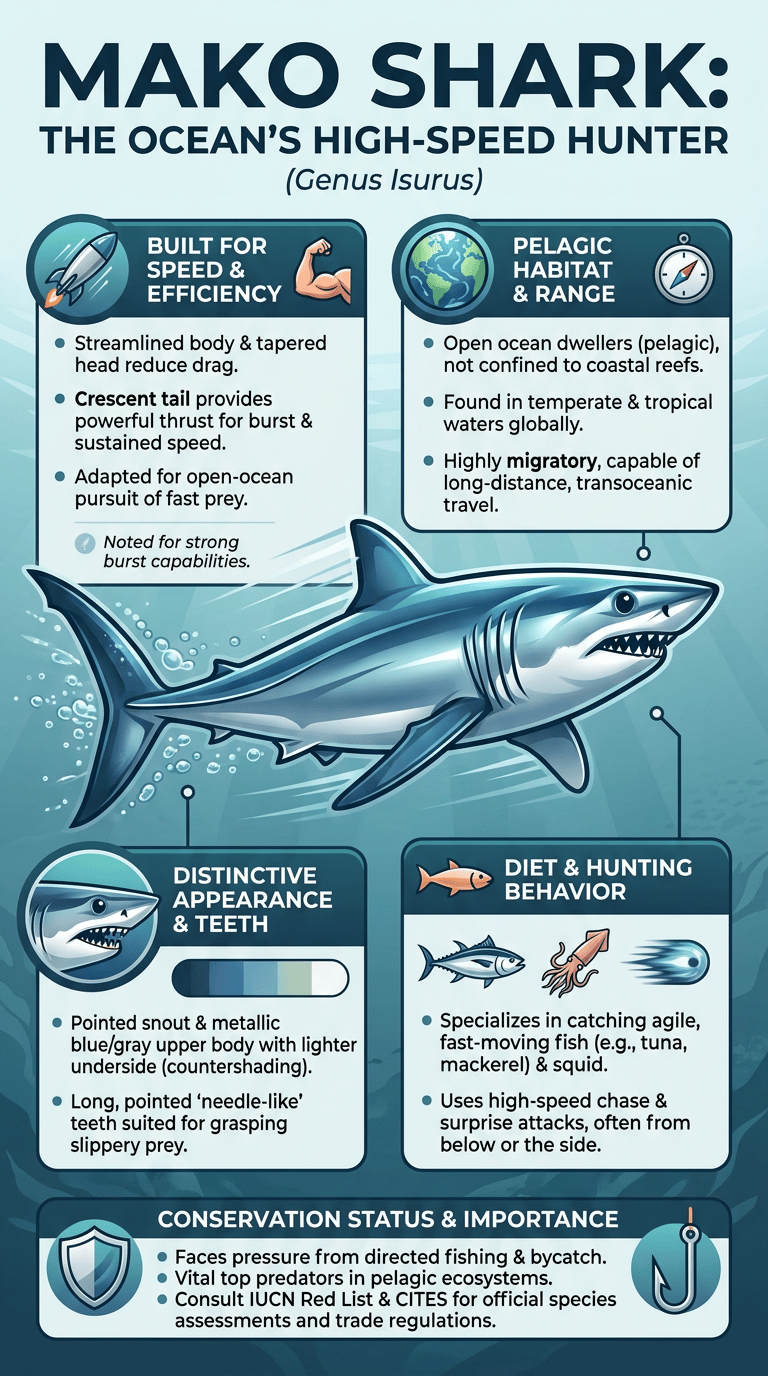
Mako sharks show anatomical adaptations associated with rapid swimming: streamlined bodies, strong musculature, and tail shapes suited for powerful thrust. These features support pursuit of fast-moving prey in open-ocean environments rather than ambush hunting on reefs.
Streamlined body shape
A tapered head and smooth profile reduce drag and help convert muscular effort into forward motion efficiently. Streamlining is common among active, open-ocean predators and contributes to higher cruising efficiency than many coastal species.
Powerful tail
The crescent-shaped tail provides thrust for both bursts of speed and sustained swimming. Tail shape, musculature, and body form combine to make makos effective pursuit predators and long-distance swimmers.
Burst speed vs. cruising speed
Shark speed descriptions distinguish between short bursts used to capture prey and lower cruising speeds used for travel. Mako sharks are noted for strong burst capabilities and efficient cruising that allow them to cover open-ocean distances. Exact numerical speed estimates vary by method and conditions and are reported in primary research publications.
Readers comparing mako shark facts may also find tiger shark facts useful for a deeper look at a closely related shark topic.
Size
General size notes
Mako sharks are large pelagic predators that reach multiple meters in length at maturity. Size varies with species, sex, and geographic population. Fisheries records and conservation assessments provide verified measurements and context for exceptional specimens.
Appearance
Pointed snout
Mako sharks have a pointed snout that contributes to a hydrodynamic head profile.
Metallic blue coloring
The upper surfaces are typically darker and can appear metallic blue or gray, while the underside is lighter. This countershading reduces visibility from different vantage points in the water column.
Long, sharp teeth
Mako teeth are pointed and well suited to grasping slippery, fast-moving prey. The teeth are a distinctive feature when the mouth is visible.
Athletic body structure
The overall appearance is muscular and agile: a compact torso, strong caudal peduncle, and fins proportioned for efficient open-water locomotion. This body plan supports hunting and wide-ranging movements.
Distribution and habitat
Open ocean
Mako sharks are largely pelagic and spend much of their lives in open ocean waters rather than being confined to coastal reefs or shelves.
Temperate and tropical waters
Both shortfin and longfin makos occur across temperate and tropical ocean zones, with seasonal and regional variation. For mapped range information and region-specific notes, consult global conservation databases.
Range descriptions and maps are available from the IUCN Red List.
Vertical movement
Mako sharks use both surface waters and deeper parts of the water column. Vertical movements are influenced by prey depth, temperature, and time of day.
Long-distance travel
Individuals of pelagic shark species, including makos, are capable of long-distance movements. Tagging studies and fisheries data contribute to understanding seasonal migrations and transoceanic dispersal.
Diet
Fast fish
Mako sharks specialize in capturing agile, fast-moving fish rather than slow-moving bottom organisms.
Tuna and mackerel
Tuna, mackerel, and similar pelagic fishes are commonly cited in diet descriptions for mako sharks.
Squid
Cephalopods such as squid are also part of the mako diet in many regions.
Other prey
Mako sharks may opportunistically take other marine animals, including smaller sharks and rays, depending on availability.
Hunting behavior
High-speed chasing
Mako sharks employ high-speed pursuit as a primary hunting mode, using rapid acceleration and precise maneuvers to capture fast prey.
Attacking from below or the side
Approaches from below or the side exploit light and background, aiding surprise and momentum during attacks.
Using speed to catch prey
Speed, combined with effective dentition, enables makos to seize and secure slippery, agile prey.
Teeth and bite
Needle-like teeth
Mako teeth are long and pointed, suited to piercing and holding live prey.
Holding slippery prey
The tooth shape and spacing help prevent prey from slipping free during capture.
Dental morphology and diet
The dental morphology reflects a diet focused on active pelagic organisms, with teeth optimized for seizing and retaining prey items.
Behavior
Solitary lifestyle
Mako sharks are often encountered alone, though individuals may aggregate where prey is abundant.
Powerful swimming
Swimming underpins hunting, migration, and thermoregulation for makos.
Breaching
Mako sharks are capable of energetic breaches and may leap above the surface during hunting or when hooked by fishers.
Migration
Migration and wide-ranging travel patterns are influenced by prey distribution, reproductive cycles, and oceanographic factors. Tagging studies and fisheries records inform movement understanding.
Human encounters and safety
Human encounters
Encounters between mako sharks and people most often occur in offshore fishing contexts. Because makos prefer offshore habitats and pelagic prey, casual swimmers and beachgoers are unlikely to encounter them near shore.
Fishing-related risk
Fishing situations can increase the chance of close contact. Hooked or stressed sharks may behave unpredictably. Safety guidance for anglers and boaters emphasizes caution, proper handling techniques, and adherence to local regulations. In any situation involving a large wild animal, contact qualified professionals or local authorities for assistance rather than attempting to handle the animal yourself.
This article provides general informational context about mako sharks. For any real-world incident or risk, contact local authorities, professional wildlife responders, or fisheries managers.
Conservation
Fishing pressure
Mako sharks face pressure from both directed fishing and bycatch in longline, gillnet, and other high-seas fisheries. Conservation assessments describe fishing mortality as a primary threat for many pelagic shark species.
The IUCN Red List provides species assessments, population trend summaries, and threat descriptions for mako sharks.
Sport and recreational fishing
Sport and recreational fishing contribute to regional pressure on mako populations in some areas. Management frameworks vary by country and jurisdiction.
Recovery considerations
Many large shark species show population responses to fishing pressure that can involve long recovery times. Conservation assessments use life-history and population trend data to describe recovery prospects and management needs.
International trade regulations can influence demand and management approaches. See the Convention on International Trade in Endangered Species (CITES) for information about trade measures and listings that affect marine species.
Why protection matters
Protecting mako sharks supports the health of pelagic ecosystems, where they function as top predators. Measures such as catch limits, bycatch mitigation, spatial protections, and international cooperation on high-seas fisheries can reduce pressure and help sustain ecological roles.
FAQs about mako sharks
Is the mako shark the fastest shark?
Shortfin mako sharks are commonly described as among the fastest sharks based on observations of burst swimming and pursuit behavior. Precise rankings depend on measurement methods and individual variation; consult specialist literature and species assessments for cautious summaries.
What do mako sharks eat?
Mako sharks feed mainly on fast pelagic fishes and cephalopods such as tuna, mackerel, and squid, with diet composition varying by region and season.
Are mako sharks dangerous?
Mako sharks are large, powerful predators. Risk to people is primarily associated with fishing encounters or working in offshore waters. Casual swimmers and beachgoers are unlikely to encounter them near shore. Follow local safety guidance and contact qualified professionals if assistance is needed.
Where do mako sharks live?
Mako sharks are pelagic and occur in temperate and tropical open-ocean waters. They use both surface and deeper waters and can travel long distances. For mapped distributions and region-specific information, consult conservation assessments.
See the IUCN Red List for range information and the CITES website for international trade context.
Conclusion
Mako sharks are striking open-ocean predators shaped by speed and endurance. Their streamlined bodies, powerful tails, and sharp teeth support pursuit of fast-moving prey, while populations face conservation challenges from fisheries and international demand. For detailed, species-specific data such as measurements, population trends, or legal protections, consult authoritative conservation assessments and international trade frameworks like the IUCN Red List and CITES.

Ethan Walker is the founder and research editor of Animal Fact Central. He creates and reviews educational animal facts content using trusted wildlife, pet care, and science-based sources. His work focuses on making animal behavior, adaptations, habitats, and species facts clear, accurate, and engaging for everyday readers.
Read More Details About Ethan Walker: https://animalfactcentral.com/ethan-walker/