
What is a great white shark?
Scientific classification
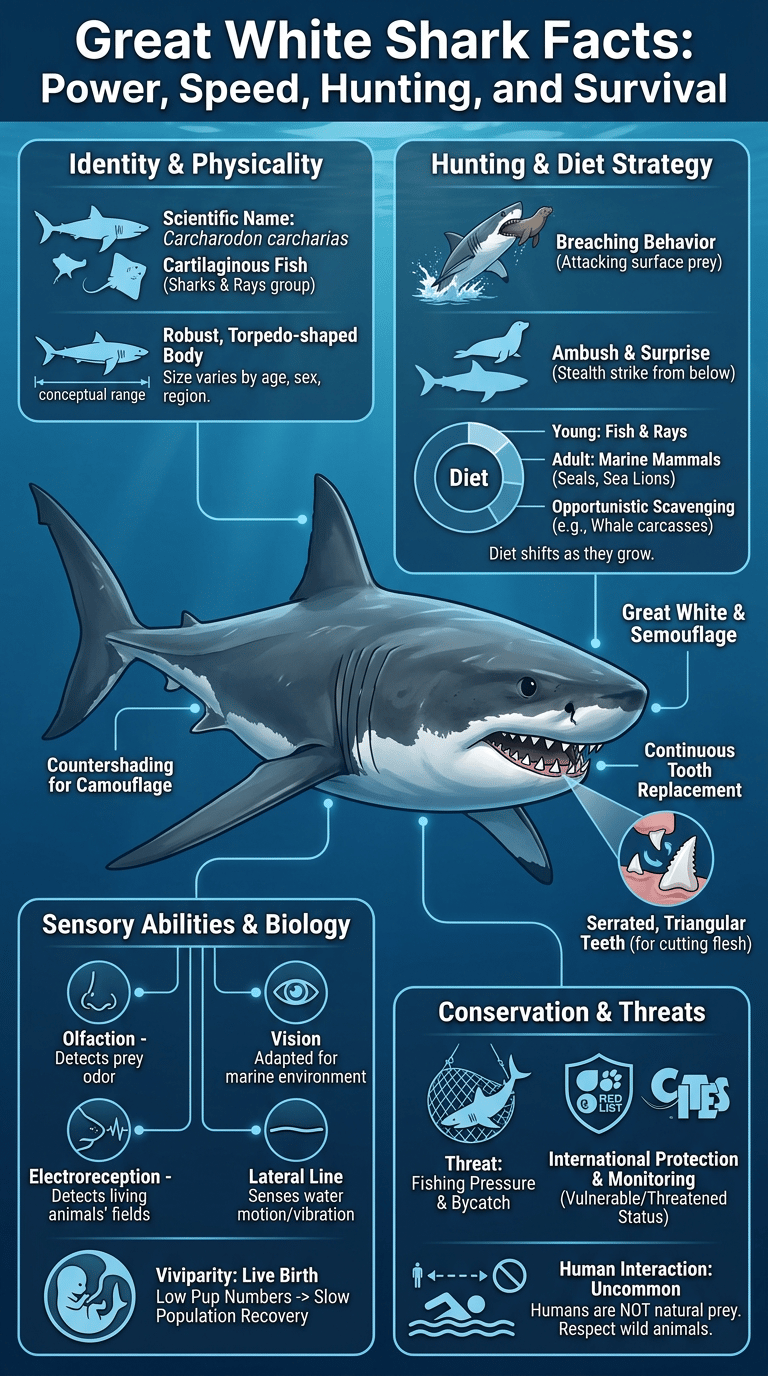
The great white shark is a large predatory shark species known by the scientific name Carcharodon carcharias. It is a cartilaginous fish in the group that includes sharks and rays. For authoritative conservation listings and species assessments, see the IUCN Red List and international wildlife trade resources such as CITES.
Physical appearance
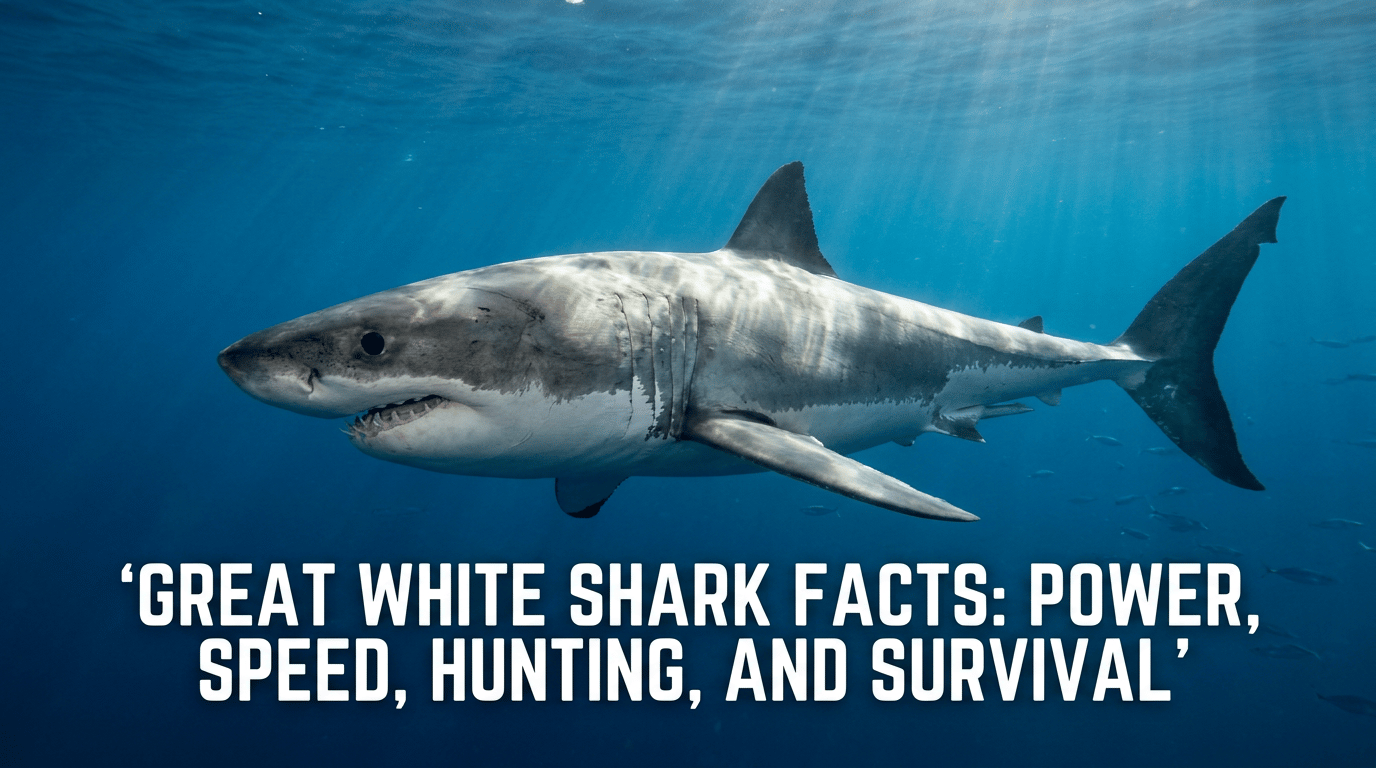
Great white sharks typically have a robust, torpedo-shaped body, a pointed snout, a large crescent-shaped tail, and rows of triangular, serrated teeth. Their coloration is usually darker on top and lighter on the underside, which helps with camouflage. Size and proportions vary with age, sex, and region; for measured figures consult species accounts and conservation assessments.
Readers comparing great white shark facts may also find tiger shark facts useful for a deeper look at a closely related shark topic.
Readers comparing great white shark facts may also find megalodon shark facts useful for a deeper look at a closely related shark topic.
Readers comparing great white shark facts may also find mako shark facts useful for a deeper look at a closely related shark topic.
Fame and cultural impact
Great whites are widely recognized and often featured in media, documentaries, and films. Their surface behaviors and predatory reputation have shaped public perceptions of sharks. For balanced perspectives on wildlife and conservation, institutional resources and international conservation organizations provide context about species management and public outreach (CITES).
Size and body mass
General size patterns
Great white sharks reach sizes that place them among the larger predatory fishes in the ocean. There is natural variation based on age, sex, and geographic population. For precise, measured size ranges consult species accounts and peer-reviewed studies compiled by conservation authorities.
Weight variation
Body mass varies with age, sex, and condition. Adult individuals generally weigh substantially more than juveniles; published weight ranges differ by study and location, so consult vetted references for regional figures.
Records and verification
Reports of exceptionally large individuals appear in natural history records, but extraordinary size claims should be verified by measurements documented in scientific literature or by trusted institutions.
Distribution and habitat
Coastal and continental shelf waters
Great whites are commonly associated with coastal and continental shelf waters where prey is abundant. They are often observed near shorelines, islands, and regions with rich marine life. Patterns of occurrence are influenced by prey availability and local ocean conditions.
Temperate zones and wider range
Many populations occupy temperate ocean zones, though the species can appear in a range of oceanic environments. Range and habitat descriptions vary among populations; consult conservation assessments for region-specific information (IUCN Red List).
Hotspots and monitoring
Certain coastal regions are known for reliable great white sightings because of seasonal prey movements and local geography. These hotspots are often the focus of tagging and monitoring programs that help researchers understand movements and behavior.
Diet
Fish and rays
Great white diets include a variety of bony fishes and cartilaginous fishes such as rays. Juvenile and adult diet composition can differ because of size and hunting ability; field studies and species accounts provide the best regional detail.
Pinnipeds and other marine mammals
In many areas, pinnipeds such as seals and sea lions form a notable part of the diet for larger adults. Predation on these marine mammals relates to hunting strategy and seasonal availability of pinniped colonies near productive coastal waters.
Scavenging behavior
Great whites are opportunistic and may scavenge on marine carrion, including whale carcasses.
Ontogenetic diet shifts
Diet often shifts as individuals grow: younger sharks typically take smaller prey, while mature adults can tackle larger animals. This shift influences habitat use and movement patterns.
Hunting strategies
Ambush and surprise
Great whites use stealth and speed to approach prey, often striking from below or behind to surprise their target. This takes advantage of their coloration and burst swimming ability during short chases.
Breaching behavior
Great whites have been observed leaping clear of the water when attacking fast-moving surface prey such as fleeing pinnipeds. These breaching events occur in specific hunting contexts and are energetically costly.
Investigative bites
Researchers have noted that great whites sometimes bite to investigate or disable prey before feeding more extensively. An investigative bite can help the shark assess a potential meal.
Teeth and feeding mechanics
Serrated, triangular teeth
Great whites have distinct triangular, serrated teeth well suited to cutting flesh. The serrations help slice through tough tissue of marine mammals and large fish.
Continuous tooth replacement
Like other sharks, great whites continually replace teeth throughout life. When a tooth is lost, another rotates or moves into place from a row behind it.
Bite mechanics
Bite mechanics support a feeding strategy of powerful, tearing bites and sometimes removing large tissue chunks. Numerical bite-force values are available in specialized scientific studies and technical literature.
Sensory abilities
Olfaction
Great whites have a well-developed sense of smell that helps detect prey odor in the water.
Vision
Shark vision is adapted to the marine environment; visual cues are important during close-range hunting and when identifying surface prey.
Electroreception
Sharks possess specialized sensory organs that detect weak electrical fields produced by living animals, aiding in locating hidden or resting prey.
Lateral line
The lateral line system allows sharks to sense water motion and vibrations, helping them detect swimming animals and navigate in low-visibility conditions.
Movement and migration
Long-distance movements
Great whites are capable of long-distance movements, and individual sharks have been documented traveling across broad oceanic areas. Such travel connects feeding, breeding, and nursery habitats in complex ways that scientists continue to study.
Seasonal feeding areas
Sharks often use particular areas seasonally when prey is abundant. Seasonal concentrations of predators and prey influence where and when people encounter sharks.
Scientific tracking
Researchers track great whites to learn about movement patterns, habitat use, and population connectivity. Tracking data help inform conservation measures by revealing essential habitats and migration corridors.
Reproduction
Viviparity
Great white sharks give birth to live young rather than laying eggs. Embryos develop internally, and neonates are born active and self-sufficient.
Low pup numbers
Great whites produce relatively few offspring per reproductive event compared with many fishes. This trait affects how quickly populations can rebound from decline and is considered in conservation assessments.
Human interactions and safety
Why bites occur
Great whites have the size and teeth capable of causing serious injury when a bite occurs. Some incidents are thought to involve mistaken identity or investigative biting rather than deliberate predation on humans.
Humans are not typical prey
Marine mammals and large fish are typical natural prey for adult great whites; humans are not part of that natural diet. Human-shark interactions are uncommon.
Risk reduction
Public fear of sharks is shaped by media portrayals and rare high-profile incidents. People recreating in shark-inhabited waters can reduce risk by following local guidance and exercising situational awareness. If a dangerous encounter or injury occurs, contact emergency responders and wildlife authorities.
Quick safety reminder: Great white sharks are wild animals and should be respected. Do not approach, feed, touch, capture, or harass wild sharks. If you are concerned about an encounter or injury, contact qualified emergency services and local wildlife authorities.
Conservation status and threats
Fishing pressure and bycatch
Great white sharks face threats from direct and incidental capture in fisheries. Conservation listings and regulatory frameworks evaluate how fishing pressure and bycatch affect population trends and the need for protection (IUCN Red List and CITES).
Recovery challenges
Long-lived, slow-reproducing predators typically recover more slowly than fast-breeding species. Conservation strategies aim to reduce human-caused mortality and protect critical habitats.
Role of protection
Protecting great whites helps maintain their ecological role as apex predators. International agreements and national protections contribute to conservation, and assessments by global organizations provide the evidence base for policy decisions (IUCN Red List; CITES).
Great whites in public education and media
Media influence
Films and documentaries have amplified the image of the great white as a fearsome predator, often emphasizing dramatic moments that are not representative of daily ecological behavior.
Outreach and correction
Outreach that combines accurate biology with thoughtful storytelling helps correct misconceptions and can support conservation by increasing public understanding and interest in marine science. Institutional resources about how zoos and aquaria present species and conservation topics may be useful for public-facing education (Smithsonian National Zoo).
Frequently asked questions
How big is a great white shark?
Great whites are large predatory sharks, and size varies with age, sex, and region. For precise, measured size ranges, consult species accounts and peer-reviewed studies compiled by conservation authorities.
What does a great white shark eat?
Diet commonly includes fishes, rays, and marine mammals, and may include scavenged whale carcasses. Diet composition shifts as sharks grow and as prey availability changes regionally.
Where do great white sharks live?
Great whites inhabit coastal and offshore waters in various temperate regions, with seasonal and long-distance movements that connect feeding and breeding areas. Local and global assessments provide the best details for particular regions (IUCN Red List).
Are great white sharks protected?
Conservation assessments consider threats, population trends, and biology when assigning risk categories. International resources such as the IUCN Red List and CITES track species status and provide current evaluations (IUCN Red List; CITES).
Can great white sharks be kept in aquariums?
Great whites are challenging to keep in captivity for extended periods due to their size, movement needs, and specialized biology. Most public aquaria focus on species that can thrive in managed environments and provide long-term welfare; institutional resources describe captive care and public education practices (Smithsonian National Zoo).
For authoritative information on species assessments, conservation status, and international regulation, consult the IUCN Red List (IUCN Red List) and CITES (CITES).

Ethan Walker is the founder and research editor of Animal Fact Central. He creates and reviews educational animal facts content using trusted wildlife, pet care, and science-based sources. His work focuses on making animal behavior, adaptations, habitats, and species facts clear, accurate, and engaging for everyday readers.
Read More Details About Ethan Walker: https://animalfactcentral.com/ethan-walker/