
Why Do Cats Purr? explains a behavior many cat owners notice during ordinary life at home. The goal is to read the cat clearly, respond gently, and know when a behavior is normal versus when it may point to stress, pain, illness, or a setup that needs to change. For broader behavior context, see guidance on cat social behavior.
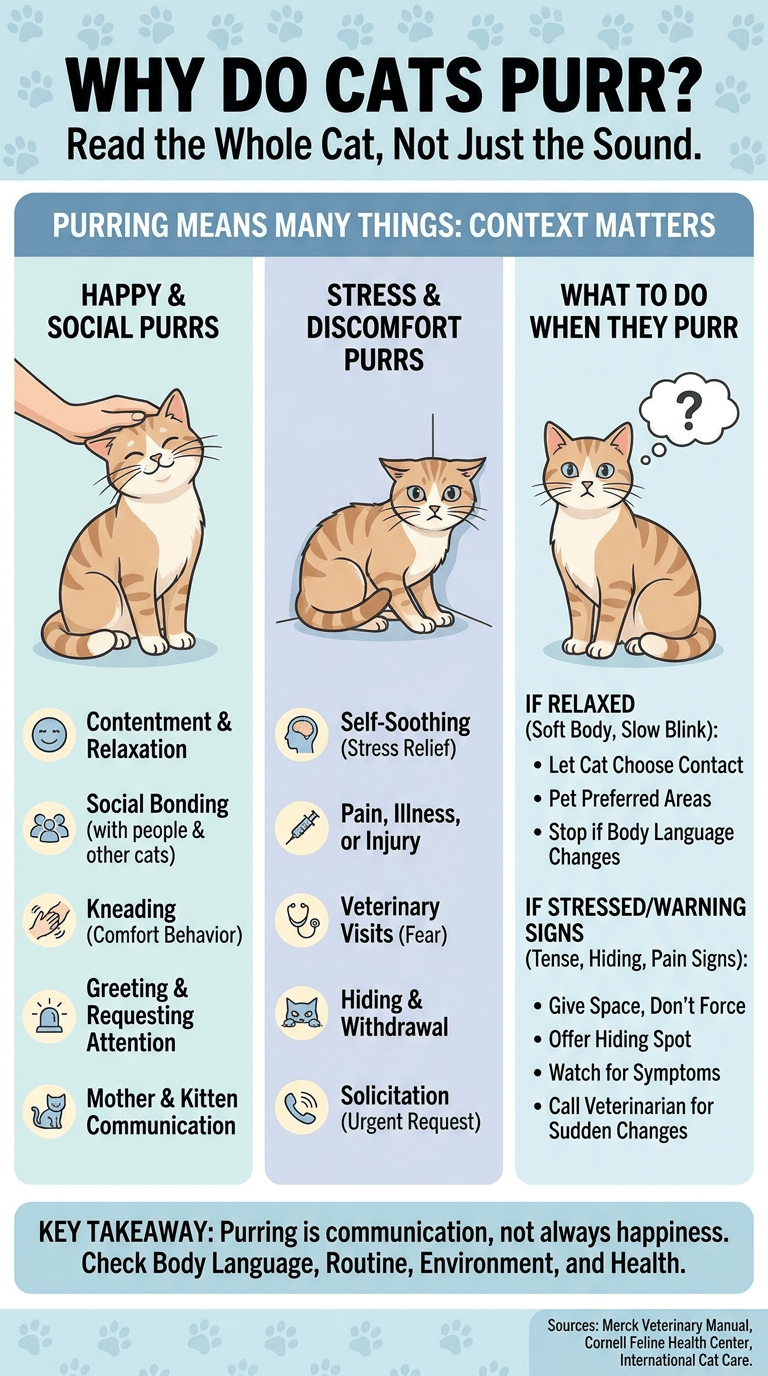
This guide focuses on practical meaning, gentle handling, cat choice, and warning signs that should not be ignored. Cornell Feline Health Center resources.
Readers comparing why do cats purr may also find cat zoomies useful for a closer look at a related cat behavior signal.
For the broader pattern behind this signal, the main guide to cat behavior connects everyday actions with mood, communication, and owner responses.
Readers comparing why do cats purr may also find why do cats lick you useful for a closer look at a related cat behavior signal.
Readers comparing why do cats purr may also find why do cats knead useful for a closer look at a related cat behavior signal.
Quick Answer: Why Cats Purr
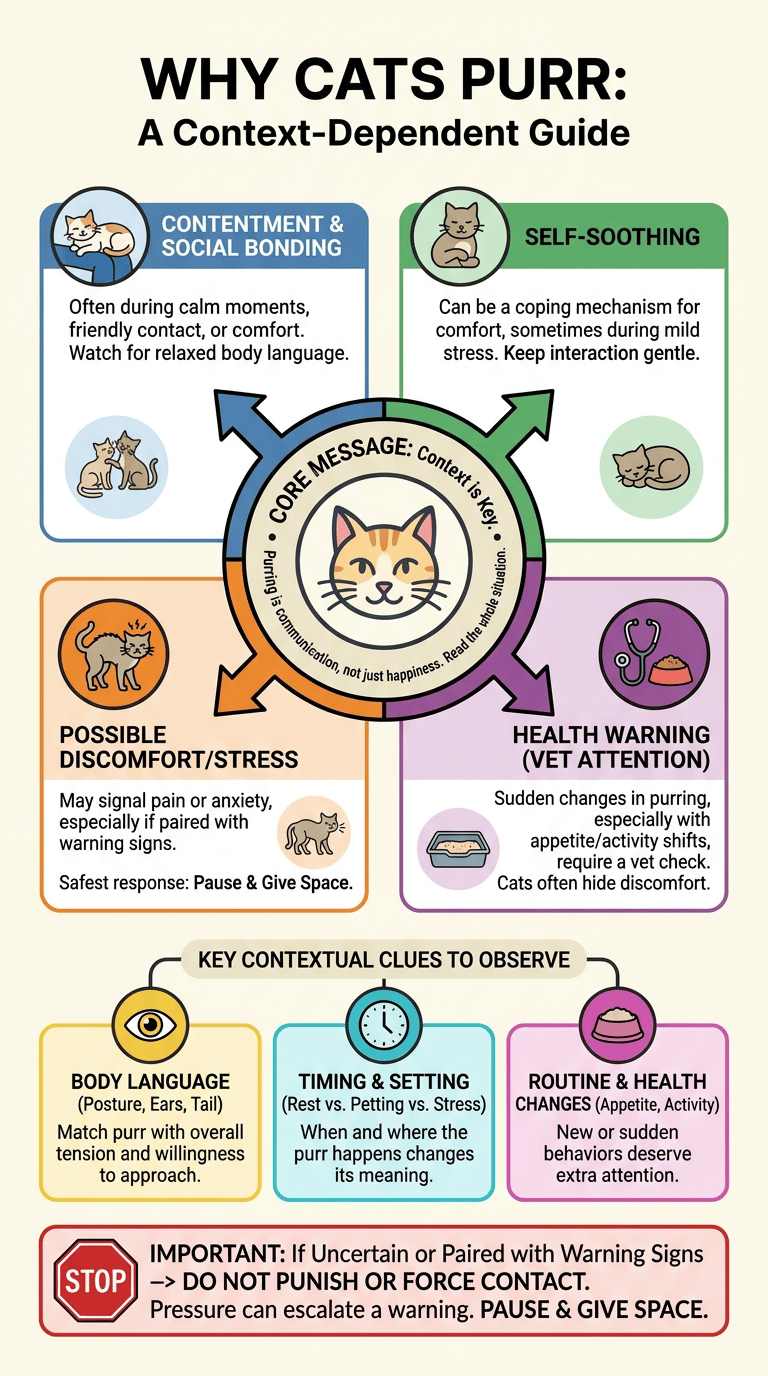
Cats purr in more than one situation. Many purr when relaxed, but some also purr when seeking comfort, coping with stress, or feeling unwell, so the rest of the body tells the real story. cat owner guidance on behavior problems.
Purring can mean several things
Purring can mean several things can show comfort, familiarity, or self-soothing. Keep the moment low-pressure and stop if the cat starts to tense.
Contentment
Contentment is part of the bigger pattern, not a stand-alone answer. If the cat stays loose and recovers quickly, the sign is usually less concerning.
Social bonding
Social bonding is usually a calmer signal when the cat stays loose and chooses to remain nearby.
Self-soothing
Self-soothing can help explain why purring shows up in that moment. It matters most when it changes from what that individual cat normally does.
Possible discomfort when paired with warning signs
Possible discomfort when paired with warning signs should stay gentle. If the cat stiffens, turns away, or escalates, end contact calmly.
Why context matters
Why context matters depends on the order of events around the behavior. What happened before, how the cat responded, and what changed afterward all shape the meaning.
Body posture
Body posture is useful only when read with the rest of the body. Match it with ear position, eyes, posture, muscle tension, and the cat’s choice to approach or leave.
Tail and ears
Tail and ears is useful only when read with the rest of the body. Match it with ear position, eyes, posture, muscle tension, and the cat’s choice to approach or leave.
Appetite and activity
Appetite and activity deserves a careful look because cats may stay quiet when uncomfortable. A sudden change, repeated episode, or sign of pain is enough reason to get professional guidance.
Whether the purr happens during rest, petting, or stress
Whether the purr happens during rest, petting, or stress should stay gentle. If the cat stiffens, turns away, or escalates, end contact calmly.
How Cat Purring Works
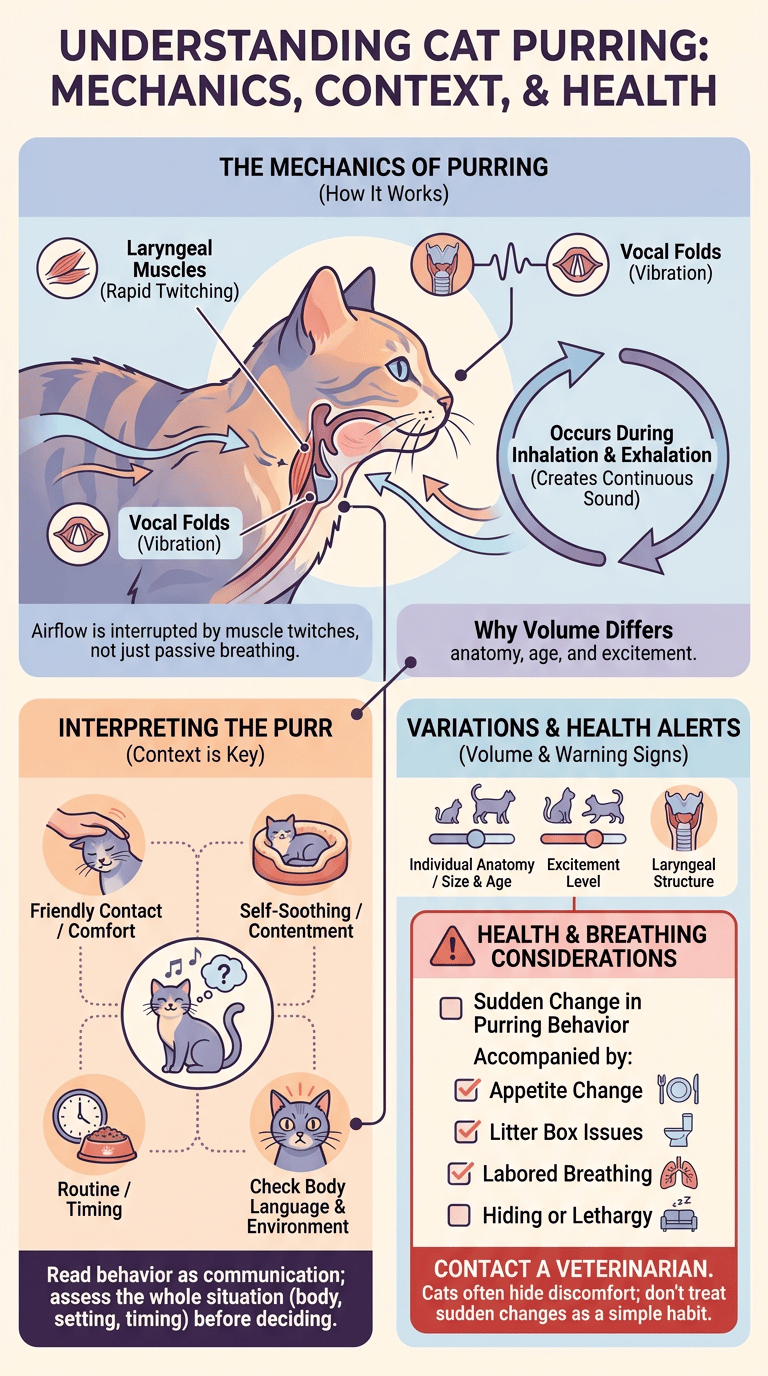
Purring is a physical sound pattern, not a complete emotion label by itself. Volume, rhythm, posture, breathing, appetite, and willingness to interact help explain what the purr means. body language.
What creates the purring sound
What creates the purring sound is easier to trust when posture is soft, breathing is normal, and the cat does not avoid contact.
Vocal folds and laryngeal muscles
Vocal folds and laryngeal muscles should be judged against the cat’s own history, age, health, and daily routine.
Breathing in and out
Breathing in and out should shift the focus from interpretation to welfare. Watch for appetite change, hiding, poor mobility, or litter box changes, then involve a vet if the pattern is new.
Why purring sounds continuous
Why purring sounds continuous is usually a calmer signal when the cat stays loose and chooses to remain nearby.
Why purr volume differs between cats
Why purr volume differs between cats is usually a calmer signal when the cat stays loose and chooses to remain nearby.
Individual anatomy
Individual anatomy may look different across cats while still being normal for each one.
Age and size
Age and size is easier to interpret when the owner knows what is typical for that particular cat.
Excitement level
Excitement level adds one useful detail to purring. It matters most when it changes from what that individual cat normally does.
Health and breathing considerations
Health and breathing considerations should shift the focus from interpretation to welfare. Watch for appetite change, hiding, poor mobility, or litter box changes, then involve a vet if the pattern is new.
Happy Purring
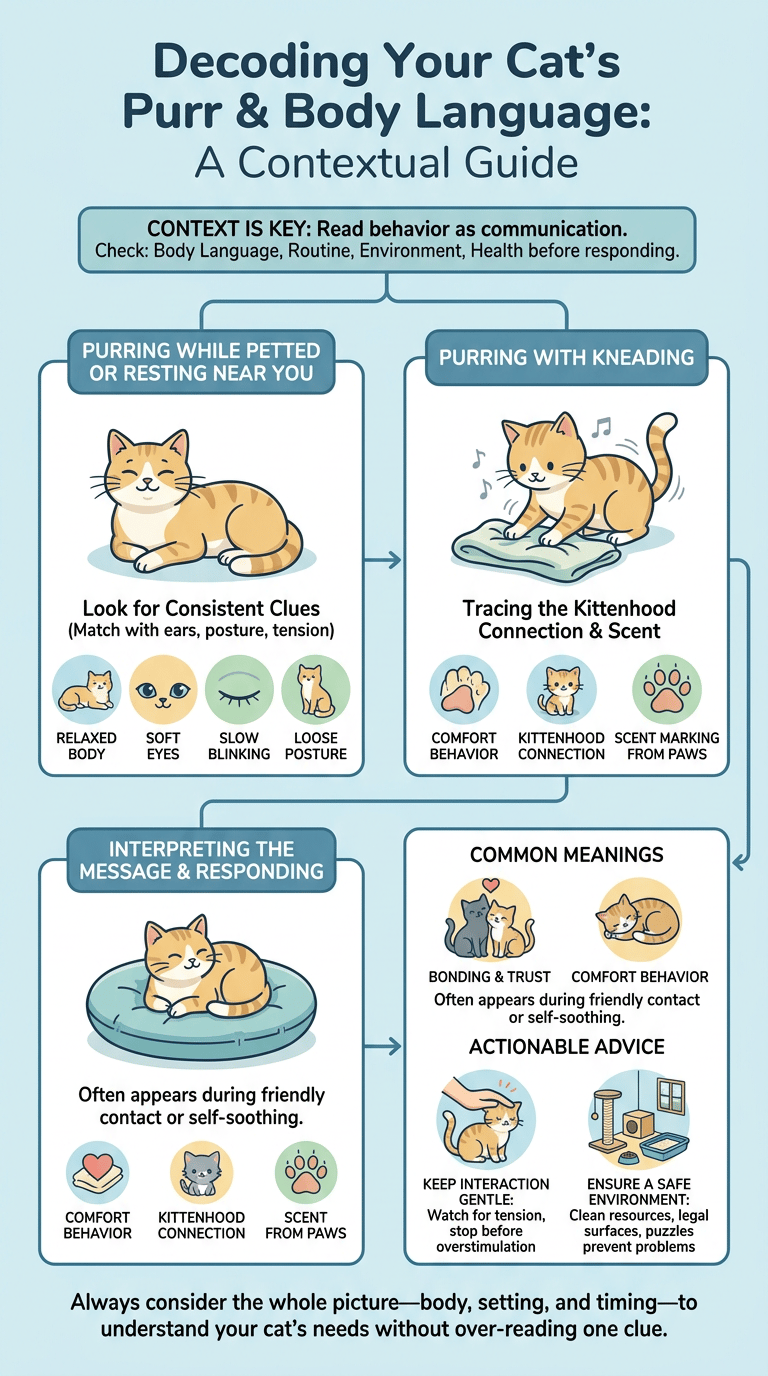
Happy purring usually comes with soft posture, relaxed eyes, and a cat that can choose to stay or leave. Gentle handling keeps that relaxed moment from turning into overstimulation.
Purring while being petted
Purring while being petted should stay gentle. If the cat stiffens, turns away, or escalates, end contact calmly.
Relaxed body
Relaxed body is useful only when read with the rest of the body. Match it with ear position, eyes, posture, muscle tension, and the cat’s choice to approach or leave.
Soft eyes
Soft eyes is useful only when read with the rest of the body. Match it with ear position, eyes, posture, muscle tension, and the cat’s choice to approach or leave.
Slow blinking
Slow blinking is useful only when read with the rest of the body. Match it with ear position, eyes, posture, muscle tension, and the cat’s choice to approach or leave.
Loose posture
Loose posture is useful only when read with the rest of the body. Match it with ear position, eyes, posture, muscle tension, and the cat’s choice to approach or leave.
Purring while resting near you
Purring while resting near you only makes sense beside the rest of the body. Ears, eyes, posture, muscle tension, and distance from people help show whether the cat is comfortable or asking for space.
Bonding
Bonding can show comfort, familiarity, or self-soothing. Keep the moment low-pressure and stop if the cat starts to tense.
Trust
Trust is usually a calmer signal when the cat stays loose and chooses to remain nearby.
Safe environment
Safe environment is part of everyday welfare. Clean resources, legal scratching surfaces, food puzzles, and easy access to litter boxes can prevent many behavior problems before they start.
Purring with kneading
Purring with kneading should stay gentle. If the cat stiffens, turns away, or escalates, end contact calmly.
Comfort behavior
Comfort behavior is usually a calmer signal when the cat stays loose and chooses to remain nearby.
Kittenhood connection
Kittenhood connection may look different across cats while still being normal for each one.
Scent marking from paws
Scent marking from paws can show comfort, familiarity, or self-soothing. Keep the moment low-pressure and stop if the cat starts to tense.
Social Purring
Social Purring is best read through the main theme of the article: A relaxed purr usually comes with soft eyes, loose muscles, normal breathing, and a cat that remains free to move away. Purring with hiding, appetite loss, breathing changes, or pain signs should not be brushed off as simple happiness.
Purring between cats
Purring between cats should stay gentle. If the cat stiffens, turns away, or escalates, end contact calmly.
Mother and kitten communication
Mother and kitten communication is easier to interpret when the owner knows what is typical for that particular cat.
Familiar cat interactions
Familiar cat interactions gives the behavior a more specific context. Use it with the cat’s posture, comfort level, and recent routine before changing how you respond.
Grooming and resting together
Grooming and resting together is usually a calmer signal when the cat stays loose and chooses to remain nearby.
Purring toward people
Purring toward people should stay gentle. If the cat stiffens, turns away, or escalates, end contact calmly.
Greeting
Greeting can help explain why purring shows up in that moment. The safest response is gentle observation and a small adjustment only when the cat seems uncomfortable.
Requesting attention
Requesting attention gives the behavior a more specific context. Pair it with appetite, energy, litter box habits, and willingness to interact.
Asking for food or access
Asking for food or access is part of everyday welfare. Clean resources, legal scratching surfaces, food puzzles, and easy access to litter boxes can prevent many behavior problems before they start.
Solicitation purrs
Solicitation purrs should leave the cat in control of contact, including the option to pause or walk away.
Why some purrs sound more urgent
Why some purrs sound more urgent is usually a calmer signal when the cat stays loose and chooses to remain nearby.
How cats may learn owner responses
How cats may learn owner responses only makes sense beside the rest of the body. Ears, eyes, posture, muscle tension, and distance from people help show whether the cat is comfortable or asking for space.
How to respond without overfeeding or rewarding pushy behavior
How to respond without overfeeding or rewarding pushy behavior is part of everyday welfare. Clean resources, legal scratching surfaces, food puzzles, and easy access to litter boxes can prevent many behavior problems before they start.
Stress or Discomfort Purring
Stress or Discomfort Purring is best read through the main theme of the article: A relaxed purr usually comes with soft eyes, loose muscles, normal breathing, and a cat that remains free to move away. Purring with hiding, appetite loss, breathing changes, or pain signs should not be brushed off as simple happiness.
Purring at the veterinarian
Purring at the veterinarian should be treated as a warning area for purring. Purring with hiding, appetite loss, breathing changes, or pain signs should not be brushed off as simple happiness.
Stress context
Stress context means the cat is asking for the situation to change. Quiet distance is safer than touching, chasing, or scolding.
Self-soothing possibility
Self-soothing possibility is part of the bigger pattern, not a stand-alone answer. Pair it with appetite, energy, litter box habits, and willingness to interact.
Why calm handling matters
Why calm handling matters depends on the order of events around the behavior. What happened before, how the cat responded, and what changed afterward all shape the meaning.
Purring when sick or injured
Purring when sick or injured can show comfort, familiarity, or self-soothing. Keep the moment low-pressure and stop if the cat starts to tense.
Purring with hiding
Purring with hiding can show comfort, familiarity, or self-soothing. Keep the moment low-pressure and stop if the cat starts to tense.
Purring with low appetite
Purring with low appetite is a health-check point, not just a behavior note. Call a veterinarian if it appears suddenly or sits beside changes in eating, movement, breathing, or litter box use.
Purring with limping or breathing changes
Purring with limping or breathing changes deserves a careful look because cats may stay quiet when uncomfortable. A sudden change, repeated episode, or sign of pain is enough reason to get professional guidance.
How to tell purring may not mean happiness
How to tell purring may not mean happiness should stay gentle. If the cat stiffens, turns away, or escalates, end contact calmly.
Tense body
Tense body is useful only when read with the rest of the body. Match it with ear position, eyes, posture, muscle tension, and the cat’s choice to approach or leave.
Flattened ears
Flattened ears is useful only when read with the rest of the body. Match it with ear position, eyes, posture, muscle tension, and the cat’s choice to approach or leave.
Dilated pupils
Dilated pupils only makes sense beside the rest of the body. Ears, eyes, posture, muscle tension, and distance from people help show whether the cat is comfortable or asking for space.
Avoidance or withdrawal
Avoidance or withdrawal is easiest to place when the rest of the scene is clear. It matters most when it changes from what that individual cat normally does.
What To Do When Your Cat Purrs
What To Do When Your Cat Purrs is best read through the main theme of the article: A relaxed purr usually comes with soft eyes, loose muscles, normal breathing, and a cat that remains free to move away. Purring with hiding, appetite loss, breathing changes, or pain signs should not be brushed off as simple happiness.
If your cat seems relaxed
If your cat seems relaxed should stay gentle. If the cat stiffens, turns away, or escalates, end contact calmly.
Let the cat choose contact
Let the cat choose contact gives the behavior a more specific context. Pair it with appetite, energy, litter box habits, and willingness to interact.
Pet preferred areas
Pet preferred areas gives the behavior a more specific context. Use it with the cat’s posture, comfort level, and recent routine before changing how you respond.
Stop if body language changes
Stop if body language changes is useful only when read with the rest of the body. Match it with ear position, eyes, posture, muscle tension, and the cat’s choice to approach or leave.
If your cat seems stressed
If your cat seems stressed calls for more space, not pressure. Pause contact, avoid punishment, and let the cat reset before anyone tries to interact again.
Reduce noise and handling
Reduce noise and handling can help explain why purring shows up in that moment. It matters most when it changes from what that individual cat normally does.
Offer hiding space
Offer hiding space fits normal feline rest when the cat wakes easily, moves normally, and keeps regular eating and litter box habits. Related reading: sleep.
Watch for other symptoms
Watch for other symptoms adds one useful detail to purring. If it appears suddenly or feels intense, slow down and look for stress or health clues.
If purring comes with warning signs
If purring comes with warning signs should stay gentle. If the cat stiffens, turns away, or escalates, end contact calmly.
Appetite change
Appetite change is more concerning when it arrives with low energy, withdrawal, altered breathing, or a change in normal routines.
Breathing difficulty
Breathing difficulty should shift the focus from interpretation to welfare. Watch for appetite change, hiding, poor mobility, or litter box changes, then involve a vet if the pattern is new.
Pain signs
Pain signs deserves a careful look because cats may stay quiet when uncomfortable. A sudden change, repeated episode, or sign of pain is enough reason to get professional guidance.
When to call a veterinarian
When to call a veterinarian is a health-check point, not just a behavior note. Call a veterinarian if it appears suddenly or sits beside changes in eating, movement, breathing, or litter box use.
Cat Purring FAQ
Cat Purring FAQ is best read through the main theme of the article: A relaxed purr usually comes with soft eyes, loose muscles, normal breathing, and a cat that remains free to move away. Purring with hiding, appetite loss, breathing changes, or pain signs should not be brushed off as simple happiness.
Do cats only purr when they are happy?
Do cats only purr when they are happy should leave the cat in control of contact, including the option to pause or walk away.
Why does my cat purr and bite me?
Why does my cat purr and bite me is usually a calmer signal when the cat stays loose and chooses to remain nearby.
Why does my cat purr so loudly?
Why does my cat purr so loudly is usually a calmer signal when the cat stays loose and chooses to remain nearby.
Why does my cat purr when sleeping?
Why does my cat purr when sleeping should leave the cat in control of contact, including the option to pause or walk away.
Should I worry if my cat stops purring?
Should I worry if my cat stops purring should stay gentle. If the cat stiffens, turns away, or escalates, end contact calmly.
Key Takeaways
Why Do Cats Purr? is easiest to understand when you read the whole cat, not one isolated action. Body language, routine, environment, health, and recent handling all change the meaning. For more practical cat-care reading, use International Cat Care guidance.
Most behaviors are normal when they fit the cat’s usual pattern and the cat looks relaxed. Sudden changes, hard biting, hiding, appetite changes, litter box changes, breathing trouble, or signs of pain deserve professional guidance.

Ethan Walker is the founder and research editor of Animal Fact Central. He creates and reviews educational animal facts content using trusted wildlife, pet care, and science-based sources. His work focuses on making animal behavior, adaptations, habitats, and species facts clear, accurate, and engaging for everyday readers.
Read More Details About Ethan Walker: https://animalfactcentral.com/ethan-walker/