
Dogs do a lot of things that make us laugh, scratch our heads, or reach for our phones to capture the moment. Many of those behaviors are harmless curiosities rooted in evolution, communication, play, or routine. Others can be signals of stress, discomfort, or underlying medical issues. This article walks through common odd dog behaviors, explains sensible reasons they happen, and highlights when you should seek professional help.
Why Dogs Do Weird Things
Many weird behaviors are normal
Domesticated dogs are mammals with a long natural history of social living, play, and environment-driven habits. Many behaviors that seem odd to people are normal mammalian behaviors that serve practical purposes, such as conserving energy, avoiding danger, marking scent, or building social bonds. For a general perspective on mammal behavior and how those patterns shape pet species, consult a broad overview of mammal natural history and behavior from a reputable mammal reference source that summarizes mammalian behavior and ecology.
Some weird behaviors are communication
Dogs rely heavily on body language, sounds, and scent to communicate with humans and other animals. What looks like a quirky habit can be a deliberate message: an invitation to play, an attempt to solicit attention, or a subtle warning. Zoo and wildlife education resources describe how mammals use posture, vocalization, and facial expressions to convey intent and emotion, which helps explain why dogs perform certain repetitive or exaggerated actions in the context of mammal social behavior as described by major zoological educators.
Some weird behaviors can signal stress or health issues
While many odd behaviors are benign, sudden changes or repetitive actions can be signs of stress, pain, or medical problems. Behavioral shifts that appear abruptly, persistently interfere with daily life, or are accompanied by other symptoms, such as reduced appetite, vomiting, or difficulty moving, deserve prompt attention. Resources that discuss animal welfare and how behavior reflects health are helpful for understanding when to consult a veterinarian or animal behavior professional in a broader discussion of mammal welfare and behavior.
Weird Dog Behaviors Explained
Head tilting
Sound focus
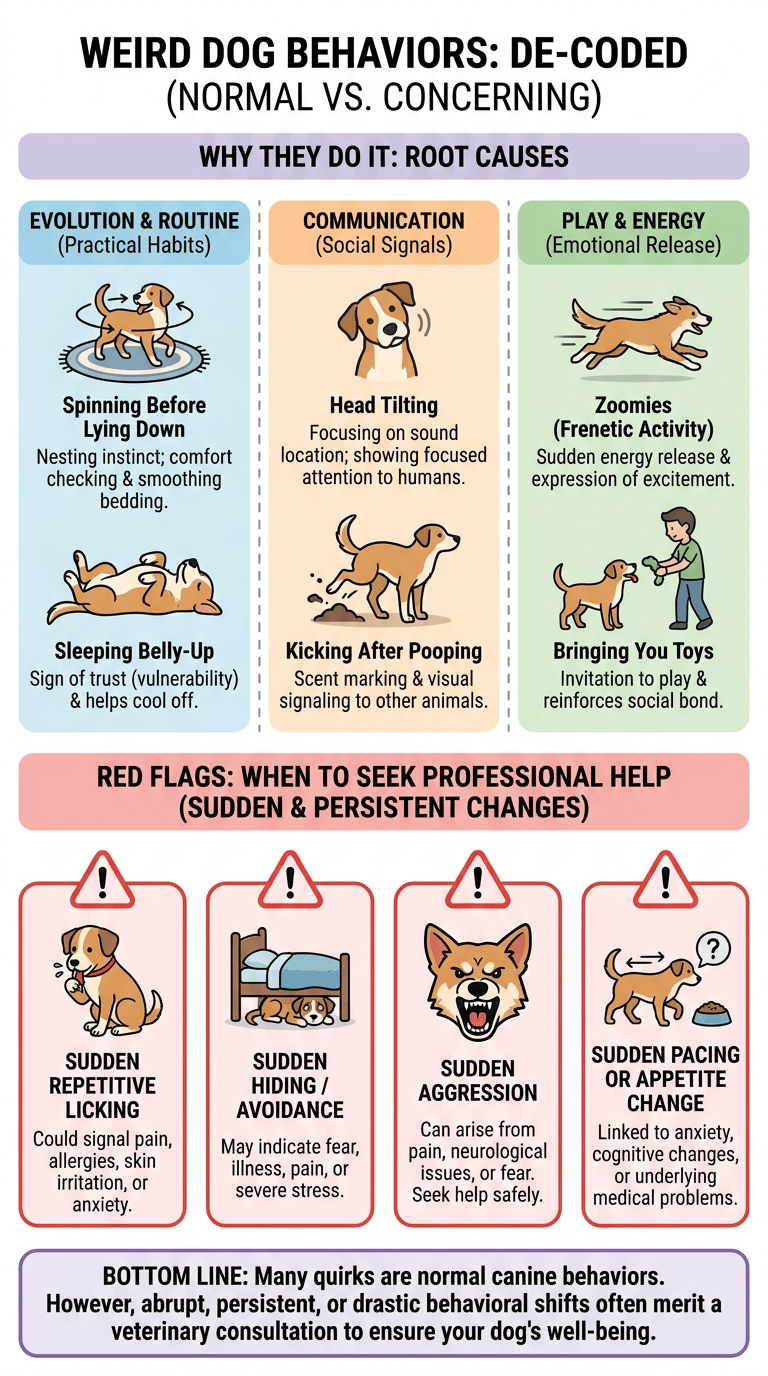
When a dog tilts its head, it may be trying to reposition its ears and eyes to better localize or interpret a sound. Tilting can help align the external ear and change the angle of vision, which may improve the dog’s ability to determine where a noise is coming from. In many cases this response is a momentary, attentive behavior triggered by unfamiliar or interesting sounds.
Attention
Head tilts often coincide with attempts to understand human speech, gestures, or facial expressions. Dogs that are highly attuned to their humans may tilt their heads as part of focused attention, trying to extract more information from tone of voice or body language. This behavior is commonly reinforced because people tend to respond enthusiastically when dogs make eye contact and tilt their heads.
Spinning before lying down
Nesting instinct
Circling or spinning before settling is a behavior with deep ancestral roots. Wild canids and other mammals often trample vegetation and inspect a site before resting, which can create a comfortable, sheltered spot and reduce the chance of insects or sharp objects. This instinctual behavior can persist in domestic dogs as a way of preparing their sleeping area.
Comfort checking
Spinning may also help a dog test the comfort and orientation of the surface, smoothing bedding or redistributing heat. For dogs that sleep in crates or outdoors occasionally, circling can be an important part of making the location feel safe before they relax.
Kicking after pooping
Scent marking
The classic backward kicking motion after elimination spreads scent from glands in the paws as well as from the feces. This behavior helps deposit the dog’s scent on surrounding objects and ground, reinforcing territorial or communicative signals to other animals that may pass through the area.
Visual signaling
Beyond scent, vigorous kicking can also create visual disturbances in grass or leaves that draw attention to the spot a dog has used. In social species, combining odor and visual cues strengthens the signal left behind.
Zoomies
Energy release
Sudden bursts of frenetic running and spinning, often called zoomies, are a way for dogs to release pent-up energy. After periods of confinement, after a bath, or during playful interactions, dogs may expend excess arousal through rapid sprints and playful collisions. This behavior helps reset emotional state and provides physical exercise.
Excitement
Zoomies are strongly associated with exuberant positive arousal. Excitement-related hormone and adrenaline surges can trigger this short-lived hyperactivity. Many owners report that allowing controlled, safe outlets for this energy helps reduce indoor chaos.
Staring at nothing
Hearing something
Dogs have keen hearing and may appear to stare at empty space while monitoring distant or faint noises. Even sounds outside human hearing range can capture a dog’s attention, producing focused staring as the animal orients toward auditory cues.
Scent detection
Because dogs track the world through scent, a passing odor or faint trace on the air can cause them to focus intently. Staring is a low-energy way to concentrate on monitoring a stimulus while remaining ready to move if needed.
When it may be concerning
Occasional staring is normal, but persistent fixed staring at walls, corners, or the same spot can sometimes indicate sensory issues, cognitive changes, or neurological problems. If staring is accompanied by disorientation, loss of house training, sudden changes in interaction, or repetitive motion, contact a veterinarian for evaluation.
Licking the air
Stress
Brief air-licking episodes can be a displacement behavior, meaning the dog is showing a calming action in a stressful or uncertain situation. Dogs may lick the air when they are unsure how to respond or when they experience mild anxiety.
Nausea
Air licking can also be associated with nausea or an upset stomach. Dogs sometimes lick at nothing when they feel queasy. If air licking is frequent and paired with drooling, retching, loss of appetite, or lethargy, seek veterinary advice.
Dental discomfort
Oral discomfort such as dental pain or a foreign object can provoke repeated tongue motions that appear as air licking. Observing the dog’s mouth, breath, and eating behavior can help determine whether a dental exam is warranted.
Sleeping belly-up
Trust
When a dog sleeps on its back with belly exposed, it is showing vulnerability. This posture is often an expression of trust and security within the home and with people present. It signals that the dog feels safe and unthreatened in its environment.
Cooling off
The belly has less fur and greater exposure of skin, so sleeping belly-up can help a dog regulate temperature. On warm days, this position allows heat to dissipate more effectively than curled postures.
Bringing you toys
Play invitation
Presenting a toy is a direct way a dog asks you to engage in play. Dogs commonly bring objects to initiate interaction, especially if past invitations have led to enjoyable activity. This behavior is often enthusiastic and accompanied by a play bow or excited vocalizations.
Social bonding
Offering a prized object can also be a social gesture, reinforcing attachment and shared routines. In many cases, dogs repeat this behavior because it strengthens the human-animal bond and results in positive attention.
Leaning on you
Affection
Leaning is a common canine behavior that conveys closeness. When a dog leans against you, it may simply be seeking physical contact and offering affiliative touch. This gentle pressure can be soothing for both dog and person.
Security
Leaning can also be an expression of seeking reassurance or security. Dogs that are slightly uneasy in a setting may lean into a trusted person to feel anchored and safe.
Following you to the bathroom
Pack behavior
Dogs are social animals with a pack-oriented psychology. Following you into small or private spaces can stem from a desire to stay with the group. Being near you provides safety and includes the dog in household activities.
Curiosity
Bathrooms can be interesting places for a dog because of novel sounds, scents, and the chance for attention. The activity of daily routines piques a dog’s curiosity, and following is a simple way to keep up with what the pack is doing.
Attachment
For some dogs, companionship is the main motivator. Dogs that form strong attachments to their people may follow them almost everywhere as an expression of closeness rather than for a specific reward.
Weird Dog Behaviors That May Need Attention
Sudden repetitive licking
Occasional grooming is normal, but a sudden onset of persistent licking of a particular area or the air can indicate underlying issues. Potential causes include skin irritation, allergies, pain, anxiety, or gastrointestinal discomfort. Because this behavior can have many origins, a veterinary evaluation is often the best way to identify and treat the root cause. If the licking creates sores, causes fur loss, or is accompanied by behavioral change, contact a veterinarian promptly.
Sudden hiding
Dogs may hide sometimes to get quiet time, but a sudden or prolonged change in hiding behavior can be a red flag. New or intensified hiding may indicate pain, fear, illness, or stress from changes in the home. Sudden avoidance of interaction or failure to respond to familiar cues should prompt a health check and an assessment of the dog’s environment to identify and remove potential stressors.
Sudden aggression
A previously gentle dog that shows sudden aggression toward people or other animals needs immediate attention. Aggression can arise from medical causes such as pain or neurologic issues, or from rapidly changing emotional states. Do not try to handle an aggressive dog without guidance. Seek veterinary and qualified behavior professional help to ensure safety for people and animals and to determine underlying causes.
Sudden pacing
Persistent, restless pacing that appears suddenly can reflect anxiety, cognitive changes, pain, or discomfort. Older dogs may display pacing as part of age-related cognitive decline, while younger dogs may pace due to stress or an unmet need for mental and physical stimulation. If pacing is new, frequent, or accompanied by other symptoms, discuss it with your veterinarian for evaluation and management options.
Sudden appetite change
A noticeable drop or increase in appetite can signal a range of medical issues, from dental pain and gastrointestinal upset to metabolic or systemic illness. Appetite changes that last for more than a short period, or that coincide with vomiting, diarrhea, weight loss, or lethargy, should be evaluated by a veterinarian to rule out treatable causes.
Weird Dog Behaviors FAQ
Why does my dog do weird things at night?
Evening and nighttime are moments when household activity changes, which can alter a dog’s arousal and attention. Dogs may become more active after being home alone all day, display nighttime play behavior, or show restlessness because of changes in light, noise, or temperature. If unusual night behaviors are new or disruptive, check for environmental triggers, provide regular exercise during the day, and consider consulting a veterinarian if the behavior suggests anxiety or discomfort.
Are zoomies normal?
Yes. Zoomies are a normal form of play and energy release for many dogs. They are typically short-lived and occur when a dog has accumulated excitement or excess energy. Provide a safe, enclosed space for zoomies, and gently redirect activity if the dog approaches a high-risk area such as stairs, roads, or fragile items. If hyperactivity becomes frequent and interferes with daily life, discuss environmental enrichment and exercise strategies with a professional.
Why does my dog stare at me?
Staring can mean many things depending on context. Dogs may stare to seek attention, request food or interaction, read your facial cues, or simply monitor your movement. Prolonged or intense staring can also be a sign of stress or an attempt to assert control in some contexts, but most often it is a way to engage with you or gather information. Pay attention to the dog’s overall body language to interpret the intent behind the look.
When is weird dog behavior a problem?
Behavior becomes a concern when it is sudden, severe, persistent, or accompanied by other signs of illness or distress. Warning signs include abrupt changes from baseline behavior, persistent self-injury, loss of coordination, appetite or elimination changes, and behaviors that endanger the dog or others. In those cases, seek assessment from a veterinarian. For complex behavioral issues, a qualified animal behaviorist or certified trainer can work with you to develop humane, evidence-based strategies.
Understanding why dogs act in odd ways helps you respond with empathy and good sense. Many quirks are normal and harmless, while changes in frequency or intensity often merit a professional check. When in doubt, contact a veterinarian or certified behavior professional to ensure your dog’s health and well-being.

Ethan Walker is the founder and research editor of Animal Fact Central. He creates and reviews educational animal facts content using trusted wildlife, pet care, and science-based sources. His work focuses on making animal behavior, adaptations, habitats, and species facts clear, accurate, and engaging for everyday readers.
Read More Details About Ethan Walker: https://animalfactcentral.com/ethan-walker/