
Why Do Cats Knead? explains a behavior many cat owners notice during ordinary life at home. The goal is to read the cat clearly, respond gently, and know when a behavior is normal versus when it may point to stress, pain, illness, or a setup that needs to change. For broader behavior context, see guidance on cat social behavior.
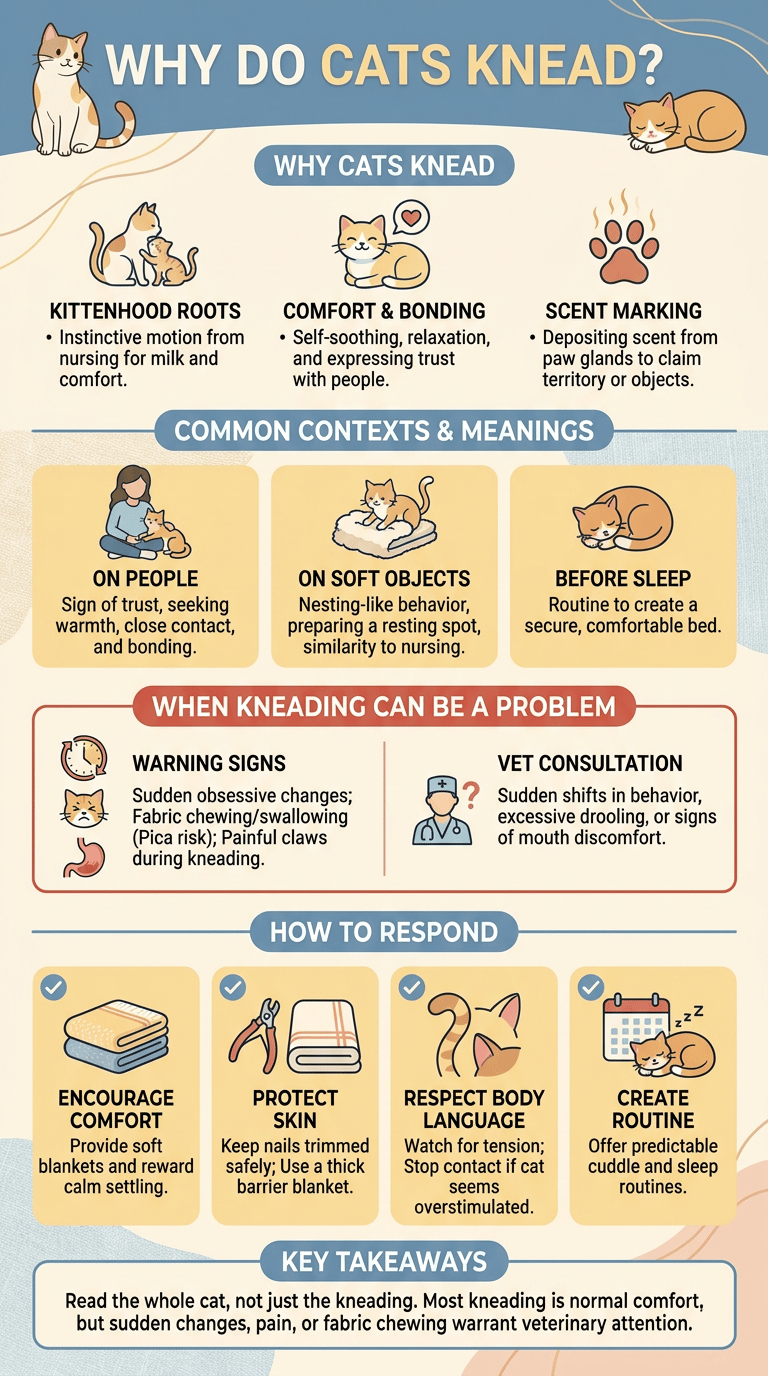
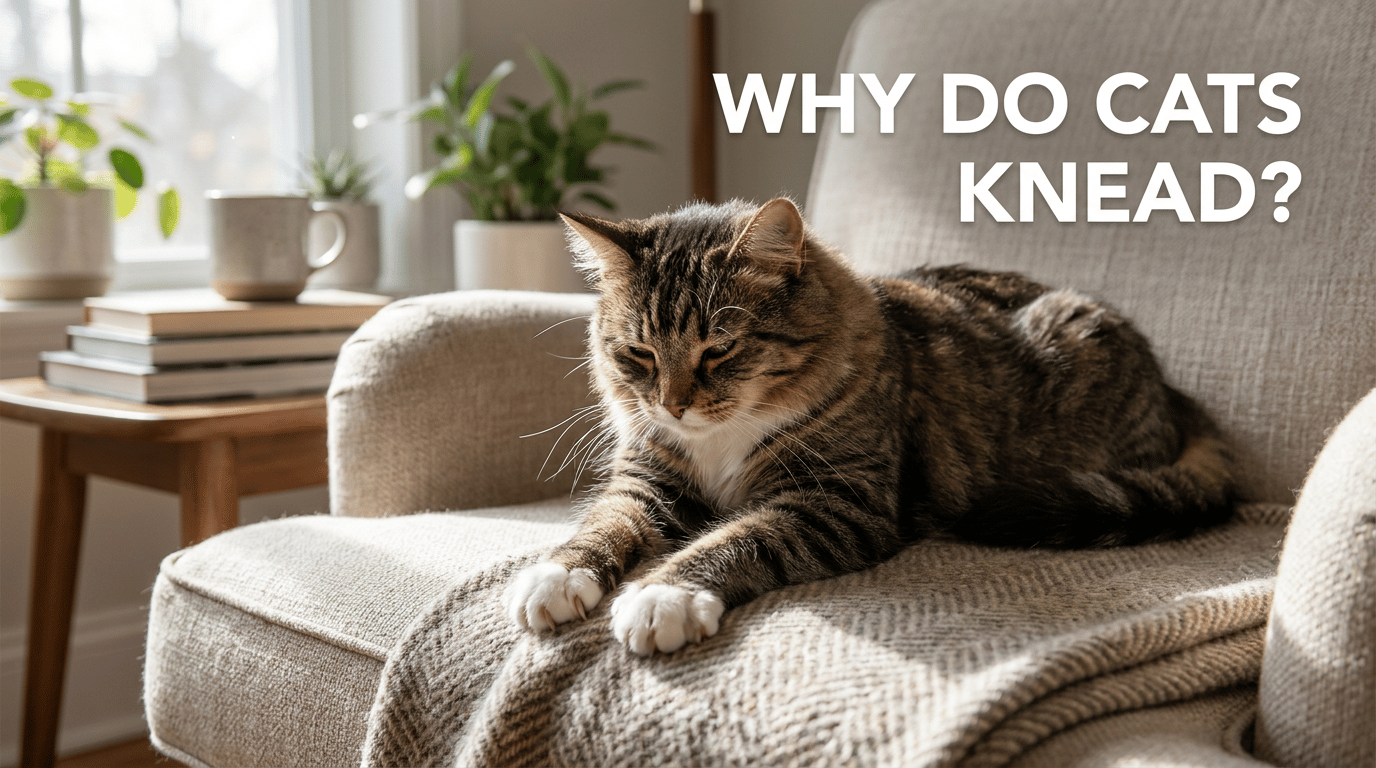
It focuses on practical meaning for why do cats knead, safe handling, cat choice, and warning signs that should not be ignored. Health and welfare questions are also covered by Cornell Feline Health Center resources.
For the broader pattern behind this signal, the main guide to cat behavior connects everyday actions with mood, communication, and owner responses.
Readers comparing why do cats knead may also find why do cats lick you useful for a closer look at a related cat behavior signal.
Readers comparing why do cats knead may also find why do cats purr useful for a closer look at a related cat behavior signal.
Quick Answer: Why Cats Knead
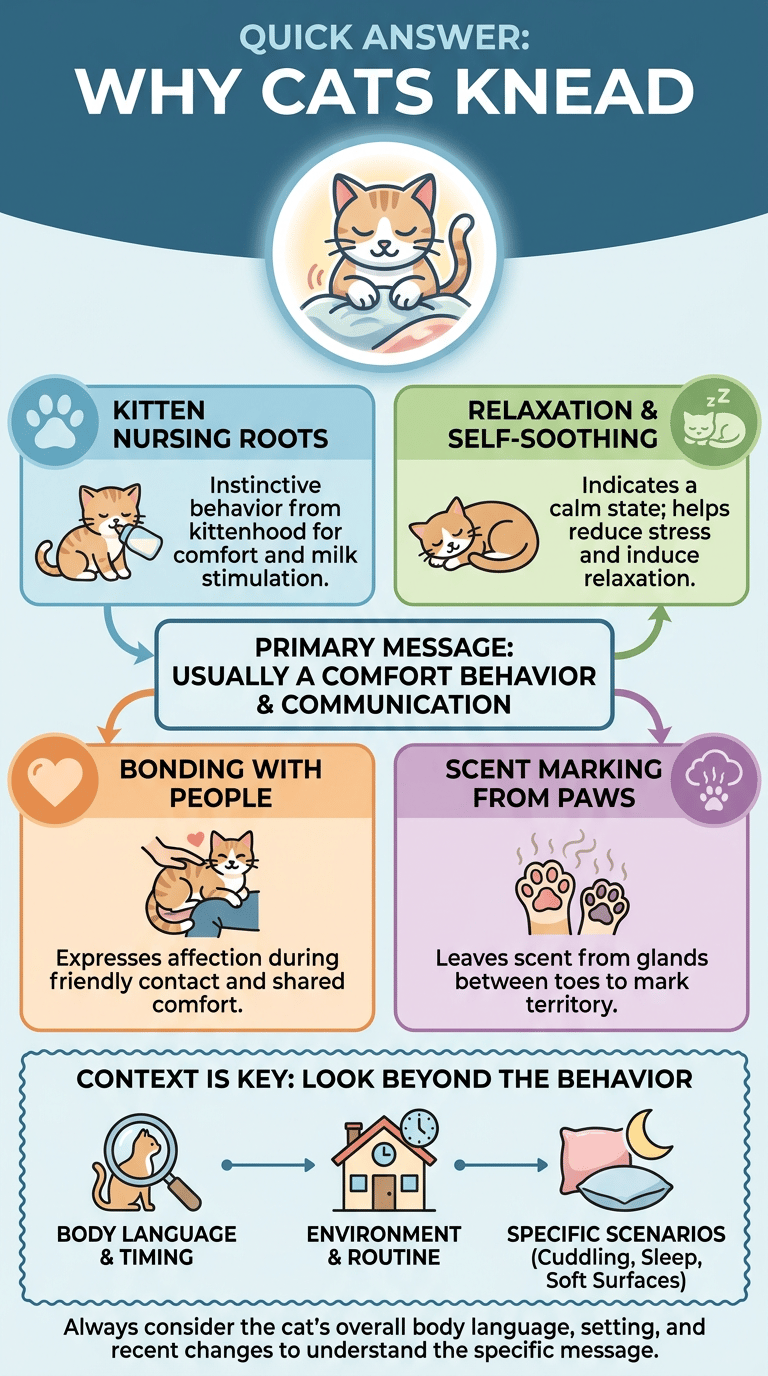
Kneading is usually a normal comfort behavior. Cats may press their paws into blankets, beds, or people when they feel settled, mark familiar areas with paw scent, or repeat a kittenhood pattern. cat owner guidance on behavior problems.
Kneading is usually a comfort behavior
Most kneading is a comfort signal. A cat may press its paws into a blanket, bed, or person while settling into a safe and familiar spot.
Kitten nursing roots
Kneading often traces back to the paw movement kittens use while nursing, which is why the action can remain soothing in adulthood.
Relaxation
A relaxed kneading cat usually has loose muscles, soft eyes, and an easy rhythm rather than a tense or frantic motion.
Bonding with people
Bonding with people should stay gentle. If the cat stiffens, turns away, or escalates, end contact calmly.
Scent marking from paws
Paw pads carry scent glands, so kneading can leave a familiar scent on blankets, beds, or a trusted person.
Kneading is not always one single message
The same paw motion can mean comfort, scent marking, settling down, or asking for attention, depending on the moment.
Context during cuddling
During cuddling, kneading often means the cat feels secure enough to settle close to you.
Context before sleep
Before sleep, kneading may help the cat settle into a comfortable position and prepare a familiar resting spot.
Context around soft surfaces
Soft surfaces invite kneading because they give the paws pressure and warmth, much like a comfortable resting nest.
Where Kneading Comes From
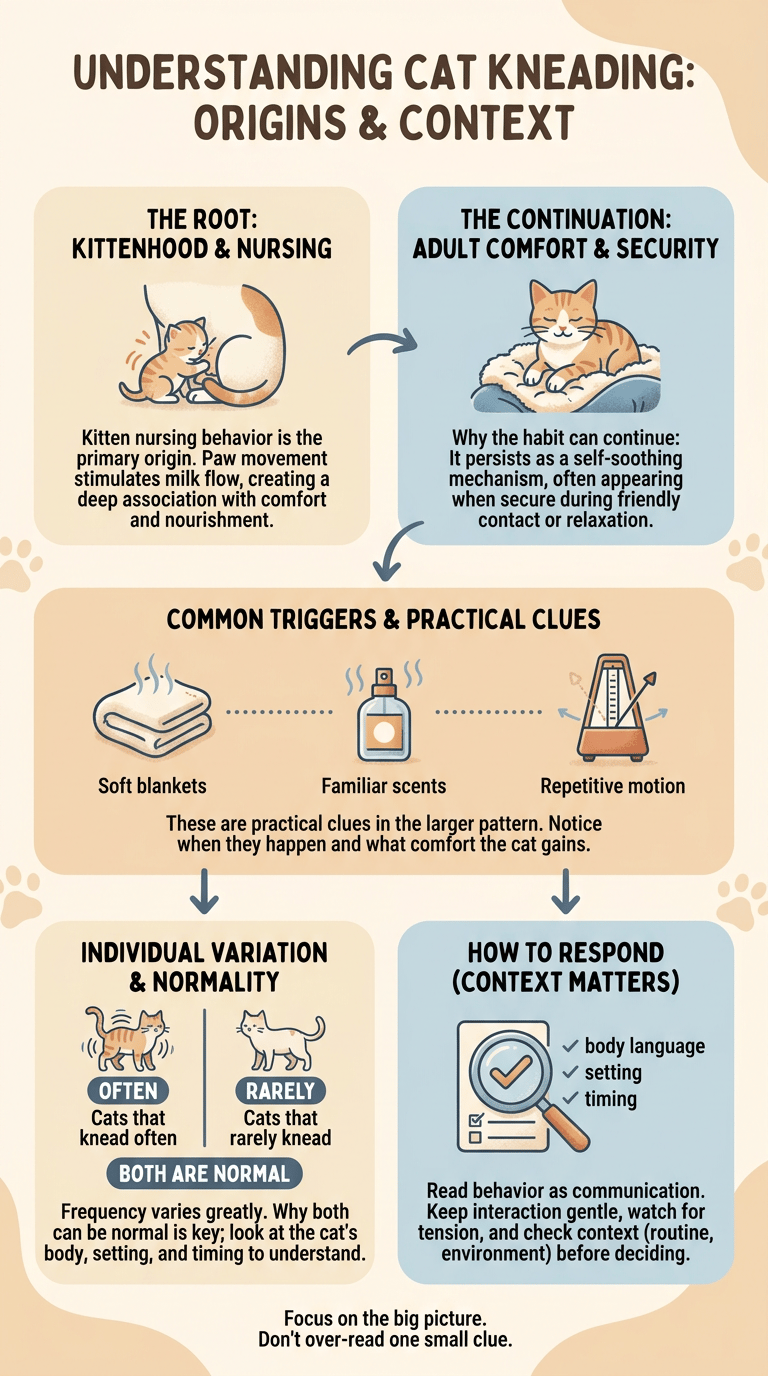
Kneading begins early in life and can remain part of adult comfort behavior. The habit does not need to mean one single thing every time, so context matters.
Kitten nursing behavior
Kitten nursing behavior is the root of the paw motion, but adult kneading is usually about comfort rather than feeding.
Paw movement during nursing
The nursing motion helps explain why many cats pair kneading with purring, drooling, or settling into sleep.
Why the habit can continue into adulthood
Adult cats may keep kneading because the rhythm is familiar, calming, and linked with safe rest.
Why adult cats may knead when secure
An adult cat may knead when the room, person, or resting place feels predictable and safe.
Comfort and self-soothing
Kneading can work like a calming routine, especially when the cat is settling in and the body looks loose.
Soft blankets
Blankets give the paws something warm and yielding to press into, so many cats choose them before napping.
Familiar scents
A blanket or lap that smells familiar can make kneading more likely because the cat already associates it with safety.
Repetitive motion
The steady paw rhythm can be self-soothing, especially when the rest of the cat’s body looks loose and calm.
Individual differences
Some cats are enthusiastic kneaders and others almost never do it; both can be normal for that individual cat.
Cats that knead often
Cats that knead often may simply use the habit as part of resting, greeting, or getting comfortable.
Cats that rarely knead
Cats that rarely knead are not necessarily less bonded; they may show comfort through purring, resting nearby, or rubbing instead.
Why both can be normal
Some cats knead every day and others rarely do it; either pattern can be normal if the cat is otherwise comfortable.
Why Cats Knead People
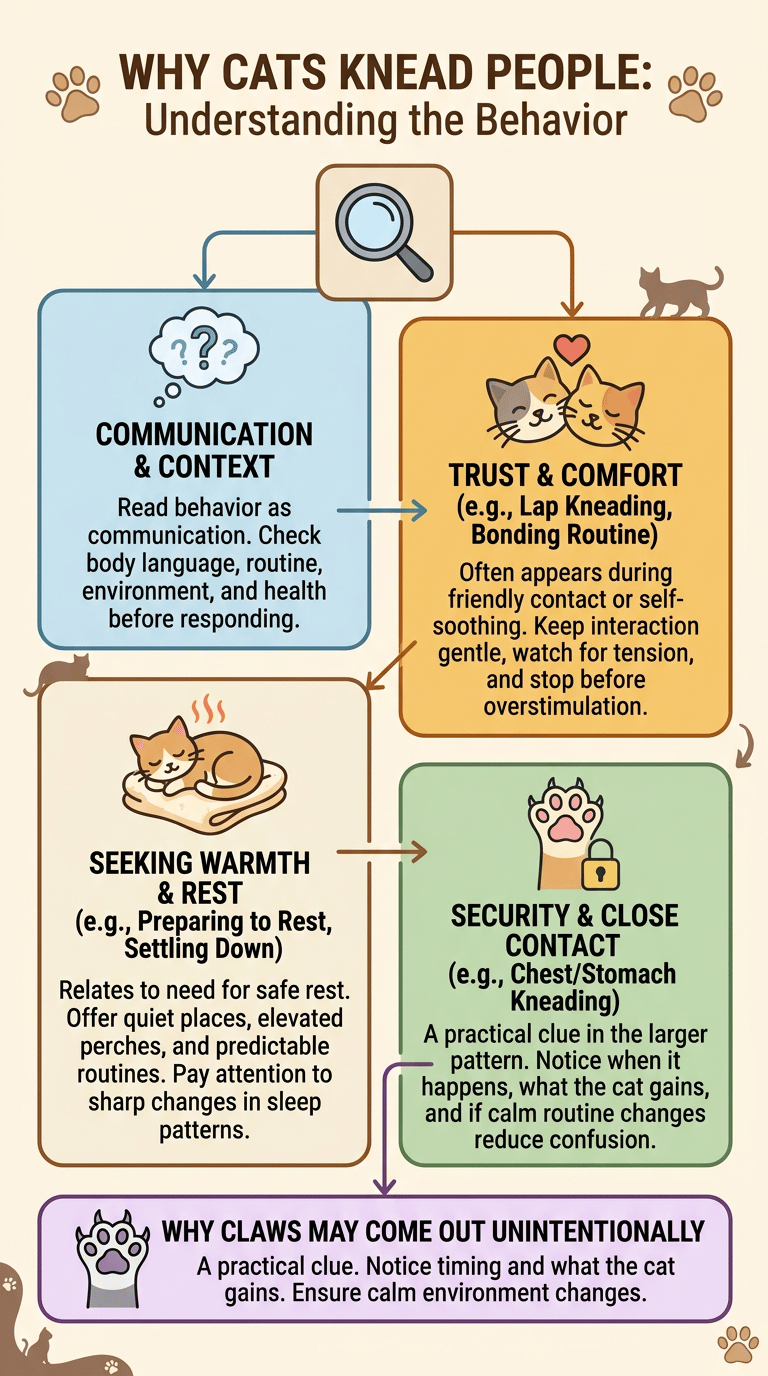
When a cat kneads a person, it may be choosing a warm, familiar resting place. Keep claws trimmed, use a blanket barrier if needed, and avoid scolding a cat for a normal behavior. body language.
Kneading your lap
A lap is warm, soft, and close to a trusted person, which makes it a common place for kneading.
Trust and comfort
Trust is more likely when the cat kneads with a relaxed body and stays because it wants to, not because it is held there.
Warmth
Warmth can make a lap, blanket, or bed more inviting when a cat is ready to knead and rest.
Preferred resting place
A favorite resting place may become part of the kneading routine because it already feels safe.
Kneading your chest or stomach
Chest or stomach kneading can happen when a cat wants close contact, but a blanket barrier can make it more comfortable for the person.
Close contact
Kneading during close contact often means the cat wants warmth and security, but the cat should still be free to leave.
Bonding routine
A bonding routine can include kneading, purring, and settling beside a person at predictable times.
Why claws may come out unintentionally
Claws may extend during kneading because the paw flexes naturally; a thick blanket protects skin without punishing the cat.
Kneading then settling down
Kneading followed by lying down usually means the cat is preparing a comfortable place to rest.
Preparing to rest
Preparing to rest may include turning, pawing, kneading, and then curling into a chosen spot.
Security
Kneading before sleep often shows that the cat feels secure enough to relax in that spot.
Routine before sleep
A repeated kneading routine before sleep is usually normal when the cat settles afterward and behaves normally otherwise.
Why Cats Knead Blankets, Beds, and Soft Objects
Blankets, beds, and soft objects give cats a comfortable place to press, scent, turn, and settle before resting.
Soft texture
Soft texture gives the behavior a more specific context. It matters most when it changes from what that individual cat normally does.
Similarity to nursing comfort
The pressure of soft fabric may echo the comfort of early nursing without meaning the adult cat is distressed.
Warmth and pressure
Warmth and gentle pressure can make kneading feel more satisfying before the cat settles.
Familiar bedding
Familiar bedding carries household and cat scent, making it a natural place for repeated kneading.
Nesting-like behavior
Nesting-like behavior is easiest to place when the rest of the scene is clear. The safest response is gentle observation and a small adjustment only when the cat seems uncomfortable.
Preparing a resting spot
Preparing a resting spot may include pawing, turning, and pressing into the surface until it feels right.
Turning and kneading before lying down
Turning and kneading before lying down is usually just a settling routine.
Why this is usually normal
This is usually normal when the cat settles afterward, eats normally, and shows no signs of stress or fabric chewing.
Scent marking
Scent marking can show comfort, familiarity, or self-soothing. Keep the moment low-pressure and stop if the cat starts to tense.
Paw scent glands
Paw scent glands can add the cat’s own scent to a favorite blanket, bed, or resting area.
Marking familiar objects
Marking a familiar object through kneading can make a resting place smell safer and more predictable.
Territory and security
For cats, familiar scent can be part of feeling secure in a room, bed, or lap.
Kneading With Purring, Drooling, or Suckling
Kneading with purring, drooling, or suckling often points to deep comfort, but sudden or excessive changes deserve attention.
Kneading and purring
Kneading and purring often go together when a cat is relaxed and enjoying contact or a soft resting place.
Relaxed body language
Relaxed body language is useful only when read with the rest of the body. Match it with ear position, eyes, posture, muscle tension, and the cat’s choice to approach or leave.
Social comfort
Social comfort is likely when the cat kneads near a familiar person and can leave whenever it chooses.
When to stop petting
Stop petting if the cat’s tail starts twitching, the body stiffens, the ears shift back, or the cat turns toward your hand.
Kneading and drooling
Kneading and drooling can be normal for some cats during deep relaxation, especially if it is a long-standing habit.
Deep relaxation
Drooling with kneading can happen during deep relaxation, especially in cats that have always done it.
Dental or mouth concerns if new or excessive
Dental or mouth concerns if new or excessive is useful only when read with the rest of the body. Match it with ear position, eyes, posture, muscle tension, and the cat’s choice to approach or leave.
When to monitor changes
Monitor changes when drooling, suckling, or kneading becomes new, excessive, or paired with mouth discomfort.
Kneading and suckling
Kneading and suckling can be a comfort habit, but the fabric must be safe and the cat should not swallow material.
Comfort behavior
Comfort behavior should look calm and easy, not frantic, distressed, or impossible for the cat to interrupt.
Blanket suckling
Blanket suckling can be a comfort habit, but the fabric should be safe and the cat should not swallow threads.
When fabric chewing becomes risky
Fabric chewing becomes risky when the cat pulls off pieces, swallows material, vomits, or seems unable to stop.
When Kneading Can Become a Problem
Kneading becomes a problem when claws hurt people, fabric gets swallowed, or the behavior suddenly turns frantic or compulsive.
Painful claws
Painful claws should be treated as a warning area for kneading. Sudden, frantic, or compulsive kneading deserves a closer look if it appears with stress, fabric chewing, pain signs, or other behavior changes.
Keep nails trimmed safely
Safe nail trims reduce painful scratches while allowing the cat to keep a normal kneading habit.
Use a thick blanket barrier
A thick blanket lets the cat knead your lap without putting claws directly into skin.
Avoid punishing the cat
Avoid punishing the cat adds one useful detail to kneading. Use it with the cat’s posture, comfort level, and recent routine before changing how you respond.
Obsessive or sudden kneading changes
A sudden jump in kneading intensity can point to stress, discomfort, or a change in the home routine.
Stress changes
Stress changes should be handled by backing off rather than correcting the cat. Space prevents a small warning from becoming a stronger reaction.
New household routines
New household routines is part of everyday welfare. Clean resources, legal scratching surfaces, food puzzles, and easy access to litter boxes can prevent many behavior problems before they start.
Medical changes to rule out
Medical changes to rule out is worth tracking closely. If it is new, worsening, or paired with other symptoms, do not treat it as a harmless quirk.
Fabric chewing or swallowing
Fabric chewing or swallowing should be treated as a warning area for kneading. Sudden, frantic, or compulsive kneading deserves a closer look if it appears with stress, fabric chewing, pain signs, or other behavior changes.
Pica risk
Pica risk matters when the cat chews or swallows non-food material instead of only pressing paws into fabric.
Unsafe materials
Loose threads, strings, and soft plastics are unsafe if the cat chews or swallows them during kneading.
When to call a veterinarian
When to call a veterinarian is more concerning when it arrives with low energy, withdrawal, altered breathing, or a change in normal routines.
How To Respond to Cat Kneading
Respond by making kneading comfortable and safe: offer soft fabric, protect your skin, and move gently before the cat gets overstimulated.
Encourage comfortable kneading
Encourage comfortable kneading by giving the cat a soft, safe target before claws reach skin.
Provide soft blankets
Soft blankets give the cat an approved place to knead and settle without using bare skin.
Reward calm settling
Reward calm settling by letting the cat rest peacefully once the kneading slows and the body relaxes.
Create predictable cuddle routines
Create predictable cuddle routines is part of everyday welfare. Clean resources, legal scratching surfaces, food puzzles, and easy access to litter boxes can prevent many behavior problems before they start.
Protect your skin
Protect your skin should be read alongside the cat’s normal habits. If it appears suddenly or feels intense, slow down and look for stress or health clues.
Redirect to a blanket
Redirect to a blanket by sliding fabric under the paws instead of pushing the cat away abruptly.
Trim claws
Trim claws carefully and regularly so kneading stays comfortable for both the cat and the person.
Move gently before overstimulation
Move gently before overstimulation is easiest to prevent when people stop before the cat has to escalate.
Respect cat body language
Respect cat body language only makes sense beside the rest of the body. Ears, eyes, posture, muscle tension, and distance from people help show whether the cat is comfortable or asking for space.
Watch tail movement
Watch tail movement is useful only when read with the rest of the body. Match it with ear position, eyes, posture, muscle tension, and the cat’s choice to approach or leave.
Watch ears
Watch ears is useful only when read with the rest of the body. Match it with ear position, eyes, posture, muscle tension, and the cat’s choice to approach or leave.
Stop contact if tension appears
Stop contact if tension appears only makes sense beside the rest of the body. Ears, eyes, posture, muscle tension, and distance from people help show whether the cat is comfortable or asking for space.
Cat Kneading FAQ
These kneading questions are best answered by looking at comfort, habit, claws, fabric safety, and the cat’s normal pattern.
Why does my cat knead me but not other people?
Why does my cat knead me but not other people is usually a calmer signal when the cat stays loose and chooses to remain nearby.
Why does my cat knead and purr at the same time?
Why does my cat knead and purr at the same time can show comfort, familiarity, or self-soothing. Keep the moment low-pressure and stop if the cat starts to tense.
Why does my cat knead with claws out?
Why does my cat knead with claws out should stay gentle. If the cat stiffens, turns away, or escalates, end contact calmly.
Is cat kneading a sign of affection?
Is cat kneading a sign of affection is easier to trust when posture is soft, breathing is normal, and the cat does not avoid contact.
Should I stop my cat from kneading?
Should I stop my cat from kneading should stay gentle. If the cat stiffens, turns away, or escalates, end contact calmly.
Key Takeaways
Why Do Cats Knead? is easiest to understand when you read the whole cat, not one isolated action. Body language, routine, environment, health, and recent handling all change the meaning. For more practical cat-care reading, use International Cat Care guidance.
Most behaviors are normal when they fit the cat’s usual pattern and the cat looks relaxed. Sudden changes, hard biting, hiding, appetite changes, litter box changes, breathing trouble, or signs of pain deserve professional guidance.

Ethan Walker is the founder and research editor of Animal Fact Central. He creates and reviews educational animal facts content using trusted wildlife, pet care, and science-based sources. His work focuses on making animal behavior, adaptations, habitats, and species facts clear, accurate, and engaging for everyday readers.
Read More Details About Ethan Walker: https://animalfactcentral.com/ethan-walker/