
Why Do Cats Sleep So Much? explains a behavior many cat owners notice during ordinary life at home. The goal is to read the cat clearly, respond gently, and know when a behavior is normal versus when it may point to stress, pain, illness, or a setup that needs to change. For broader behavior context, see guidance on cat social behavior.
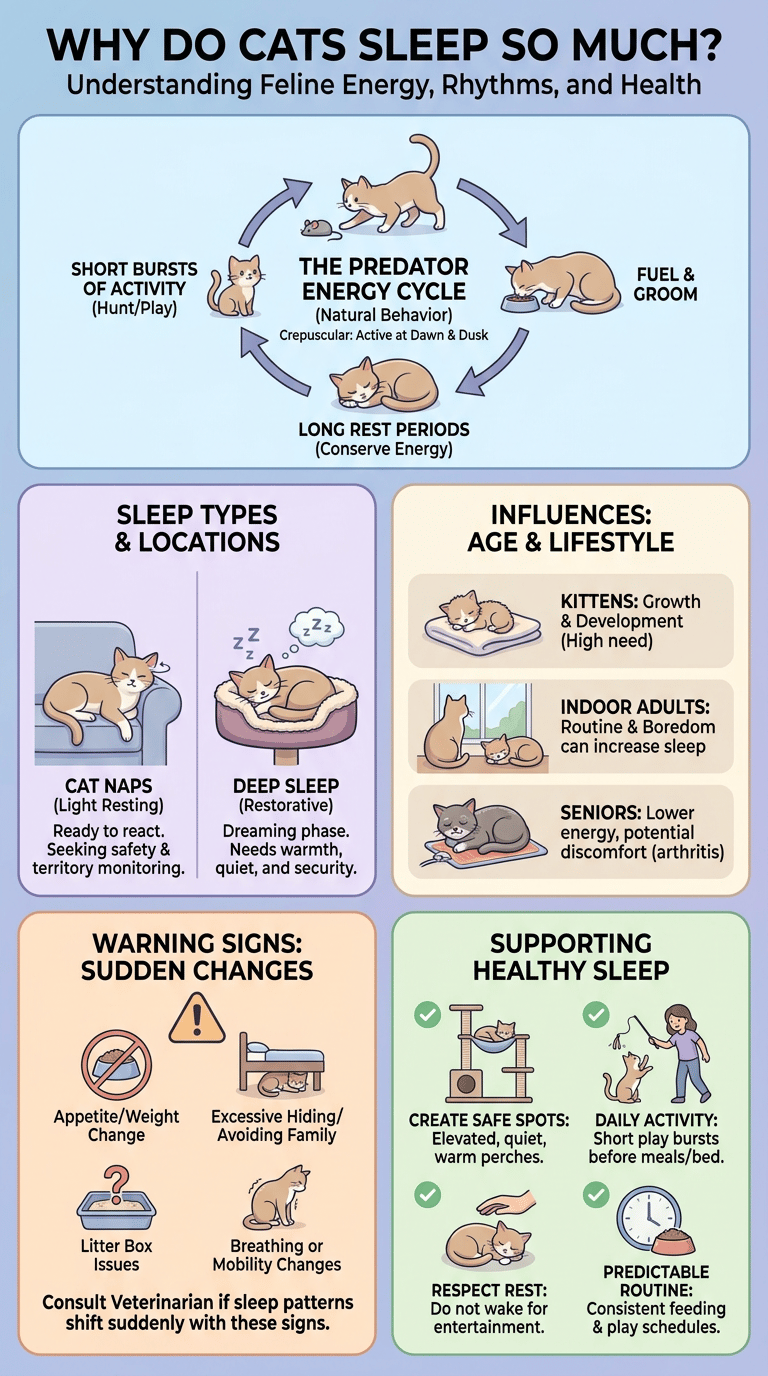
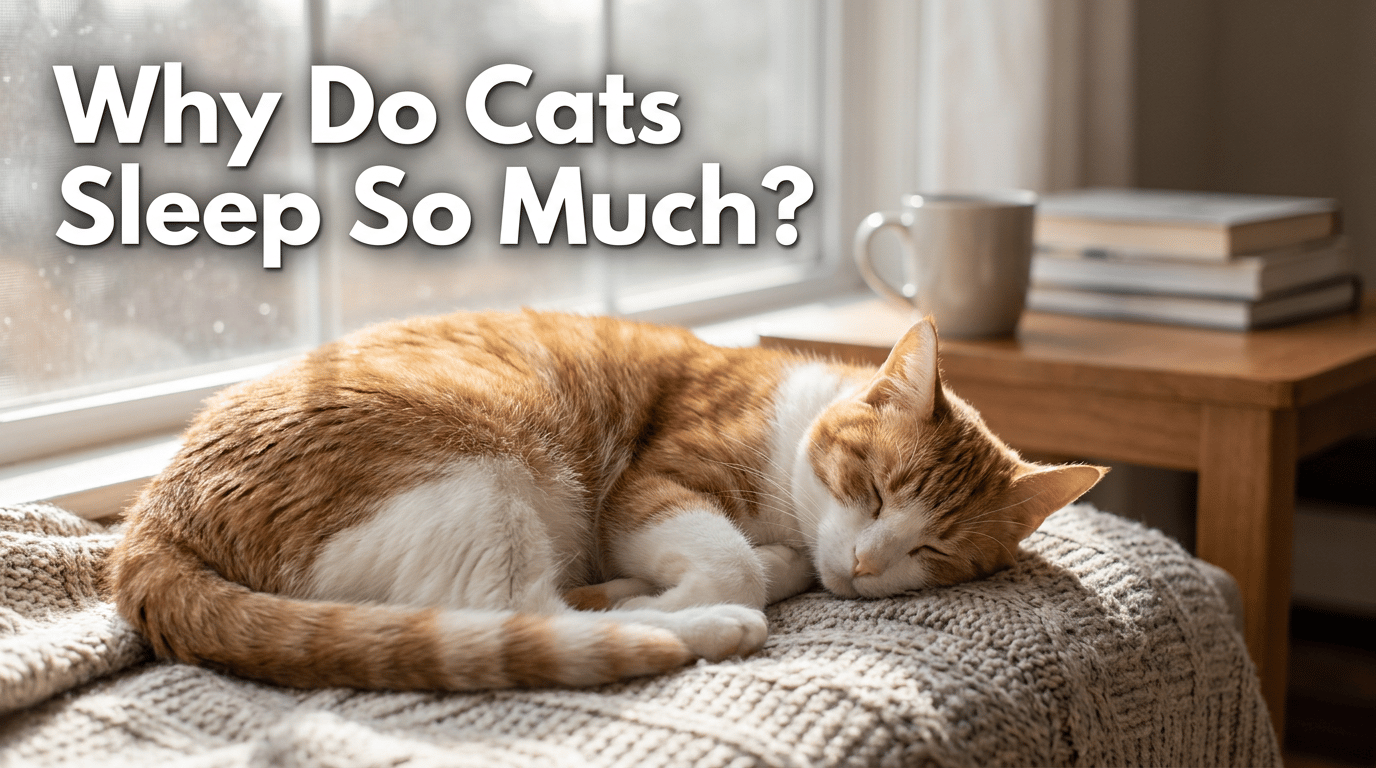
This guide focuses on practical meaning, gentle handling, cat choice, and warning signs that should not be ignored. Cornell Feline Health Center resources.
Readers comparing why do cats sleep so much may also find cat zoomies useful for a closer look at a related cat behavior signal.
For the broader pattern behind this signal, the main guide to cat behavior connects everyday actions with mood, communication, and owner responses.
Readers comparing why do cats sleep so much may also find why do cats purr useful for a closer look at a related cat behavior signal.
Quick Answer: Why Cats Sleep So Much
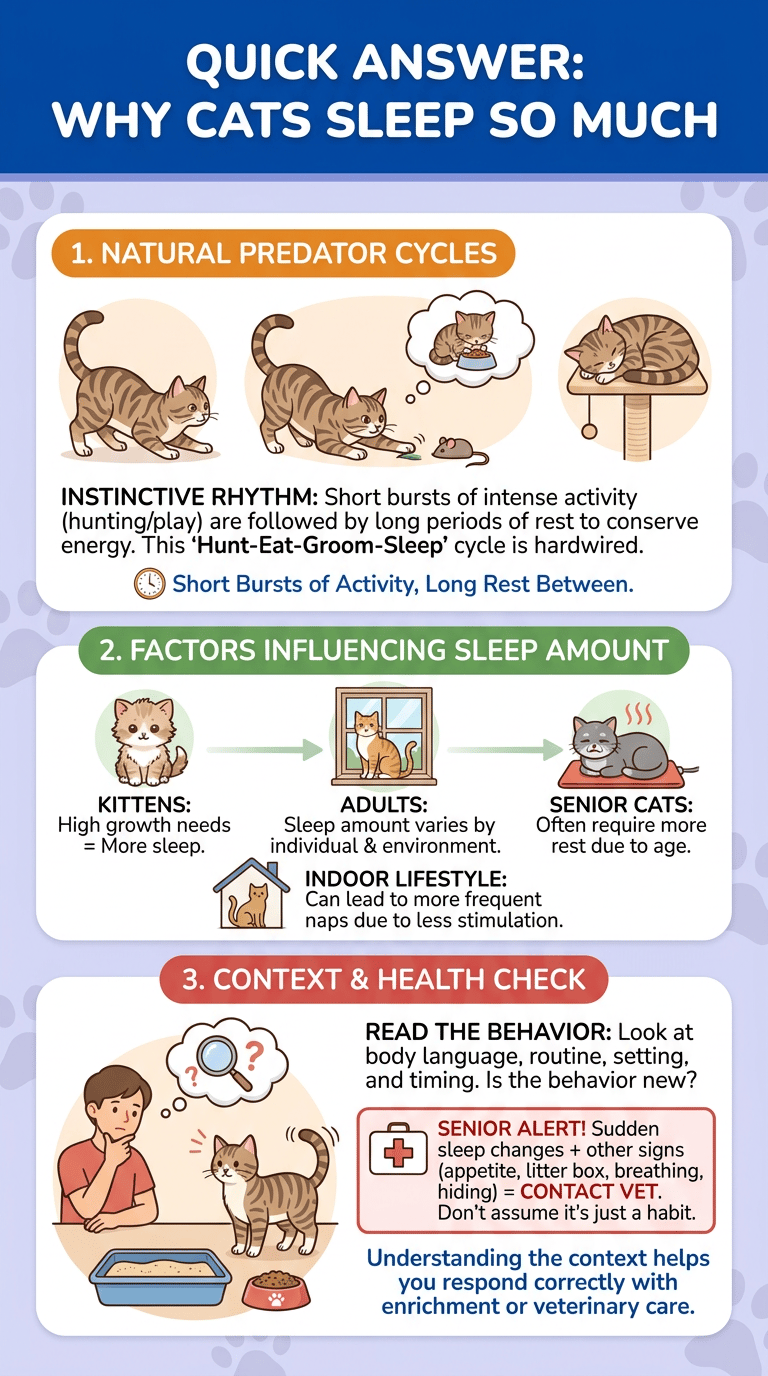
Cats naturally spend a lot of time resting, and their sleep can be spread across many short naps. The concern is not sleep by itself, but a sharp change from the cat’s usual pattern. cat owner guidance on behavior problems.
Cats naturally rest a lot
Cats naturally rest a lot fits normal feline rest when the cat wakes easily, moves normally, and keeps regular eating and litter box habits.
Predator energy cycles
Predator energy cycles works best when the cat has something appropriate to stalk, chase, grab, and release.
Short bursts of activity
Short bursts of activity adds one useful detail to cat sleep. If it appears suddenly or feels intense, slow down and look for stress or health clues.
Rest between hunting-like behaviors
Rest between hunting-like behaviors often improves when the cat gets a clear start and finish to play instead of random bursts with no outlet.
Sleep amount depends on the cat
Sleep amount depends on the cat fits normal feline rest when the cat wakes easily, moves normally, and keeps regular eating and litter box habits.
Kittens
Kittens is easier to interpret when the owner knows what is typical for that particular cat.
Adults
Adults is not the same for every cat, so a familiar baseline matters more than a universal rule.
Senior cats
Senior cats is more concerning when it arrives with low energy, withdrawal, altered breathing, or a change in normal routines.
Indoor lifestyle
Indoor lifestyle gives the behavior a more specific context. The safest response is gentle observation and a small adjustment only when the cat seems uncomfortable.
Cat Sleep Patterns
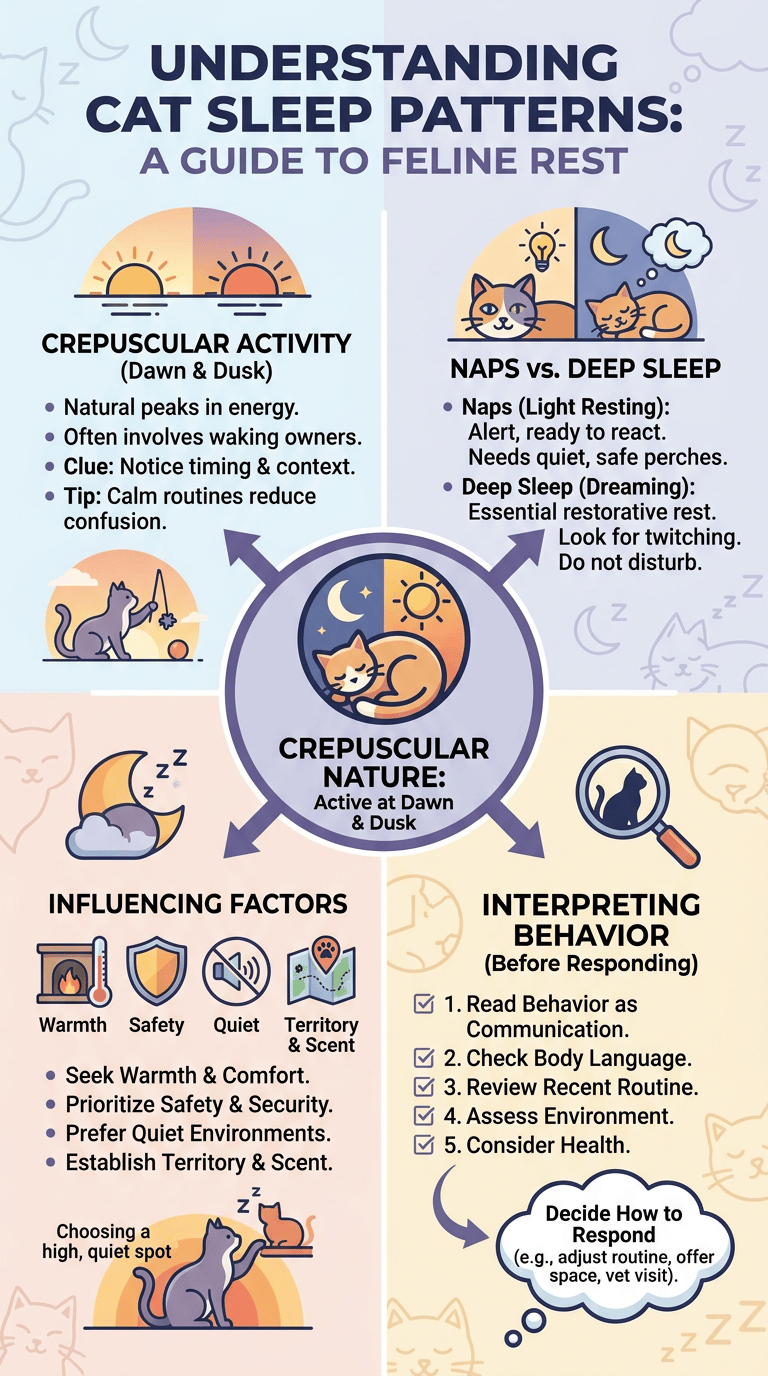
Cat sleep shifts with age, activity, safety, temperature, and household routine. A familiar pattern is usually less concerning than sudden lethargy, hiding, appetite change, or breathing difficulty. body language.
Cats are crepuscular
Cats are crepuscular can help explain why sleep shows up in that moment. The safest response is gentle observation and a small adjustment only when the cat seems uncomfortable.
Dawn activity
Dawn activity is easiest to place when the rest of the scene is clear. If it appears suddenly or feels intense, slow down and look for stress or health clues.
Dusk activity
Dusk activity should be read alongside the cat’s normal habits. The safest response is gentle observation and a small adjustment only when the cat seems uncomfortable.
Why cats may wake owners at night
Why cats may wake owners at night depends on the order of events around the behavior. What happened before, how the cat responded, and what changed afterward all shape the meaning.
Naps vs deep sleep
Naps vs deep sleep fits normal feline rest when the cat wakes easily, moves normally, and keeps regular eating and litter box habits.
Light resting
Light resting fits normal feline rest when the cat wakes easily, moves normally, and keeps regular eating and litter box habits.
Deep sleep
Deep sleep fits normal feline rest when the cat wakes easily, moves normally, and keeps regular eating and litter box habits.
Dreaming and twitching
Dreaming and twitching is part of the bigger pattern, not a stand-alone answer. If it appears suddenly or feels intense, slow down and look for stress or health clues.
Why cats change sleep spots
Why cats change sleep spots fits normal feline rest when the cat wakes easily, moves normally, and keeps regular eating and litter box habits.
Warmth
Warmth fits normal feline rest when the cat wakes easily, moves normally, and keeps regular eating and litter box habits.
Safety
Safety is easiest to place when the rest of the scene is clear. The safest response is gentle observation and a small adjustment only when the cat seems uncomfortable.
Quiet
Quiet fits normal feline rest when the cat wakes easily, moves normally, and keeps regular eating and litter box habits.
Territory and scent
Territory and scent is usually a calmer signal when the cat stays loose and chooses to remain nearby.
Why Indoor Cats May Sleep More
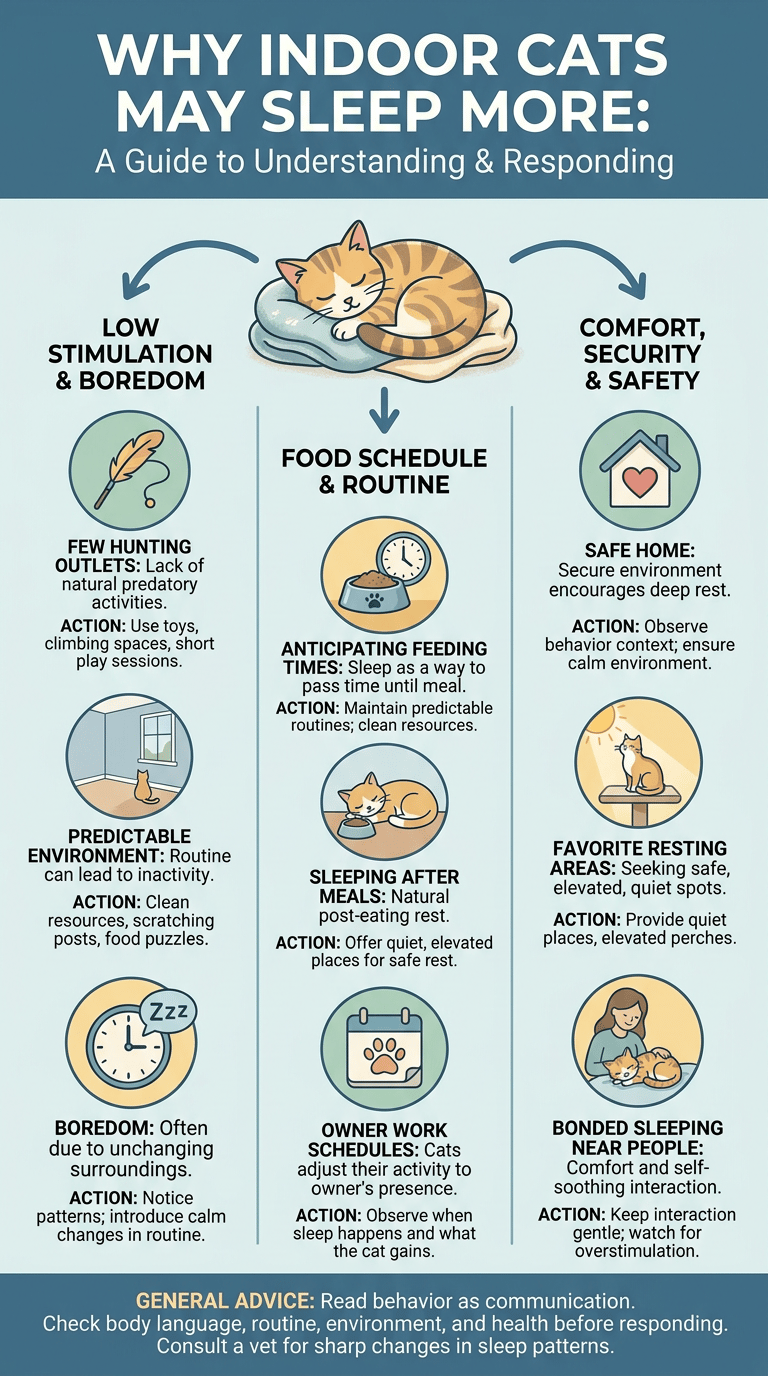
Indoor cats may nap more when the home is quiet and predictable. Food puzzles, climbing places, window views, and daily play can add activity without forcing the cat awake.
Low stimulation
Low stimulation is easiest to place when the rest of the scene is clear. Use it with the cat’s posture, comfort level, and recent routine before changing how you respond.
Few hunting outlets
Few hunting outlets works best when the cat has something appropriate to stalk, chase, grab, and release.
Predictable environment
Predictable environment is part of everyday welfare. Clean resources, legal scratching surfaces, food puzzles, and easy access to litter boxes can prevent many behavior problems before they start.
Boredom
Boredom is part of the bigger pattern, not a stand-alone answer. Pair it with appetite, energy, litter box habits, and willingness to interact.
Food schedule and routine
Food schedule and routine is part of the cat’s daily setup. Clean resources, predictable routines, and enough choice in the home can prevent stress from building.
Sleeping after meals
Sleeping after meals fits normal feline rest when the cat wakes easily, moves normally, and keeps regular eating and litter box habits.
Anticipating feeding times
Anticipating feeding times is part of everyday welfare. Clean resources, legal scratching surfaces, food puzzles, and easy access to litter boxes can prevent many behavior problems before they start.
Owner work schedules
Owner work schedules is part of the cat’s daily setup. Clean resources, predictable routines, and enough choice in the home can prevent stress from building.
Comfort and security
Comfort and security is easier to trust when posture is soft, breathing is normal, and the cat does not avoid contact.
Safe home
Safe home is part of the cat’s daily setup. Clean resources, predictable routines, and enough choice in the home can prevent stress from building.
Favorite resting areas
Favorite resting areas fits normal feline rest when the cat wakes easily, moves normally, and keeps regular eating and litter box habits.
Bonded sleeping near people
Bonded sleeping near people only makes sense beside the rest of the body. Ears, eyes, posture, muscle tension, and distance from people help show whether the cat is comfortable or asking for space.
Sleep by Life Stage
Sleep by Life Stage is best read through the main theme of the article: Rest is a major part of a cat’s day, and normal sleep varies with age, activity, safety, temperature, and household rhythm. Extra sleep becomes more concerning when it arrives suddenly or comes with low appetite, hiding, weight change, breathing trouble, or litter box changes.
Kitten sleep
Kitten sleep fits normal feline rest when the cat wakes easily, moves normally, and keeps regular eating and litter box habits.
Growth and development
Growth and development adds one useful detail to cat sleep. It matters most when it changes from what that individual cat normally does.
Short play bursts
Short play bursts works best when the cat has something appropriate to stalk, chase, grab, and release.
Safe sleep setup
Safe sleep setup fits normal feline rest when the cat wakes easily, moves normally, and keeps regular eating and litter box habits.
Adult cat sleep
Adult cat sleep fits normal feline rest when the cat wakes easily, moves normally, and keeps regular eating and litter box habits.
Normal rest routines
Normal rest routines fits normal feline rest when the cat wakes easily, moves normally, and keeps regular eating and litter box habits.
Activity balance
Activity balance adds one useful detail to cat sleep. It matters most when it changes from what that individual cat normally does.
Environmental enrichment
Environmental enrichment is part of everyday welfare. Clean resources, legal scratching surfaces, food puzzles, and easy access to litter boxes can prevent many behavior problems before they start.
Senior cat sleep
Senior cat sleep should be treated as a warning area for cat sleep. Extra sleep becomes more concerning when it arrives suddenly or comes with low appetite, hiding, weight change, breathing trouble, or litter box changes.
Lower energy
Lower energy often improves when the cat gets a clear start and finish to play instead of random bursts with no outlet.
Arthritis or discomfort possibility
Arthritis or discomfort possibility should leave the cat in control of contact, including the option to pause or walk away.
Cognitive or sensory changes
Cognitive or sensory changes is part of the bigger pattern, not a stand-alone answer. If it appears suddenly or feels intense, slow down and look for stress or health clues.
When Sleeping a Lot May Be a Problem
When Sleeping a Lot May Be a Problem is best read through the main theme of the article: Rest is a major part of a cat’s day, and normal sleep varies with age, activity, safety, temperature, and household rhythm. Extra sleep becomes more concerning when it arrives suddenly or comes with low appetite, hiding, weight change, breathing trouble, or litter box changes.
Sudden increase in sleep
Sudden increase in sleep fits normal feline rest when the cat wakes easily, moves normally, and keeps regular eating and litter box habits.
Illness possibility
Illness possibility deserves a careful look because cats may stay quiet when uncomfortable. A sudden change, repeated episode, or sign of pain is enough reason to get professional guidance.
Pain possibility
Pain possibility is a health-check point, not just a behavior note. Call a veterinarian if it appears suddenly or sits beside changes in eating, movement, breathing, or litter box use.
Stress or depression-like changes
Stress or depression-like changes should be handled by backing off rather than correcting the cat. Space prevents a small warning from becoming a stronger reaction.
Sleep with other warning signs
Sleep with other warning signs fits normal feline rest when the cat wakes easily, moves normally, and keeps regular eating and litter box habits.
Appetite change
Appetite change is more concerning when it arrives with low energy, withdrawal, altered breathing, or a change in normal routines.
Weight change
Weight change is worth tracking closely. If it is new, worsening, or paired with other symptoms, do not treat it as a harmless quirk.
Hiding
Hiding fits normal feline rest when the cat wakes easily, moves normally, and keeps regular eating and litter box habits.
Litter box changes
Litter box changes should shift the focus from interpretation to welfare. Watch for appetite change, hiding, poor mobility, or litter box changes, then involve a vet if the pattern is new.
Breathing changes
Breathing changes is more concerning when it arrives with low energy, withdrawal, altered breathing, or a change in normal routines.
Sleeping in unusual places
Sleeping in unusual places fits normal feline rest when the cat wakes easily, moves normally, and keeps regular eating and litter box habits.
Hiding under furniture
Hiding under furniture is useful only when read with the rest of the body. Match it with ear position, eyes, posture, muscle tension, and the cat’s choice to approach or leave.
Avoiding family
Avoiding family gives the behavior a more specific context. It matters most when it changes from what that individual cat normally does.
Seeking heat excessively
Seeking heat excessively is easiest to place when the rest of the scene is clear. The safest response is gentle observation and a small adjustment only when the cat seems uncomfortable.
How To Support Healthy Cat Sleep
How To Support Healthy Cat Sleep is best read through the main theme of the article: Rest is a major part of a cat’s day, and normal sleep varies with age, activity, safety, temperature, and household rhythm. Extra sleep becomes more concerning when it arrives suddenly or comes with low appetite, hiding, weight change, breathing trouble, or litter box changes.
Create good resting spaces
Create good resting spaces fits normal feline rest when the cat wakes easily, moves normally, and keeps regular eating and litter box habits.
Quiet beds
Quiet beds fits normal feline rest when the cat wakes easily, moves normally, and keeps regular eating and litter box habits.
Elevated perches
Elevated perches fits normal feline rest when the cat wakes easily, moves normally, and keeps regular eating and litter box habits.
Warm but safe areas
Warm but safe areas fits normal feline rest when the cat wakes easily, moves normally, and keeps regular eating and litter box habits.
Add daily activity
Add daily activity should be read alongside the cat’s normal habits. It matters most when it changes from what that individual cat normally does.
Wand toy play
Wand toy play works best when the cat has something appropriate to stalk, chase, grab, and release.
Puzzle feeders
Puzzle feeders is part of everyday welfare. Clean resources, legal scratching surfaces, food puzzles, and easy access to litter boxes can prevent many behavior problems before they start.
Short sessions before meals
Short sessions before meals is part of everyday welfare. Clean resources, legal scratching surfaces, food puzzles, and easy access to litter boxes can prevent many behavior problems before they start.
Respect sleep
Respect sleep fits normal feline rest when the cat wakes easily, moves normally, and keeps regular eating and litter box habits.
Do not wake cats for entertainment
Do not wake cats for entertainment gives the behavior a more specific context. The safest response is gentle observation and a small adjustment only when the cat seems uncomfortable.
Teach children gentle boundaries
Teach children gentle boundaries is part of the bigger pattern, not a stand-alone answer. It matters most when it changes from what that individual cat normally does.
Watch for changes over time
Watch for changes over time should be read alongside the cat’s normal habits. If the cat stays loose and recovers quickly, the sign is usually less concerning.
Night Waking and Early Morning Activity
Night Waking and Early Morning Activity is best read through the main theme of the article: Rest is a major part of a cat’s day, and normal sleep varies with age, activity, safety, temperature, and household rhythm. Extra sleep becomes more concerning when it arrives suddenly or comes with low appetite, hiding, weight change, breathing trouble, or litter box changes.
Why cats wake people up
Why cats wake people up depends on the order of events around the behavior. What happened before, how the cat responded, and what changed afterward all shape the meaning.
Dawn activity rhythm
Dawn activity rhythm adds one useful detail to cat sleep. Use it with the cat’s posture, comfort level, and recent routine before changing how you respond.
Hunger expectations
Hunger expectations should be read alongside the cat’s normal habits. The safest response is gentle observation and a small adjustment only when the cat seems uncomfortable.
Learned attention-seeking
Learned attention-seeking only makes sense beside the rest of the body. Ears, eyes, posture, muscle tension, and distance from people help show whether the cat is comfortable or asking for space.
How to reduce night disturbance
How to reduce night disturbance gives the behavior a more specific context. Use it with the cat’s posture, comfort level, and recent routine before changing how you respond.
Evening play
Evening play is usually easier to manage by adding play before the busy time of day, not by scolding the cat afterward.
Predictable feeding
Predictable feeding is part of everyday welfare. Clean resources, legal scratching surfaces, food puzzles, and easy access to litter boxes can prevent many behavior problems before they start.
Avoid rewarding meowing at night
Avoid rewarding meowing at night is part of the bigger pattern, not a stand-alone answer. It matters most when it changes from what that individual cat normally does.
When night activity may signal a problem
When night activity may signal a problem gives the behavior a more specific context. The safest response is gentle observation and a small adjustment only when the cat seems uncomfortable.
Senior confusion
Senior confusion deserves a careful look because cats may stay quiet when uncomfortable. A sudden change, repeated episode, or sign of pain is enough reason to get professional guidance.
Pain
Pain is a health-check point, not just a behavior note. Call a veterinarian if it appears suddenly or sits beside changes in eating, movement, breathing, or litter box use.
Hyperthyroid-like warning signs to discuss with a vet
Hyperthyroid-like warning signs to discuss with a vet is easiest to prevent when people stop before the cat has to escalate.
Cat Sleep FAQ
Cat Sleep FAQ is best read through the main theme of the article: Rest is a major part of a cat’s day, and normal sleep varies with age, activity, safety, temperature, and household rhythm. Extra sleep becomes more concerning when it arrives suddenly or comes with low appetite, hiding, weight change, breathing trouble, or litter box changes.
Is it normal for cats to sleep all day?
Is it normal for cats to sleep all day fits normal feline rest when the cat wakes easily, moves normally, and keeps regular eating and litter box habits.
Why does my cat sleep near me?
Why does my cat sleep near me only makes sense beside the rest of the body. Ears, eyes, posture, muscle tension, and distance from people help show whether the cat is comfortable or asking for space.
Why does my cat sleep after eating?
Why does my cat sleep after eating fits normal feline rest when the cat wakes easily, moves normally, and keeps regular eating and litter box habits.
Why is my senior cat sleeping more?
Why is my senior cat sleeping more should be treated as a warning area for cat sleep. Extra sleep becomes more concerning when it arrives suddenly or comes with low appetite, hiding, weight change, breathing trouble, or litter box changes.
When should I worry about my cat sleeping too much?
When should I worry about my cat sleeping too much fits normal feline rest when the cat wakes easily, moves normally, and keeps regular eating and litter box habits.
Key Takeaways
Why Do Cats Sleep So Much? is easiest to understand when you read the whole cat, not one isolated action. Body language, routine, environment, health, and recent handling all change the meaning. For more practical cat-care reading, use International Cat Care guidance.
Most behaviors are normal when they fit the cat’s usual pattern and the cat looks relaxed. Sudden changes, hard biting, hiding, appetite changes, litter.

Ethan Walker is the founder and research editor of Animal Fact Central. He creates and reviews educational animal facts content using trusted wildlife, pet care, and science-based sources. His work focuses on making animal behavior, adaptations, habitats, and species facts clear, accurate, and engaging for everyday readers.
Read More Details About Ethan Walker: https://animalfactcentral.com/ethan-walker/