
Cat Tail Language: What Your Cat’s Tail Is Telling You explains a behavior many cat owners notice during ordinary life at home. The goal is to read the cat clearly, respond gently, and know when a behavior is normal versus when it may point to stress, pain, illness, or a setup that needs to change. For broader behavior context, see guidance on cat social behavior.
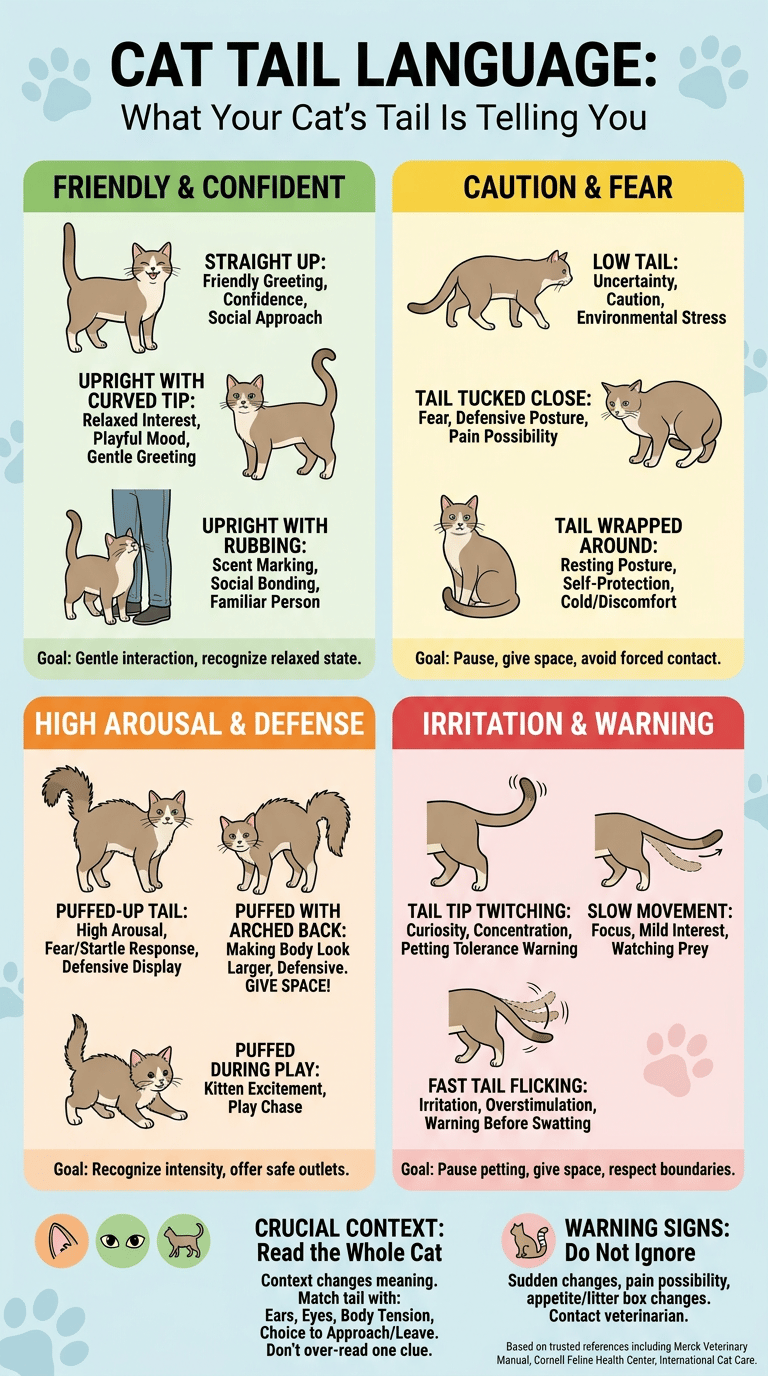
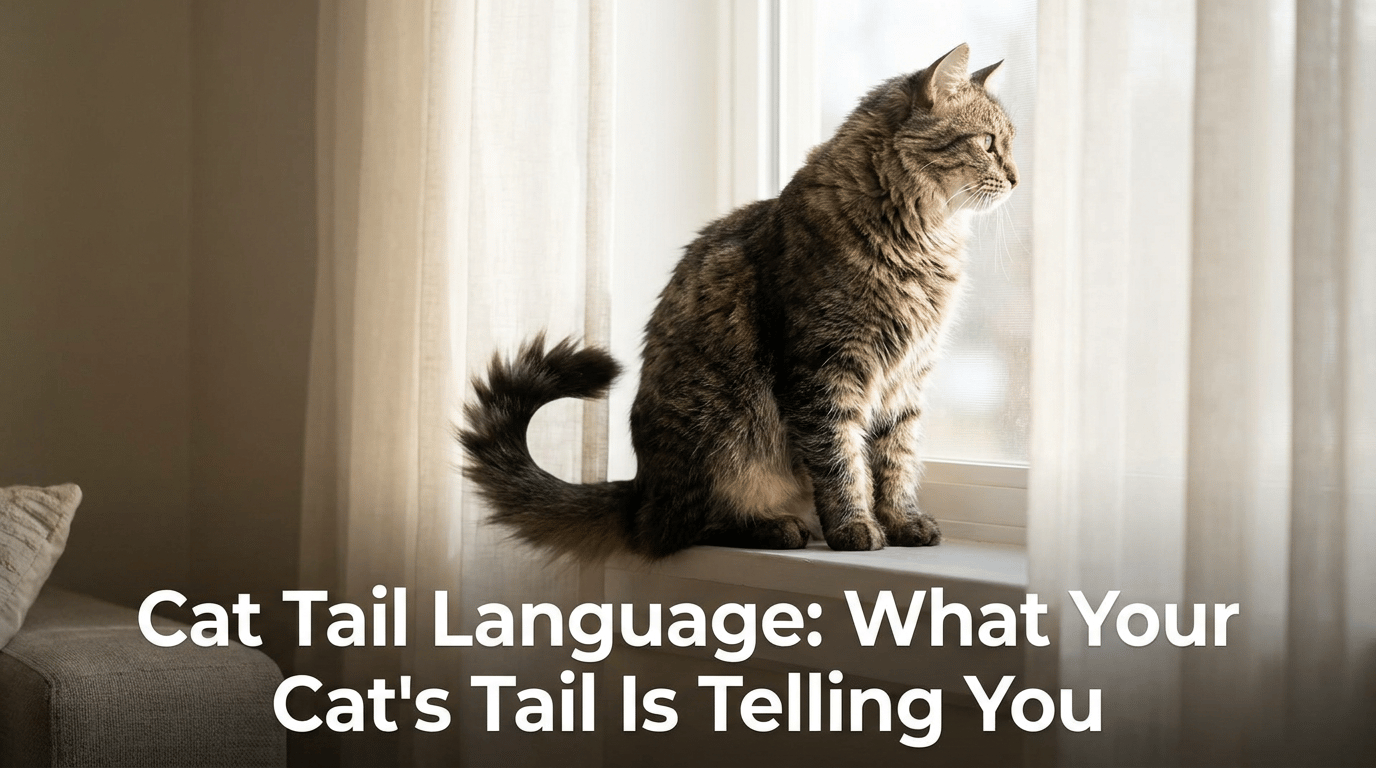
This guide focuses on practical meaning, gentle handling, cat choice, and warning signs that should not be ignored. Cornell Feline Health Center resources.
Readers comparing cat tail language may also find cat zoomies useful for a closer look at a related cat behavior signal.
For the broader pattern behind this signal, the main guide to cat behavior connects everyday actions with mood, communication, and owner responses.
Readers comparing cat tail language may also find why do cats lick you useful for a closer look at a related cat behavior signal.
Readers comparing cat tail language may also find why do cats knead useful for a closer look at a related cat behavior signal.
Readers comparing cat tail language may also find why do cats purr useful for a closer look at a related cat behavior signal.
Why Cat Tail Language Matters
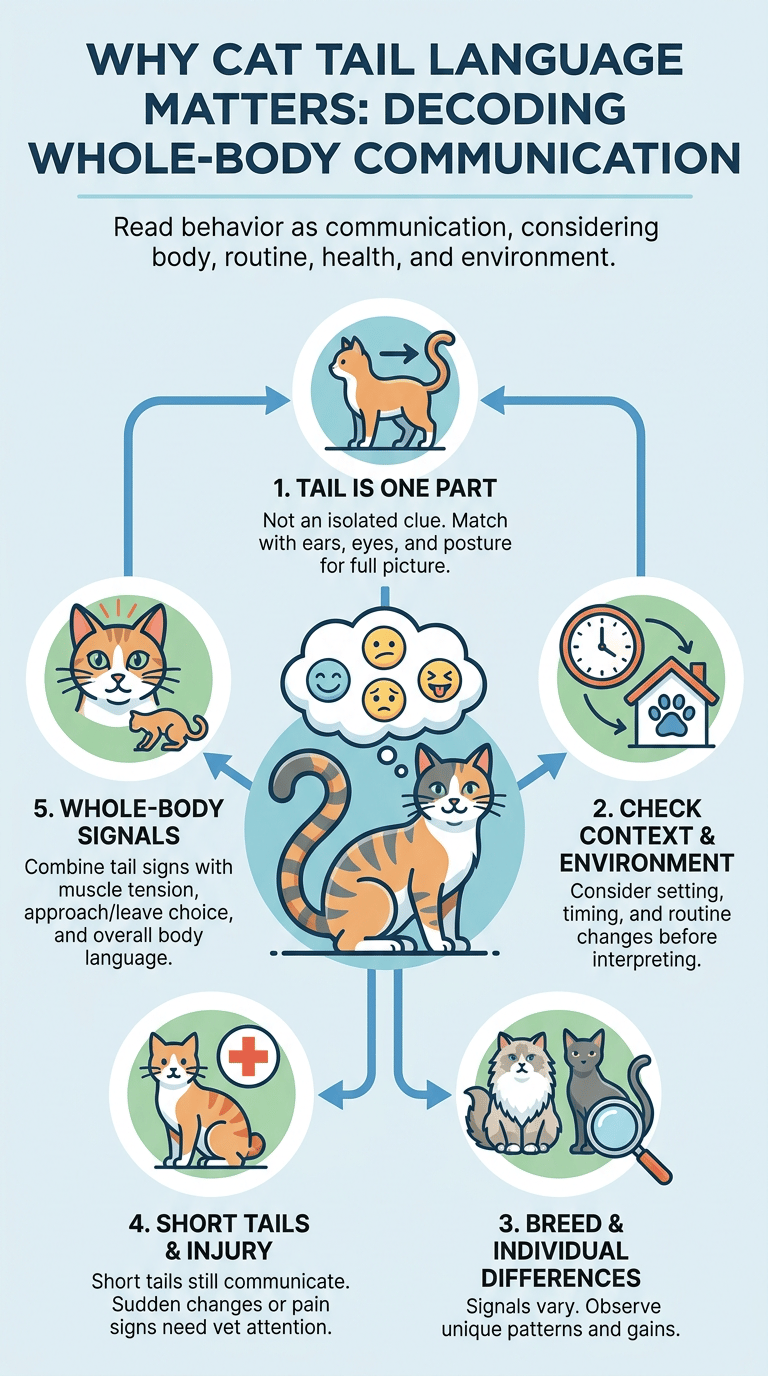
A cat’s tail is helpful, but it is never the whole message. Read it together with ears, eyes, posture, movement, vocal sounds, and whether the cat is trying to approach or avoid contact. cat owner guidance on behavior problems.
The tail is one part of whole-body communication
A tail signal should be read with the whole cat: ears, eyes, posture, movement, and the cat’s choice to approach or move away.
Tail position
Tail position is useful only when read with the rest of the body. Match it with ear position, eyes, posture, muscle tension, and the cat’s choice to approach or leave.
Tail movement
Tail movement is useful only when read with the rest of the body. Match it with ear position, eyes, posture, muscle tension, and the cat’s choice to approach or leave.
Ears, eyes, and posture
Ears, eyes, and posture is useful only when read with the rest of the body. Match it with ear position, eyes, posture, muscle tension, and the cat’s choice to approach or leave.
Why context changes meaning
Why context changes meaning depends on the order of events around the behavior. What happened before, how the cat responded, and what changed afterward all shape the meaning.
Tail signals are not one-size-fits-all
The same tail position can mean different things in different cats, so compare it with that cat’s usual behavior.
Breed and individual differences
Breed and individual differences is not the same for every cat, so a familiar baseline matters more than a universal rule.
Cats with short tails
Cats with short tails is useful only when read with the rest of the body. Match it with ear position, eyes, posture, muscle tension, and the cat’s choice to approach or leave.
Injury or pain considerations
Injury or pain considerations is more concerning when it arrives with low energy, withdrawal, altered breathing, or a change in normal routines.
Upright Cat Tail
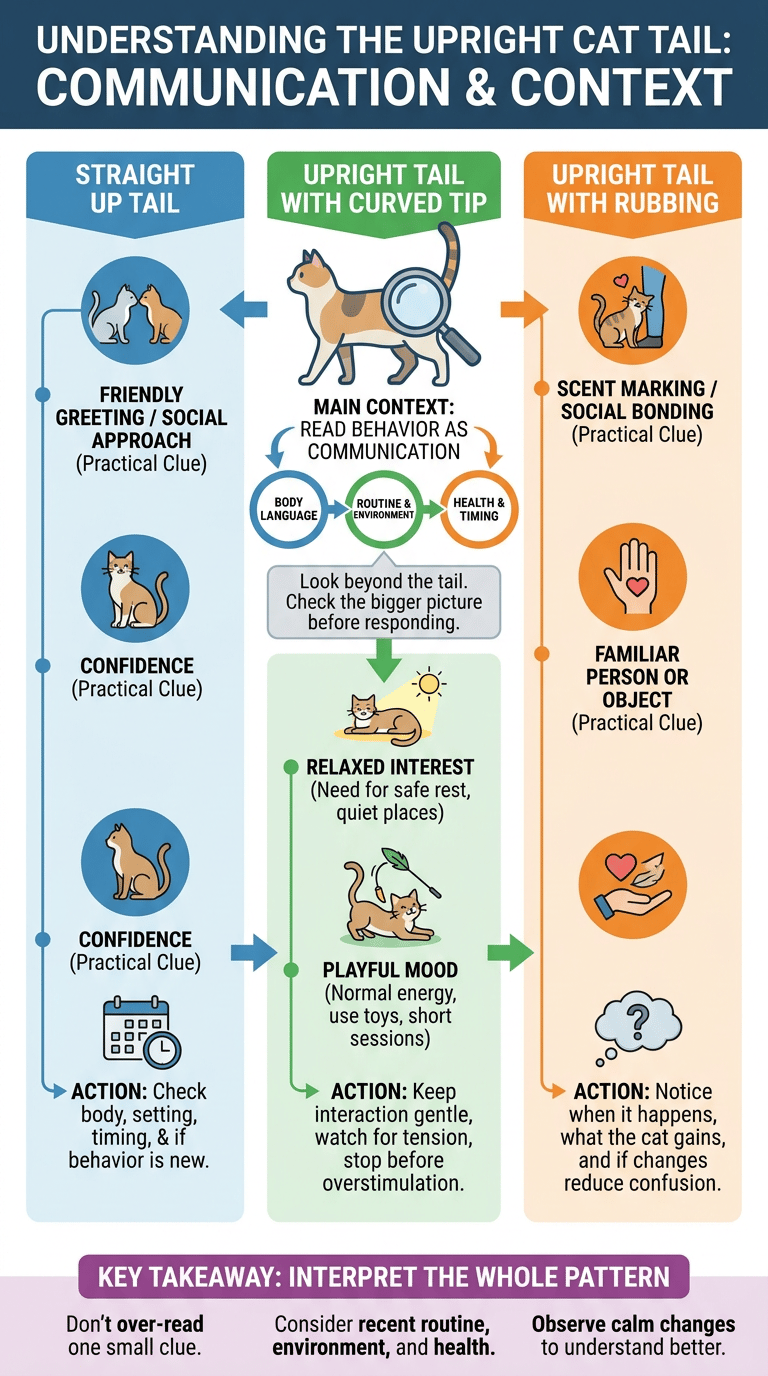
An upright tail often appears in friendly greeting or confident movement. Even then, the safest reading comes from the whole body and the cat’s willingness to interact.
Straight up tail
A straight up tail often appears during a confident greeting, especially when the cat walks toward a familiar person or place.
Friendly greeting
Friendly greeting gives the behavior a more specific context. The safest response is gentle observation and a small adjustment only when the cat seems uncomfortable.
Confidence
Confidence is part of the bigger pattern, not a stand-alone answer. The safest response is gentle observation and a small adjustment only when the cat seems uncomfortable.
Social approach
Social approach is usually a calmer signal when the cat stays loose and chooses to remain nearby.
Upright tail with curved tip
An upright tail with a curved tip can look friendly and relaxed, like a soft question mark during greeting.
Relaxed interest
Relaxed interest should stay gentle. If the cat stiffens, turns away, or escalates, end contact calmly. Related reading: sleep.
Playful mood
Playful mood is usually easier to manage by adding play before the busy time of day, not by scolding the cat afterward.
Gentle greeting
Gentle greeting can help explain why tail position shows up in that moment. The safest response is gentle observation and a small adjustment only when the cat seems uncomfortable.
Upright tail with rubbing
An upright tail with rubbing often pairs greeting with scent sharing, especially around familiar people or furniture.
Scent marking
Scent marking is easier to trust when posture is soft, breathing is normal, and the cat does not avoid contact.
Familiar person or object
Familiar person or object gives the behavior a more specific context. If the cat stays loose and recovers quickly, the sign is usually less concerning.
Social bonding
Social bonding is usually a calmer signal when the cat stays loose and chooses to remain nearby.
Low or Tucked Cat Tail
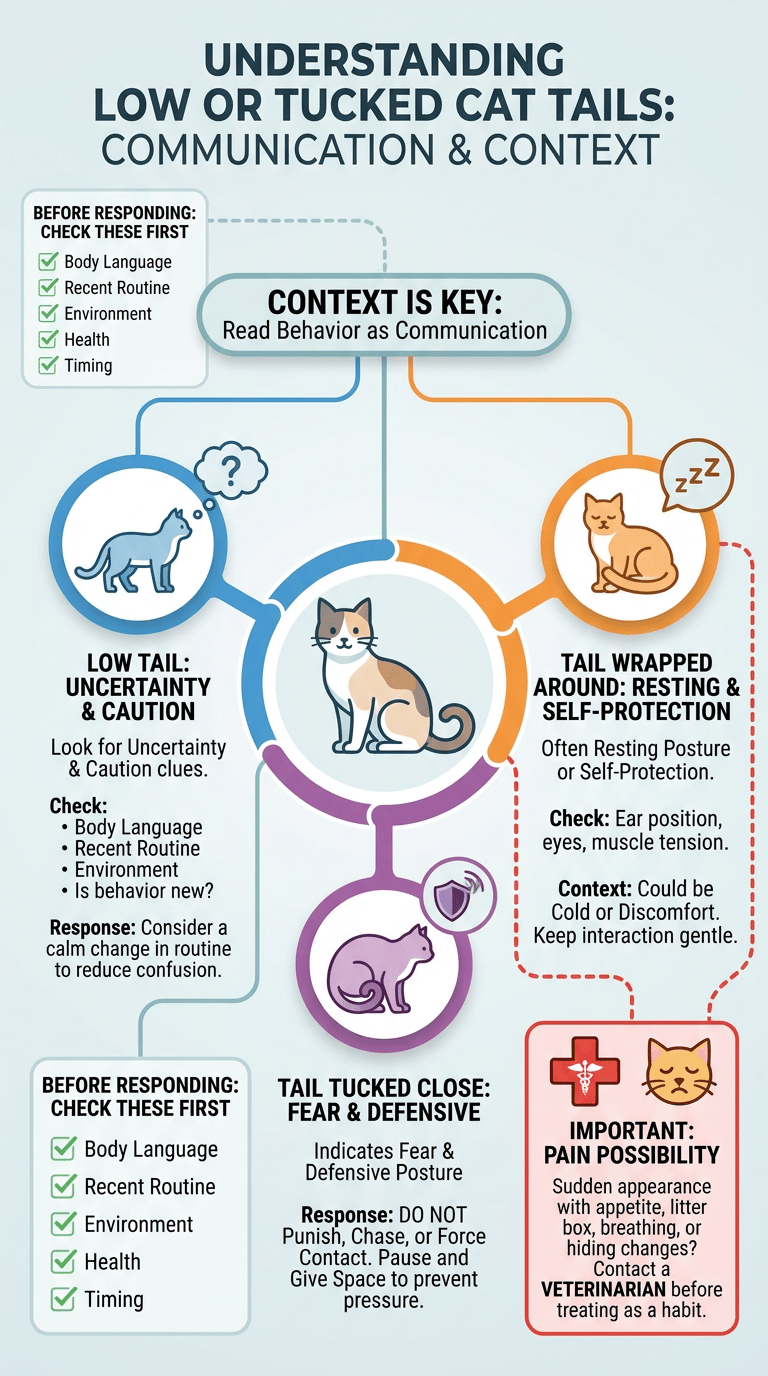
A low or tucked tail can signal fear, discomfort, or caution. Give the cat space, reduce pressure, and look for other signs that the situation feels too intense.
Low tail
A low tail can show caution, uncertainty, or discomfort, so give the cat time before reaching toward it.
Uncertainty
Uncertainty gives the behavior a more specific context. The safest response is gentle observation and a small adjustment only when the cat seems uncomfortable.
Caution
Caution adds one useful detail to cat tail language. If it appears suddenly or feels intense, slow down and look for stress or health clues.
Environmental stress
Environmental stress is part of the cat’s daily setup. Clean resources, predictable routines, and enough choice in the home can prevent stress from building. Related reading: bite.
Tail tucked close to the body
A tucked tail usually means the cat wants protection or distance, not more handling.
Fear
Fear shows more clearly when a low or tucked tail appears with crouching, wide eyes, flattened ears, or an attempt to hide.
Defensive posture
A defensive cat needs an exit route and quiet space; approaching closer can make the reaction stronger.
Pain possibility
Pain possibility is a health-check point, not just a behavior note. Call a veterinarian if it appears suddenly or sits beside changes in eating, movement, breathing, or litter box use.
Tail wrapped around the body
A tail wrapped around the body can be a resting posture, but in a tense cat it may also show caution.
Resting posture
Resting posture is useful only when read with the rest of the body. Match it with ear position, eyes, posture, muscle tension, and the cat’s choice to approach or leave.
Self-protection
Self-protection can help explain why tail position shows up in that moment. The safest response is gentle observation and a small adjustment only when the cat seems uncomfortable.
Cold or discomfort context
Cold or discomfort context should leave the cat in control of contact, including the option to pause or walk away.
Puffed-Up Cat Tail
Puffed-Up Cat Tail is best read through the main theme of the article: Tail signals are useful only when they are read with ears, eyes, posture, movement, and the cat’s choice to approach or leave. A tense, tucked, puffed, or thrashing tail is a reason to slow down and give the cat more space.
Why the tail puffs up
A puffed tail makes the cat look larger when it feels startled, threatened, or highly aroused.
High arousal
High arousal is easiest to place when the rest of the scene is clear. It matters most when it changes from what that individual cat normally does.
Fear response
A fear response is more likely when the puffed tail appears with an arched back, sideways stance, or retreat.
Startle response
Startle response should be read alongside the cat’s normal habits. If the cat stays loose and recovers quickly, the sign is usually less concerning.
Puffed tail with arched back
A puffed tail with an arched back is a strong sign to stop approaching and let the cat calm down.
Defensive display
Defensive display is usually easier to manage by adding play before the busy time of day, not by scolding the cat afterward.
Making the body look larger
Making the body look larger is useful only when read with the rest of the body. Match it with ear position, eyes, posture, muscle tension, and the cat’s choice to approach or leave.
When to give space
When to give space is part of the bigger pattern, not a stand-alone answer. If the cat stays loose and recovers quickly, the sign is usually less concerning.
Puffed tail during play
Puffed tail during play usually works better with planned play than with punishment. Short sessions, safe toys, and a clear wind-down help the cat use energy without turning hands or furniture into targets.
Kitten excitement
Kitten excitement is easier to interpret when the owner knows what is typical for that particular cat.
Play chase
Play chase can be redirected toward toys, climbing spaces, and predictable play sessions so the cat does not practice on hands or furniture.
How to tell play from fear
How to tell play from fear points to the cat’s need for movement and a safe outlet. Wand toys, chase games, and a short wind-down can make the behavior easier to live with.
Twitching, Flicking, and Swishing Tail
Twitching, Flicking, and Swishing Tail is best read through the main theme of the article: Tail signals are useful only when they are read with ears, eyes, posture, movement, and the cat’s choice to approach or leave. A tense, tucked, puffed, or thrashing tail is a reason to slow down and give the cat more space.
Slow tail movement
Slow tail movement can show focus, mild uncertainty, or careful attention to something nearby.
Focus
Focus can help explain why tail position shows up in that moment. If the cat stays loose and recovers quickly, the sign is usually less concerning.
Mild interest
Mild interest fits normal feline rest when the cat wakes easily, moves normally, and keeps regular eating and litter box habits.
Watching prey or toys
Watching prey or toys can be redirected toward toys, climbing spaces, and predictable play sessions so the cat does not practice on hands or furniture.
Fast tail flicking
Fast tail flicking often means irritation is building, especially during petting or close handling.
Irritation
Irritation gives the behavior a more specific context. It matters most when it changes from what that individual cat normally does.
Overstimulation
Overstimulation is a cue to reduce pressure. Stop the interaction, give the cat room, and wait for relaxed body language before trying again.
Warning before swatting or biting
Warning before swatting or biting should be handled by backing off rather than correcting the cat. Space prevents a small warning from becoming a stronger reaction.
Side-to-side swishing
Side-to-side swishing can show excitement, frustration, or hunting focus depending on what the cat is watching.
Hunting focus
Hunting focus works best when the cat has something appropriate to stalk, chase, grab, and release.
Play arousal
Play arousal can be redirected toward toys, climbing spaces, and predictable play sessions so the cat does not practice on hands or furniture.
Frustration depending on context
Frustration depending on context depends on the order of events around the behavior. What happened before, how the cat responded, and what changed afterward all shape the meaning.
Tail tip twitching
Tail tip twitching may be a small sign of interest, concentration, or rising annoyance.
Curiosity
Curiosity is part of the bigger pattern, not a stand-alone answer. It matters most when it changes from what that individual cat normally does.
Concentration
Concentration should be read alongside the cat’s normal habits. It matters most when it changes from what that individual cat normally does.
Petting tolerance warning
Petting tolerance warning calls for a calmer setup: fewer hands, less noise, and an easy exit route for the cat.
Tail Signals During Common Situations
Tail Signals During Common Situations is best read through the main theme of the article: Tail signals are useful only when they are read with ears, eyes, posture, movement, and the cat’s choice to approach or leave. A tense, tucked, puffed, or thrashing tail is a reason to slow down and give the cat more space.
During petting
During petting adds one useful detail to cat tail language. If the cat stays loose and recovers quickly, the sign is usually less concerning.
Relaxed tail
Relaxed tail is useful only when read with the rest of the body. Match it with ear position, eyes, posture, muscle tension, and the.
Twitching tail
Twitching tail is useful only when read with the rest of the body. Match it with ear position, eyes, posture, muscle tension, and the.
When to stop petting
When to stop petting should be read alongside the cat’s normal habits. The safest response is gentle observation and a small adjustment only when the cat seems uncomfortable.
During play
During play usually works better with planned play than with punishment. Short sessions, safe toys, and a clear wind-down help the cat use energy without turning hands or furniture into targets.
Stalking tail movement
Stalking tail movement is useful only when read with the rest of the body. Match it with ear position, eyes, posture, muscle tension, and.
Puffed playful tail
Puffed playful tail points to the cat’s need for movement and a safe outlet. Wand toys, chase games, and a short wind-down can make the behavior easier to live with.
Excitement vs aggression
Excitement vs aggression is a cue to reduce pressure. Stop the interaction, give the cat room, and wait for relaxed body language before trying again.
Around other cats
Around other cats gives the behavior a more specific context. The safest response is gentle observation and a small adjustment only when the cat seems uncomfortable.
Friendly upright tail
Friendly upright tail is useful only when read with the rest of the body. Match it with ear position, eyes, posture, muscle tension, and.
Defensive low tail
A defensive low tail is a reason to pause interaction and let the cat choose distance.
Conflict signals
Conflict signals is easiest to place when the rest of the scene is clear. Use it with the cat’s posture, comfort level, and recent routine before changing how you respond.
At the veterinarian or in carriers
At the veterinarian or in carriers should be treated as a warning area for cat tail language. A tense, tucked, puffed, or thrashing tail is a reason to slow down and give the cat more space.
Tucked tail
Tucked tail is useful only when read with the rest of the body. Match it with ear position, eyes, posture, muscle tension, and the.
Still tail
Still tail is useful only when read with the rest of the body. Match it with ear position, eyes, posture, muscle tension, and the.
Fear and stress context
Fear and stress context matters because tail position becomes clearer when paired with hiding, freezing, hissing, or avoidance.
Common Mistakes in Reading Cat Tails
Common Mistakes in Reading Cat Tails is best read through the main theme of the article: Tail signals are useful only when they are read with ears, eyes, posture, movement, and the cat’s choice to approach or leave. A tense, tucked, puffed, or thrashing tail is a reason to slow down and give the cat more space.
Assuming wagging means happy
Assuming wagging means happy gives the behavior a more specific context. It matters most when it changes from what that individual cat normally does.
Difference from dog tail wagging
Difference from dog tail wagging is useful only when read with the rest of the body. Match it with ear position, eyes, posture, muscle.
Why fast flicking often means irritation
Fast flicking during petting often means the cat is close to its limit and contact should stop.
Ignoring the rest of the body
Ignoring the rest of the body can lead to a wrong reading because the tail is only one part of the message.
Ear position
Ear position helps confirm the tail signal; ears turned back or sideways often add tension to the message.
Eye shape
Eye shape adds context, with soft blinking suggesting ease and wide, fixed eyes suggesting arousal or concern.
Body tension
Body tension is one of the clearest clues: a loose cat and a stiff cat can hold similar tails for different reasons.
Continuing petting after warning signs
Continuing petting after warning signs calls for more space, not pressure. Pause contact, avoid punishment, and let the cat reset before anyone tries to interact again.
Tail flicking
Tail flicking is useful only when read with the rest of the body. Match it with ear position, eyes, posture, muscle tension, and the.
Skin rippling
Skin rippling is easiest to place when the rest of the scene is clear. The safest response is gentle observation and a small adjustment only when the cat seems uncomfortable.
Head turning toward your hand
Head turning toward your hand can help explain why tail position shows up in that moment. If the cat stays loose and recovers quickly, the sign is usually less concerning.
How To Respond to Tail Signals
How To Respond to Tail Signals is best read through the main theme of the article: Tail signals are useful only when they are read with ears, eyes, posture, movement, and the cat’s choice to approach or leave. A tense, tucked, puffed, or thrashing tail is a reason to slow down and give the cat more space.
When the tail shows relaxation
A relaxed tail usually comes with loose posture, normal movement, and a cat that is not trying to escape.
Offer calm attention
Offer calm attention gives the behavior a more specific context. Use it with the cat’s posture, comfort level, and recent routine before changing how you respond.
Keep handling gentle
Keep handling gentle is easiest to place when the rest of the scene is clear. If it appears suddenly or feels intense, slow down and look for stress or health clues.
Let the cat choose contact
Let the cat choose contact gives the behavior a more specific context. Use it with the cat’s posture, comfort level, and recent routine before changing how you respond.
When the tail shows irritation
Irritation is more likely when tail movement becomes sharp, fast, or paired with skin twitching and a tense body.
Pause petting
Pause petting adds one useful detail to cat tail language. If it appears suddenly or feels intense, slow down and look for stress or health clues.
Give space
Give space can help explain why tail position shows up in that moment. If it appears suddenly or feels intense, slow down and look for stress or health clues.
Redirect to play if appropriate
Redirect to play if appropriate often improves when the cat gets a clear start and finish to play instead of random bursts with no outlet.
When the tail shows fear
Fear is more likely when the tail lowers, tucks, or puffs while the cat crouches, hides, or avoids contact.
Lower noise
Lower noise is part of the bigger pattern, not a stand-alone answer. If it appears suddenly or feels intense, slow down and look for stress or health clues.
Provide hiding options
Provide hiding options fits normal feline rest when the cat wakes easily, moves normally, and keeps regular eating and litter box habits.
Avoid forced interaction
Avoid forced interaction adds one useful detail to cat tail language. The safest response is gentle observation and a small adjustment only when the cat seems uncomfortable.
Cat Tail Language FAQ
Cat Tail Language FAQ is best read through the main theme of the article: Tail signals are useful only when they are read with ears, eyes, posture, movement, and the cat’s choice to approach or leave. A tense, tucked, puffed, or thrashing tail is a reason to slow down and give the cat more space.
What does it mean when a cat’s tail is straight up?
A straight up tail often means a friendly or confident greeting, but the rest of the body should still look relaxed.
Why does my cat flick its tail while I pet it?
Tail flicking during petting often means the cat is getting overstimulated, so stop before it turns into swatting or biting.
What does a puffed-up cat tail mean?
A puffed-up tail usually points to fear, surprise, or high arousal rather than simple playfulness.
Why does my cat wrap its tail around me?
A cat wrapping its tail around you can be a gentle social gesture, especially if the body stays relaxed.
Do cats wag their tails when happy?
Cats do not wag their tails like dogs; a moving cat tail can mean interest, irritation, focus, or mixed feelings.
Key Takeaways
Cat Tail Language: What Your Cat’s Tail Is Telling You is easiest to understand when you read the whole cat, not one isolated action. Body language, routine, environment, health, and recent handling all change the meaning. International Cat Care guidance.
Most behaviors are normal when they fit the cat’s usual pattern and the cat looks relaxed. Sudden

Ethan Walker is the founder and research editor of Animal Fact Central. He creates and reviews educational animal facts content using trusted wildlife, pet care, and science-based sources. His work focuses on making animal behavior, adaptations, habitats, and species facts clear, accurate, and engaging for everyday readers.
Read More Details About Ethan Walker: https://animalfactcentral.com/ethan-walker/