
Cat Zoomies Explained explains a behavior many cat owners notice during ordinary life at home. The goal is to read the cat clearly, respond gently, and know when a behavior is normal versus when it may point to stress, pain, illness, or a setup that needs to change. For broader behavior context, see guidance on cat social behavior.
This guide focuses on practical meaning, gentle handling, cat choice, and warning signs that should not be ignored. Cornell Feline Health Center resources.
For the broader pattern behind this signal, the main guide to cat behavior connects everyday actions with mood, communication, and owner responses.
Readers comparing cat zoomies may also find why do cats purr useful for a closer look at a related cat behavior signal.
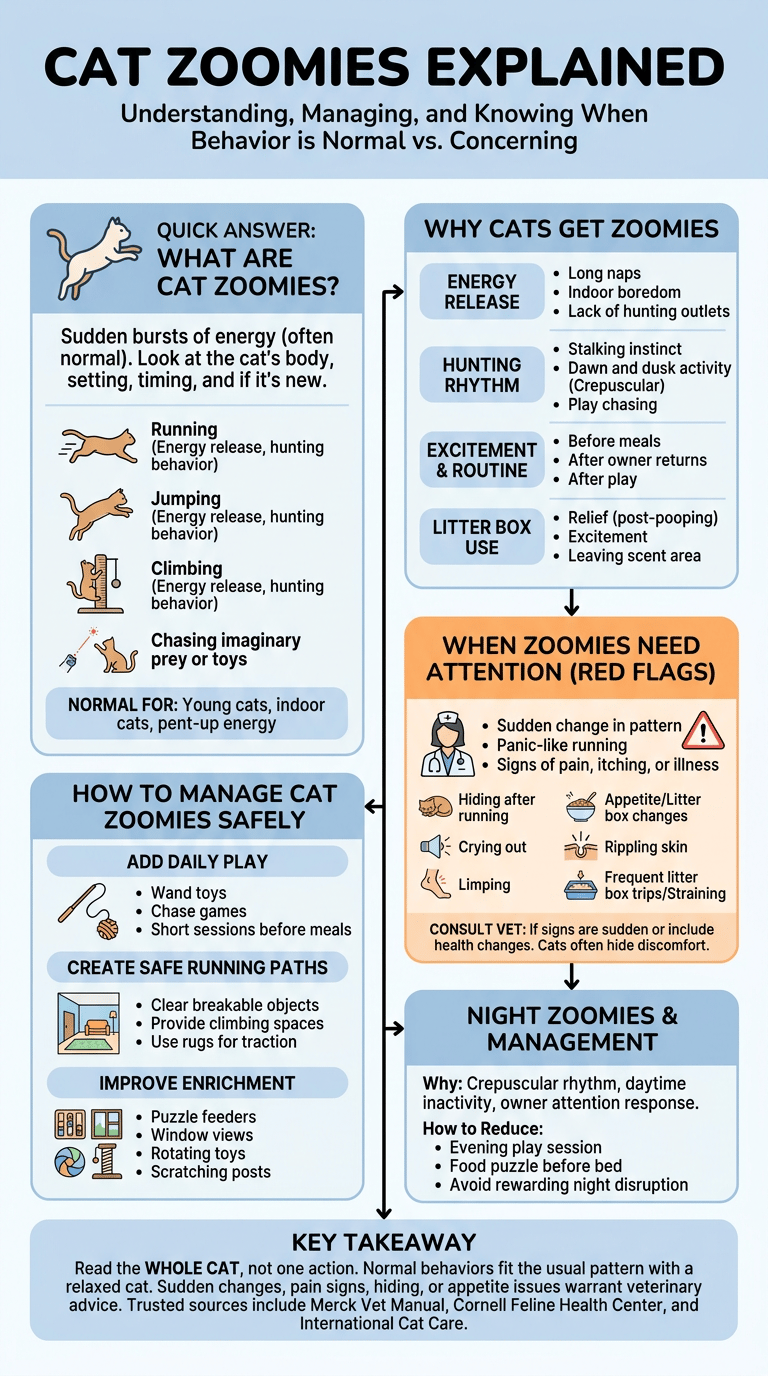
Quick Answer: What Are Cat Zoomies?
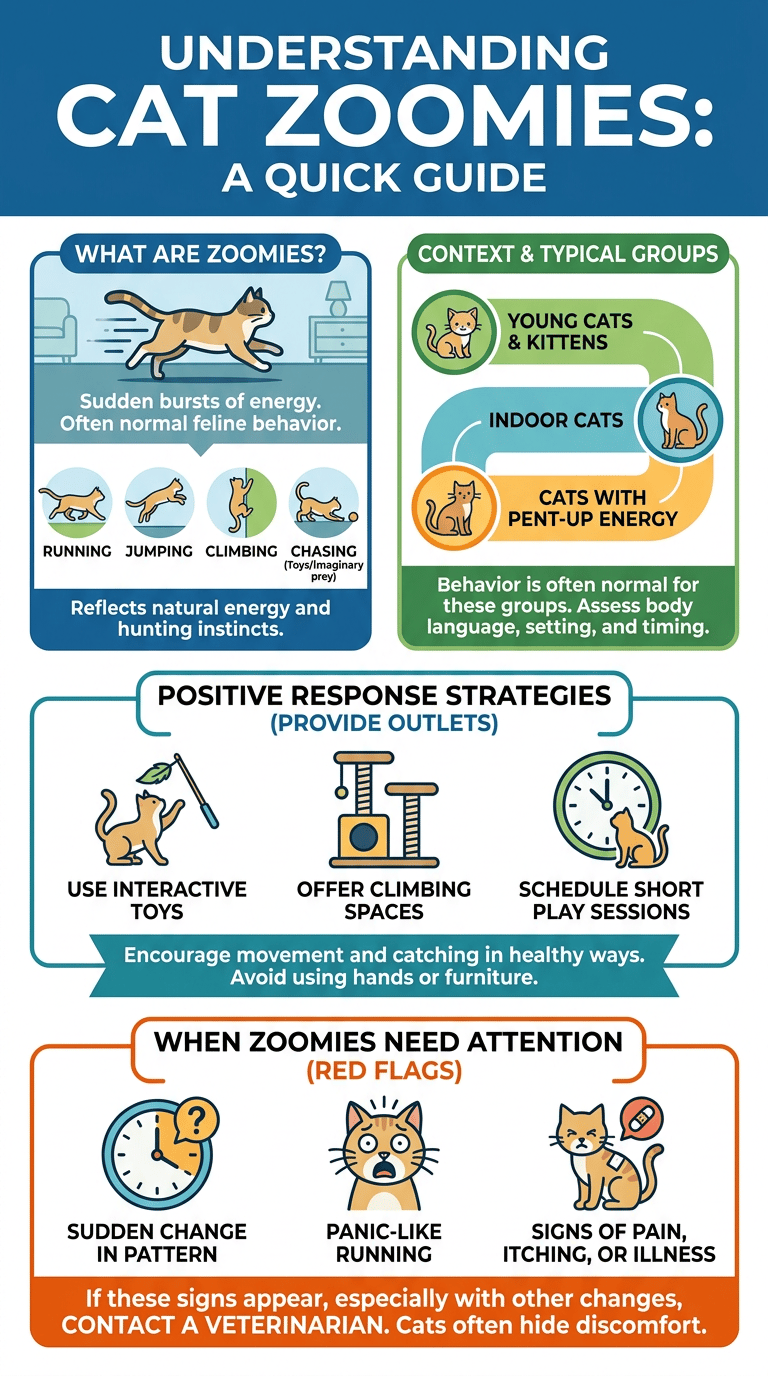
Cat zoomies are sudden bursts of running, leaping, and sharp turns. They are often normal, especially when the cat has energy to release, but the timing and the cat’s body language still matter. cat owner guidance on behavior problems.
Zoomies are sudden bursts of energy
Zoomies are sudden bursts of energy usually works better with planned play than with punishment. Short sessions, safe toys, and a clear wind-down help the cat use energy without turning hands or furniture into targets.
Running
Running points to the cat’s need for movement and a safe outlet. Wand toys, chase games, and a short wind-down can make the behavior easier to live with.
Jumping
Jumping can be redirected toward toys, climbing spaces, and predictable play sessions so the cat does not practice on hands or furniture.
Climbing
Climbing often improves when the cat gets a clear start and finish to play instead of random bursts with no outlet.
Chasing imaginary prey or toys
Chasing imaginary prey or toys is usually easier to manage by adding play before the busy time of day, not by scolding the cat afterward.
Zoomies are often normal
Zoomies are often normal usually works better with planned play than with punishment. Short sessions, safe toys, and a clear wind-down help the cat use energy without turning hands or furniture into targets.
Young cats and kittens
Young cats and kittens may look different across cats while still being normal for each one.
Indoor cats
Indoor cats adds one useful detail to cat zoomies. The safest response is gentle observation and a small adjustment only when the cat seems uncomfortable.
Cats with pent-up energy
Cats with pent-up energy can be redirected toward toys, climbing spaces, and predictable play sessions so the cat does not practice on hands or furniture.
When zoomies need attention
When zoomies need attention usually works better with planned play than with punishment. Short sessions, safe toys, and a clear wind-down help the cat use energy without turning hands or furniture into targets.
Sudden change in pattern
Sudden change in pattern depends on the order of events around the behavior. What happened before, how the cat responded, and what changed afterward all shape the meaning.
Panic-like running
Panic-like running is usually easier to manage by adding play before the busy time of day, not by scolding the cat afterward.
Signs of pain, itching, or illness
Signs of pain, itching, or illness is a health-check point, not just a behavior note. Call a veterinarian if it appears suddenly or sits beside changes in eating, movement, breathing, or litter box use.
Why Cats Get Zoomies
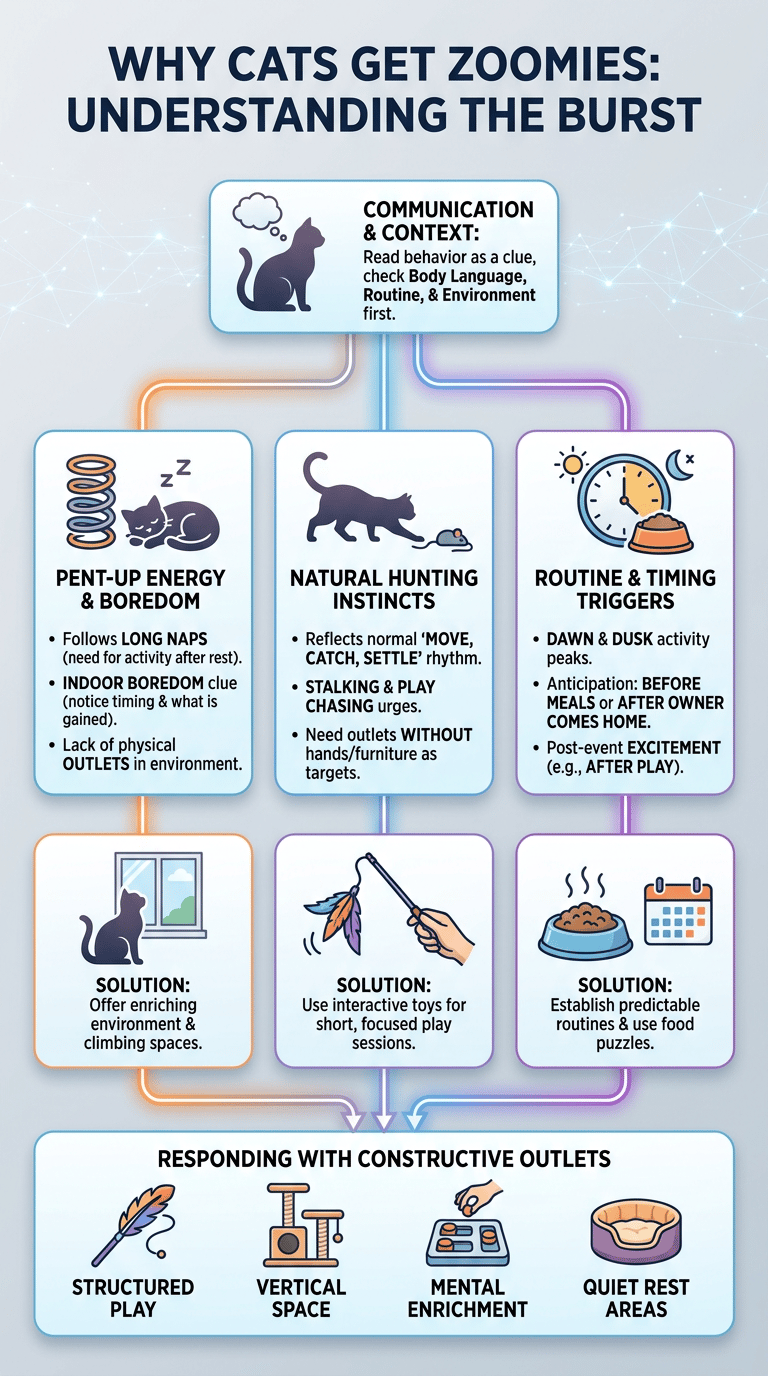
Zoomies usually make more sense when you look at the cat’s day as a whole. Indoor routines, missed play, excitement, relief after using the litter box, and dawn or dusk energy can all shape when the sprinting appears. body language.
Energy release
Energy release usually works better with planned play than with punishment. Short sessions, safe toys, and a clear wind-down help the cat use energy without turning hands or furniture into targets.
Long naps
Long naps fits normal feline rest when the cat wakes easily, moves normally, and keeps regular eating and litter box habits. Related reading: sleep.
Indoor boredom
Indoor boredom should be read alongside the cat’s normal habits. If it appears suddenly or feels intense, slow down and look for stress or health clues.
Lack of hunting outlets
Lack of hunting outlets works best when the cat has something appropriate to stalk, chase, grab, and release.
Hunting rhythm
Hunting rhythm usually works better with planned play than with punishment. Short sessions, safe toys, and a clear wind-down help the cat use energy without turning hands or furniture into targets.
Stalking instinct
Stalking instinct gives the behavior a more specific context. If it appears suddenly or feels intense, slow down and look for stress or health clues.
Dawn and dusk activity
Dawn and dusk activity should be read alongside the cat’s normal habits. Use it with the cat’s posture, comfort level, and recent routine before changing how you respond.
Play chasing
Play chasing often improves when the cat gets a clear start and finish to play instead of random bursts with no outlet.
Excitement and routine
Excitement and routine is part of the cat’s daily setup. Clean resources, predictable routines, and enough choice in the home can prevent stress from building.
Before meals
Before meals is part of everyday welfare. Clean resources, legal scratching surfaces, food puzzles, and easy access to litter boxes can prevent many behavior problems before they start.
After owner comes home
After owner comes home is part of the cat’s daily setup. Clean resources, predictable routines, and enough choice in the home can prevent stress from building.
After play
After play often improves when the cat gets a clear start and finish to play instead of random bursts with no outlet.
Night Zoomies
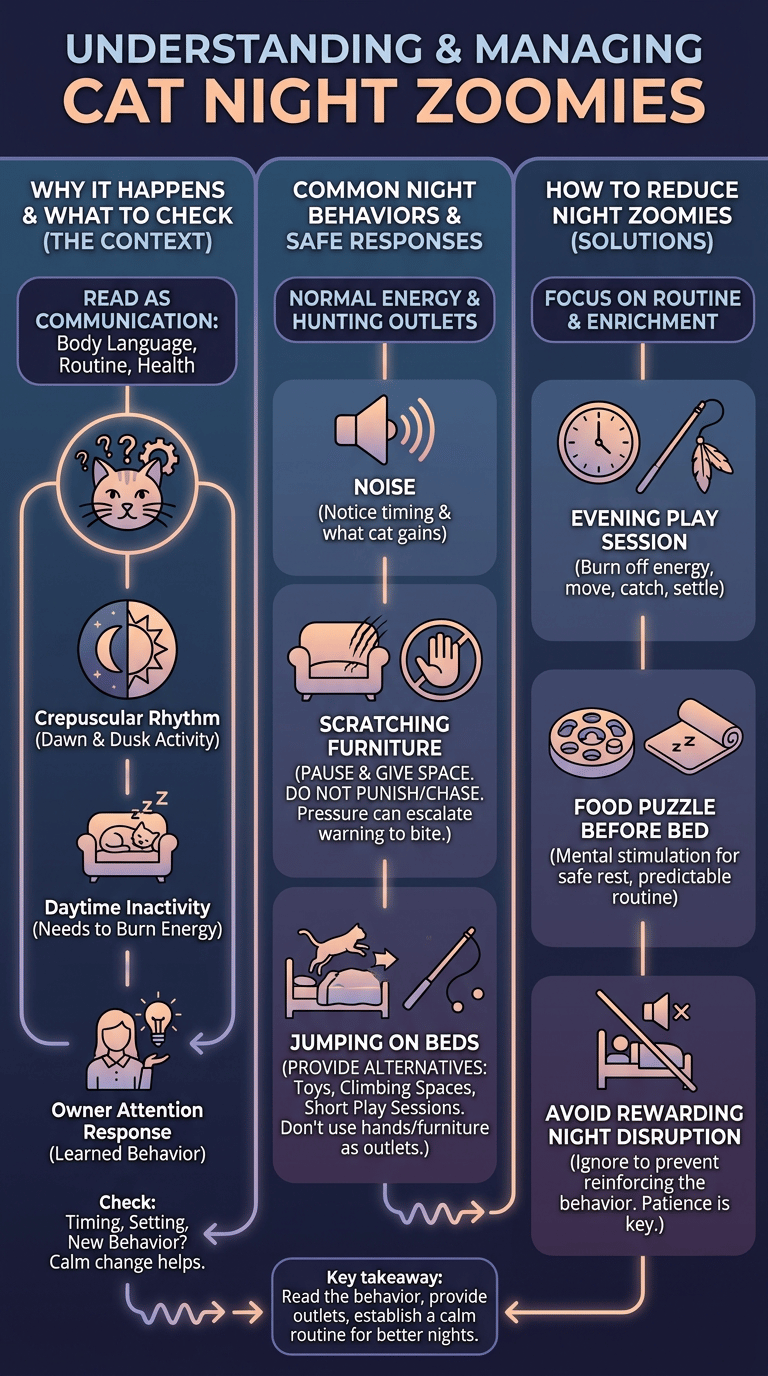
Night zoomies can be frustrating for owners, but they are not a reason to punish a cat. A better response is to move active play and feeding into an evening rhythm that helps the cat settle.
Why cats run around at night
Why cats run around at night depends on the order of events around the behavior. What happened before, how the cat responded, and what changed afterward all shape the meaning.
Crepuscular rhythm
Crepuscular rhythm is part of the bigger pattern, not a stand-alone answer. Use it with the cat’s posture, comfort level, and recent routine before changing how you respond.
Daytime inactivity
Daytime inactivity should be read alongside the cat’s normal habits. It matters most when it changes from what that individual cat normally does.
Owner attention response
Owner attention response can help explain why zoomies shows up in that moment. Pair it with appetite, energy, litter box habits, and willingness to interact.
How night zoomies affect owners
How night zoomies affect owners usually works better with planned play than with punishment. Short sessions, safe toys, and a clear wind-down help the cat use energy without turning hands or furniture into targets.
Noise
Noise should be read alongside the cat’s normal habits. Pair it with appetite, energy, litter box habits, and willingness to interact.
Scratching furniture
Scratching furniture only makes sense beside the rest of the body. Ears, eyes, posture, muscle tension, and distance from people help show whether the cat is comfortable or asking for space.
Jumping on beds
Jumping on beds points to the cat’s need for movement and a safe outlet. Wand toys, chase games, and a short wind-down can make the behavior easier to live with.
How to reduce night zoomies
How to reduce night zoomies usually works better with planned play than with punishment. Short sessions, safe toys, and a clear wind-down help the cat use energy without turning hands or furniture into targets.
Evening play session
Evening play session works best when the cat has something appropriate to stalk, chase, grab, and release.
Food puzzle before bed
Food puzzle before bed fits normal feline rest when the cat wakes easily, moves normally, and keeps regular eating and litter box habits.
Avoid rewarding night disruption
Avoid rewarding night disruption should be read alongside the cat’s normal habits. If it appears suddenly or feels intense, slow down and look for stress or health clues.
Zoomies After Using the Litter Box
Zoomies After Using the Litter Box is best read through the main theme of the article: Short bursts of running are often normal, especially in young cats or after quiet parts of the day. Zoomies need more attention when they are sudden in an older cat, tied to litter box distress, paired with pain signs, or causing unsafe collisions.
Why some cats run after pooping
Why some cats run after pooping depends on the order of events around the behavior. What happened before, how the cat responded, and what changed afterward all shape the meaning.
Relief
Relief should be read alongside the cat’s normal habits. It matters most when it changes from what that individual cat normally does.
Excitement
Excitement can help explain why zoomies shows up in that moment. If the cat stays loose and recovers quickly, the sign is usually less concerning.
Leaving the scent area
Leaving the scent area is usually a calmer signal when the cat stays loose and chooses to remain nearby.
When litter box zoomies may be concerning
When litter box zoomies may be concerning should be treated as a warning area for cat zoomies. Zoomies need more attention when they are sudden in an older cat, tied to litter box distress, paired with pain signs, or causing unsafe collisions.
Straining
Straining is easiest to place when the rest of the scene is clear. Use it with the cat’s posture, comfort level, and recent routine before changing how you respond.
Frequent trips
Frequent trips is easiest to place when the rest of the scene is clear. If the cat stays loose and recovers quickly, the sign is usually less concerning.
Vocalizing
Vocalizing can help explain why zoomies shows up in that moment. If the cat stays loose and recovers quickly, the sign is usually less concerning.
Blood or diarrhea
Blood or diarrhea is a health-check point, not just a behavior note. Call a veterinarian if it appears suddenly or sits beside changes in eating, movement, breathing, or litter box use.
Litter box setup considerations
Litter box setup considerations should be treated as a warning area for cat zoomies. Zoomies need more attention when they are sudden in an older cat, tied to litter box distress, paired with pain signs, or causing unsafe collisions.
Clean box
Clean box is part of everyday welfare. Clean resources, legal scratching surfaces, food puzzles, and easy access to litter boxes can prevent many behavior problems before they start.
Easy access
Easy access adds one useful detail to cat zoomies. The safest response is gentle observation and a small adjustment only when the cat seems uncomfortable.
Enough boxes for the household
Enough boxes for the household is part of everyday welfare. Clean resources, legal scratching surfaces, food puzzles, and easy access to litter boxes can prevent many behavior problems before they start.
Kitten Zoomies vs Adult Cat Zoomies
Kitten Zoomies vs Adult Cat Zoomies is best read through the main theme of the article: Short bursts of running are often normal, especially in young cats or after quiet parts of the day. Zoomies need more attention when they are sudden in an older cat, tied to litter box distress, paired with pain signs, or causing unsafe collisions.
Kitten zoomies
Kitten zoomies usually works better with planned play than with punishment. Short sessions, safe toys, and a clear wind-down help the cat use energy without turning hands or furniture into targets.
Growth and play
Growth and play points to the cat’s need for movement and a safe outlet. Wand toys, chase games, and a short wind-down can make the behavior easier to live with.
Learning hunting skills
Learning hunting skills is usually easier to manage by adding play before the busy time of day, not by scolding the cat afterward.
Short intense bursts
Short intense bursts should be read alongside the cat’s normal habits. If it appears suddenly or feels intense, slow down and look for stress or health clues.
Adult cat zoomies
Adult cat zoomies usually works better with planned play than with punishment. Short sessions, safe toys, and a clear wind-down help the cat use energy without turning hands or furniture into targets.
Routine energy release
Routine energy release works best when the cat has something appropriate to stalk, chase, grab, and release.
Stress or boredom possibilities
Stress or boredom possibilities means the cat is asking for the situation to change. Quiet distance is safer than touching, chasing, or scolding. Related reading: bite.
Need for enrichment
Need for enrichment is part of everyday welfare. Clean resources, legal scratching surfaces, food puzzles, and easy access to litter boxes can prevent many behavior problems before they start.
Senior cat zoomies
Senior cat zoomies should be treated as a warning area for cat zoomies. Zoomies need more attention when they are sudden in an older cat, tied to litter box distress, paired with pain signs, or causing unsafe collisions.
Less common patterns
Less common patterns depends on the order of events around the behavior. What happened before, how the cat responded, and what changed afterward all shape the meaning.
Pain or confusion considerations
Pain or confusion considerations is a health-check point, not just a behavior note. Call a veterinarian if it appears suddenly or sits beside changes in eating, movement, breathing, or litter box use.
When to ask a veterinarian
When to ask a veterinarian is more concerning when it arrives with low energy, withdrawal, altered breathing, or a change in normal routines.
Stress, Itching, and Medical Lookalikes
Stress, Itching, and Medical Lookalikes is best read through the main theme of the article: Short bursts of running are often normal, especially in young cats or after quiet parts of the day. Zoomies need more attention when they are sudden in an older cat, tied to litter box distress, paired with pain signs, or causing unsafe collisions.
Stress-related running
Stress-related running usually works better with planned play than with punishment. Short sessions, safe toys, and a clear wind-down help the cat use energy without turning hands or furniture into targets.
New pets
New pets gives the behavior a more specific context. Pair it with appetite, energy, litter box habits, and willingness to interact.
Visitors
Visitors should be read alongside the cat’s normal habits. If it appears suddenly or feels intense, slow down and look for stress or health clues.
Household changes
Household changes is part of the cat’s daily setup. Clean resources, predictable routines, and enough choice in the home can prevent stress from building.
Skin or flea irritation
Skin or flea irritation can help explain why zoomies shows up in that moment. Use it with the cat’s posture, comfort level, and recent routine before changing how you respond.
Sudden darting
Sudden darting is easiest to place when the rest of the scene is clear. If the cat stays loose and recovers quickly, the sign is usually less concerning.
Licking or scratching
Licking or scratching is easier to trust when posture is soft, breathing is normal, and the cat does not avoid contact.
Rippling skin
Rippling skin should be read alongside the cat’s normal habits. The safest response is gentle observation and a small adjustment only when the cat seems uncomfortable.
Pain or illness signs
Pain or illness signs should be treated as a warning area for cat zoomies. Zoomies need more attention when they are sudden in an older cat, tied to litter box distress, paired with pain signs, or causing unsafe collisions.
Hiding after running
Hiding after running often improves when the cat gets a clear start and finish to play instead of random bursts with no outlet.
Crying out
Crying out is easiest to place when the rest of the scene is clear. Pair it with appetite, energy, litter box habits, and willingness to interact.
Limping
Limping is more concerning when it arrives with low energy, withdrawal, altered breathing, or a change in normal routines.
Appetite or litter box changes
Appetite or litter box changes is a health-check point, not just a behavior note. Call a veterinarian if it appears suddenly or sits beside changes in eating, movement, breathing, or litter box use.
How To Manage Cat Zoomies Safely
How To Manage Cat Zoomies Safely is best read through the main theme of the article: Short bursts of running are often normal, especially in young cats or after quiet parts of the day. Zoomies need more attention when they are sudden in an older cat, tied to litter box distress, paired with pain signs, or causing unsafe collisions.
Add daily play
Add daily play usually works better with planned play than with punishment. Short sessions, safe toys, and a clear wind-down help the cat use energy without turning hands or furniture into targets.
Wand toys
Wand toys often improves when the cat gets a clear start and finish to play instead of random bursts with no outlet.
Chase games
Chase games usually works better with planned play than with punishment. Short sessions, safe toys, and a clear wind-down help the cat use energy without turning hands or furniture into targets.
Short sessions before meals
Short sessions before meals is part of everyday welfare. Clean resources, legal scratching surfaces, food puzzles, and easy access to litter boxes can prevent many behavior problems before they start.
Create safe running paths
Create safe running paths usually works better with planned play than with punishment. Short sessions, safe toys, and a clear wind-down help the cat use energy without turning hands or furniture into targets.
Clear breakable objects
Clear breakable objects only makes sense beside the rest of the body. Ears, eyes, posture, muscle tension, and distance from people help show whether the cat is comfortable or asking for space.
Provide climbing spaces
Provide climbing spaces can be redirected toward toys, climbing spaces, and predictable play sessions so the cat does not practice on hands or furniture.
Use rugs for traction
Use rugs for traction is easiest to place when the rest of the scene is clear. Use it with the cat’s posture, comfort level, and recent routine before changing how you respond.
Improve enrichment
Improve enrichment is part of the cat’s daily setup. Clean resources, predictable routines, and enough choice in the home can prevent stress from building.
Puzzle feeders
Puzzle feeders is part of everyday welfare. Clean resources, legal scratching surfaces, food puzzles, and easy access to litter boxes can prevent many behavior problems before they start.
Window views
Window views is easiest to place when the rest of the scene is clear. The safest response is gentle observation and a small adjustment only when the cat seems uncomfortable.
Rotating toys
Rotating toys often improves when the cat gets a clear start and finish to play instead of random bursts with no outlet.
Scratching posts
Scratching posts is part of the cat’s daily setup. Clean resources, predictable routines, and enough choice in the home can prevent stress from building.
Cat Zoomies FAQ
Cat Zoomies FAQ is best read through the main theme of the article: Short bursts of running are often normal, especially in young cats or after quiet parts of the day. Zoomies need more attention when they are sudden in an older cat, tied to litter box distress, paired with pain signs, or causing unsafe collisions.
Are cat zoomies normal?
Are cat zoomies normal usually works better with planned play than with punishment. Short sessions, safe toys, and a clear wind-down help the cat use energy without turning hands or furniture into targets.
Why does my cat get zoomies at night?
Why does my cat get zoomies at night usually works better with planned play than with punishment. Short sessions, safe toys, and a clear wind-down help the cat use energy without turning hands or furniture into targets.
Why does my cat run after pooping?
Why does my cat run after pooping depends on the order of events around the behavior. What happened before, how the cat responded, and what changed afterward all shape the meaning.
How do I stop my cat from running around the house?
How do I stop my cat from running around the house usually works better with planned play than with punishment. Short sessions, safe toys, and a clear wind-down help the cat use energy without turning hands or furniture into targets.
When are cat zoomies a health concern?
When are cat zoomies a health concern should be treated as a warning area for cat zoomies. Zoomies need more attention when they are sudden in an older cat, tied to litter box distress, paired with pain signs, or causing unsafe collisions.
Key Takeaways
Cat Zoomies Explained is easiest to understand when you read the whole cat, not one isolated action. Body language, routine, environment, health, and recent handling all change the meaning. International Cat Care guidance.
Most behaviors are normal when they fit the cat’s usual pattern and the cat looks relaxed. Sudden changes, hard biting, hiding, appetite changes, litter.

Ethan Walker is the founder and research editor of Animal Fact Central. He creates and reviews educational animal facts content using trusted wildlife, pet care, and science-based sources. His work focuses on making animal behavior, adaptations, habitats, and species facts clear, accurate, and engaging for everyday readers.
Read More Details About Ethan Walker: https://animalfactcentral.com/ethan-walker/