
Quick Non-Venomous Snake Facts
What Non-Venomous Means
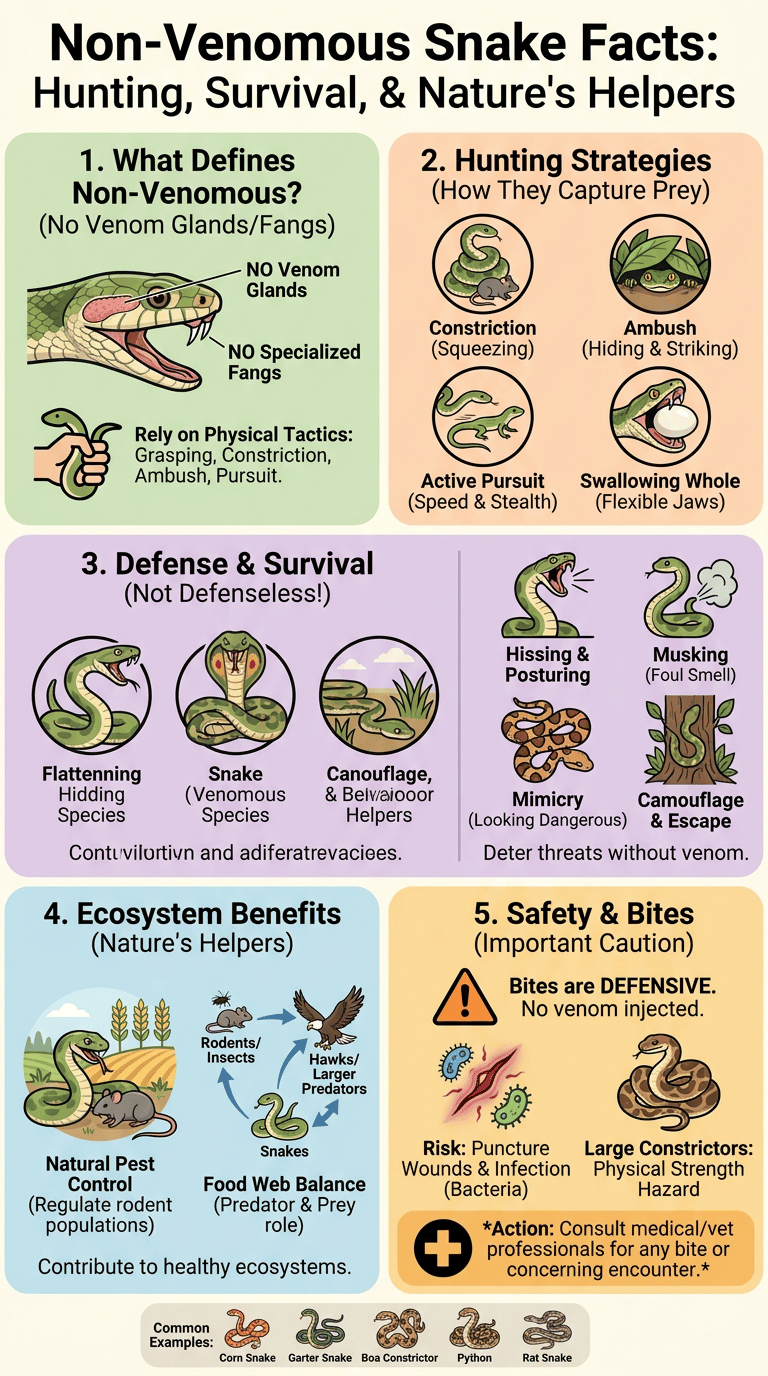
A non-venomous snake does not produce or deliver venom through specialized venom glands and fangs. These species rely on tactics such as grasping, constriction, ambush, or active pursuit to capture and consume prey. For clinical and anatomical differences between venomous and non-venomous bites, see the Merck Veterinary Manual on snakebites in animals from the Merck Veterinary Manual.
Common Examples
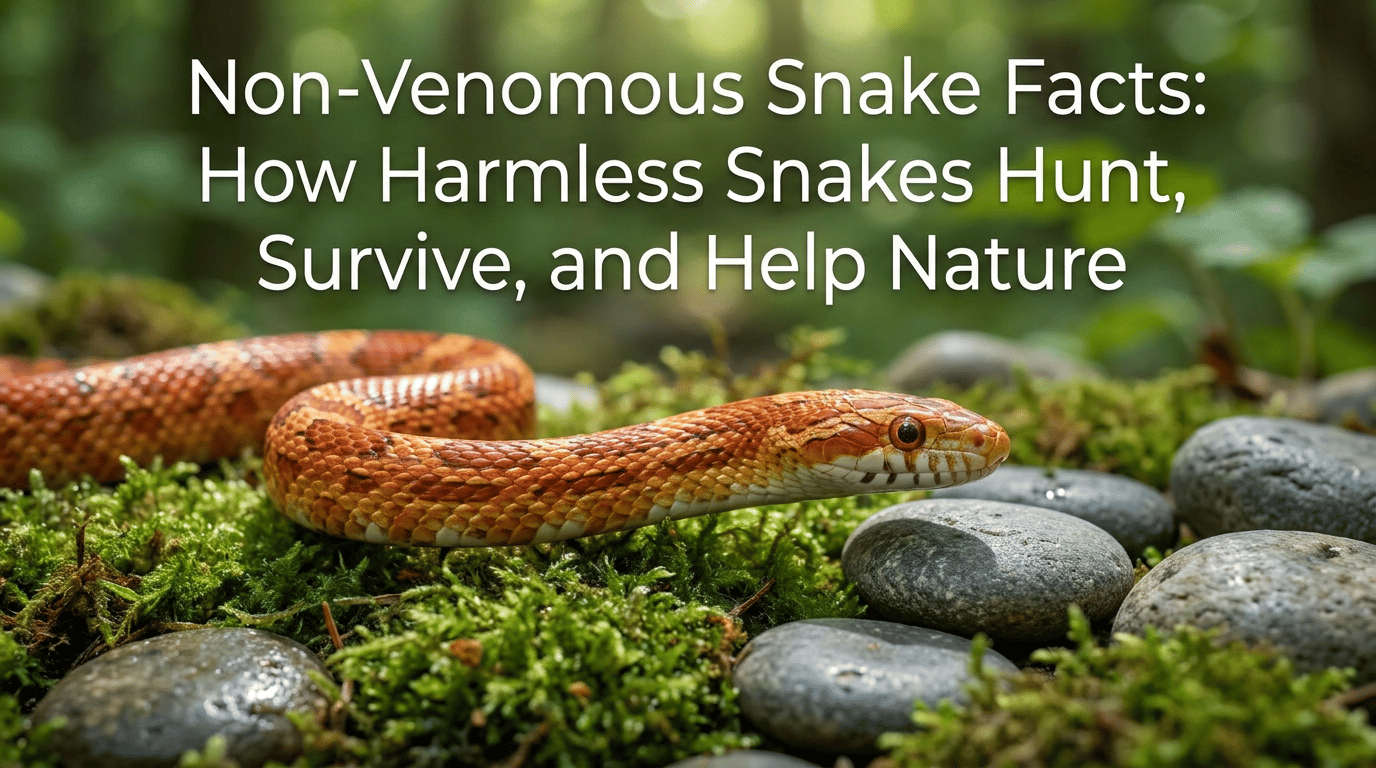
Non-venomous snakes occur in many regions and include a broad range of species. Examples often encountered in the wild or kept in captivity include corn snakes, garter snakes, boa constrictors, pythons, and rat snakes; these species illustrate a range of hunting strategies and body sizes.
Hunting Methods
Non-venomous snakes use a variety of hunting methods instead of injecting venom. Typical strategies include constricting prey, ambushing from cover, pursuing prey using speed and stealth, and swallowing smaller animals whole. Different species specialize in different methods depending on their anatomy, habitat, and prey preferences.
Danger Level
Because they do not inject venom, most non-venomous snakes do not pose venom-related medical risks. They can still bite, and larger constrictors can present physical hazards to small animals or, in rare circumstances, humans. In any bite or concerning encounter, consult qualified medical or veterinary professionals for advice; veterinary guidance on bite treatment and wound management is available from the Merck Veterinary Manual here.
Role in Nature
Non-venomous snakes act as predators that help regulate populations of rodents, amphibians, birds, and invertebrates, and they are also prey for larger animals. Their presence contributes to balanced food webs and can affect pest dynamics and ecosystem health. For context on snakes’ ecological roles, conservation, and management, see research summaries from the U.S. Geological Survey at the U.S. Geological Survey.
What Is a Non-Venomous Snake?
Non-Venomous Does Not Mean Defenseless
Non-venomous snakes use camouflage, rapid escape, startling displays, hissing, or releasing foul-smelling secretions to deter threats. Some species will bite if threatened, and larger constrictors can immobilize prey or deter predators by wrapping around a target. These behaviors help them survive without venom.
Why Some Non-Venomous Snakes Still Bite
Bites from non-venomous snakes typically occur as a defensive response when the animal is cornered, mishandled, or surprised. Bites can break the skin and introduce bacteria, so hygienic handling and professional advice after a bite are important. Veterinary resources discuss differences between venomous and non-venomous bites and their treatment in the Merck Veterinary Manual.
For the opposite side of the comparison, venomous snake facts explain how venom glands, fangs, and toxin effects work.
Non-Venomous vs Venomous Snakes
Main Biological Difference
The principal biological distinction is whether the snake has venom-producing glands and a delivery system such as hollow or grooved fangs capable of injecting venom. Venom is a biochemical tool used by some snakes to immobilize or digest prey and sometimes to deter predators. Non-venomous snakes lack this system and rely on mechanical methods and behavior.
Hunting Difference
Venomous snakes often rely on venom to subdue prey, while non-venomous species subdue prey physically through constriction, grasping, or rapid swallowing. These contrasting approaches shape anatomy and behavior across different snake groups.
Safety Difference
Because non-venomous snakes do not inject venom, the medical risks from their bites differ from those posed by venomous species; however, bites can still cause puncture wounds, infection risk, or physical trauma. In any bite or suspected envenomation situation, contact medical or veterinary professionals for guidance.
Why Identification Can Be Difficult
Identifying whether a snake is venomous based on brief observation can be difficult because color patterns, head shapes, and behaviors often overlap between species. When a snake poses a safety concern, keep distance and consult local wildlife authorities or trained professionals rather than attempting close identification.
How Non-Venomous Snakes Hunt
Constriction
Constriction is a common method among many larger non-venomous species: the snake seizes an animal with its teeth and loops its body around the prey to apply pressure until the prey is immobilized and can be swallowed. For a family-friendly description of constrictor behavior, see the Smithsonian’s National Zoo boa constrictor profile from the Smithsonian’s National Zoo.
Ambush Hunting
Some non-venomous snakes remain motionless and concealed until prey comes within striking distance. Ambush hunters rely on camouflage, patience, and a rapid strike to secure prey, followed by subduing or immediate swallowing depending on prey size.
Swallowing Prey Whole
Snakes have flexible jaws and bodies that allow them to consume prey larger than their head after the prey has been subdued. They typically swallow head-first and work the prey down the digestive tract.
Using Speed and Stealth
Active hunters pursue or stalk prey with rapid strikes and agile movement. Hunting style reflects habitat and diet; species that feed on fast-moving vertebrates often favor speed and precision.
Examples of Non-Venomous Snakes
Corn Snakes
Corn snakes are commonly cited in educational and pet contexts for their docile behavior and adaptability to captive care and are frequently discussed in beginner reptile resources.
Garter Snakes
Garter snakes are widespread in many regions, displaying varied diets and behaviors. They are often encountered near gardens and water and feed on a range of prey items.
Boa Constrictors
Boa constrictors are a clear example of a large non-venomous constrictor that subdues prey by wrapping and applying pressure. See the Smithsonian’s National Zoo species account for accessible information on their typical behavior and life history here.
Pythons
Pythons are another group of sizable non-venomous constrictors found in various regions; they use constriction and swallowing to feed, and their natural history is discussed in herpetological and zoological resources.
Rat Snakes
Rat snakes commonly occupy agricultural and suburban habitats where they help control rodent populations. Many species are adept climbers and take a variety of small mammal prey.
Are Non-Venomous Snakes Dangerous?
When They May Bite
Non-venomous snakes may bite when cornered, handled improperly, or surprised. Bites can break the skin and carry bacteria, so cleaning and professional evaluation are sensible steps. Public-health guidance on zoonotic risks and safe handling practices for reptile pets is available from the Centers for Disease Control and Prevention about reptiles and amphibians.
Large Constrictor Safety
Large constricting snakes do not use venom but can cause harm through physical force. Owners and caregivers of large captive constrictors should follow expert care standards, housing guidelines, and safety protocols. In wild encounters, maintain distance and contact trained professionals if a large snake is in a human-occupied area; for species-level behavior notes, see the Smithsonian’s National Zoo boa profile from the Smithsonian’s National Zoo.
Why Wild Snakes Should Not Be Handled
Wild snakes may harbor parasites or bacteria and may bite when handled. Handling stresses animals and can harm their welfare. Unless you are trained and permitted, avoid handling wild snakes and seek local animal control or wildlife agency assistance for removal.
What Do Non-Venomous Snakes Eat?
Rodents
Rodents are a common prey item for many non-venomous snakes and make up an important part of the diet for species that specialize on small mammals.
Birds and Eggs
Several non-venomous snakes include birds and eggs in their diets. Climbing species are especially likely to access nests to feed on eggs or nestlings.
Frogs and Fish
Snakes that inhabit wet or riparian habitats commonly feed on amphibians and fish as part of their prey repertoire, reflecting adaptations to aquatic or semi-aquatic life.
Insects and Small Prey
Smaller non-venomous species often take insects, invertebrates, and other small animals. Diets vary considerably by species, age, and local prey availability.
Non-Venomous Snake Defense Facts
Hissing
Hissing is a common threat display intended to startle predators and communicate agitation.
Musking
Many snakes release a foul-smelling secretion from glands near the base of the tail when threatened; this musking discourages predators and reduces palatability.
Playing Dead
Some species exhibit thanatosis, appearing lifeless to discourage predators that prefer live prey.
Mimicking Venomous Snakes
Certain non-venomous snakes adopt coloration, posture, or behaviors that resemble venomous species, reducing predation risk through mimicry.
Why Non-Venomous Snakes Are Good for the Environment
Natural Pest Control
By preying on rodents and other small animals, non-venomous snakes help regulate pest populations that can damage crops or spread disease, complementing other natural controls in agricultural and residential areas.
Food Web Balance
Non-venomous snakes are both predators and prey in ecosystems, transferring energy through food webs and supporting populations of raptors, mammals, and other predators that feed on snakes.
Reducing Rodent Populations
Where present, snakes can influence local rodent dynamics and reduce the frequency of rodent encounters with people, an ecological service visible where snakes and small mammals overlap.
Non-Venomous Snakes as Pets
Popular Beginner Species
Several non-venomous species are commonly recommended to new reptile keepers because of generally manageable temperaments and husbandry requirements. Prospective owners should research species-specific needs and consider long-term commitment before acquiring a snake.
Why Captive-Bred Snakes Are Preferred
Captive-bred snakes are often healthier and better adapted to life in captivity and reduce pressure on wild populations. Buying captive-bred animals also lowers the likelihood of introducing wild parasites or depleting local populations.
Basic Responsibility of Snake Ownership
Owning a snake includes meeting temperature, humidity, housing, and diet requirements; providing proper care to avoid stress and illness; and following local regulations for exotic or large species. Reptile owners should follow hygienic practices and be aware of zoonotic risks described by public-health authorities at the CDC.
Owners should also understand why snakes shed skin because humidity and enclosure conditions can affect healthy shedding.
Common Myths About Non-Venomous Snakes
Myth: All Snakes Are Dangerous
Not all snakes present the same level of risk. Many non-venomous snakes avoid people and pose little threat if left alone. Understanding species behavior and exercising caution around wildlife helps reduce unnecessary fear.
Myth: Non-Venomous Snakes Cannot Hurt You
Although they do not inject venom, non-venomous snakes can bite and cause wounds; larger constrictors can apply damaging force. Avoid handling wild snakes and seek professional care for bites or concerning interactions.
Myth: You Can Easily Identify Every Safe Snake
Field identification can be challenging, and some harmless species mimic venomous ones. Because mistakes have consequences, treat unfamiliar snakes with caution and allow experts to identify them when needed.
Non-Venomous Snake FAQs
What snakes are non-venomous?
Many snake species are non-venomous, including groups such as rat snakes, garter snakes, pythons, and boas. The absence of venom glands and a venom-delivery system is the defining characteristic. For clinical context about venom and bite differences, consult the Merck Veterinary Manual on snakebites from the Merck Veterinary Manual.
Can non-venomous snakes bite?
Yes. Non-venomous snakes can bite in defense or when mishandled. Bites can cause puncture wounds and carry infection risk. Basic wound care and professional evaluation are recommended when a bite breaks the skin.
Are pythons non-venomous?
Pythons are members of a group of non-venomous constrictors that subdue prey by grasping and applying pressure rather than by injecting venom. Species-level information and husbandry considerations are available through zoological resources.
Are boa constrictors non-venomous?
Boa constrictors are non-venomous constrictors that use wrapping and pressure to subdue prey. See the Smithsonian’s National Zoo for a general species profile with behavior notes from the Smithsonian’s National Zoo.
Are non-venomous snakes good to have around?
Non-venomous snakes can provide ecological benefits such as rodent control and food-web contributions. Whether they are desirable near homes depends on local context and personal comfort. If a snake is in an unwanted location, contact local wildlife professionals rather than attempting to handle or remove it yourself.
Final Thoughts
Non-venomous snakes are a diverse and ecologically important group that use physical and behavioral strategies to hunt and defend themselves. They provide natural pest control and play roles across ecosystems, yet they deserve respectful distance and careful handling when encountered. For questions about bite treatment, captive care, or public-health risks, consult qualified veterinarians and public-health guidance such as the Merck Veterinary Manual and CDC resources. For broader ecological and management perspectives, scientific summaries from the U.S. Geological Survey can provide additional context about snakes in ecosystem science.
Please remember: do not attempt to handle or capture wild snakes unless you are trained and authorized to do so. If you are concerned about a snake on your property, contact local wildlife control or animal health professionals for safe assistance.

Ethan Walker is the founder and research editor of Animal Fact Central. He creates and reviews educational animal facts content using trusted wildlife, pet care, and science-based sources. His work focuses on making animal behavior, adaptations, habitats, and species facts clear, accurate, and engaging for everyday readers.
Read More Details About Ethan Walker: https://animalfactcentral.com/ethan-walker/