
Venomous snakes capture curiosity and fear in equal measure. This article explains what “venomous” means, how venom systems work, why snakes use venom, common categories of venom effects, how venom helps with hunting and digestion, and how to think about safety and conservation. The goal is clear, evidence-aware explanation rather than sensationalism.
Quick facts
What venom means
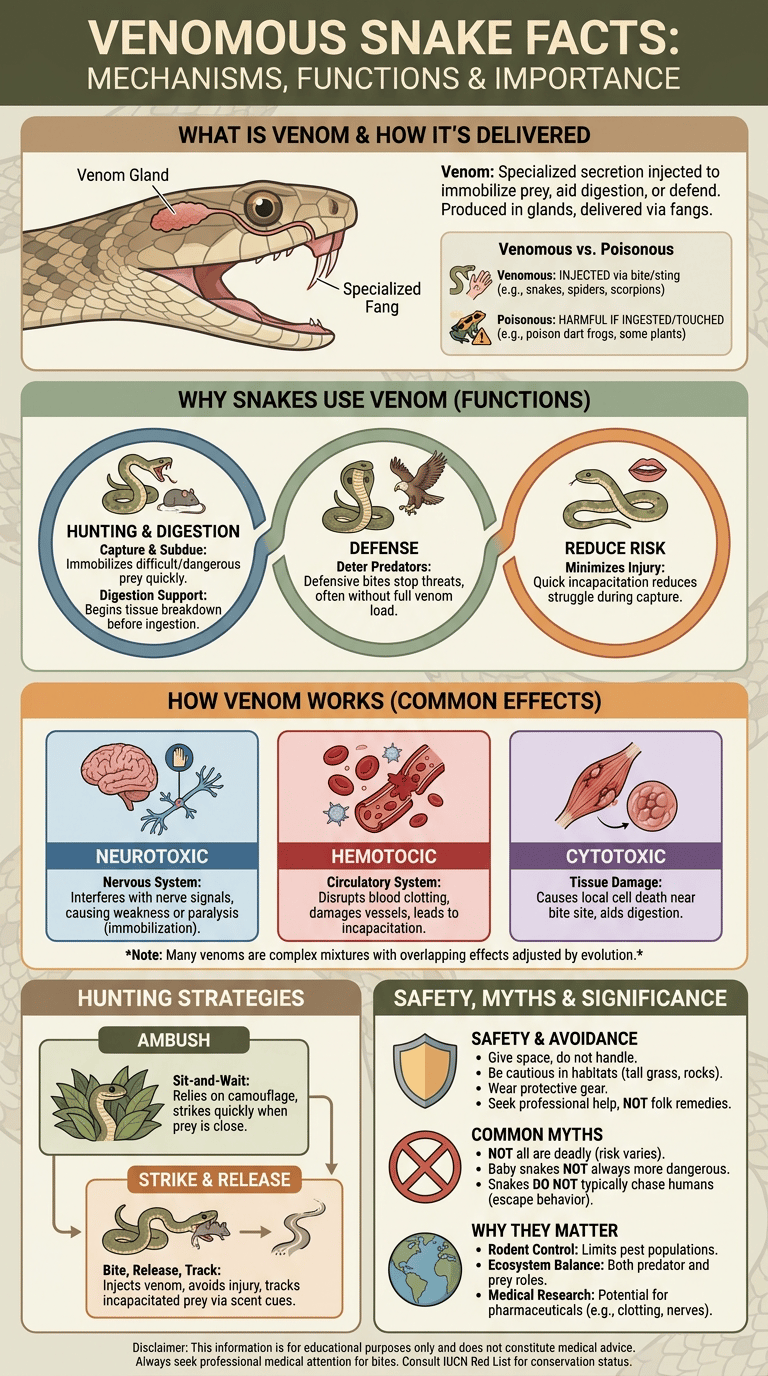
Venom is a specialized secretion that an animal injects into another organism to immobilize prey, aid digestion, or defend itself. In snakes, venom is produced in glandular tissue and delivered through specialized teeth. The term refers to both the mode of delivery and the biochemical activity of the secretion.
How many snakes are venomous
Venom is present in a subset of snake species. For current species assessments and conservation context, consult species databases such as the IUCN Red List.
Why venom exists
Venom helps snakes capture and subdue prey, reduces the risk of injury during a struggle, can begin the process of breaking down tissues to aid digestion, and functions in defense to deter predators.
Common venomous snake groups
Common groups often mentioned include cobras, mambas, rattlesnakes, and sea snakes. These names refer to groups with distinct natural histories and ecological roles. For taxonomic and conservation information on particular species or marine lineages, consult resources such as the World Register of Marine Species and the IUCN Red List.
What makes a snake venomous?
Venom glands
Venom is produced in glandular tissue located behind the head and delivered through ducts connected to specialized teeth. Venom is a complex mixture of proteins, peptides, enzymes, and other molecules, and its composition can vary widely between species.
Fangs
Fangs are specialized teeth adapted for delivering venom. Fang structure and position vary across snake families and influence how venom is delivered during a bite.
Venom delivery
Venom delivery is a coordinated action: a snake bites, glandular tissue releases venom, and the secretion flows through a fang channel into the wound. Some species can vary whether they inject venom and how much is delivered.
Sea snakes add a marine example of venomous snakes with different habitats, risks, and adaptations from land species.
Venomous vs poisonous
Venomous
Venomous refers to organisms that inject toxic substances into other organisms via a bite or sting. In snakes, this typically occurs through fangs.
Poisonous
Poisonous refers to organisms that are harmful when touched or eaten because they contain toxic substances within their tissues. Most snakes are not poisonous in this sense.
For comparison, non-venomous snake facts explain how snakes hunt and defend themselves without venom glands or specialized fangs.
Why people confuse the terms
The difference is the route of exposure: venom involves injection, poison involves ingestion or contact. Using the terms correctly reduces misunderstanding about risks and responses.
How snake venom works
Neurotoxic effects
Neurotoxic components act on the nervous system and can interfere with nerve signal transmission, causing weakness or paralysis that immobilizes prey.
Hemotoxic effects
Hemotoxic components affect the circulatory system and blood, potentially disrupting clotting or damaging blood vessels and contributing to incapacitation and tissue breakdown.
Cytotoxic effects
Cytotoxic components cause local tissue damage near the bite site, which can facilitate digestion and may produce significant local injury in larger animals.
Mixed venom effects
Many venoms are mixtures that produce overlapping effects. Venom composition reflects evolutionary trade-offs shaped by prey types, hunting strategies, and ecological pressures.
Why snakes have venom
Hunting prey
Venom allows snakes to capture prey that would otherwise be difficult or dangerous to subdue. Immobilizing prey quickly reduces the risk of injury and increases hunting efficiency.
Self-defense
Venom can deter predators. Defensive bites are usually intended to stop a threat rather than to facilitate feeding.
Digestion support
Certain venom components begin the breakdown of prey tissues, effectively starting digestion before ingestion and reducing handling time.
How venomous snakes hunt
Ambush hunting
Many venomous snakes are sit-and-wait predators that rely on camouflage and patience. They strike quickly when prey comes within reach.
Strike and release
Some snakes bite to inject venom and then release the prey to avoid injury. After the venom takes effect, the snake tracks and consumes the incapacitated animal.
Tracking prey after a bite
When strike-and-release occurs, snakes use chemical cues to track envenomated prey. Tracking reduces the need to guard prey while it dies, lowering risk to the snake.
Examples of venomous snakes
The following groups illustrate diversity of venom systems and ecological roles. For conservation status and species-specific information, consult the IUCN Red List and, for marine species, the World Register of Marine Species or ocean science resources such as the NOAA Ocean Service.
Cobras
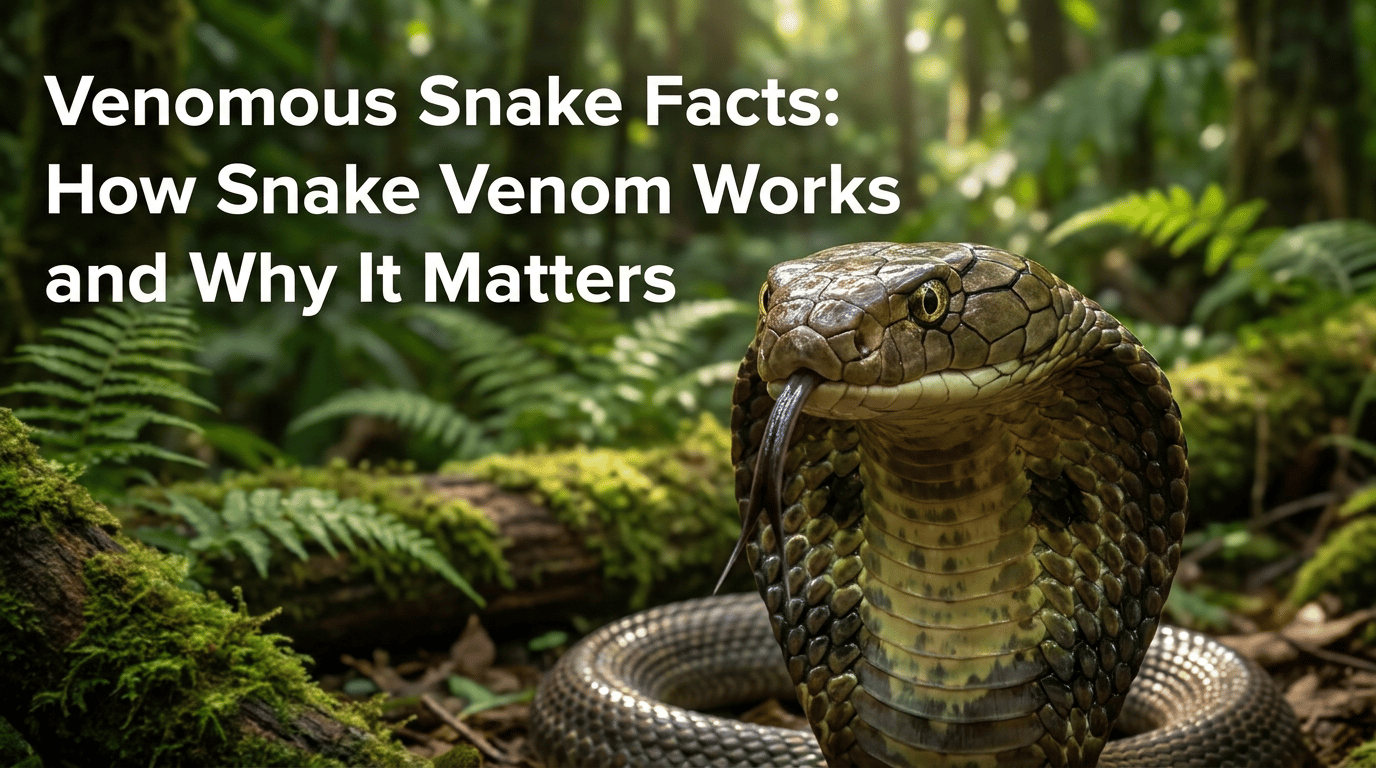
“Cobra” is a common name for several species known for hood displays and typically front-fanged venom delivery.
King cobras
King cobras are widely recognized for their large size and their dietary habits that in some areas include other snakes. Check species accounts for current conservation assessments on the IUCN Red List.
Black mambas
Black mambas are noted for rapid movement and potent venom used in hunting and defense. Understanding behavior and ecology provides context beyond sensational descriptions.
Rattlesnakes
Rattlesnakes are pit vipers that use heat-sensitive pits to detect warm-blooded prey and often display a rattle as a warning signal.
Sea snakes
Sea snakes include multiple marine-adapted groups with streamlined bodies and physiology for living in marine environments. For marine taxonomy and species information, consult the World Register of Marine Species and ocean science resources such as the NOAA Ocean Service.
Are venomous snakes aggressive?
Defensive bites vs hunting bites
Snakes bite in two broad contexts: to subdue prey or in defense. Defensive bites are reactive rather than predatory.
Why most snakes avoid humans
Most snakes prefer to avoid confrontation and will flee or display before biting. Human encounters often reflect habitat overlap or accidental surprise.
Warning displays
Many snakes use visual or auditory signals to warn potential threats and avoid physical conflict, such as hood spreading, rattling, hissing, or flattening the body.
Common myths
Myth: All venomous snakes are deadly
Risk varies with venom composition, fang structure, behavior, and likelihood of contact. Treat venomous wildlife with caution and respect.
Myth: Baby snakes are always more dangerous
Venom composition and delivery mechanics can change with growth in some species, and behavior also differs. Avoid generalized assumptions and consult expert sources for specific risk assessments.
Myth: Venomous snakes chase people
Reports that snakes chase people are often misunderstandings of escape behavior or defensive movement. Given space, most snakes retreat.
Why venomous snakes matter
Rodent control
Snakes help limit populations of small mammals in many ecosystems, contributing to natural pest control.
Ecosystem balance
Snakes occupy many trophic roles as both predators and prey, contributing to food web complexity. For species-specific conservation status and trends, see the IUCN Red List.
Medical research
Snake venoms are biologically active mixtures studied for potential medical applications, including pharmaceuticals and research into blood clotting and nerve function.
Safety
How to avoid snake bites
- Give snakes space and do not attempt to handle or capture wild snakes.
- Be cautious in snake-prone habitats such as tall grass, rocky areas, and near water; use a flashlight at night when moving through such areas.
- Wear protective footwear and clothing when working or hiking in snake country.
These are general safety practices. Local conditions vary, so follow guidance from local wildlife authorities and trained professionals.
What not to do
- Do not try to kill or handle wild snakes; this increases the risk of bites and may be illegal in some areas.
- Do not rely on folk remedies or home treatments after a bite.
- Do not attempt to identify a snake under stress at close range; maintain a safe distance and seek professional identification if needed.
If a bite or potential exposure occurs, seek prompt assistance from qualified medical or wildlife professionals. This article does not provide medical advice and should not replace professional evaluation and treatment.
Why identification should be left to experts
Accurate species identification can be difficult and is sometimes important for clinical or conservation reasons. Trained wildlife biologists, herpetologists, and medical professionals are the appropriate sources for identification and for guidance on potential risks or necessary actions.
FAQ
What is the most venomous snake?
“Most venomous” is imprecise because venom potency, delivery efficiency, and the likelihood of human contact all affect risk. For up-to-date species assessments and conservation context, consult the IUCN Red List.
Are all cobras venomous?
Species commonly called cobras are generally venomous and typically have front-fanged delivery systems. For taxonomic and species-specific information, consult the IUCN Red List and, for marine lineages, the World Register of Marine Species.
Can venomous snakes control their venom?
Some species can regulate whether they inject venom and how much they deliver in different contexts. Venom economy is an evolved trait in many snakes because producing venom has energetic costs.
Do venomous snakes always inject venom?
No. Snakes sometimes give dry bites without injecting venom, and the frequency of dry bites varies among species and individuals. Any bite should be treated seriously and receive professional medical assessment when there is a risk of envenomation.
What should you do after a snake bite?
This article does not provide emergency medical instructions. If a snake bite occurs, seek help from qualified medical professionals or local emergency services promptly. For legal and conservation implications relating to protected species, consult regulatory resources such as CITES.
Final thoughts
Venomous snakes are ecologically important animals with specialized anatomy and biochemistry. Understanding how venom systems work, why snakes use venom, and how to reduce risk during human interactions helps promote coexistence, safety, and conservation. For species-specific information and authoritative taxonomic details, consult the IUCN Red List, CITES, the World Register of Marine Species, and the NOAA Ocean Service.
King cobras give readers a focused example of how venom, prey choice, nesting behavior, and conservation overlap.
Black mambas show how speed, neurotoxic venom, and habitat combine in one of the best-known venomous snake examples.
If you encounter a snake in the wild, observe from a safe distance and contact local wildlife professionals if you need assistance. Never attempt to handle or relocate a wild snake unless you are properly trained and authorized to do so.