
What Is a Hammerhead Shark?
Hammerhead shark family
Hammerhead sharks are a group of cartilaginous fishes recognized for their flattened, laterally extended head. This distinctive head shape is a key feature used to identify members of the group, and conservation databases and species assessments provide species-level information and ranges. The International Union for Conservation of Nature maintains a global database of species assessments and ranges for many shark species, including hammerheads, which is useful for official status and range details. IUCN Red List
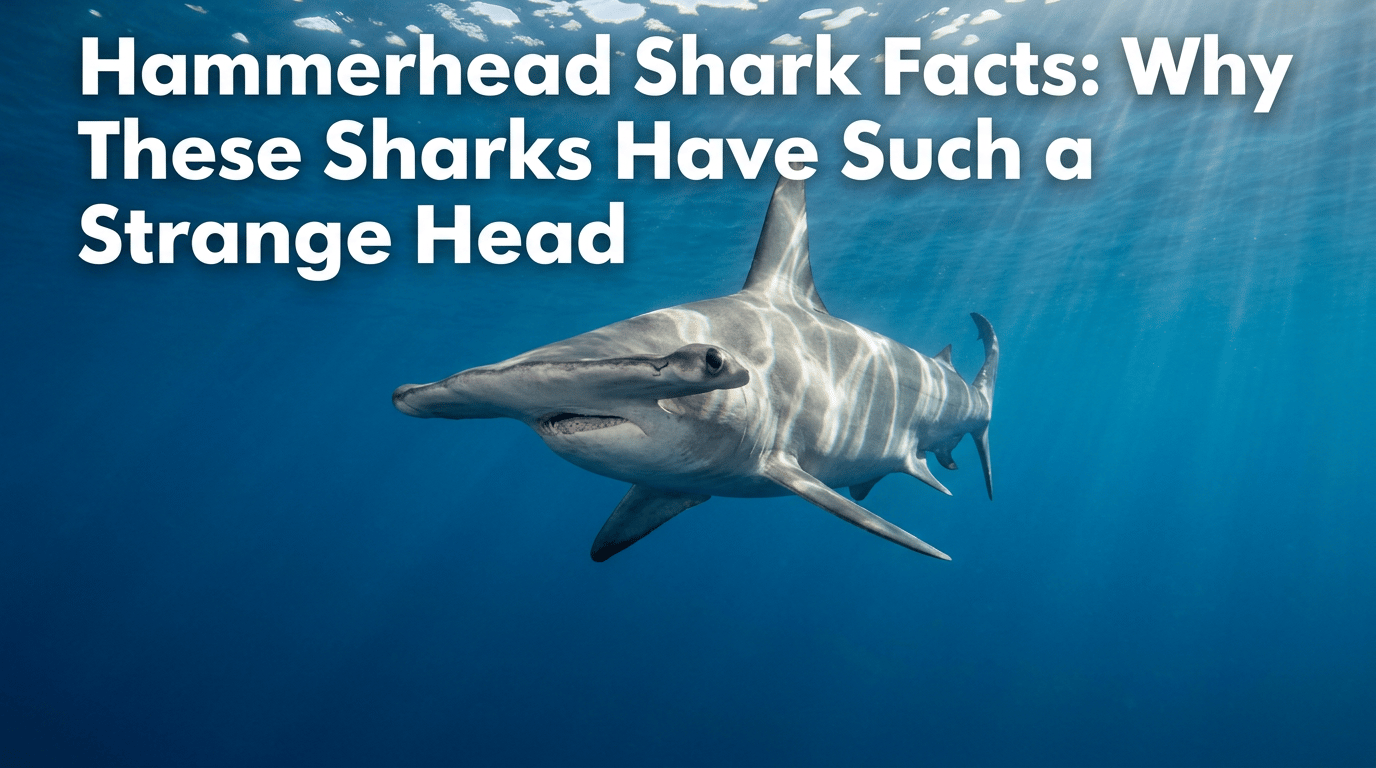
Different hammerhead species
Several hammerhead species are recognized, with head shapes that range from broadly scalloped to more straightened. Species differ in size, distribution, and habits, and some are subject to conservation concern where declines have been documented. International trade rules may apply to certain shark species; the global treaty that regulates trade in endangered species provides context on how trade is managed. CITES
Why their shape is so recognizable
The flattened head is the defining visual feature of hammerheads and gives these sharks a distinctive silhouette. The head shape has several proposed functional advantages related to sensing, maneuverability, and feeding, which are described in the sections below.
Why Do Hammerhead Sharks Have Hammer-Shaped Heads?
What the cephalofoil is
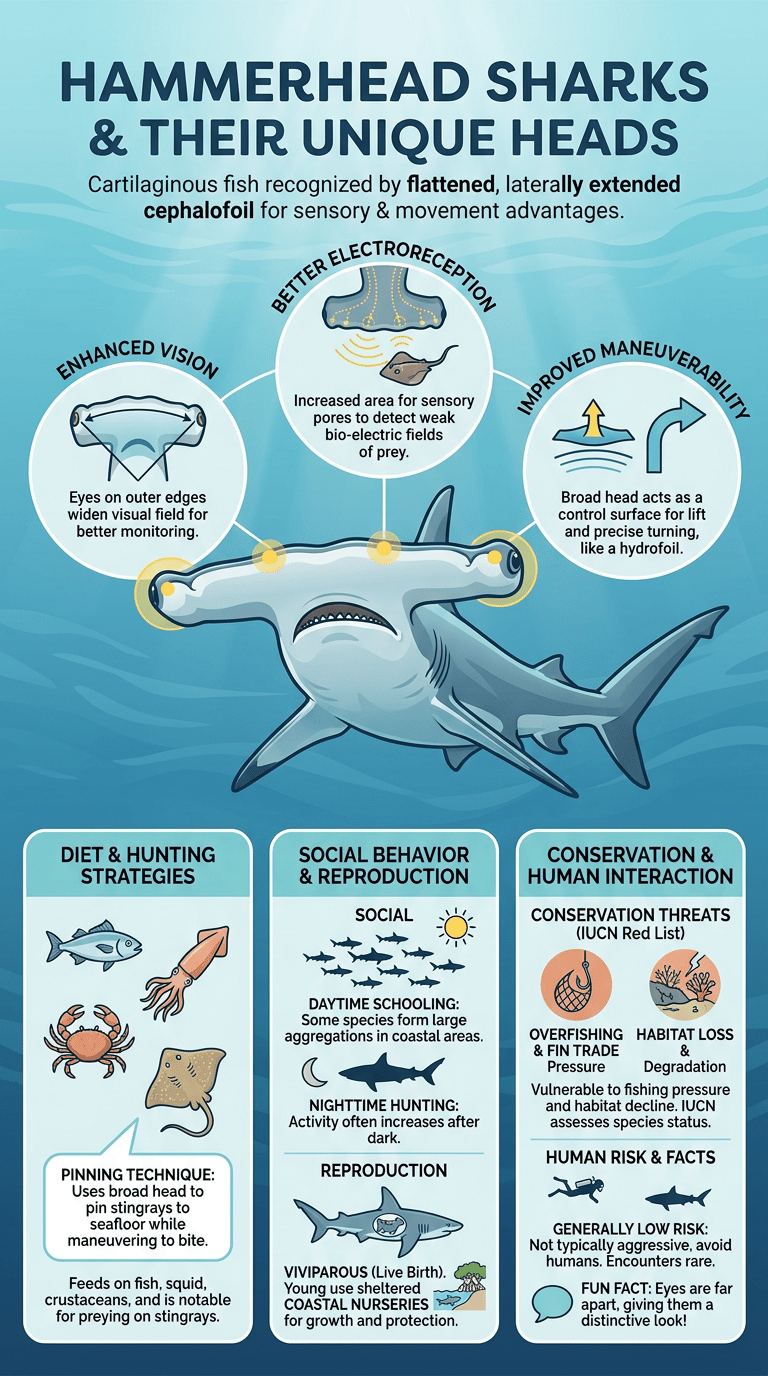
The technical term for a hammerhead shark’s widened head is the cephalofoil, referring to the flattened lateral expansions at the front of the skull. The cephalofoil influences how the shark senses and interacts with its environment, and its specific functions vary across species and are the subject of ongoing scientific study.
Better vision
Eye placement on the outer edges of the cephalofoil widens the shark’s visual field, which can help monitor more space around the animal than more forward-facing eyes would allow. This arrangement may aid in detecting prey and other animals in the shark’s environment.
Better electroreception
Hammerheads, like other sharks, possess electroreceptive organs called ampullae of Lorenzini. The cephalofoil increases the area available for these sensory pores, which may improve the shark’s ability to detect weak electrical fields produced by buried or camouflaged prey.
Better maneuverability
The broad head can affect hydrodynamics, acting like a control surface that provides lift or improved turning ability when the shark swims. This can be useful when hunting agile prey or making precise movements near the seafloor.
Hammerhead Shark Size Facts
Small hammerhead species
Hammerhead species vary in adult size. Some are relatively small within the group, while others reach larger adult dimensions. Size differs by species, life stage, and local conditions.
Great hammerhead size
The great hammerhead is commonly cited as one of the largest species in the group. For exact length and weight ranges for particular species, consult species-level resources and conservation assessments.
How size varies by species
Size differences influence ecology: larger species may take larger prey and travel longer distances, while smaller species may be more associated with coastal habitats and different prey types. These are general patterns that vary regionally.
Where Hammerhead Sharks Live
Warm coastal waters
Many hammerhead species are associated with warm coastal waters, which can provide shallow foraging grounds and nursery habitat for young sharks. Specific coastal areas used differ by species and region.
Continental shelves
Continental shelf areas with relatively shallow depths can be important habitat, offering access to benthic prey and sheltered zones where juveniles may spend time.
Oceanic islands
Some hammerhead species are recorded around oceanic islands, where foraging and migration patterns may differ from mainland coastal zones.
Seasonal migration areas
Certain populations make seasonal movements following prey availability, water temperature gradients, or reproductive cycles. Migration patterns vary by species and geographic area, and conservation assessments compile known migratory routes and aggregations.
What Hammerhead Sharks Eat
Fish
Fish are an important component of many hammerhead diets. Different species and life stages target different fish types, and feeding strategies include active pursuit, ambush, and opportunistic foraging.
Squid
Cephalopods such as squid are commonly included in the diet of many shark species that hunt in coastal and open-water environments, providing high-energy prey items captured using speed and agility.
Crustaceans
Crustaceans can be part of the prey spectrum, especially for species that forage over the seafloor where crabs, lobsters, and similar animals occur.
Stingrays as favorite prey
Stingrays are a notable prey type for several hammerhead species. The flattened bodies of rays make them suitable prey for hammerheads, which may use their head shape and sensory systems to detect and extract rays from sediment. International trade and conservation frameworks provide context for how targeted and incidental catch affect species. CITES
How Hammerhead Sharks Hunt
Using their wide head to detect prey
Hammerheads use a combination of senses while hunting. Their cephalofoil offers a wide platform for sensory organs that detect visual, chemical, and electrical cues, helping to localize hidden or camouflaged prey.
Pinning stingrays
Observational accounts describe hammerheads pinning rays to the seafloor with their broad heads to limit the ray’s movement while the shark maneuvers to bite. This feeding interaction is commonly cited in natural history summaries.
Hunting alone vs in groups
Hammerheads have been observed hunting both singly and in groups. Group foraging may occur where individuals benefit from shared information or when prey is abundant, while solitary hunting occurs in other contexts. Patterns vary by species, location, and time of day.
Hammerhead Shark Social Behavior
Why some hammerheads form schools
Certain hammerhead species form large aggregations. Proposed explanations include improved foraging efficiency, social interactions related to breeding, and safety in numbers. Aggregations are a notable aspect of some populations and remain an active topic in shark ecology.
Daytime grouping
Some species gather in coastal or shelf areas during daylight hours. Group sizes vary from a few individuals to very large assemblies depending on species and local conditions.
Nighttime hunting
Activity levels in many shark species, including several hammerheads, can increase after dark when predators exploit nocturnal prey. Nighttime hunting may involve different tactics and habitat use than daytime behaviour.
What scientists still do not fully understand
Researchers continue to study the drivers of aggregation, fine-scale social structure, and how environmental change influences movement and behaviour in hammerheads. Ongoing research refines understanding of their social ecology.
Hammerhead Shark Reproduction
Live birth
Hammerhead sharks are generally viviparous, meaning females give birth to live young rather than laying eggs. Embryos develop within the mother and are born as fully formed juveniles; this reproductive mode is common in several shark families.
Shark pups in nursery areas
After birth, young sharks often use sheltered coastal habitats as nursery areas that provide abundant small prey and relative protection from larger predators, helping juveniles grow during vulnerable early stages.
Why coastal nurseries matter
Coastal nursery areas support juvenile survival and can contribute to the long-term stability of local shark populations. Protecting these habitats is frequently identified as a conservation priority.
Are Hammerhead Sharks Dangerous?
Human risk
Hammerhead sharks are not typically described as aggressive toward humans. While they are large predatory fishes, recorded interactions with people are relatively rare. It is important to approach wild animals with caution and respect.
Why they usually avoid people
Sharks, including hammerheads, tend to avoid humans under normal circumstances. Their natural prey and foraging strategies do not depend on interacting with people, and most encounters are brief and non-confrontational. Follow local safety guidance when swimming, diving, or boating in areas where large sharks are present.
Difference between size and aggression
Size alone does not determine aggression. Behaviour toward humans depends on many factors, including hunger, provocation, mistaken identity, and environmental conditions. Avoiding risky behaviour around wildlife and following local guidance is prudent.
Hammerhead Shark Conservation
Overfishing
Fishing pressure can significantly affect hammerhead populations in many regions. Overfishing, whether targeted or incidental, reduces numbers and can alter population structure. Global conservation databases compile species assessments and trends that summarize regional details. IUCN Red List
Fin trade pressure
The demand for shark fins has driven increased shark mortality worldwide, affecting many species. Hammerheads are among the types of sharks impacted by the fin trade, and international trade regulations aim to reduce unsustainable harvest and unregulated trade. CITES
Habitat loss
Coastal development, pollution, and degradation of nearshore systems can reduce the availability and quality of habitats used by hammerheads for feeding and nurseries. Protecting coastal and shelf habitats is often cited as a conservation priority where sharks rely on those environments.
Why some hammerheads are vulnerable
Certain large hammerhead species face heightened conservation concern due to a combination of life history traits and human pressures. Population declines reported for some species have prompted conservation listings and management responses; consult international conservation assessments for up-to-date status and trends. IUCN Red List
Weird and Fun Hammerhead Facts
Their eyes are far apart
Eyes positioned at the ends of the head broaden the field of view and are a memorable trait that distinguishes hammerheads from other sharks.
Their head helps them turn
The broad, flattened head can act like a hydrofoil, assisting with turning and stabilization in the water, which is useful during hunting and quick manoeuvres near the seafloor.
Some travel in large groups
Large aggregations of hammerheads are an impressive natural phenomenon at certain times and places and attract interest from divers, researchers, and conservationists.
Their shape is a survival tool
The cephalofoil likely contributes to multiple advantages that improve sensing, prey capture, and movement efficiency, making the hammer-shaped head an adaptive trait shaped by ecological needs.
FAQs About Hammerhead Sharks
Why is a hammerhead shark’s head shaped like a hammer?
The head, called a cephalofoil, likely offers multiple benefits including improved sensory coverage, enhanced electroreception, and manoeuvrability. It most likely serves several functions that together aid survival in different habitats.
Are hammerhead sharks dangerous?
Hammerheads are predators but are not generally considered a significant threat to people. Encounters are usually non-aggressive. When in marine environments, follow local safety guidance and avoid actions that might provoke or stress wild animals.
What do hammerhead sharks eat?
Hammerheads feed on a variety of prey including fish, squid, crustaceans, and rays. Diets vary by species, size, and local prey availability.
Where do hammerhead sharks live?
Hammerheads occur in warm coastal waters, continental shelf zones, and around oceanic islands. Some populations undertake seasonal movements; specific distribution patterns differ among species and regions. For species-level details, consult conservation assessments such as those maintained by the IUCN. IUCN Red List
How big do hammerhead sharks get?
Size varies across species. Some hammerheads are relatively small compared to the largest species. For exact length and weight estimates for a given species, consult species-specific references and conservation assessments.

Ethan Walker is the founder and research editor of Animal Fact Central. He creates and reviews educational animal facts content using trusted wildlife, pet care, and science-based sources. His work focuses on making animal behavior, adaptations, habitats, and species facts clear, accurate, and engaging for everyday readers.
Read More Details About Ethan Walker: https://animalfactcentral.com/ethan-walker/