
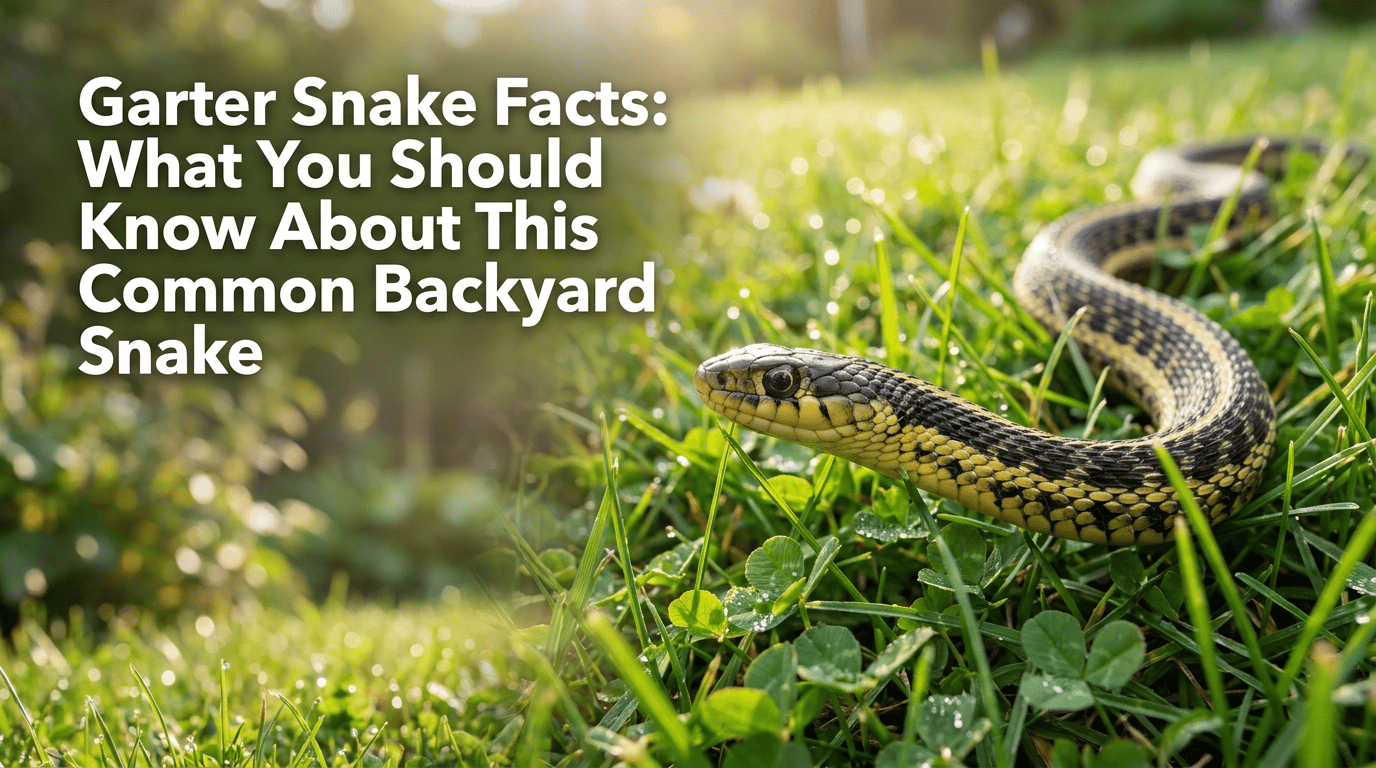
Garter snakes are common in many neighborhoods and gardens. This article explains how to recognize them, where they live, what they eat, and why they are often considered helpful around yards. If you are worried about safety, follow caution and contact qualified professionals when needed.
Quick garter snake facts
Scientific name
The common name “garter snake” refers to multiple species in the genus Thamnophis. For species assessments and range maps, consult the IUCN Red List for the particular species you are interested in.
Average size
Garter snakes are generally described as small to medium-sized, with size varying among species and populations. For precise measurements for a given species, consult authoritative species accounts or local field guides.
Habitat
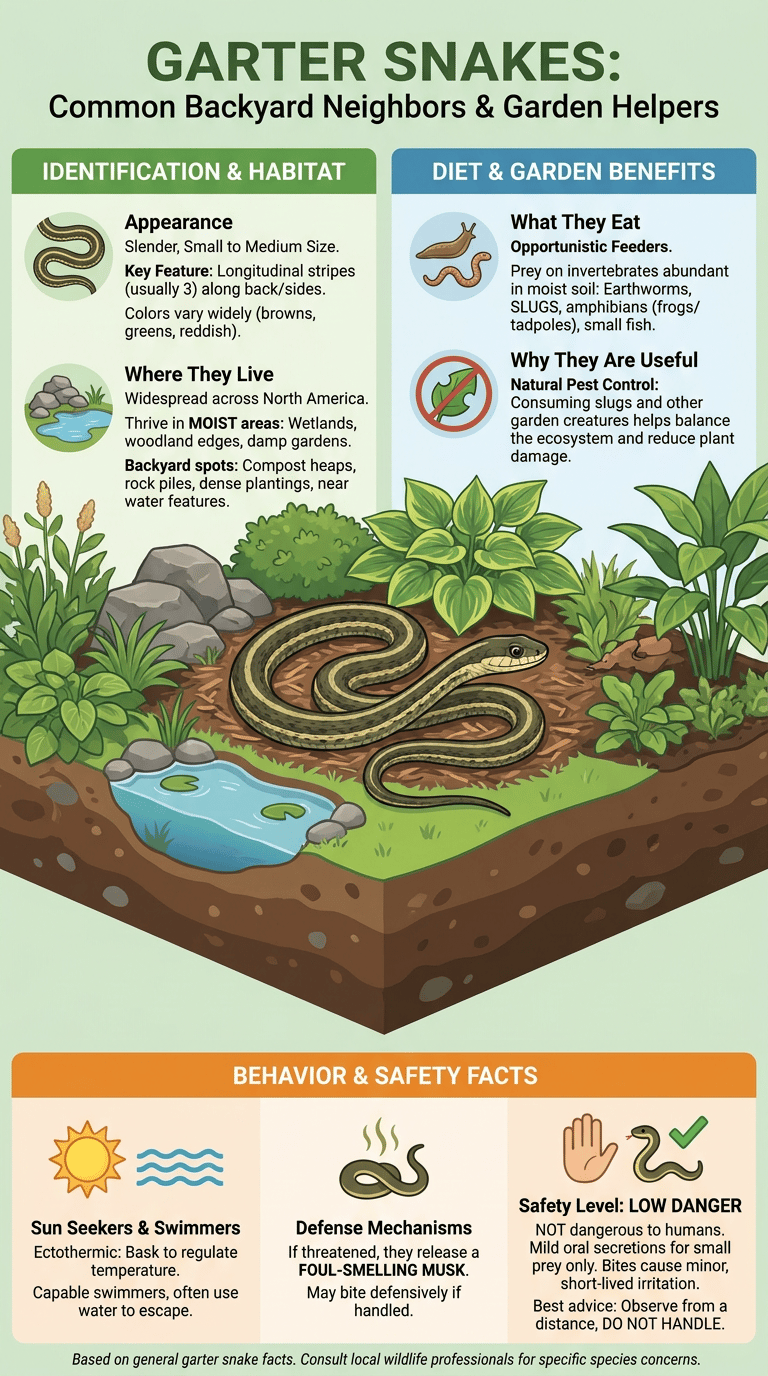
They use a range of habitats that provide cover and prey, including moist sites such as wetlands, ponds, and damp garden areas, as well as grasslands, woodland edges, and suburban yards.
Diet
Garter snakes are opportunistic feeders. Their diet may include earthworms, slugs, amphibians, small fish, and other small animals available in their habitat. Diet varies by species, local prey availability, and life stage.
Like other reptiles, garter snakes also shed as they grow, and understanding why snakes shed skin helps explain normal changes in activity and appearance.
Lifespan
Wild lifespans vary by species and local conditions. Many factors influence survival, so lifespan statements should be treated as general guidance rather than exact expectations.
Danger level
Garter snakes are not typically aggressive toward people. Some species produce mild oral secretions used to subdue small prey. If you are bitten or concerned about a snake encounter, seek advice from medical or wildlife professionals rather than handling the animal yourself.
For broader non-venomous snake facts, compare garter snakes with corn snakes, boas, pythons, and rat snakes.
What is a garter snake?
Why garter snakes are so common
Garter snakes thrive in a variety of environments and can adapt to human-altered landscapes. Their flexible diet, tolerance of different habitats, and use of cover such as garden vegetation and debris can make them common residents in yards and green spaces.
How to recognize a garter snake
Identification usually relies on a combination of body shape, stripe patterns, head shape, and behavior. Many garter snakes are slender and show longitudinal stripes, but exact color and pattern vary among species and individuals. When in doubt, observe from a safe distance and consult field guides or local wildlife experts for identification.
Where do garter snakes live?
North American range
Many garter snake species occur across broad parts of North America. For official conservation status and species-specific range information, consult the IUCN Red List.
Backyard and garden habitats
In yards and gardens, garter snakes often use sheltered spots such as rock piles, compost heaps, dense plantings, and stacked wood. Moist gardens that attract slugs, worms, and amphibians can provide both habitat and food.
Why they like moist areas
Moist environments support many of the prey items garter snakes eat, such as worms, slugs, amphibians, and small fish. Moisture also affects a snake’s ability to thermoregulate and find cover, so encounters are more likely near ponds, streams, or damp garden beds.
What do garter snakes look like?
Stripe patterns
Many garter snakes have longitudinal stripes running down the length of the body. Stripes can be centered on the back or located on the sides, and color contrasts vary. Stripe arrangement is a common field mark used to separate species and regional forms.
Color variations
Coloration ranges widely. Some individuals are boldly patterned while others are more muted. Appearance varies with habitat, genetics, and seasonal changes, so color alone is not always a reliable identification feature.
How big garter snakes get
Garter snakes are typically small to medium-sized, with size varying by species and population. Consult species-specific resources or local experts for accurate size ranges in your area.
Are garter snakes venomous?
Mild toxins explained
Some garter snake species produce mild oral secretions that aid in subduing small prey. These secretions are not the same as the advanced venom systems of certain other snake groups and are generally not considered dangerous to healthy adults. For questions about envenomation, contact medical professionals or local wildlife authorities.
Are they dangerous to humans?
Garter snakes are not typically regarded as dangerous to people. Bites are usually defensive and may cause local irritation. Anyone handling wildlife risks bites, infection, or allergic reactions; seek medical advice if you have concerns after a bite.
What happens if a garter snake bites?
Bites usually cause a mild, short-lived reaction at the bite site. Treat any bite with caution: clean the area, monitor for signs of infection or allergic reaction, and contact a healthcare provider if symptoms worsen. Contact licensed wildlife rehabilitators, local animal control, or medical professionals for assistance with wildlife encounters.
What do garter snakes eat?
Worms and slugs
Garter snakes commonly consume invertebrates abundant in moist soil and gardens, such as earthworms and slugs. These prey items are easily captured in damp environments with leaf litter and mulched areas.
Frogs and small fish
In wet habitats, garter snakes will take small amphibians and fish when available. Their opportunistic feeding makes them predators of small aquatic and semi-aquatic organisms.
Why they are useful in gardens
Because garter snakes eat creatures that gardeners consider pests or visitors that can damage plants, their presence can contribute to natural pest control. If you prefer to encourage their presence, maintain habitat features that support both snakes and their prey while using caution around wildlife.
Garter snake behavior facts
Why garter snakes bask
Like other reptiles, garter snakes are ectothermic and rely on external heat sources to regulate body temperature. Basking helps raise body temperature for digestion and activity.
How they escape predators
Garter snakes use escape strategies such as fleeing into cover, hiding under debris, remaining motionless, or entering water. They are capable swimmers and may use water to escape threats.
Why they release a bad smell
When threatened, garter snakes may release foul-smelling secretions from their cloacal glands to deter predators and make the snake less appealing to handle. This defensive tactic is common among many snake species.
Do garter snakes swim?
Why they are often found near water
Many garter snake species spend time near water because it provides abundant prey and escape routes. Water bodies also offer moist microhabitats that support amphibians and invertebrates they feed on.
What they hunt in wet areas
In aquatic or semi-aquatic settings, garter snakes hunt small fish, tadpoles, frogs, and aquatic invertebrates. Some snakes enter shallow water to forage.
Garter snake reproduction facts
Do garter snakes lay eggs?
Reproductive mode varies among species; many garter snake species give birth to live young. For species-level reproductive details, consult authoritative references or species assessments on the IUCN Red List.
Baby garter snake facts
Young garter snakes are typically independent at birth and receive no parental care. Juveniles disperse to find suitable habitat and prey; brood size and development differ among species and populations.
Why some garter snakes gather in groups
Certain species form aggregations for thermoregulation, mating, or shared shelter. Grouping can help individuals conserve heat and find mates more efficiently. If you observe a group of snakes, maintain a respectful distance and avoid disturbance.
Garter snakes in your yard
Should you remove them?
Decisions about removing wildlife should balance safety, legal protection, and ecological value. Many garter snake species provide benefits by eating pests, but some regions have regulations that protect wildlife. If unsure, contact local wildlife authorities or a licensed professional for guidance. Do not attempt to handle, capture, or relocate snakes yourself. For information on international wildlife protection and trade, consult CITES.
Are they good for gardens?
Garter snakes can be beneficial in gardens because they prey on creatures like slugs and other small animals that can damage plants. Their presence contributes to a balanced garden ecosystem. To support wildlife-friendly gardens while minimizing unwanted close encounters, create habitat features that favor natural cover away from high-traffic areas.
How to keep distance safely
- Leave snakes alone and observe from a distance.
- Reduce easy hiding spots close to homes, such as loose rock piles or dense debris, if you want fewer snakes near foundations.
- Keep pets supervised and avoid letting them chase or corner wildlife.
- If a snake needs removal from a structure or poses a safety concern, contact licensed wildlife control or local animal services.
For site-specific advice, consult local wildlife professionals.
Garter snake vs. corn snake
Appearance difference
Garter snakes and corn snakes belong to different groups and usually differ in pattern and color. Garter snakes often show longitudinal striping, while corn snakes typically display blotched, crosswise patterns. Appearance varies by species and region, so use multiple field marks for reliable identification.
Behavior difference
Behavioral differences include habitat preference and activity patterns. Corn snakes are often associated with forests, fields, and structures where they can climb and hunt for small mammals, whereas garter snakes frequently use moist habitats and feed on a mix of aquatic and terrestrial prey. Both may occur near human structures but in different ecological contexts.
Pet difference
Corn snakes are commonly kept as pets and are bred in captivity. Garter snakes are sometimes kept by experienced keepers but are more commonly encountered in the wild. If considering any animal as a pet, research species-specific husbandry and legal considerations, and obtain animals from reputable, legal sources rather than removing wild individuals from natural habitats.
FAQs
Are garter snakes dangerous?
Garter snakes are not typically dangerous to people. They may bite if harassed, and some species have mild oral secretions used on prey. Seek professional medical advice if you have concerns after a bite or encounter.
Do garter snakes bite?
Yes, garter snakes can bite defensively. Bites tend to be defensive rather than predatory when directed at humans. Avoid handling wild snakes and keep a safe distance.
What attracts garter snakes?
Food availability, cover, and suitable moisture levels attract garter snakes. Gardens with abundant prey, water features, and shelter are more likely to host them. To discourage visits, minimize standing water and easily accessible shelter near buildings.
Are garter snakes good to have around?
Many people appreciate garter snakes for their role in controlling garden pests and contributing to local biodiversity. Whether they are desirable depends on personal comfort, pet and child safety considerations, and local regulations.
Can garter snakes swim?
Yes, many garter snakes use aquatic habitats and are able to swim. Water provides refuge and prey opportunities for them.
Final thoughts
Garter snakes are a common and adaptable group that play useful roles in many ecosystems, including gardens and yards. They are typically small to medium-sized, opportunistic feeders that often use moist habitats. While some species produce mild oral secretions used on prey, they are not generally considered dangerous to people. Observe without disturbing, take sensible safety measures, and contact qualified professionals for removal or medical questions.
For species-level conservation, range, and natural-history information, consult the IUCN Red List for species assessments, and for international trade and protection context see CITES.

Ethan Walker is the founder and research editor of Animal Fact Central. He creates and reviews educational animal facts content using trusted wildlife, pet care, and science-based sources. His work focuses on making animal behavior, adaptations, habitats, and species facts clear, accurate, and engaging for everyday readers.
Read More Details About Ethan Walker: https://animalfactcentral.com/ethan-walker/