
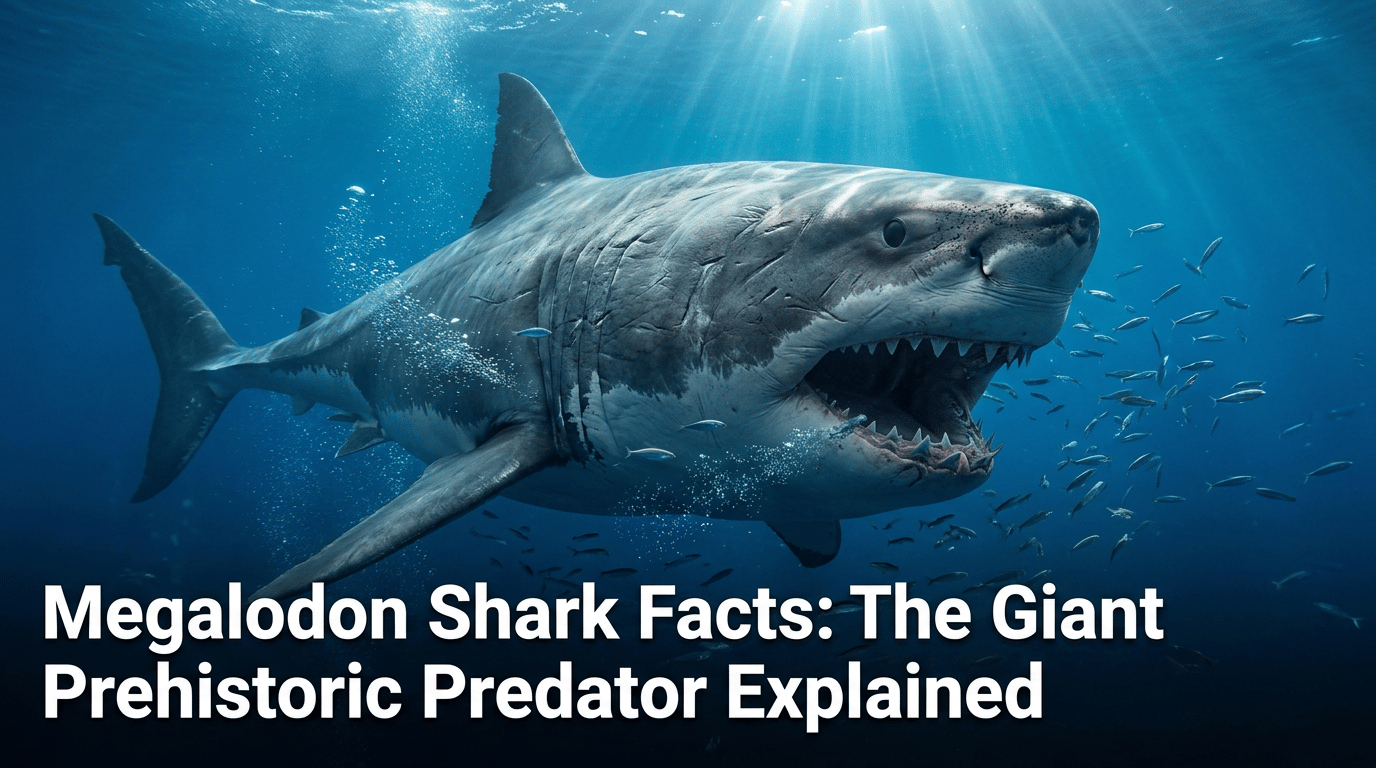
Megalodon is one of the most famous prehistoric ocean predators. Popular culture often pictures it as a modern sea monster, but scientific study paints a more measured picture based on fossils, comparative anatomy, and careful inference. This article explains what megalodon was, how scientists study it, and how to separate fossil-based conclusions from movie myths and internet speculation.
What was megalodon?
Scientific naming and taxonomy
The animal commonly called megalodon is referenced in scientific literature under names used for extinct large predatory sharks. Because megalodon is known primarily from fossil remains, taxonomic names reflect ongoing scientific discussion and revision rather than a living species roster.
When megalodon lived
Megalodon is described from fossil material and is regarded as a creature of the geological past rather than a modern species. References to megalodon place it well before the present day and within ancient marine faunas.
Why it is so famous
Megalodon attracts broad interest for several reasons:
- It represents an idea of a very large, tooth-bearing shark that lived long ago.
- Fossil teeth are notably large compared with teeth of many living sharks, which makes megalodon an attention-grabbing subject for museums, books, and media.
- Storytelling in films, documentaries, and online media has amplified size and danger, encouraging curiosity and myth-making.
Was megalodon really a shark?
Place in shark evolution
Scientists interpret megalodon as part of the broader shark lineage. Fossil species are placed in evolutionary trees using tooth anatomy and comparisons with living sharks. Because megalodon is known from fossils, paleontologists use comparative methods to infer where it belongs within shark evolution.
Difference from modern great white sharks
Although popular discussion sometimes treats megalodon and the modern great white shark as directly comparable, they are distinct in evolutionary terms. Differences in tooth shape, inferred jaw structure, and time of existence mean megalodon should be understood on its own terms rather than as a simple larger version of a modern species.
Why scientists debate its exact appearance
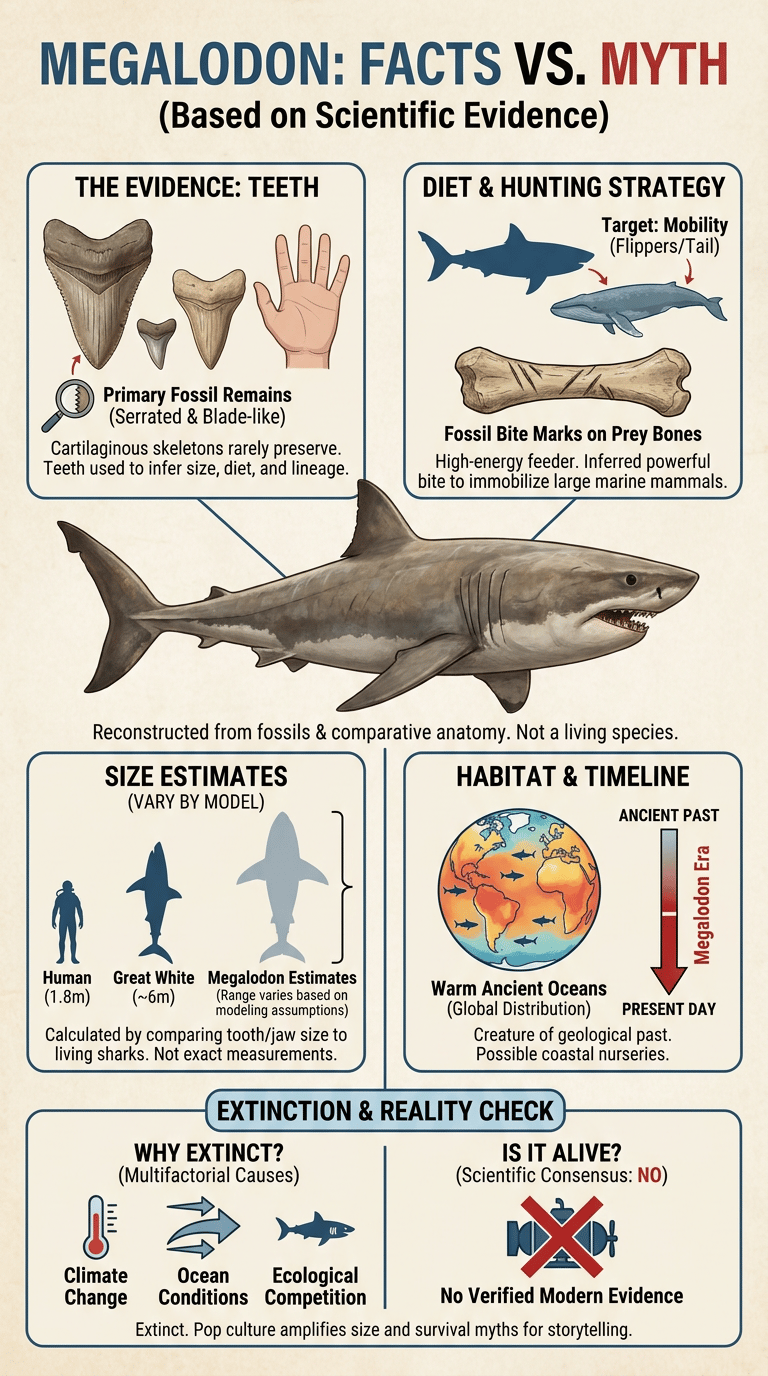
Reconstructing the appearance of an extinct shark relies on limited fossil material. Sharks have cartilaginous skeletons that often do not preserve, so reconstructions depend heavily on tooth shape and rare associated remains. This leaves room for differing interpretations about body proportions, fin shapes, color patterns, and other external features that are not preserved in teeth alone.
Megalodon size facts
Estimated length and weight
Scientists produce size estimates by comparing tooth size and jaw reconstructions with living sharks and fossil relatives. These model-based inferences include ranges and caveats: different methods and assumptions yield different results. Weight estimates derive from inferred body volume and scaling relationships and carry similar uncertainty.
Why size estimates vary
Size estimates differ because researchers use different comparative species and mathematical models, fossil sample sizes vary, and reconstructions of jaw and body proportions rely on interpretation. Scientific publications typically explain their assumptions so readers can see why estimates do not always match.
Comparing megalodon to modern sharks
Megalodon is commonly described as substantially larger than most modern sharks. Modern shark species vary widely in size, and comparisons are used to help readers grasp scale while noting that the animals occupied different ecological contexts and evolutionary histories.
Megalodon teeth facts
Large serrated teeth
Megalodon teeth are notable for their size and, in many specimens, serrated cutting edges. These characteristics made the teeth effective tools for slicing into prey and distinctive finds in the fossil record.
Why teeth are the main fossil evidence
Shark skeletons are primarily cartilaginous and often do not fossilize as readily as bone. Teeth, composed of mineralized tissues, preserve far more commonly. For megalodon, teeth are the most abundant and informative direct fossils available, and scientists rely on them to infer aspects of anatomy, diet, and life history.
What teeth reveal about diet
Tooth shape, serration, and wear patterns help paleontologists infer feeding behavior. Teeth adapted for cutting suggest a predator capable of processing large, fleshy prey. Wear, breakage, and fossil evidence such as bite marks on prey fossils contribute additional insight into how the animal used its teeth in life.
Comparing megalodon teeth to great white teeth
Both megalodon and the modern great white shark have blade-like teeth with serrations effective for cutting flesh. Differences in tooth proportions and other features suggest variations in feeding mechanics and prey choice, but direct comparisons must account for evolutionary distance and functional adaptation.
What did megalodon eat?
Marine mammals and large prey
Fossil evidence and tooth form are consistent with megalodon feeding on large marine animals. Marine mammal fossils sometimes show wounds or tooth marks that researchers interpret as evidence of shark predation or scavenging. For context on the biology of modern marine mammals and the kinds of prey large predators target, see mammal resources such as the Smithsonian National Zoo and the San Diego Zoo Wildlife Explorers.
Smithsonian National Zoo mammal pages
San Diego Zoo Wildlife Explorers mammal pages
Other large ocean animals
Beyond whales, other sizable marine animals would have been plausible prey items for a very large predator. Body size and tooth morphology are consistent with a diet that included substantial, fleshy animals rather than only small schooling fish. Fossil contexts and comparisons with modern predators inform this interpretation.
Why large prey make ecological sense
Large predators have high energetic demands, and an animal reconstructed as very large would likely require substantial calorie intake. This ecological logic, combined with tooth form and fossil evidence showing interactions with marine mammals, supports the interpretation that megalodon fed on large prey.
How megalodon hunted
Powerful bite inferred from fossils
Researchers infer strong biting ability from tooth shape and jaw reconstructions derived from teeth. Robust teeth and wide jaw spacing in reconstructions suggest a predator capable of delivering powerful bites appropriate for large prey. Bite strength estimates come from comparative anatomy and modeling rather than direct measurement.
Attacking large prey
Tactics to subdue large prey could have included targeting soft tissues, biting flippers or tails to disable movement, or delivering repeated damaging bites. Fossil bite marks on prey bones support the idea that megalodon engaged with large animals, although precise hunting sequences remain hypothetical.
Hunting strategy hypotheses
Scientists discuss several plausible hunting strategies: ambush attacks in coastal areas, opportunistic scavenging of carcasses, and active pursuit in open water. Without direct observation, researchers evaluate likelihood using comparative data from living predators and the fossil record.
What fossil bite marks suggest
Fossil bones bearing serrated tooth marks can indicate predator-prey interactions and sometimes allow researchers to match bite size and spacing to the biting animal. Such marks are a valuable line of evidence for reconstructing feeding behavior, though they rarely provide a complete account of how a hunt unfolded.
Where megalodon lived
Warm ancient oceans
Paleontological evidence places megalodon in marine environments that supported large prey communities. Many fossil sites associated with large predatory shark teeth come from regions that were comparatively warm in the past. Habitat reconstructions combine sedimentary context, associated fauna, and geochemical indicators to infer environmental settings.
Coastal nursery areas
Some researchers have proposed that large marine predators used coastal areas as nursery habitats for juveniles, a pattern seen in several modern sharks. The concept of coastal nursery areas for juvenile sharks is informed by modern ecological studies of shark life histories, and this framework helps paleontologists consider where juvenile fossil remains might accumulate.
Fossils found around the world
Teeth attributed to very large predatory sharks appear in fossil collections from multiple continents, which suggests a broad geographic distribution in ancient oceans. The presence of similar teeth in widely separated locations points to widespread predatory sharks occupying diverse marine environments during the time periods represented by those fossils.
Why did megalodon go extinct?
Multiple contributing factors
Long-term changes in climate and ocean conditions, shifts in prey availability, and ecological competition are commonly considered together when explaining the decline and disappearance of large marine predators. Alterations in temperature, sea level, and ocean circulation can change habitat availability and prey distributions, making survival harder for some predators. Paleontologists evaluate multiple lines of evidence and often treat extinction as a multifactorial outcome rather than the result of a single cause.
For background on how scientists assess threats and population trends in living species, see the IUCN Red List, which explains frameworks used to evaluate conservation status and threats.
Is megalodon still alive?
Claims of modern survival
Claims that megalodon survives today often stem from wishful thinking, misinterpretation of ambiguous sightings, and sensational media. The deep ocean is vast and not fully explored, which feeds speculative narratives, but popular films and internet content sometimes portray megalodon as lurking in modern seas despite the lack of verifiable evidence.
Scientific perspective on extinction
The consensus in paleontology treats megalodon as known only from fossil remains rather than as a living species. The fossil record places it in past geological times, and there are no verified modern specimens or genetic samples attributed to megalodon.
Limitations of the deep-ocean survival idea
The hypothesis that megalodon could survive unseen in deep-ocean refuges faces practical challenges: deep, isolated environments usually have limited food resources compared with coastal systems, and a very large predator would likely leave detectable ecological signatures. No reliable physical specimens, genetic material, or contemporary fossil deposits indicate survival into modern times.
Megalodon vs great white shark
Size and bite comparisons
Megalodon is commonly presented as much larger than the modern great white shark based on tooth size and inferred jaw dimensions. Bite and teeth comparisons rely on models and assumptions, while the great white is a living species with directly studied anatomy and behavior.
Habitat and diet differences
Modern great whites occupy coastal and open-ocean habitats and feed on a range of prey including marine mammals, fish, and carrion. Megalodon, based on fossil contexts and inferred ecology, likely hunted larger prey and may have favored different habitat scales and prey assemblages in prehistoric oceans. They are best understood as occupying different ecological roles separated by time and evolution.
Megalodon in movies and pop culture
Why megalodon became a monster icon
Megalodon is an easy subject for dramatic storytelling. Large teeth and the idea of an enormous shark combine to form a compelling image that works well in movies, novels, and viral online content. Storytellers often amplify size, speed, and aggressiveness to create suspense and spectacle.
Fiction versus science
Fictional portrayals typically prioritize excitement over scientific nuance, showing living megalodons in modern oceans or depicting behaviors not supported by fossil evidence. Scientific accounts focus on what can be inferred from fossils, the uncertainty in those inferences, and how different lines of evidence are weighed to reconstruct life history and ecology.
FAQs about megalodon
How big was megalodon?
Scientists offer a range of size estimates based on tooth measurements and comparative models with living sharks. Because different methods yield different numbers, it is more accurate to say that megalodon is reconstructed as a very large shark and that precise numeric values depend on modeling choices and assumptions.
Is megalodon still alive?
No verified modern evidence supports the idea that megalodon persists today. The scientific view treats megalodon as an extinct, prehistoric shark known from fossil remains rather than a living species.
What did megalodon eat?
Based on tooth form and fossil associations, researchers infer that megalodon fed on large marine animals, including marine mammals. For accessible overviews of marine mammal biology that provide context for why whales and other large animals are plausible prey, see the Smithsonian National Zoo and the San Diego Zoo Wildlife Explorers pages linked above.
When did megalodon go extinct?
Extinction timing for any fossil species is the subject of paleontological research and relies on the distribution of fossils in dated sediments. Discussions of extinction include environmental changes, prey availability, and ecological competition. Exact numeric dating is handled in specialist literature; broadly, megalodon is regarded as part of ancient marine faunas rather than a modern species.
Was megalodon bigger than a blue whale?
Comparisons between megalodon and the blue whale are sometimes made in popular media. The blue whale is a living animal with well-documented size records, while megalodon reconstructions come from fossil-based models. Direct, exact size comparisons depend on the specific numeric estimates used for megalodon and should be interpreted cautiously.
When learning about sharks, whether living or extinct, avoid fear-driven actions toward wildlife. The rules of wildlife observation and safety recommend not approaching, feeding, touching, or attempting to capture wild animals. For living shark species, contact qualified professionals or local authorities for guidance if you encounter injured animals or are involved in a marine wildlife issue.
Understanding megalodon involves balancing excitement with evidence. Fossil teeth and related data provide a window into the life of a large prehistoric predator, while scientific methods and careful qualification keep reconstructions grounded in what the fossil record can support. Popular portrayals will continue to spark interest, and those curious can explore both accessible educational resources and scientific literature to learn how paleontologists build hypotheses about lost ocean giants.

Ethan Walker is the founder and research editor of Animal Fact Central. He creates and reviews educational animal facts content using trusted wildlife, pet care, and science-based sources. His work focuses on making animal behavior, adaptations, habitats, and species facts clear, accurate, and engaging for everyday readers.
Read More Details About Ethan Walker: https://animalfactcentral.com/ethan-walker/