
Backyard Wildlife Guide: Animals You May See Around Your Home is for readers who notice activity near a lawn, garden, porch, balcony, fence, feeder, or tree line and want a clear way to understand it. Backyard animals are not random visitors. They usually appear because a yard offers food, water, shelter, nesting space, travel cover, or a quiet place to pause.
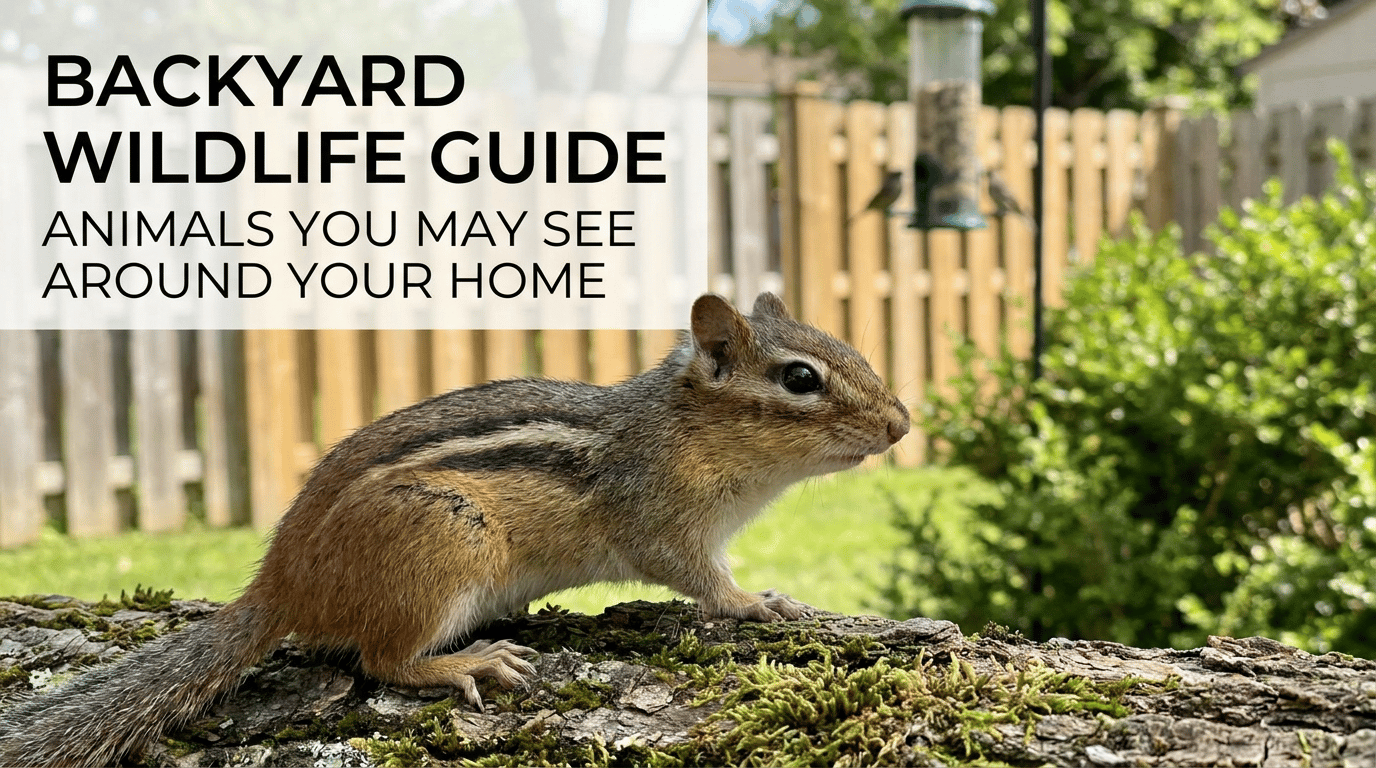
This guide keeps backyard wildlife guide practical and safety-first. It is written for Homeowners, renters, families, beginner nature watchers, backyard birders, and US readers who want a practical, safe, wildlife-friendly guide to animals around the home.. The goal is to help you observe, identify, and reduce problems without trying to touch, catch, feed, keep, or relocate wild animals.
Readers comparing backyard wildlife guide may also find bird feeder placement guide useful for a closer look at a related backyard wildlife topic.
This article stays practical: observe from a distance, reduce easy rewards, and call qualified local help when a backyard situation is no longer routine.
What Is Backyard Wildlife?
What Is Backyard Wildlife? gives this backyard wildlife guide topic a practical frame. Look first at what the animal is doing, what resource may be drawing it in, and whether the situation is a normal visit or a safety concern. That patient approach helps people enjoy wildlife while keeping distance, protecting pets, and avoiding actions that make animals bolder around homes. For calm observation habits, use wildlife watching habits.
Backyard wildlife includes more than birds
Backyard wildlife includes more than birds is best read as one clue, not the whole story. The useful question is why the behavior is happening in that place at that time, then whether a calm change in the yard can make the situation safer.
Birds
Birds: Watch the shape, movement, and repeated pattern before naming the animal, then compare your notes with a reliable bird or wildlife guide.
Mammals
Mammals: Notice where it happens, what changed nearby, and whether the pattern is occasional, seasonal, or repeated enough to need a safer yard setup.
Reptiles and amphibians
Reptiles and amphibians: Notice where it happens, what changed nearby, and whether the pattern is occasional, seasonal, or repeated enough to need a safer yard setup.
Insects and other invertebrates
Insects and other invertebrates: These small animals often support pollination, soil life, and natural food webs, so habitat choices can help them while keeping people from handling them.
Why animals visit yards
Why animals visit yards is best read as one clue, not the whole story. The useful question is why the behavior is happening in that place at that time, then whether a calm change in the yard can make the situation safer.
Food
Food: Notice where it happens, what changed nearby, and whether the pattern is occasional, seasonal, or repeated enough to need a safer yard setup.
Water
Water: Water helps wildlife when it is shallow, clean, and managed so it does not become stagnant or draw animals too close to busy household areas.
Shelter
Shelter: Notice where it happens, what changed nearby, and whether the pattern is occasional, seasonal, or repeated enough to need a safer yard setup.
Nesting and raising young
Nesting and raising young: Notice where it happens, what changed nearby, and whether the pattern is occasional, seasonal, or repeated enough to need a safer yard setup.
Normal visits vs problem situations
Normal visits vs problem situations is best read as one clue, not the whole story. The useful question is why the behavior is happening in that place at that time, then whether a calm change in the yard can make the situation safer.
Passing through
Passing through: Notice where it happens, what changed nearby, and whether the pattern is occasional, seasonal, or repeated enough to need a safer yard setup.
Feeding naturally
Feeding naturally: Notice where it happens, what changed nearby, and whether the pattern is occasional, seasonal, or repeated enough to need a safer yard setup.
Nesting near homes
Nesting near homes: Notice where it happens, what changed nearby, and whether the pattern is occasional, seasonal, or repeated enough to need a safer yard setup.
Repeated conflict or safety concerns
Repeated conflict or safety concerns: Notice where it happens, what changed nearby, and whether the pattern is occasional, seasonal, or repeated enough to need a safer yard setup.
Common Backyard Animals You May See
Common Backyard Animals You May See helps separate normal yard visits from patterns that need distance, cleanup, or local help.
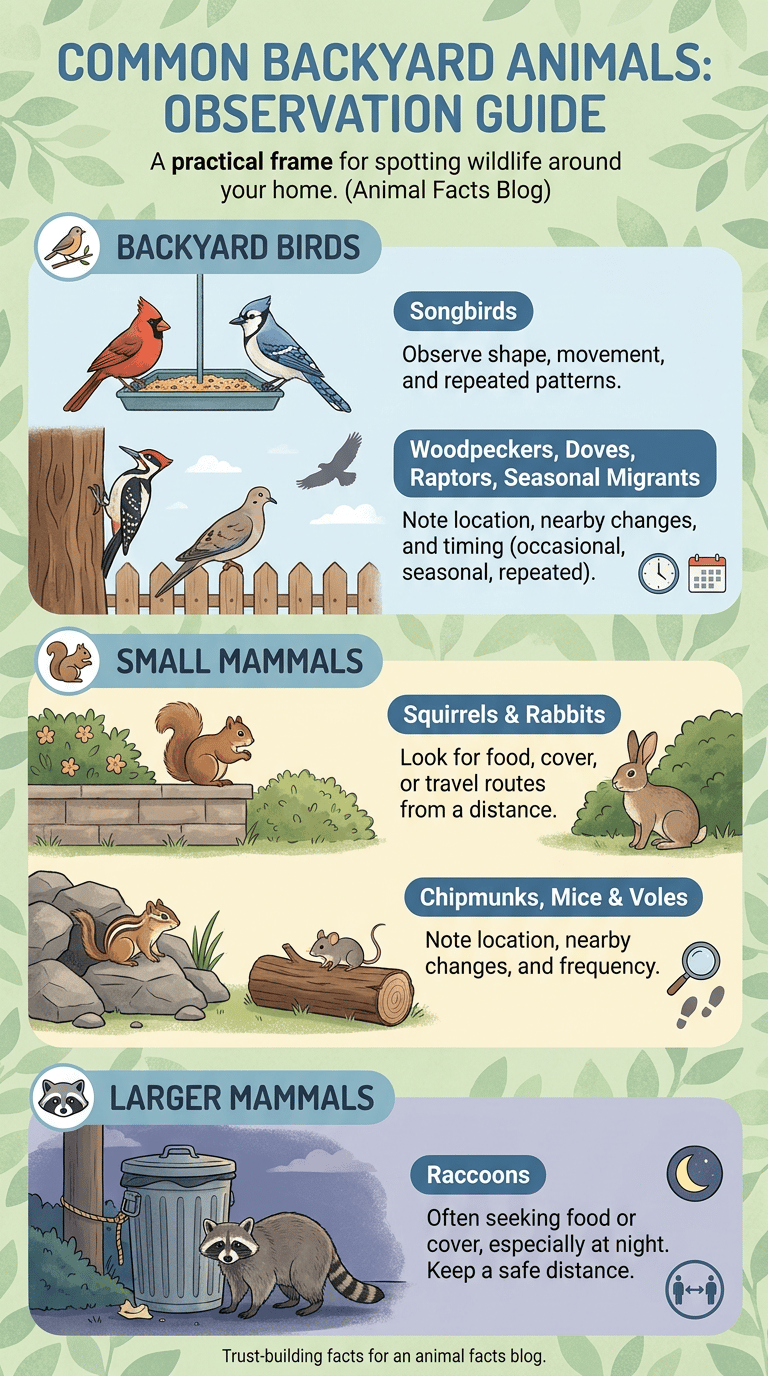
Backyard birds
Backyard birds is best read as one clue, not the whole story. The useful question is why the.
Songbirds
Songbirds: Watch the shape, movement, and repeated pattern before naming the animal, then compare your notes with a.
Woodpeckers
Woodpeckers: Notice where it happens, what changed nearby, and whether the pattern is occasional, seasonal, or repeated enough.
Doves
Doves: Notice where it happens, what changed nearby, and whether the pattern is occasional, seasonal, or repeated enough.
Raptors
Raptors: Notice where it happens, what changed nearby, and whether the pattern is occasional, seasonal, or repeated enough.
Seasonal migrants
Seasonal migrants: Notice where it happens, what changed nearby, and whether the pattern is occasional, seasonal, or repeated.
Small mammals
Small mammals is best read as one clue, not the whole story. The useful question is why the.
Squirrels
Squirrels: This visitor is usually looking for food, cover, or a travel route, so observe from a distance.
Rabbits
Rabbits: This visitor is usually looking for food, cover, or a travel route, so observe from a distance.
Chipmunks
Chipmunks: Notice where it happens, what changed nearby, and whether the pattern is occasional, seasonal, or repeated enough.
Mice and voles
Mice and voles: Notice where it happens, what changed nearby, and whether the pattern is occasional, seasonal, or.
Larger mammals
Larger mammals is best read as one clue, not the whole story. The useful question is why the.
Raccoons
Raccoons: This visitor is usually looking for food, cover, or a travel route, so observe from a distance.
Opossums
Opossums: This visitor is usually looking for food, cover, or a travel route, so observe from a distance.
Skunks
Skunks: This visitor is usually looking for food, cover, or a travel route, so observe from a distance.
Foxes
Foxes: This visitor is usually looking for food, cover, or a travel route, so observe from a distance.
Deer
Deer: This visitor is usually looking for food, cover, or a travel route, so observe from a distance.
Reptiles and amphibians
Reptiles and amphibians is best read as one clue, not the whole story. The useful question is why.
Lizards
Lizards: Notice where it happens, what changed nearby, and whether the pattern is occasional, seasonal, or repeated enough.
Turtles
Turtles: Notice where it happens, what changed nearby, and whether the pattern is occasional, seasonal, or repeated enough.
Frogs and toads
Frogs and toads: Notice where it happens, what changed nearby, and whether the pattern is occasional, seasonal, or.
Snakes
Snakes: Notice where it happens, what changed nearby, and whether the pattern is occasional, seasonal, or repeated enough.
Insects and pollinators
Insects and pollinators is best read as one clue, not the whole story. The useful question is why.
Bees
Bees: These small animals often support pollination, soil life, and natural food webs, so habitat choices can help.
Butterflies
Butterflies: These small animals often support pollination, soil life, and natural food webs, so habitat choices can help.
Beetles
Beetles: These small animals often support pollination, soil life, and natural food webs, so habitat choices can help.
Dragonflies
Dragonflies: These small animals often support pollination, soil life, and natural food webs, so habitat choices can help.
How to Identify Backyard Wildlife Safely
How to Identify Backyard Wildlife Safely helps separate normal yard visits from patterns that need distance, cleanup, or local help. For checking bird clues, compare notes with the bird identification guide.
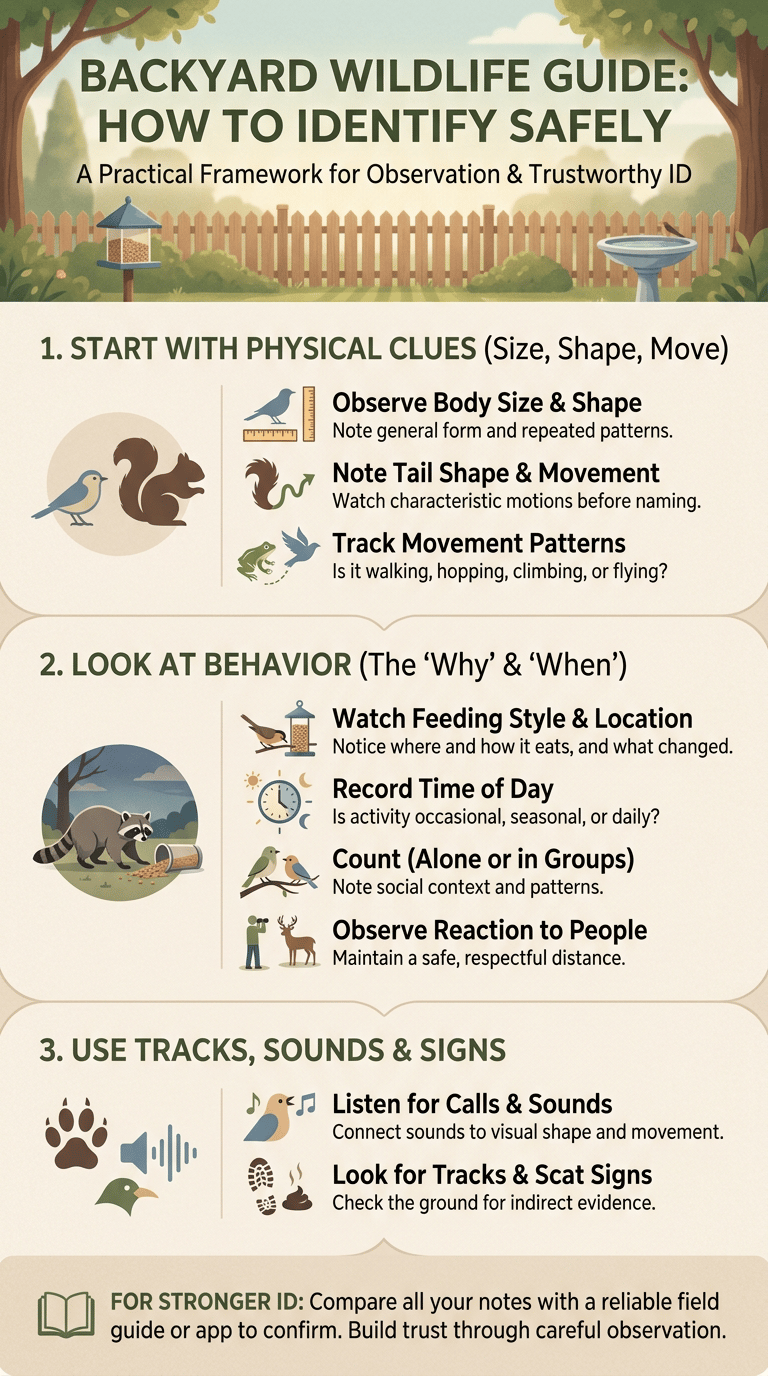
Start with size, shape, and movement
Start with size, shape, and movement is best read as one clue, not the whole story. Use several.
Body size
Body size: Notice where it happens, what changed nearby, and whether the pattern is occasional, seasonal, or repeated.
Tail shape
Tail shape: Watch the shape, movement, and repeated pattern before naming the animal, then compare your notes with.
Walking, hopping, climbing, or flying
Walking, hopping, climbing, or flying: Notice where it happens, what changed nearby, and whether the pattern is occasional.
Look at behavior
Look at behavior is best read as one clue, not the whole story. The useful question is why.
Feeding style
Feeding style: Notice where it happens, what changed nearby, and whether the pattern is occasional, seasonal, or repeated.
Time of day
Time of day: Notice where it happens, what changed nearby, and whether the pattern is occasional, seasonal, or.
Alone or in groups
Alone or in groups: Notice where it happens, what changed nearby, and whether the pattern is occasional, seasonal.
Reaction to people
Reaction to people: Notice where it happens, what changed nearby, and whether the pattern is occasional, seasonal, or.
Use tracks, sounds, and signs
Use tracks, sounds, and signs is best read as one clue, not the whole story. Use several observations.
Bird calls
Bird calls: Watch the shape, movement, and repeated pattern before naming the animal, then compare your notes with.
Chew marks
Chew marks: Notice where it happens, what changed nearby, and whether the pattern is occasional, seasonal, or repeated.
Droppings without touching them
Droppings without touching them: Notice where it happens, what changed nearby, and whether the pattern is occasional, seasonal.
Nests, burrows, and dens
Nests, burrows, and dens: Animals in structures need careful help, since cornering them or sealing an opening too.
Avoid unsafe identification habits
Avoid unsafe identification habits is best read as one clue, not the whole story. Small setup choices can.
Do not approach wildlife
Do not approach wildlife: Treat this as a safety boundary and give the animal a clear route away.
Do not handle young animals
Do not handle young animals: Treat this as a safety boundary and give the animal a clear route.
Do not corner animals for photos
Do not corner animals for photos: Treat this as a safety boundary and give the animal a clear.
Keep pets away
Keep pets away: Notice where it happens, what changed nearby, and whether the pattern is occasional, seasonal, or.
Backyard Birds: The Most Visible Wildlife
Backyard Birds: The Most Visible Wildlife helps separate normal yard visits from patterns that need distance, cleanup, or local help.
Why birds are common in yards
Why birds are common in yards is best read as one clue, not the whole story. The useful.
Trees and shrubs
Trees and shrubs: Plant-based habitat supports wildlife most safely when it offers natural food and cover without creating.
Seed and fruit sources
Seed and fruit sources: Secure or clean this attractant because easy food teaches wildlife to return and can.
Water
Water: Water helps wildlife when it is shallow, clean, and managed so it does not become stagnant or.
Safe perches
Safe perches: Notice where it happens, what changed nearby, and whether the pattern is occasional, seasonal, or repeated.
Basic bird identification clues
Basic bird identification clues is best read as one clue, not the whole story. Small setup choices can.
Size and silhouette
Size and silhouette: Watch the shape, movement, and repeated pattern before naming the animal, then compare your notes.
Bill shape
Bill shape: Watch the shape, movement, and repeated pattern before naming the animal, then compare your notes with.
Color pattern
Color pattern: Watch the shape, movement, and repeated pattern before naming the animal, then compare your notes with.
Song and call
Song and call: Watch the shape, movement, and repeated pattern before naming the animal, then compare your notes.
Feeding behavior
Feeding behavior: Notice where it happens, what changed nearby, and whether the pattern is occasional, seasonal, or repeated.
Bird-friendly yard choices
Bird-friendly yard choices is best read as one clue, not the whole story. The useful question is why.
Native plants
Native plants: Plant-based habitat supports wildlife most safely when it offers natural food and cover without creating hidden.
Clean water
Clean water: Water helps wildlife when it is shallow, clean, and managed so it does not become stagnant.
Safe windows
Safe windows: Notice where it happens, what changed nearby, and whether the pattern is occasional, seasonal, or repeated.
Responsible feeders
Responsible feeders: Notice where it happens, what changed nearby, and whether the pattern is occasional, seasonal, or repeated.
Coexisting With Backyard Mammals
Coexisting With Backyard Mammals gives this backyard wildlife guide topic a practical frame. Look first at what the.
Squirrels around the home
Squirrels around the home is best read as one clue, not the whole story. The useful question is.
Natural foraging
Natural foraging: Notice where it happens, what changed nearby, and whether the pattern is occasional, seasonal, or repeated.
Tree and roof access
Tree and roof access: Plant-based habitat supports wildlife most safely when it offers natural food and cover without.
Feeder conflict
Feeder conflict: Notice where it happens, what changed nearby, and whether the pattern is occasional, seasonal, or repeated.
Raccoons and other nocturnal visitors
Raccoons and other nocturnal visitors is best read as one clue, not the whole story. The useful question.
Garbage attraction
Garbage attraction: Secure or clean this attractant because easy food teaches wildlife to return and can increase conflict.
Pet food attraction
Pet food attraction: Secure or clean this attractant because easy food teaches wildlife to return and can increase.
Denning spaces
Denning spaces: Treat this as a safety boundary and give the animal a clear route away instead of.
Why distance matters
Why distance matters: Treat this as a safety boundary and give the animal a clear route away instead.
Deer, rabbits, and garden browsing
Deer, rabbits, and garden browsing is best read as one clue, not the whole story. Food draws repeat.
Plant damage
Plant damage: Notice where it happens, what changed nearby, and whether the pattern is occasional, seasonal, or repeated.
Seasonal browsing
Seasonal browsing: Notice where it happens, what changed nearby, and whether the pattern is occasional, seasonal, or repeated.
Humane exclusion options
Humane exclusion options: Notice where it happens, what changed nearby, and whether the pattern is occasional, seasonal, or.
How to Make a Yard Wildlife-Friendly
How to Make a Yard Wildlife-Friendly helps separate normal yard visits from patterns that need distance, cleanup, or local help. For plant and insect habitat choices, use pollinator habitat guidance.
Provide natural food
Provide natural food is best read as one clue, not the whole story. Food draws repeat visits quickly.
Native flowers
Native flowers: Plant-based habitat supports wildlife most safely when it offers natural food and cover without creating hidden.
Seed-bearing plants
Seed-bearing plants: Secure or clean this attractant because easy food teaches wildlife to return and can increase conflict.
Fruit-bearing shrubs
Fruit-bearing shrubs: Plant-based habitat supports wildlife most safely when it offers natural food and cover without creating hidden.
Leaf litter for insects
Leaf litter for insects: Plant-based habitat supports wildlife most safely when it offers natural food and cover without.
Provide water safely
Provide water safely is best read as one clue, not the whole story. Small setup choices can reduce.
Birdbaths
Birdbaths: Water helps wildlife when it is shallow, clean, and managed so it does not become stagnant or.
Shallow dishes
Shallow dishes: Water helps wildlife when it is shallow, clean, and managed so it does not become stagnant.
Cleaning water sources
Cleaning water sources: Water helps wildlife when it is shallow, clean, and managed so it does not become.
Mosquito prevention
Mosquito prevention: Water helps wildlife when it is shallow, clean, and managed so it does not become stagnant.
Provide shelter
Provide shelter is best read as one clue, not the whole story. Shelter matters because animals need places.
Trees and shrubs
Trees and shrubs: Plant-based habitat supports wildlife most safely when it offers natural food and cover without creating.
Brush piles where appropriate
Brush piles where appropriate: Notice where it happens, what changed nearby, and whether the pattern is occasional, seasonal.
Nest boxes when maintained correctly
Nest boxes when maintained correctly: Notice where it happens, what changed nearby, and whether the pattern is occasional.
Reduce hazards
Reduce hazards is best read as one clue, not the whole story. Small setup choices can reduce risk.
Window collisions
Window collisions: Notice where it happens, what changed nearby, and whether the pattern is occasional, seasonal, or repeated.
Outdoor cats
Outdoor cats: Notice where it happens, what changed nearby, and whether the pattern is occasional, seasonal, or repeated.
Pesticides
Pesticides: Notice where it happens, what changed nearby, and whether the pattern is occasional, seasonal, or repeated enough.
Loose trash
Loose trash: Secure or clean this attractant because easy food teaches wildlife to return and can increase conflict.
When Backyard Wildlife Becomes a Concern
When Backyard Wildlife Becomes a Concern helps separate normal yard visits from patterns that need distance, cleanup, or local help. For contact and cleanup safety, check animal contact safety guidance. For distance and encounter safety, use wildlife safety basics.
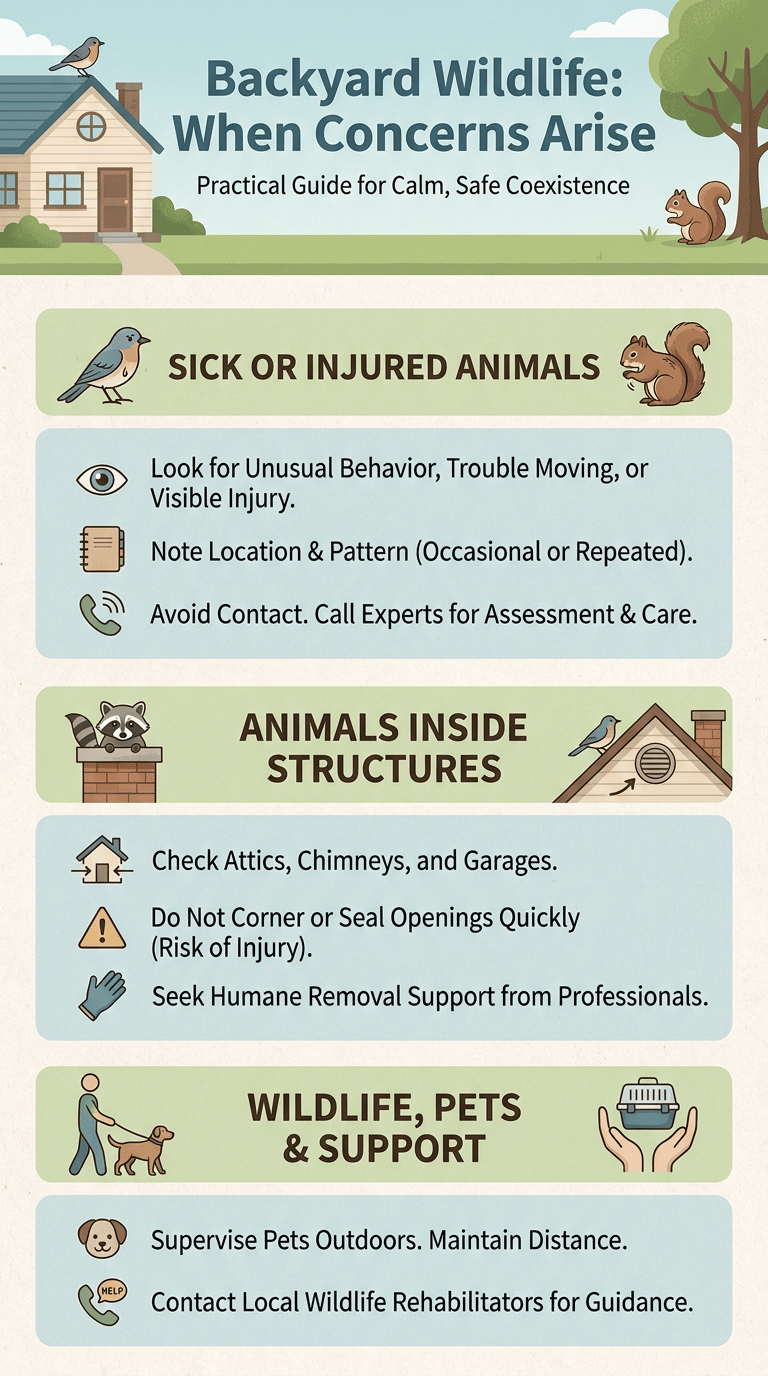
Sick or injured animals
Sick or injured animals is best read as one clue, not the whole story. If the animal appears.
Unusual behavior
Unusual behavior: Notice where it happens, what changed nearby, and whether the pattern is occasional, seasonal, or repeated.
Visible injury
Visible injury: Notice where it happens, what changed nearby, and whether the pattern is occasional, seasonal, or repeated.
Trouble moving
Trouble moving: Notice where it happens, what changed nearby, and whether the pattern is occasional, seasonal, or repeated.
Who to call
Who to call: Watch the shape, movement, and repeated pattern before naming the animal, then compare your notes.
Animals inside the house
Animals inside the house is best read as one clue, not the whole story. The useful question is.
Attics
Attics: Animals in structures need careful help, since cornering them or sealing an opening too quickly can injure.
Chimneys
Chimneys: Animals in structures need careful help, since cornering them or sealing an opening too quickly can injure.
Garages
Garages: Animals in structures need careful help, since cornering them or sealing an opening too quickly can injure.
Humane removal support
Humane removal support: Notice where it happens, what changed nearby, and whether the pattern is occasional, seasonal, or.
Wildlife and pets
Wildlife and pets is best read as one clue, not the whole story. If the animal appears hurt.
Keeping cats indoors or supervised
Keeping cats indoors or supervised: Notice where it happens, what changed nearby, and whether the pattern is occasional.
Leashing dogs
Leashing dogs: Notice where it happens, what changed nearby, and whether the pattern is occasional, seasonal, or repeated.
Removing outdoor pet food
Removing outdoor pet food: Secure or clean this attractant because easy food teaches wildlife to return and can.
Disease and safety concerns
Disease and safety concerns is best read as one clue, not the whole story. If the animal appears.
Rabies risk context
Rabies risk context: Notice where it happens, what changed nearby, and whether the pattern is occasional, seasonal, or.
Parasites and droppings
Parasites and droppings: Notice where it happens, what changed nearby, and whether the pattern is occasional, seasonal, or.
Why handling wildlife is unsafe
Why handling wildlife is unsafe: Treat this as a safety boundary and give the animal a clear route.
Backyard Wildlife FAQ
What animals are common in backyards?
Common answers depend on your region, season, and yard setup. For backyard wildlife guide, the safest habit is to observe calmly, remove risky attractants, and call local help when an animal is injured, trapped, or in contact with people or pets.
Why do animals keep coming into my yard?
Common answers depend on your region, season, and yard setup. For backyard wildlife guide, the safest habit is to observe calmly, remove risky attractants, and call local help when an animal is injured, trapped, or in contact with people or pets.
Should I feed wild animals in my backyard?
Direct feeding is usually not the safest choice. Natural habitat, clean water where appropriate, secure trash, and responsible.
What should I do if I find a baby animal?
Do not handle young wildlife. Many young animals are not abandoned, and the safest next step is to.
How can I enjoy backyard wildlife safely?
Common answers depend on your region, season, and yard setup. For backyard wildlife guide, the safest habit is to observe calmly, remove risky attractants, and call local help when an animal is injured, trapped, or in contact with people or pets.
Key Takeaways
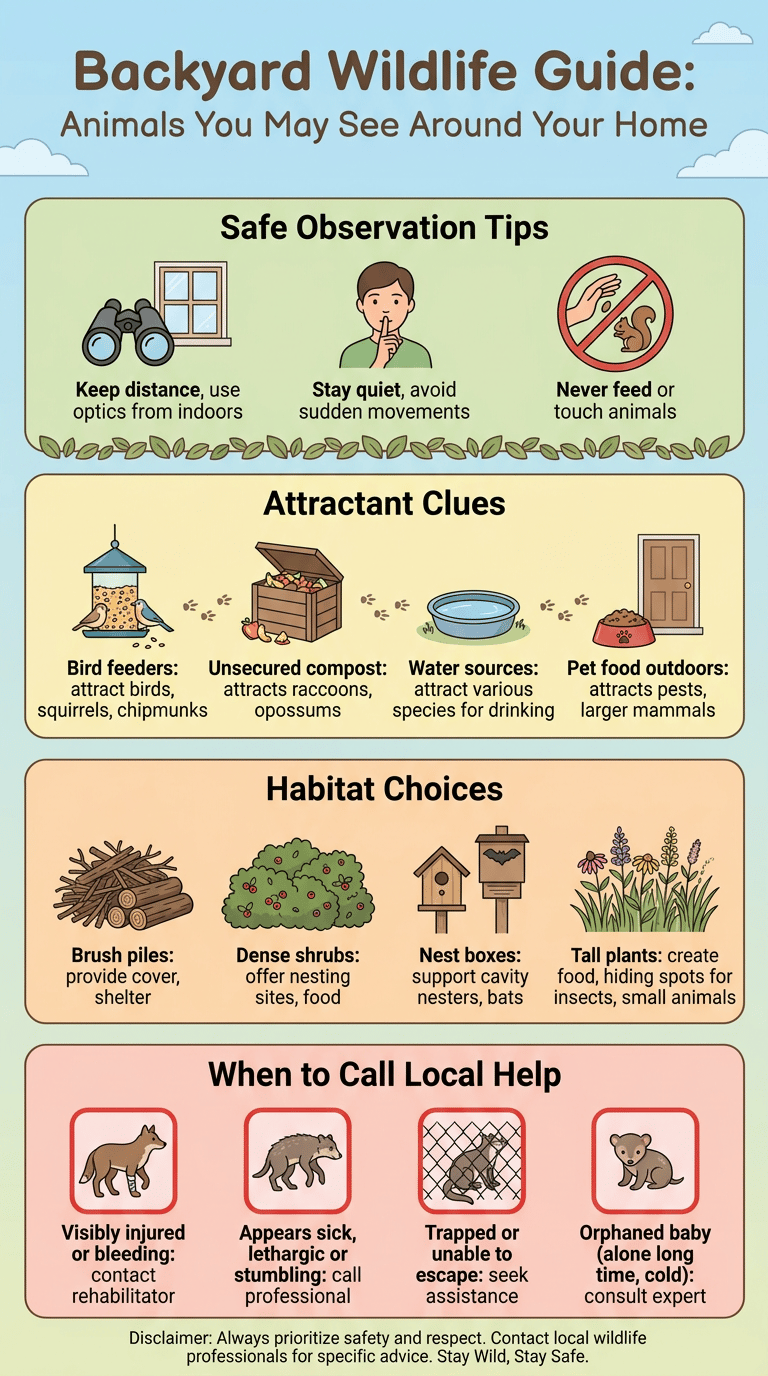
Backyard Wildlife Guide: Animals You May See Around Your Home is easiest to use when you slow down.
Keep distance, remove attractants, support natural habitat, keep pets supervised, and use trusted local help when a situation.

Ethan Walker is the founder and research editor of Animal Fact Central. He creates and reviews educational animal facts content using trusted wildlife, pet care, and science-based sources. His work focuses on making animal behavior, adaptations, habitats, and species facts clear, accurate, and engaging for everyday readers.
Read More Details About Ethan Walker: https://animalfactcentral.com/ethan-walker/