
How to Attract Birds Safely is for readers who notice activity near a lawn, garden, porch, balcony, fence, feeder, or tree line and want a clear way to understand it. Backyard animals are not random visitors. They usually appear because a yard offers food, water, shelter, nesting space, travel cover, or a quiet place to pause.
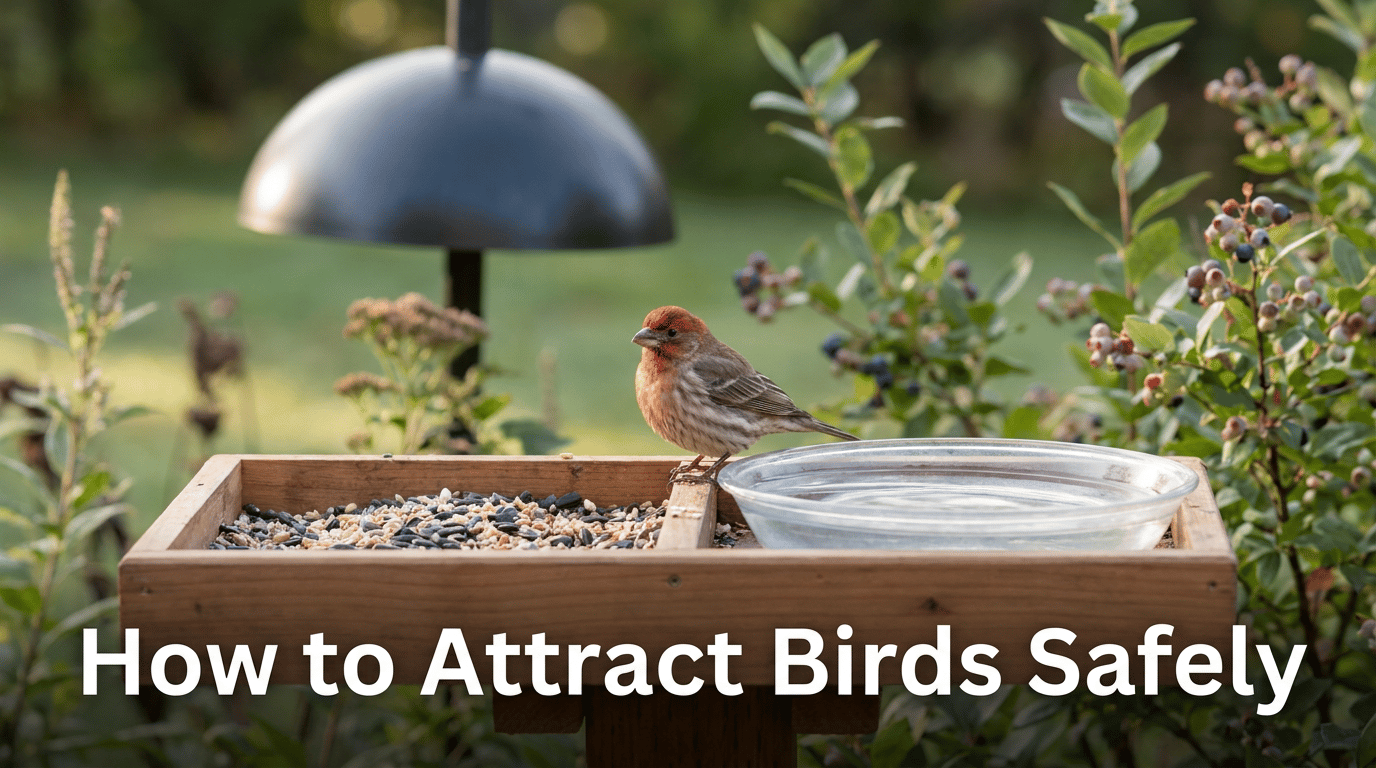
This guide keeps how to attract birds safely practical and safety-first. It is written for Homeowners, renters with outdoor space, beginner birders, families, gardeners, and readers who want a bird-friendly yard without harming birds.. The goal is to help you observe, identify, and reduce problems without trying to touch, catch, feed, keep, or relocate wild animals.
Readers comparing how to attract birds safely may also find common backyard animals in the US useful for a closer look at a related backyard wildlife topic.
Readers comparing how to attract birds safely may also find bird feeder placement guide useful for a closer look at a related backyard wildlife topic.
Readers comparing how to attract birds safely may also find are raccoons dangerous useful for a closer look at a related backyard wildlife topic.
Readers comparing how to attract birds safely may also find how to identify backyard birds useful for a closer look at a related backyard wildlife topic.
For broader context, the main backyard wildlife guide connects this topic with habitat, safe viewing, feeding choices, and responsible yard management.
This article stays practical: observe from a distance, reduce easy rewards, and call qualified local help when a backyard situation is no longer routine.
Start With a Bird-Friendly Habitat
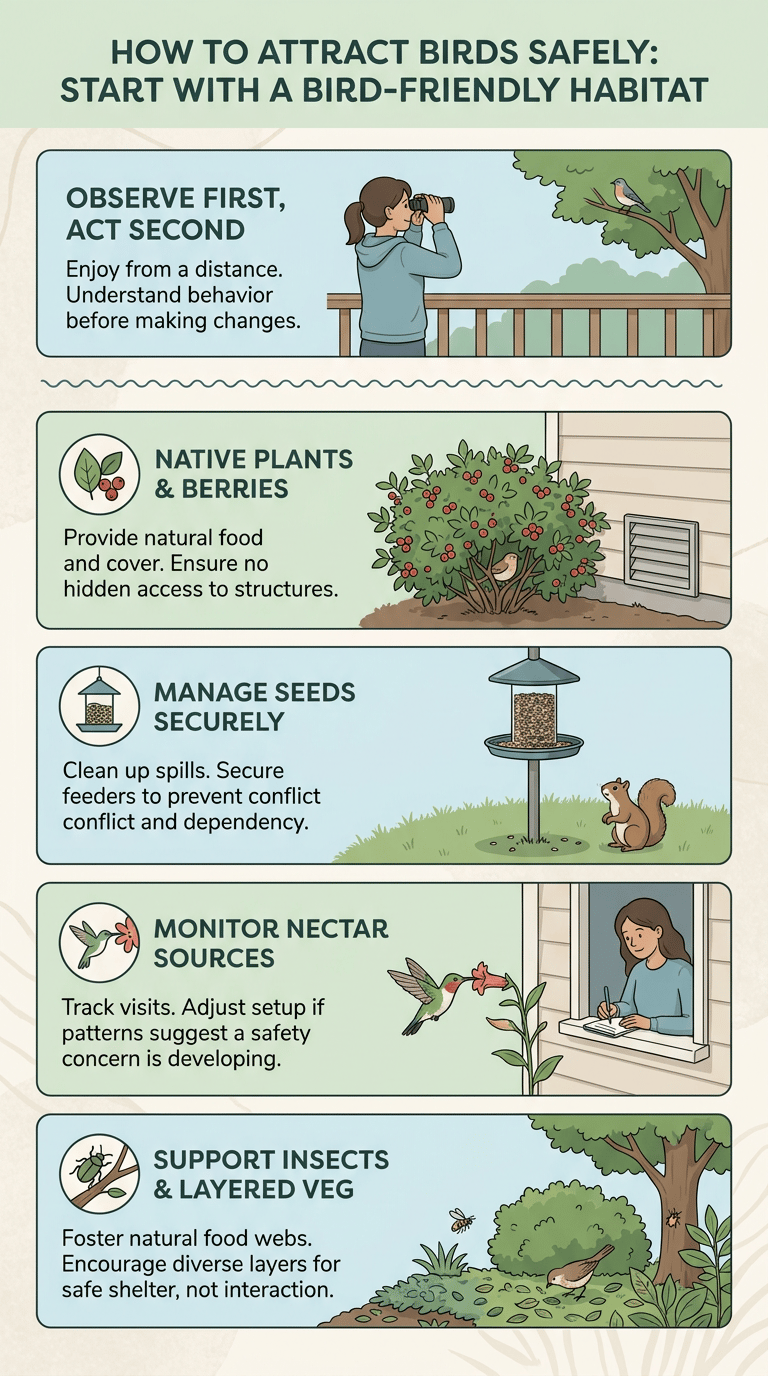
Start With a Bird-Friendly Habitat gives this how to attract birds safely topic a practical frame. Look first at what the animal is doing, what resource may be drawing it in, and whether the situation is a normal visit or a safety concern. That patient approach helps people enjoy wildlife while keeping distance, protecting pets, and avoiding actions that make animals bolder around homes. For choosing bird-friendly plants, use native plant finder. For plant and insect habitat choices, use pollinator conservation guidance.
Native plants
Native plants is best read as one clue, not the whole story. The useful question is why the behavior is happening in that place at that time, then whether a calm change in the yard can make the situation safer.
Seeds
Seeds: Secure or clean this attractant because easy food teaches wildlife to return and can increase conflict around doors, decks, feeders, and pets.
Berries
Berries: Plant-based habitat supports wildlife most safely when it offers natural food and cover without creating hidden access into roofs, vents, or play areas.
Nectar
Nectar: Notice where it happens, what changed nearby, and whether the pattern is occasional, seasonal, or repeated enough to need a safer yard setup.
Insects
Insects: These small animals often support pollination, soil life, and natural food webs, so habitat choices can help them while keeping people from handling them.
Layered vegetation
Layered vegetation is best read as one clue, not the whole story. The useful question is why the behavior is happening in that place at that time, then whether a calm change in the yard can make the situation safer.
Ground cover
Ground cover: Notice where it happens, what changed nearby, and whether the pattern is occasional, seasonal, or repeated enough to need a safer yard setup.
Shrubs
Shrubs: Plant-based habitat supports wildlife most safely when it offers natural food and cover without creating hidden access into roofs, vents, or play areas.
Small trees
Small trees: Plant-based habitat supports wildlife most safely when it offers natural food and cover without creating hidden access into roofs, vents, or play areas.
Tall trees
Tall trees: Plant-based habitat supports wildlife most safely when it offers natural food and cover without creating hidden access into roofs, vents, or play areas.
Seasonal resources
Seasonal resources is best read as one clue, not the whole story. The useful question is why the behavior is happening in that place at that time, then whether a calm change in the yard can make the situation safer.
Spring nesting support
Spring nesting support: Notice where it happens, what changed nearby, and whether the pattern is occasional, seasonal, or repeated enough to need a safer yard setup.
Summer insects
Summer insects: These small animals often support pollination, soil life, and natural food webs, so habitat choices can help them while keeping people from handling them.
Fall fruit and seeds
Fall fruit and seeds: Secure or clean this attractant because easy food teaches wildlife to return and can increase conflict around doors, decks, feeders, and pets.
Winter cover
Winter cover: Notice where it happens, what changed nearby, and whether the pattern is occasional, seasonal, or repeated enough to need a safer yard setup.
Provide Food Responsibly
Provide Food Responsibly gives this how to attract birds safely topic a practical frame. Look first at what the animal is doing, what resource may be drawing it in, and whether the situation is a normal visit or a safety concern. That patient approach helps people enjoy wildlife while keeping distance, protecting pets, and avoiding actions that make animals bolder around homes. For feeder care decisions, use bird feeding guidance.
Natural food first
Natural food first is best read as one clue, not the whole story. Food draws repeat visits quickly, so the safest response is usually better storage, cleaner feeding areas, natural plant choices, and less spilled or accessible food.
Seed-bearing flowers
Seed-bearing flowers: Secure or clean this attractant because easy food teaches wildlife to return and can increase conflict around doors, decks, feeders, and pets.
Fruit-bearing shrubs
Fruit-bearing shrubs: Plant-based habitat supports wildlife most safely when it offers natural food and cover without creating hidden access into roofs, vents, or play areas.
Insect-friendly gardening
Insect-friendly gardening: Animals in structures need careful help, since cornering them or sealing an opening too quickly can injure wildlife and make the household problem worse.
Feeder food options
Feeder food options is best read as one clue, not the whole story. Food draws repeat visits quickly, so the safest response is usually better storage, cleaner feeding areas, natural plant choices, and less spilled or accessible food.
Black oil sunflower
Black oil sunflower: Notice where it happens, what changed nearby, and whether the pattern is occasional, seasonal, or repeated enough to need a safer yard setup.
Nyjer where appropriate
Nyjer where appropriate: Notice where it happens, what changed nearby, and whether the pattern is occasional, seasonal, or repeated enough to need a safer yard setup.
Suet in suitable weather
Suet in suitable weather: Notice where it happens, what changed nearby, and whether the pattern is occasional, seasonal, or repeated enough to need a safer yard setup.
Nectar for hummingbirds where relevant
Nectar for hummingbirds where relevant: Watch the shape, movement, and repeated pattern before naming the animal, then compare your notes with a reliable bird or wildlife guide.
What not to feed birds
What not to feed birds is best read as one clue, not the whole story. Food draws repeat visits quickly, so the safest response is usually better storage, cleaner feeding areas, natural plant choices, and less spilled or accessible food.
Bread
Bread: Notice where it happens, what changed nearby, and whether the pattern is occasional, seasonal, or repeated enough to need a safer yard setup.
Moldy seed
Moldy seed: Secure or clean this attractant because easy food teaches wildlife to return and can increase conflict around doors, decks, feeders, and pets.
Salty or processed foods
Salty or processed foods: Notice where it happens, what changed nearby, and whether the pattern is occasional, seasonal, or repeated enough to need a safer yard setup.
Spoiled nectar
Spoiled nectar: Notice where it happens, what changed nearby, and whether the pattern is occasional, seasonal, or repeated enough to need a safer yard setup.
Keep Feeders Clean and Safe
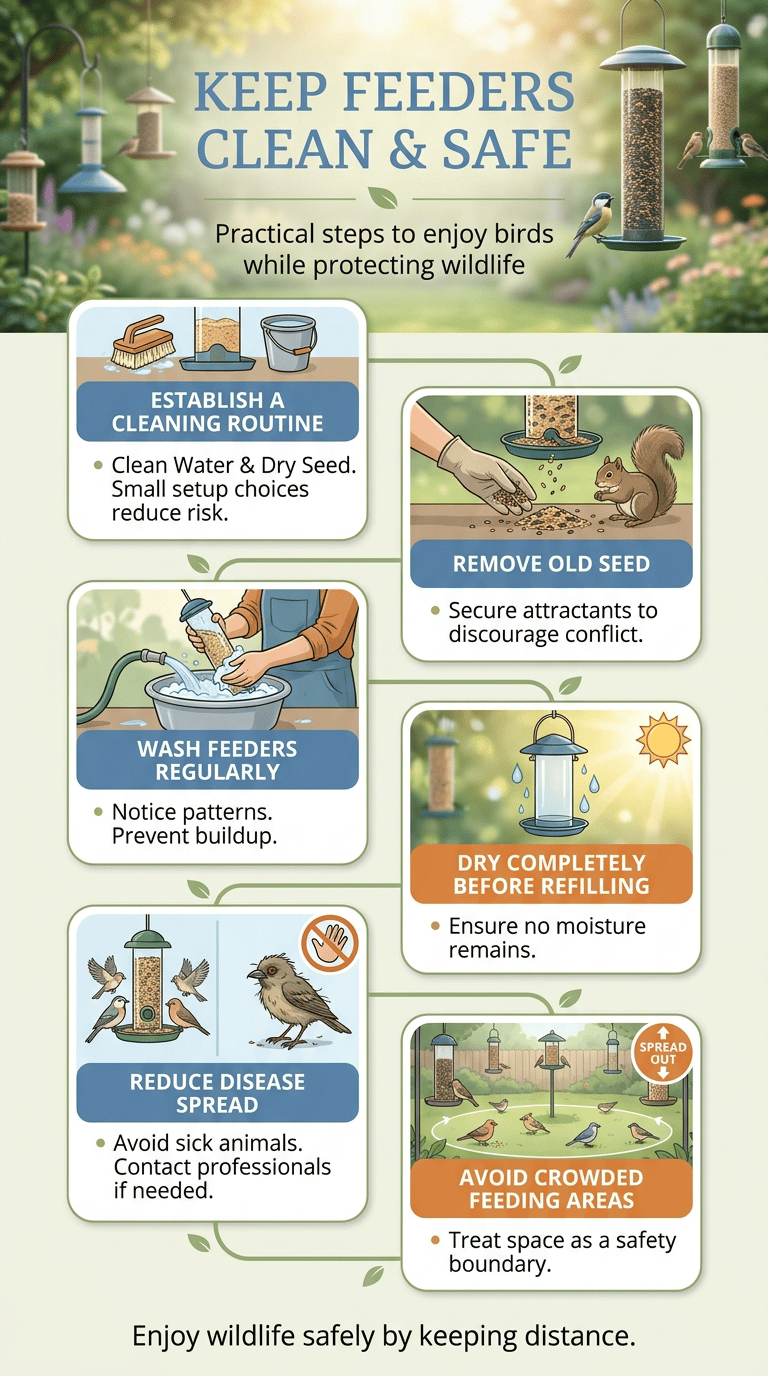
Keep Feeders Clean and Safe gives this how to attract birds safely topic a practical frame. Look first at what the animal is doing, what resource may be drawing it in, and whether the situation is a normal visit or a safety concern. That patient approach helps people enjoy wildlife while keeping distance, protecting pets, and avoiding actions that make animals bolder around homes.
Cleaning routines
Cleaning routines is best read as one clue, not the whole story. Small setup choices can reduce risk: clean water, safer glass treatments, supervised pets, dry seed, and feeder locations that do not create easy ambush points.
Remove old seed
Remove old seed: Secure or clean this attractant because easy food teaches wildlife to return and can increase conflict around doors, decks, feeders, and pets.
Wash feeders
Wash feeders: Notice where it happens, what changed nearby, and whether the pattern is occasional, seasonal, or repeated enough to need a safer yard setup.
Dry before refilling
Dry before refilling: Notice where it happens, what changed nearby, and whether the pattern is occasional, seasonal, or repeated enough to need a safer yard setup.
Reduce disease spread
Reduce disease spread is best read as one clue, not the whole story. If the animal appears hurt, disoriented, unusually aggressive, trapped, or in direct contact with a person or pet, keep distance and contact the appropriate local professional, animal control, wildlife rehabilitator, veterinarian, or health authority.
Avoid crowded feeding areas
Avoid crowded feeding areas: Treat this as a safety boundary and give the animal a clear route away instead of moving closer for a photo or closer look.
Move feeders when needed
Move feeders when needed: Notice where it happens, what changed nearby, and whether the pattern is occasional, seasonal, or repeated enough to need a safer yard setup.
Stop feeding temporarily during disease concerns
Stop feeding temporarily during disease concerns: Notice where it happens, what changed nearby, and whether the pattern is occasional, seasonal, or repeated enough to need a safer yard setup.
Manage spilled seed
Manage spilled seed is best read as one clue, not the whole story. Food draws repeat visits quickly, so the safest response is usually better storage, cleaner feeding areas, natural plant choices, and less spilled or accessible food.
Prevent mold
Prevent mold: Notice where it happens, what changed nearby, and whether the pattern is occasional, seasonal, or repeated enough to need a safer yard setup.
Reduce rodents
Reduce rodents: Animals in structures need careful help, since cornering them or sealing an opening too quickly can injure wildlife and make the household problem worse.
Reduce raccoon attraction
Reduce raccoon attraction: This visitor is usually looking for food, cover, or a travel route, so observe from a distance and remove rewards instead of trying to interact.
Provide Water Safely
Provide Water Safely gives this how to attract birds safely topic a practical frame. Look first at what the animal is doing, what resource may be drawing it in, and whether the situation is a normal visit or a safety concern. That patient approach helps people enjoy wildlife while keeping distance, protecting pets, and avoiding actions that make animals bolder around homes.
Birdbaths
Birdbaths is best read as one clue, not the whole story. The useful question is why the behavior is happening in that place at that time, then whether a calm change in the yard can make the situation safer.
Shallow water
Shallow water: Water helps wildlife when it is shallow, clean, and managed so it does not become stagnant or draw animals too close to busy household areas.
Rough surface
Rough surface: Notice where it happens, what changed nearby, and whether the pattern is occasional, seasonal, or repeated enough to need a safer yard setup.
Safe depth
Safe depth: Notice where it happens, what changed nearby, and whether the pattern is occasional, seasonal, or repeated enough to need a safer yard setup.
Moving water
Moving water is best read as one clue, not the whole story. Small setup choices can reduce risk: clean water, safer glass treatments, supervised pets, dry seed, and feeder locations that do not create easy ambush points.
Drippers
Drippers: Notice where it happens, what changed nearby, and whether the pattern is occasional, seasonal, or repeated enough to need a safer yard setup.
Small fountains
Small fountains: Notice where it happens, what changed nearby, and whether the pattern is occasional, seasonal, or repeated enough to need a safer yard setup.
Why sound attracts birds
Why sound attracts birds: Watch the shape, movement, and repeated pattern before naming the animal, then compare your notes with a reliable bird or wildlife guide.
Water maintenance
Water maintenance is best read as one clue, not the whole story. Small setup choices can reduce risk: clean water, safer glass treatments, supervised pets, dry seed, and feeder locations that do not create easy ambush points.
Frequent cleaning
Frequent cleaning: Water helps wildlife when it is shallow, clean, and managed so it does not become stagnant or draw animals too close to busy household areas.
Mosquito prevention
Mosquito prevention: Water helps wildlife when it is shallow, clean, and managed so it does not become stagnant or draw animals too close to busy household areas.
Winter considerations
Winter considerations: Notice where it happens, what changed nearby, and whether the pattern is occasional, seasonal, or repeated enough to need a safer yard setup.
Reduce Backyard Hazards
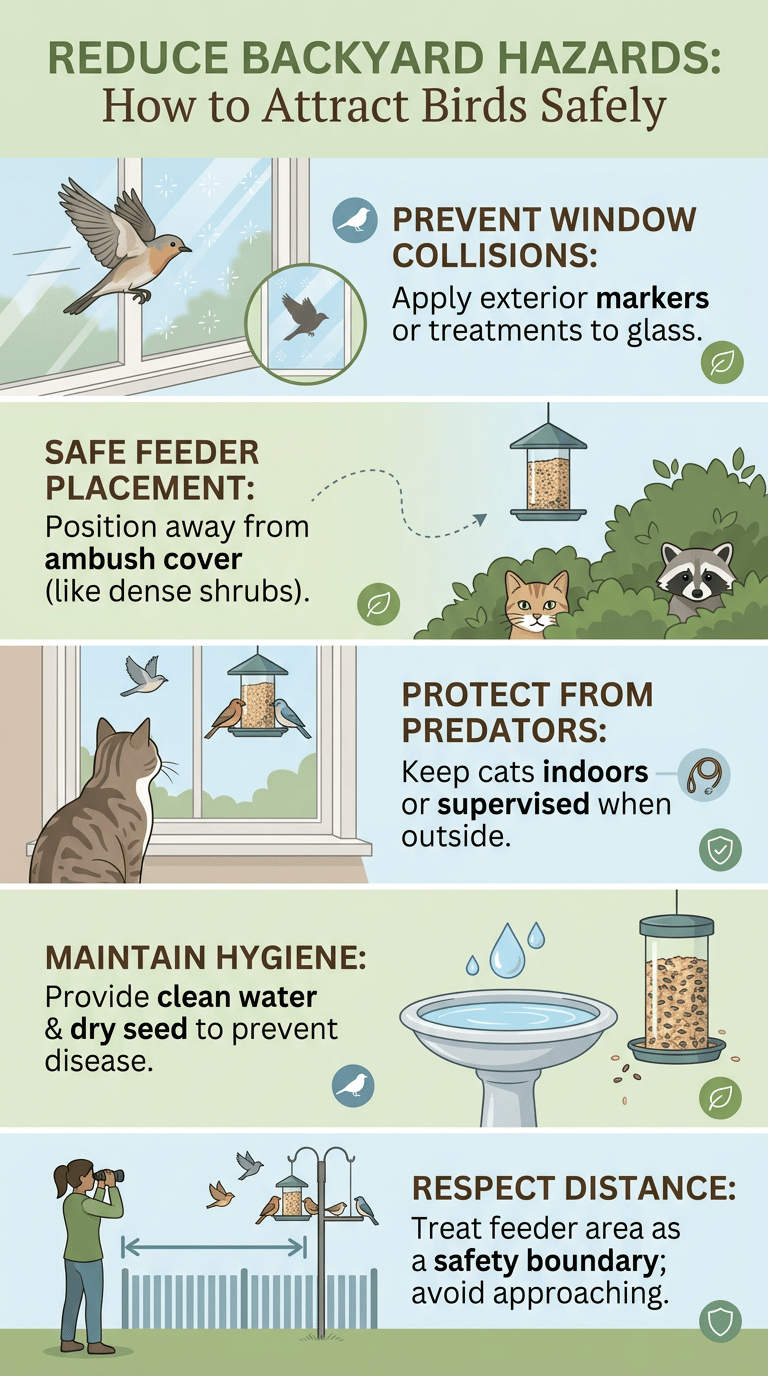
Reduce Backyard Hazards gives this how to attract birds safely topic a practical frame. Look first at what the animal is doing, what resource may be drawing it in, and whether the situation is a normal visit or a safety concern. That patient approach helps people enjoy wildlife while keeping distance, protecting pets, and avoiding actions that make animals bolder around homes. For window safety decisions, use glass collision guidance.
Window collisions
Window collisions is best read as one clue, not the whole story. Small setup choices can reduce risk: clean water, safer glass treatments, supervised pets, dry seed, and feeder locations that do not create easy ambush points.
Why reflections confuse birds
Why reflections confuse birds: Watch the shape, movement, and repeated pattern before naming the animal, then compare your notes with a reliable bird or wildlife guide.
Exterior window markers
Exterior window markers: Notice where it happens, what changed nearby, and whether the pattern is occasional, seasonal, or repeated enough to need a safer yard setup.
Feeder distance considerations
Feeder distance considerations: Treat this as a safety boundary and give the animal a clear route away instead of moving closer for a photo or closer look.
Cats and predators
Cats and predators is best read as one clue, not the whole story. Small setup choices can reduce.
Keep cats indoors or supervised
Keep cats indoors or supervised: Notice where it happens, what changed nearby, and whether the pattern is occasional.
Avoid placing feeders near ambush cover
Avoid placing feeders near ambush cover: Treat this as a safety boundary and give the animal a clear.
Protect nesting birds
Protect nesting birds: Watch the shape, movement, and repeated pattern before naming the animal, then compare your notes.
Pesticides and chemicals
Pesticides and chemicals is best read as one clue, not the whole story. The useful question is why.
Insect food loss
Insect food loss: These small animals often support pollination, soil life, and natural food webs, so habitat choices.
Poisoning risk context
Poisoning risk context: Notice where it happens, what changed nearby, and whether the pattern is occasional, seasonal, or.
Safer yard choices
Safer yard choices: Notice where it happens, what changed nearby, and whether the pattern is occasional, seasonal, or.
Make Nesting Safer
Make Nesting Safer gives this how to attract birds safely topic a practical frame. Look first at what. For nesting and migration context, check migratory bird resources.
Nest boxes
Nest boxes is best read as one clue, not the whole story. Shelter matters because animals need places.
Use the right box for the right species
Use the right box for the right species: Notice where it happens, what changed nearby, and whether the.
Mount securely
Mount securely: Notice where it happens, what changed nearby, and whether the pattern is occasional, seasonal, or repeated.
Clean and maintain when appropriate
Clean and maintain when appropriate: Water helps wildlife when it is shallow, clean, and managed so it does.
Natural nesting habitat
Natural nesting habitat is best read as one clue, not the whole story. Shelter matters because animals need.
Shrubs
Shrubs: Plant-based habitat supports wildlife most safely when it offers natural food and cover without creating hidden access.
Trees
Trees: Plant-based habitat supports wildlife most safely when it offers natural food and cover without creating hidden access.
Brush and leaf litter where safe
Brush and leaf litter where safe: Plant-based habitat supports wildlife most safely when it offers natural food and.
What not to do around nests
What not to do around nests is best read as one clue, not the whole story. Shelter matters.
Do not disturb nests
Do not disturb nests: Treat this as a safety boundary and give the animal a clear route away.
Do not handle eggs or young
Do not handle eggs or young: Treat this as a safety boundary and give the animal a clear.
Keep pets away
Keep pets away: Notice where it happens, what changed nearby, and whether the pattern is occasional, seasonal, or.
Attracting Birds in Small Spaces
Attracting Birds in Small Spaces gives this how to attract birds safely topic a practical frame. Look first.
Balconies and patios
Balconies and patios is best read as one clue, not the whole story. The useful question is why.
Container plants
Container plants: Plant-based habitat supports wildlife most safely when it offers natural food and cover without creating hidden.
Small water sources
Small water sources: Water helps wildlife when it is shallow, clean, and managed so it does not become.
Rules and neighbor considerations
Rules and neighbor considerations: Notice where it happens, what changed nearby, and whether the pattern is occasional, seasonal.
Urban yards
Urban yards is best read as one clue, not the whole story. The useful question is why the.
Native planters
Native planters: Plant-based habitat supports wildlife most safely when it offers natural food and cover without creating hidden.
Window safety
Window safety: Notice where it happens, what changed nearby, and whether the pattern is occasional, seasonal, or repeated.
Clean feeders
Clean feeders: Water helps wildlife when it is shallow, clean, and managed so it does not become stagnant.
Attract Birds Safely FAQ
What is the safest way to attract birds?
Common answers depend on your region, season, and yard setup. For how to attract birds safely, the safest habit is to observe calmly, remove risky attractants, and call local help when an animal is injured, trapped, or in contact with people or pets.
Is it okay to feed birds year-round?
Direct feeding is usually not the safest choice. Natural habitat, clean water where appropriate, secure trash, and responsible.
How often should I clean bird feeders?
Direct feeding is usually not the safest choice. Natural habitat, clean water where appropriate, secure trash, and responsible.
How can I attract birds without feeders?
Direct feeding is usually not the safest choice. Natural habitat, clean water where appropriate, secure trash, and responsible.
How do I keep birds safe from windows and cats?
Use exterior window markers, supervise or keep cats indoors, keep feeders clean, and place food or water where.
Key Takeaways
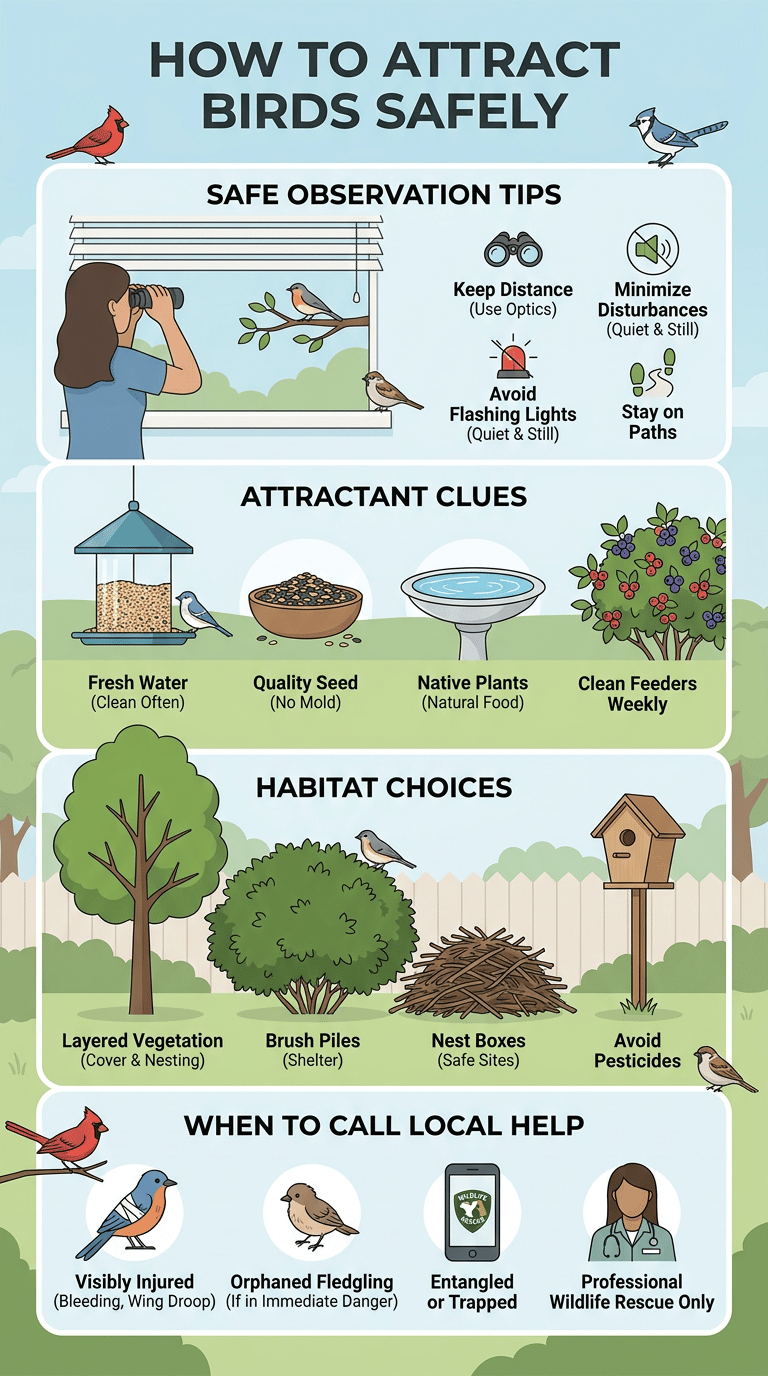
How to Attract Birds Safely is easiest to use when you slow down and read the whole situation.
Keep distance, remove attractants, support natural habitat, keep pets supervised, and use trusted local help when a situation.

Ethan Walker is the founder and research editor of Animal Fact Central. He creates and reviews educational animal facts content using trusted wildlife, pet care, and science-based sources. His work focuses on making animal behavior, adaptations, habitats, and species facts clear, accurate, and engaging for everyday readers.
Read More Details About Ethan Walker: https://animalfactcentral.com/ethan-walker/