
How to Identify Backyard Birds is for readers who notice activity near a lawn, garden, porch, balcony, fence, feeder, or tree line and want a clear way to understand it. Backyard animals are not random visitors. They usually appear because a yard offers food, water, shelter, nesting space, travel cover, or a quiet place to pause.
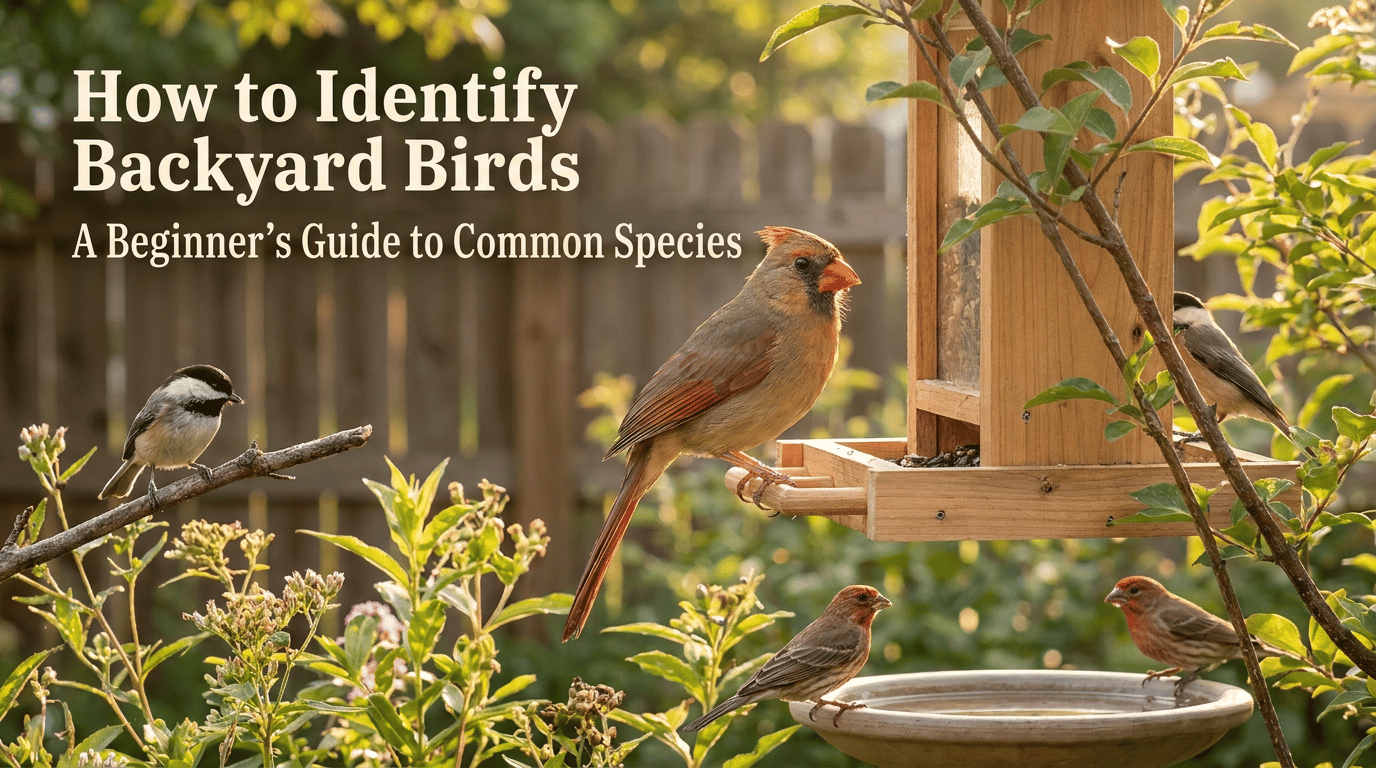
This guide keeps how to identify backyard birds practical and safety-first. It is written for Beginner birders, families, homeowners, renters, students, and casual nature watchers who want to identify birds without needing advanced field skills.. The goal is to help you observe, identify, and reduce problems without trying to touch, catch, feed, keep, or relocate wild animals.
Readers comparing how to identify backyard birds may also find bird feeder placement guide useful for a closer look at a related backyard wildlife topic.
Readers comparing how to identify backyard birds may also find how to attract birds safely useful for a closer look at a related backyard wildlife topic.
Readers comparing how to identify backyard birds may also find common backyard animals in the US useful for a closer look at a related backyard wildlife topic.
For broader context, the main backyard wildlife guide connects this topic with habitat, safe viewing, feeding choices, and responsible yard management.
This article stays practical: observe from a distance, reduce easy rewards, and call qualified local help when a backyard situation is no longer routine.
Start With Bird Size and Shape
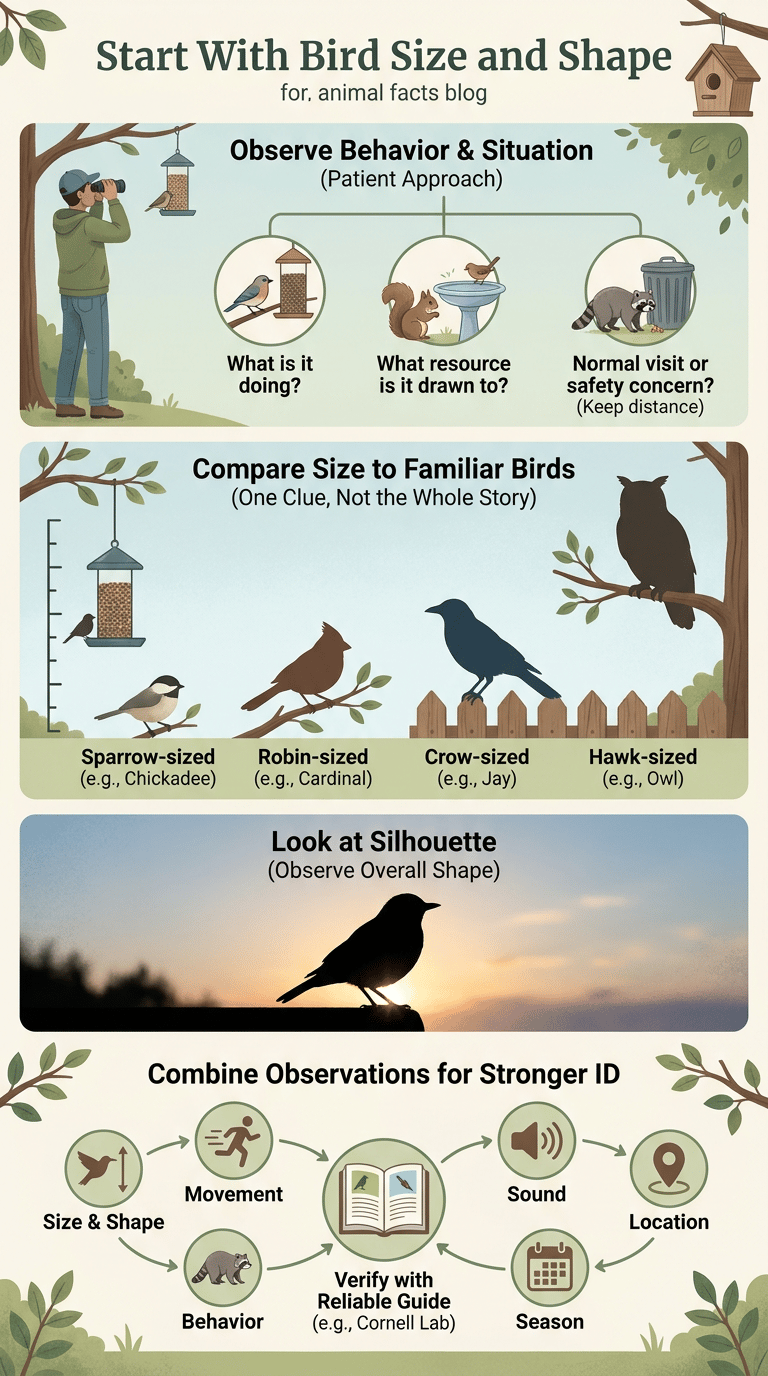
Start With Bird Size and Shape gives this how to identify backyard birds topic a practical frame. Look first at what the animal is doing, what resource may be drawing it in, and whether the situation is a normal visit or a safety concern. That patient approach helps people enjoy wildlife while keeping distance, protecting pets, and avoiding actions that make animals bolder around homes. For checking bird clues, compare notes with the Cornell Lab bird guide.
Compare size to familiar birds
Compare size to familiar birds is best read as one clue, not the whole story. Use several observations together: size, shape, movement, sound, location, season, and behavior. A single color or track can mislead beginners.
Sparrow-sized birds
Sparrow-sized birds: Watch the shape, movement, and repeated pattern before naming the animal, then compare your notes with a reliable bird or wildlife guide.
Robin-sized birds
Robin-sized birds: Watch the shape, movement, and repeated pattern before naming the animal, then compare your notes with a reliable bird or wildlife guide.
Crow-sized birds
Crow-sized birds: Watch the shape, movement, and repeated pattern before naming the animal, then compare your notes with a reliable bird or wildlife guide.
Hawk-sized birds
Hawk-sized birds: Watch the shape, movement, and repeated pattern before naming the animal, then compare your notes with a reliable bird or wildlife guide.
Look at silhouette
Look at silhouette is best read as one clue, not the whole story. The useful question is why the behavior is happening in that place at that time, then whether a calm change in the yard can make the situation safer.
Round body
Round body: Notice where it happens, what changed nearby, and whether the pattern is occasional, seasonal, or repeated enough to need a safer yard setup.
Long tail
Long tail: Watch the shape, movement, and repeated pattern before naming the animal, then compare your notes with a reliable bird or wildlife guide.
Crest
Crest: Notice where it happens, what changed nearby, and whether the pattern is occasional, seasonal, or repeated enough to need a safer yard setup.
Long neck or legs
Long neck or legs: Notice where it happens, what changed nearby, and whether the pattern is occasional, seasonal, or repeated enough to need a safer yard setup.
Notice posture
Notice posture is best read as one clue, not the whole story. The useful question is why the behavior is happening in that place at that time, then whether a calm change in the yard can make the situation safer.
Upright posture
Upright posture: Notice where it happens, what changed nearby, and whether the pattern is occasional, seasonal, or repeated enough to need a safer yard setup.
Horizontal posture
Horizontal posture: Notice where it happens, what changed nearby, and whether the pattern is occasional, seasonal, or repeated enough to need a safer yard setup.
Clinging to tree trunks
Clinging to tree trunks: Plant-based habitat supports wildlife most safely when it offers natural food and cover without creating hidden access into roofs, vents, or play areas.
Use Bill Shape as a Clue
Use Bill Shape as a Clue gives this how to identify backyard birds topic a practical frame. Look first at what the animal is doing, what resource may be drawing it in, and whether the situation is a normal visit or a safety concern. That patient approach helps people enjoy wildlife while keeping distance, protecting pets, and avoiding actions that make animals bolder around homes.
Seed-cracking bills
Seed-cracking bills is best read as one clue, not the whole story. Food draws repeat visits quickly, so the safest response is usually better storage, cleaner feeding areas, natural plant choices, and less spilled or accessible food.
Thick cone-shaped bills
Thick cone-shaped bills: Watch the shape, movement, and repeated pattern before naming the animal, then compare your notes with a reliable bird or wildlife guide.
Finches and cardinals
Finches and cardinals: Notice where it happens, what changed nearby, and whether the pattern is occasional, seasonal, or repeated enough to need a safer yard setup.
Insect-catching bills
Insect-catching bills is best read as one clue, not the whole story. Use several observations together: size, shape, movement, sound, location, season, and behavior. A single color or track can mislead beginners.
Thin pointed bills
Thin pointed bills: Watch the shape, movement, and repeated pattern before naming the animal, then compare your notes with a reliable bird or wildlife guide.
Warblers and wrens
Warblers and wrens: Notice where it happens, what changed nearby, and whether the pattern is occasional, seasonal, or repeated enough to need a safer yard setup.
Probing and drilling bills
Probing and drilling bills is best read as one clue, not the whole story. Use several observations together: size, shape, movement, sound, location, season, and behavior. A single color or track can mislead beginners.
Long bills
Long bills: Watch the shape, movement, and repeated pattern before naming the animal, then compare your notes with a reliable bird or wildlife guide.
Woodpecker bills
Woodpecker bills: Watch the shape, movement, and repeated pattern before naming the animal, then compare your notes with a reliable bird or wildlife guide.
Raptor bills
Raptor bills is best read as one clue, not the whole story. Use several observations together: size, shape, movement, sound, location, season, and behavior. A single color or track can mislead beginners.
Hooked bills
Hooked bills: Watch the shape, movement, and repeated pattern before naming the animal, then compare your notes with a reliable bird or wildlife guide.
Why not to rely on bill alone
Why not to rely on bill alone: Treat this as a safety boundary and give the animal a clear route away instead of moving closer for a photo or closer look.
Study Color Pattern, Not Just Color
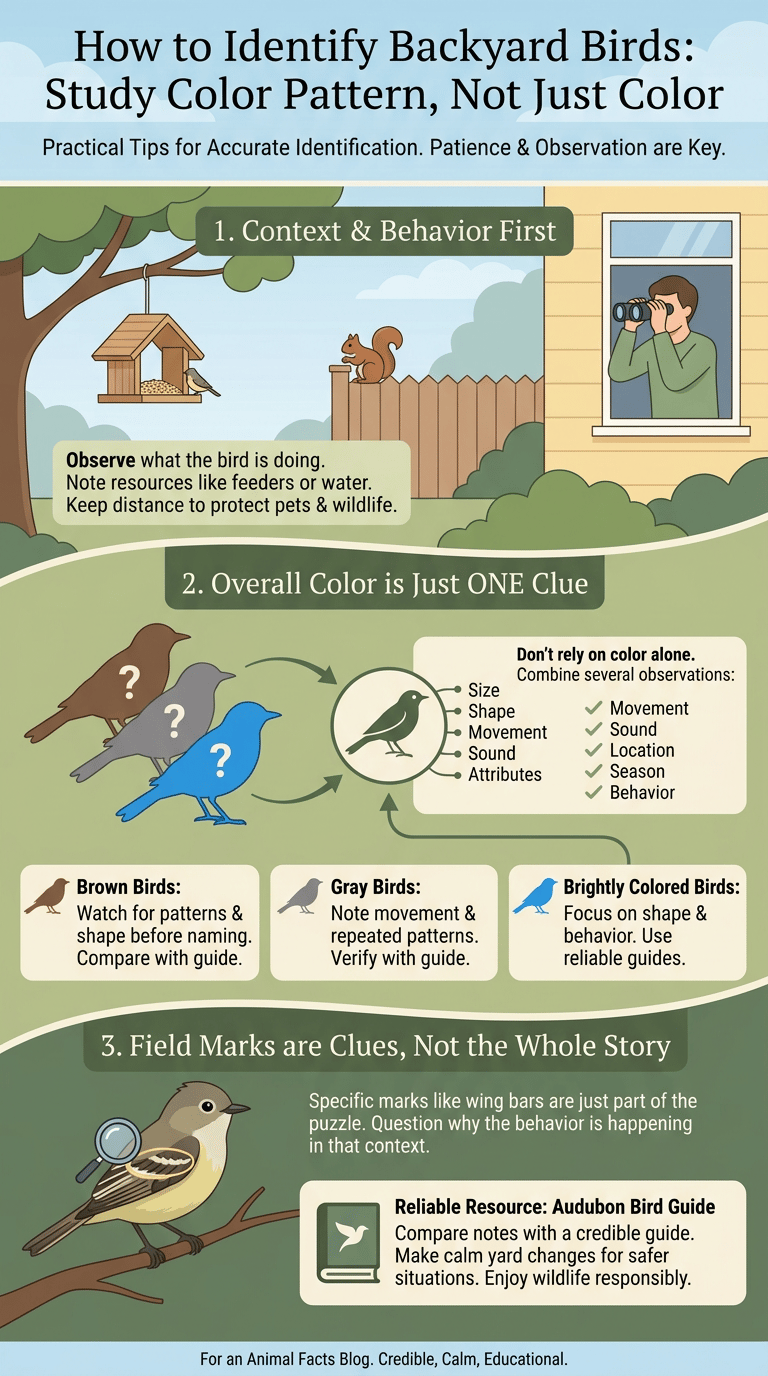
Study Color Pattern, Not Just Color gives this how to identify backyard birds topic a practical frame. Look first at what the animal is doing, what resource may be drawing it in, and whether the situation is a normal visit or a safety concern. That patient approach helps people enjoy wildlife while keeping distance, protecting pets, and avoiding actions that make animals bolder around homes. For another ID comparison, use the Audubon bird guide.
Overall color
Overall color is best read as one clue, not the whole story. Use several observations together: size, shape, movement, sound, location, season, and behavior. A single color or track can mislead beginners.
Brown birds
Brown birds: Watch the shape, movement, and repeated pattern before naming the animal, then compare your notes with a reliable bird or wildlife guide.
Gray birds
Gray birds: Watch the shape, movement, and repeated pattern before naming the animal, then compare your notes with a reliable bird or wildlife guide.
Brightly colored birds
Brightly colored birds: Watch the shape, movement, and repeated pattern before naming the animal, then compare your notes with a reliable bird or wildlife guide.
Field marks
Field marks is best read as one clue, not the whole story. The useful question is why the behavior is happening in that place at that time, then whether a calm change in the yard can make the situation safer.
Wing bars
Wing bars: Watch the shape, movement, and repeated pattern before naming the animal, then compare your notes with a reliable bird or wildlife guide.
Eye rings
Eye rings: Notice where it happens, what changed nearby, and whether the pattern is occasional, seasonal, or repeated enough to need a safer yard setup.
Stripes
Stripes: Notice where it happens, what changed nearby, and whether the pattern is occasional, seasonal, or repeated enough to need a safer yard setup.
Tail patches
Tail patches: Watch the shape, movement, and repeated pattern before naming the animal, then compare your notes with a reliable bird or wildlife guide.
Male, female, juvenile, and seasonal differences
Male, female, juvenile, and seasonal differences is best read as one clue, not the whole story. The useful question is why the behavior is happening in that place at that time, then whether a calm change in the yard can make the situation safer.
Why some birds change appearance
Why some birds change appearance: Watch the shape, movement, and repeated pattern before naming the animal, then compare your notes with a reliable bird or wildlife guide.
Why females may be less colorful
Why females may be less colorful: Watch the shape, movement, and repeated pattern before naming the animal, then compare your notes with a reliable bird or wildlife guide.
Why young birds can be confusing
Why young birds can be confusing: Watch the shape, movement, and repeated pattern before naming the animal, then compare your notes with a reliable bird or wildlife guide.
Watch How the Bird Behaves
Watch How the Bird Behaves gives this how to identify backyard birds topic a practical frame. Look first at what the animal is doing, what resource may be drawing it in, and whether the situation is a normal visit or a safety concern. That patient approach helps people enjoy wildlife while keeping distance, protecting pets, and avoiding actions that make animals bolder around homes.
Feeding behavior
Feeding behavior is best read as one clue, not the whole story. Food draws repeat visits quickly, so the safest response is usually better storage, cleaner feeding areas, natural plant choices, and less spilled or accessible food.
Ground feeding
Ground feeding: Notice where it happens, what changed nearby, and whether the pattern is occasional, seasonal, or repeated enough to need a safer yard setup.
Tree foraging
Tree foraging: Plant-based habitat supports wildlife most safely when it offers natural food and cover without creating hidden access into roofs, vents, or play areas.
Hovering
Hovering: Notice where it happens, what changed nearby, and whether the pattern is occasional, seasonal, or repeated enough to need a safer yard setup.
Catching insects in air
Catching insects in air: These small animals often support pollination, soil life, and natural food webs, so habitat choices can help them while keeping people from handling them.
Movement style
Movement style is best read as one clue, not the whole story. The useful question is why the behavior is happening in that place at that time, then whether a calm change in the yard can make the situation safer.
Hopping
Hopping: Notice where it happens, what changed nearby, and whether the pattern is occasional, seasonal, or repeated enough to need a safer yard setup.
Walking
Walking: Notice where it happens, what changed nearby, and whether the pattern is occasional, seasonal, or repeated enough to need a safer yard setup.
Tail bobbing
Tail bobbing: Watch the shape, movement, and repeated pattern before naming the animal, then compare your notes with a reliable bird or wildlife guide.
Climbing
Climbing: Notice where it happens, what changed nearby, and whether the pattern is occasional, seasonal, or repeated enough to need a safer yard setup.
Social behavior
Social behavior is best read as one clue, not the whole story. The useful question is why the behavior is happening in that place at that time, then whether a calm change in the yard can make the situation safer.
Alone
Alone: Notice where it happens, what changed nearby, and whether the pattern is occasional, seasonal, or repeated enough to need a safer yard setup.
Pairs
Pairs: Notice where it happens, what changed nearby, and whether the pattern is occasional, seasonal, or repeated enough to need a safer yard setup.
Flocks
Flocks: Notice where it happens, what changed nearby, and whether the pattern is occasional, seasonal, or repeated enough to need a safer yard setup.
Mixed-species groups
Mixed-species groups: Notice where it happens, what changed nearby, and whether the pattern is occasional, seasonal, or repeated enough to need a safer yard setup.
Listen to Sounds
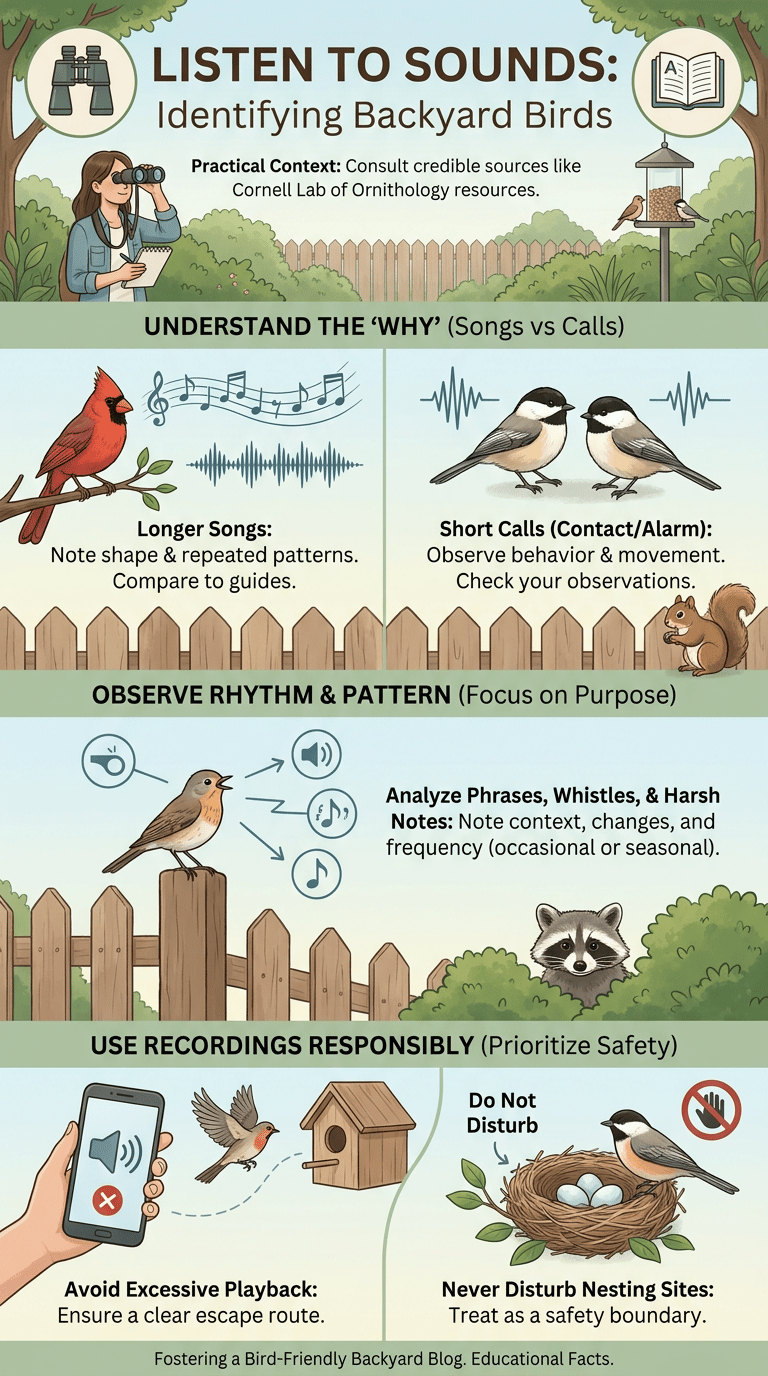
Listen to Sounds gives this how to identify backyard birds topic a practical frame. Look first at what. For broader birding background, use Cornell Lab of Ornithology resources.
Songs vs calls
Songs vs calls is best read as one clue, not the whole story. The useful question is why.
Longer songs
Longer songs: Watch the shape, movement, and repeated pattern before naming the animal, then compare your notes with.
Short contact calls
Short contact calls: Watch the shape, movement, and repeated pattern before naming the animal, then compare your notes.
Alarm calls
Alarm calls: Watch the shape, movement, and repeated pattern before naming the animal, then compare your notes with.
Rhythm and pattern
Rhythm and pattern is best read as one clue, not the whole story. The useful question is why.
Repeated phrases
Repeated phrases: Notice where it happens, what changed nearby, and whether the pattern is occasional, seasonal, or repeated.
Clear whistles
Clear whistles: Notice where it happens, what changed nearby, and whether the pattern is occasional, seasonal, or repeated.
Harsh notes
Harsh notes: Notice where it happens, what changed nearby, and whether the pattern is occasional, seasonal, or repeated.
Use recordings responsibly
Use recordings responsibly is best read as one clue, not the whole story. The useful question is why.
Avoid excessive playback
Avoid excessive playback: Treat this as a safety boundary and give the animal a clear route away instead.
Do not disturb nesting birds
Do not disturb nesting birds: Treat this as a safety boundary and give the animal a clear route.
Consider Location and Season
Consider Location and Season helps narrow the ID by comparing several clues instead of trusting one feature alone. For nesting and migration context, check migratory bird resources.
Region matters
Region matters is best read as one clue, not the whole story. The useful question is why the.
Eastern US
Eastern US: Notice where it happens, what changed nearby, and whether the pattern is occasional, seasonal, or repeated.
Western US
Western US: Notice where it happens, what changed nearby, and whether the pattern is occasional, seasonal, or repeated.
Coastal areas
Coastal areas: Notice where it happens, what changed nearby, and whether the pattern is occasional, seasonal, or repeated.
Urban and suburban yards
Urban and suburban yards: Notice where it happens, what changed nearby, and whether the pattern is occasional, seasonal.
Habitat in the yard
Habitat in the yard is best read as one clue, not the whole story. The useful question is.
Lawn
Lawn: Notice where it happens, what changed nearby, and whether the pattern is occasional, seasonal, or repeated enough.
Shrubs
Shrubs: Plant-based habitat supports wildlife most safely when it offers natural food and cover without creating hidden access.
Tree canopy
Tree canopy: Plant-based habitat supports wildlife most safely when it offers natural food and cover without creating hidden.
Water features
Water features: Water helps wildlife when it is shallow, clean, and managed so it does not become stagnant.
Seasonal timing
Seasonal timing is best read as one clue, not the whole story. The useful question is why the.
Migration
Migration: Notice where it happens, what changed nearby, and whether the pattern is occasional, seasonal, or repeated enough.
Breeding season
Breeding season: Notice where it happens, what changed nearby, and whether the pattern is occasional, seasonal, or repeated.
Winter visitors
Winter visitors: Notice where it happens, what changed nearby, and whether the pattern is occasional, seasonal, or repeated.
Tools That Help With Bird Identification
Tools That Help With Bird Identification gives this how to identify backyard birds topic a practical frame. Look. For conservation context, check bird conservation resources.
Binoculars
Binoculars is best read as one clue, not the whole story. The useful question is why the behavior.
What to look for
What to look for: Notice where it happens, what changed nearby, and whether the pattern is occasional, seasonal.
Why distance protects birds
Why distance protects birds: Treat this as a safety boundary and give the animal a clear route away.
Field guides and apps
Field guides and apps is best read as one clue, not the whole story. The useful question is.
Photos
Photos: Notice where it happens, what changed nearby, and whether the pattern is occasional, seasonal, or repeated enough.
Range maps
Range maps: Notice where it happens, what changed nearby, and whether the pattern is occasional, seasonal, or repeated.
Sound tools
Sound tools: Notice where it happens, what changed nearby, and whether the pattern is occasional, seasonal, or repeated.
Bird notes
Bird notes is best read as one clue, not the whole story. The useful question is why the.
Date
Date: Notice where it happens, what changed nearby, and whether the pattern is occasional, seasonal, or repeated enough.
Location
Location: Notice where it happens, what changed nearby, and whether the pattern is occasional, seasonal, or repeated enough.
Behavior
Behavior: Notice where it happens, what changed nearby, and whether the pattern is occasional, seasonal, or repeated enough.
Field marks
Field marks: Watch the shape, movement, and repeated pattern before naming the animal, then compare your notes with.
Backyard Bird Identification FAQ
What is the easiest way to identify a backyard bird?
Start with size, shape, movement, time of day, habitat, sounds, and signs. Then compare those clues with a.
Why do some birds look different in winter?
Common answers depend on your region, season, and yard setup. For how to identify backyard birds, the safest habit is to observe calmly, remove risky attractants, and call local help when an animal is injured, trapped, or in contact with people or pets.
Can I identify birds by sound?
Start with size, shape, movement, time of day, habitat, sounds, and signs. Then compare those clues with a.
What should I do if I find a baby bird?
Do not handle young wildlife. Many young animals are not abandoned, and the safest next step is to.
How can I get better at bird identification?
Common answers depend on your region, season, and yard setup. For how to identify backyard birds, the safest habit is to observe calmly, remove risky attractants, and call local help when an animal is injured, trapped, or in contact with people or pets.
Key Takeaways
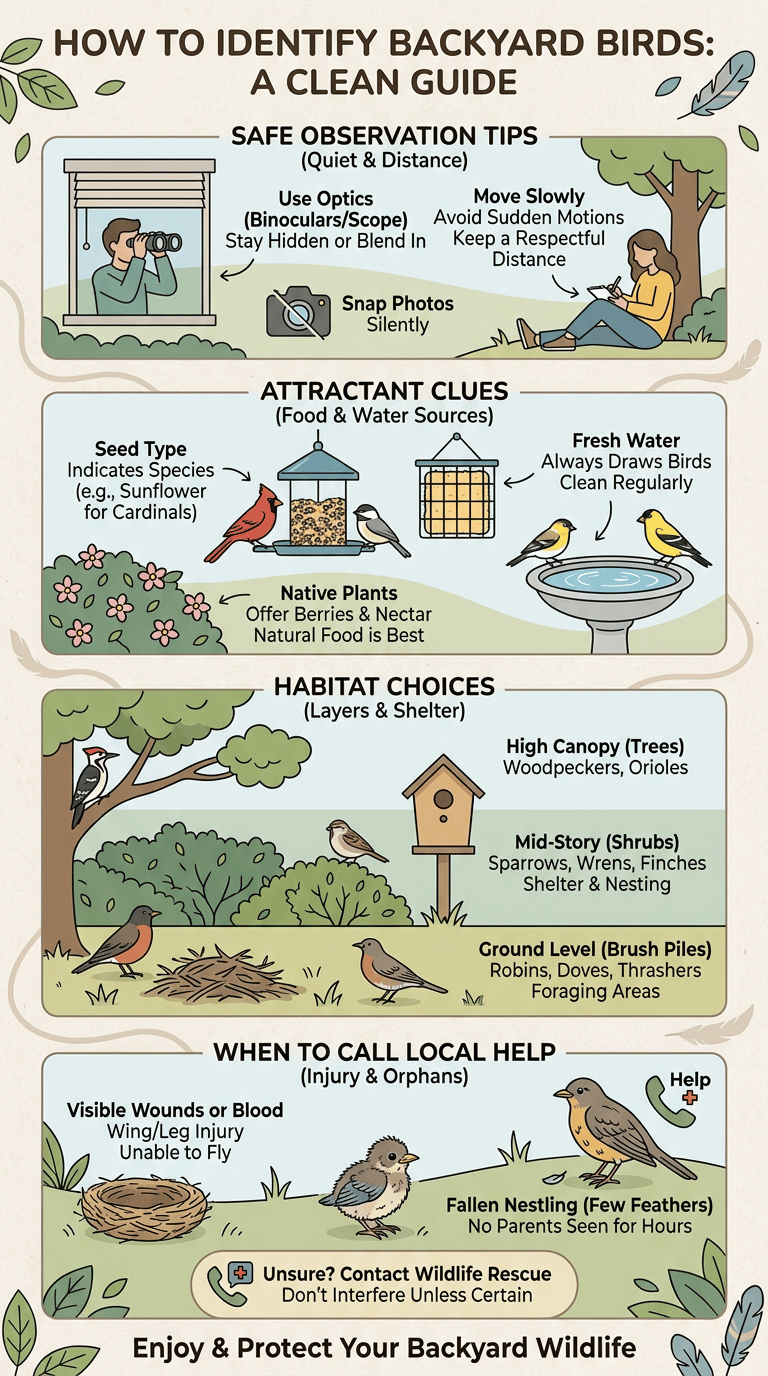
How to Identify Backyard Birds is easiest to use when you slow down and read the whole situation.
Keep distance, remove attractants, support natural habitat, keep pets supervised, and use trusted local help when a situation.

Ethan Walker is the founder and research editor of Animal Fact Central. He creates and reviews educational animal facts content using trusted wildlife, pet care, and science-based sources. His work focuses on making animal behavior, adaptations, habitats, and species facts clear, accurate, and engaging for everyday readers.
Read More Details About Ethan Walker: https://animalfactcentral.com/ethan-walker/