
Are Raccoons Dangerous? is for readers who notice activity near a lawn, garden, porch, balcony, fence, feeder, or tree line and want a clear way to understand it. Backyard animals are not random visitors. They usually appear because a yard offers food, water, shelter, nesting space, travel cover, or a quiet place to pause.
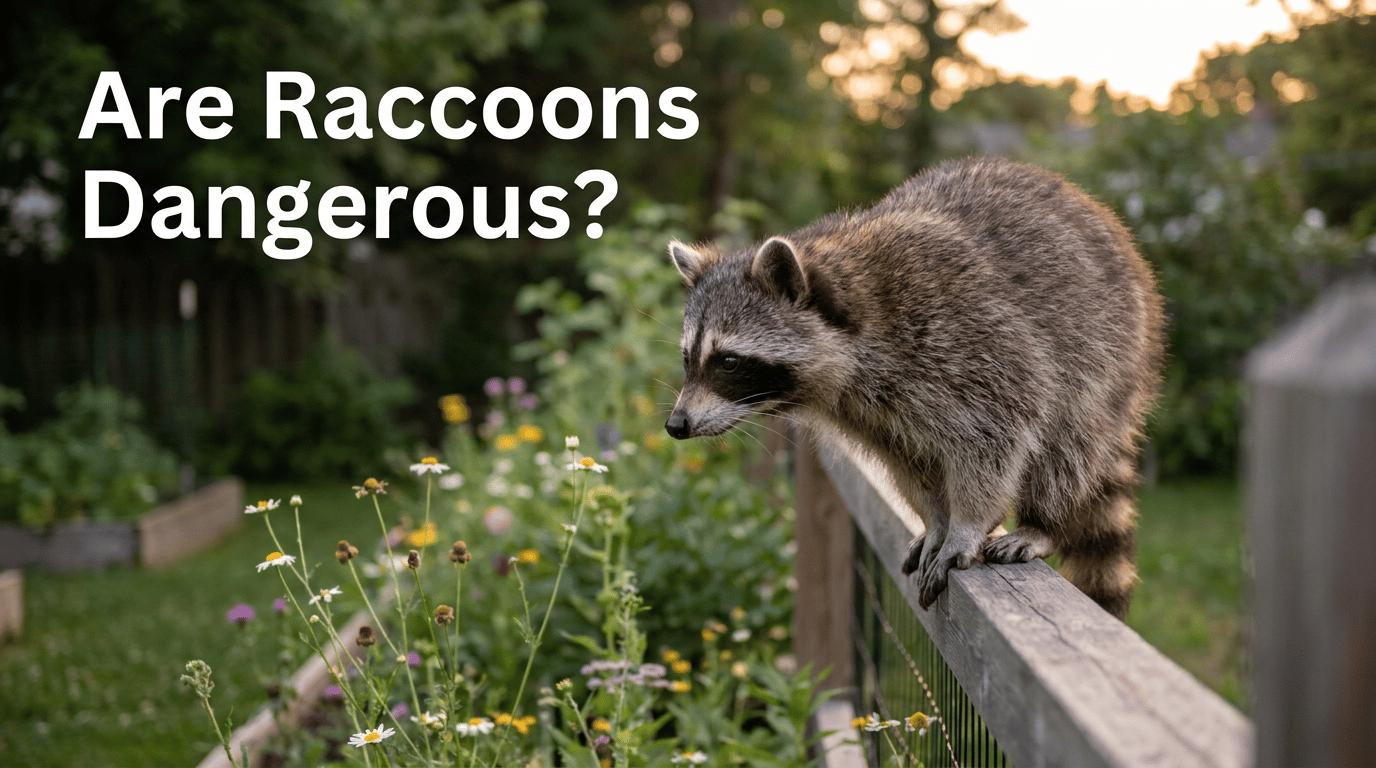
This guide keeps are raccoons dangerous practical and safety-first. It is written for Homeowners, renters, families, pet owners, gardeners, and readers who see raccoons around trash, decks, garages, feeders, or yards.. The goal is to help you observe, identify, and reduce problems without trying to touch, catch, feed, keep, or relocate wild animals.
Readers comparing are raccoons dangerous may also find bird feeder placement guide useful for a closer look at a related backyard wildlife topic.
Readers comparing are raccoons dangerous may also find how to attract birds safely useful for a closer look at a related backyard wildlife topic.
Readers comparing are raccoons dangerous may also find common backyard animals in the US useful for a closer look at a related backyard wildlife topic.
For broader context, the main backyard wildlife guide connects this topic with habitat, safe viewing, feeding choices, and responsible yard management.
This article stays practical: observe from a distance, reduce easy rewards, and call qualified local help when a backyard situation is no longer routine.
Quick Answer: Are Raccoons Dangerous?
Quick Answer: Are Raccoons Dangerous? gives this are raccoons dangerous topic a practical frame. Look first at what the animal is doing, what resource may be drawing it in, and whether the situation is a normal visit or a safety concern. That patient approach helps people enjoy wildlife while keeping distance, protecting pets, and avoiding actions that make animals bolder around homes.
Raccoons are usually avoidant but can create risks
Raccoons are usually avoidant but can create risks is best read as one clue, not the whole story. The useful question is why the behavior is happening in that place at that time, then whether a calm change in the yard can make the situation safer.
Defensive behavior
Defensive behavior: Notice where it happens, what changed nearby, and whether the pattern is occasional, seasonal, or repeated enough to need a safer yard setup.
Food-conditioned behavior
Food-conditioned behavior: Notice where it happens, what changed nearby, and whether the pattern is occasional, seasonal, or repeated enough to need a safer yard setup.
Disease and parasite concerns
Disease and parasite concerns: Notice where it happens, what changed nearby, and whether the pattern is occasional, seasonal, or repeated enough to need a safer yard setup.
Pet conflicts
Pet conflicts: Notice where it happens, what changed nearby, and whether the pattern is occasional, seasonal, or repeated enough to need a safer yard setup.
Risk depends on context
Risk depends on context is best read as one clue, not the whole story. The useful question is why the behavior is happening in that place at that time, then whether a calm change in the yard can make the situation safer.
Daytime sightings
Daytime sightings: Notice where it happens, what changed nearby, and whether the pattern is occasional, seasonal, or repeated enough to need a safer yard setup.
Night activity
Night activity: Notice where it happens, what changed nearby, and whether the pattern is occasional, seasonal, or repeated enough to need a safer yard setup.
A raccoon trapped or cornered
A raccoon trapped or cornered: This visitor is usually looking for food, cover, or a travel route, so observe from a distance and remove rewards instead of trying to interact.
A mother with young
A mother with young: These small animals often support pollination, soil life, and natural food webs, so habitat choices can help them while keeping people from handling them.
Why Raccoons Come Into Yards
Why Raccoons Come Into Yards gives this are raccoons dangerous topic a practical frame. Look first at what the animal is doing, what resource may be drawing it in, and whether the situation is a normal visit or a safety concern. That patient approach helps people enjoy wildlife while keeping distance, protecting pets, and avoiding actions that make animals bolder around homes. For calm observation habits, use wildlife watching guidance.
Food attractants
Food attractants is best read as one clue, not the whole story. Food draws repeat visits quickly, so the safest response is usually better storage, cleaner feeding areas, natural plant choices, and less spilled or accessible food.
Trash
Trash: Secure or clean this attractant because easy food teaches wildlife to return and can increase conflict around doors, decks, feeders, and pets.
Pet food
Pet food: Secure or clean this attractant because easy food teaches wildlife to return and can increase conflict around doors, decks, feeders, and pets.
Bird seed
Bird seed: Secure or clean this attractant because easy food teaches wildlife to return and can increase conflict around doors, decks, feeders, and pets.
Compost
Compost: Secure or clean this attractant because easy food teaches wildlife to return and can increase conflict around doors, decks, feeders, and pets.
Shelter opportunities
Shelter opportunities is best read as one clue, not the whole story. Shelter matters because animals need places to hide, rest, raise young, or escape predators. Check carefully before closing openings so young or adults are not sealed inside.
Decks
Decks: Notice where it happens, what changed nearby, and whether the pattern is occasional, seasonal, or repeated enough to need a safer yard setup.
Sheds
Sheds: Notice where it happens, what changed nearby, and whether the pattern is occasional, seasonal, or repeated enough to need a safer yard setup.
Chimneys
Chimneys: Animals in structures need careful help, since cornering them or sealing an opening too quickly can injure wildlife and make the household problem worse.
Attics
Attics: Animals in structures need careful help, since cornering them or sealing an opening too quickly can injure wildlife and make the household problem worse.
Water and travel routes
Water and travel routes is best read as one clue, not the whole story. Small setup choices can reduce risk: clean water, safer glass treatments, supervised pets, dry seed, and feeder locations that do not create easy ambush points.
Ponds
Ponds: Water helps wildlife when it is shallow, clean, and managed so it does not become stagnant or draw animals too close to busy household areas.
Drainage areas
Drainage areas: Notice where it happens, what changed nearby, and whether the pattern is occasional, seasonal, or repeated enough to need a safer yard setup.
Fence lines
Fence lines: Notice where it happens, what changed nearby, and whether the pattern is occasional, seasonal, or repeated enough to need a safer yard setup.
Raccoon Behavior Around People
Raccoon Behavior Around People gives this are raccoons dangerous topic a practical frame. Look first at what the animal is doing, what resource may be drawing it in, and whether the situation is a normal visit or a safety concern. That patient approach helps people enjoy wildlife while keeping distance, protecting pets, and avoiding actions that make animals bolder around homes.
Normal raccoon behavior
Normal raccoon behavior is best read as one clue, not the whole story. The useful question is why the behavior is happening in that place at that time, then whether a calm change in the yard can make the situation safer.
Foraging at night
Foraging at night: Notice where it happens, what changed nearby, and whether the pattern is occasional, seasonal, or repeated enough to need a safer yard setup.
Climbing
Climbing: Notice where it happens, what changed nearby, and whether the pattern is occasional, seasonal, or repeated enough to need a safer yard setup.
Investigating food smells
Investigating food smells: Notice where it happens, what changed nearby, and whether the pattern is occasional, seasonal, or repeated enough to need a safer yard setup.
Warning signs to take seriously
Warning signs to take seriously is best read as one clue, not the whole story. Use several observations together: size, shape, movement, sound, location, season, and behavior. A single color or track can mislead beginners.
Approaching people
Approaching people: Notice where it happens, what changed nearby, and whether the pattern is occasional, seasonal, or repeated enough to need a safer yard setup.
Acting disoriented
Acting disoriented: Notice where it happens, what changed nearby, and whether the pattern is occasional, seasonal, or repeated enough to need a safer yard setup.
Unusual aggression
Unusual aggression: Notice where it happens, what changed nearby, and whether the pattern is occasional, seasonal, or repeated enough to need a safer yard setup.
Trouble moving
Trouble moving: Notice where it happens, what changed nearby, and whether the pattern is occasional, seasonal, or repeated enough to need a safer yard setup.
Why you should not feed raccoons
Why you should not feed raccoons is best read as one clue, not the whole story. Food draws repeat visits quickly, so the safest response is usually better storage, cleaner feeding areas, natural plant choices, and less spilled or accessible food.
Habituation
Habituation: Notice where it happens, what changed nearby, and whether the pattern is occasional, seasonal, or repeated enough to need a safer yard setup.
Bolder behavior
Bolder behavior: Notice where it happens, what changed nearby, and whether the pattern is occasional, seasonal, or repeated enough to need a safer yard setup.
More yard visits
More yard visits: Notice where it happens, what changed nearby, and whether the pattern is occasional, seasonal, or repeated enough to need a safer yard setup.
Raccoons, Pets, and Children
Raccoons, Pets, and Children gives this are raccoons dangerous topic a practical frame. Look first at what the animal is doing, what resource may be drawing it in, and whether the situation is a normal visit or a safety concern. That patient approach helps people enjoy wildlife while keeping distance, protecting pets, and avoiding actions that make animals bolder around homes. For pet-related decisions after contact, use pet owner resources from AVMA.
Dogs and raccoons
Dogs and raccoons is best read as one clue, not the whole story. The useful question is why the behavior is happening in that place at that time, then whether a calm change in the yard can make the situation safer.
Leash and supervision
Leash and supervision: Notice where it happens, what changed nearby, and whether the pattern is occasional, seasonal, or repeated enough to need a safer yard setup.
Avoiding confrontations
Avoiding confrontations: Treat this as a safety boundary and give the animal a clear route away instead of moving closer for a photo or closer look.
Veterinary care after contact
Veterinary care after contact: Notice where it happens, what changed nearby, and whether the pattern is occasional, seasonal, or repeated enough to need a safer yard setup.
Cats and raccoons
Cats and raccoons is best read as one clue, not the whole story. Small setup choices can reduce risk: clean water, safer glass treatments, supervised pets, dry seed, and feeder locations that do not create easy ambush points.
Keeping cats indoors or supervised
Keeping cats indoors or supervised: Notice where it happens, what changed nearby, and whether the pattern is occasional, seasonal, or repeated enough to need a safer yard setup.
Outdoor food issues
Outdoor food issues: Notice where it happens, what changed nearby, and whether the pattern is occasional, seasonal, or repeated enough to need a safer yard setup.
Injury risk
Injury risk: Notice where it happens, what changed nearby, and whether the pattern is occasional, seasonal, or repeated enough to need a safer yard setup.
Children and raccoons
Children and raccoons is best read as one clue, not the whole story. If the animal appears hurt, disoriented, unusually aggressive, trapped, or in direct contact with a person or pet, keep distance and contact the appropriate local professional, animal control, wildlife rehabilitator, veterinarian, or health authority.
Do not approach
Do not approach: Treat this as a safety boundary and give the animal a clear route away instead of moving closer for a photo or closer look.
Do not touch young animals
Do not touch young animals: Treat this as a safety boundary and give the animal a clear route away instead of moving closer for a photo or closer look.
Tell an adult about sightings
Tell an adult about sightings: Notice where it happens, what changed nearby, and whether the pattern is occasional, seasonal, or repeated enough to need a safer yard setup.
Disease and Dropping Safety
Disease and Dropping Safety gives this are raccoons dangerous topic a practical frame. Look first at what the animal is doing, what resource may be drawing it in, and whether the situation is a normal visit or a safety concern. That patient approach helps people enjoy wildlife while keeping distance, protecting pets, and avoiding actions that make animals bolder around homes. For bite and exposure context, check rabies information from CDC. For droppings and parasite context, check raccoon roundworm information.
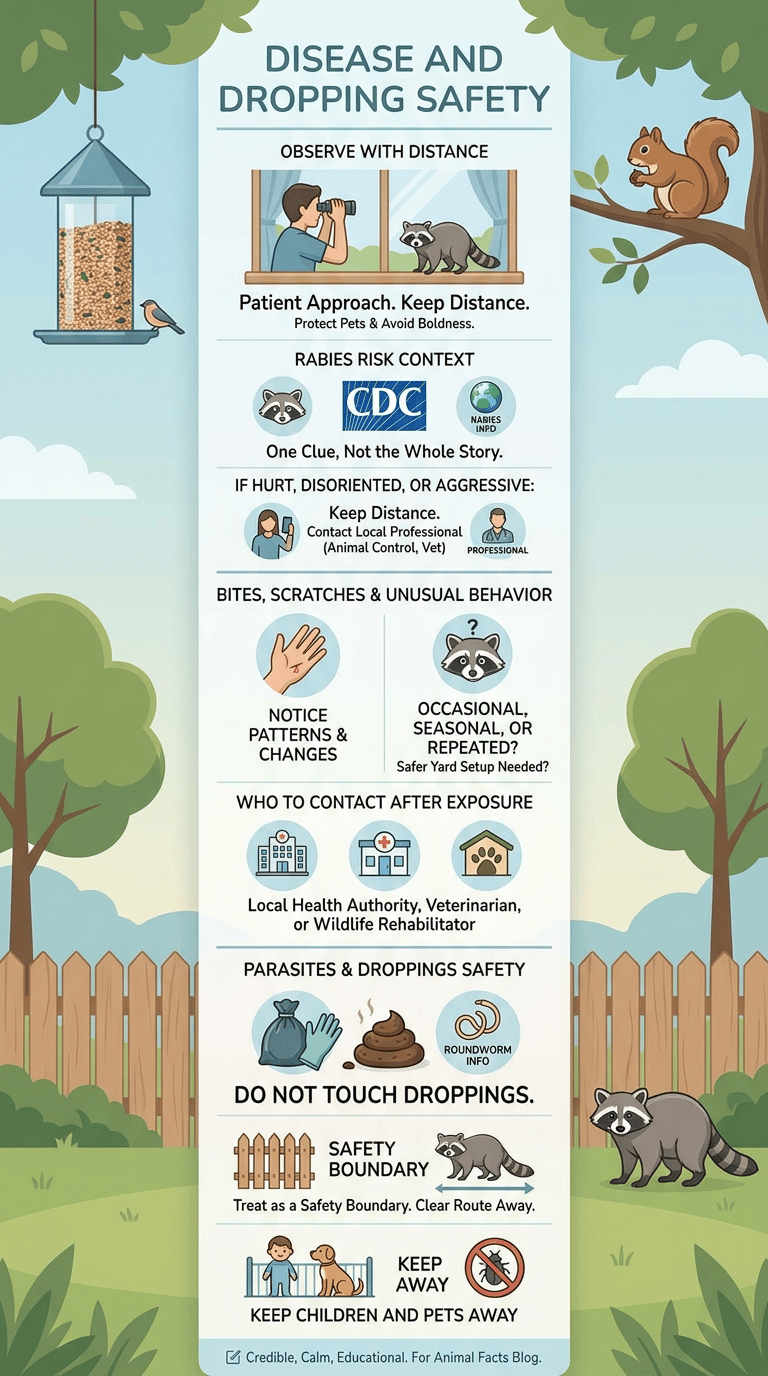
Rabies risk context
Rabies risk context is best read as one clue, not the whole story. If the animal appears hurt, disoriented, unusually aggressive, trapped, or in direct contact with a person or pet, keep distance and contact the appropriate local professional, animal control, wildlife rehabilitator, veterinarian, or health authority.
Why bites and scratches matter
Why bites and scratches matter: Notice where it happens, what changed nearby, and whether the pattern is occasional, seasonal, or repeated enough to need a safer yard setup.
Why unusual behavior matters
Why unusual behavior matters: Notice where it happens, what changed nearby, and whether the pattern is occasional, seasonal.
Who to contact after exposure
Who to contact after exposure: Notice where it happens, what changed nearby, and whether the pattern is occasional.
Parasites and raccoon droppings
Parasites and raccoon droppings is best read as one clue, not the whole story. If the animal appears.
Do not touch droppings
Do not touch droppings: Treat this as a safety boundary and give the animal a clear route away.
Keep children and pets away
Keep children and pets away: Notice where it happens, what changed nearby, and whether the pattern is occasional.
Professional cleanup considerations
Professional cleanup considerations: Water helps wildlife when it is shallow, clean, and managed so it does not become.
General hygiene
General hygiene is best read as one clue, not the whole story. The useful question is why the.
Wash hands after outdoor cleanup
Wash hands after outdoor cleanup: Water helps wildlife when it is shallow, clean, and managed so it does.
Use protective precautions
Use protective precautions: Notice where it happens, what changed nearby, and whether the pattern is occasional, seasonal, or.
Avoid stirring contaminated material
Avoid stirring contaminated material: Treat this as a safety boundary and give the animal a clear route away.
How to Reduce Raccoon Visits
How to Reduce Raccoon Visits gives this are raccoons dangerous topic a practical frame. Look first at what.
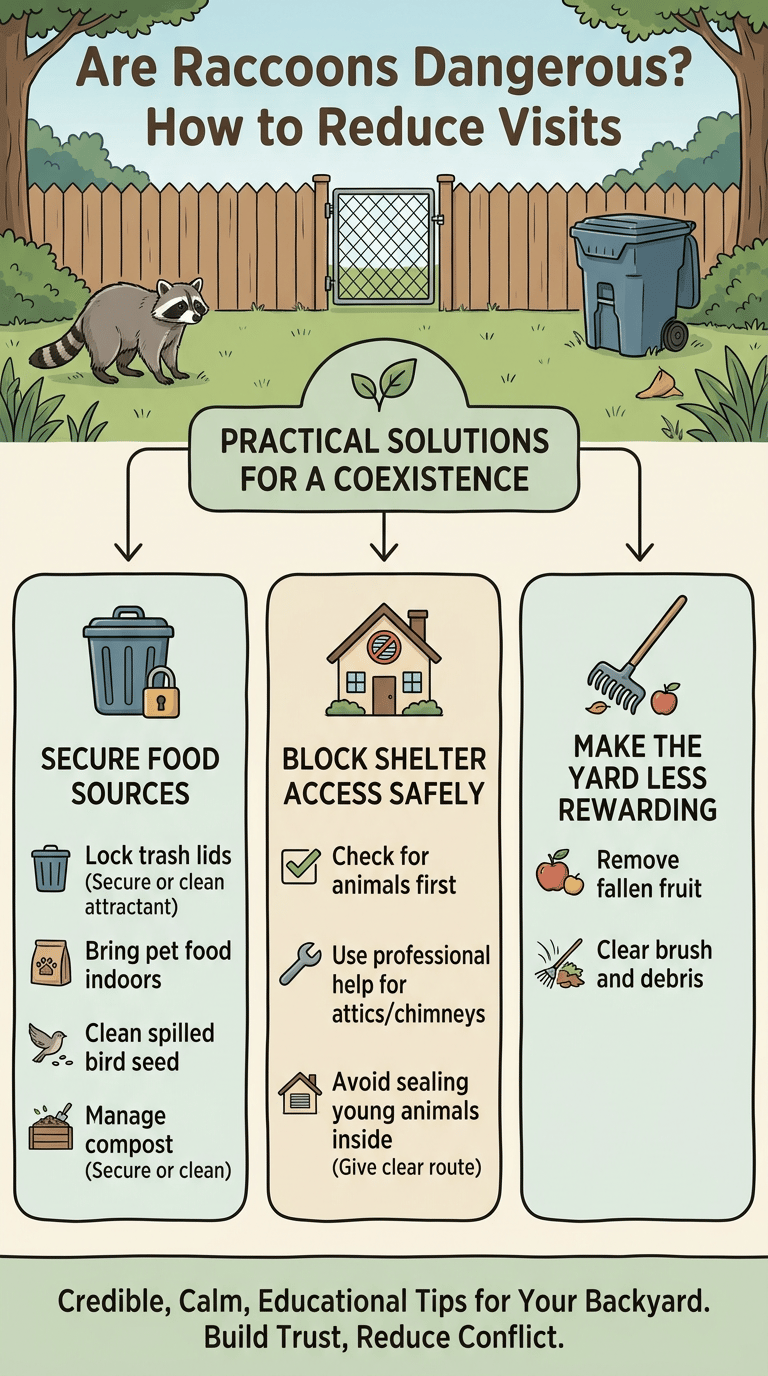
Secure food sources
Secure food sources is best read as one clue, not the whole story. Food draws repeat visits quickly.
Lock trash lids
Lock trash lids: Secure or clean this attractant because easy food teaches wildlife to return and can increase.
Bring pet food indoors
Bring pet food indoors: Secure or clean this attractant because easy food teaches wildlife to return and can.
Clean spilled bird seed
Clean spilled bird seed: Secure or clean this attractant because easy food teaches wildlife to return and can.
Manage compost
Manage compost: Secure or clean this attractant because easy food teaches wildlife to return and can increase conflict.
Block shelter access safely
Block shelter access safely is best read as one clue, not the whole story. Shelter matters because animals.
Check for animals first
Check for animals first: Notice where it happens, what changed nearby, and whether the pattern is occasional, seasonal.
Use professional help for attics and chimneys
Use professional help for attics and chimneys: Animals in structures need careful help, since cornering them or sealing.
Avoid sealing young animals inside
Avoid sealing young animals inside: Treat this as a safety boundary and give the animal a clear route.
Make the yard less rewarding
Make the yard less rewarding is best read as one clue, not the whole story. The useful question.
Remove fallen fruit
Remove fallen fruit: Secure or clean this attractant because easy food teaches wildlife to return and can increase.
Limit water attractants where practical
Limit water attractants where practical: Water helps wildlife when it is shallow, clean, and managed so it does.
Keep grills clean
Keep grills clean: Water helps wildlife when it is shallow, clean, and managed so it does not become.
What to Do If You See a Raccoon
What to Do If You See a Raccoon gives this are raccoons dangerous topic a practical frame. Look. For distance and encounter safety, use wildlife safety guidance.
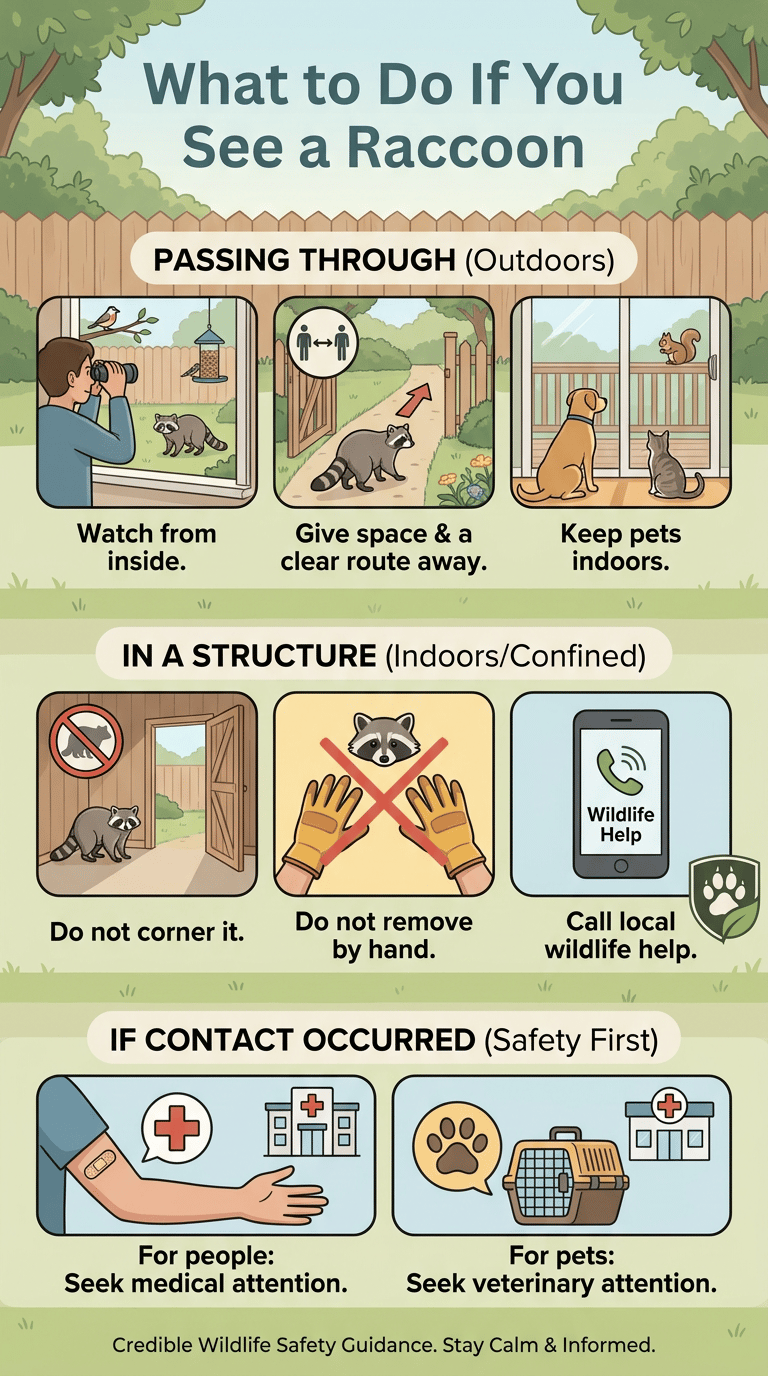
If it is passing through
If it is passing through is best read as one clue, not the whole story. The useful question.
Watch from inside
Watch from inside: Notice where it happens, what changed nearby, and whether the pattern is occasional, seasonal, or.
Give space
Give space: Treat this as a safety boundary and give the animal a clear route away instead of.
Keep pets indoors
Keep pets indoors: Notice where it happens, what changed nearby, and whether the pattern is occasional, seasonal, or.
If it is in a structure
If it is in a structure is best read as one clue, not the whole story. Shelter matters.
Do not corner it
Do not corner it: Treat this as a safety boundary and give the animal a clear route away.
Do not attempt removal by hand
Do not attempt removal by hand: Treat this as a safety boundary and give the animal a clear.
Call local wildlife help
Call local wildlife help: Watch the shape, movement, and repeated pattern before naming the animal, then compare your.
If there was contact
If there was contact is best read as one clue, not the whole story. If the animal appears.
For people
For people: Notice where it happens, what changed nearby, and whether the pattern is occasional, seasonal, or repeated.
For pets
For pets: Notice where it happens, what changed nearby, and whether the pattern is occasional, seasonal, or repeated.
Why prompt professional guidance matters
Why prompt professional guidance matters: Notice where it happens, what changed nearby, and whether the pattern is occasional.
Raccoon Safety FAQ
Is it normal to see a raccoon during the day?
Common answers depend on your region, season, and yard setup. For are raccoons dangerous, the safest habit is to observe calmly, remove risky attractants, and call local help when an animal is injured, trapped, or in contact with people or pets.
Will raccoons attack people?
Most wildlife avoids people when it has space. Risk rises when animals are cornered, fed, sick, protecting young.
Are raccoons dangerous to dogs?
Most wildlife avoids people when it has space. Risk rises when animals are cornered, fed, sick, protecting young.
What should I do if a raccoon is in my attic?
Common answers depend on your region, season, and yard setup. For are raccoons dangerous, the safest habit is to observe calmly, remove risky attractants, and call local help when an animal is injured, trapped, or in contact with people or pets.
Should I feed raccoons?
Direct feeding is usually not the safest choice. Natural habitat, clean water where appropriate, secure trash, and responsible.
Key Takeaways
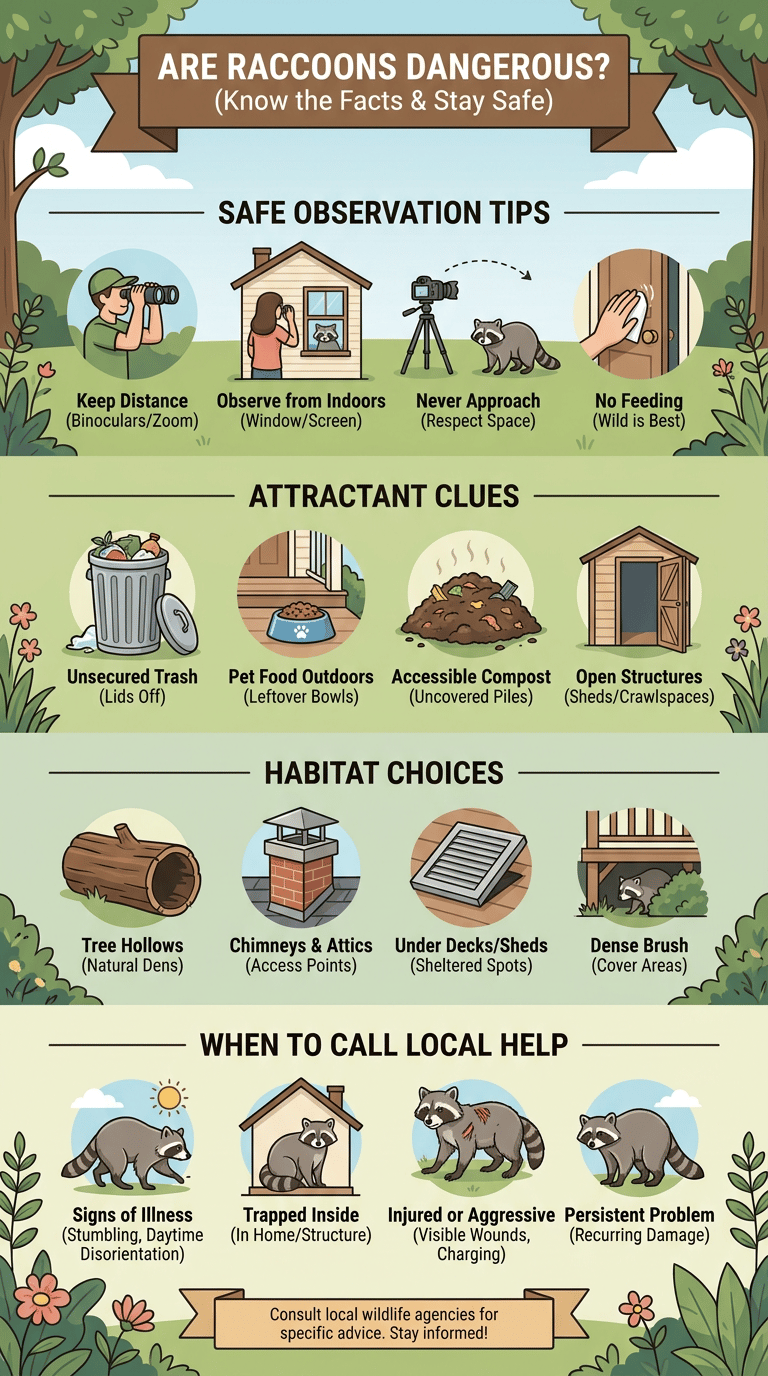
Are Raccoons Dangerous? is easiest to use when you slow down and read the whole situation. Most yard.
Keep distance, remove attractants, support natural habitat, keep pets supervised, and use trusted local help when a situation.

Ethan Walker is the founder and research editor of Animal Fact Central. He creates and reviews educational animal facts content using trusted wildlife, pet care, and science-based sources. His work focuses on making animal behavior, adaptations, habitats, and species facts clear, accurate, and engaging for everyday readers.
Read More Details About Ethan Walker: https://animalfactcentral.com/ethan-walker/