
Why Are Sharks Important to the Ocean? explains why animal survival depends on more than a single threat. For Ocean readers, students, teachers, wildlife fans, conservation beginners, and readers curious about why shark protection matters., the useful question is not only which species are at risk, but how pressure builds and what responsible conservation can do. This guide keeps the focus on clear causes, realistic solutions, and safe ways to care about wildlife without disturbing wild animals.
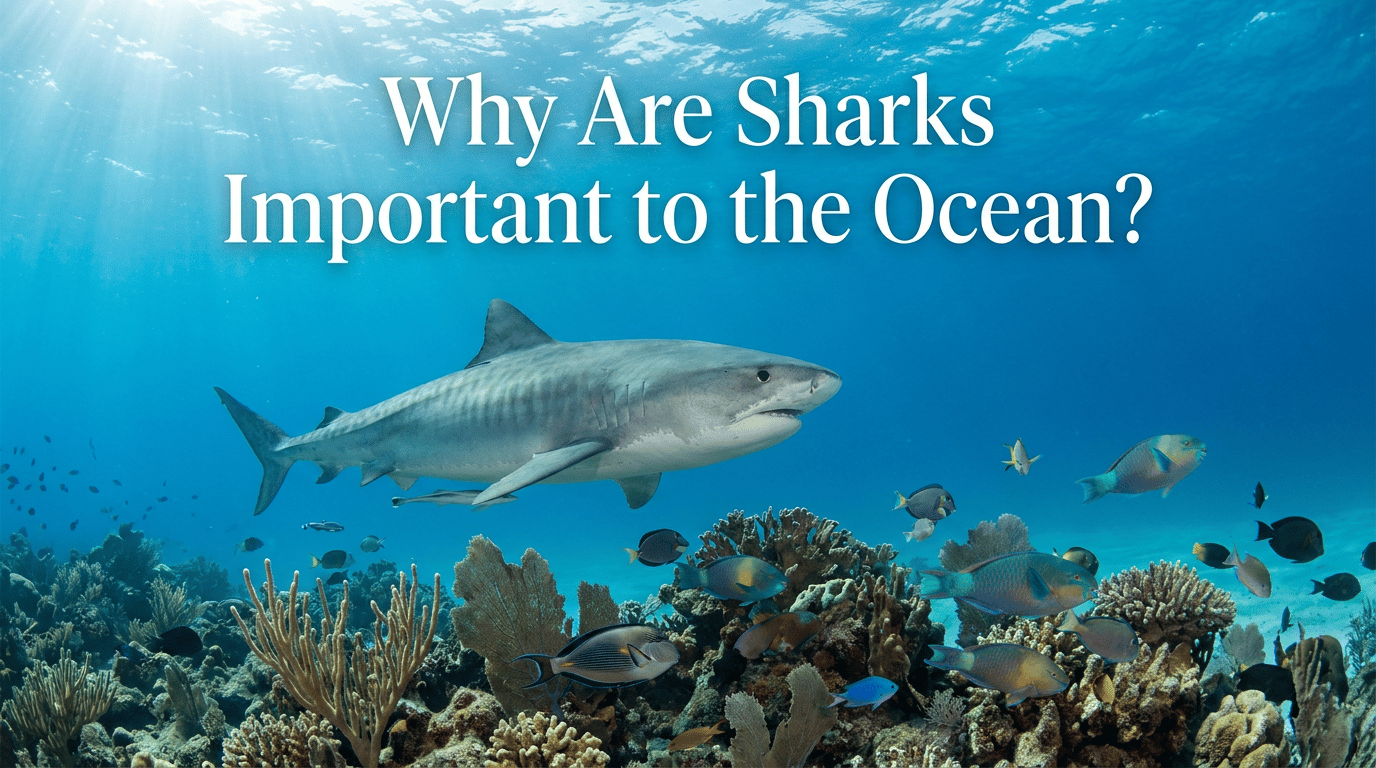
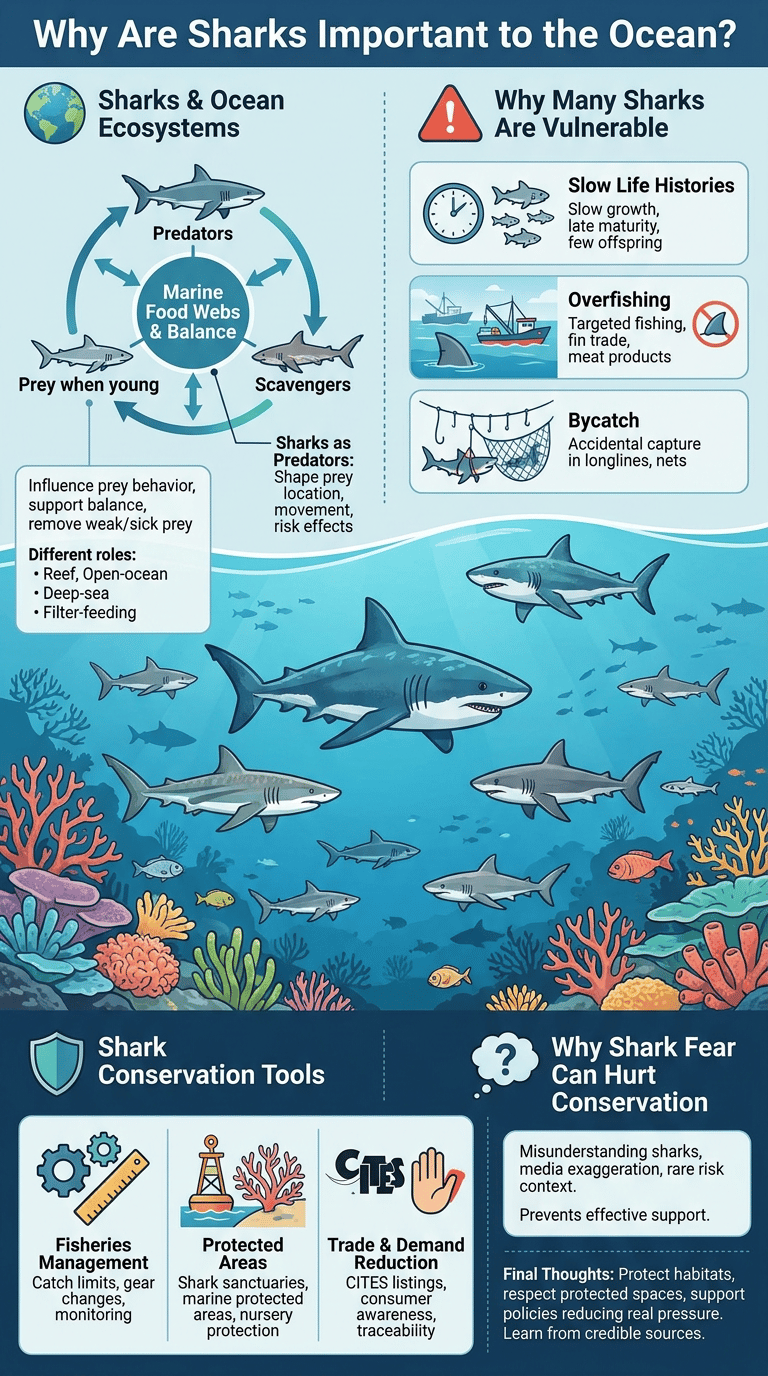
Sharks and Ocean Ecosystems
Climate change can affect animals through heat, water stress, storms, sea ice loss, ocean warming, and changes in food timing. Some species can shift range or behavior, but others are limited by barriers, slow reproduction, specialized diets, or habitats that cannot move with them. Readers can compare this idea with IUCN Red List, which gives a reliable reference point for the claim.
Sharks are part of marine food webs
Sharks are part of marine food webs is an important part of understanding why are sharks important to the ocean. It shows how biology, habitat, human activity, and conservation decisions connect. Looking at this part carefully helps readers see why a species or ecosystem may decline and why recovery usually takes sustained work.
Readers comparing why are sharks important to the ocean may also find how climate change affects animals useful for a closer look at a related endangered wildlife topic.
For broader context, the main guide to endangered animals connects this issue with habitat pressure, poaching, climate stress, and conservation choices.
Predators
For why are sharks important to the ocean, predators is best understood as part of sharks and ocean ecosystems, not as a separate problem.
Scavengers
For why are sharks important to the ocean, scavengers is best understood as part of sharks and ocean ecosystems, not as a separate problem.
Prey when young
For why are sharks important to the ocean, prey when young is best understood as part of sharks and ocean ecosystems, not as a separate problem.
Different sharks have different roles
Different sharks have different roles is an important part of understanding why are sharks important to the ocean. It shows how biology, habitat, human activity, and conservation decisions connect. Looking at this part carefully helps readers see why a species or ecosystem may decline and why recovery usually takes sustained work.
Reef sharks
Marine threats often happen across large areas, so management needs monitoring and cooperation.
Open-ocean sharks
Marine threats often happen across large areas, so management needs monitoring and cooperation.
Deep-sea sharks
Marine threats often happen across large areas, so management needs monitoring and cooperation.
Filter-feeding sharks
Marine threats often happen across large areas, so management needs monitoring and cooperation.
Sharks as Predators
Sharks as Predators is an important part of understanding why are sharks important to the ocean. It shows how biology, habitat, human activity, and conservation decisions connect. Looking at this part carefully helps readers see why a species or ecosystem may decline and why recovery usually takes sustained work.
Predators can influence prey behavior
Predators can influence prey behavior is an important part of understanding why are sharks important to the ocean. It shows how biology, habitat, human activity, and conservation decisions connect. Looking at this part carefully helps readers see why a species or ecosystem may decline and why recovery usually takes sustained work.
Where prey feed
For why are sharks important to the ocean, where prey feed is best understood as part of sharks as predators, not as a separate problem.
When prey move
For why are sharks important to the ocean, when prey move is best understood as part of sharks as predators, not as a separate problem.
Risk effects
For why are sharks important to the ocean, risk effects is best understood as part of sharks as predators, not as a separate problem.
Predation can support balance
Predation can support balance is an important part of understanding why are sharks important to the ocean. It shows how biology, habitat, human activity, and conservation decisions connect. Looking at this part carefully helps readers see why a species or ecosystem may decline and why recovery usually takes sustained work. Readers can compare this idea with NOAA Fisheries shark conservation guidance, which gives a reliable reference point for the claim.
Removing weak or sick prey where relevant
For why are sharks important to the ocean, removing weak or sick prey where relevant is best understood as part of sharks as predators, not as a separate problem.
Food-web structure
For why are sharks important to the ocean, food-web structure is best understood as part of sharks as predators, not as a separate problem.
Avoiding simple predator myths
For why are sharks important to the ocean, avoiding simple predator myths is best understood as part of sharks as predators, not as a separate problem.
Sharks and Healthy Habitats
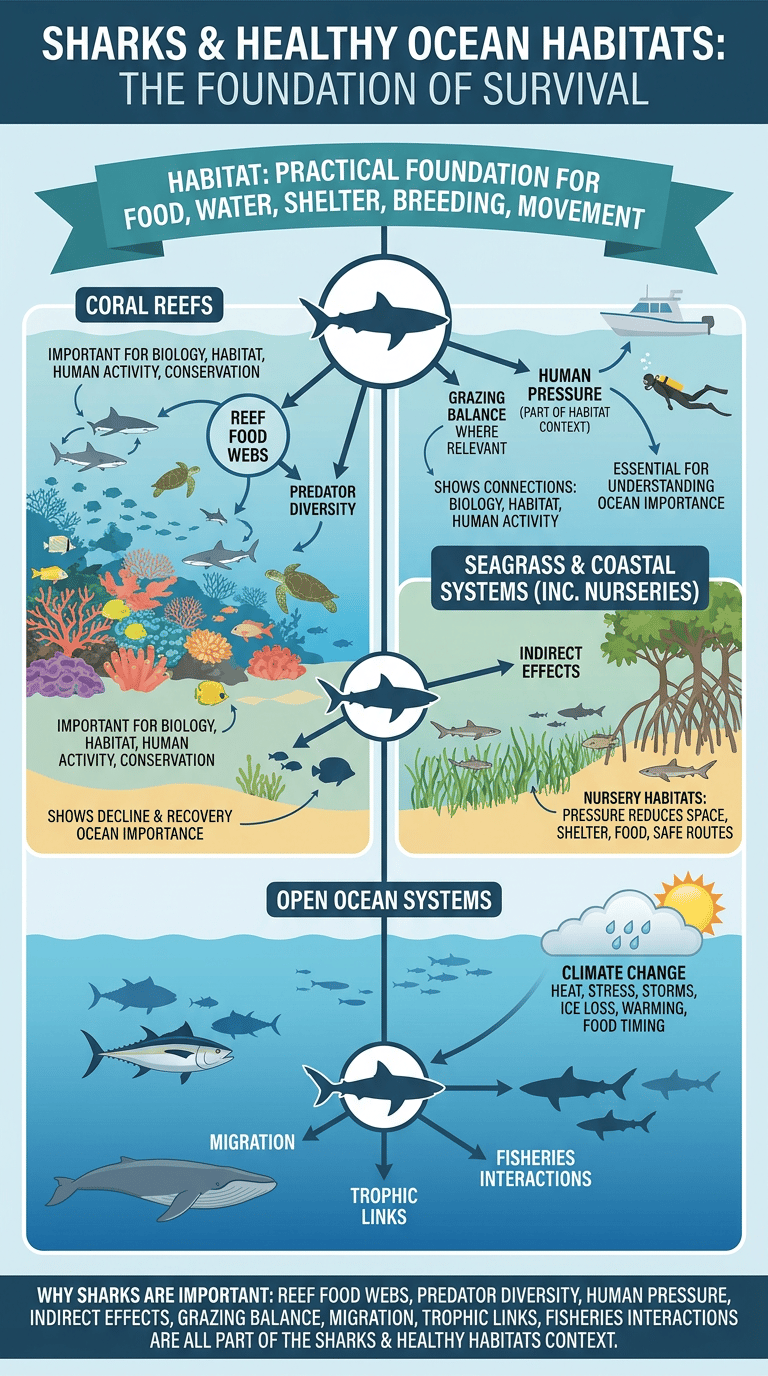
Habitat is the practical foundation of survival. Animals need space for food, water, shelter, breeding, and movement between seasonal areas. When habitat is removed, degraded, or split into small patches, even protected animals may struggle to find mates, avoid conflict, or keep populations connected.
Coral reefs
Coral reefs is an important part of understanding why are sharks important to the ocean. It shows how biology, habitat, human activity, and conservation decisions connect. Looking at this part carefully helps readers see why a species or ecosystem may decline and why recovery usually takes sustained work.
Reef food webs
For why are sharks important to the ocean, reef food webs is best understood as part of sharks and healthy habitats, not as a separate problem.
Predator diversity
For why are sharks important to the ocean, predator diversity is best understood as part of sharks and healthy habitats, not as a separate problem.
Human pressure
For why are sharks important to the ocean, human pressure is best understood as part of sharks and healthy habitats, not as a separate problem.
Seagrass and coastal systems
Seagrass and coastal systems is an important part of understanding why are sharks important to the ocean. It shows how biology, habitat, human activity, and conservation decisions connect. Looking at this part carefully helps readers see why a species or ecosystem may decline and why recovery usually takes sustained work.
Indirect effects
For why are sharks important to the ocean, indirect effects is best understood as part of sharks and healthy habitats, not as a separate problem.
Grazing balance where relevant
For why are sharks important to the ocean, grazing balance where relevant is best understood as part of sharks and healthy habitats, not as a separate problem.
Nursery habitats
Habitat pressure reduces the space, shelter, food, and safe movement routes animals need.
Open ocean systems
Climate change can affect animals through heat, water stress, storms, sea ice loss, ocean warming, and changes in food timing. Some species can shift range or behavior, but others are limited by barriers, slow reproduction, specialized diets, or habitats that cannot move with them.
Migration
For why are sharks important to the ocean, migration is best understood as part of sharks and healthy habitats, not as a separate problem.
Trophic links
For why are sharks important to the ocean, trophic links is best understood as part of sharks and healthy habitats, not as a separate problem.
Fisheries interactions
For why are sharks important to the ocean, fisheries interactions is best understood as part of sharks and healthy habitats, not as a separate problem.
Why Many Sharks Are Vulnerable
The main causes behind why are sharks important to the ocean usually interact. Habitat loss can push animals closer to people, which can raise conflict and make poaching or accidental killing more likely. At the same time, climate stress, pollution, disease, and reduced prey can make recovery slower even where legal protection exists.
Slow life histories in many species
Slow life histories in many species is an important part of understanding why are sharks important to the ocean. It shows how biology, habitat, human activity, and conservation decisions connect. Looking at this part carefully helps readers see why a species or ecosystem may decline and why recovery usually takes sustained work.
Slow growth
For why are sharks important to the ocean, slow growth is best understood as part of why many sharks are vulnerable, not as a separate problem.
Late maturity
For why are sharks important to the ocean, late maturity is best understood as part of why many sharks are vulnerable, not as a separate problem.
Few offspring
For why are sharks important to the ocean, few offspring is best understood as part of why many sharks are vulnerable, not as a separate problem.
Overfishing
Overfishing is an important part of understanding why are sharks important to the ocean. It shows how biology, habitat, human activity, and conservation decisions connect. Looking at this part carefully helps readers see why a species or ecosystem may decline and why recovery usually takes sustained work.
Targeted fishing
For why are sharks important to the ocean, targeted fishing is best understood as part of why many sharks are vulnerable, not as a separate problem.
Fin trade
Illegal trade turns wildlife into products, so protection must address both supply and demand.
Meat and other products
For why are sharks important to the ocean, meat and other products is best understood as part of why many sharks are vulnerable, not as a separate problem.
Bycatch
Bycatch is an important part of understanding why are sharks important to the ocean. It shows how biology, habitat, human activity, and conservation decisions connect. Looking at this part carefully helps readers see why a species or ecosystem may decline and why recovery usually takes sustained work. Readers can compare this idea with NOAA Fisheries bycatch overview, which gives a reliable reference point for the claim.
Longlines
For why are sharks important to the ocean, longlines is best understood as part of why many sharks are vulnerable, not as a separate problem.
Nets
For why are sharks important to the ocean, nets is best understood as part of why many sharks are vulnerable, not as a separate problem.
Accidental capture
For why are sharks important to the ocean, accidental capture is best understood as part of why many sharks are vulnerable, not as a separate problem.
Shark Conservation Tools
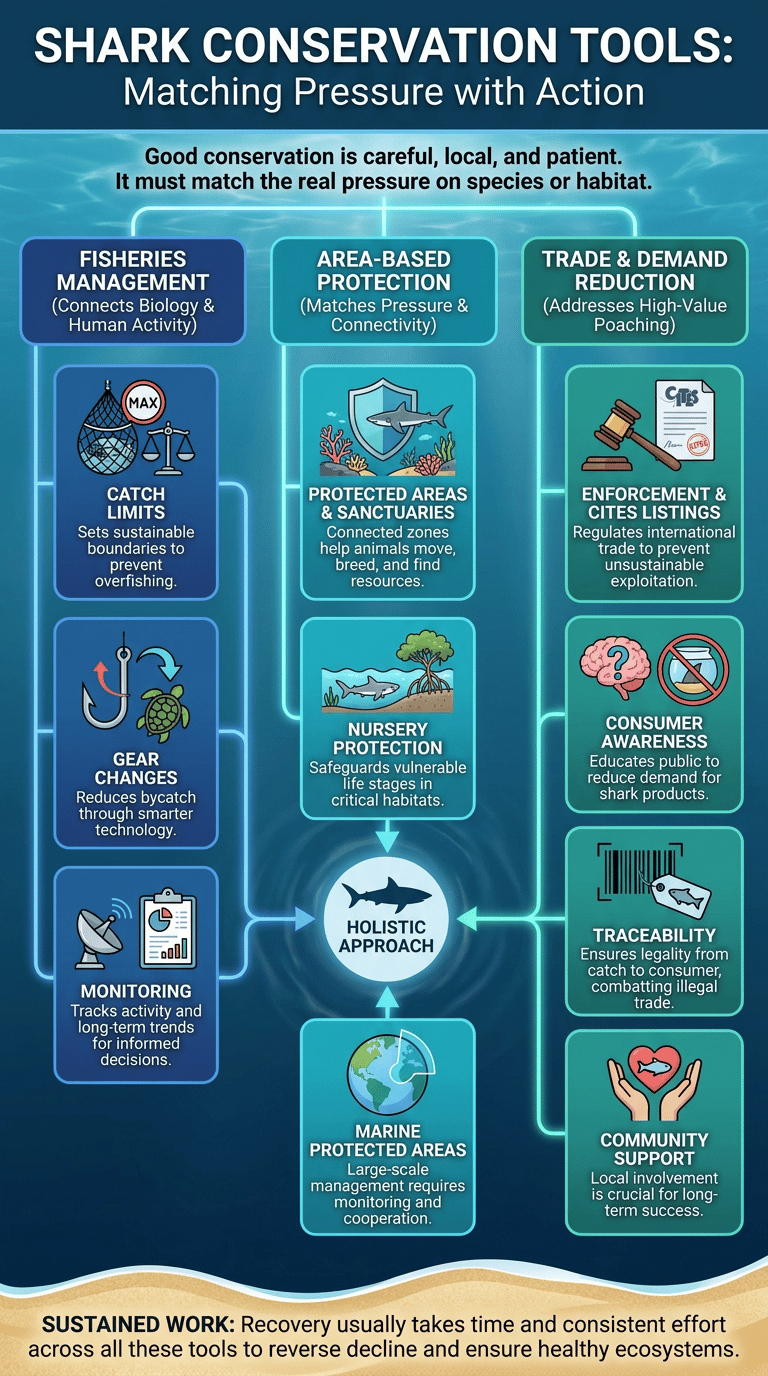
Conservation is most useful when it matches the real pressure on the species or habitat. That may mean protected areas, wildlife corridors, trade enforcement, bycatch reduction, restoration, safer coexistence tools, or long-term monitoring. Good conservation is careful, local, and patient.
Fisheries management
Fisheries management is an important part of understanding why are sharks important to the ocean. It shows how biology, habitat, human activity, and conservation decisions connect. Looking at this part carefully helps readers see why a species or ecosystem may decline and why recovery usually takes sustained work.
Catch limits
For why are sharks important to the ocean, catch limits is best understood as part of shark conservation tools, not as a separate problem.
Gear changes
For why are sharks important to the ocean, gear changes is best understood as part of shark conservation tools, not as a separate problem.
Monitoring
For why are sharks important to the ocean, monitoring is best understood as part of shark conservation tools, not as a separate problem.
Protected areas
Conservation is most useful when it matches the real pressure on the species or habitat. That may mean protected areas, wildlife corridors, trade enforcement, bycatch reduction, restoration, safer coexistence tools, or long-term monitoring. Good conservation is careful, local, and patient.
Shark sanctuaries
Marine threats often happen across large areas, so management needs monitoring and cooperation.
Marine protected areas
Connected protection helps animals move, breed, and find resources beyond one isolated patch.
Nursery protection
For why are sharks important to the ocean, nursery protection is best understood as part of shark conservation tools, not as a separate problem.
Trade and demand reduction
Poaching and illegal trade are conservation problems because they remove animals faster than some populations can replace them. The risk is highest when body parts, live animals, or luxury products become valuable. Enforcement helps, but demand reduction and community support are also important.
CITES listings where relevant
For why are sharks important to the ocean, cites listings where relevant is best understood as part of shark conservation tools, not as a separate problem.
Consumer awareness
For why are sharks important to the ocean, consumer awareness is best understood as part of shark conservation tools, not as a separate problem.
Traceability
For why are sharks important to the ocean, traceability is best understood as part of shark conservation tools, not as a separate problem.
Why Shark Fear Can Hurt Conservation
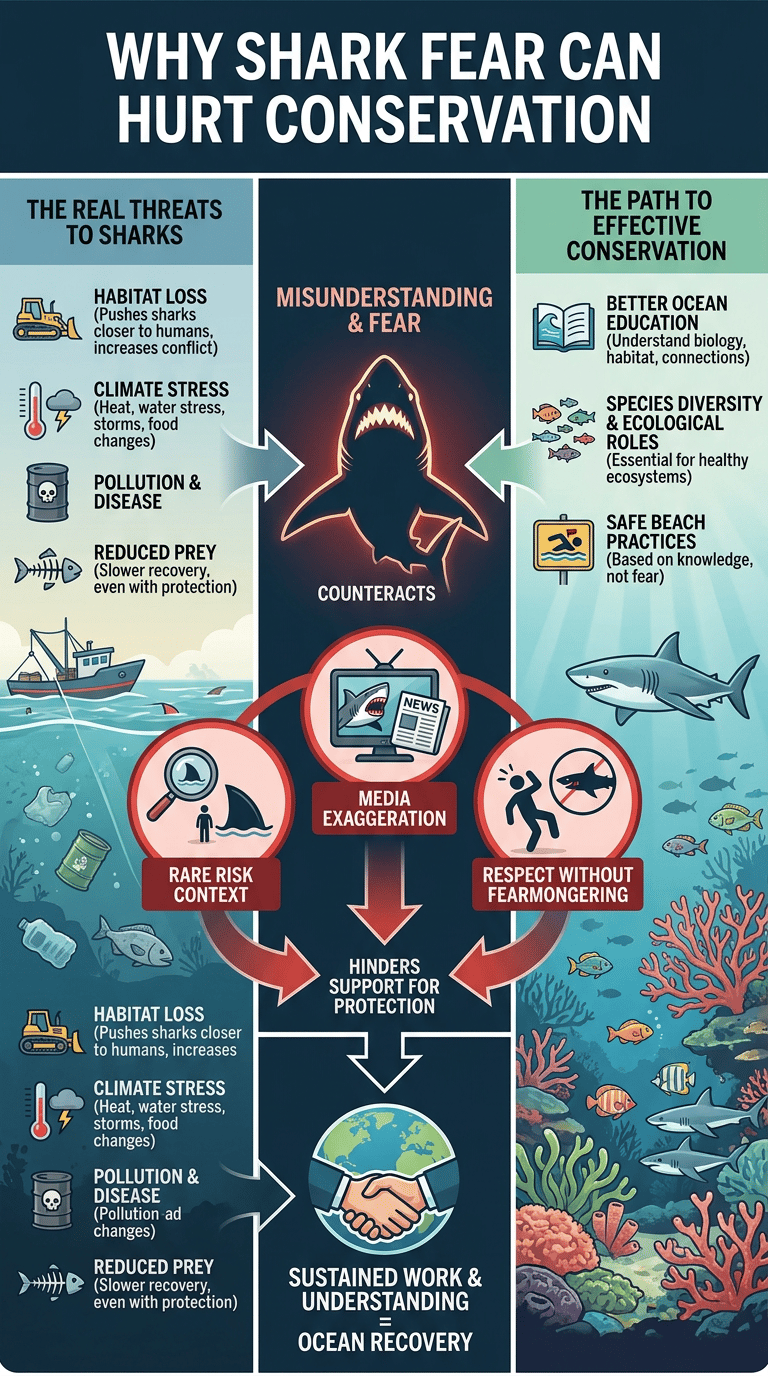
The main causes behind why are sharks important to the ocean usually interact. Habitat loss can push animals closer to people, which can raise conflict and make poaching or accidental killing more likely. At the same time, climate stress, pollution, disease, and reduced prey can make recovery slower even where legal protection exists.
Misunderstanding sharks
Misunderstanding sharks is an important part of understanding why are sharks important to the ocean. It shows how biology, habitat, human activity, and conservation decisions connect. Looking at this part carefully helps readers see why a species or ecosystem may decline and why recovery usually takes sustained work.
Rare risk context
For why are sharks important to the ocean, rare risk context is best understood as part of why shark fear can hurt conservation, not as a separate problem.
Media exaggeration
For why are sharks important to the ocean, media exaggeration is best understood as part of why shark fear can hurt conservation, not as a separate problem.
Respect without fearmongering
For why are sharks important to the ocean, respect without fearmongering is best understood as part of why shark fear can hurt conservation, not as a separate problem.
Better ocean education
Climate change can affect animals through heat, water stress, storms, sea ice loss, ocean warming, and changes in food timing. Some species can shift range or behavior, but others are limited by barriers, slow reproduction, specialized diets, or habitats that cannot move with them.
Species diversity
For why are sharks important to the ocean, species diversity is best understood as part of why shark fear can hurt conservation, not as a separate problem.
Ecological roles
For why are sharks important to the ocean, ecological roles is best understood as part of why shark fear can hurt conservation, not as a separate problem.
Safe beach practices
Climate pressure can change temperature, water, food timing, and the places animals can use.
Sharks and Ocean Conservation FAQ
Climate change can affect animals through heat, water stress, storms, sea ice loss, ocean warming, and changes in food timing. Some species can shift range or behavior, but others are limited by barriers, slow reproduction, specialized diets, or habitats that cannot move with them.
Why are sharks important?
The main causes behind why are sharks important to the ocean usually interact. Habitat loss can push animals closer to people, which can raise conflict and make poaching or accidental killing more likely. At the same time, climate stress, pollution, disease, and reduced prey can make recovery slower even where legal protection exists.
What happens if sharks disappear?
What happens if sharks disappear? is an important part of understanding why are sharks important to the ocean. It shows how biology, habitat, human activity, and conservation decisions connect. Looking at this part carefully helps readers see why a species or ecosystem may decline and why recovery usually takes sustained work.
Are all sharks apex predators?
Are all sharks apex predators? is an important part of understanding why are sharks important to the ocean. It shows how biology, habitat, human activity, and conservation decisions connect. Looking at this part carefully helps readers see why a species or ecosystem may decline and why recovery usually takes sustained work.
Why are sharks threatened?
The main causes behind why are sharks important to the ocean usually interact. Habitat loss can push animals closer to people, which can raise conflict and make poaching or accidental killing more likely. At the same time, climate stress, pollution, disease, and reduced prey can make recovery slower even where legal protection exists.
How can people help shark conservation?
Conservation is most useful when it matches the real pressure on the species or habitat. That may mean protected areas, wildlife corridors, trade enforcement, bycatch reduction, restoration, safer coexistence tools, or long-term monitoring. Good conservation is careful, local, and patient.
Final Thoughts
Why are sharks important to the ocean is easiest to understand when every threat is treated as part of a system. Habitat, trade, food webs, climate, and human decisions all shape the outcome. Readers can help most by learning from credible conservation groups, avoiding wildlife products, respecting protected spaces, and supporting policies and projects that reduce real pressure on animals.

Ethan Walker is the founder and research editor of Animal Fact Central. He creates and reviews educational animal facts content using trusted wildlife, pet care, and science-based sources. His work focuses on making animal behavior, adaptations, habitats, and species facts clear, accurate, and engaging for everyday readers.
Read More Details About Ethan Walker: https://animalfactcentral.com/ethan-walker/