
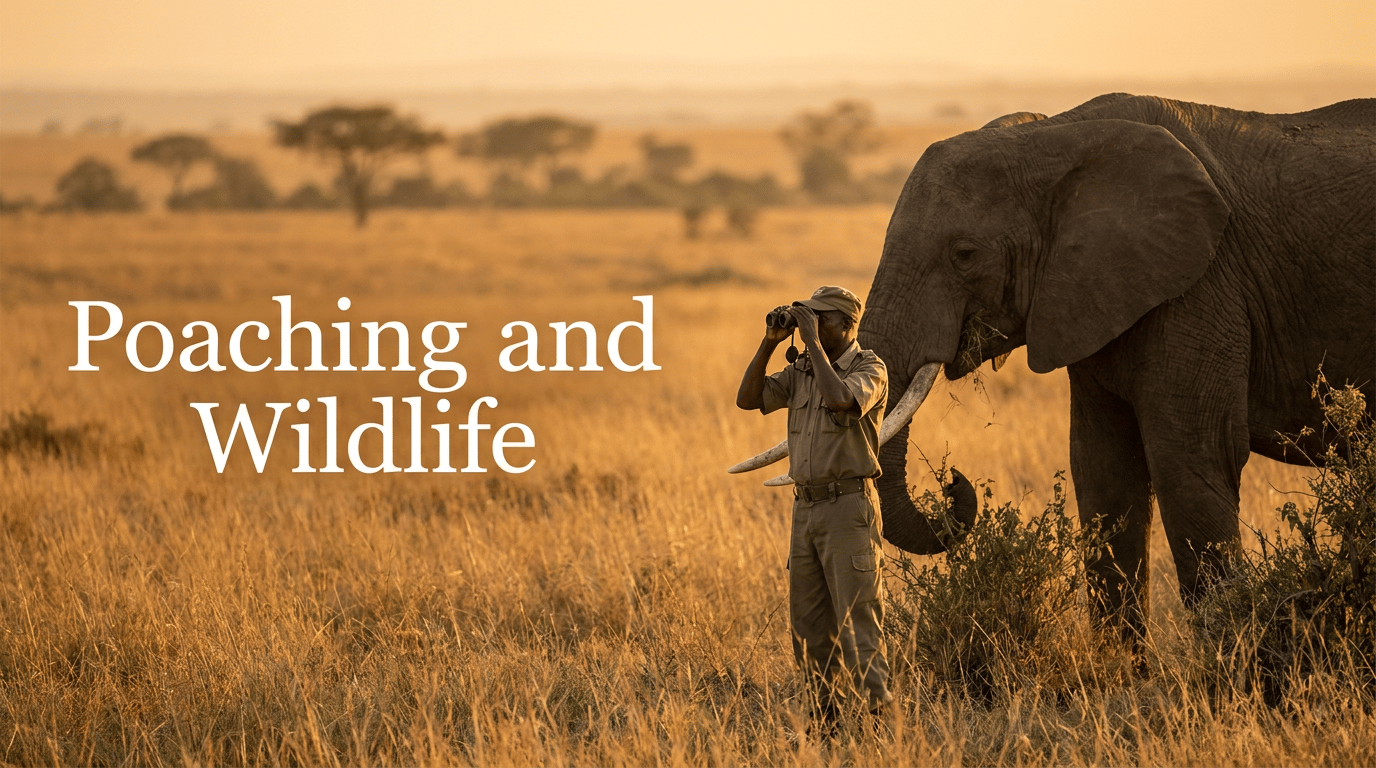
Poaching and Wildlife explains why animal survival depends on more than a single threat For Students wildlife readers conservation beginners animal lovers and readers seeking a calm factual explanation of poaching and illegal wildlife trade the useful question.
What Is Poaching?
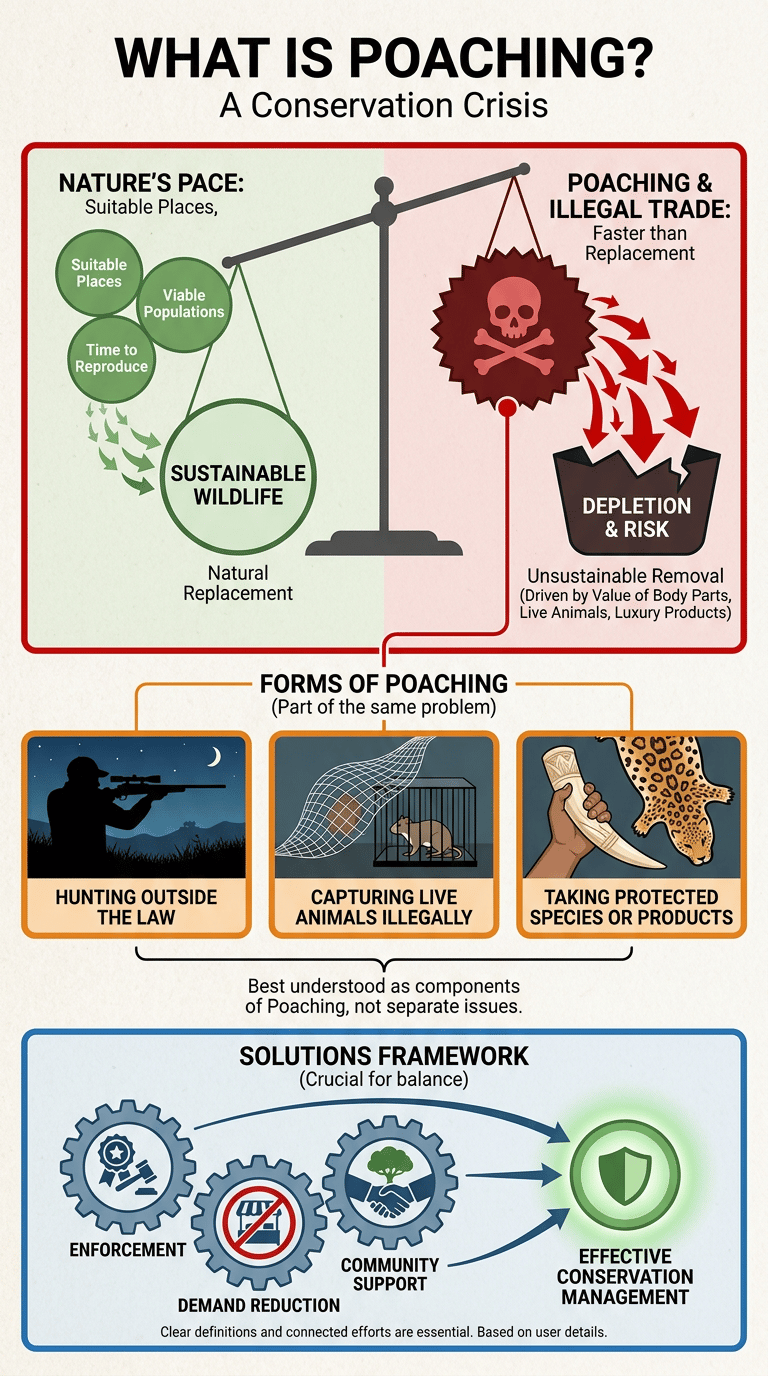
What Is Poaching? describes the basic idea behind poaching and wildlife: animals need suitable places, viable populations, and enough time to reproduce. A species becomes more at risk when those conditions weaken together. Clear definitions help readers avoid treating conservation status as a label that never changes. Readers can compare this idea with CITES, which gives a reliable reference point for the claim.
Readers comparing poaching and wildlife may also find how climate change affects animals useful for a closer look at a related endangered wildlife topic.
Readers comparing poaching and wildlife may also find why are sharks important to the ocean useful for a closer look at a related endangered wildlife topic.
Readers comparing poaching and wildlife may also find why are tigers endangered useful for a closer look at a related endangered wildlife topic.
For broader context, the main guide to endangered animals connects this issue with habitat pressure, poaching, climate stress, and conservation choices.
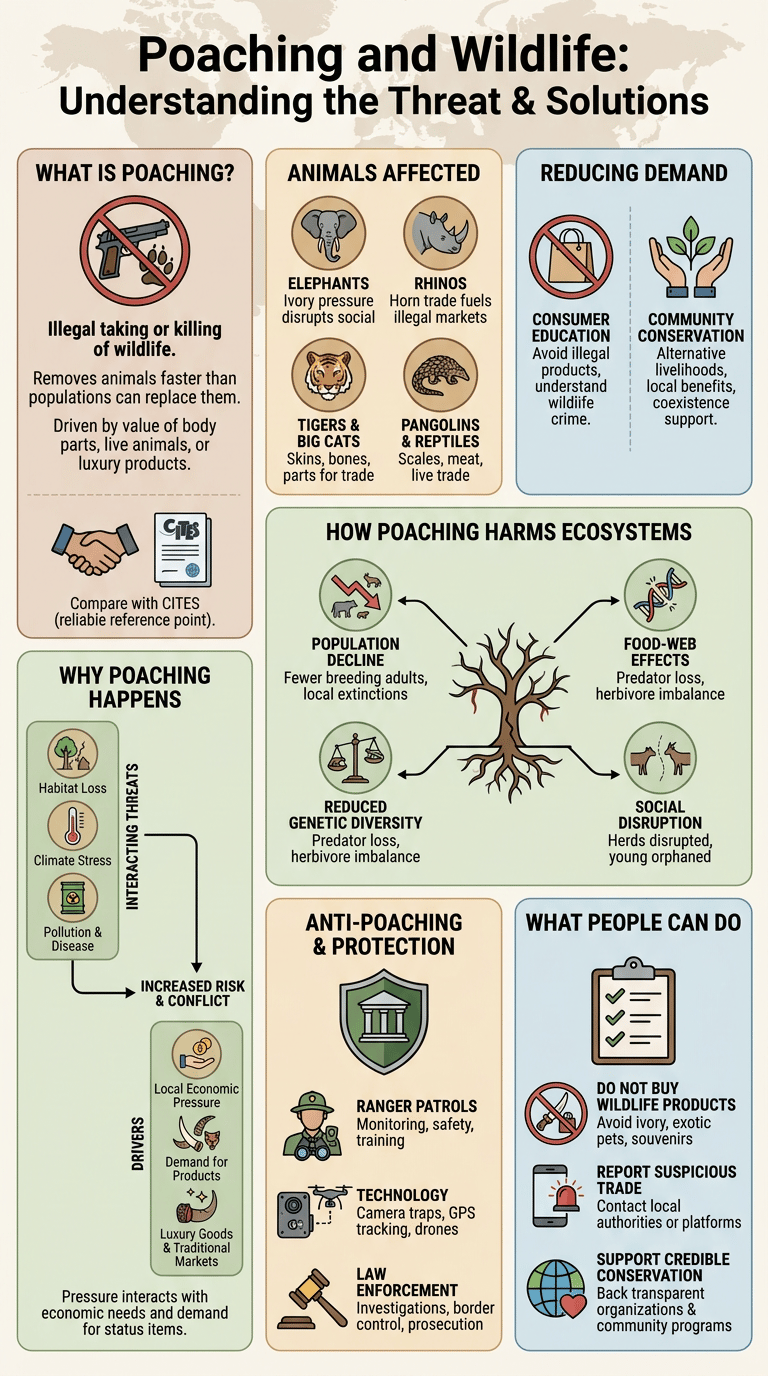
Poaching is illegal taking or killing of wildlife
Poaching and illegal trade are conservation problems because they remove animals faster than some populations can replace them. The risk is highest when body parts, live animals, or luxury products become valuable. Enforcement helps, but demand reduction and community support are also important.
Hunting outside the law
For poaching and wildlife, hunting outside the law is best understood as part of what is poaching?, not as a separate problem.
Capturing live animals illegally
For poaching and wildlife, capturing live animals illegally is best understood as part of what is poaching?, not as a separate problem.
Taking protected species or products
Connected protection helps animals move, breed, and find resources beyond one isolated patch.
Poaching vs legal hunting
Poaching and illegal trade are conservation problems because they remove animals faster than some populations can replace them. The risk is highest when body parts, live animals, or luxury products become valuable. Enforcement helps, but demand reduction and community support are also important.
Permits and rules
For poaching and wildlife, permits and rules is best understood as part of what is poaching?, not as a separate problem.
Protected species
Connected protection helps animals move, breed, and find resources beyond one isolated patch.
Conservation management context
For poaching and wildlife, conservation management context is best understood as part of what is poaching?, not as a separate problem.
Why Poaching Happens
The main causes behind poaching and wildlife usually interact. Habitat loss can push animals closer to people, which can raise conflict and make poaching or accidental killing more likely. At the same time, climate stress, pollution, disease, and reduced prey can make recovery slower even where legal protection exists.
Illegal wildlife trade
Poaching and illegal trade are conservation problems because they remove animals faster than some populations can replace them. The risk is highest when body parts, live animals, or luxury products become valuable. Enforcement helps, but demand reduction and community support are also important.
Ivory
Ivory pressure matters because tusks can make individual animals targets and can disrupt family groups.
Horns
Illegal trade turns wildlife into products, so protection must address both supply and demand.
Skins
Illegal trade turns wildlife into products, so protection must address both supply and demand.
Live animals
For poaching and wildlife, live animals is best understood as part of why poaching happens, not as a separate problem.
Local economic pressure
Local economic pressure is an important part of understanding poaching and wildlife. It shows how biology, habitat, human activity, and conservation decisions connect. Looking at this part carefully helps readers see why a species or ecosystem may decline and why recovery usually takes sustained work. Readers can compare this idea with TRAFFIC wildlife trade work, which gives a reliable reference point for the claim.
Income needs
For poaching and wildlife, income needs is best understood as part of why poaching happens, not as a separate problem.
Lack of alternatives
For poaching and wildlife, lack of alternatives is best understood as part of why poaching happens, not as a separate problem.
Human-wildlife conflict
Conflict grows when animals and people are pushed into the same shrinking spaces.
Demand and status products
Demand and status products is an important part of understanding poaching and wildlife. It shows how biology, habitat, human activity, and conservation decisions connect. Looking at this part carefully helps readers see why a species or ecosystem may decline and why recovery usually takes sustained work.
Luxury goods
For poaching and wildlife, luxury goods is best understood as part of why poaching happens, not as a separate problem.
Traditional-use markets where relevant
For poaching and wildlife, traditional-use markets where relevant is best understood as part of why poaching happens, not as a separate problem.
Exotic pets
For poaching and wildlife, exotic pets is best understood as part of why poaching happens, not as a separate problem.
Animals Affected by Poaching
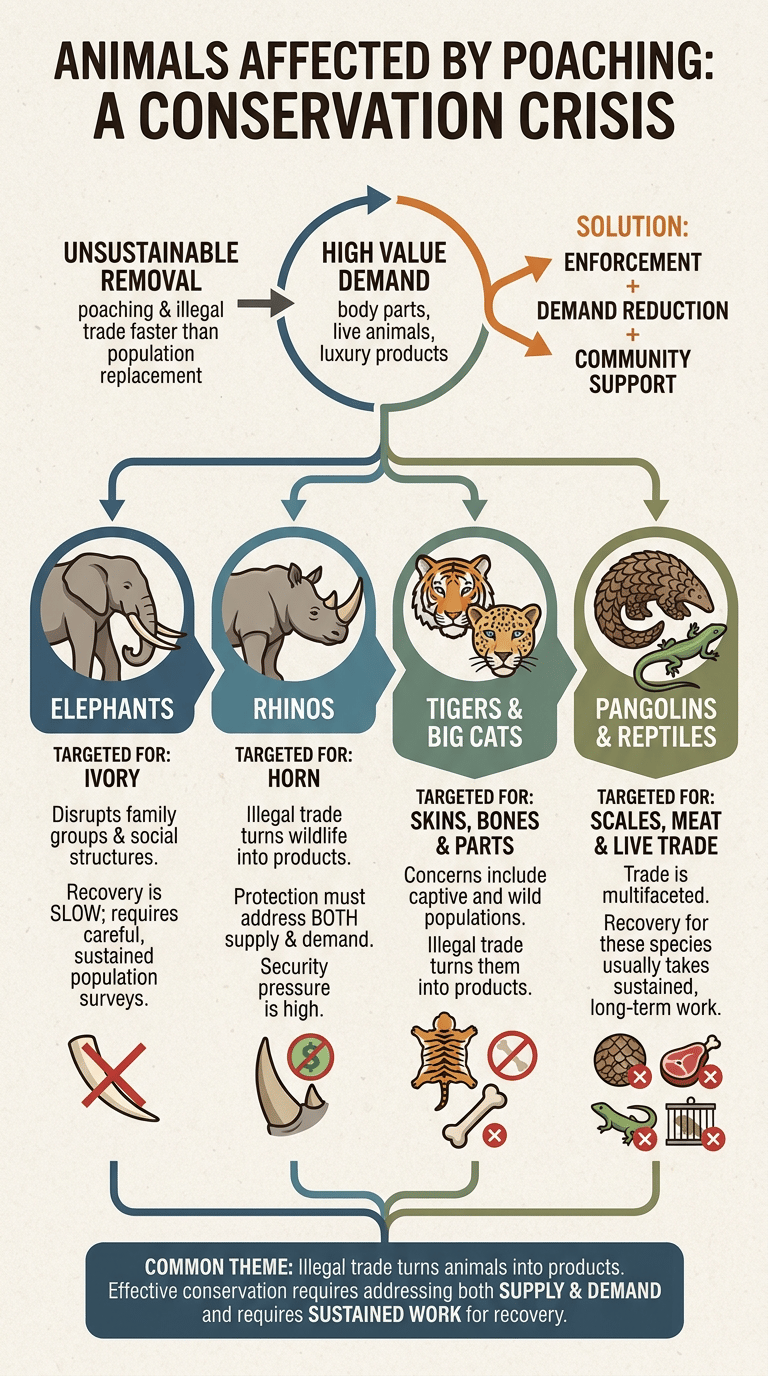
Poaching and illegal trade are conservation problems because they remove animals faster than some populations can replace them. The risk is highest when body parts, live animals, or luxury products become valuable. Enforcement helps, but demand reduction and community support are also important.
Elephants
Elephants is an important part of understanding poaching and wildlife. It shows how biology, habitat, human activity, and conservation decisions connect. Looking at this part carefully helps readers see why a species or ecosystem may decline and why recovery usually takes sustained work.
Ivory
Ivory pressure matters because tusks can make individual animals targets and can disrupt family groups.
Social impact
For poaching and wildlife, social impact is best understood as part of animals affected by poaching, not as a separate problem.
Slow recovery
Population trends need careful surveys because a few visible animals do not prove recovery.
Rhinos
Rhinos is an important part of understanding poaching and wildlife. It shows how biology, habitat, human activity, and conservation decisions connect. Looking at this part carefully helps readers see why a species or ecosystem may decline and why recovery usually takes sustained work.
Horn trade
Illegal trade turns wildlife into products, so protection must address both supply and demand.
Security pressure
For poaching and wildlife, security pressure is best understood as part of animals affected by poaching, not as a separate problem.
Tigers and big cats
Tigers and big cats is an important part of understanding poaching and wildlife. It shows how biology, habitat, human activity, and conservation decisions connect. Looking at this part carefully helps readers see why a species or ecosystem may decline and why recovery usually takes sustained work.
Skins
Illegal trade turns wildlife into products, so protection must address both supply and demand.
Bones and other parts
For poaching and wildlife, bones and other parts is best understood as part of animals affected by poaching, not as a separate problem.
Captive and wild trade concerns
Illegal trade turns wildlife into products, so protection must address both supply and demand.
Pangolins and reptiles
Pangolins and reptiles is an important part of understanding poaching and wildlife. It shows how biology, habitat, human activity, and conservation decisions connect. Looking at this part carefully helps readers see why a species or ecosystem may decline and why recovery usually takes sustained work.
Scales
For poaching and wildlife, scales is best understood as part of animals affected by poaching, not as a separate problem.
Meat
For poaching and wildlife, meat is best understood as part of animals affected by poaching, not as a separate problem.
Live trade
Illegal trade turns wildlife into products, so protection must address both supply and demand.
How Poaching Harms Ecosystems
Poaching and illegal trade are conservation problems because they remove animals faster than some populations can replace them. The risk is highest when body parts, live animals, or luxury products become valuable. Enforcement helps, but demand reduction and community support are also important.
Population decline
Population decline is an important part of understanding poaching and wildlife. It shows how biology, habitat, human activity, and conservation decisions connect. Looking at this part carefully helps readers see why a species or ecosystem may decline and why recovery usually takes sustained work. Readers can compare this idea with IUCN Red List, which gives a reliable reference point for the claim.
Fewer breeding adults
For poaching and wildlife, fewer breeding adults is best understood as part of how poaching harms ecosystems, not as a separate problem.
Local extinctions
For poaching and wildlife, local extinctions is best understood as part of how poaching harms ecosystems, not as a separate problem.
Reduced genetic diversity
For poaching and wildlife, reduced genetic diversity is best understood as part of how poaching harms ecosystems, not as a separate problem.
Food-web effects
Food-web effects is an important part of understanding poaching and wildlife. It shows how biology, habitat, human activity, and conservation decisions connect. Looking at this part carefully helps readers see why a species or ecosystem may decline and why recovery usually takes sustained work.
Predator loss
For poaching and wildlife, predator loss is best understood as part of how poaching harms ecosystems, not as a separate problem.
Herbivore imbalance
For poaching and wildlife, herbivore imbalance is best understood as part of how poaching harms ecosystems, not as a separate problem.
Seed dispersal loss
For poaching and wildlife, seed dispersal loss is best understood as part of how poaching harms ecosystems, not as a separate problem.
Social disruption
Social disruption is an important part of understanding poaching and wildlife. It shows how biology, habitat, human activity, and conservation decisions connect. Looking at this part carefully helps readers see why a species or ecosystem may decline and why recovery usually takes sustained work.
Elephant herds
For poaching and wildlife, elephant herds is best understood as part of how poaching harms ecosystems, not as a separate problem.
Territorial species
For poaching and wildlife, territorial species is best understood as part of how poaching harms ecosystems, not as a separate problem.
Young animals orphaned
For poaching and wildlife, young animals orphaned is best understood as part of how poaching harms ecosystems, not as a separate problem.
Anti-Poaching and Wildlife Protection
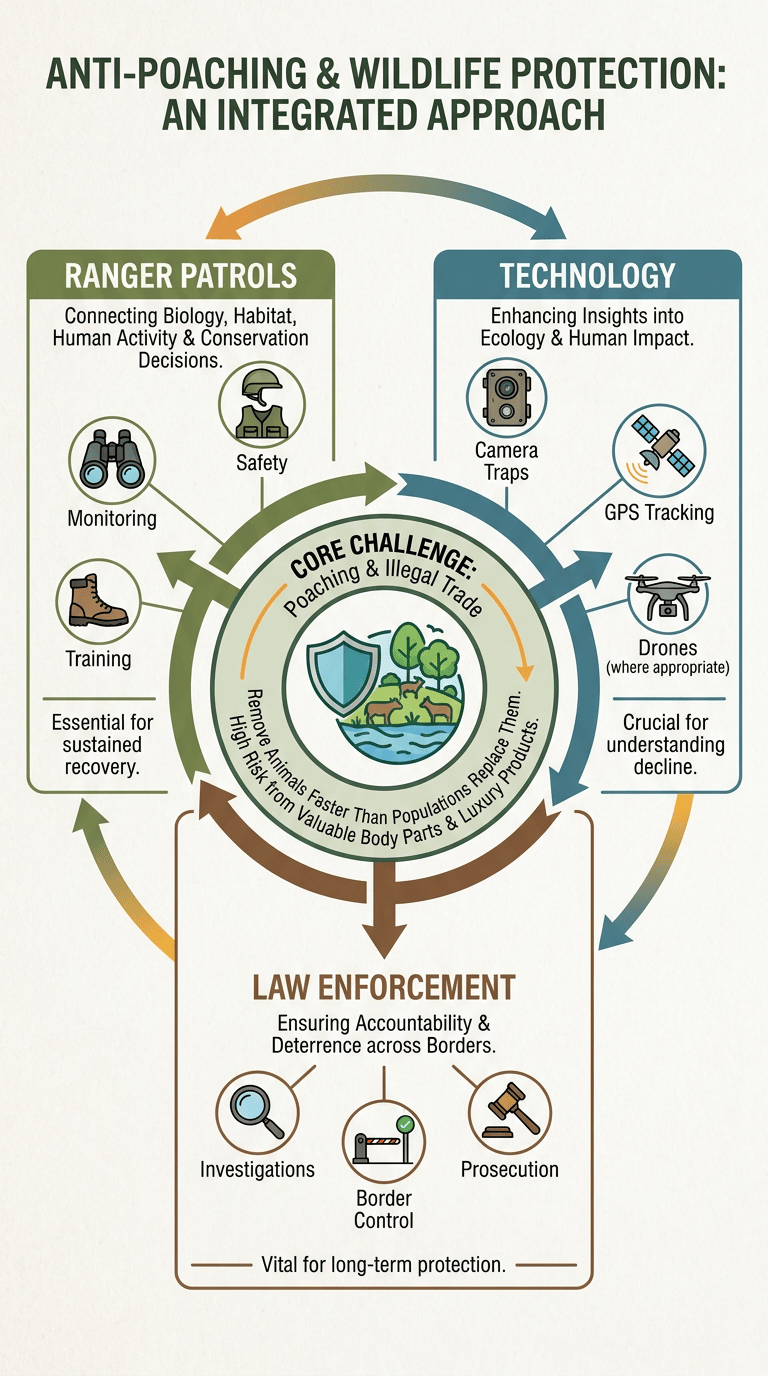
Poaching and illegal trade are conservation problems because they remove animals faster than some populations can replace them. The risk is highest when body parts, live animals, or luxury products become valuable. Enforcement helps, but demand reduction and community support are also important.
Ranger patrols
Ranger patrols is an important part of understanding poaching and wildlife. It shows how biology, habitat, human activity, and conservation decisions connect. Looking at this part carefully helps readers see why a species or ecosystem may decline and why recovery usually takes sustained work.
Monitoring
For poaching and wildlife, monitoring is best understood as part of anti-poaching and wildlife protection, not as a separate problem.
Safety
For poaching and wildlife, safety is best understood as part of anti-poaching and wildlife protection, not as a separate problem.
Training
For poaching and wildlife, training is best understood as part of anti-poaching and wildlife protection, not as a separate problem.
Technology
Technology is an important part of understanding poaching and wildlife. It shows how biology, habitat, human activity, and conservation decisions connect. Looking at this part carefully helps readers see why a species or ecosystem may decline and why recovery usually takes sustained work.
Camera traps
For poaching and wildlife, camera traps is best understood as part of anti-poaching and wildlife protection, not as a separate problem.
GPS tracking
For poaching and wildlife, gps tracking is best understood as part of anti-poaching and wildlife protection, not as a separate problem.
Drones where appropriate
For poaching and wildlife, drones where appropriate is best understood as part of anti-poaching and wildlife protection, not as a separate problem.
Law enforcement
Law enforcement is an important part of understanding poaching and wildlife. It shows how biology, habitat, human activity, and conservation decisions connect. Looking at this part carefully helps readers see why a species or ecosystem may decline and why recovery usually takes sustained work.
Investigations
For poaching and wildlife, investigations is best understood as part of anti-poaching and wildlife protection, not as a separate problem.
Border control
For poaching and wildlife, border control is best understood as part of anti-poaching and wildlife protection, not as a separate problem.
Prosecution
For poaching and wildlife, prosecution is best understood as part of anti-poaching and wildlife protection, not as a separate problem.
Reducing Demand for Illegal Wildlife Products
Reducing Demand for Illegal Wildlife Products is an important part of understanding poaching and wildlife. It shows how biology, habitat, human activity, and conservation decisions connect. Looking at this part carefully helps readers see why a species or ecosystem may decline and why recovery usually takes sustained work.
Consumer education
Consumer education is an important part of understanding poaching and wildlife. It shows how biology, habitat, human activity, and conservation decisions connect. Looking at this part carefully helps readers see why a species or ecosystem may decline and why recovery usually takes sustained work. Readers can compare this idea with U.S. Fish and Wildlife Service elephant ivory guidance, which gives a reliable reference point for the claim.
Avoiding illegal products
For poaching and wildlife, avoiding illegal products is best understood as part of reducing demand for illegal wildlife products, not as a separate problem.
Understanding wildlife crime
For poaching and wildlife, understanding wildlife crime is best understood as part of reducing demand for illegal wildlife products, not as a separate problem.
Trade rules
Poaching and illegal trade are conservation problems because they remove animals faster than some populations can replace them. The risk is highest when body parts, live animals, or luxury products become valuable. Enforcement helps, but demand reduction and community support are also important.
CITES context
For poaching and wildlife, cites context is best understood as part of reducing demand for illegal wildlife products, not as a separate problem.
National laws
For poaching and wildlife, national laws is best understood as part of reducing demand for illegal wildlife products, not as a separate problem.
Online marketplace monitoring
For poaching and wildlife, online marketplace monitoring is best understood as part of reducing demand for illegal wildlife products, not as a separate problem.
Community conservation
Conservation is most useful when it matches the real pressure on the species or habitat. That may mean protected areas, wildlife corridors, trade enforcement, bycatch reduction, restoration, safer coexistence tools, or long-term monitoring. Good conservation is careful, local, and patient.
Alternative livelihoods
For poaching and wildlife, alternative livelihoods is best understood as part of reducing demand for illegal wildlife products, not as a separate problem.
Local benefits
For poaching and wildlife, local benefits is best understood as part of reducing demand for illegal wildlife products, not as a separate problem.
Coexistence support
For poaching and wildlife, coexistence support is best understood as part of reducing demand for illegal wildlife products, not as a separate problem.
What People Can Do
What People Can Do is an important part of understanding poaching and wildlife. It shows how biology, habitat, human activity, and conservation decisions connect. Looking at this part carefully helps readers see why a species or ecosystem may decline and why recovery usually takes sustained work.
Do not buy wildlife products
Do not buy wildlife products is an important part of understanding poaching and wildlife. It shows how biology, habitat, human activity, and conservation decisions connect. Looking at this part carefully helps readers see why a species or ecosystem may decline and why recovery usually takes sustained work.
Ivory
Ivory pressure matters because tusks can make individual animals targets and can disrupt family groups.
Exotic pets
For poaching and wildlife, exotic pets is best understood as part of what people can do, not as a separate problem.
Souvenirs
For poaching and wildlife, souvenirs is best understood as part of what people can do, not as a separate problem.
Report suspicious trade
Poaching and illegal trade are conservation problems because they remove animals faster than some populations can replace them. The risk is highest when body parts, live animals, or luxury products become valuable. Enforcement helps, but demand reduction and community support are also important.
Local authorities
For poaching and wildlife, local authorities is best understood as part of what people can do, not as a separate problem.
Platform reporting
For poaching and wildlife, platform reporting is best understood as part of what people can do, not as a separate problem.
Travel awareness
For poaching and wildlife, travel awareness is best understood as part of what people can do, not as a separate problem.
Support credible conservation
Conservation is most useful when it matches the real pressure on the species or habitat. That may mean protected areas, wildlife corridors, trade enforcement, bycatch reduction, restoration, safer coexistence tools, or long-term monitoring. Good conservation is careful, local, and patient.
Transparent organizations
For poaching and wildlife, transparent organizations is best understood as part of what people can do, not as a separate problem.
Community-based programs
For poaching and wildlife, community-based programs is best understood as part of what people can do, not as a separate problem.
Habitat protection
Habitat pressure reduces the space, shelter, food, and safe movement routes animals need.
Poaching and Wildlife FAQ
Poaching and illegal trade are conservation problems because they remove animals faster than some populations can replace them. The risk is highest when body parts, live animals, or luxury products become valuable. Enforcement helps, but demand reduction and community support are also important.
What is poaching?
What is poaching? describes the basic idea behind poaching and wildlife: animals need suitable places, viable populations, and enough time to reproduce. A species becomes more at risk when those conditions weaken together. Clear definitions help readers avoid treating conservation status as a label that never changes.
Why is poaching harmful?
The main causes behind poaching and wildlife usually interact. Habitat loss can push animals closer to people, which can raise conflict and make poaching or accidental killing more likely. At the same time, climate stress, pollution, disease, and reduced prey can make recovery slower even where legal protection exists.
Which animals are most affected by poaching?
Poaching and illegal trade are conservation problems because they remove animals faster than some populations can replace them. The risk is highest when body parts, live animals, or luxury products become valuable. Enforcement helps, but demand reduction and community support are also important.
How does anti-poaching work?
Poaching and illegal trade are conservation problems because they remove animals faster than some populations can replace them. The risk is highest when body parts, live animals, or luxury products become valuable. Enforcement helps, but demand reduction and community support are also important.
How can ordinary people help stop poaching?
Poaching and illegal trade are conservation problems because they remove animals faster than some populations can replace them. The risk is highest when body parts, live animals, or luxury products become valuable. Enforcement helps, but demand reduction and community support are also important.
Final Thoughts
Poaching and wildlife is easiest to understand when every threat is treated as part of a system. Habitat, trade, food webs, climate, and human decisions all shape the outcome. Readers can help most by learning from credible conservation groups, avoiding wildlife products, respecting protected spaces, and supporting policies and projects that reduce real pressure on animals.

Ethan Walker is the founder and research editor of Animal Fact Central. He creates and reviews educational animal facts content using trusted wildlife, pet care, and science-based sources. His work focuses on making animal behavior, adaptations, habitats, and species facts clear, accurate, and engaging for everyday readers.
Read More Details About Ethan Walker: https://animalfactcentral.com/ethan-walker/