
Animals With Venom vs Poison explains how animals meet the basic challenges of staying alive, finding food, avoiding danger, reproducing, and handling the places they live. The most useful way to read animals with venom vs poison is to connect each trait with a real survival problem.
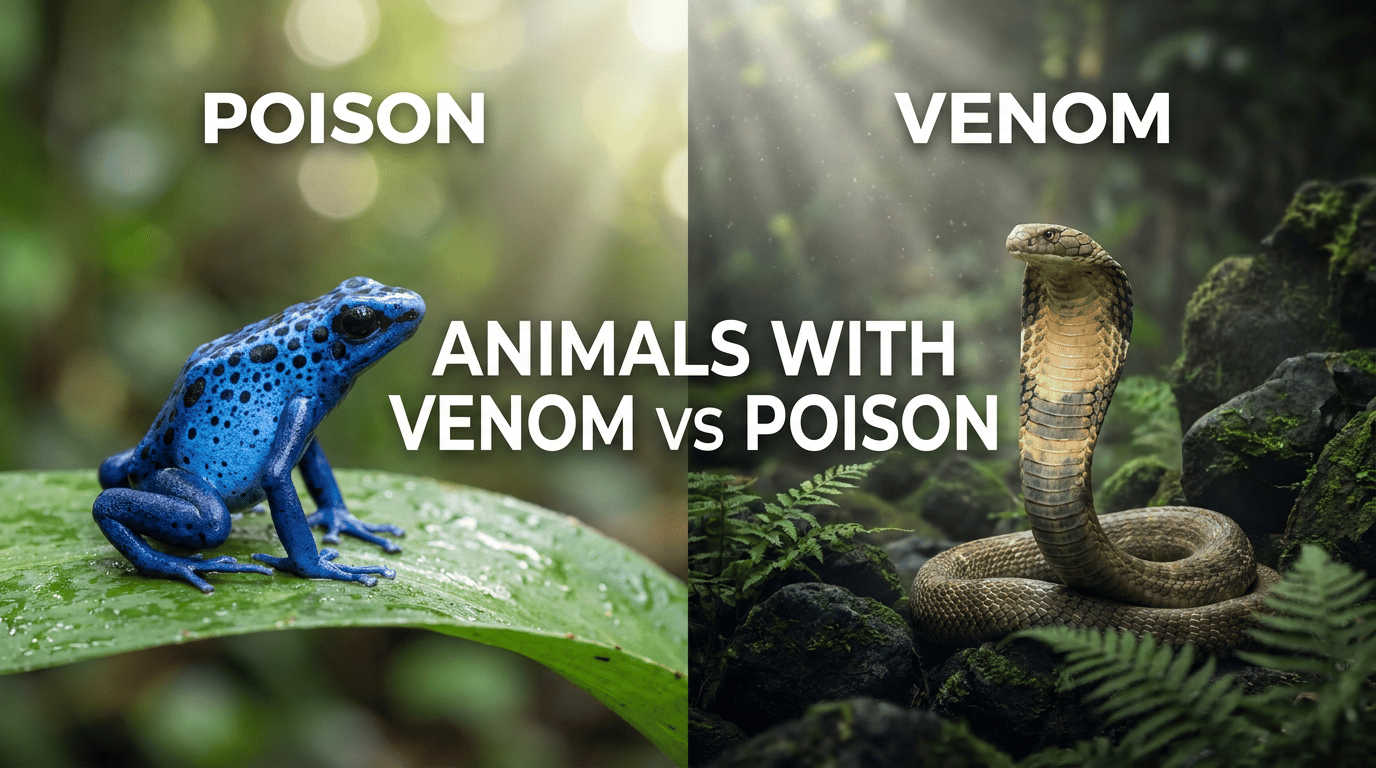
This guide is written for Students, parents, teachers, animal lovers, and readers confused by venomous vs poisonous animal terminology.. It keeps the science clear, calm, and family-friendly while avoiding the common mistake of treating evolution as if animals planned their traits. Adaptations are inherited patterns shaped across generations, not conscious choices made by one animal.
The focus here is specific: Focus on the distinction between venom and poison, delivery method, examples, safety context, and why wording matters. Keep it educational and avoid sensational danger framing.. Use the headings as a map, then notice how body structures, behaviors, internal processes, and seasonal timing often work together instead of acting as separate tricks.
Venom vs Poison: The Simple Difference
This part of animals with venom vs poison narrows the idea into a practical survival question. Look for the pressure, the trait, and the trade-off. A helpful reference point is Australian Museum explanation of venomous and poisonous animals.
Readers comparing animals with venom vs poison may also find animal defense mechanisms useful for a closer look at a related animal adaptation topic.
Readers comparing animals with venom vs poison may also find camouflage in animals useful for a closer look at a related animal adaptation topic.
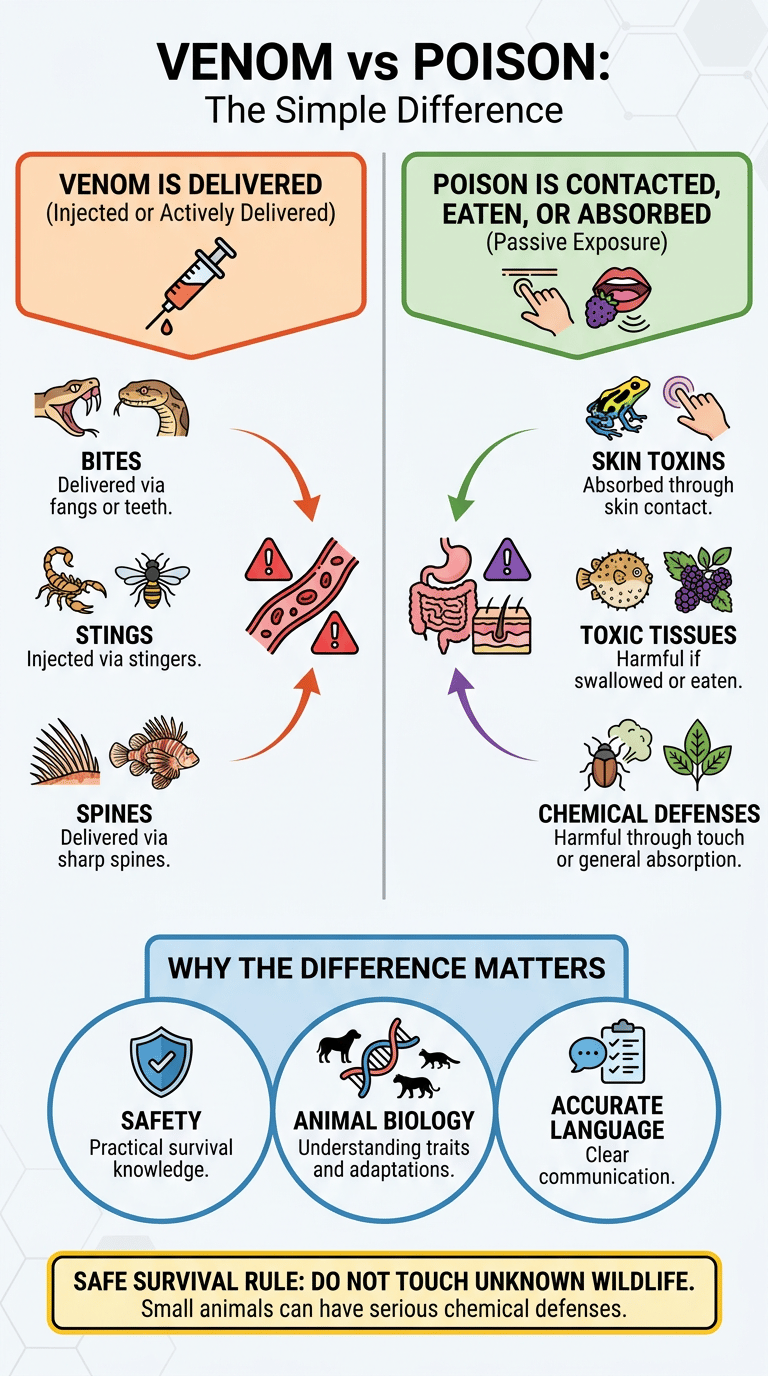
Venom is delivered
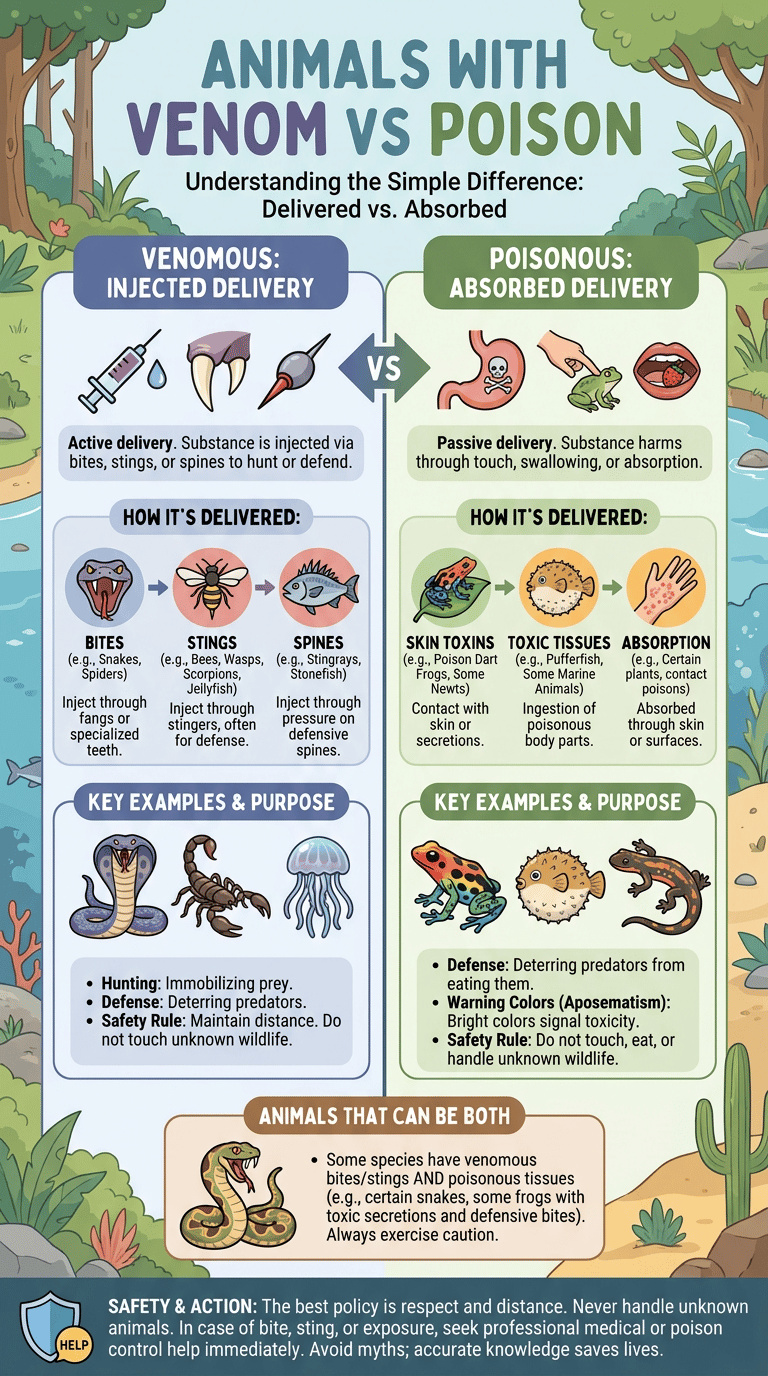
Chemical defenses and hunting tools depend on how a substance is delivered. Venom is injected or actively delivered, while poison harms through touch, swallowing, or absorption.
Bites
Bites: The safe rule is simple: do not touch unknown wildlife, because small animals can still have serious chemical defenses.
Stings
Stings: The safe rule is simple: do not touch unknown wildlife, because small animals can still have serious chemical defenses.
Spines
Spines: The safe rule is simple: do not touch unknown wildlife, because small animals can still have serious chemical defenses.
Poison is contacted, eaten, or absorbed
Chemical defenses and hunting tools depend on how a substance is delivered. Venom is injected or actively delivered, while poison harms through touch, swallowing, or absorption.
Skin toxins
Skin toxins: This structure changes how the animal moves, feeds, protects itself, or handles temperature in its usual habitat.
Toxic tissues
Toxic tissues: The value of this trait depends on context: habitat, season, predators, food supply, and the animal’s other adaptations.
Chemical defenses
Chemical defenses: The value of this trait depends on context: habitat, season, predators, food supply, and the animal’s other adaptations.
Why the difference matters
Why the difference matters shows how animals with venom vs poison connects a trait to a pressure in the environment. The important question is what the trait helps the animal do.
Safety
Safety: The value of this trait depends on context: habitat, season, predators, food supply, and the animal’s other adaptations.
Animal biology
Animal biology: The value of this trait depends on context: habitat, season, predators, food supply, and the animal’s other adaptations.
Accurate language
Accurate language: The value of this trait depends on context: habitat, season, predators, food supply, and the animal’s other adaptations.
Venomous Animals
This part of animals with venom vs poison narrows the idea into a practical survival question. Look for the pressure, the trait, and the trade-off.
Snakes
Snakes shows how animals with venom vs poison connects a trait to a pressure in the environment. The important question is what the trait helps the animal do. A helpful reference point is World Health Organization snakebite information.
Venom glands
Venom glands: The safe rule is simple: do not touch unknown wildlife, because small animals can still have serious chemical defenses.
Fangs
Fangs: The value of this trait depends on context: habitat, season, predators, food supply, and the animal’s other adaptations.
Prey capture and defense
Prey capture and defense: The value of this trait depends on context: habitat, season, predators, food supply, and the animal’s other adaptations.
Spiders and scorpions
Spiders and scorpions shows how animals with venom vs poison connects a trait to a pressure in the environment. The important question is what the trait helps the animal do.
Venom delivery
Venom delivery: The safe rule is simple: do not touch unknown wildlife, because small animals can still have serious chemical defenses.
Hunting
Hunting: This action helps only when it fits the timing, place, and risk the animal faces.
Defense
Defense: The value of this trait depends on context: habitat, season, predators, food supply, and the animal’s other adaptations.
Bees, wasps, and ants
Bees, wasps, and ants shows how animals with venom vs poison connects a trait to a pressure in the environment. The important question is what the trait helps the animal do.
Stings
Stings: The safe rule is simple: do not touch unknown wildlife, because small animals can still have serious chemical defenses.
Colony defense
Colony defense: The value of this trait depends on context: habitat, season, predators, food supply, and the animal’s other adaptations.
Allergic reaction context
Allergic reaction context: The value of this trait depends on context: habitat, season, predators, food supply, and the animal’s other adaptations.
Marine venomous animals
Chemical defenses and hunting tools depend on how a substance is delivered. Venom is injected or actively delivered, while poison harms through touch, swallowing, or absorption.
Jellyfish
Jellyfish: The value of this trait depends on context: habitat, season, predators, food supply, and the animal’s other adaptations.
Cone snails
Cone snails: The value of this trait depends on context: habitat, season, predators, food supply, and the animal’s other adaptations.
Stingrays where relevant
Stingrays where relevant: The safe rule is simple: do not touch unknown wildlife, because small animals can still have serious chemical defenses.
Poisonous Animals
This part of animals with venom vs poison narrows the idea into a practical survival question. Look for the pressure, the trait, and the trade-off.
Poison dart frogs
Chemical defenses and hunting tools depend on how a substance is delivered. Venom is injected or actively delivered, while poison harms through touch, swallowing, or absorption. A helpful reference point is Smithsonian National Zoo poison frog information.
Skin toxins
Skin toxins: This structure changes how the animal moves, feeds, protects itself, or handles temperature in its usual habitat.
Diet and toxicity context
Diet and toxicity context: The value of this trait depends on context: habitat, season, predators, food supply, and the animal’s other adaptations.
Warning colors
Warning colors: The visual effect depends on the background, the viewer’s eyes, lighting, distance, and whether the animal stays still.
Some newts and salamanders
Some newts and salamanders shows how animals with venom vs poison connects a trait to a pressure in the environment. The important question is what the trait helps the animal do.
Skin secretions
Skin secretions: This structure changes how the animal moves, feeds, protects itself, or handles temperature in its usual habitat.
Handling risk
Handling risk: The value of this trait depends on context: habitat, season, predators, food supply, and the animal’s other adaptations.
Toxic fish and marine animals
Toxic fish and marine animals shows how animals with venom vs poison connects a trait to a pressure in the environment. The important question is what the trait helps the animal do.
Pufferfish
Pufferfish: The value of this trait depends on context: habitat, season, predators, food supply, and the animal’s other adaptations.
Food safety context
Food safety context: The value of this trait depends on context: habitat, season, predators, food supply, and the animal’s other adaptations.
Animals That Can Be Both
This part of animals with venom vs poison narrows the idea into a practical survival question. Look for the pressure, the trait, and the trade-off.
Why categories can overlap
Why categories can overlap shows how animals with venom vs poison connects a trait to a pressure in the environment. The important question is what the trait helps the animal do.
Different toxins
Different toxins: The safe rule is simple: do not touch unknown wildlife, because small animals can still have serious chemical defenses.
Different delivery routes
Different delivery routes: The value of this trait depends on context: habitat, season, predators, food supply, and the animal’s other adaptations.
Examples where relevant
Examples where relevant shows how animals with venom vs poison connects a trait to a pressure in the environment. The important question is what the trait helps the animal do.
Venomous bite or sting
Venomous bite or sting: The safe rule is simple: do not touch unknown wildlife, because small animals can still have serious chemical defenses.
Poisonous body tissues
Poisonous body tissues: This structure changes how the animal moves, feeds, protects itself, or handles temperature in its usual habitat.
What Venom and Poison Are For
This part of animals with venom vs poison narrows the idea into a practical survival question. Look for the pressure, the trait, and the trade-off.
Defense
Defense shows how animals with venom vs poison connects a trait to a pressure in the environment. The important question is what the trait helps the animal do.
Deterring predators
Deterring predators: The value of this trait depends on context: habitat, season, predators, food supply, and the animal’s other adaptations.
Warning signals
Warning signals: The value of this trait depends on context: habitat, season, predators, food supply, and the animal’s other adaptations.
Hunting
Behavioral traits are patterns of action. They matter because the same body can survive very differently depending on when, where, and how an animal uses it.
Immobilizing prey
Immobilizing prey: The value of this trait depends on context: habitat, season, predators, food supply, and the animal’s other adaptations.
Digestion support where relevant
Digestion support where relevant: The value of this trait depends on context: habitat, season, predators, food supply, and the animal’s other adaptations.
Competition and survival
Competition and survival shows how animals with venom vs poison connects a trait to a pressure in the environment. The important question is what the trait helps the animal do.
Saving energy
Saving energy: This internal adjustment helps the animal manage energy, water, salt, or heat without wasting more resources than the habitat can replace.
Reducing injury risk
Reducing injury risk: The value of this trait depends on context: habitat, season, predators, food supply, and the animal’s other adaptations.
Warning Colors and Toxic Animals
This part of animals with venom vs poison narrows the idea into a practical survival question. Look for the pressure, the trait, and the trade-off.
Aposematism
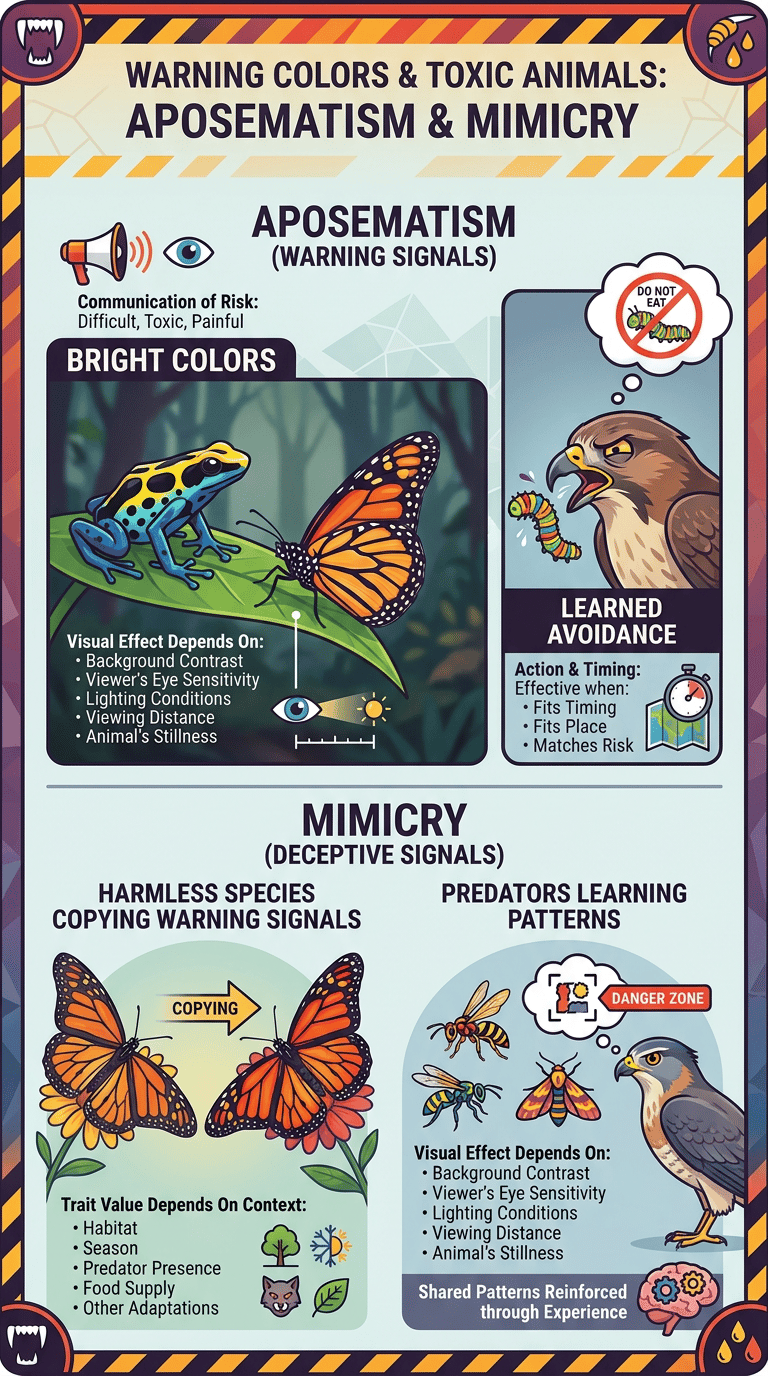
Warning signals rely on communication. A color, sound, smell, or display can teach predators that an animal is difficult, toxic, painful, or not worth the risk.
Bright colors
Bright colors: The visual effect depends on the background, the viewer’s eyes, lighting, distance, and whether the animal stays still.
Learned avoidance
Learned avoidance: This action helps only when it fits the timing, place, and risk the animal faces.
Mimicry
Warning signals rely on communication. A color, sound, smell, or display can teach predators that an animal is difficult, toxic, painful, or not worth the risk.
Harmless species copying warning signals
Harmless species copying warning signals: The value of this trait depends on context: habitat, season, predators, food supply, and the animal’s other adaptations.
Predators learning patterns
Predators learning patterns: The visual effect depends on the background, the viewer’s eyes, lighting, distance, and whether the animal stays still.
Safety Around Venomous or Poisonous Animals
Safety around wildlife starts with distance and respect. The goal is to understand animals without handling, feeding, chasing, or testing their defenses.
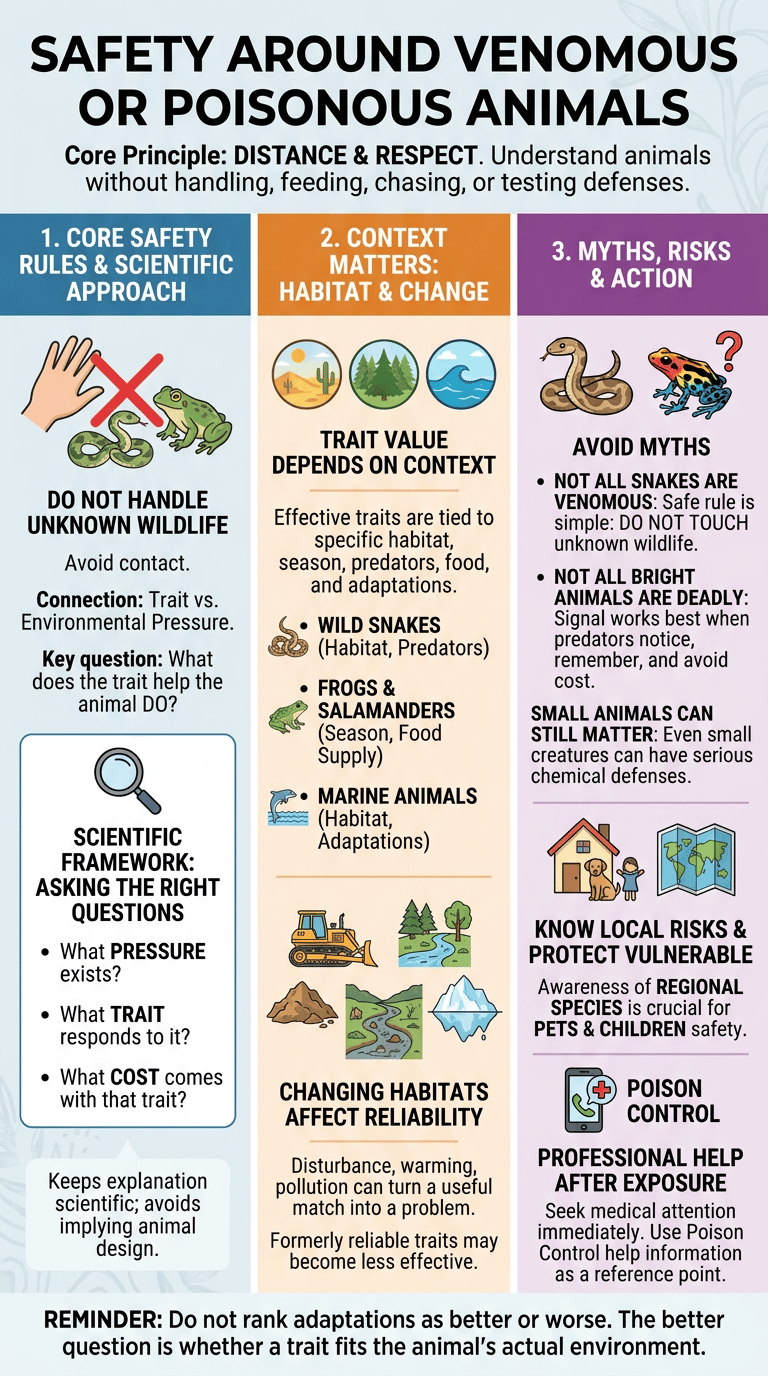
Do not handle unknown animals
Do not handle unknown animals shows how animals with venom vs poison connects a trait to a pressure in the environment. The important question is what the trait helps the animal do.
Wild snakes
Wild snakes: The value of this trait depends on context: habitat, season, predators, food supply, and the animal’s other adaptations.
Frogs and salamanders
Frogs and salamanders: The value of this trait depends on context: habitat, season, predators, food supply, and the animal’s other adaptations.
Marine animals
Marine animals: The value of this trait depends on context: habitat, season, predators, food supply, and the animal’s other adaptations.
Know local risks
The same trait can become less reliable when habitats change quickly. Disturbance, warming, roads, pollution, and shifting seasons can turn a once useful match into a problem.
Regional species
Regional species: The value of this trait depends on context: habitat, season, predators, food supply, and the animal’s other adaptations.
Pets and children
Pets and children: The value of this trait depends on context: habitat, season, predators, food supply, and the animal’s other adaptations.
Professional help after exposure
Professional help after exposure: The value of this trait depends on context: habitat, season, predators, food supply, and the animal’s other adaptations. A helpful reference point is Poison Control help information.
Avoid myths
Avoid myths shows how animals with venom vs poison connects a trait to a pressure in the environment. The important question is what the trait helps the animal do.
Not all snakes are venomous
Not all snakes are venomous: The safe rule is simple: do not touch unknown wildlife, because small animals can still have serious chemical defenses.
Not all bright animals are deadly
Not all bright animals are deadly: The signal works best when predators notice it, remember it, and decide the attack is not worth the cost.
Small animals can still matter
Small animals can still matter: The value of this trait depends on context: habitat, season, predators, food supply, and the animal’s other adaptations.
A useful way to study this topic is to ask three questions: what pressure exists, what trait responds to it, and what cost comes with that trait. That keeps the explanation scientific without making the animal sound as if it designed the solution.
Examples are clearest when they stay tied to habitat. A trait that works well in sand, snow, open water, forest leaf litter, or darkness may be much less useful somewhere else.
The same animal can combine several adaptations at once. A body structure may support a behavior, while an internal process makes that behavior possible during a difficult season.
For readers comparing species, avoid ranking adaptations as simply better or worse. The better question is whether a trait fits the environment the animal actually faces.
Venom vs Poison FAQ
These quick answers cover the common points readers usually need after learning the main concepts above.
What is the difference between venom and poison?
The short answer is that animals with venom vs poison works only in context. A trait helps when it matches the animal’s habitat, predators, food, season, and body plan.
Are snakes venomous or poisonous?
The short answer is that animals with venom vs poison works only in context. A trait helps when it matches the animal’s habitat, predators, food, season, and body plan.
Are poison dart frogs venomous?
The short answer is that animals with venom vs poison works only in context. A trait helps when it matches the animal’s habitat, predators, food, season, and body plan.
Can an animal be both venomous and poisonous?
The short answer is that animals with venom vs poison works only in context. A trait helps when it matches the animal’s habitat, predators, food, season, and body plan.
What should you do after a bite, sting, or exposure?
Keep distance and do not handle the animal. For bites, stings, toxin exposure, injured wildlife, or pet contact, contact emergency services, poison control, a veterinarian, animal control, or a qualified local professional as appropriate.
Key Takeaways
- Animals With Venom vs Poison is easiest to understand when each trait is tied to a specific survival challenge.
- Adaptations are not perfect solutions. They have costs, limits, and trade-offs that depend on habitat and season.
- Wild animals should be observed from a respectful distance, especially when venom, poison, defensive behavior, nests, dens, or dormant animals are involved.

Ethan Walker is the founder and research editor of Animal Fact Central. He creates and reviews educational animal facts content using trusted wildlife, pet care, and science-based sources. His work focuses on making animal behavior, adaptations, habitats, and species facts clear, accurate, and engaging for everyday readers.
Read More Details About Ethan Walker: https://animalfactcentral.com/ethan-walker/