
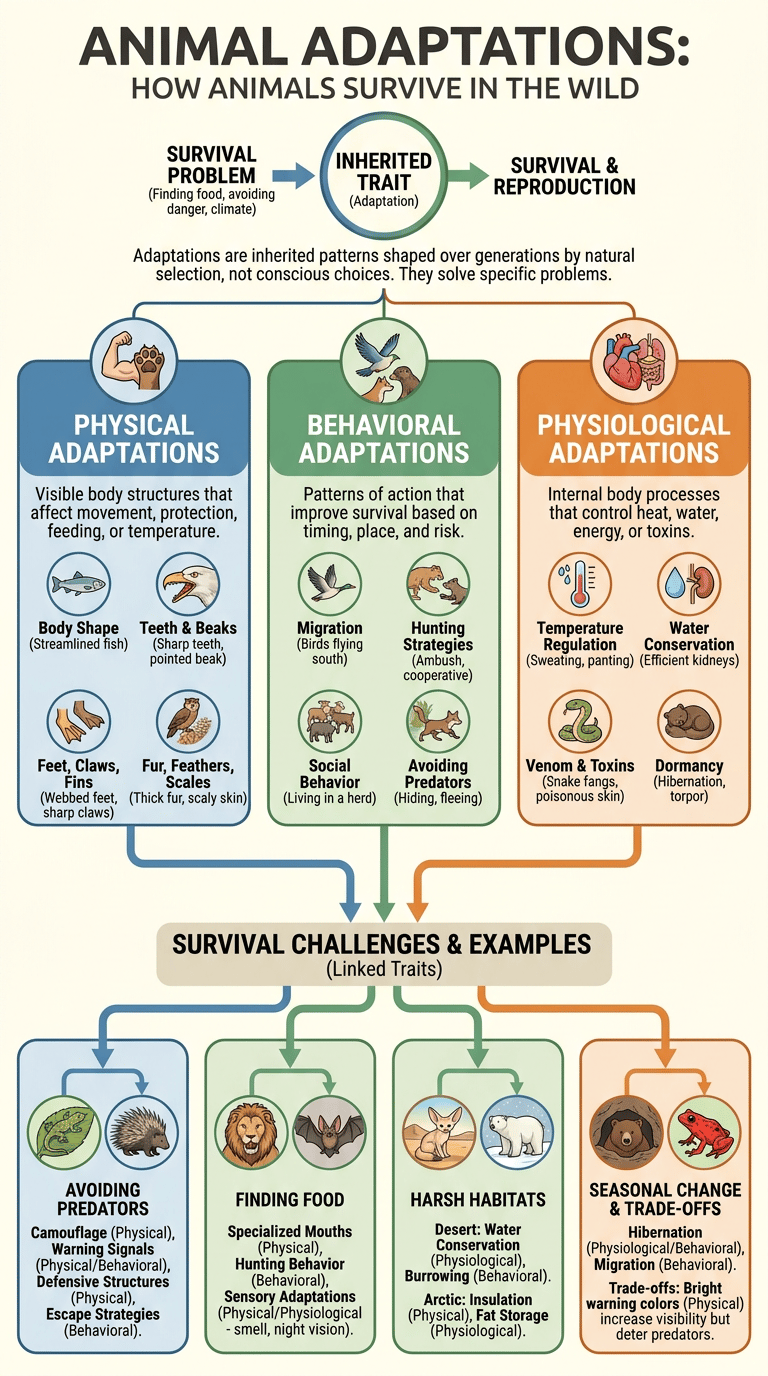
Animal Adaptations: How Animals Survive in the Wild explains how animals meet the basic challenges of staying alive, finding food, avoiding danger, reproducing, and handling the places they live. The most useful way to read animal adaptations is to connect each trait with a real survival problem.
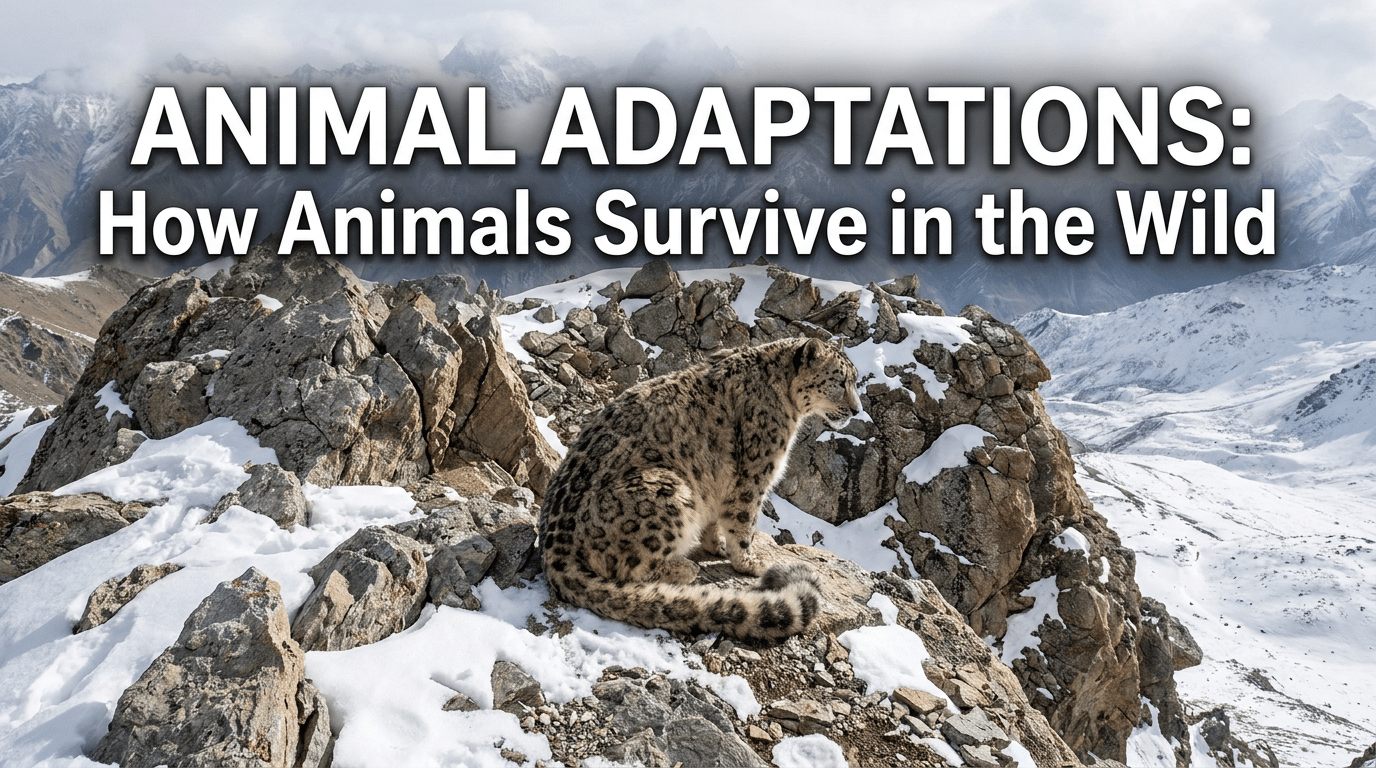
This guide is written for Students, parents, teachers, curious readers, animal lovers, and general science readers who want a clear overview of survival strategies in wild animals.. It keeps the science clear, calm, and family-friendly while avoiding the common mistake of treating evolution as if animals planned their traits. Adaptations are inherited patterns shaped across generations, not conscious choices made by one animal.
The focus here is specific: Serve as the pillar guide for the Animal Adaptations cluster. Explain physical, behavioral, and physiological adaptations, then briefly introduce camouflage, hibernation, desert survival, arctic survival, nocturnal life, venom vs poison, and defense mechanisms without replacing the dedicated cluster articles.. Use the headings as a map, then notice how body structures, behaviors, internal processes, and seasonal timing often work together instead of acting as separate tricks.
What Are Animal Adaptations?
This part of animal adaptations narrows the idea into a practical survival question. Look for the pressure, the trait, and the trade-off. A helpful reference point is Animal Diversity Web overview of animal biology.
Adaptations are traits that help survival or reproduction
Adaptations are traits that help survival or reproduction means the trait has a job in survival or reproduction. The job may be obvious, such as a shell, or less visible, such as conserving water.
Body structures
Body structures: This structure changes how the animal moves, feeds, protects itself, or handles temperature in its usual habitat.
Behaviors
Behaviors: This action helps only when it fits the timing, place, and risk the animal faces.
Internal processes
Internal processes: The value of this trait depends on context: habitat, season, predators, food supply, and the animal’s other adaptations.
Life cycle timing
Life cycle timing: Timing protects vulnerable life stages by matching reproduction with food, shelter, temperature, or lower predation risk.
Adaptations form over generations
Inherited variation gives natural selection something to act on. Traits that help animals leave more surviving young can become more common over many generations. A helpful reference point is natural selection explanation from the University of California Museum of Paleontology.
Variation
Variation: This point matters because adaptation is inherited change across generations, not a plan made by an individual animal.
Natural selection
Natural selection: This point matters because adaptation is inherited change across generations, not a plan made by an individual animal.
Environmental pressure
Environmental pressure: This point matters because adaptation is inherited change across generations, not a plan made by an individual animal.
Why adaptation is not a conscious choice
Why adaptation is not a conscious choice: This point matters because adaptation is inherited change across generations, not a plan made by an individual animal.
Adaptation vs acclimation
Adaptation vs acclimation shows how animal adaptations connects a trait to a pressure in the environment. The important question is what the trait helps the animal do.
Long-term inherited traits
Long-term inherited traits: This point matters because adaptation is inherited change across generations, not a plan made by an individual animal.
Short-term individual adjustment
Short-term individual adjustment: The value of this trait depends on context: habitat, season, predators, food supply, and the animal’s other adaptations.
Why the difference matters
Why the difference matters: The value of this trait depends on context: habitat, season, predators, food supply, and the animal’s other adaptations.
The Main Types of Animal Adaptations
This section separates the big categories so the rest of the article is easier to follow. A body part, a behavior, and an internal process can all help survival, but they work in different ways.
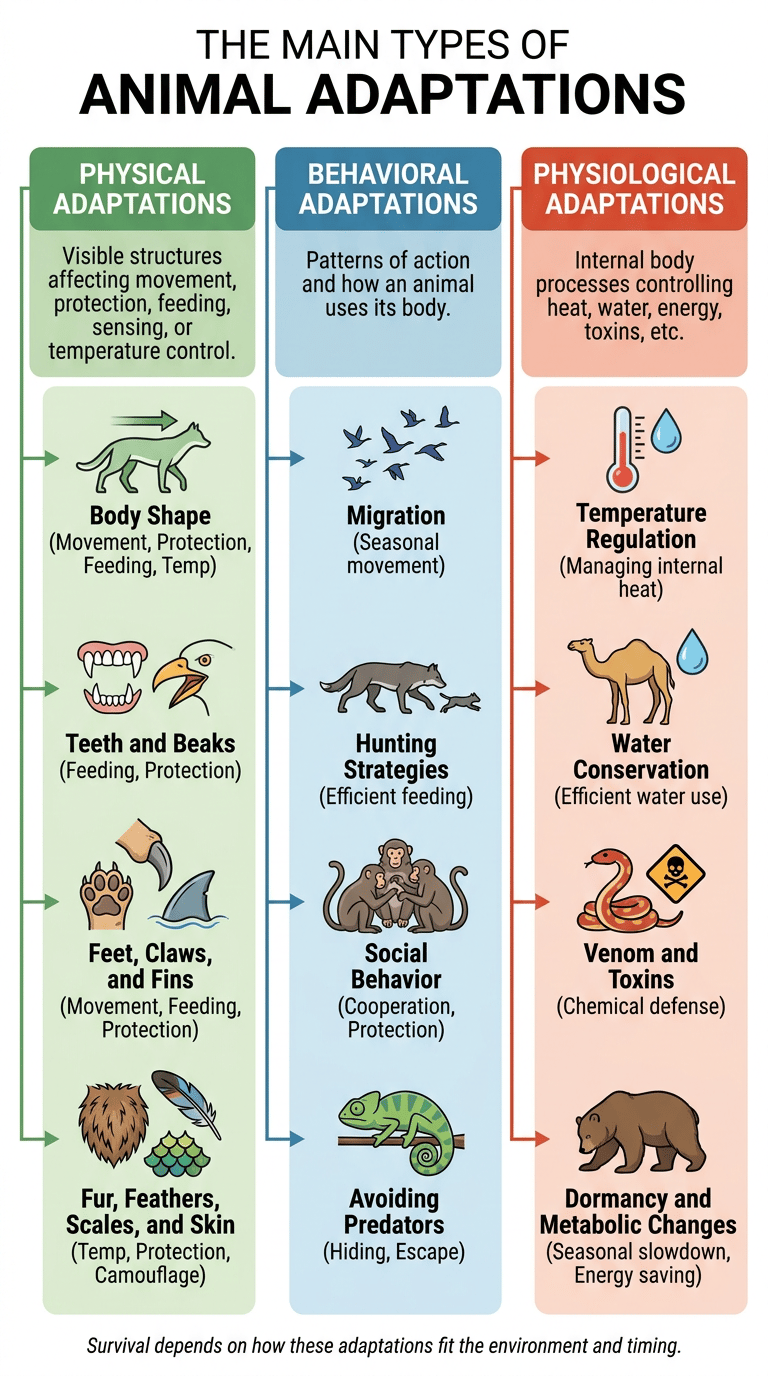
Physical adaptations
Physical traits are visible structures that affect movement, protection, feeding, sensing, or temperature control. They are often the easiest adaptations for readers to notice.
Body shape
Body shape: This structure changes how the animal moves, feeds, protects itself, or handles temperature in its usual habitat.
Teeth and beaks
Teeth and beaks: This structure changes how the animal moves, feeds, protects itself, or handles temperature in its usual habitat.
Feet, claws, and fins
Feet, claws, and fins: This structure changes how the animal moves, feeds, protects itself, or handles temperature in its usual habitat.
Fur, feathers, scales, and skin
Fur, feathers, scales, and skin: This structure changes how the animal moves, feeds, protects itself, or handles temperature in its usual habitat.
Behavioral adaptations
Behavioral traits are patterns of action. They matter because the same body can survive very differently depending on when, where, and how an animal uses it.
Migration
Migration: This action helps only when it fits the timing, place, and risk the animal faces.
Hunting strategies
Hunting strategies: This action helps only when it fits the timing, place, and risk the animal faces.
Social behavior
Social behavior: This action helps only when it fits the timing, place, and risk the animal faces.
Avoiding predators
Avoiding predators: This action helps only when it fits the timing, place, and risk the animal faces.
Physiological adaptations
Physiological traits work inside the body. They can control heat, water, energy use, toxins, breathing, or seasonal slowdown.
Temperature regulation
Temperature regulation: This internal adjustment helps the animal manage energy, water, salt, or heat without wasting more resources than the habitat can replace.
Water conservation
Water conservation: This internal adjustment helps the animal manage energy, water, salt, or heat without wasting more resources than the habitat can replace.
Venom and toxins
Venom and toxins: The safe rule is simple: do not touch unknown wildlife, because small animals can still have serious chemical defenses.
Dormancy and metabolic changes
Dormancy and metabolic changes: This internal adjustment helps the animal manage energy, water, salt, or heat without wasting more resources than the habitat can replace.
Adaptations for Avoiding Predators
Predator pressure is one of the clearest places to see adaptation at work. Some animals avoid being noticed, some discourage attack, and others survive by escaping at the right moment.
Camouflage
Camouflage works by changing what the viewer notices. It may match a background, break up an outline, reduce shadows, or make the animal look like something ordinary.
Background matching
Background matching: The visual effect depends on the background, the viewer’s eyes, lighting, distance, and whether the animal stays still.
Disruptive patterns
Disruptive patterns: The visual effect depends on the background, the viewer’s eyes, lighting, distance, and whether the animal stays still.
Seasonal color change
Seasonal color change: The visual effect depends on the background, the viewer’s eyes, lighting, distance, and whether the animal stays still.
Warning signals
Warning signals rely on communication. A color, sound, smell, or display can teach predators that an animal is difficult, toxic, painful, or not worth the risk.
Bright colors
Bright colors: The visual effect depends on the background, the viewer’s eyes, lighting, distance, and whether the animal stays still.
Sounds
Sounds: The signal works best when predators notice it, remember it, and decide the attack is not worth the cost.
Smells
Smells: The signal works best when predators notice it, remember it, and decide the attack is not worth the cost.
Defensive structures
Defensive structures shows how animal adaptations connects a trait to a pressure in the environment. The important question is what the trait helps the animal do.
Shells
Shells: The value of this trait depends on context: habitat, season, predators, food supply, and the animal’s other adaptations.
Spines
Spines: The safe rule is simple: do not touch unknown wildlife, because small animals can still have serious chemical defenses.
Armor
Armor: The value of this trait depends on context: habitat, season, predators, food supply, and the animal’s other adaptations.
Thick skin
Thick skin: This structure changes how the animal moves, feeds, protects itself, or handles temperature in its usual habitat.
Escape strategies
Escape strategies shows how animal adaptations connects a trait to a pressure in the environment. The important question is what the trait helps the animal do.
Speed
Speed: The value of this trait depends on context: habitat, season, predators, food supply, and the animal’s other adaptations.
Burrowing
Burrowing: This action helps only when it fits the timing, place, and risk the animal faces.
Flying
Flying: This action helps only when it fits the timing, place, and risk the animal faces.
Dropping body parts where relevant
Dropping body parts where relevant: This structure changes how the animal moves, feeds, protects itself, or handles temperature in its usual habitat.
Adaptations for Finding Food
Feeding adaptations show how tightly an animal fits its diet and habitat. Mouth shape, senses, movement, timing, and social behavior can all affect whether an animal gets enough energy.
Specialized mouths and teeth
Physical traits are visible structures that affect movement, protection, feeding, sensing, or temperature control. They are often the easiest adaptations for readers to notice.
Carnivore teeth
Carnivore teeth: This structure changes how the animal moves, feeds, protects itself, or handles temperature in its usual habitat.
Herbivore teeth
Herbivore teeth: This structure changes how the animal moves, feeds, protects itself, or handles temperature in its usual habitat.
Filter feeding structures
Filter feeding structures: This structure changes how the animal moves, feeds, protects itself, or handles temperature in its usual habitat.
Hunting and foraging behavior
Behavioral traits are patterns of action. They matter because the same body can survive very differently depending on when, where, and how an animal uses it.
Ambush hunting
Ambush hunting: This action helps only when it fits the timing, place, and risk the animal faces.
Cooperative hunting
Cooperative hunting: This action helps only when it fits the timing, place, and risk the animal faces.
Tool use where relevant
Tool use where relevant: The value of this trait depends on context: habitat, season, predators, food supply, and the animal’s other adaptations.
Sensory adaptations
Sensory adaptations shows how animal adaptations connects a trait to a pressure in the environment. The important question is what the trait helps the animal do.
Smell
Smell: The value of this trait depends on context: habitat, season, predators, food supply, and the animal’s other adaptations.
Hearing
Hearing: The value of this trait depends on context: habitat, season, predators, food supply, and the animal’s other adaptations.
Night vision
Night vision: The value of this trait depends on context: habitat, season, predators, food supply, and the animal’s other adaptations.
Heat sensing where relevant
Heat sensing where relevant: This internal adjustment helps the animal manage energy, water, salt, or heat without wasting more resources than the habitat can replace.
Adaptations for Harsh Habitats
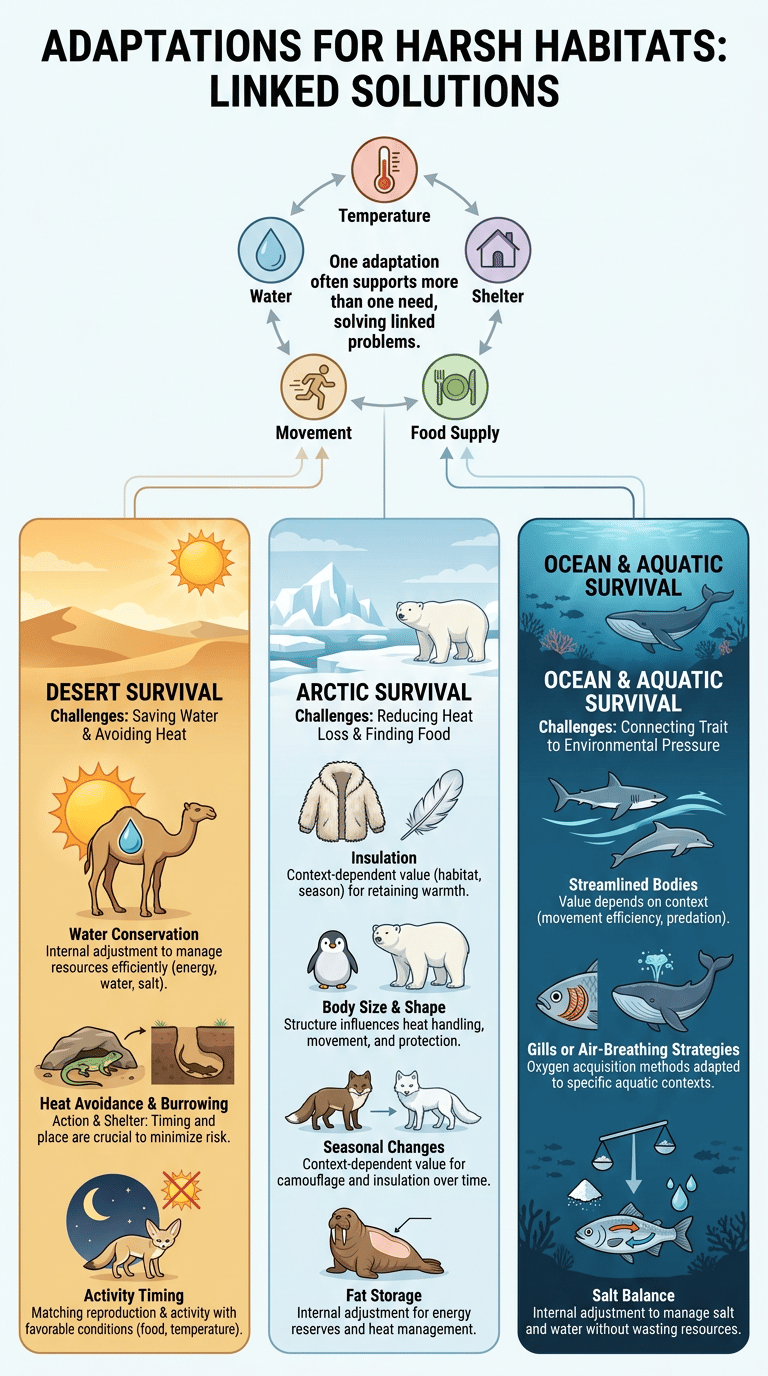
Harsh habitats reward traits that solve several problems at once. Temperature, water, shelter, movement, and food supply are linked, so one adaptation often supports more than one need.
Desert survival
Desert survival often comes down to saving water and avoiding dangerous heat. Many desert animals solve those problems through timing, shelter, body surfaces, and efficient waste.
Water conservation
Water conservation: This internal adjustment helps the animal manage energy, water, salt, or heat without wasting more resources than the habitat can replace.
Heat avoidance
Heat avoidance: This action helps only when it fits the timing, place, and risk the animal faces.
Burrowing
Burrowing: This action helps only when it fits the timing, place, and risk the animal faces.
Activity timing
Activity timing: Timing protects vulnerable life stages by matching reproduction with food, shelter, temperature, or lower predation risk.
Arctic survival
Arctic survival depends on reducing heat loss while still finding food across snow, ice, tundra, or cold seas. Insulation and timing both matter.
Insulation
Insulation: The value of this trait depends on context: habitat, season, predators, food supply, and the animal’s other adaptations.
Body size and shape
Body size and shape: This structure changes how the animal moves, feeds, protects itself, or handles temperature in its usual habitat.
Seasonal changes
Seasonal changes: The value of this trait depends on context: habitat, season, predators, food supply, and the animal’s other adaptations.
Fat storage
Fat storage: This internal adjustment helps the animal manage energy, water, salt, or heat without wasting more resources than the habitat can replace.
Ocean and aquatic survival
Ocean and aquatic survival shows how animal adaptations connects a trait to a pressure in the environment. The important question is what the trait helps the animal do. A helpful reference point is NOAA Fisheries information on marine life.
Streamlined bodies
Streamlined bodies: The value of this trait depends on context: habitat, season, predators, food supply, and the animal’s other adaptations.
Gills or air-breathing strategies
Gills or air-breathing strategies: The value of this trait depends on context: habitat, season, predators, food supply, and the animal’s other adaptations.
Salt balance
Salt balance: This internal adjustment helps the animal manage energy, water, salt, or heat without wasting more resources than the habitat can replace.
Adaptations for Seasonal Change
Seasonal change forces animals to match their activity to food, weather, and breeding opportunities. Many survival strategies are really timing strategies.
Hibernation and torpor
Physiological traits work inside the body. They can control heat, water, energy use, toxins, breathing, or seasonal slowdown.
Lower activity
Lower activity: The value of this trait depends on context: habitat, season, predators, food supply, and the animal’s other adaptations.
Energy saving
Energy saving: This internal adjustment helps the animal manage energy, water, salt, or heat without wasting more resources than the habitat can replace.
Safe shelter
Safe shelter: The value of this trait depends on context: habitat, season, predators, food supply, and the animal’s other adaptations.
Migration
Behavioral traits are patterns of action. They matter because the same body can survive very differently depending on when, where, and how an animal uses it.
Finding food
Finding food: The value of this trait depends on context: habitat, season, predators, food supply, and the animal’s other adaptations.
Breeding timing
Breeding timing: Timing protects vulnerable life stages by matching reproduction with food, shelter, temperature, or lower predation risk.
Avoiding harsh weather
Avoiding harsh weather: This action helps only when it fits the timing, place, and risk the animal faces.
Seasonal coats and colors
Seasonal coats and colors shows how animal adaptations connects a trait to a pressure in the environment. The important question is what the trait helps the animal do.
Molting
Molting: The value of this trait depends on context: habitat, season, predators, food supply, and the animal’s other adaptations.
White winter coats
White winter coats: The visual effect depends on the background, the viewer’s eyes, lighting, distance, and whether the animal stays still.
Thick winter fur
Thick winter fur: This structure changes how the animal moves, feeds, protects itself, or handles temperature in its usual habitat.
Why Adaptations Have Trade-Offs
No adaptation is perfect. A trait that helps in one place can cost energy, reduce speed, increase visibility, or become less useful when the habitat changes.
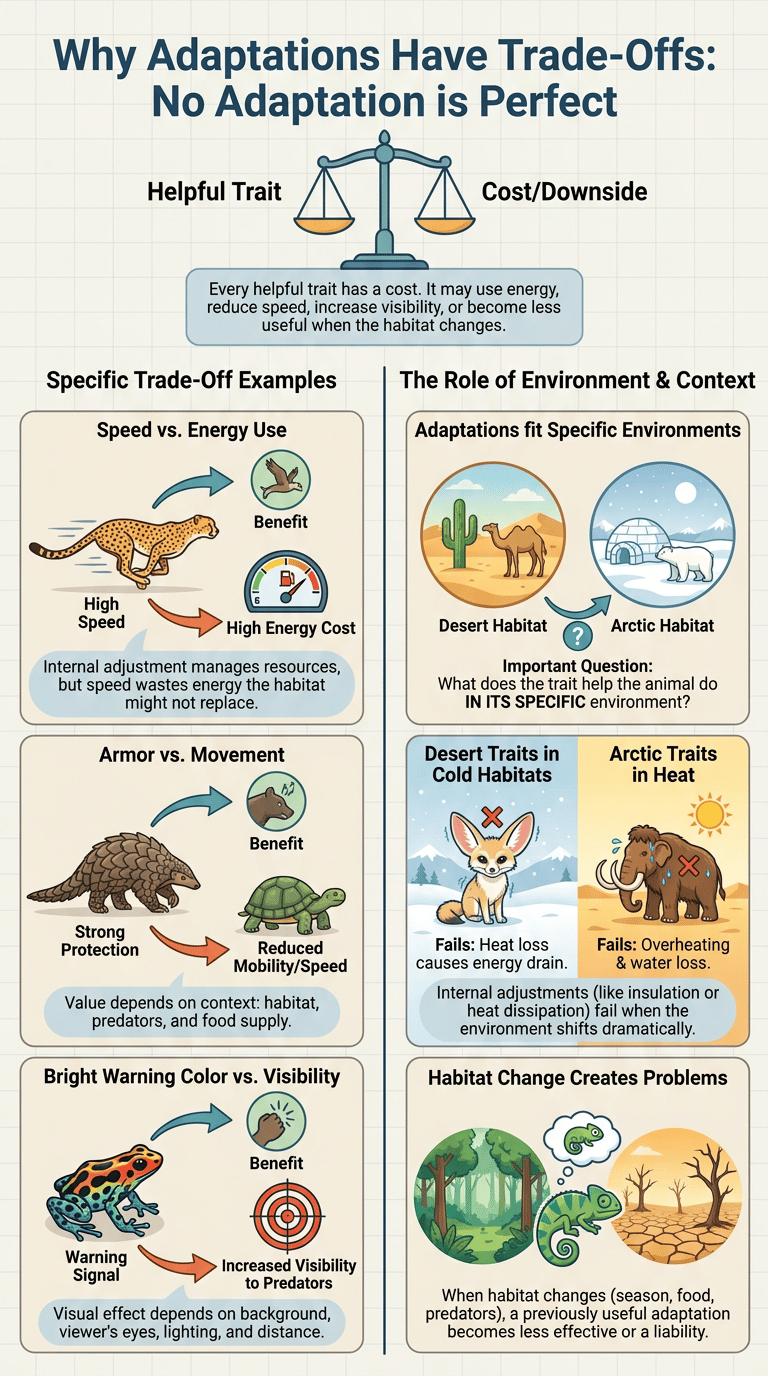
A useful trait can have a cost
A useful trait can have a cost shows how animal adaptations connects a trait to a pressure in the environment. The important question is what the trait helps the animal do.
Speed vs energy use
Speed vs energy use: This internal adjustment helps the animal manage energy, water, salt, or heat without wasting more resources than the habitat can replace.
Armor vs movement
Armor vs movement: The value of this trait depends on context: habitat, season, predators, food supply, and the animal’s other adaptations.
Bright warning color vs visibility
Bright warning color vs visibility: The visual effect depends on the background, the viewer’s eyes, lighting, distance, and whether the animal stays still.
Adaptations fit specific environments
Adaptations fit specific environments shows how animal adaptations connects a trait to a pressure in the environment. The important question is what the trait helps the animal do.
Why desert traits may fail in cold habitats
Why desert traits may fail in cold habitats: This internal adjustment helps the animal manage energy, water, salt, or heat without wasting more resources than the habitat can replace.
Why arctic traits may fail in heat
Why arctic traits may fail in heat: This internal adjustment helps the animal manage energy, water, salt, or heat without wasting more resources than the habitat can replace.
Why habitat change can create problems
Why habitat change can create problems: The value of this trait depends on context: habitat, season, predators, food supply, and the animal’s other adaptations.
Animal Adaptations FAQ
These quick answers cover the common points readers usually need after learning the main concepts above.
What are examples of animal adaptations?
Examples depend on the topic, but useful cases include camouflage, migration, insulation, venom, specialized teeth, burrows, night activity, shells, spines, and seasonal dormancy. For animal adaptations, the best example is one that clearly connects a trait with a survival challenge.
What are the three main types of adaptations?
The three main types are physical adaptations, behavioral adaptations, and physiological adaptations. Many animals use more than one at the same time.
How do adaptations help animals survive?
Adaptations help animals get food, avoid predators, handle temperature, conserve water, reproduce, or move through their habitat more successfully.
Are adaptations the same as evolution?
Adaptations are part of evolution. Evolution is the broader change in inherited traits across generations, while an adaptation is a trait shaped because it helps survival or reproduction in a particular setting.
Can animals adapt quickly to climate change?
Some populations can adjust behavior or range, but rapid climate change can outpace inherited adaptation, especially when food timing, snow cover, sea ice, or habitat structure changes quickly. A helpful reference point is IUCN climate change and species information.
Key Takeaways
- Animal Adaptations: How Animals Survive in the Wild is easiest to understand when each trait is tied to a specific survival challenge.
- Adaptations are not perfect solutions. They have costs, limits, and trade-offs that depend on habitat and season.
- Wild animals should be observed from a respectful distance, especially when venom, poison, defensive behavior, nests, dens, or dormant animals are involved.

Ethan Walker is the founder and research editor of Animal Fact Central. He creates and reviews educational animal facts content using trusted wildlife, pet care, and science-based sources. His work focuses on making animal behavior, adaptations, habitats, and species facts clear, accurate, and engaging for everyday readers.
Read More Details About Ethan Walker: https://animalfactcentral.com/ethan-walker/