
Animals That Live in the Desert explains how animals meet the basic challenges of staying alive, finding food, avoiding danger, reproducing, and handling the places they live. The most useful way to read animals that live in the desert is to connect each trait with a real survival problem.
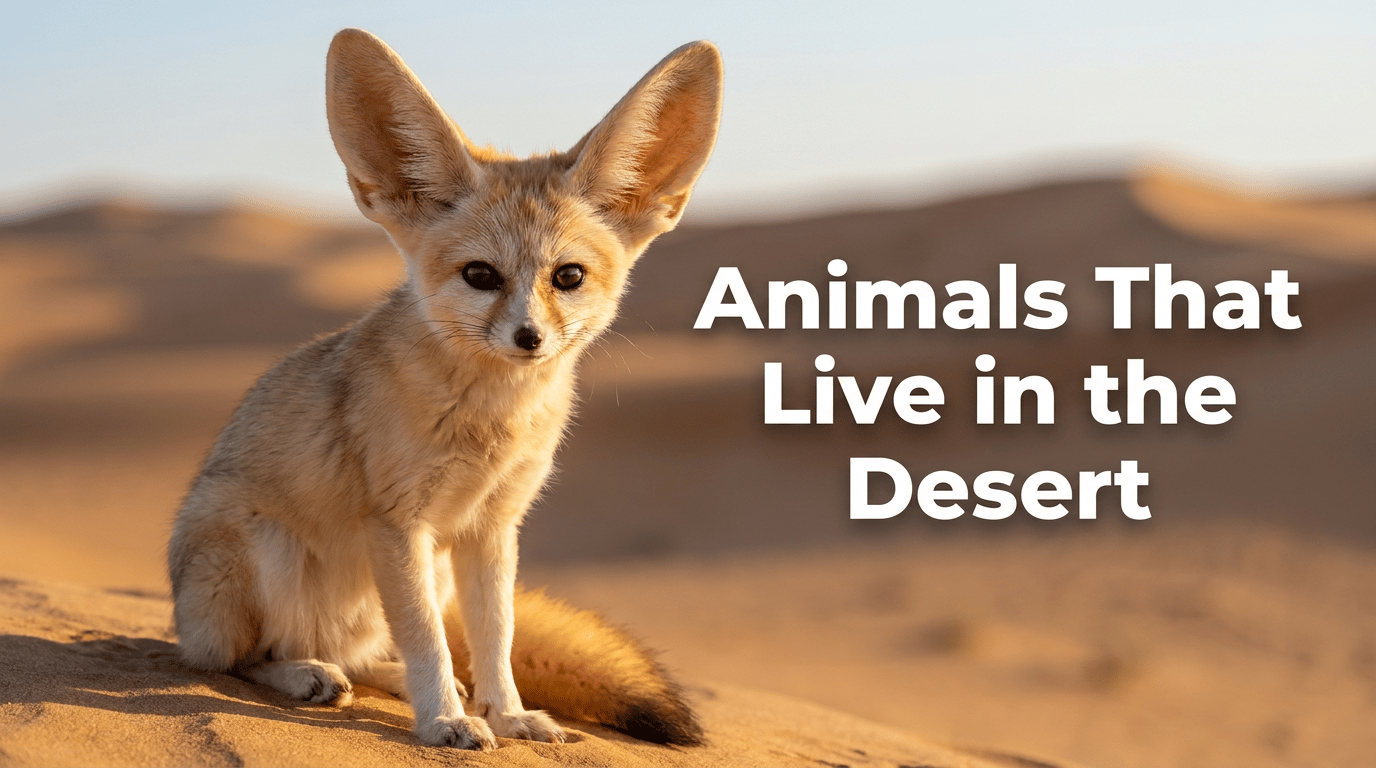
This guide is written for Students, parents, teachers, animal lovers, and readers curious about deserts, heat survival, water conservation, and desert wildlife.. It keeps the science clear, calm, and family-friendly while avoiding the common mistake of treating evolution as if animals planned their traits. Adaptations are inherited patterns shaped across generations, not conscious choices made by one animal.
The focus here is specific: Focus on desert habitat survival and adaptation. Keep the article centered on desert life rather than a broad list of animal facts.. Use the headings as a map, then notice how body structures, behaviors, internal processes, and seasonal timing often work together instead of acting as separate tricks.
What Makes Deserts Hard for Animals?
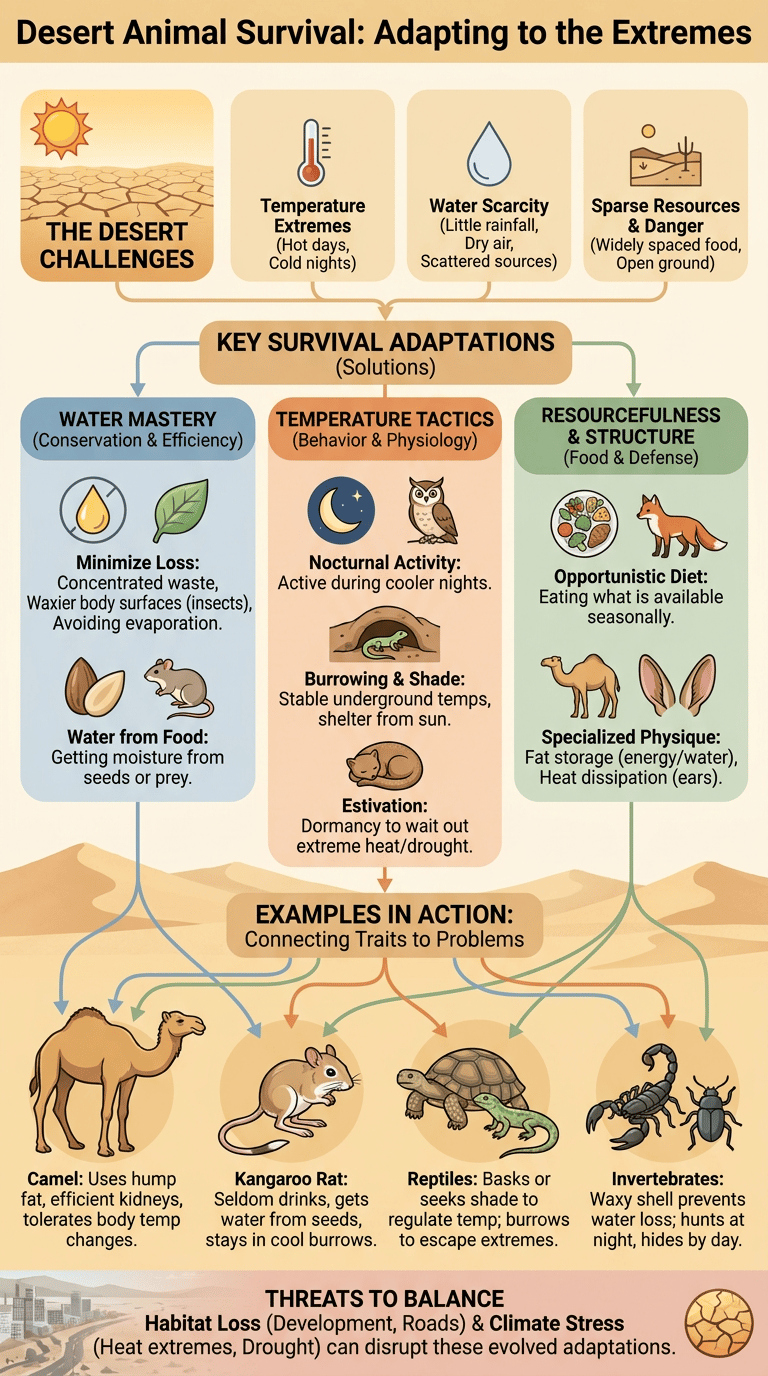
Harsh habitats reward traits that solve several problems at once. Temperature, water, shelter, movement, and food supply are linked, so one adaptation often supports more than one need. A helpful reference point is National Park Service desert ecosystem information.
Low water availability
Physiological traits work inside the body. They can control heat, water, energy use, toxins, breathing, or seasonal slowdown.
Little rainfall
Little rainfall: The value of this trait depends on context: habitat, season, predators, food supply, and the animal’s other adaptations.
Dry air
Dry air: The value of this trait depends on context: habitat, season, predators, food supply, and the animal’s other adaptations.
Scattered water sources
Scattered water sources: This internal adjustment helps the animal manage energy, water, salt, or heat without wasting more resources than the habitat can replace.
Temperature extremes
Physiological traits work inside the body. They can control heat, water, energy use, toxins, breathing, or seasonal slowdown.
Hot days
Hot days: The value of this trait depends on context: habitat, season, predators, food supply, and the animal’s other adaptations.
Cold nights
Cold nights: This internal adjustment helps the animal manage energy, water, salt, or heat without wasting more resources than the habitat can replace.
Seasonal variation
Seasonal variation: This point matters because adaptation is inherited change across generations, not a plan made by an individual animal.
Sparse food and shelter
Sparse food and shelter shows how animals that live in the desert connects a trait to a pressure in the environment. The important question is what the trait helps the animal do.
Readers comparing animals that live in the desert may also find animals that hibernate useful for a closer look at a related animal adaptation topic.
Readers comparing animals that live in the desert may also find animal defense mechanisms useful for a closer look at a related animal adaptation topic.
Readers comparing animals that live in the desert may also find camouflage in animals useful for a closer look at a related animal adaptation topic.
Widely spaced plants
Widely spaced plants: The value of this trait depends on context: habitat, season, predators, food supply, and the animal’s other adaptations.
Hidden prey
Hidden prey: The value of this trait depends on context: habitat, season, predators, food supply, and the animal’s other adaptations.
Open ground
Open ground: The value of this trait depends on context: habitat, season, predators, food supply, and the animal’s other adaptations.
Desert Mammals
Harsh habitats reward traits that solve several problems at once. Temperature, water, shelter, movement, and food supply are linked, so one adaptation often supports more than one need.
Camels and large desert herbivores
Desert survival often comes down to saving water and avoiding dangerous heat. Many desert animals solve those problems through timing, shelter, body surfaces, and efficient waste.
Water conservation
Water conservation: This internal adjustment helps the animal manage energy, water, salt, or heat without wasting more resources than the habitat can replace.
Fat storage
Fat storage: This internal adjustment helps the animal manage energy, water, salt, or heat without wasting more resources than the habitat can replace.
Heat tolerance
Heat tolerance: This internal adjustment helps the animal manage energy, water, salt, or heat without wasting more resources than the habitat can replace.
Kangaroo rats and small rodents
Kangaroo rats and small rodents shows how animals that live in the desert connects a trait to a pressure in the environment. The important question is what the trait helps the animal do.
Seed diets
Seed diets: The value of this trait depends on context: habitat, season, predators, food supply, and the animal’s other adaptations.
Burrows
Burrows: The value of this trait depends on context: habitat, season, predators, food supply, and the animal’s other adaptations.
Water from food
Water from food: This internal adjustment helps the animal manage energy, water, salt, or heat without wasting more resources than the habitat can replace.
Desert foxes and carnivores
Desert survival often comes down to saving water and avoiding dangerous heat. Many desert animals solve those problems through timing, shelter, body surfaces, and efficient waste.
Large ears where relevant
Large ears where relevant: The value of this trait depends on context: habitat, season, predators, food supply, and the animal’s other adaptations.
Night activity
Night activity: The value of this trait depends on context: habitat, season, predators, food supply, and the animal’s other adaptations.
Opportunistic diet
Opportunistic diet: The value of this trait depends on context: habitat, season, predators, food supply, and the animal’s other adaptations.
Desert Reptiles
Harsh habitats reward traits that solve several problems at once. Temperature, water, shelter, movement, and food supply are linked, so one adaptation often supports more than one need. A helpful reference point is Reptile Database species resource.
Lizards
Lizards shows how animals that live in the desert connects a trait to a pressure in the environment. The important question is what the trait helps the animal do.
Heat basking
Heat basking: This structure changes how the animal moves, feeds, protects itself, or handles temperature in its usual habitat.
Shade seeking
Shade seeking: The value of this trait depends on context: habitat, season, predators, food supply, and the animal’s other adaptations.
Fast movement
Fast movement: The value of this trait depends on context: habitat, season, predators, food supply, and the animal’s other adaptations.
Snakes
Snakes shows how animals that live in the desert connects a trait to a pressure in the environment. The important question is what the trait helps the animal do.
Burrowing
Burrowing: This action helps only when it fits the timing, place, and risk the animal faces.
Ambush hunting
Ambush hunting: This action helps only when it fits the timing, place, and risk the animal faces.
Nocturnal activity
Nocturnal activity: The value of this trait depends on context: habitat, season, predators, food supply, and the animal’s other adaptations.
Tortoises
Tortoises shows how animals that live in the desert connects a trait to a pressure in the environment. The important question is what the trait helps the animal do.
Burrows
Burrows: The value of this trait depends on context: habitat, season, predators, food supply, and the animal’s other adaptations.
Slow metabolism
Slow metabolism: The value of this trait depends on context: habitat, season, predators, food supply, and the animal’s other adaptations.
Water storage context
Water storage context: This internal adjustment helps the animal manage energy, water, salt, or heat without wasting more resources than the habitat can replace.
Desert Birds and Invertebrates
Harsh habitats reward traits that solve several problems at once. Temperature, water, shelter, movement, and food supply are linked, so one adaptation often supports more than one need.
Desert birds
Desert survival often comes down to saving water and avoiding dangerous heat. Many desert animals solve those problems through timing, shelter, body surfaces, and efficient waste.
Timing activity
Timing activity: Timing protects vulnerable life stages by matching reproduction with food, shelter, temperature, or lower predation risk.
Efficient flight
Efficient flight: The value of this trait depends on context: habitat, season, predators, food supply, and the animal’s other adaptations.
Nest placement
Nest placement: Timing protects vulnerable life stages by matching reproduction with food, shelter, temperature, or lower predation risk.
Scorpions and spiders
Scorpions and spiders shows how animals that live in the desert connects a trait to a pressure in the environment. The important question is what the trait helps the animal do.
Nocturnal hunting
Nocturnal hunting: This action helps only when it fits the timing, place, and risk the animal faces.
Venom use
Venom use: The safe rule is simple: do not touch unknown wildlife, because small animals can still have serious chemical defenses.
Hiding in shelters
Hiding in shelters: The value of this trait depends on context: habitat, season, predators, food supply, and the animal’s other adaptations.
Desert insects
Desert survival often comes down to saving water and avoiding dangerous heat. Many desert animals solve those problems through timing, shelter, body surfaces, and efficient waste.
Waxier body surfaces
Waxier body surfaces: This structure changes how the animal moves, feeds, protects itself, or handles temperature in its usual habitat.
Burrowing
Burrowing: This action helps only when it fits the timing, place, and risk the animal faces.
Plant relationships
Plant relationships: The value of this trait depends on context: habitat, season, predators, food supply, and the animal’s other adaptations.
Desert Survival Adaptations
Harsh habitats reward traits that solve several problems at once. Temperature, water, shelter, movement, and food supply are linked, so one adaptation often supports more than one need. A helpful reference point is Arizona-Sonora Desert Museum animal information.
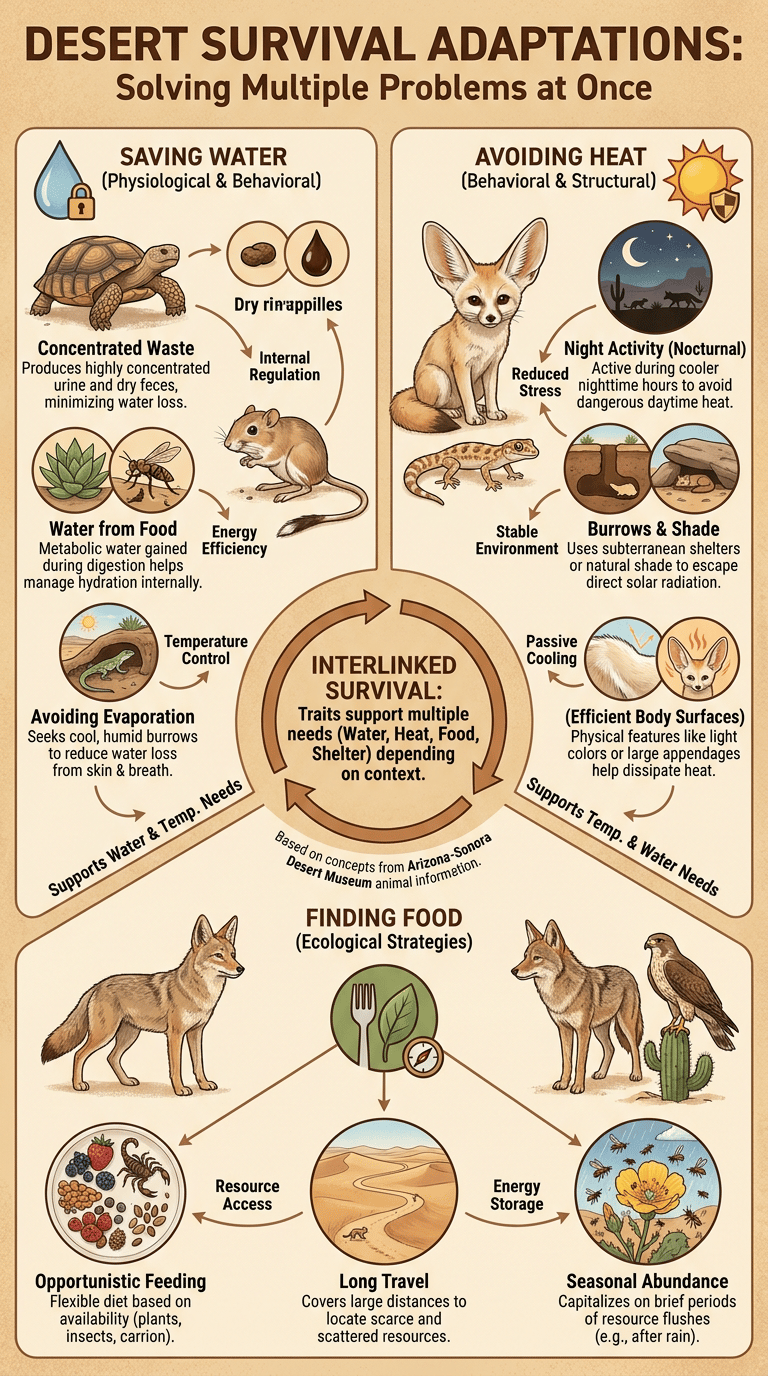
Saving water
Physiological traits work inside the body. They can control heat, water, energy use, toxins, breathing, or seasonal slowdown.
Concentrated waste
Concentrated waste: The value of this trait depends on context: habitat, season, predators, food supply, and the animal’s other adaptations.
Water from food
Water from food: This internal adjustment helps the animal manage energy, water, salt, or heat without wasting more resources than the habitat can replace.
Avoiding evaporation
Avoiding evaporation: This action helps only when it fits the timing, place, and risk the animal faces.
Avoiding heat
Desert survival often comes down to saving water and avoiding dangerous heat. Many desert animals solve those problems through timing, shelter, body surfaces, and efficient waste.
Night activity
Night activity: The value of this trait depends on context: habitat, season, predators, food supply, and the animal’s other adaptations.
Burrows
Burrows: The value of this trait depends on context: habitat, season, predators, food supply, and the animal’s other adaptations.
Shade
Shade: The value of this trait depends on context: habitat, season, predators, food supply, and the animal’s other adaptations.
Finding food
Finding food shows how animals that live in the desert connects a trait to a pressure in the environment. The important question is what the trait helps the animal do.
Opportunistic feeding
Opportunistic feeding: The value of this trait depends on context: habitat, season, predators, food supply, and the animal’s other adaptations.
Long travel
Long travel: The value of this trait depends on context: habitat, season, predators, food supply, and the animal’s other adaptations.
Seasonal abundance
Seasonal abundance: The value of this trait depends on context: habitat, season, predators, food supply, and the animal’s other adaptations.
Desert Animal Behavior
Harsh habitats reward traits that solve several problems at once. Temperature, water, shelter, movement, and food supply are linked, so one adaptation often supports more than one need.
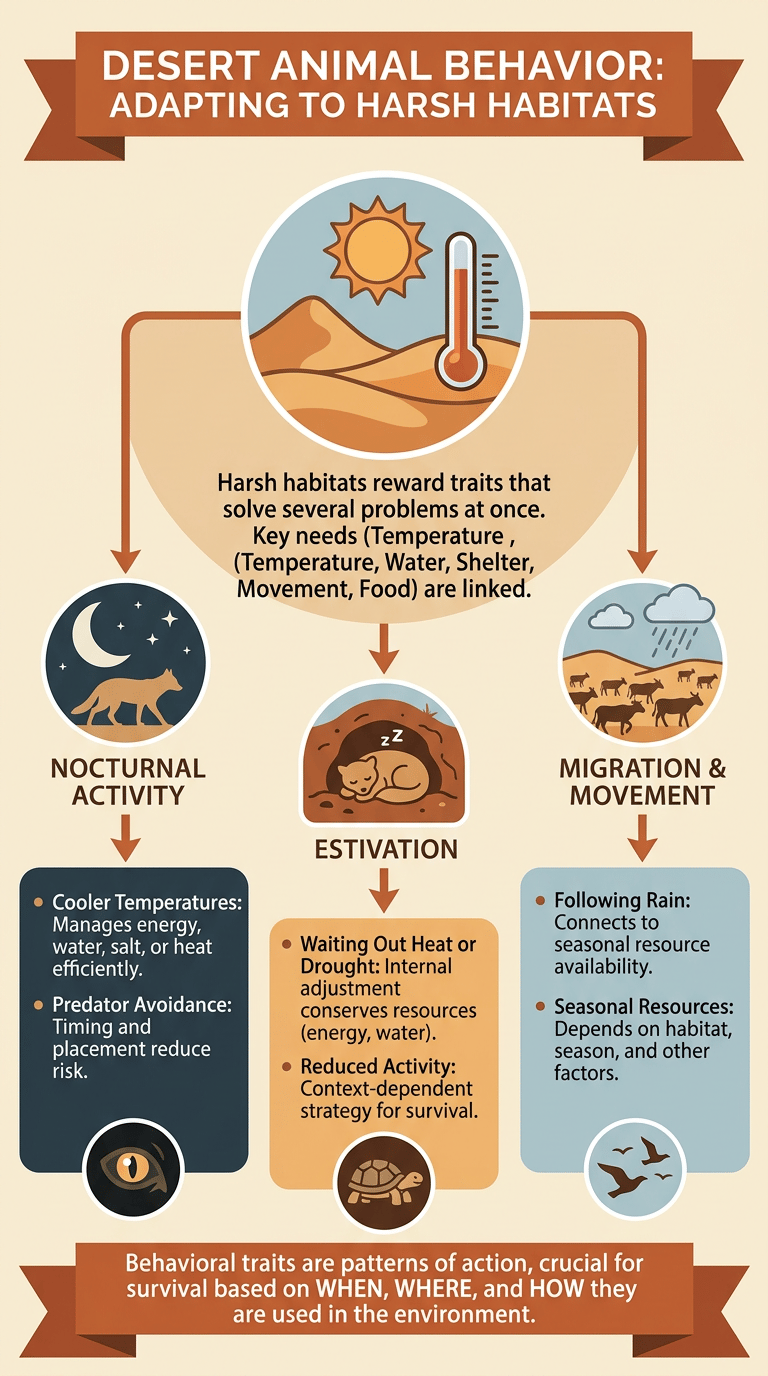
Nocturnal activity
Behavioral traits are patterns of action. They matter because the same body can survive very differently depending on when, where, and how an animal uses it.
Cooler temperatures
Cooler temperatures: This internal adjustment helps the animal manage energy, water, salt, or heat without wasting more resources than the habitat can replace.
Predator avoidance
Predator avoidance: This action helps only when it fits the timing, place, and risk the animal faces.
Estivation
Estivation shows how animals that live in the desert connects a trait to a pressure in the environment. The important question is what the trait helps the animal do.
Waiting out heat or drought
Waiting out heat or drought: This internal adjustment helps the animal manage energy, water, salt, or heat without wasting more resources than the habitat can replace.
Reduced activity
Reduced activity: The value of this trait depends on context: habitat, season, predators, food supply, and the animal’s other adaptations.
Migration and movement
Behavioral traits are patterns of action. They matter because the same body can survive very differently depending on when, where, and how an animal uses it.
Following rain
Following rain: The value of this trait depends on context: habitat, season, predators, food supply, and the animal’s other adaptations.
Seasonal resources
Seasonal resources: The value of this trait depends on context: habitat, season, predators, food supply, and the animal’s other adaptations.
Threats to Desert Animals
Harsh habitats reward traits that solve several problems at once. Temperature, water, shelter, movement, and food supply are linked, so one adaptation often supports more than one need.
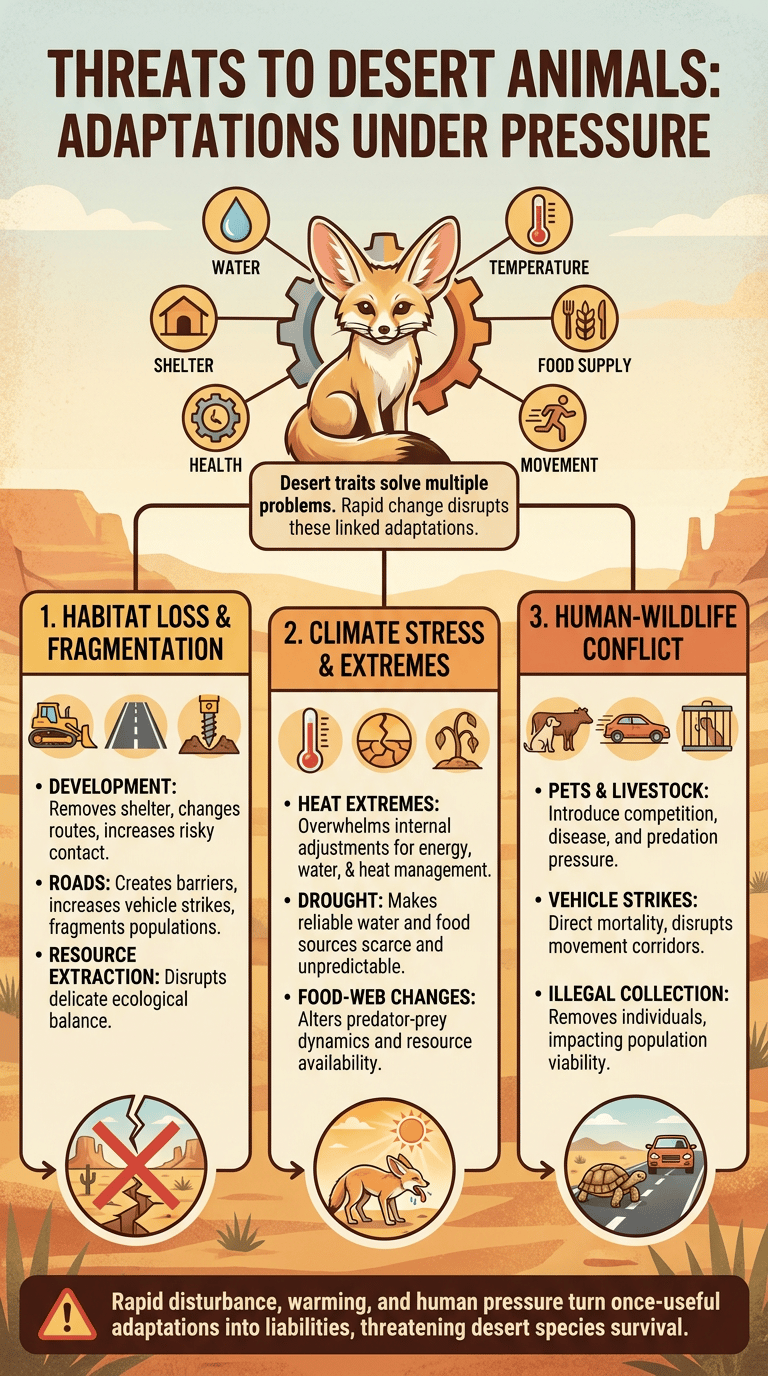
Habitat loss
The same trait can become less reliable when habitats change quickly. Disturbance, warming, roads, pollution, and shifting seasons can turn a once useful match into a problem.
Development
Development: Human pressure can remove shelter, change movement routes, increase contact, or make a once reliable behavior risky.
Roads
Roads: Human pressure can remove shelter, change movement routes, increase contact, or make a once reliable behavior risky.
Resource extraction
Resource extraction: The value of this trait depends on context: habitat, season, predators, food supply, and the animal’s other adaptations.
Climate stress
The same trait can become less reliable when habitats change quickly. Disturbance, warming, roads, pollution, and shifting seasons can turn a once useful match into a problem. A helpful reference point is IUCN climate change and species information.
Heat extremes
Heat extremes: This internal adjustment helps the animal manage energy, water, salt, or heat without wasting more resources than the habitat can replace.
Drought
Drought: The value of this trait depends on context: habitat, season, predators, food supply, and the animal’s other adaptations.
Food-web changes
Food-web changes: The value of this trait depends on context: habitat, season, predators, food supply, and the animal’s other adaptations.
Human-wildlife conflict
Human-wildlife conflict shows how animals that live in the desert connects a trait to a pressure in the environment. The important question is what the trait helps the animal do.
Pets and livestock
Pets and livestock: The value of this trait depends on context: habitat, season, predators, food supply, and the animal’s other adaptations.
Vehicle strikes
Vehicle strikes: The value of this trait depends on context: habitat, season, predators, food supply, and the animal’s other adaptations.
Illegal collection where relevant
Illegal collection where relevant: Human pressure can remove shelter, change movement routes, increase contact, or make a once reliable behavior risky.
Desert Animals FAQ
These quick answers cover the common points readers usually need after learning the main concepts above.
What animals live in the desert?
Examples depend on the topic, but useful cases include camouflage, migration, insulation, venom, specialized teeth, burrows, night activity, shells, spines, and seasonal dormancy. For animals that live in the desert, the best example is one that clearly connects a trait with a survival challenge.
How do desert animals get water?
The short answer is that animals that live in the desert works only in context. A trait helps when it matches the animal’s habitat, predators, food, season, and body plan.
Why are many desert animals nocturnal?
The short answer is that animals that live in the desert works only in context. A trait helps when it matches the animal’s habitat, predators, food, season, and body plan.
Do all deserts have hot weather?
The short answer is that animals that live in the desert works only in context. A trait helps when it matches the animal’s habitat, predators, food, season, and body plan.
What is the best-known desert adaptation?
The short answer is that animals that live in the desert works only in context. A trait helps when it matches the animal’s habitat, predators, food, season, and body plan.
Key Takeaways
- Animals That Live in the Desert is easiest to understand when each trait is tied to a specific survival challenge.
- Adaptations are not perfect solutions. They have costs, limits, and trade-offs that depend on habitat and season.
- Wild animals should be observed from a respectful distance, especially when venom, poison, defensive behavior, nests, dens, or dormant animals are involved.

Ethan Walker is the founder and research editor of Animal Fact Central. He creates and reviews educational animal facts content using trusted wildlife, pet care, and science-based sources. His work focuses on making animal behavior, adaptations, habitats, and species facts clear, accurate, and engaging for everyday readers.
Read More Details About Ethan Walker: https://animalfactcentral.com/ethan-walker/