Feliforms vs Caniforms: Key Differences Explained

Feliforms vs Caniforms: Key Differences Explained
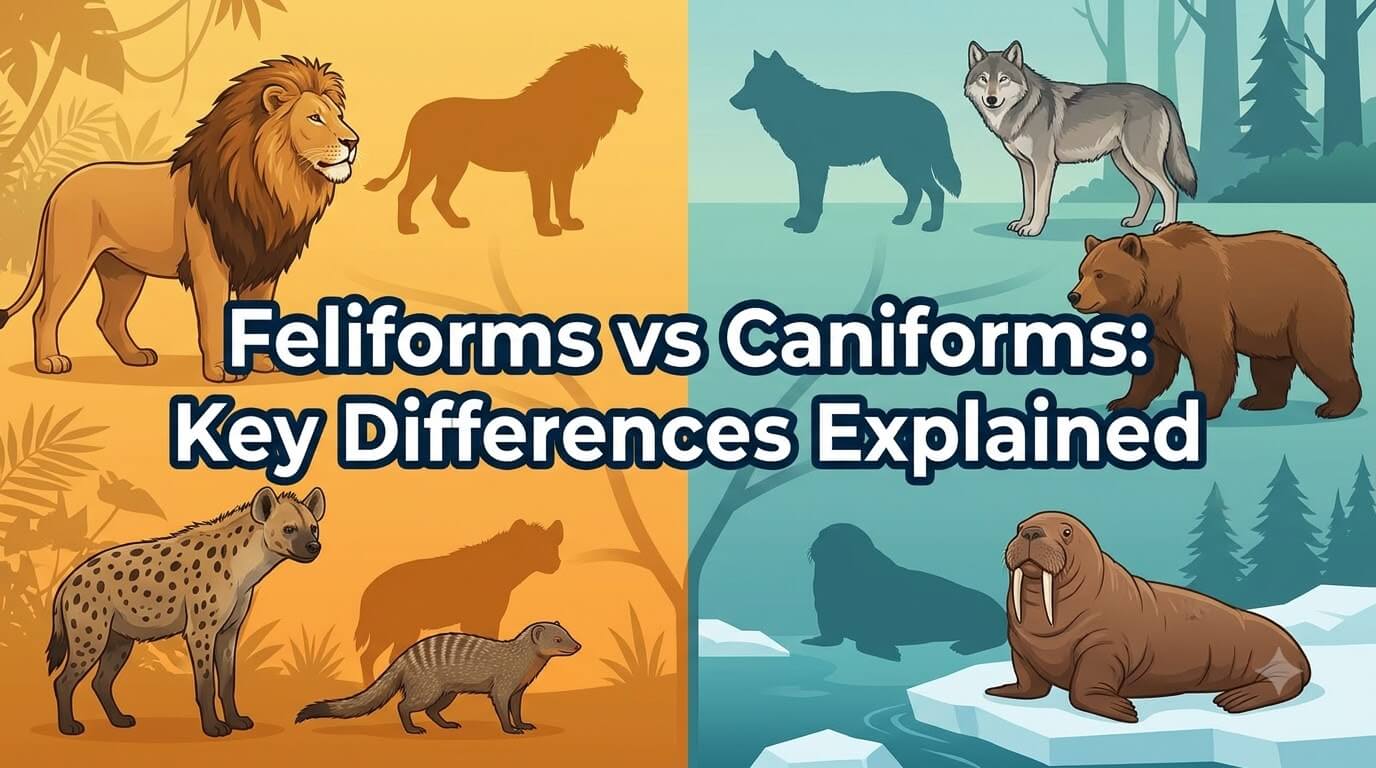
Feliforms and caniforms are the two major living branches of the mammalian order Carnivora. Feliformia includes cats, hyenas, mongooses, civets, Malagasy carnivorans, Asiatic linsangs, and the African palm civet. Caniformia includes dogs, bears, red pandas, raccoons, skunks, mustelids such as otters and badgers, plus seals, sea lions, and walruses. The names are often translated as … Read more
What Is a Carnivoran? Order Carnivora Explained

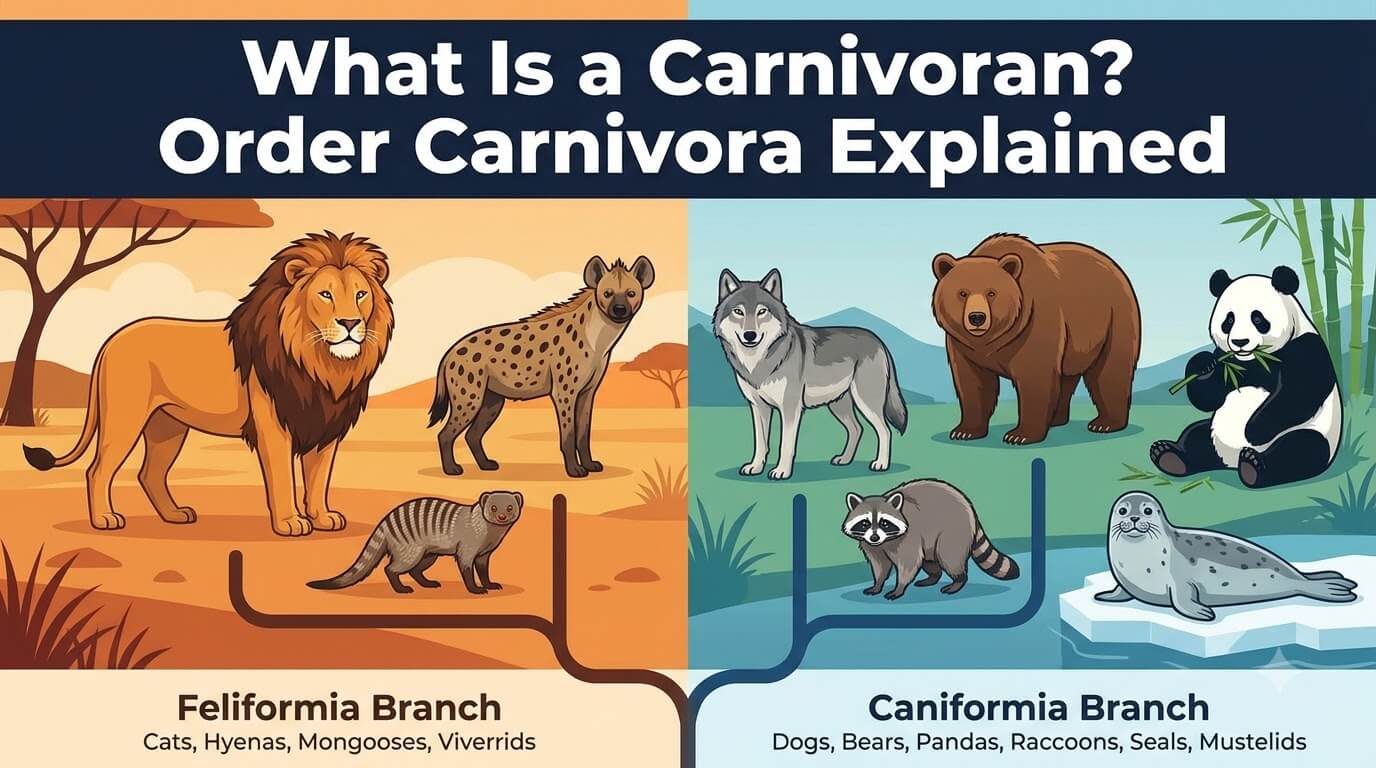
What Is a Carnivoran? Order Carnivora Explained

A carnivoran is a mammal that belongs to the scientific order Carnivora. Cats, dogs, bears, hyenas, mongooses, raccoons, otters, seals, sea lions, and walruses are all carnivorans because they share membership in this evolutionary branch of mammals. The word does not simply mean “an animal that eats meat.” That distinction matters because some carnivorans eat … Read more

Carnivoran Mammals: Cats, Dogs, Bears & Seals

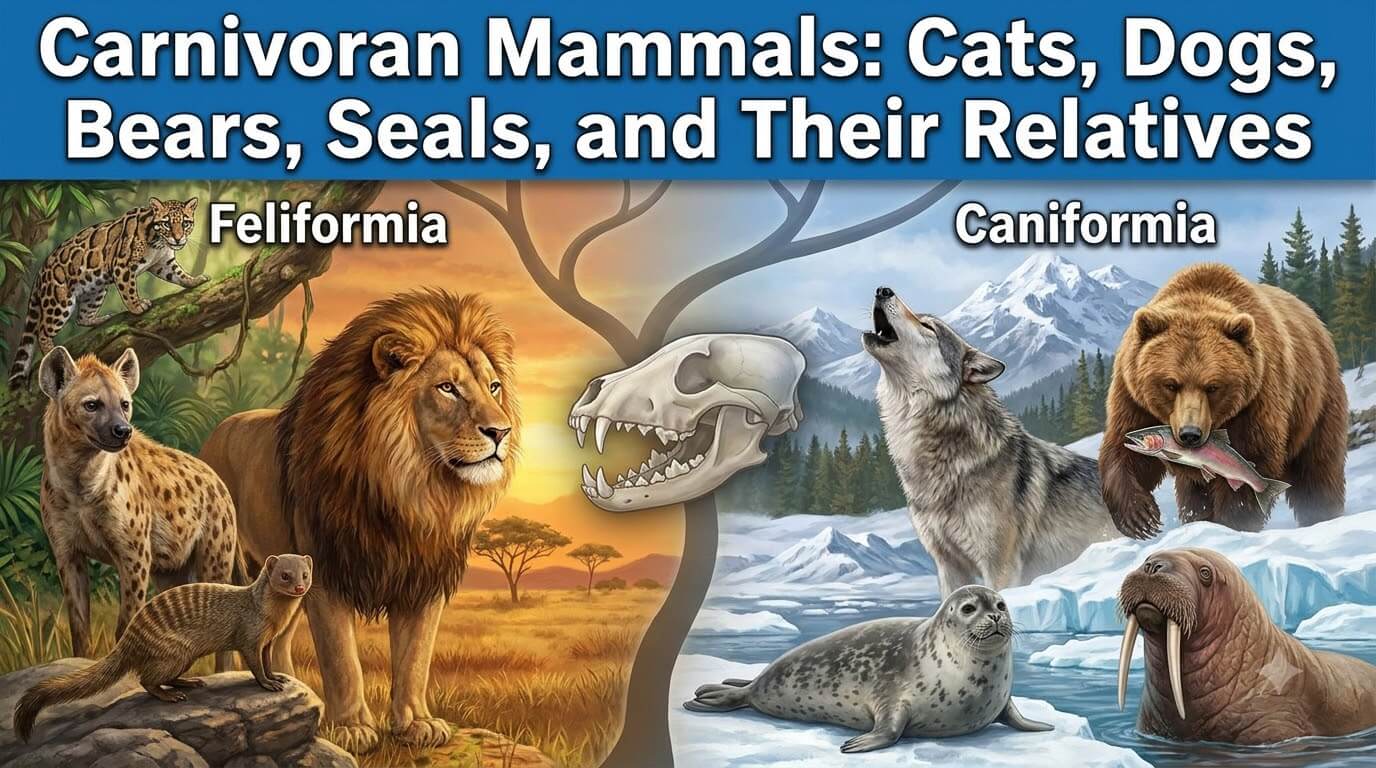
Carnivoran Mammals: Cats, Dogs, Bears, Seals, and Their Relatives

Carnivoran mammals are members of the mammalian order Carnivora, a branch of the mammal family tree that includes cats, dogs, bears, hyenas, mongooses, raccoons, skunks, otters, seals, walruses, and many less familiar relatives. The name can be misleading. A carnivoran is defined by evolutionary relationship and classification, not simply by eating meat. That distinction explains … Read more

Why Are Hoofed Mammals Important? Ecosystem Roles

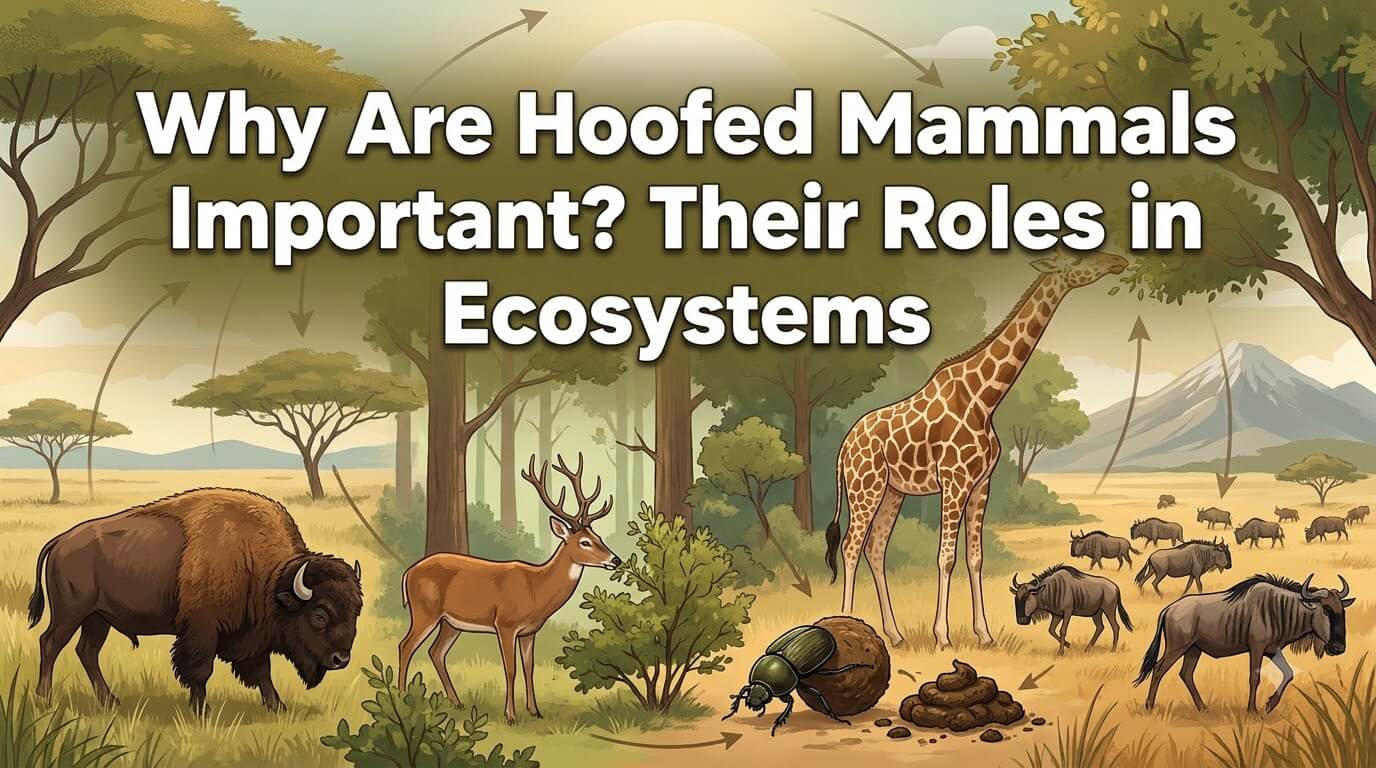
Why Are Hoofed Mammals Important? Their Roles in Ecosystems

Hoofed mammals are important because they move energy, nutrients, seeds, and physical disturbance through ecosystems. Grazers such as bison can reshape grasslands. Browsers such as deer and giraffes can alter the growth of shrubs and young trees. Fruit-eating tapirs can disperse seeds. Dung supports microbes and invertebrates, carcasses feed scavengers and decomposers, and migrating herds … Read more

Where Do Hoofed Mammals Live? Habitats & Adaptations

Where Do Hoofed Mammals Live? Habitats and Survival Adaptations

Hoofed mammals live in an extraordinary range of habitats, from tropical rainforests and African savannas to deserts, alpine cliffs, Arctic tundra, wetlands, and river systems. Their habitats are as diverse as their bodies. A zebra crossing open grassland faces different problems from a tapir moving through dense forest, a mountain goat balancing on a rocky … Read more

Hoofed Mammal Migration: Ranges & Corridors

Hoofed Mammal Migration: Seasonal Ranges, Herds, and Migration Corridors

Hoofed mammal migration is the repeated seasonal movement of ungulates between areas that provide different resources or conditions at different times of year. A mule deer may leave a low-elevation winter range and move toward higher summer habitat. Caribou may shift between wintering areas, calving grounds, and summer ranges. Wildebeest and zebras can track rainfall … Read more

Hoofed Mammal Herds: Social Behavior & Group Living

Hoofed Mammal Herds: Social Behavior, Group Living, and Cooperation

Hoofed mammals live in almost every kind of social arrangement, from large seasonal herds to small family groups and mostly solitary lives. Deer, bison, antelopes, giraffes, zebras, wild sheep, goats, camels, pigs, rhinos, and tapirs do not all organize themselves the same way. Even within one species, group size and composition can change with season, … Read more

How Hoofed Mammals Run and Escape Predators

How Hoofed Mammals Run and Escape Predators

Hoofed mammals escape predators with much more than raw speed. Long limbs, specialized hooves, elastic tendons, powerful muscles, sharp senses, group vigilance, rapid acceleration, sudden turns, camouflage, hiding behavior, and defensive body size can all affect whether an attack succeeds. Different species combine these tools in very different ways. A pronghorn or gazelle in open … Read more

How Ruminant Digestion Works: Stomachs & Cud

How Ruminant Digestion Works: Stomachs, Microbes, and Cud

Ruminant digestion works by combining a four-compartment stomach with microbial fermentation and repeated chewing. Instead of relying only on the animal’s own digestive enzymes, true ruminants such as deer, cattle, bison, sheep, goats, giraffes, and many antelopes depend on huge communities of microorganisms that break down tough plant material before it reaches the small intestine. … Read more

What Do Hoofed Mammals Eat? Grazers vs Browsers

What Do Hoofed Mammals Eat? Grazers, Browsers, and Other Feeding Strategies

Most hoofed mammals eat plants, but their diets are far more varied than the simple label “herbivore” suggests. Some focus heavily on grasses. Others browse leaves, shoots, twigs, bark, or fruit. Many switch between grass and browse as seasons change, and a few important groups, especially pigs and peccaries, can eat both plant and animal … Read more